Easy Strawberry Cobbler
Easy Strawberry Cobbler began for me as a late spring rescue, when a basket of overripe strawberries begged for transformation into something warm and comforting.
I remember standing at my kitchen counter with sticky fingers and the kind of impatience that only ripe fruit can provoke, deciding I wanted a dessert that felt homemade but did not demand a full afternoon. The memory of my grandmother’s cobbler, bubbling and fragrant, guided me as I simplified the technique to something approachable for weeknights and backyard gatherings alike. How I toss the fruit, how the batter pools and browns, and how the aroma fills the house are tiny rituals I still savor.
What I love about Easy Strawberry Cobbler is how forgiving it is. You can scatter the strawberries liberally, pour a humble batter over them, and let the oven do the heavy lifting. The first time I made it for friends, we all crowded around the pan, forks poised, trading stories while steam curled up and the top formed a golden crust. It quickly became my go to for potlucks, simple celebrations, and the kind of weeknight treat that makes everyone pause to enjoy a moment together.
Over the years I tuned a few small habits, like pre melting the butter in the pan and checking the bake a bit early if I am using metal rather than glass, and those tiny changes made the texture more consistent. I also learned to respect the fruit; strawberries release their juices differently depending on ripeness, so I never treat the recipe like an exact science. That freedom is freeing, and it is why I keep coming back to Easy Strawberry Cobbler whenever I want something rustic, fruity, and reliably joyful.
Recipe Snapshot
50 mins
5 mins
45 mins
Medium
250 kcal
American
Gluten-Free, Low FODMAP
Desserts
19×13-inch porcelain or glass baking pan, metal pan (optional) note: bakes quicker so watch it
Why This Easy Strawberry Cobbler Stands Out
Comforting and approachable
I adore how Easy Strawberry Cobbler feels both rustic and deliberate. The technique is simple, yet the finished dessert carries the warmth of a recipe passed through family. I can whip this up without turning on a mixer, and the result still feels indulgent, which is perfect when I need a reliable dessert with minimal fuss.
Fruit forward, not fussy
The recipe celebrates the natural sweetness and texture of strawberries. I find the fruit needs just a little encouragement from the batter to shine. Because the approach is forgiving, I can use slightly varied berry sizes and still get a jammy, fragrant center that pairs beautifully with a crisp top.
Fast enough for weeknights
When life is busy, this cobbler fits right in. From measuring to oven, it only takes a short stretch of focused time, then patience while the oven works. That makes it my go to when I want a homemade dessert without complex timing or equipment.
Flexible and forgiving
I love that this cobbler plays nicely with substitutions in the milk or with other fresh fruits. That flexibility means I can adapt to what is in season or what I have on hand. It rewards small adjustments, and I often tweak a little based on how juicy the fruit is that day.
Great for sharing
This is one of those desserts that instantly brings people together. I often serve slices to guests right from the pan, and the warm, fragrant slices practically demand conversation. It’s a celebratory but casual dessert that feels like a hug.
What to Buy for Easy Strawberry Cobbler
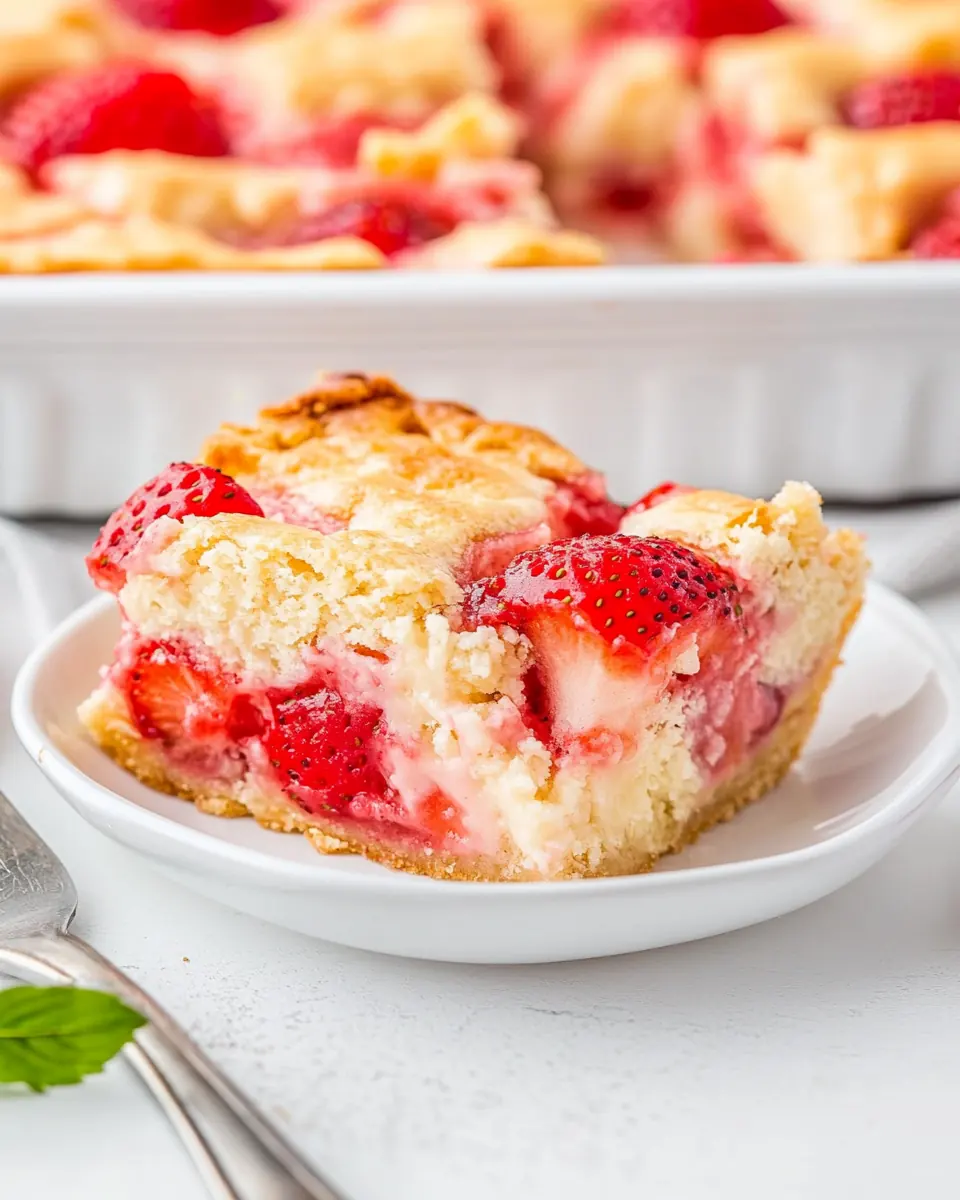
These ingredients are deliberately simple, built to work together to produce a golden, tender cobbler with a fruity, jammy interior. The batter relies on a few pantry staples to create structure and lift, while the strawberries provide bright, juicy flavor and natural sweetness. The key players are the flour and baking powder, which give the topping its lift, and the butter, which traps pockets of steam as it melts, creating a tender, slightly crisp top. Milk binds everything into a pourable batter that bakes around the fruit.
- 1 1/2 cups all purpose flour: Provides structure and body to the cobbler batter; combined with leavening and liquids to form the cake-like dough, ensuring proper texture and crumb when baked.
- 1/2 cup unsalted butter, cubed into about 8 pats or pieces: Adds rich fat and flavor while creating tender pockets in the batter; tapping cold cubed butter into the flour helps produce a slightly flaky, buttery topping.
- 1 cup granulated sugar: Sweetens the batter and balances the tartness of strawberries; dissolves into the liquid to contribute moisture and aid in browning the crust.
- 2 1/2 teaspoons baking powder: Leavens the batter to create lift and a light, airy texture; activates with the milk to produce bubbles that expand during baking.
- 1/2 teaspoons salt: Enhances overall flavor by balancing sweetness and boosting other components; a small amount helps round out the batter and accentuate strawberry brightness.
- 1 1/4 cups whole milk, (whole milk recommended but 2% or plant-based milk may be used): Provides moisture and helps hydrate the dry ingredients for proper batter consistency; supplies fat and proteins that contribute to tenderness and browning.
- 2 cups fresh strawberries, cleaned, hulled, and halved or quartered depending on size of the berry: Contributes fresh, fruity flavor, juiciness, and texture to the dish; softened berries release juices that mingle with the batter to create a saucy fruit filling.
How to Make Easy Strawberry Cobbler
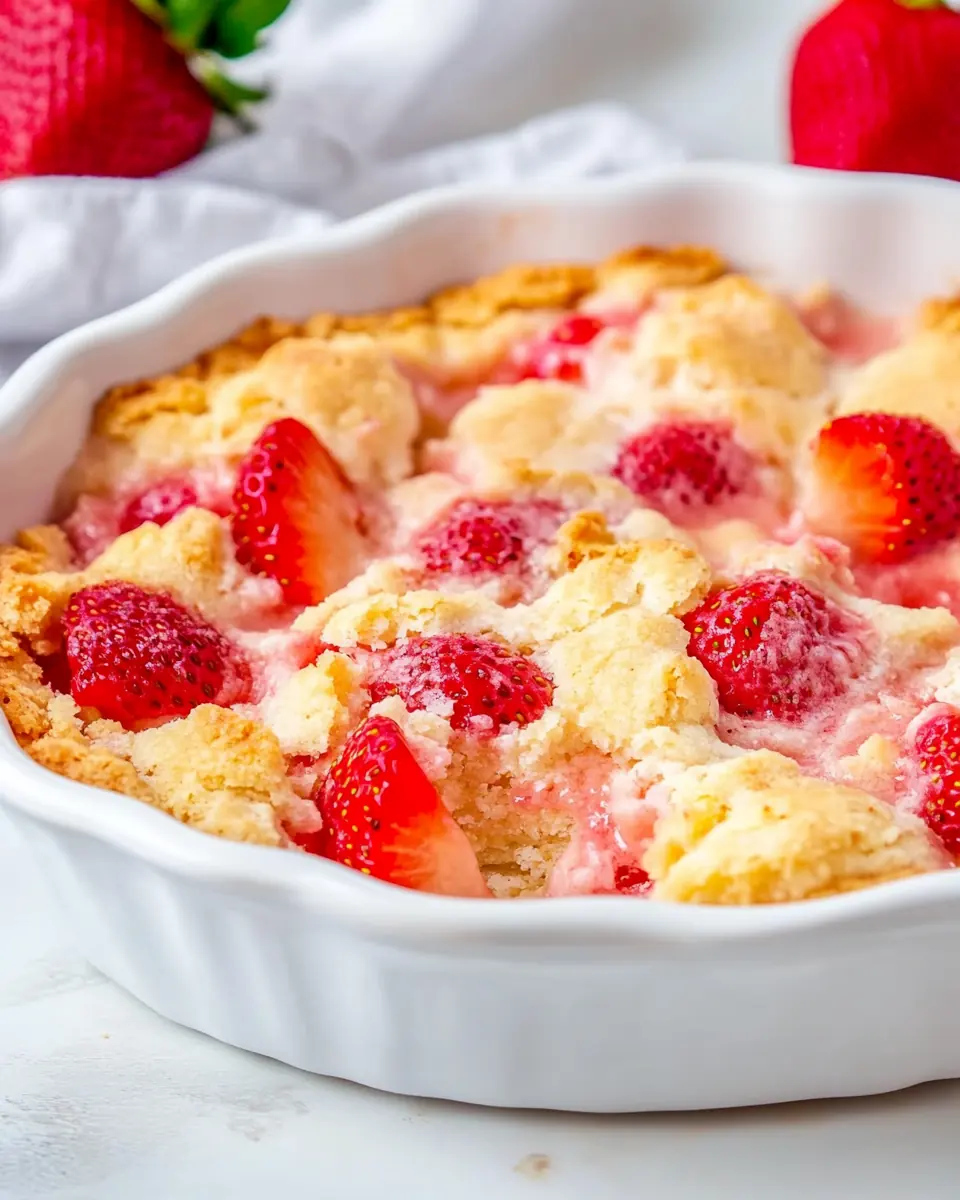
Making this cobbler is straightforward, and the real rewards come from small details like preheating, melting the butter in the pan, and watching the fruit and batter transform together. I like to work in a calm, sequential rhythm so the oven does the heavy lifting while I tidy up the kitchen and set the table.
- Preheat oven to 350 F. Add the cubed butter pieces to the bottom of the baking pan, scattered evenly, and place it in the oven while the oven is preheating in order to melt the butter, about 10 minutes.: Warm air fills the kitchen with an anticipatory hush as the oven climbs to temp. You should notice a steady warmth when you open the door, and the right temperature is crucial because it melts the butter in the pan without overbrowning the batter too early. If the oven is cooler than expected your cobbler will bake longer and the texture may end up gummy in the center; if it is hotter, the top may brown before the interior sets. A quick oven thermometer check can save a lot of worry.
- While the oven is preheating, make the batter by adding the flour, sugar, baking powder, and salt to a large mixing bowl and whisk to combine.: The sight of butter bubbling and pooling across the pan is comforting, and the sizzling sound will diminish as it fully liquefies. This technique creates a buttery base that the batter will float on, and it helps form pockets of crispness under the topping. A common mistake is starting with warm butter which will melt too fast and prevent those textural pockets from forming. Scatter the cubes evenly so the batter gets an even base of fat.
- Add the milk (tip– add a teaspoon of vanilla or almond extract now too if you'd like for extra flavor) and whisk until just combined.: The dry ingredients should look uniform and slightly aerated after whisking, and you may see the aroma of the sugar mingle with the flour. This step ensures even distribution of the leavener so the topping rises consistently. If you skip proper whisking, you risk pockets where the baking powder is concentrated, producing uneven texture. Whisk until no streaks remain.
- After about 10 minutes, remove the baking pan from the oven (make sure the butter is melted) and evenly pour the batter over the top of the butter. Do NOT mix, just pour the batter over the butter and let it be.: The batter should be smooth with a pourable thickness, not thin like pancake batter but not stiff either. You will hear a quiet swirl as you whisk and see the bowl glossy when combined. Overmixing can develop gluten and make the topping tough, so stop whisking once the batter is homogenous. If lumps remain, gently press them against the bowl to smooth them out without aggressive mixing.
- Evenly sprinkle the strawberries over the top and bake for about 45 minutes, or until the cobbler is set and done. Baking Tips– Because all fruit has and releases different amounts of natural liquids and juices, baking time will vary. Start checking about 35-40 minutes, but if your cobbler takes longer than 45 minutes to bake, that's fine. Bake it until it's done. If the top is browning more quickly than you want before it's setting up, tent the pan by loosely draping a sheet of foil loosely over the top. If you're baking in a metal pan rather than porcelain, glass, or ceramic, your cobbler will likely bake more quickly (5-8 minutes, or so is my guess) so start checking it earlier.: As the batter meets the hot butter you will notice a faint sizzle, and the batter will spread but not sink completely. This interaction is essential because the batter bakes into a tender layer that floats above the butter, creating contrast between a golden top and a moist interior. Stirring at this point collapses the structure and produces a denser result, so resist the urge to combine them.
- Serve immediately plain or with ice cream, whipped topping, Cool Whip, etc.: The fruit should glisten on top of the batter before baking, and as it cooks you will smell a bright, sweet fragrance and see juices bubble up around the edges. Check the cobbler starting at 35 to 40 minutes; the top should be golden and the center set, not wobbly. If the top browns too quickly, tent loosely with foil to prevent overbrowning while the interior finishes. A common error is relying solely on time, rather than visual cues; ovens vary, so use color and set as your guide.
- Storage– Leftovers will keep airtight in the fridge for up to 4 days. Reheat individual portions of leftovers in the microwave for about 10-15 seconds, if desired. While you can technically freeze this recipe for up to 3 months, it's not one I advocate freezing since the fruit texture will change and leftovers could be very soggy.: When you pull the cobbler from the oven, steam will rise and the aroma will be richly strawberry and buttery. Serve warm so the textures contrast delightfully with cold accompaniments. If you let it cool too long before serving, the texture firms and becomes less luscious, so plan to serve within 10 to 20 minutes for peak enjoyment.
- Storage– Leftovers will keep airtight in the fridge for up to 4 days: Stored cobbler will soften as the fruit continues to release moisture, and the texture becomes more cohesive. Reheat individual portions briefly in the microwave for 10 to 15 seconds to regain some warmth, or warm gently in a low oven. Freezing is possible but I do not recommend it because the fruit texture breaks down and the result can be soggy. A common storage mistake is leaving the cobbler uncovered, which dries out the top quickly.
Customization Ideas
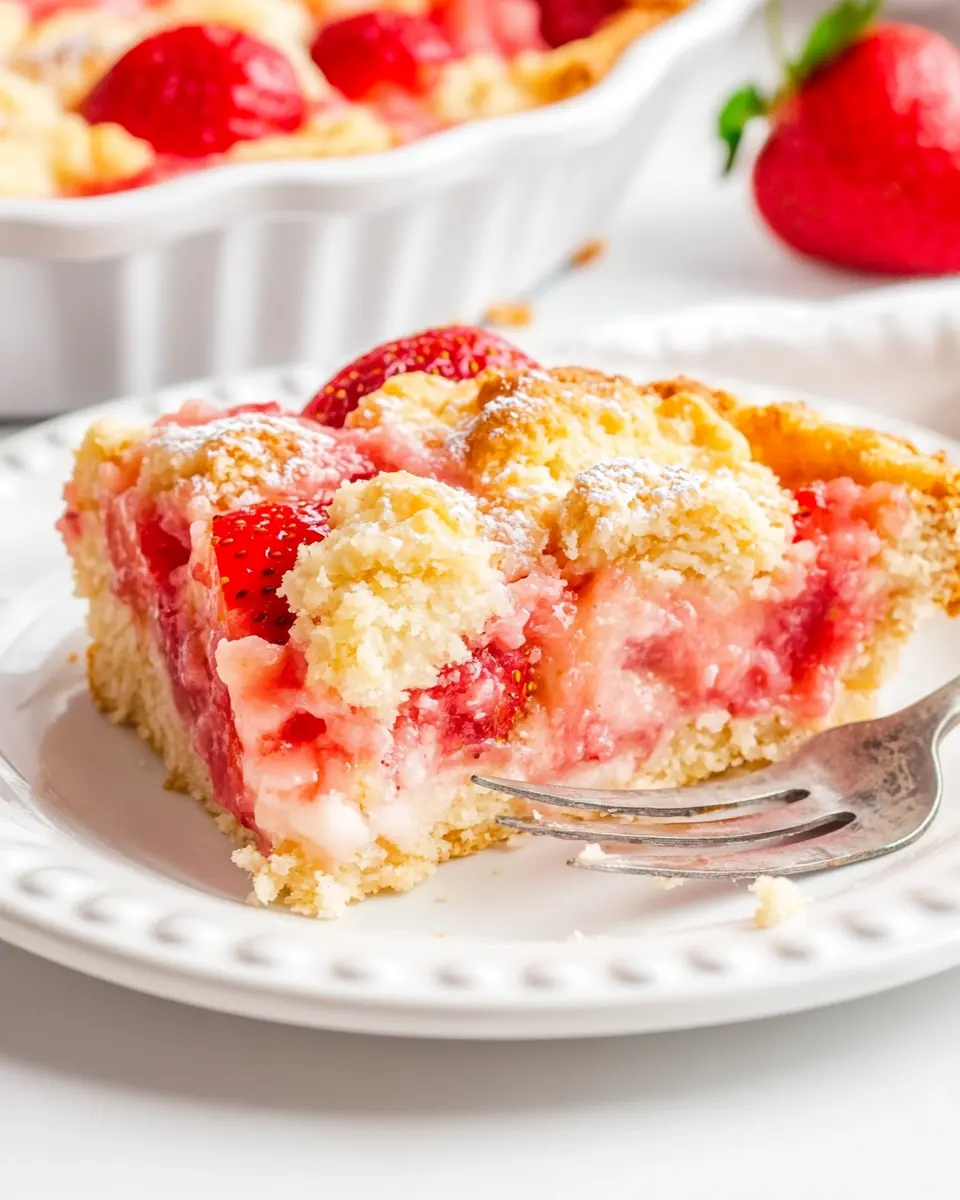
The base recipe is welcoming to tweaks, so I often adapt it to the season or my mood. Below are focused tips and variations to customize texture, flavor, and presentation while keeping the core method intact.
- Try other fresh fruits If you want a different flavor profile, swap some or all of the strawberries for fresh blueberries, blackberries, raspberries, or sliced peaches. Keep the total fruit quantity the same to preserve the bake balance.
- Adjust the sugar for tartness If your strawberries are very ripe and sweet, reduce the granulated sugar slightly to let the fruit brightness shine through without turning overly sweet.
- Use different milks You can substitute 2 percent or plant based milk for whole milk, but expect a slightly lighter mouthfeel and subtle texture differences; whole milk gives the richest result.
- Flavor accents A teaspoon of almond extract or a small pinch of citrus zest folded into the batter can lift the aroma and complement the strawberries without overpowering them.
- Tent to control browning If the top is coloring too quickly, loosely place foil over the pan to slow the browning while the interior finishes setting. This is especially helpful with a metal pan.
- Mix fruits for complexity Combine two types of fruit, such as half strawberries and half sliced peaches, for a layered flavor and texture profile that remains balanced.
What Complements This Easy Strawberry Cobbler
I love pairing warm cobbler with cold, creamy accompaniments and simple beverages to balance the sweetness. The following list explores serving styles, occasions, and storage, and it highlights practical combinations that make the dish feel intentional and complete.
- Classic scoop of ice cream Serving a warm slice of Easy Strawberry Cobbler with a scoop of vanilla ice cream creates a warm cold contrast that enhances the fruit flavors and adds a silky richness. It is perfect for casual dinners and summer evenings.
- Whipped cream or whipped topping A dollop of lightly sweetened whipped cream adds airy texture and keeps the dessert feeling light; this is ideal when you want a less cold accompaniment than ice cream.
- Simple daytime dessert Presenting the cobbler for brunch or an afternoon tea elevates a casual spread, and it pairs nicely with coffee or a fragrant herbal tea. The fruity brightness makes it feel fresh and seasonal.
- Potlucks and gatherings Because it bakes in a single pan, this cobbler is excellent for sharing at potlucks. Bring it warm if possible, or reheat briefly on site. Label the serving with a simple note about tolerance for guests with dietary considerations.
- Storage tips for leftovers Store airtight in the refrigerator for up to four days. Reheat individual portions briefly in the microwave for 10 to 15 seconds, or warm in a low oven to refresh the crust slightly. Avoid freezing if you want the best fruit texture, as frozen then thawed fruit can become watery.
- Seasonal pairings In spring, serve this with light salads or a cheese plate for a lovely contrast; in warm weather, keep it simple with cold accompaniments so the fruit remains the star. The cobbler’s versatility makes it suitable for both casual and slightly more formal occasions.
FAQ
Conclusion
This recipe’s charm comes from its simplicity and the way fresh strawberries and a simple batter transform into a warm, comforting dessert with minimal effort. Give Easy Strawberry Cobbler a try on a busy weeknight or when you want a relaxed dessert that still feels special. You will appreciate the aromatic, buttery bake and the forgiving technique that allows for small substitutions and seasonal tweaks, making it a dependable crowd pleaser that invites sharing and conversation.
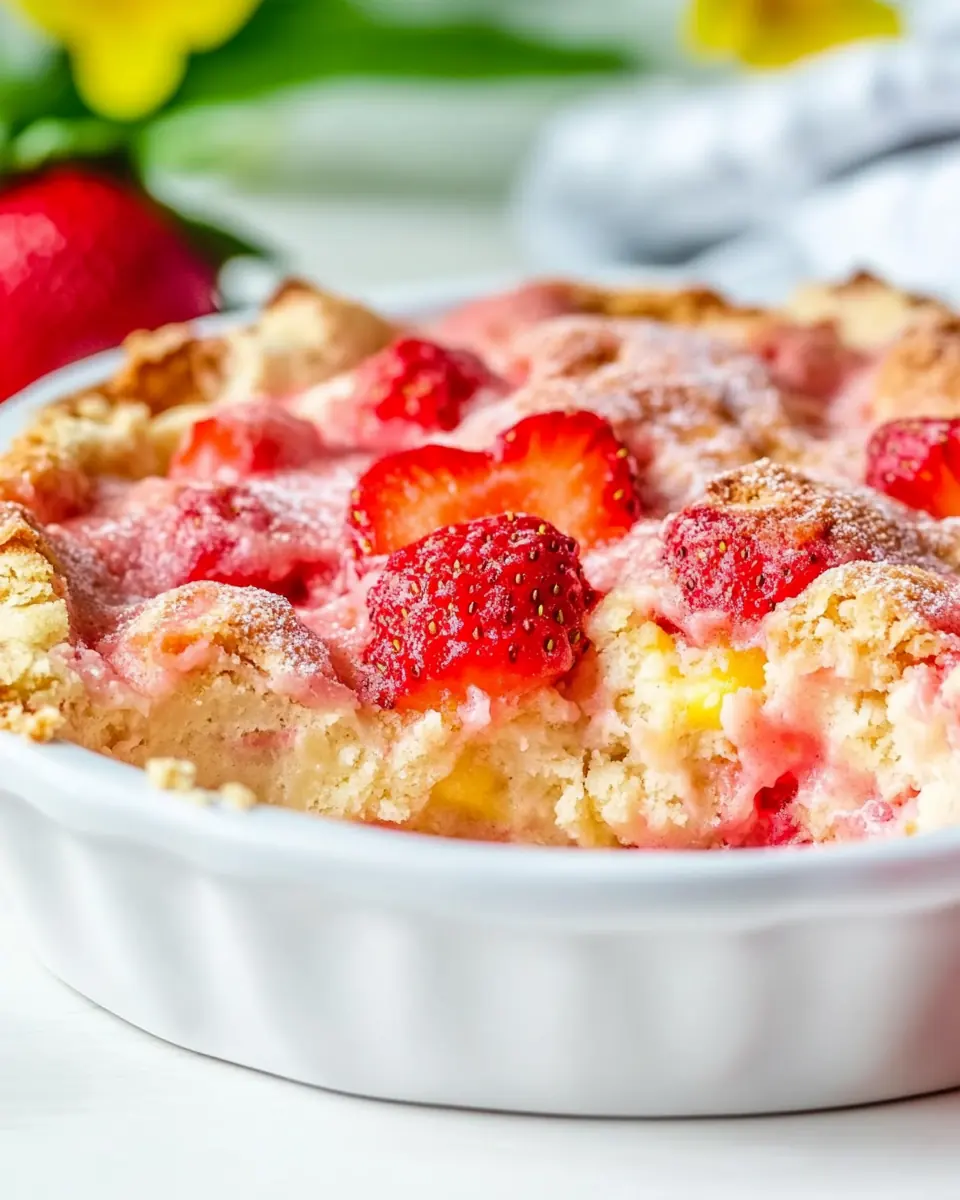
Easy Strawberry Cobbler
Ingredients
Equipment
Method
- Preheat oven to 350 F. Add the cubed butter pieces to the bottom of the baking pan, scattered evenly, and place it in the oven while the oven is preheating in order to melt the butter, about 10 minutes.: Warm air fills the kitchen with an anticipatory hush as the oven climbs to temp. You should notice a steady warmth when you open the door, and the right temperature is crucial because it melts the butter in the pan without overbrowning the batter too early. If the oven is cooler than expected your cobbler will bake longer and the texture may end up gummy in the center; if it is hotter, the top may brown before the interior sets. A quick oven thermometer check can save a lot of worry.
- While the oven is preheating, make the batter by adding the flour, sugar, baking powder, and salt to a large mixing bowl and whisk to combine.: The sight of butter bubbling and pooling across the pan is comforting, and the sizzling sound will diminish as it fully liquefies. This technique creates a buttery base that the batter will float on, and it helps form pockets of crispness under the topping. A common mistake is starting with warm butter which will melt too fast and prevent those textural pockets from forming. Scatter the cubes evenly so the batter gets an even base of fat.
- Add the milk (tip– add a teaspoon of vanilla or almond extract now too if you'd like for extra flavor) and whisk until just combined.: The dry ingredients should look uniform and slightly aerated after whisking, and you may see the aroma of the sugar mingle with the flour. This step ensures even distribution of the leavener so the topping rises consistently. If you skip proper whisking, you risk pockets where the baking powder is concentrated, producing uneven texture. Whisk until no streaks remain.
- After about 10 minutes, remove the baking pan from the oven (make sure the butter is melted) and evenly pour the batter over the top of the butter. Do NOT mix, just pour the batter over the butter and let it be.: The batter should be smooth with a pourable thickness, not thin like pancake batter but not stiff either. You will hear a quiet swirl as you whisk and see the bowl glossy when combined. Overmixing can develop gluten and make the topping tough, so stop whisking once the batter is homogenous. If lumps remain, gently press them against the bowl to smooth them out without aggressive mixing.
- Evenly sprinkle the strawberries over the top and bake for about 45 minutes, or until the cobbler is set and done. Baking Tips– Because all fruit has and releases different amounts of natural liquids and juices, baking time will vary. Start checking about 35-40 minutes, but if your cobbler takes longer than 45 minutes to bake, that's fine. Bake it until it's done. If the top is browning more quickly than you want before it's setting up, tent the pan by loosely draping a sheet of foil loosely over the top. If you're baking in a metal pan rather than porcelain, glass, or ceramic, your cobbler will likely bake more quickly (5-8 minutes, or so is my guess) so start checking it earlier.: As the batter meets the hot butter you will notice a faint sizzle, and the batter will spread but not sink completely. This interaction is essential because the batter bakes into a tender layer that floats above the butter, creating contrast between a golden top and a moist interior. Stirring at this point collapses the structure and produces a denser result, so resist the urge to combine them.
- Serve immediately plain or with ice cream, whipped topping, Cool Whip, etc.: The fruit should glisten on top of the batter before baking, and as it cooks you will smell a bright, sweet fragrance and see juices bubble up around the edges. Check the cobbler starting at 35 to 40 minutes; the top should be golden and the center set, not wobbly. If the top browns too quickly, tent loosely with foil to prevent overbrowning while the interior finishes. A common error is relying solely on time, rather than visual cues; ovens vary, so use color and set as your guide.
- Storage– Leftovers will keep airtight in the fridge for up to 4 days. Reheat individual portions of leftovers in the microwave for about 10-15 seconds, if desired. While you can technically freeze this recipe for up to 3 months, it's not one I advocate freezing since the fruit texture will change and leftovers could be very soggy.: When you pull the cobbler from the oven, steam will rise and the aroma will be richly strawberry and buttery. Serve warm so the textures contrast delightfully with cold accompaniments. If you let it cool too long before serving, the texture firms and becomes less luscious, so plan to serve within 10 to 20 minutes for peak enjoyment.
- Storage– Leftovers will keep airtight in the fridge for up to 4 days: Stored cobbler will soften as the fruit continues to release moisture, and the texture becomes more cohesive. Reheat individual portions briefly in the microwave for 10 to 15 seconds to regain some warmth, or warm gently in a low oven. Freezing is possible but I do not recommend it because the fruit texture breaks down and the result can be soggy. A common storage mistake is leaving the cobbler uncovered, which dries out the top quickly.
Notes
- Try other fresh fruits If you want a different flavor profile, swap some or all of the strawberries for fresh blueberries, blackberries, raspberries, or sliced peaches. Keep the total fruit quantity the same to preserve the bake balance.
- Adjust the sugar for tartness If your strawberries are very ripe and sweet, reduce the granulated sugar slightly to let the fruit brightness shine through without turning overly sweet.
- Use different milks You can substitute 2 percent or plant based milk for whole milk, but expect a slightly lighter mouthfeel and subtle texture differences; whole milk gives the richest result.
- Flavor accents A teaspoon of almond extract or a small pinch of citrus zest folded into the batter can lift the aroma and complement the strawberries without overpowering them.
- Tent to control browning If the top is coloring too quickly, loosely place foil over the pan to slow the browning while the interior finishes setting. This is especially helpful with a metal pan.
- Mix fruits for complexity Combine two types of fruit, such as half strawberries and half sliced peaches, for a layered flavor and texture profile that remains balanced.