Halloween Devil’s Food Cupcakes
Halloween Devil’s Food Cupcakes came into my kitchen on a cool October afternoon when the neighborhood kids were already buzzing about costumes and candy swaps. I remember carrying a tray of warm cupcakes to the porch, the scent of melted chocolate and browned butter trailing behind me, and thinking how a single bite could make the whole evening feel festive and cozy. These cupcakes quickly became my go to for seasonal get togethers because they balance deep, dark chocolate cake with bright, orange buttercream that feels playful without being saccharine.
That first batch had a small disaster moment when I accidentally added too much milk to the frosting, and I learned to trust the texture rather than the recipe measurements alone. Since then, I’ve tweaked the batter and frosting until the crumb is tender but sturdy enough to hold a generous swirl of buttercream, and the flavor pops with gentle tang from the buttermilk. I love serving them straight from a lined cupcake tin, still slightly warm, while the frosting waits patiently on the counter.
My friends often ask why these are called Devil’s Food, and I always answer that it is the intense dark chocolate flavor that makes them decadently sinful yet irresistible. The orange frosting is optional, but it makes the cupcakes feel unmistakably seasonal and fun to decorate with the kids. Over the years, I’ve used this recipe for classroom parties, potlucks, and late night baking sessions when I needed comfort and a little theatrical flair.
Recipe Snapshot
40 mins
15 mins
25 mins
Medium
200 kcal
American
Gluten-Free, Low FODMAP
Desserts
Mixing bowl, Mixer, Double boiler or heatproof bowl, Cupcake tins, Wire rack, Sifter
What Sets This Halloween Devil’s Food Cupcakes Apart
Deep chocolate flavor that actually tastes like chocolate
I find the real reason I reach for Halloween Devil’s Food Cupcakes is the full bodied dark chocolate in the batter. It is not just cocoa powder hiding behind sugar, it’s melted chocolate that gives a lush, almost fudgy note. When you cut into the cupcake, the crumb is moist and rich, with a smell that reminds me of a warm bakery on an autumn morning.
Buttermilk keeps the crumb tender and bright
The addition of buttermilk is a small trick that pays off in texture and tang. It reacts with the baking soda and powder to lift the cupcakes and keep them soft without being dense. I always appreciate how the tang balances the sweetness, especially when the frosting is on the sweeter side.
Buttercream that colors and spreads beautifully
The buttercream in this recipe is simple but reliable. A high butter content makes the frosting silky, and the powdered sugar is sifted for a smooth finish, so piping tips glide easily. Mixing in tiny amounts of milk lets you control the consistency, which is crucial if you’re switching between spreading and piping. I like the playful orange shade, because it instantly signals the season.
User friendly and flexible for decorators
Whether you just smear the frosting with a knife or you spend time with piping bags, these cupcakes stand up well. The cupcake tops are flat enough to decorate, and the crumb is sturdy from the right balance of flour and fat. I often let friends practice piping while the kids make silly faces with sprinkles, since the base recipe is forgiving.
Great for entertaining and making memories
These cupcakes are as much about the atmosphere as the taste. I love seeing how a batch of Halloween Devil’s Food Cupcakes can turn a regular evening into a small celebration. The recipe scales nicely for a crowd, and because they keep well in the fridge, you can bake ahead and focus on the party details later.
Main Ingredients for Halloween Devil’s Food Cupcakes
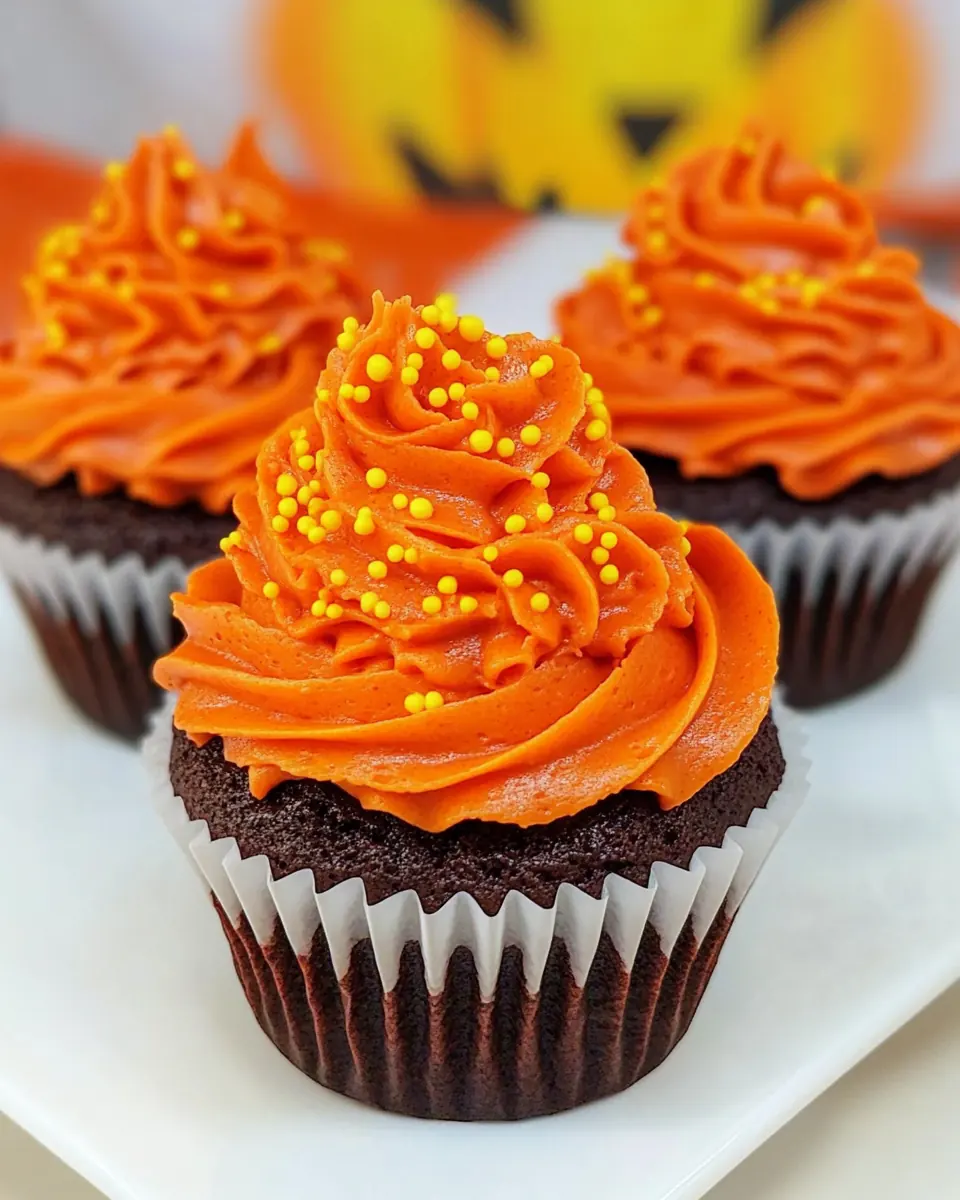
These ingredients are chosen to create a balance between a rich chocolate base and a bright, spreadable buttercream. The key players are the melted dark chocolate and the combination of buttermilk with leaveners, which give a tender crumb and lift. The frosting relies on a generous amount of unsalted butter and sifted powdered sugar for a smooth texture that holds color well.
- 2 1/2 cups sifted white cake flour: Provide a light, tender crumb by using sifted white cake flour; ensures even texture and removes lumps for delicate cupcakes. Supports structure when combined with leavening agents and liquid ingredients. Sifting helps incorporate air, contributing to a finer, softer cake.
- 1 1/2 teaspoons baking powder: Leaven baked goods by adding baking powder; creates lift and a soft, airy texture in the cupcake batter. Acts as a chemical leavener that releases carbon dioxide when moistened and heated. Balances density from other ingredients to produce a tender crumb.
- 3/4 teaspoon baking soda: React with acidic components to help batter rise by using baking soda; neutralizes acids and promotes browning. Works quickly to produce carbon dioxide, so it should be mixed and baked promptly. Contributes to lightness and proper oven spring in chocolate-based recipes.
- 1/2 teaspoons salt: Season and enhance flavors by adding salt; balances sweetness and deepens chocolate notes in the cupcakes. Strengthens gluten structure slightly to improve texture and mouthfeel. Small amounts are effective at bringing out overall flavor complexity.
- 4 ounces unsweetened dark chocolate: Provide rich chocolate flavor and deep color with unsweetened dark chocolate; melts into the batter for intense cocoa taste. Adds fat and bitterness that complements sugar and enhances overall chocolate complexity. Integrates with liquids and butter to create a smooth, cohesive batter.
- 1 3/4 cups sugar, divided: Contribute sweetness and tenderness with sugar, divided; one portion integrates into batter while another may be reserved depending on technique. Impacts texture, moisture retention, and browning during baking. Proper division ensures balanced sweetness and structure.
- 1 1/2 cups buttermilk, divided: Add moisture, tang, and acidity with buttermilk, divided; tenderizes crumb and reacts with baking soda for leavening. Helps create a fine crumb and subtle tang that brightens chocolate flavor. Dividing the amount can control batter consistency and leavening action.
- 1/2 cup unsalted butter, room temperature: Provide richness and mouthfeel using unsalted butter at room temperature; creams with sugar to incorporate air for lighter cupcakes. Adds fat that contributes to tenderness, flavor, and structure. Room temperature ensures smooth creaming and even distribution in batter.
- 3 large eggs, room temperature, well beaten: Bind and enrich the batter using well beaten large eggs at room temperature; contribute to structure and moisture. Incorporate air for additional lift and help emulsify fats with liquids for a uniform texture. Room temperature eggs blend more evenly, yielding better volume.
- 1 teaspoon vanilla: Enhance and round out flavors by adding vanilla; contributes aromatic sweetness that complements chocolate. Acts as a flavor modifier that lifts and balances the overall taste profile. Small amounts significantly improve perceived flavor complexity.
- 1 cup unsalted butter, room temperature: Create creamy frosting base with unsalted butter at room temperature; provides a rich, spreadable structure for icing. Whips with powdered sugar to trap air and produce light, smooth frosting. Room temperature ensures proper emulsification and silky texture.
- 3 4 cups powdered sugar, sifted: Sweeten and thicken frosting using sifted powdered sugar; provides structure and stability to buttercream. Sifting removes lumps for a smooth, velvety icing and helps incorporate air when beaten. Quantity controls sweetness and final frosting consistency.
- 1/4 teaspoons salt: Enhance overall flavor balance with salt; a small pinch in frosting brightens sweetness and reduces cloying taste. strengthens the flavor profile and rounds out vanilla or citrus notes. Even minimal amounts improve perception of sweetness and depth.
- 2 teaspoons vanilla, coconut, or orange flavoring extract (I like to use a combination of vanilla and coconut with these cupcakes): Add aromatic variation by using vanilla, coconut, or orange extract; intensifies and customizes the frosting flavor. Blending extracts allows layered complexity that pairs well with chocolate cupcakes. Concentrated extracts should be used sparingly to avoid overpowering.
- 1 4 tablespoons milk: Adjust frosting consistency using milk; thins the icing to desired spreadable texture and helps achieve silky smoothness. Adds moisture that allows frosting to be piped or spread evenly. Start with less and add gradually to reach preferred thickness.
- Red and yellow food coloring: Create vibrant hues by using red and yellow food coloring; combine to produce orange tones suited for Halloween decoration. Impart color without altering flavor, allowing themed presentation. Use gel or paste colorings for more intense shades with minimal liquid.
How to Make Halloween Devil’s Food Cupcakes
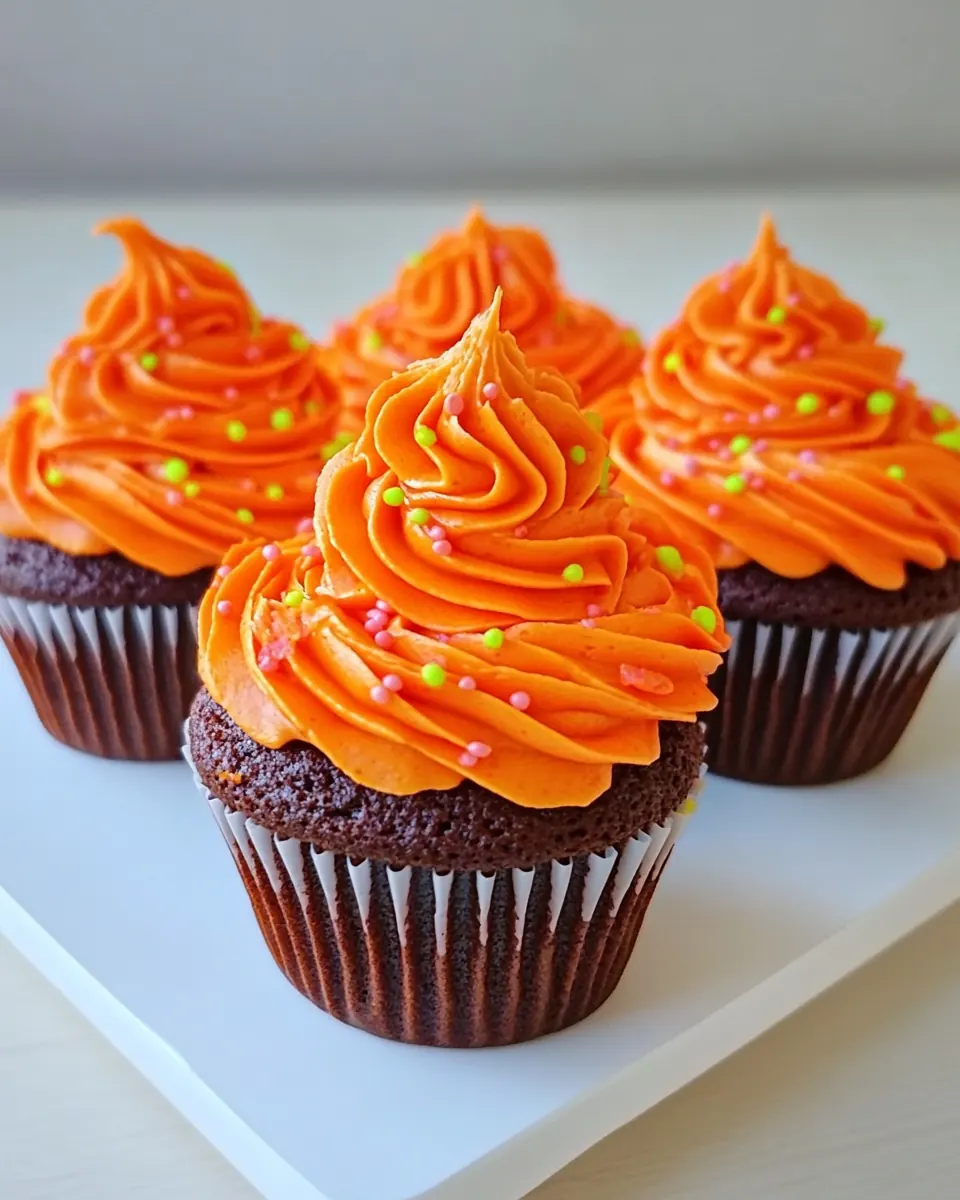
I like to approach these cupcakes with patience and sensory checks, because the small details make a big difference. The following steps expand on each instruction with descriptions of what to look and listen for, why the technique matters, and common pitfalls to avoid so that every batch turns out reliably.
- Preheat oven to 350 degrees F. Sift together the flour, baking powder, baking soda and salt. Sift the mixture again three more times. Reserve.: When your oven is preheating to 350 degrees F , you should smell a faint warm draft as it comes to temperature, and the element will cycle on and off. The repeated sifting lightens the white cake flour and evenly distributes the leaveners so the flour mixture looks airy and pale, almost like a soft dusting. This matters because a very even dry mix prevents pockets of baking soda or powder that would create uneven rise or odd metallic tastes. A common mistake is skipping sifting which can lead to a lumpy batter and uneven crumb. If your sifter clogs, break up any clumps with a spoon to keep the texture consistent.
- Chop the chocolate into small pieces and melt it in a double boiler or in a glass bowl over a pot of boiling water, stirring frequently with a rubber spatula, till the chocolate is smooth. Whisk in 1/2 cup sugar and 1/2 cup buttermilk till they are melted and well blended into the chocolate. Remove from heat and set aside.: As the dark chocolate melts gently over simmering water, you will see glossy ribbons form and hear a soft quiet bubbling from the water below. Stir with a rubber spatula so the heat distributes evenly and the chocolate does not seize. When you whisk in the 1/2 cup sugar and 1/2 cup buttermilk , the mixture should loosen into a pourable, shiny ganache like texture, smelling intensely of cocoa and slightly tangy from the buttermilk . This step is crucial because melted chocolate integrates more fully with fat in the batter, giving depth to the cake. Avoid using high direct heat or the chocolate can burn and taste bitter; if the chocolate looks grainy, remove it from heat and whisk slowly to smooth it out.
- In a large mixing bowl, cream together 1/2 cup butter and 1 1/4 cups sugar for several minutes till light, fluffy, and no longer grainy looking. Note: it's very important that the butter is at room temperature, or it won't cream properly.: it's very important that the butter is at room temperature, or it won't cream properly. : As you beat the 1/2 cup unsalted butter with 1 1/4 cups sugar , watch the texture change from dense and satiny to pale and cloud like, with tiny bubbles forming. This aeration traps air that helps the cupcakes rise and gives the crumb lift and tenderness. The mixture will smell sweet and buttery, and the sugar should dissolve so there is no grainy feeling when rubbed between fingers. If your butter is too cold, the mixture stays clumpy and you will not incorporate enough air, yielding a dense cake. Conversely, if the butter is too warm, it becomes greasy. Aim for room temperature to avoid both pitfalls.
- Beat in the eggs.: After the creamed butter and sugar are light, add the 3 large eggs slowly, and you will notice the batter become glossier and silkier with each addition. Eggs add structure and moisture, and they help the batter bind so the melted chocolate disperses evenly. The batter should smell richer and take on a slightly custardy sheen. A common mistake is adding the eggs too quickly which can cause the batter to separate or curdle; to avoid this, add eggs one at a time and beat until incorporated before adding the next.
- Beat in a quarter of the flour mixture along with all of the melted chocolate mixture.: At this stage, when you gently fold in a portion of the sifted flour with the entire melted chocolate blend, the batter will change from pale to a deep chocolate color and begin to thicken. This combined addition tempers the batter, letting the heavier chocolate incorporate without overworking the gluten in the flour . You should hear a quiet shift in the mixer and see streaks of chocolate disappear into a velvety mass. The reason for starting with a small fraction is to maintain a smooth emulsion; if you dump everything in at once, the batter can seize or become lumpy. A problem to watch for is over mixing, which causes toughness, so fold gently until just combined.
- Add the remaining flour mixture and 1 cup of buttermilk to the batter alternately in small amounts, beating thoroughly after each addition. Stir in the vanilla.: Alternate additions of the dry flour mixture and 1 cup buttermilk to create a batter that is silky and evenly hydrated. The rhythm of adding a little dry, then a little liquid, prevents clumping and keeps the texture tender. As you do this, the batter should move smoothly, not stiffly, and smell of chocolate with a hint of vanilla. Mixing thoroughly after each addition prevents pockets of dry flour . Avoid vigorous mixing once the last addition is incorporated, because over working will make the cupcakes tougher.
- Line two cupcake tins with paper liners. Fill each liner about 2/3 full with batter (don’t fill them too high or they will overflow).: When filling liners, the batter should mound slightly but not reach the top, producing evenly domed cupcakes. You will see a wet, glossy surface before baking, and the tin should feel balanced when moved. Filling too little will yield flat cakes and filling too much causes overflow and misshapen tops. Use a scoop for uniform portions to ensure consistent baking times across the batch.
- Bake the cupcakes for 20-25 minutes, until the center of the cupcakes spring back when they’re pressed gently. Don’t bake them too long or the tops will become tough. Let the cupcakes cool in the tin slightly, then remove and continue cooling on a wire rack.: As the cupcakes bake, the kitchen fills with the smell of warm chocolate and caramelized sugar, and you may hear faint cracking as the tops set. The surface should look matte and slightly springy; a gentle press on the center should bounce back. Baking too long dries them and toughens the top, so start checking at 20 minutes. Once out of the oven, the residual heat continues to finish the crumb, so let them rest in the tin briefly before transferring to a wire rack to cool completely. A common error is trying to frost warm cupcakes, which can melt the frosting and ruin your decoration.
- While the cupcakes are baking, make the frosting. Sift together 3 cups of powdered sugar and salt into a large mixing bowl. Don't skip the sifting, if you do your frosting will turn out chunky.: The act of sifting powdered sugar and salt removes lumps and incorporates air so your frosting is smooth. You will notice the sugar fluffs up, and when combined with room temperature butter it blends into a silky cream. If you skip this, you risk gritty or lumpy frosting that will not pipe cleanly. If your powdered sugar is clumped, press it through a sieve to ensure a fine texture.
- Add 1 cup room temperature butter to the mixing bowl. Beat the butter into the sugar, starting on low speed and gradually increasing to medium, till the sugar is fully incorporated into the butter.: As you blend the 1 cup unsalted butter with the sifted sugar, the mixture will transition to a light, cloud like frosting with a glossy sheen. Start slow to prevent a sugar cloud from erupting, then increase speed as the sugar incorporates. The frosting should feel smooth rather than grainy when rubbed between fingers. If it seems greasy, your butter may be too warm; chill briefly and rebeat.
- Beat in the flavoring, then add the milk, a teaspoon at a time, till the desired consistency is reached. A little liquid goes a long way, so add milk with care. For frosting cupcakes, you'll want a consistency somewhere between soft and stiff– a medium texture, which will work well both for spreading with a knife, and for using a decorating tip. Adjust the texture by adding more powdered sugar to thicken the frosting and stiffen it, or more milk to thin out the frosting and make it softer.: When you introduce the chosen extracts, the frosting will take on distinct aromatic notes that lift the whole flavor profile. Add milk slowly and watch the frosting become glossier and more spreadable; a teaspoon can change the texture significantly. Aim for a medium body that holds peaks but is still pipeable. Over thinning will make the frosting slide off the cupcakes, while over thickening will be hard to pipe. If the frosting splits or looks curdled, beating in a spoonful of sifted sugar can bring it back together.
- Color the frosting by adding equal amounts of red and yellow food coloring. Use a few drops for a light orange frosting, or several drops for a more vibrant color. Adjust the color by adding more red or yellow till it looks right to your eye.: As you blend red and yellow food coloring into the buttercream, the color will deepen and the scent may become slightly plastic if excess dye is used, so add gradually. A few drops produce a soft pumpkin hue while more creates a vivid orange. Use a spatula to fold the color evenly so you avoid streaks, and rest the frosting a few minutes to let the color settle. Beware of liquid food colors thinning the frosting; gels are preferable for a more concentrated color without altering the texture.
- Decorate the cupcakes with orange buttercream frosting after the cupcakes have completely cooled. Store frosted cupcakes in the refrigerator, take them out 15-20 minutes before serving to let the frosting soften a bit.: Fully cooled cupcakes maintain their shape when frosted and allow the buttercream to sit on top instead of melting in. The finished tray will look vibrant and seasonal, and the frosting will taste best after it has warmed slightly at room temperature for 15 to 20 minutes, becoming creamy and spreadable. Refrigeration keeps them safe longer, but serving cold will mute the flavors, so remove them ahead of time. A common oversight is frosting warm cupcakes which causes sliding and ruined decorations.
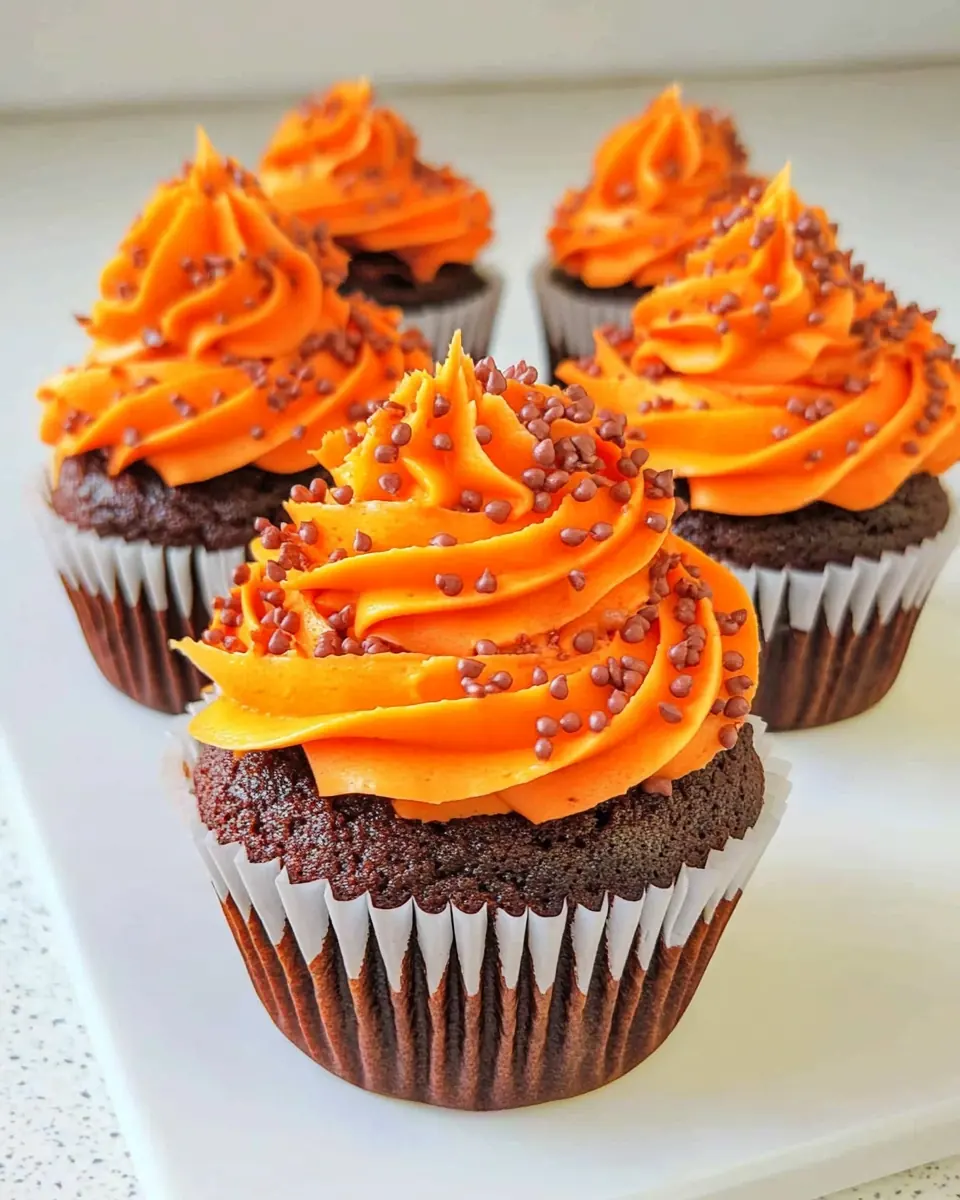
- Note: the frosting recipe above will provide enough frosting for using a knife to spread on 24 cupcakes. If you are using a decorating tip or a more advanced frosting technique like the florets pictured here, I recommend doubling the amount of frosting to ensure that you have enough for decorating all the cupcakes.: the frosting recipe above will provide enough frosting for using a knife to spread on 24 cupcakes. If you are using a decorating tip or a more advanced frosting technique like the florets pictured here, I recommend doubling the amount of frosting to ensure that you have enough for decorating all the cupcakes. : When planning decorations that require volume like piping tall swirls or intricate florets, doubling the frosting ensures you do not run out mid design. Buttercream for tips needs to be slightly stiffer, so having extra allows you to adjust consistency without compromising coverage. Running out of frosting during decorating is a frustrating interruption, so prepare extra if you expect to do more elaborate work. Be mindful that extra frosting increases sweetness, so taste and adjust flavoring if you scale up.
Make It Your Own
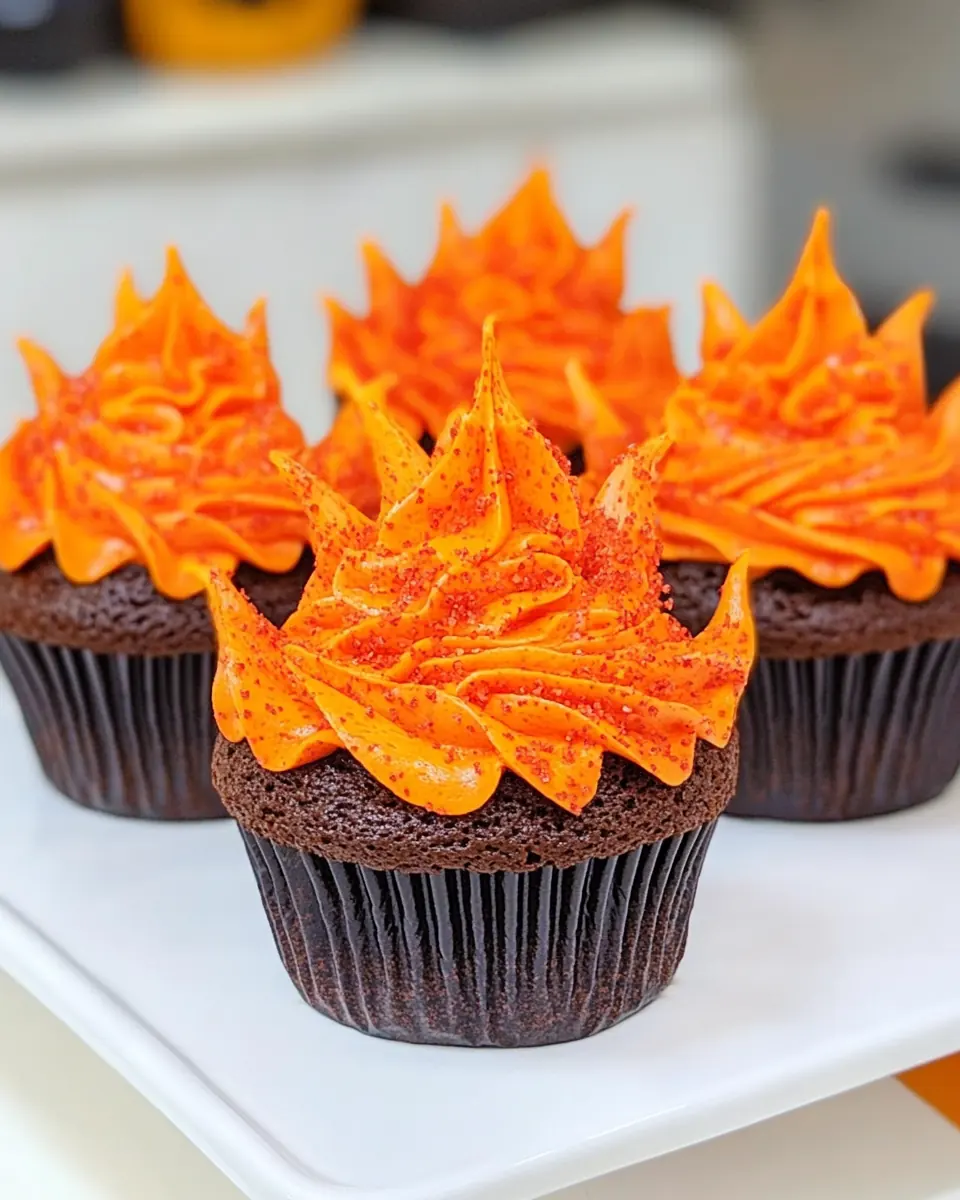
You can personalize these cupcakes with small adjustments to flavor, color, and decoration. Below are practical tips and ideas to modify texture, color saturation, and decorating approach so your batch looks and tastes uniquely yours.
- Swap flavor extracts sparingly If you want to introduce a subtle twist use a blend of the recommended extracts, for example half vanilla and half coconut, but add them slowly and taste as you go so they complement the dark chocolate rather than overwhelm it.
- Control frosting consistency Add milk one teaspoon at a time until you reach a medium spreadable texture for knife spreading, or slightly thicker for piping; gel food coloring is preferable to maintain texture while achieving vibrant orange.
- Double frosting for piping If you plan to pipe tall swirls or decorative florets double the frosting quantity to ensure you have enough volume and maintain consistent color across cupcakes without running out mid design.
- Test bake one cupcake If you are unsure about oven temperature, bake a single test cupcake to check rise and texture, this saves the rest of the batch from potential over baking issues.
- Use a small scoop for uniformity A standard cookie scoop gives even portions that bake at the same rate so your batch cooks uniformly and looks professional on a platter.
Serving Suggestions
These cupcakes are festive and easy to present for parties or small gatherings. Consider pairing ideas and storage tips below to help plan serving for different occasions and to keep them tasting fresh.
- Casual parties Serve a platter of frosted cupcakes at room temperature with a small bowl of extra sprinkles, letting guests personalize their treats.
- Classroom or bake sale Package individually in cupcake boxes or clear wraps; label them with fun seasonal stickers to emphasize the Halloween theme and make them portable.
- Make ahead Bake the cupcakes a day in advance and store unfrosted in an airtight container at room temperature; frost the day of serving for the freshest texture and brightest frosting appearance.
- Storage Refrigerate frosted cupcakes in a single layer in an airtight container, then remove 15 to 20 minutes before serving to let the buttercream soften and regain its creamy mouthfeel.
- Occasions These are perfect for fall gatherings, Halloween parties, potlucks, or anytime you want a seasonal dessert with a playful look that still tastes rich and sophisticated.
FAQ
Conclusion
These cupcakes stand out because they combine deep, melted dark chocolate with a tender crumb and a playful, bright buttercream that is perfect for seasonal gatherings. I encourage you to give this recipe a try; it rewards a little patience with reliably delicious results and lots of decorating possibilities. Whether you spread the frosting with a knife or pipe tall swirls, the cupcakes make a memorable addition to any autumn or Halloween celebration and are sure to bring smiles to the table.
Halloween Devil’s Food Cupcakes
Ingredients
Equipment
Method
- Preheat oven to 350 degrees F. Sift together the flour, baking powder, baking soda and salt. Sift the mixture again three more times. Reserve.: When your oven is preheating to 350 degrees F , you should smell a faint warm draft as it comes to temperature, and the element will cycle on and off. The repeated sifting lightens the white cake flour and evenly distributes the leaveners so the flour mixture looks airy and pale, almost like a soft dusting. This matters because a very even dry mix prevents pockets of baking soda or powder that would create uneven rise or odd metallic tastes. A common mistake is skipping sifting which can lead to a lumpy batter and uneven crumb. If your sifter clogs, break up any clumps with a spoon to keep the texture consistent.
- Chop the chocolate into small pieces and melt it in a double boiler or in a glass bowl over a pot of boiling water, stirring frequently with a rubber spatula, till the chocolate is smooth. Whisk in 1/2 cup sugar and 1/2 cup buttermilk till they are melted and well blended into the chocolate. Remove from heat and set aside.: As the dark chocolate melts gently over simmering water, you will see glossy ribbons form and hear a soft quiet bubbling from the water below. Stir with a rubber spatula so the heat distributes evenly and the chocolate does not seize. When you whisk in the 1/2 cup sugar and 1/2 cup buttermilk , the mixture should loosen into a pourable, shiny ganache like texture, smelling intensely of cocoa and slightly tangy from the buttermilk . This step is crucial because melted chocolate integrates more fully with fat in the batter, giving depth to the cake. Avoid using high direct heat or the chocolate can burn and taste bitter; if the chocolate looks grainy, remove it from heat and whisk slowly to smooth it out.
- In a large mixing bowl, cream together 1/2 cup butter and 1 1/4 cups sugar for several minutes till light, fluffy, and no longer grainy looking. Note: it's very important that the butter is at room temperature, or it won't cream properly.: it's very important that the butter is at room temperature, or it won't cream properly. : As you beat the 1/2 cup unsalted butter with 1 1/4 cups sugar , watch the texture change from dense and satiny to pale and cloud like, with tiny bubbles forming. This aeration traps air that helps the cupcakes rise and gives the crumb lift and tenderness. The mixture will smell sweet and buttery, and the sugar should dissolve so there is no grainy feeling when rubbed between fingers. If your butter is too cold, the mixture stays clumpy and you will not incorporate enough air, yielding a dense cake. Conversely, if the butter is too warm, it becomes greasy. Aim for room temperature to avoid both pitfalls.
- Beat in the eggs.: After the creamed butter and sugar are light, add the 3 large eggs slowly, and you will notice the batter become glossier and silkier with each addition. Eggs add structure and moisture, and they help the batter bind so the melted chocolate disperses evenly. The batter should smell richer and take on a slightly custardy sheen. A common mistake is adding the eggs too quickly which can cause the batter to separate or curdle; to avoid this, add eggs one at a time and beat until incorporated before adding the next.
- Beat in a quarter of the flour mixture along with all of the melted chocolate mixture.: At this stage, when you gently fold in a portion of the sifted flour with the entire melted chocolate blend, the batter will change from pale to a deep chocolate color and begin to thicken. This combined addition tempers the batter, letting the heavier chocolate incorporate without overworking the gluten in the flour . You should hear a quiet shift in the mixer and see streaks of chocolate disappear into a velvety mass. The reason for starting with a small fraction is to maintain a smooth emulsion; if you dump everything in at once, the batter can seize or become lumpy. A problem to watch for is over mixing, which causes toughness, so fold gently until just combined.
- Add the remaining flour mixture and 1 cup of buttermilk to the batter alternately in small amounts, beating thoroughly after each addition. Stir in the vanilla.: Alternate additions of the dry flour mixture and 1 cup buttermilk to create a batter that is silky and evenly hydrated. The rhythm of adding a little dry, then a little liquid, prevents clumping and keeps the texture tender. As you do this, the batter should move smoothly, not stiffly, and smell of chocolate with a hint of vanilla. Mixing thoroughly after each addition prevents pockets of dry flour . Avoid vigorous mixing once the last addition is incorporated, because over working will make the cupcakes tougher.
- Line two cupcake tins with paper liners. Fill each liner about 2/3 full with batter (don’t fill them too high or they will overflow).: When filling liners, the batter should mound slightly but not reach the top, producing evenly domed cupcakes. You will see a wet, glossy surface before baking, and the tin should feel balanced when moved. Filling too little will yield flat cakes and filling too much causes overflow and misshapen tops. Use a scoop for uniform portions to ensure consistent baking times across the batch.
- Bake the cupcakes for 20-25 minutes, until the center of the cupcakes spring back when they’re pressed gently. Don’t bake them too long or the tops will become tough. Let the cupcakes cool in the tin slightly, then remove and continue cooling on a wire rack.: As the cupcakes bake, the kitchen fills with the smell of warm chocolate and caramelized sugar, and you may hear faint cracking as the tops set. The surface should look matte and slightly springy; a gentle press on the center should bounce back. Baking too long dries them and toughens the top, so start checking at 20 minutes. Once out of the oven, the residual heat continues to finish the crumb, so let them rest in the tin briefly before transferring to a wire rack to cool completely. A common error is trying to frost warm cupcakes, which can melt the frosting and ruin your decoration.
- While the cupcakes are baking, make the frosting. Sift together 3 cups of powdered sugar and salt into a large mixing bowl. Don't skip the sifting, if you do your frosting will turn out chunky.: The act of sifting powdered sugar and salt removes lumps and incorporates air so your frosting is smooth. You will notice the sugar fluffs up, and when combined with room temperature butter it blends into a silky cream. If you skip this, you risk gritty or lumpy frosting that will not pipe cleanly. If your powdered sugar is clumped, press it through a sieve to ensure a fine texture.
- Add 1 cup room temperature butter to the mixing bowl. Beat the butter into the sugar, starting on low speed and gradually increasing to medium, till the sugar is fully incorporated into the butter.: As you blend the 1 cup unsalted butter with the sifted sugar, the mixture will transition to a light, cloud like frosting with a glossy sheen. Start slow to prevent a sugar cloud from erupting, then increase speed as the sugar incorporates. The frosting should feel smooth rather than grainy when rubbed between fingers. If it seems greasy, your butter may be too warm; chill briefly and rebeat.
- Beat in the flavoring, then add the milk, a teaspoon at a time, till the desired consistency is reached. A little liquid goes a long way, so add milk with care. For frosting cupcakes, you'll want a consistency somewhere between soft and stiff-- a medium texture, which will work well both for spreading with a knife, and for using a decorating tip. Adjust the texture by adding more powdered sugar to thicken the frosting and stiffen it, or more milk to thin out the frosting and make it softer.: When you introduce the chosen extracts, the frosting will take on distinct aromatic notes that lift the whole flavor profile. Add milk slowly and watch the frosting become glossier and more spreadable; a teaspoon can change the texture significantly. Aim for a medium body that holds peaks but is still pipeable. Over thinning will make the frosting slide off the cupcakes, while over thickening will be hard to pipe. If the frosting splits or looks curdled, beating in a spoonful of sifted sugar can bring it back together.
- Color the frosting by adding equal amounts of red and yellow food coloring. Use a few drops for a light orange frosting, or several drops for a more vibrant color. Adjust the color by adding more red or yellow till it looks right to your eye.: As you blend red and yellow food coloring into the buttercream, the color will deepen and the scent may become slightly plastic if excess dye is used, so add gradually. A few drops produce a soft pumpkin hue while more creates a vivid orange. Use a spatula to fold the color evenly so you avoid streaks, and rest the frosting a few minutes to let the color settle. Beware of liquid food colors thinning the frosting; gels are preferable for a more concentrated color without altering the texture.
- Decorate the cupcakes with orange buttercream frosting after the cupcakes have completely cooled. Store frosted cupcakes in the refrigerator, take them out 15-20 minutes before serving to let the frosting soften a bit.: Fully cooled cupcakes maintain their shape when frosted and allow the buttercream to sit on top instead of melting in. The finished tray will look vibrant and seasonal, and the frosting will taste best after it has warmed slightly at room temperature for 15 to 20 minutes, becoming creamy and spreadable. Refrigeration keeps them safe longer, but serving cold will mute the flavors, so remove them ahead of time. A common oversight is frosting warm cupcakes which causes sliding and ruined decorations.
- Note: the frosting recipe above will provide enough frosting for using a knife to spread on 24 cupcakes. If you are using a decorating tip or a more advanced frosting technique like the florets pictured here, I recommend doubling the amount of frosting to ensure that you have enough for decorating all the cupcakes.: the frosting recipe above will provide enough frosting for using a knife to spread on 24 cupcakes. If you are using a decorating tip or a more advanced frosting technique like the florets pictured here, I recommend doubling the amount of frosting to ensure that you have enough for decorating all the cupcakes. : When planning decorations that require volume like piping tall swirls or intricate florets, doubling the frosting ensures you do not run out mid design. Buttercream for tips needs to be slightly stiffer, so having extra allows you to adjust consistency without compromising coverage. Running out of frosting during decorating is a frustrating interruption, so prepare extra if you expect to do more elaborate work. Be mindful that extra frosting increases sweetness, so taste and adjust flavoring if you scale up.
Notes
- Swap flavor extracts sparingly If you want to introduce a subtle twist use a blend of the recommended extracts, for example half vanilla and half coconut, but add them slowly and taste as you go so they complement the dark chocolate rather than overwhelm it.
- Control frosting consistency Add milk one teaspoon at a time until you reach a medium spreadable texture for knife spreading, or slightly thicker for piping; gel food coloring is preferable to maintain texture while achieving vibrant orange.
- Double frosting for piping If you plan to pipe tall swirls or decorative florets double the frosting quantity to ensure you have enough volume and maintain consistent color across cupcakes without running out mid design.
- Test bake one cupcake If you are unsure about oven temperature, bake a single test cupcake to check rise and texture, this saves the rest of the batch from potential over baking issues.
- Use a small scoop for uniformity A standard cookie scoop gives even portions that bake at the same rate so your batch cooks uniformly and looks professional on a platter.