Easy Fruit Pizza Recipe
Easy Fruit Pizza Recipe is one of those joyful, no fuss desserts I turn to when I want something bright, colorful, and shareable.
Years ago I made this for a neighborhood potluck and watched as kids and adults alike reached for the glossy fruit and creamy filling, each bite sparking little conversations about favorite berries. The simplicity appealed to me immediately, because it gives space to fresh fruit to shine while the crust provides a tender, slightly crisp base that holds up without stealing the show. I remember standing by the table, trading plating tips with a friend, and realizing how flexible this recipe is, from mini rounds for parties to a sheet version for easy slicing.
What I love most about this version is how approachable it is, even when you feel pressed for time. You get a buttery, golden crust from a clever shortcut, a luxuriously smooth cream cheese layer that sets the stage, and a rainbow of sliced strawberries, blueberries, or tropical picks that make every serving feel celebratory. I often change the fruit based on what is ripe and fragrant at the market, and that small swap can completely change the personality of the dessert. It became my go to for summer gatherings, and I still find myself smiling when someone asks for the recipe.
Recipe Snapshot
23 mins
10 mins
13 mins
Easy
150 kcal
American
Gluten-Free, Low FODMAP
Desserts
10 x 15 inch pan, Parchment paper, Electric mixer, Offset spatula, Wire rack
What You’ll Enjoy About This Easy Fruit Pizza Recipe
Bright Seasonal Appeal
I adore how the Easy Fruit Pizza Recipe showcases seasonal fruit. When berries are at their peak, the dish bursts with natural sweetness and vibrant color, and that freshness is the main attraction. You need very little extra sweetness because ripe strawberries and blueberries do so much of the heavy lifting.
Speed Without Sacrificing Flavor
We all have nights when time is tight, and this recipe answers that need. Using ready made dough keeps things fast, yet the final crust still tastes homemade once it is baked to golden perfection. The technique prioritizes efficiency while preserving a crisp, tender base that supports the creamy topping.
Customizable and Crowd Friendly
I love that you can adapt the toppings to suit any crowd. For a picnic I pick sturdy fruits like grapes and pineapple, while for a more elegant brunch I slice peaches and kiwi thinly. Kids especially enjoy decorating their own mini pizzas, which makes the recipe a hit for casual gatherings.
Great Texture Contrast
The contrast between the slightly crunchy, golden crust and the silky cream cheese layer is what keeps people coming back for another bite. The filling is smooth and slightly tangy, which offsets the sweet fruit and prevents the dessert from feeling cloying. That balance is key to a satisfying slice.
Make Ahead Flexibility
I often prepare parts of this recipe ahead of time. The crust and filling can be ready a day in advance, saving precious moments on serving day. You should wait to add the fruit until just before serving for the best texture, but even with that small caveat, the planning makes entertaining effortless.
Ingredient List for Easy Fruit Pizza Recipe
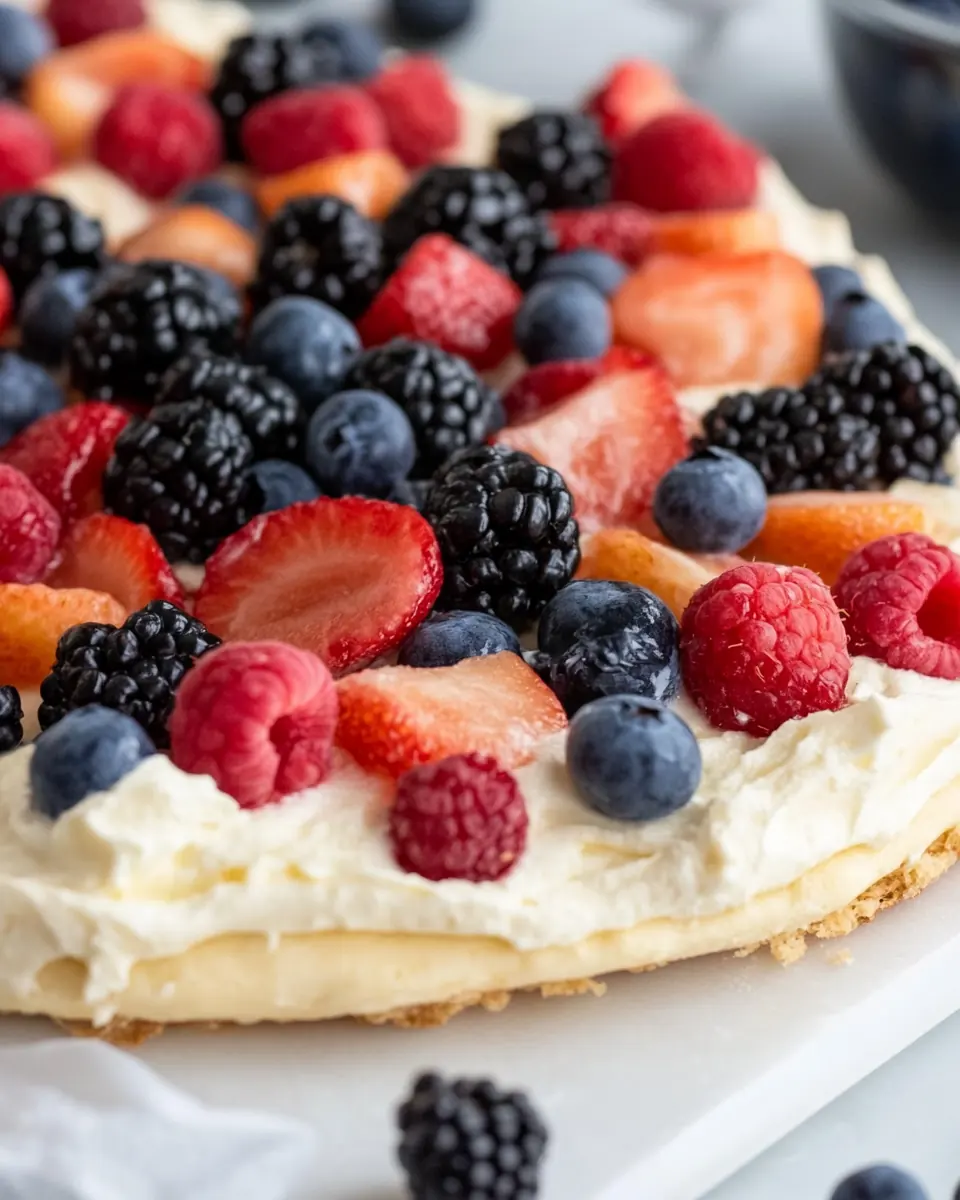
These ingredients come together to build a simple, balanced dessert where each component has a clear role. The crust acts as a slightly crisp foundation, the filling brings creaminess and a touch of tang, the sugar sweetens and stabilizes, and the vanilla extract lifts the flavor. Finally, the assortment of fruit adds brightness, texture, and visual appeal. Together they create a dish that is both comforting and festive.
- 2 tubes (2) refrigerated crescent rolls: Unroll and press into a single crust to form the base of the fruit pizza; its flaky, buttery texture bakes into a golden, slightly crisp foundation. Provide structure and a mild, savory contrast to the sweet toppings, while offering an easy-to-handle platform for slicing and serving.
- 12 ounce (340.2 g) cream cheese, at room temperature: Soften and whip until smooth to create a creamy, tangy layer that holds the fruit in place; its rich texture mimics a custard-like spread. Add moisture and balance the sweetness of the sugar and fruit, contributing depth and a luscious mouthfeel to each slice.
- 1/3 cup (66.67 g) granulated sugar: Sweeten and blend into the cream cheese to add light sweetness and help stabilize the spreadable topping; it dissolves to create a smooth, uniform flavor. Enhance the overall dessert by tempering the tang of the cheese and allowing the fruit flavors to pop without being cloying.
- 3/4 teaspoon (0.75 teaspoon) vanilla extract: Flavor and brighten the cream cheese mixture with a concentrated warm, floral note; a small amount goes a long way in rounding out the filling. Elevate the aroma and complexity of the topping, tying together the dairy and fruit components for a more polished dessert.
- Assorted fruit, for topping: Top and garnish the finished pizza with colorful, fresh varieties to provide brightness, texture, and natural sweetness; choose a mix of berries, stone fruit, and slices for visual appeal. Add freshness and contrast to the creamy base and buttery crust, making each slice vibrant and inviting.
Easy Fruit Pizza Recipe Instructions
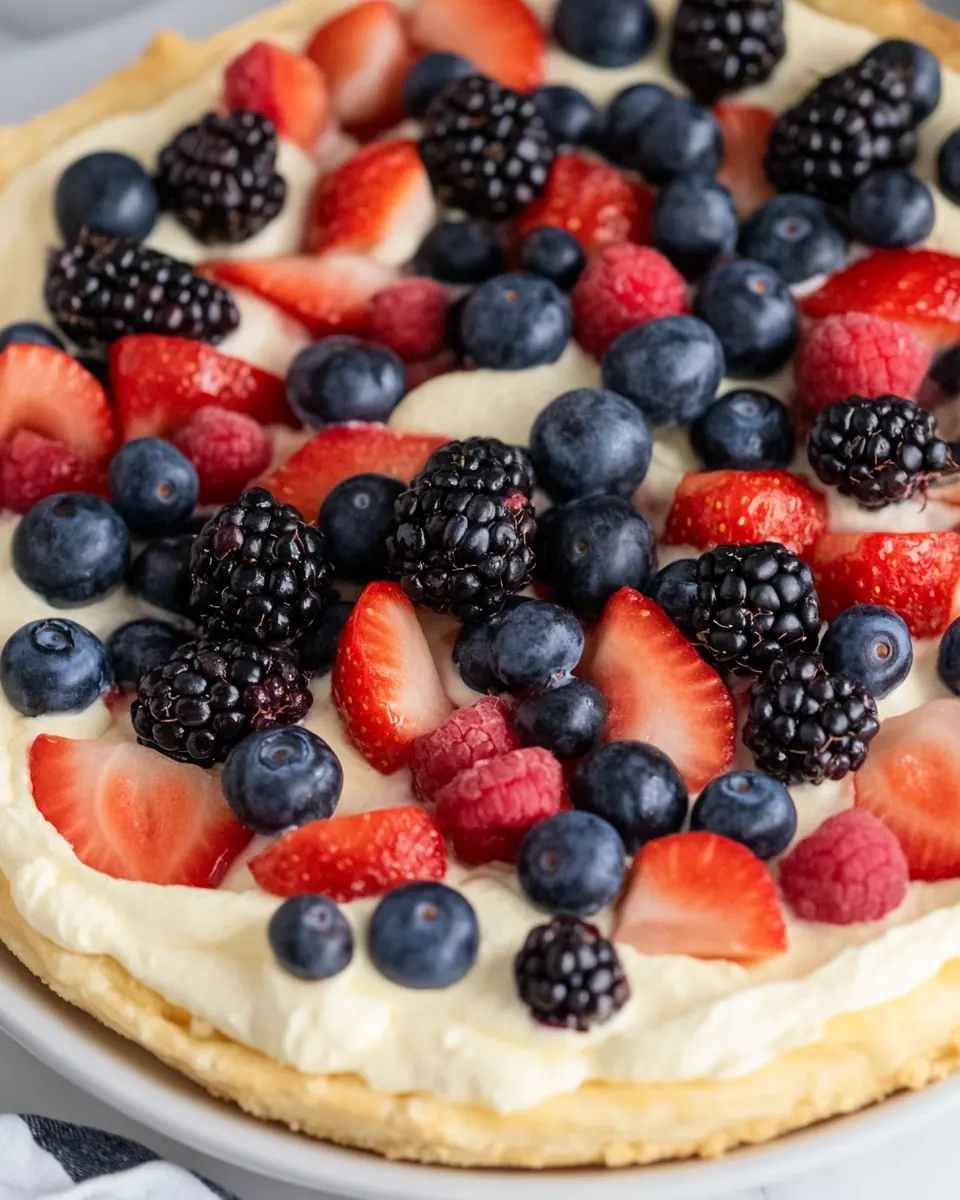
I find the best approach is steady and observant. Move through the steps with intention, paying close attention to visual and tactile cues so you know when the crust is ready and the filling is perfectly smooth. Keep tools close at hand, and plan your fruit arrangement while the crust cools so finishing is quick and pretty.
- Preheat oven to 375 degrees F.: Warmth in the kitchen is immediately comforting, and as the oven rises to 375 degrees F you will notice the air shifting to a gentle, dry heat that will help the crust bake evenly. The reason for this exact temperature is to allow the crescent dough to puff and develop a golden surface without burning the edges. A common mistake is placing the pan too low, which can brown the bottom too quickly, so position the rack in the center. If your oven runs hot, consider using an oven thermometer for accuracy. Expect a faint yeasty aroma as the oven stabilizes, and it is normal to hear a low hum from the heating element.
- Unroll the crescent rolls and press into a 10 x 15-inch pan (or place on a parchment paper-lined cookie sheet), making sure to seal any seams. Bake until puffed and golden brown, 11 to 13 minutes. Place the pan on a wire rack to cool completely.: As you unroll the dough, you will feel its soft, slightly tacky texture under your fingers. Pressing it into a 10 x 15 inch pan or onto a parchment lined sheet gives you an even canvas, and sealing seams prevents gaps that could puff unevenly. The tactile feedback of smoothing the dough helps you spot thin or thick spots to adjust. One why this matters is because an even crust bakes uniformly, producing a consistent crunch and color. A frequent slip up is leaving seams unsealed, which causes awkward holes where filling can seep through, so take a moment to press seams firmly. The dough will relax and slightly spring back after pressing, which is normal, and you should notice a gentle sheen on its surface.
- Using an electric mixer, beat the cream cheese at medium speed until soft and smooth, about 2 minutes. Gradually add the sugar and beat until completely combined, then mix in the vanilla extract. Using an offset spatula, spread the cream cheese mixture over the cooled crust.: During baking you will watch the dough transform, puffing gently and shifting from pale to a warm golden brown. The aroma becomes buttery and faintly sweet, filling the kitchen with welcoming notes. The timing of 11 to 13 minutes lets the interior set without overbrowning the edges. This stage matters because under baked dough will be doughy and unable to support the filling, while overbaked dough becomes too crisp and can crumble. A common oversight is opening the oven too often, which drops the temperature and can affect even coloring, so try to resist peeking. When it is done you will see even color and a slight firmness when tapped.
- Top with assorted fruit of your choice. Serve immediately, or cover and refrigerate for up to 2 days.: Cooling on a wire rack lets air circulate beneath the crust so steam dissipates, preventing a soggy underside. The sound is quiet as the pan settles, and the cooled crust will feel firm to the touch. This pause is important because spreading a warm filling will cause melting and slipping of toppings, compromising texture. Many cooks try to rush this step, leading to a soft filling and shifted fruit, so patience pays off. When the pan is cool, the crust will support the filling without bending.
- Using an electric mixer, beat the cream cheese at medium speed until soft and smooth, about 2 minutes.: The texture shift is dramatic, from stiff and slightly lumpy to luxuriously smooth. Beating at medium speed creates a light, spreadable consistency, and the mixer provides a consistent rhythm that eliminates small lumps. This matters because a smooth filling looks professional and spreads evenly. A typical error is using cold cream cheese , which resists smoothing and yields a bumpy result, so always allow it to come to room temperature. You should hear a steady, even motor hum and see the mass loosen into a creamy ribbon.
- Gradually add the sugar and beat until completely combined, then mix in the vanilla extract.: Adding the sugar slowly helps it dissolve into the cream, avoiding a gritty texture. As you mix, the filling will lighten slightly in color and become silkier, and the small addition of vanilla extract brightens the flavor. The technique matters because well incorporated sugar ensures a smooth mouthfeel and even sweetness across every bite. One mistake is dumping the sugar all at once, which can scatter and leave undissolved granules. When combined properly, the filling should taste balanced, not toothachingly sweet, with a subtle aromatic lift from the vanilla extract .
- Using an offset spatula, spread the cream cheese mixture over the cooled crust.: Spreading with an offset spatula gives you smooth control and clean edges. The filling should glide across the surface, leaving a satiny sheen without tearing the crust. This step matters because an even layer distributes flavor and provides a stable bed for the fruit . A common misstep is applying too thick a layer, which can overwhelm the crust and make the dessert heavy, so aim for a balanced coverage. Listen for quiet scraping sounds as the spatula levels the filling, and stop when the surface looks glossy and even.
- Top with assorted fruit of your choice.: Arranging the fruit is the creative part, and you will notice a burst of color and fresh fragrance as slices and berries go down. The contrast of textures is immediate, with tender fruit resting on creamy filling and supported by a crisp crust. Placing fruit close together creates a mosaic, while spacing pieces gives a lighter presentation; either choice tastes wonderful. One pitfall is adding wet, very juicy fruit directly after slicing, which can release too much juice and make the filling runny, so pat certain fruits dry if needed. The visual payoff is high, and the finished surface should gleam and look inviting.
- Serve immediately, or cover and refrigerate for up to 2 days.: When you serve right away, the crust remains at its peak texture and the fruit is freshest. If you refrigerate, cover the pizza to protect it from absorbing odors, and plan to eat within 2 days to avoid sogginess. Cooling changes the mouthfeel slightly, with the filling becoming firmer and the crust softening a little, which is fine for short storage. A common error is leaving it uncovered, which dries the fruit and dulls the filling, so always cover tightly. When ready to serve, bring to a cool room temperature for the best balance between firmness and flavor.
Tips and Tricks about Easy Fruit Pizza Recipe
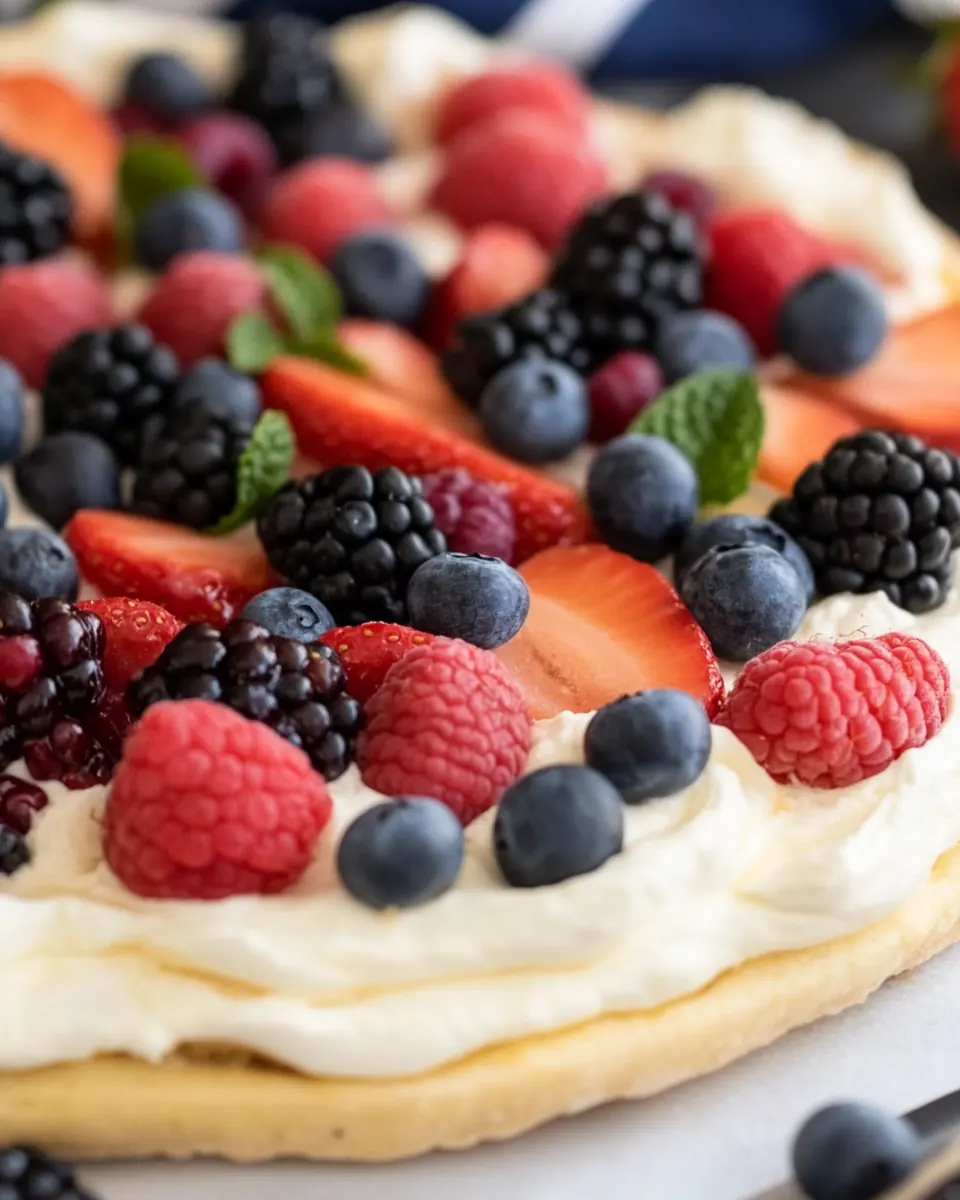
I like to think of tips as small time savers and flavor enhancers that elevate a simple dessert into something memorable. Below are practical pointers based on what has worked for me over many batches, from tool choices to presentation notes. Use them as a checklist the first few times, then adapt to your style.
- Room Temperature Matters Allow the cream cheese to soften fully to avoid lumps and achieve a silkier, more spreadable filling.
- Seal Seams Well Press the crescent dough seams together firmly to create a uniform crust that bakes evenly and supports the topping.
- Mix Fruit Textures Combine berries with firmer slices like kiwi or pineapple so the topping retains structure and visual contrast.
- Use Parchment Lining your pan with parchment helps with cleanup and prevents sticking, keeping the crust intact when you lift or slice.
- Glaze for Shine Brush a thin layer of warmed apricot jam or honey thinned with water over the fruit right before serving to add sheen and hold fruit in place.
How to Enjoy Easy Fruit Pizza Recipe
This dessert shines in relaxed, social settings where people can help themselves to slices, and it adapts well to many occasions. Consider the following serving approaches and storage notes to present it at its best.
- Casual Potlucks Serve the pizza in square slices on a platter so guests can grab a piece easily between conversations.
- Brunch Spread Pair with coffee and light pastries, and offer small plates and forks so the creamy filling is easy to enjoy.
- Summer Gatherings Choose local, ripe fruit to highlight peak flavor, and keep the pizza chilled until serving to preserve texture.
- Kids Parties Make mini rounds or let children decorate their own for a hands on activity that doubles as dessert.
- Storage Tips Cover and refrigerate for up to 2 days, but add the fruit late if you need more shelf life to avoid soggy crust.
FAQ
Conclusion
This Easy Fruit Pizza Recipe stands out because it balances a tender, golden crust with a silky cream cheese layer and a vibrant selection of fresh fruit, creating a dessert that is both visually striking and wonderfully approachable. Give it a try the next time you need a crowd pleasing treat, and you will likely find it becomes a go to for gatherings and casual celebrations. It is forgiving, adaptable, and always looks impressive on the table, so have fun with the toppings and enjoy sharing it with friends and family.
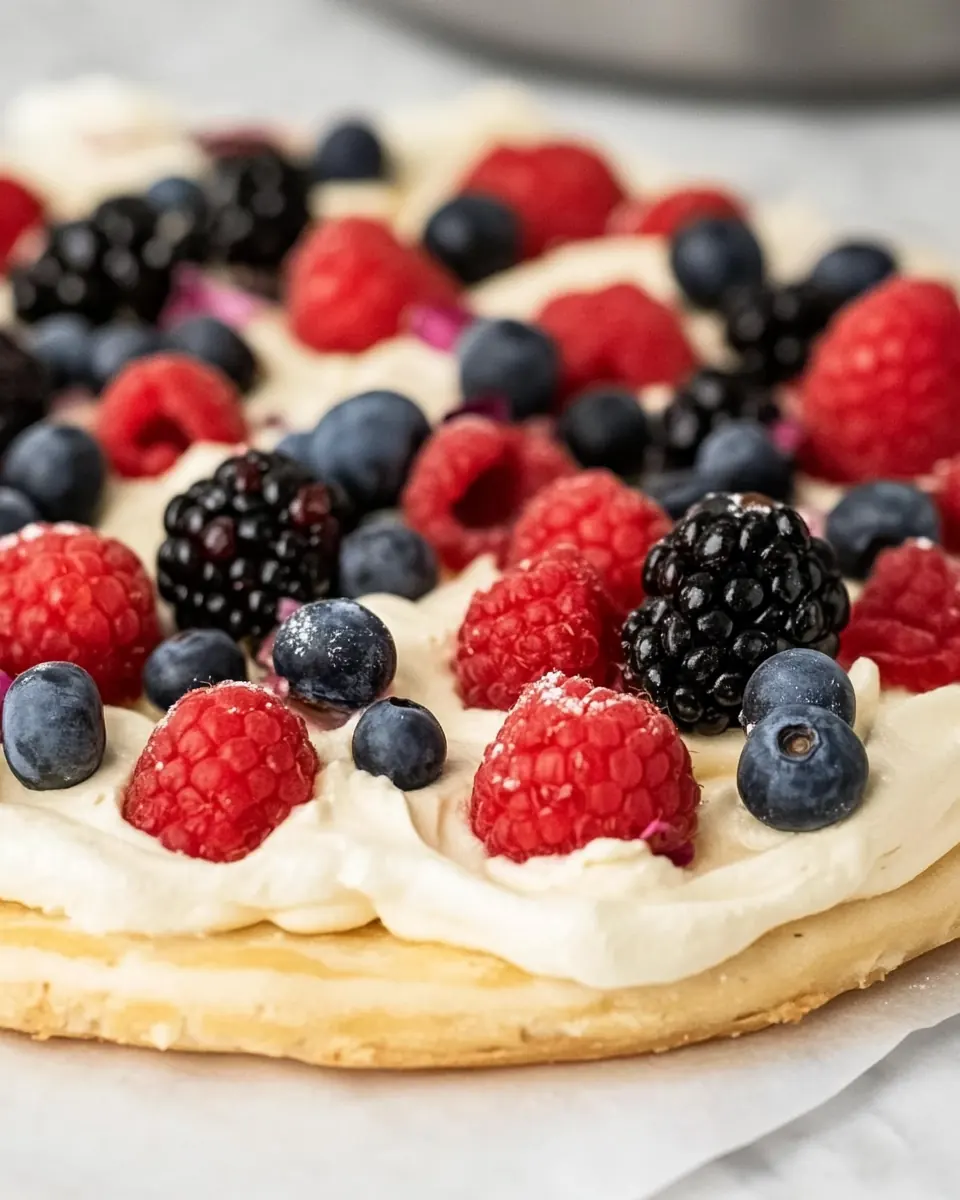
Easy Fruit Pizza Recipe
Ingredients
Equipment
Method
- Preheat oven to 375 degrees F.: Warmth in the kitchen is immediately comforting, and as the oven rises to 375 degrees F you will notice the air shifting to a gentle, dry heat that will help the crust bake evenly. The reason for this exact temperature is to allow the crescent dough to puff and develop a golden surface without burning the edges. A common mistake is placing the pan too low, which can brown the bottom too quickly, so position the rack in the center. If your oven runs hot, consider using an oven thermometer for accuracy. Expect a faint yeasty aroma as the oven stabilizes, and it is normal to hear a low hum from the heating element.
- Unroll the crescent rolls and press into a 10 x 15-inch pan (or place on a parchment paper-lined cookie sheet), making sure to seal any seams. Bake until puffed and golden brown, 11 to 13 minutes. Place the pan on a wire rack to cool completely.: As you unroll the dough, you will feel its soft, slightly tacky texture under your fingers. Pressing it into a 10 x 15 inch pan or onto a parchment lined sheet gives you an even canvas, and sealing seams prevents gaps that could puff unevenly. The tactile feedback of smoothing the dough helps you spot thin or thick spots to adjust. One why this matters is because an even crust bakes uniformly, producing a consistent crunch and color. A frequent slip up is leaving seams unsealed, which causes awkward holes where filling can seep through, so take a moment to press seams firmly. The dough will relax and slightly spring back after pressing, which is normal, and you should notice a gentle sheen on its surface.
- Using an electric mixer, beat the cream cheese at medium speed until soft and smooth, about 2 minutes. Gradually add the sugar and beat until completely combined, then mix in the vanilla extract. Using an offset spatula, spread the cream cheese mixture over the cooled crust.: During baking you will watch the dough transform, puffing gently and shifting from pale to a warm golden brown. The aroma becomes buttery and faintly sweet, filling the kitchen with welcoming notes. The timing of 11 to 13 minutes lets the interior set without overbrowning the edges. This stage matters because under baked dough will be doughy and unable to support the filling, while overbaked dough becomes too crisp and can crumble. A common oversight is opening the oven too often, which drops the temperature and can affect even coloring, so try to resist peeking. When it is done you will see even color and a slight firmness when tapped.
- Top with assorted fruit of your choice. Serve immediately, or cover and refrigerate for up to 2 days.: Cooling on a wire rack lets air circulate beneath the crust so steam dissipates, preventing a soggy underside. The sound is quiet as the pan settles, and the cooled crust will feel firm to the touch. This pause is important because spreading a warm filling will cause melting and slipping of toppings, compromising texture. Many cooks try to rush this step, leading to a soft filling and shifted fruit, so patience pays off. When the pan is cool, the crust will support the filling without bending.
- Using an electric mixer, beat the cream cheese at medium speed until soft and smooth, about 2 minutes.: The texture shift is dramatic, from stiff and slightly lumpy to luxuriously smooth. Beating at medium speed creates a light, spreadable consistency, and the mixer provides a consistent rhythm that eliminates small lumps. This matters because a smooth filling looks professional and spreads evenly. A typical error is using cold cream cheese , which resists smoothing and yields a bumpy result, so always allow it to come to room temperature. You should hear a steady, even motor hum and see the mass loosen into a creamy ribbon.
- Gradually add the sugar and beat until completely combined, then mix in the vanilla extract.: Adding the sugar slowly helps it dissolve into the cream, avoiding a gritty texture. As you mix, the filling will lighten slightly in color and become silkier, and the small addition of vanilla extract brightens the flavor. The technique matters because well incorporated sugar ensures a smooth mouthfeel and even sweetness across every bite. One mistake is dumping the sugar all at once, which can scatter and leave undissolved granules. When combined properly, the filling should taste balanced, not toothachingly sweet, with a subtle aromatic lift from the vanilla extract .
- Using an offset spatula, spread the cream cheese mixture over the cooled crust.: Spreading with an offset spatula gives you smooth control and clean edges. The filling should glide across the surface, leaving a satiny sheen without tearing the crust. This step matters because an even layer distributes flavor and provides a stable bed for the fruit . A common misstep is applying too thick a layer, which can overwhelm the crust and make the dessert heavy, so aim for a balanced coverage. Listen for quiet scraping sounds as the spatula levels the filling, and stop when the surface looks glossy and even.
- Top with assorted fruit of your choice.: Arranging the fruit is the creative part, and you will notice a burst of color and fresh fragrance as slices and berries go down. The contrast of textures is immediate, with tender fruit resting on creamy filling and supported by a crisp crust. Placing fruit close together creates a mosaic, while spacing pieces gives a lighter presentation; either choice tastes wonderful. One pitfall is adding wet, very juicy fruit directly after slicing, which can release too much juice and make the filling runny, so pat certain fruits dry if needed. The visual payoff is high, and the finished surface should gleam and look inviting.
- Serve immediately, or cover and refrigerate for up to 2 days.: When you serve right away, the crust remains at its peak texture and the fruit is freshest. If you refrigerate, cover the pizza to protect it from absorbing odors, and plan to eat within 2 days to avoid sogginess. Cooling changes the mouthfeel slightly, with the filling becoming firmer and the crust softening a little, which is fine for short storage. A common error is leaving it uncovered, which dries the fruit and dulls the filling, so always cover tightly. When ready to serve, bring to a cool room temperature for the best balance between firmness and flavor.
Notes
- Room Temperature Matters Allow the cream cheese to soften fully to avoid lumps and achieve a silkier, more spreadable filling.
- Seal Seams Well Press the crescent dough seams together firmly to create a uniform crust that bakes evenly and supports the topping.
- Mix Fruit Textures Combine berries with firmer slices like kiwi or pineapple so the topping retains structure and visual contrast.
- Use Parchment Lining your pan with parchment helps with cleanup and prevents sticking, keeping the crust intact when you lift or slice.
- Glaze for Shine Brush a thin layer of warmed apricot jam or honey thinned with water over the fruit right before serving to add sheen and hold fruit in place.