Basil Tahini Pasta with Mushrooms and Burst Tomatoes
Basil Tahini Pasta with Mushrooms and Burst Tomatoes is one of those dinners I turn to when the week has been full and I want something that feels special without a lot of fuss. The first time I made this dish I was coming home from a long day, and the fragrance of basil and garlic in the food processor felt like an instant pick me up. It was comfortingly simple, yet every bite had layers of texture and flavor that kept me going back for more.
I remember standing at the stove, watching the cherry and grape tomatoes go from glossy to gently split and molten, coaxing them with the back of a spoon until they surrendered their juices. The skillet sizzled and popped, and the kitchen filled with a sweet, roasted scent that paired perfectly with the herbaceous, nutty sauce. When I tossed the shaped pasta into the warm pan with the creamy basil tahini, the whole dish came together like an old friend greeting you at the door.
What I love most is how flexible it is. You can keep it deliberately rustic, serving the burst tomatoes on top so everyone has a little concentrated sweetness, or fold them into the pasta for an all-in-one bowl of silky, saucy goodness. The mushrooms add a meaty chew, while the tahini gives a rich, savory backbone that is both comforting and a little unexpected. This is one of those recipes I’ve made dozens of times, tweaking small details each time yet never tiring of the result.
Recipe Snapshot
55 mins
20 mins
35 mins
Medium
450 kcal
Italian
Vegan, Gluten-Free
Dinner
Food Processor
Why We Love This Basil Tahini Pasta with Mushrooms and Burst Tomatoes
It balances creamy and bright
I adore how Basil Tahini Pasta with Mushrooms and Burst Tomatoes brings together the rich, almost savory creaminess of tahini and the bright acidity of lemon juice. The contrast creates a harmonious mouthfeel where the sauce clings to every twist of pasta, making each forkful sing. When I taste it, the tahini calms the acidity while still letting the lemon and tomatoes shine.
The texture game is on point
One of the reasons I keep returning to this recipe is texture, I love the chew of the shaped pasta, the tender bite of the cremini mushrooms, and the burst of syrupy tomato pockets. The result is dynamic, every mouthful slightly different and very satisfying. I find this keeps people engaged with the meal, rather than zoning out after the first bite.
Easy to make weeknight special
There is an effortless quality to the recipe that makes it a go to for easy weeknight dinner plans. The sauce comes together in the food processor while the pasta is boiling, and the skillet work for tomatoes and mushrooms feels leisurely, not hectic. I can get dinner on the table and still have time to breathe, set the table, or sip a cup of tea before serving.
Flavor layering that feels elevated
I appreciate how simple techniques, like letting the mushrooms sit in the pan until they form a golden exterior, builds real depth. The gentle browning of garlic in the tahini and the slight charring on the tomatoes adds complexity that belies the short ingredient list. It’s the kind of cooking that rewards a little patience with big payoff in flavor.
Versatility for dietary preferences
Finally, I love that this dish adapts to different pastas and add ins. Whether I reach for a legume based pasta or a classic semolina one, the recipe still comes together beautifully. That adaptability makes it a reliable choice when cooking for friends or family with varied tastes.
Ingredient List for Basil Tahini Pasta with Mushrooms and Burst Tomatoes
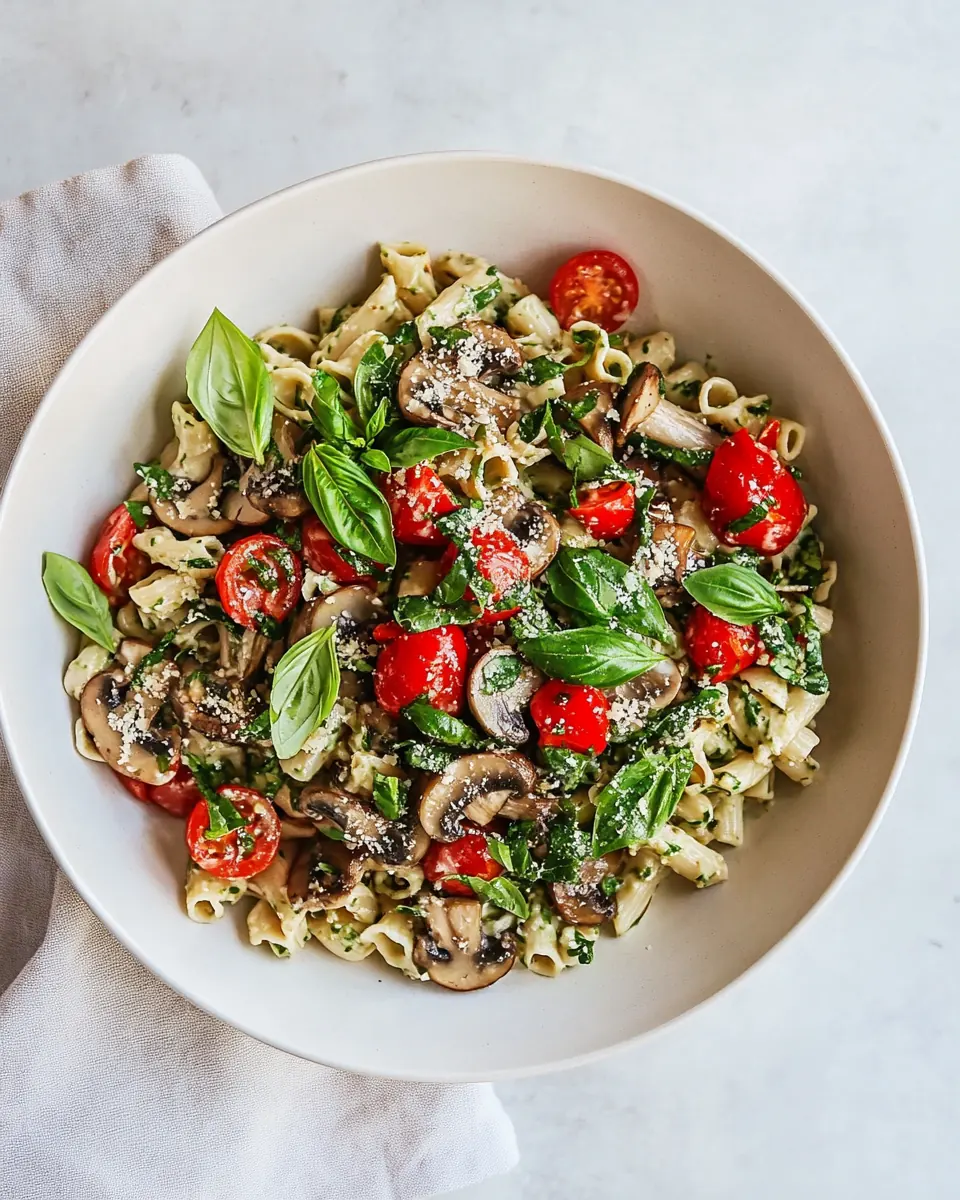
These ingredients form a concise but powerful cast. The sauce is anchored by tahini and brightened by lemon juice, while basil leaves provide an herbal lift. The tomatoes offer bursts of sweet acidity and the cremini mushrooms contribute earthy body, all tied together by the shaped pasta. I aim for harmony between richness and brightness so each component has its moment.
- 1/2 cup tahini: Provide a creamy, nutty base for the sauce and bind the lemon, garlic, and basil into a smooth, rich dressing that coats the pasta beautifully; whisk with cold water to reach a silky consistency.
- 2 teaspoons olive oil: Add a subtle fruity note and help sauté vegetables; use for quick frying of mushrooms and to finish the pasta with a glossy sheen.
- 3 cloves of garlic: Impart pungent, aromatic depth and bright savory notes when minced or crushed into the sauce; lightly sauté with olive oil for mellowed flavor before mixing with tahini.
- 3 tablespoons lemon juice: Deliver bright acidity to cut through the tahini’s richness and brighten the overall flavor; adjust amount to balance creaminess and tang.
- 1 cup basil leaves, packed (plus extra for garnish): Contribute fresh, herbaceous flavor and vibrant color to the sauce when blended with tahini; reserve some leaves for garnish to enhance aroma.
- sea salt and ground black pepper, to taste: Season and enhance all flavors in the dish; add gradually while tasting to achieve the desired savory balance against the tahini and lemon.
- 1/2 cup cold water, plus extra if necessary: Thin the tahini to a pourable sauce and help achieve a smooth, silky texture; add sparingly until the desired consistency is reached.
- 3/4 lb (340 grams) shaped pasta of choice (penne and rotini are great): Provide the primary carbohydrate and texture element that carries the sauce; choose a shaped pasta to trap the creamy tahini between ridges and twists.
- 4 teaspoons olive oil, divided: Help cook vegetables and add richness to the pan when sautéing; divide use between cooking mushrooms and finishing the tomatoes for flavor layering.
- 2 cups cherry/grape tomatoes: Offer bursts of juicy sweetness and slight acidity that contrast the creamy sauce; blister briefly to release juices and intensify natural sugars.
- 3/4 lb (340 grams) cremini mushrooms, sliced: Add a meaty, earthy texture and deepen savory umami when sliced and sautéed until golden-brown; absorb flavors from oil and seasonings.
- red pepper flakes, to taste: Introduce a touch of heat and warming spice that can be sprinkled to taste; use sparingly to complement the basil and tahini without overwhelming them.
Directions for Basil Tahini Pasta with Mushrooms and Burst Tomatoes
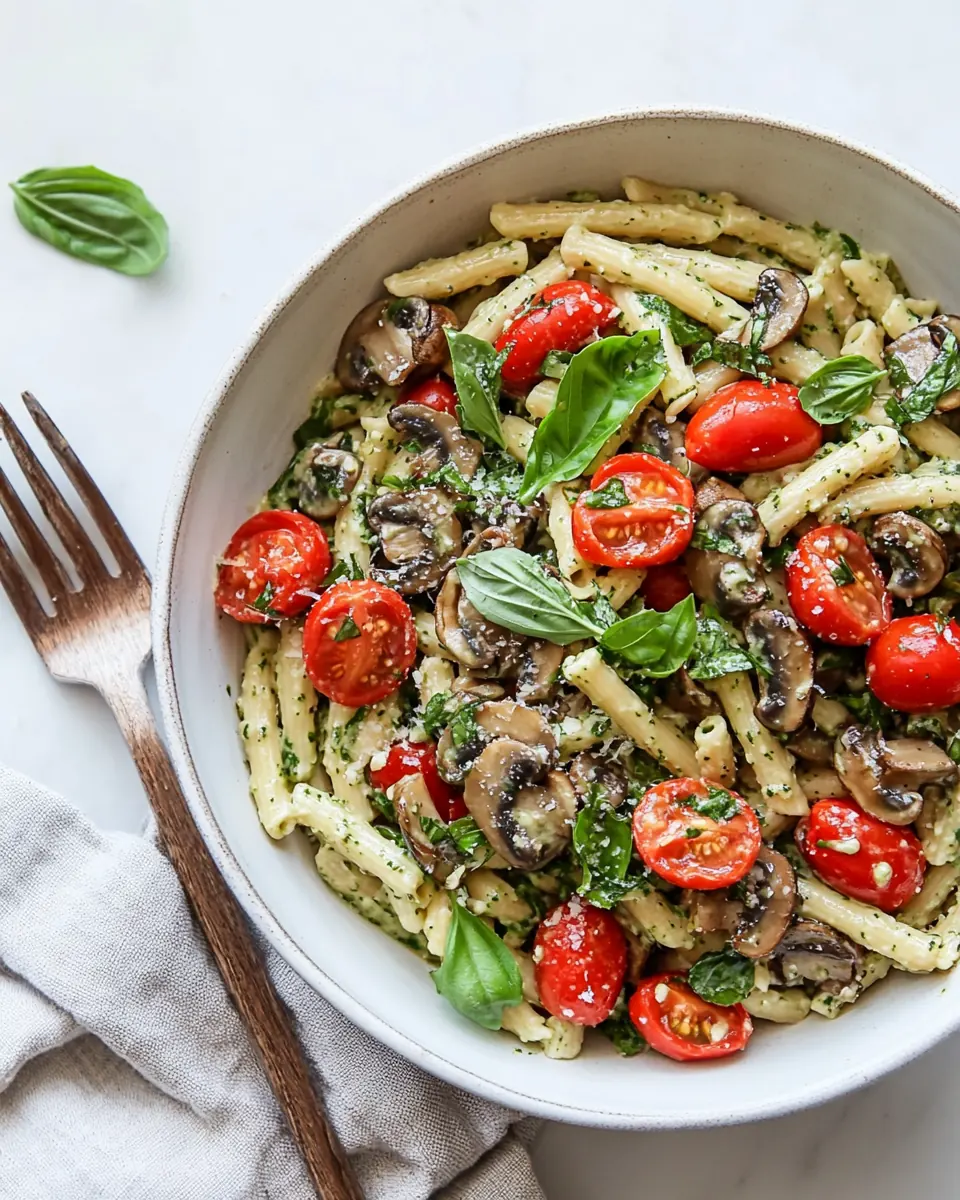
These directions guide you through a few straightforward components that, when combined, make a standout bowl of pasta. Work steadily and pay attention to sensory cues like aroma, color, and texture. The following steps will help you manage timing so everything comes together hot and harmonious.
- Make the basil tahini: in a food processor, combine the tahini, olive oil, garlic, lemon juice, basil, salt and pepper. Pulse the machine until the basil is finely chopped and incorporated. With the motor running, drizzle the cold water into the feed tube until you have a creamy but still loose consistency, similar to table cream. Add more water if necessary and check the basil tahini for seasoning. Adjust and set aside.: in a food processor, combine the tahini, olive oil, garlic, lemon juice, basil, salt and pepper. : The moment you pulse the tahini , lemon juice , and basil together, a bright green, herbaceous scent rises and tells you the sauce is coming alive. Listen for the processor motor’s steady hum, and watch as the mixture shifts from pasty to more unified. I keep a wooden spoon nearby so I can scrape down the bowl once or twice, ensuring even blending. One common mistake is adding too much water at once, which makes the sauce too thin; add the cold water slowly while the machine runs to control texture and achieve a creamy, table cream consistency.
- Cook the pasta according to package directions. Reserve 1 cup of the salted and starchy cooking water. Drain the pasta and set aside.: As the basil breaks down, the fragrance intensifies and the color deepens to a vibrant shade. The visual cue to stop pulsing is when you no longer see whole leaves and the mixture looks smooth but still has body. If you overprocess, the sauce can warm slightly and lose some vibrancy, so pulse in short bursts. A typical pitfall here is rushing and creating a watery emulsion; patience with short pulses prevents a diluted sauce.
- Heat 2 teaspoons of the olive oil in a large, deep skillet (or braiser) over medium heat. Add the tomatoes to the skillet and stir. Keep stirring the tomatoes until they are lightly browned, glistening, and starting to burst. You will have to use the back of your spoon to get this process going. I find this takes a good 8-10 minutes total. Scrape the burst tomatoes out into a bowl and give the skillet a good wipe.: When you add the cold water slowly, the tahini loosens and becomes glossy, silky, and pourable. Keep an eye on texture, stopping when the sauce coats a spoon lightly and flows slowly. The temperature matters, colder water keeps the emulsion stable. Avoid adding hot liquid here, as heat can change the mouthfeel and slightly separate the emulsion.
- Return the skillet to the heat with the remaining olive oil. Add the mushrooms to the skillet and let them sit for a full 2 minutes. Then, stir the mushrooms and season them with pepper. Let them sit another full minute. Then start stirring them again. They should be lightly browned and glistening. Season the mushrooms with salt. Continue letting them cook until evenly browned, soft, and glistening.: Taste for salt , black pepper , and acid from the lemon juice , adjusting incrementally. The tahini will mellow with a touch more salt , and a small squeeze of additional lemon juice brightens it. Overseasoning is a frequent error, so correct in small steps and remember you will add reserved pasta water later which carries salt too.
- Add the pasta to the skillet along with the basil tahini. Stir everything up until evenly combined and warmed through. Season the pasta with salt and pepper and stir. If the pasta seems a little dry, add some of the reserved pasta water until you reach your desired consistency. Transfer the pasta to your serving vessel and scatter the burst tomatoes on top along with the extra basil and red pepper flakes. Serve and enjoy immediately.: Once balanced, transfer the basil tahini to a bowl and set it aside so the flavors meld slightly while you work on the tomatoes and mushrooms . You should notice a harmonious aroma of sesame and herb. If you store it too hot near the stove, the color can fade and the sauce might thin prematurely, so keep it at room temperature away from direct heat.
- Cook the pasta according to package directions.: While the sauce is resting, bring a large pot of well salted water to a rolling boil and add the shaped pasta . The sound of the pot moving and gentle boil signals the right heat level. Stir a few times early to prevent sticking, and cook until al dente so the pasta maintains pleasant bite against the creamy tahini. Overcooking is common, so test a piece a minute or two before the package recommends.
- Reserve 1 cup of the salted and starchy cooking water.: Before you drain, scoop out a cup of the pasta water. That cloudy, salted liquid is gold for adjusting the sauce viscosity and seasoning later. Its starch helps the tahini cling to the pasta . A mistake is forgetting to reserve this water, which can make the final dish dry or harder to blend smoothly.
- Drain the pasta and set aside.: Drain the pasta promptly and set it aside in the colander or back in the pot off heat, keeping it from overcooking. If it sits too long, it can absorb liquid and become gummy, so plan to toss it into the skillet shortly after draining. Rinsing is a misstep here because it removes the starch that helps sauce adhere.
- Heat 2 teaspoons of the olive oil in a large, deep skillet (or braiser) over medium heat.: The oil should shimmer but not smoke, that sheen tells you the pan is ready. The sound is a faint sizzle when you first add an ingredient. Using the correct heat level ensures the tomatoes blister instead of simply steaming. If the oil smokes, reduce the heat and wipe the pan if necessary to avoid burnt flavors.
- Add the tomatoes to the skillet and stir.: As you stir, the tomatoes will soften and start to glisten, releasing sweet juices. Use the back of your spoon to press a few against the pan to encourage them to burst. You will smell a concentrated tomato perfume as sugars caramelize. Stirring too aggressively can break them down into an indistinct purée, so be gentle and patient.
- Keep stirring the tomatoes until they are lightly browned, glistening, and starting to burst.: This transformation, which can take about 8 to 10 minutes, creates pockets of concentrated sweetness and a hint of char. Visual cues include a mix of blistered skins and glossy, saucy juice pooling in the pan. A typical error is turning up the heat to rush browning, which can char the skins too harshly and create bitterness.
- You will have to use the back of your spoon to get this process going.: Gentle pressure helps coax the tomatoes to release their insides and caramelize. You want some intact tomatoes alongside some that have yielded their juices for contrast. Avoid smashing everything into oblivion, that spoils texture and the distinct bursts you are aiming for.
- Scrape the burst tomatoes out into a bowl and give the skillet a good wipe.: Removing the tomatoes preserves their concentrated flavor and clears the pan for the mushrooms, preventing flavor cross contamination that could lead to steaming rather than browning. Wiping the skillet also removes stuck bits that might burn. Leaving them can cause bitterness when you cook the mushrooms.
- Return the skillet to the heat with the remaining olive oil.: Add the second portion of olive oil so the pan develops a fresh surface for browning the mushrooms . The oil helps achieve even color and prevents sticking. If you add mushrooms to a cold pan, they will release moisture and steam instead of developing a caramelized exterior.
- Add the mushrooms to the skillet and let them sit for a full 2 minutes.: This stillness is crucial for forming golden brown surfaces. You will hear a low sizzle turn into a steady sear and begin to smell a toasty, nutty aroma as the moisture evaporates. Resist the urge to stir early, since movement interrupts browning and leads to limp, gray mushrooms.
- Then, stir the mushrooms and season them with pepper.: After the initial sear, a gentle stir redistributes heat and lets the mushrooms brown more evenly. Adding black pepper here helps it toast slightly and release aroma. A frequent mistake is overcrowding the pan with too many mushrooms, which causes steaming rather than browning.
- Let them sit another full minute.: This second rest promotes more even caramelization and deepens flavor. Watch the edges darken and the mushrooms take on a translucent quality. When they begin to glisten, you know the sugars are concentrating nicely. If your mushrooms are still watery after sitting, the pan may be too cool.
- Then start stirring them again.: Stirring now helps build an even golden color across slices and integrates any fond left on the pan into the mushrooms’ surface. The aroma will be rich and earthy. Avoid excessive stirring which prevents the crisp edges you want.
- They should be lightly browned and glistening.: The ideal mushroom has a caramelized edge and a plush center, with an audible faint sizzle as it moves in the pan. This texture provides contrast to the creamy tahini and bright tomatoes. Undercooking leaves them raw and rubbery, overcooking makes them dry and shriveled.
- Season the mushrooms with salt.: Add salt at this stage to draw out and concentrate flavors, enhancing their natural umami. The seasoning should be balanced so it does not pull moisture excessively. A common misstep is over salting, which can make the final pasta taste flat once combined with the reserved starchy water.
- Continue letting them cook until evenly browned, soft, and glistening.: Cook a few minutes more until the mushrooms are uniformly caramelized and tender, releasing a roasted aroma. Their glossy surface indicates properly rendered juices and an appealing mouthfeel. If they begin to blacken intensely, lower the heat to prevent burning, which creates a bitter note.
- Add the pasta to the skillet along with the basil tahini.: At this point the sensory orchestra is full the pan smells of toasted mushrooms and the air is perfumed with basil from the tahini. The hot pasta loosens the sauce and helps it coat every piece. Do not pour the sauce in from too high up as you want even coverage without splatter.
- Stir everything up until evenly combined and warmed through.: Use tongs or a large spoon to fold the components so the tahini warms and clings to the pasta , creating a silky coating. The sound is a soft, cohesive swish as ingredients marry. If the sauce looks too thick, add small splashes of the reserved pasta water to achieve a satin finish.
- Season the pasta with salt and pepper and stir.: Final seasoning lets you fine tune the balance after tasting the combined flavors. Adjust in small increments since the reserved pasta water may carry salt. Over seasoning at this late stage is hard to reverse.
- If the pasta seems a little dry, add some of the reserved pasta water until you reach your desired consistency.: The starchy water binds the tahini and creates a glossy emulsion, transforming the dish from clumpy to cohesive. Add a tablespoon at a time until you reach a silky, clingy sauce. A common error is pouring in too much water, which dilutes the flavors and flattens the sauce.
- Transfer the pasta to your serving vessel and scatter the burst tomatoes on top along with the extra basil and red pepper flakes.: Presenting the burst tomatoes on top gives striking contrast and a hit of concentrated sweetness in each bite. Sprinkle reserved basil leaves for fresh aroma and red pepper flakes for heat. If you mix everything too aggressively, the tomatoes may break down and lose their delightful pockets of juice.
- Serve and enjoy immediately.: The best moment is when steam rises from the bowl and the first forkful brings creamy tahini, tender mushroom , and a pops of tomato sweetness together. Serve hot so the textures and flavors are at their peak, and savor the balance you created. Letting it sit too long makes the tahini set and the pasta lose immediacy.
How to Switch It Up
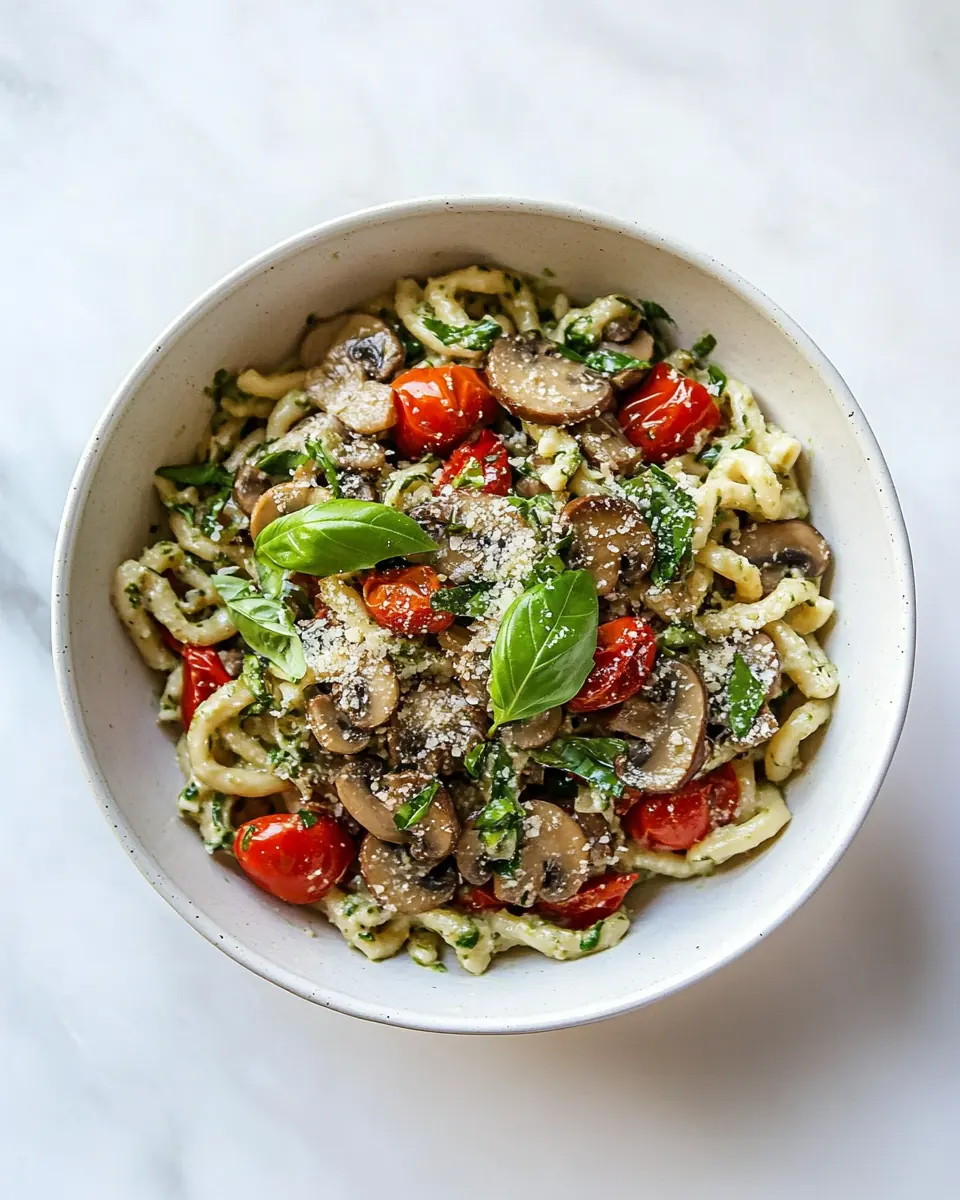
This section gives practical ideas to vary the recipe without losing its soul. Small swaps and timing tweaks can change texture and flavor while staying true to the core concept of creamy basil tahini paired with sautéed mushrooms and burst tomatoes.
- Use legume based pasta: Swap in a red lentil or chickpea pasta to increase protein and create a nuttier, firmer bite. These pastas cook differently, so watch timing closely to avoid overcooking.
- Add chopped greens at the end: Toss in baby spinach or other tender greens right at the end of mushroom cooking to wilt them briefly, which adds freshness and color without changing the sauce.
- Boost herb intensity: Stir in extra chopped basil just before serving for a brighter, more herbal finish and vibrant color that complements the tahini.
- Adjust heat level: Increase red pepper flakes to add warmth, or omit them for a milder profile, tailoring the dish to your listeners and guests.
- Texture play: Finish with a drizzle of high quality olive oil for gloss and mouthfeel, or fold in a spoonful of reserved pasta water to emphasize silkiness over shine.
- Tomato presentation: Serve some burst tomatoes on top for bright pops and keep the rest folded in to distribute sweetness throughout the dish.
What to Serve Alongside Basil Tahini Pasta with Mushrooms and Burst Tomatoes
This pasta is flexible and pairs well with light sides or simple additions to make a full meal. Think seasonal salad or warm breads for sopping the silky tahini, and consider occasions from casual weeknights to relaxed dinner gatherings.
- Light green salad: A crisp salad with lemon vinaigrette refreshes the palate and offers textural contrast to the creamy pasta. Try baby greens and a sprinkle of sea salt.
- Toasted flatbread or pita: Warm, thin breads are wonderful for scooping up any leftover tahini sauce and the burst tomato juices, making every last bit enjoyable.
- Roasted vegetables: Serve seasonal roasted vegetables on the side for heartier meals, their caramelized flavors complement the nutty tahini and savory mushrooms.
- Occasions: This dish works well for casual dinners, summer evenings when basil is abundant, and gatherings where you want an easy weeknight dinner that feels elevated.
- Storage tips: Store leftovers in an airtight container for up to two days. Reheat gently with a splash of water to revive the sauce, stirring over low heat so the tahini loosens and the pasta warms evenly.
- Seasonal pairings: In summer, serve with extra fresh basil and ripe tomatoes; in cooler months, consider heartier pastas and a bigger serving of sautéed mushrooms for comfort.
FAQ
Conclusion
This Basil Tahini Pasta with Mushrooms and Burst Tomatoes stands out for its balance of creamy tahini, bright lemon and basil, and the sweet pop of blistered tomatoes. It manages to feel both comforting and intentionally composed, a dish you can make any night yet serve with pride. I encourage you to try it exactly as written the first time, paying attention to the sensory cues in the skillet and the silky finish created by the reserved pasta water. Once you taste how the textures and flavors interact, you’ll understand why it’s become a favorite in my rotation.
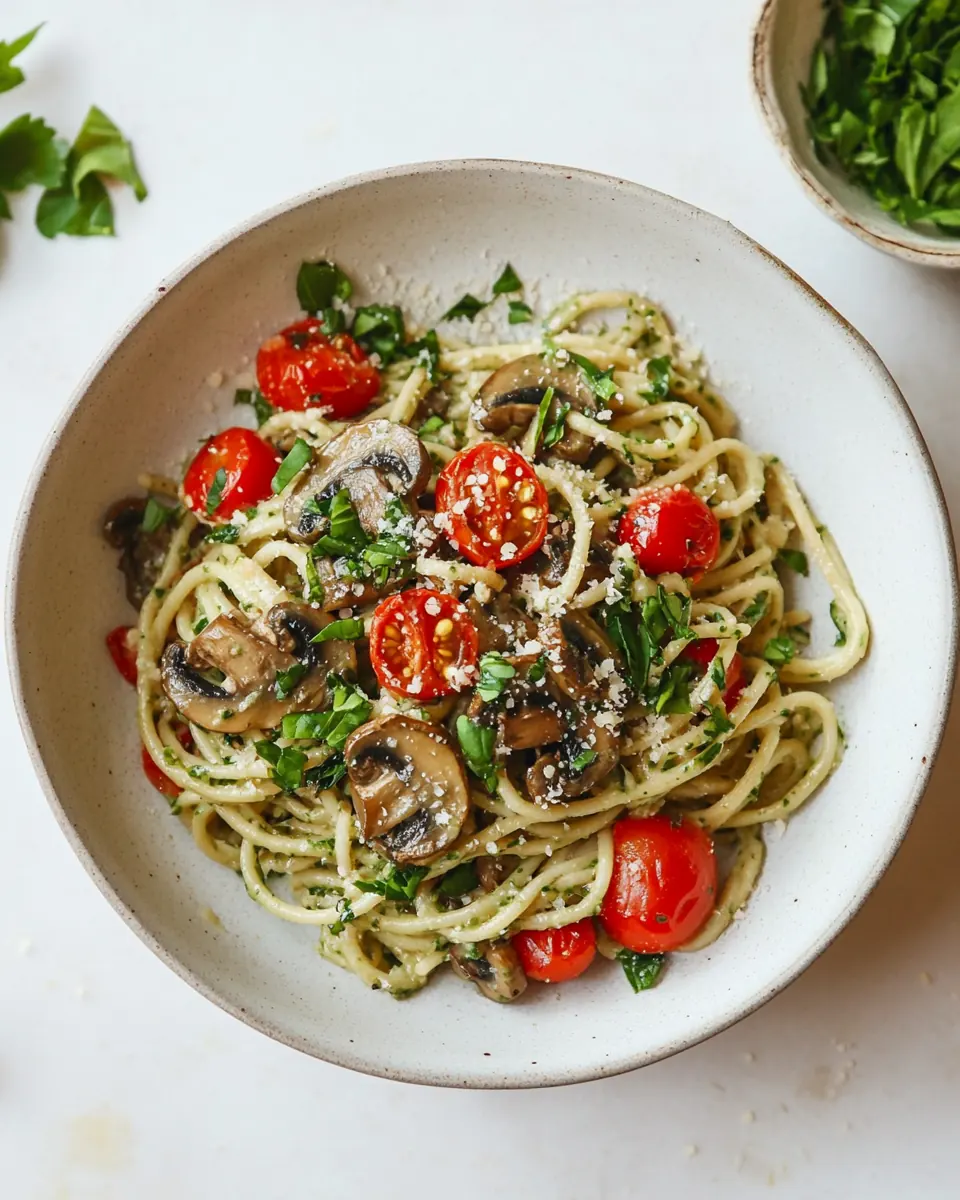
Basil Tahini Pasta with Mushrooms and Burst Tomatoes
Ingredients
Equipment
Method
- Make the basil tahini: in a food processor, combine the tahini, olive oil, garlic, lemon juice, basil, salt and pepper. Pulse the machine until the basil is finely chopped and incorporated. With the motor running, drizzle the cold water into the feed tube until you have a creamy but still loose consistency, similar to table cream. Add more water if necessary and check the basil tahini for seasoning. Adjust and set aside.: in a food processor, combine the tahini, olive oil, garlic, lemon juice, basil, salt and pepper. : The moment you pulse the tahini , lemon juice , and basil together, a bright green, herbaceous scent rises and tells you the sauce is coming alive. Listen for the processor motor’s steady hum, and watch as the mixture shifts from pasty to more unified. I keep a wooden spoon nearby so I can scrape down the bowl once or twice, ensuring even blending. One common mistake is adding too much water at once, which makes the sauce too thin; add the cold water slowly while the machine runs to control texture and achieve a creamy, table cream consistency.
- Cook the pasta according to package directions. Reserve 1 cup of the salted and starchy cooking water. Drain the pasta and set aside.: As the basil breaks down, the fragrance intensifies and the color deepens to a vibrant shade. The visual cue to stop pulsing is when you no longer see whole leaves and the mixture looks smooth but still has body. If you overprocess, the sauce can warm slightly and lose some vibrancy, so pulse in short bursts. A typical pitfall here is rushing and creating a watery emulsion; patience with short pulses prevents a diluted sauce.
- Heat 2 teaspoons of the olive oil in a large, deep skillet (or braiser) over medium heat. Add the tomatoes to the skillet and stir. Keep stirring the tomatoes until they are lightly browned, glistening, and starting to burst. You will have to use the back of your spoon to get this process going. I find this takes a good 8-10 minutes total. Scrape the burst tomatoes out into a bowl and give the skillet a good wipe.: When you add the cold water slowly, the tahini loosens and becomes glossy, silky, and pourable. Keep an eye on texture, stopping when the sauce coats a spoon lightly and flows slowly. The temperature matters, colder water keeps the emulsion stable. Avoid adding hot liquid here, as heat can change the mouthfeel and slightly separate the emulsion.
- Return the skillet to the heat with the remaining olive oil. Add the mushrooms to the skillet and let them sit for a full 2 minutes. Then, stir the mushrooms and season them with pepper. Let them sit another full minute. Then start stirring them again. They should be lightly browned and glistening. Season the mushrooms with salt. Continue letting them cook until evenly browned, soft, and glistening.: Taste for salt , black pepper , and acid from the lemon juice , adjusting incrementally. The tahini will mellow with a touch more salt , and a small squeeze of additional lemon juice brightens it. Overseasoning is a frequent error, so correct in small steps and remember you will add reserved pasta water later which carries salt too.
- Add the pasta to the skillet along with the basil tahini. Stir everything up until evenly combined and warmed through. Season the pasta with salt and pepper and stir. If the pasta seems a little dry, add some of the reserved pasta water until you reach your desired consistency. Transfer the pasta to your serving vessel and scatter the burst tomatoes on top along with the extra basil and red pepper flakes. Serve and enjoy immediately.: Once balanced, transfer the basil tahini to a bowl and set it aside so the flavors meld slightly while you work on the tomatoes and mushrooms . You should notice a harmonious aroma of sesame and herb. If you store it too hot near the stove, the color can fade and the sauce might thin prematurely, so keep it at room temperature away from direct heat.
- Cook the pasta according to package directions.: While the sauce is resting, bring a large pot of well salted water to a rolling boil and add the shaped pasta . The sound of the pot moving and gentle boil signals the right heat level. Stir a few times early to prevent sticking, and cook until al dente so the pasta maintains pleasant bite against the creamy tahini. Overcooking is common, so test a piece a minute or two before the package recommends.
- Reserve 1 cup of the salted and starchy cooking water.: Before you drain, scoop out a cup of the pasta water. That cloudy, salted liquid is gold for adjusting the sauce viscosity and seasoning later. Its starch helps the tahini cling to the pasta . A mistake is forgetting to reserve this water, which can make the final dish dry or harder to blend smoothly.
- Drain the pasta and set aside.: Drain the pasta promptly and set it aside in the colander or back in the pot off heat, keeping it from overcooking. If it sits too long, it can absorb liquid and become gummy, so plan to toss it into the skillet shortly after draining. Rinsing is a misstep here because it removes the starch that helps sauce adhere.
- Heat 2 teaspoons of the olive oil in a large, deep skillet (or braiser) over medium heat.: The oil should shimmer but not smoke, that sheen tells you the pan is ready. The sound is a faint sizzle when you first add an ingredient. Using the correct heat level ensures the tomatoes blister instead of simply steaming. If the oil smokes, reduce the heat and wipe the pan if necessary to avoid burnt flavors.
- Add the tomatoes to the skillet and stir.: As you stir, the tomatoes will soften and start to glisten, releasing sweet juices. Use the back of your spoon to press a few against the pan to encourage them to burst. You will smell a concentrated tomato perfume as sugars caramelize. Stirring too aggressively can break them down into an indistinct purée, so be gentle and patient.
- Keep stirring the tomatoes until they are lightly browned, glistening, and starting to burst.: This transformation, which can take about 8 to 10 minutes, creates pockets of concentrated sweetness and a hint of char. Visual cues include a mix of blistered skins and glossy, saucy juice pooling in the pan. A typical error is turning up the heat to rush browning, which can char the skins too harshly and create bitterness.
- You will have to use the back of your spoon to get this process going.: Gentle pressure helps coax the tomatoes to release their insides and caramelize. You want some intact tomatoes alongside some that have yielded their juices for contrast. Avoid smashing everything into oblivion, that spoils texture and the distinct bursts you are aiming for.
- Scrape the burst tomatoes out into a bowl and give the skillet a good wipe.: Removing the tomatoes preserves their concentrated flavor and clears the pan for the mushrooms, preventing flavor cross contamination that could lead to steaming rather than browning. Wiping the skillet also removes stuck bits that might burn. Leaving them can cause bitterness when you cook the mushrooms.
- Return the skillet to the heat with the remaining olive oil.: Add the second portion of olive oil so the pan develops a fresh surface for browning the mushrooms . The oil helps achieve even color and prevents sticking. If you add mushrooms to a cold pan, they will release moisture and steam instead of developing a caramelized exterior.
- Add the mushrooms to the skillet and let them sit for a full 2 minutes.: This stillness is crucial for forming golden brown surfaces. You will hear a low sizzle turn into a steady sear and begin to smell a toasty, nutty aroma as the moisture evaporates. Resist the urge to stir early, since movement interrupts browning and leads to limp, gray mushrooms.
- Then, stir the mushrooms and season them with pepper.: After the initial sear, a gentle stir redistributes heat and lets the mushrooms brown more evenly. Adding black pepper here helps it toast slightly and release aroma. A frequent mistake is overcrowding the pan with too many mushrooms, which causes steaming rather than browning.
- Let them sit another full minute.: This second rest promotes more even caramelization and deepens flavor. Watch the edges darken and the mushrooms take on a translucent quality. When they begin to glisten, you know the sugars are concentrating nicely. If your mushrooms are still watery after sitting, the pan may be too cool.
- Then start stirring them again.: Stirring now helps build an even golden color across slices and integrates any fond left on the pan into the mushrooms’ surface. The aroma will be rich and earthy. Avoid excessive stirring which prevents the crisp edges you want.
- They should be lightly browned and glistening.: The ideal mushroom has a caramelized edge and a plush center, with an audible faint sizzle as it moves in the pan. This texture provides contrast to the creamy tahini and bright tomatoes. Undercooking leaves them raw and rubbery, overcooking makes them dry and shriveled.
- Season the mushrooms with salt.: Add salt at this stage to draw out and concentrate flavors, enhancing their natural umami. The seasoning should be balanced so it does not pull moisture excessively. A common misstep is over salting, which can make the final pasta taste flat once combined with the reserved starchy water.
- Continue letting them cook until evenly browned, soft, and glistening.: Cook a few minutes more until the mushrooms are uniformly caramelized and tender, releasing a roasted aroma. Their glossy surface indicates properly rendered juices and an appealing mouthfeel. If they begin to blacken intensely, lower the heat to prevent burning, which creates a bitter note.
- Add the pasta to the skillet along with the basil tahini.: At this point the sensory orchestra is full the pan smells of toasted mushrooms and the air is perfumed with basil from the tahini. The hot pasta loosens the sauce and helps it coat every piece. Do not pour the sauce in from too high up as you want even coverage without splatter.
- Stir everything up until evenly combined and warmed through.: Use tongs or a large spoon to fold the components so the tahini warms and clings to the pasta , creating a silky coating. The sound is a soft, cohesive swish as ingredients marry. If the sauce looks too thick, add small splashes of the reserved pasta water to achieve a satin finish.
- Season the pasta with salt and pepper and stir.: Final seasoning lets you fine tune the balance after tasting the combined flavors. Adjust in small increments since the reserved pasta water may carry salt. Over seasoning at this late stage is hard to reverse.
- If the pasta seems a little dry, add some of the reserved pasta water until you reach your desired consistency.: The starchy water binds the tahini and creates a glossy emulsion, transforming the dish from clumpy to cohesive. Add a tablespoon at a time until you reach a silky, clingy sauce. A common error is pouring in too much water, which dilutes the flavors and flattens the sauce.
- Transfer the pasta to your serving vessel and scatter the burst tomatoes on top along with the extra basil and red pepper flakes.: Presenting the burst tomatoes on top gives striking contrast and a hit of concentrated sweetness in each bite. Sprinkle reserved basil leaves for fresh aroma and red pepper flakes for heat. If you mix everything too aggressively, the tomatoes may break down and lose their delightful pockets of juice.
- Serve and enjoy immediately.: The best moment is when steam rises from the bowl and the first forkful brings creamy tahini, tender mushroom , and a pops of tomato sweetness together. Serve hot so the textures and flavors are at their peak, and savor the balance you created. Letting it sit too long makes the tahini set and the pasta lose immediacy.
Notes
- Use legume based pasta: Swap in a red lentil or chickpea pasta to increase protein and create a nuttier, firmer bite. These pastas cook differently, so watch timing closely to avoid overcooking.
- Add chopped greens at the end: Toss in baby spinach or other tender greens right at the end of mushroom cooking to wilt them briefly, which adds freshness and color without changing the sauce.
- Boost herb intensity: Stir in extra chopped basil just before serving for a brighter, more herbal finish and vibrant color that complements the tahini.
- Adjust heat level: Increase red pepper flakes to add warmth, or omit them for a milder profile, tailoring the dish to your listeners and guests.
- Texture play: Finish with a drizzle of high quality olive oil for gloss and mouthfeel, or fold in a spoonful of reserved pasta water to emphasize silkiness over shine.
- Tomato presentation: Serve some burst tomatoes on top for bright pops and keep the rest folded in to distribute sweetness throughout the dish.