4th of July Cupcakes
4th of July Cupcakes have been my go to festive treat every summer when the neighborhood fills with laughter and the grill smoke drifts down the block.
One year I brought a batch to a potluck and watched kids and adults alike light up as they found the layered red and blue surprise inside each liner. I remember standing by the picnic table, sticky with frosting, trading stories with a neighbor while someone else took photos of the display. The simplicity of a boxed cake mix combined with a small handful of ingredients made these cupcakes a stress free way to join the celebration, and the color layering always felt like a tiny culinary magic trick.
What I love most is how flexible they are. I often double the batch, recruit a helper to pipe batter, and we chat while squeezing three colors into the liners in rhythm. The texture turns out tender and soft, and when you top them with your favorite Frosting your favorite and a sprinkle of decorations, they become downright irresistible. Over the years I learned small tricks that keep the colors distinct and the crumb light, and those little details are what make these a repeat request at summer gatherings.
Recipe Snapshot
24 mins
10 mins
14 mins
Medium
200 kcal
American
Keto, Gluten-Free
Desserts
Mixing bowl, Electric mixer, Cupcake pan, Cupcake liners, Wire rack, Measuring cup, Disposable decorator bags
The Magic of This 4th of July Cupcakes
They are quick and crowd friendly
I adore how 4th of July Cupcakes come together fast, so you can show up with something homemade without spending all day in the kitchen. Using a box mix speeds things up, letting you focus on the fun parts like coloring the batter and decorating. For backyard parties or last minute invites, this convenience is everything, and I often hear guests say they can tell it was made with care even though it wasn’t complicated.
Colorful celebration with minimal fuss
I love the visual impact. A trio of bright batter colors squeezed into each liner creates a playful surprise inside each cupcake. That pop of color feels festive and intentional, and it makes the dessert table instantly more inviting. I also appreciate that small changes to the decoration let these work for a variety of events beyond the holiday.
Kid friendly and collaborative
I often recruit kids to pick the hues or press sprinkles on top. It turns baking into a shared activity, not a solo task. Kids feel proud piping batter and seeing the finished cupcakes, and that involvement makes the treat taste even better. For me, baking is as much about memory making as the finished product.
Texture and flavor you can depend on
Even though the base is a box mix, the combination of 4 large egg whites, 1 c. buttermilk, and 1/3 c. vegetable or canola oil elevates the crumb to something tender and moist. I like how the egg whites keep the color of the batter clearer, and the buttermilk gives a subtle tang that balances the sweetness. This balance is why people keep coming back for seconds.
Customizable and forgiving
I appreciate that these cupcakes are forgiving. Whether you swap pastry bags for a resealable plastic bag or use whole eggs if you’re out of egg whites, the results remain enjoyable. The recipe tolerates small adjustments while still delivering that classic cupcake charm, which makes it perfect for busy hosts like me.
Ingredients Overview for 4th of July Cupcakes
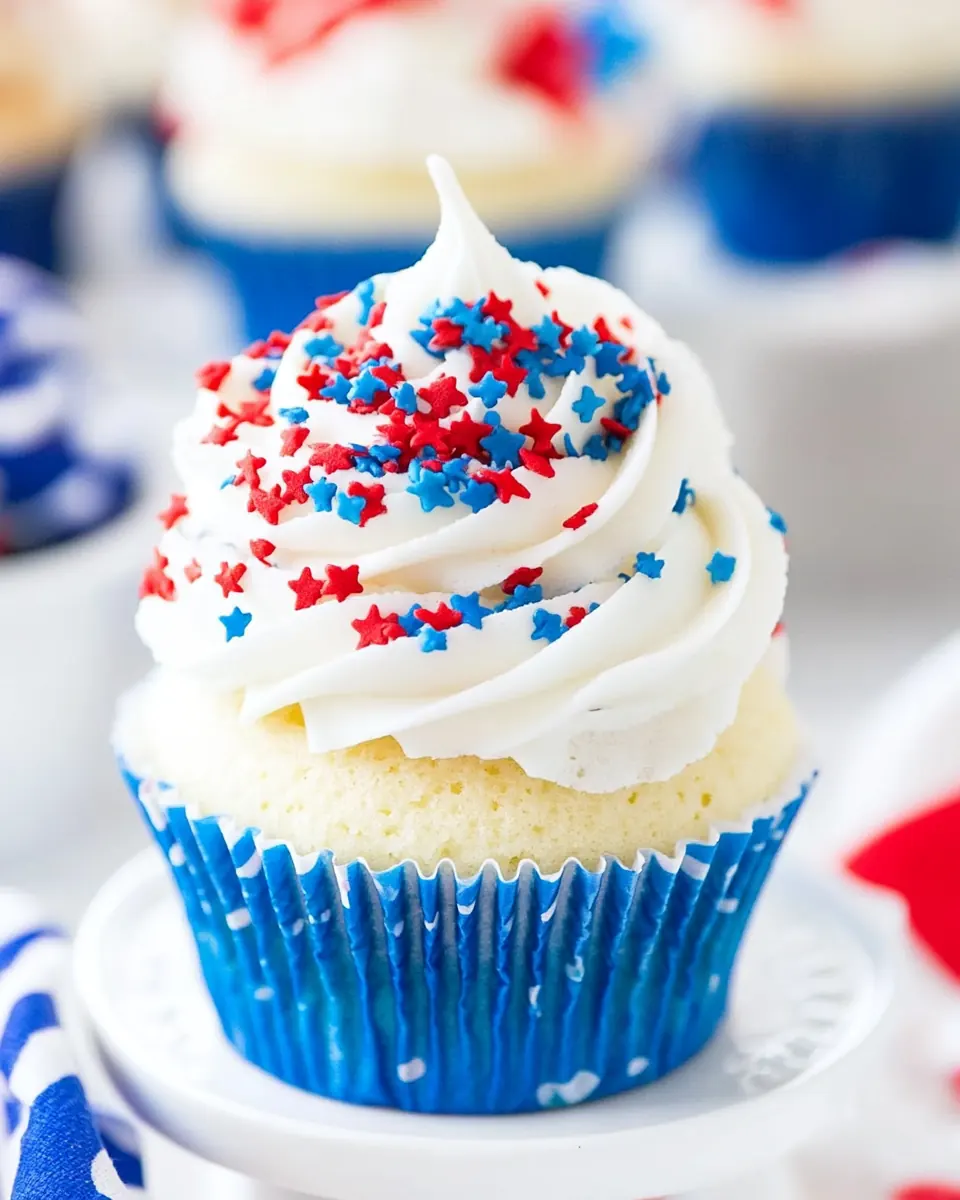
These ingredients are intentionally simple so the focus stays on texture and color. The boxed cake mix provides a reliable, tender base while the liquids and oil come together to produce a moist, delicate crumb. The food coloring and decorations transform a plain cupcake into a festive celebration piece, and the other components are the key players that create structure and flavor.
- 15.25 oz box white cake mix: Provides the base structure and primary dry components for the cupcakes, containing flour, sugar, and leavening to ensure proper crumb and rise; sift or mix according to package instructions to avoid lumps. Adds sweetness and bulk to the batter while simplifying measurements and prep for a reliably textured cake.
- 4 large egg whites room temperature: Adds lightness and stability while contributing moisture and protein without yolk fat, helping achieve a tender crumb and taller rise; beat gently if specified to incorporate air. Keeps color pale and flavor neutral compared with whole eggs, making it ideal when coloring or delicate flavors are desired.
- 1 c. buttermilk: Contributes acidity and tang that reacts with leavening agents to create lift and a tender crumb; bring to room temperature for even mixing and better emulsification. Adds moistness and subtle richness that balances the sweetness of the cake mix and complements frosting flavors.
- 1/3 c. vegetable or canola oil: Provides fat for tenderness and moisture while aiding in keeping cupcakes soft; pour in measured amount and mix until just combined to prevent greasiness. Use a neutral oil to avoid altering the cupcake flavor and ensure a consistent, moist texture.
- Red and blue food coloring: Adds vibrant color for a festive red and blue theme; use a few drops at a time to reach desired shade and avoid over-saturation that can affect batter consistency. Allows customization of appearance for holiday presentation without altering taste when using gel or concentrated food coloring.
- Frosting your favorite: Adds creamy sweetness and finishing flavor that complements the cupcakes; choose a preferred flavor and texture, and spread or pipe after cupcakes have fully cooled to prevent melting. Enhances overall presentation and mouthfeel while providing an opportunity to add complementary extracts or colors.
- Decorations: Provides finishing visual appeal and texture such as sprinkles, edible glitter, or themed toppers to enhance the holiday aesthetic; apply after frosting firms slightly to ensure decorations adhere. Offers the final touch that makes cupcakes festive and appropriate for a 4th of July celebration.
How to Cook 4th of July Cupcakes
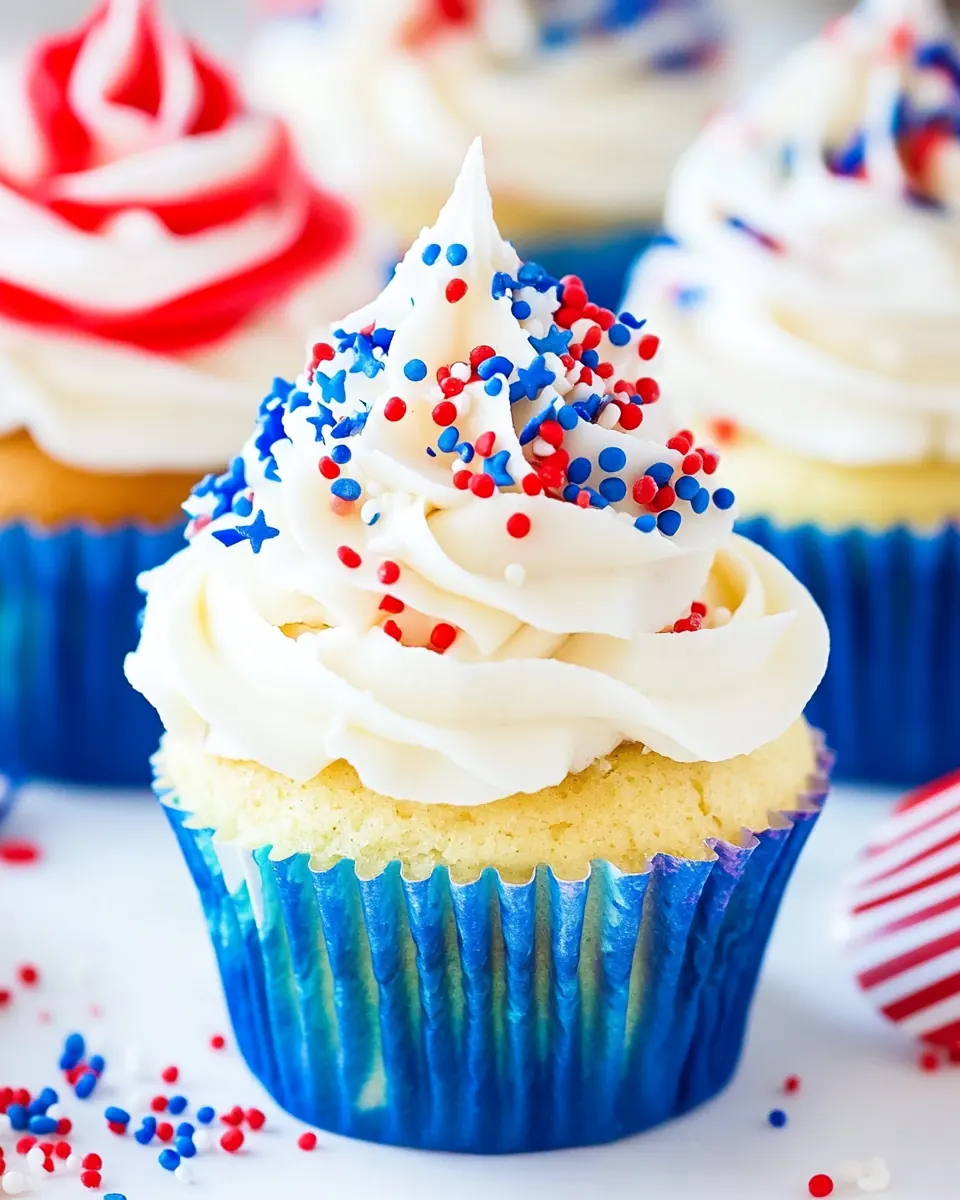
This is the part where the batter transforms into light, colorful cupcakes and small decisions matter. I recommend working in an organized flow, prepping liners and bowls before you mix, so each step feels calm and controlled. With a helper, piping three colors becomes rhythmic and efficient.
- Preheat oven to 350 degrees F and add cupcake liners to pan.: Take a moment to preheat fully so the first cupcakes start baking at the right temperature, which gives an even rise and predictable baking time. You will notice the oven warming and a dry, slightly metallic scent from the heating elements, which is normal. Placing liners in the tin ensures uniform shapes and prevents sticking. A common mistake is not positioning the rack in the center of the oven, which can cause uneven browning; avoid opening the oven often while baking.
- In a large mixing bowl, beat together the cake mix, egg whites, buttermilk, and oil. Mix on low until it is smooth, turn up mixer to medium and beat for 2 minutes.: As the ingredients combine, the batter will become glossy and smooth, with no dry pockets of mix. You may hear the mixer humming steadily and see the batter thicken slightly as it aerates. This step hydrates the dry mix and blends the liquids so the texture is uniform. If you overmix at high speed you can develop excess air, which leads to large holes, so stick to the instructed speeds and times.
- Divide batter into 3 bowls, you should have about 1 1/4 cups of batter in each bowl.: Portioning the batter evenly ensures consistent cupcake size and uniform baking across the tray. Use a measuring cup for accuracy; each bowl should feel equally heavy when lifted. Visual cues include a smooth surface in each bowl and similar volume. A common slip is uneven division, which causes some cupcakes to finish earlier; if one bowl is noticeably smaller, redistribute slightly.
- Color one with red and one with blue food coloring.: Add food coloring in small increments and mix until you reach the shade you want, watching the hue deepen as you stir. The batter will darken a bit as it absorbs the dye, and gel colors give the richest tones with minimal liquid. Stir gently to keep air pockets small and maintain a velvety texture. Avoid adding too much liquid dye, because it can thin the batter and impact rise and texture.
- Transfer each color of batter to a disposable decorator bag to make it easier to fill cupcakes.: Filling bags makes piping tidy and controlled, especially when working with three colors. You will feel the weight of the batter in the bag and can control flow with steady pressure. If you lack pastry bags, a resealable plastic bag with a trimmed corner works fine. Watch out for leaks at the seam if you reuse an older bag; twist the top securely before squeezing.
- Squeeze equal amounts of each color of batter into cupcake liners.: As you squeeze, the colors will pool side by side and create a layered or marbled effect inside the liner. You can feel the resistance change as the liner fills, and the visual cue is a roughly dome shaped batter mound centered in each cup. Work steadily so colors stay defined, and if they begin to merge too much, adjust pressure or reduce the amount in the next liners. Avoid overfilling, as this causes spillover and uneven baking.
- Bake at 350 degrees F for 12-14 minutes or until a toothpick inserted in the center comes out clean.: While baking you will notice a sweet, bready aroma filling the kitchen and small domes rising gently. Check at the earliest time to avoid dryness; the toothpick test ensures the centers are set without overbaking. If you see excessive browning on top before the centers are set, your oven may run hot, so reduce temp slightly next time. Resist opening the oven frequently during the first portion of baking as it can cause the cupcakes to sink.
- Cool completely on a wire rack.: Cooling lets the cupcake crumb set so frosting will glide smoothly without melting into the cake. You will feel warmth radiating from the tin, and the tops will firm as they drop to room temperature. Transfer each cupcake carefully to avoid denting the top, and allow full cooling before decorating to prevent sliding frosting. A common mistake is frosting warm cupcakes, which leads to runny decorations and messy presentation.
- Decorate with frosting of your choice, and add sprinkles or other decorations.: When frosting, the texture should be smooth and spreadable, offering slight resistance as your spatula moves across the top. Pipe or spread the frosting to your preferred style, and press sprinkles gently so they adhere. The visual cue of a clean peak or smooth swirl tells you the frosting is the right consistency. If the frosting is too soft, chill briefly to firm up; if too stiff, stir in a tiny splash of liquid to loosen it.
Tips and Tricks about 4th of July Cupcakes
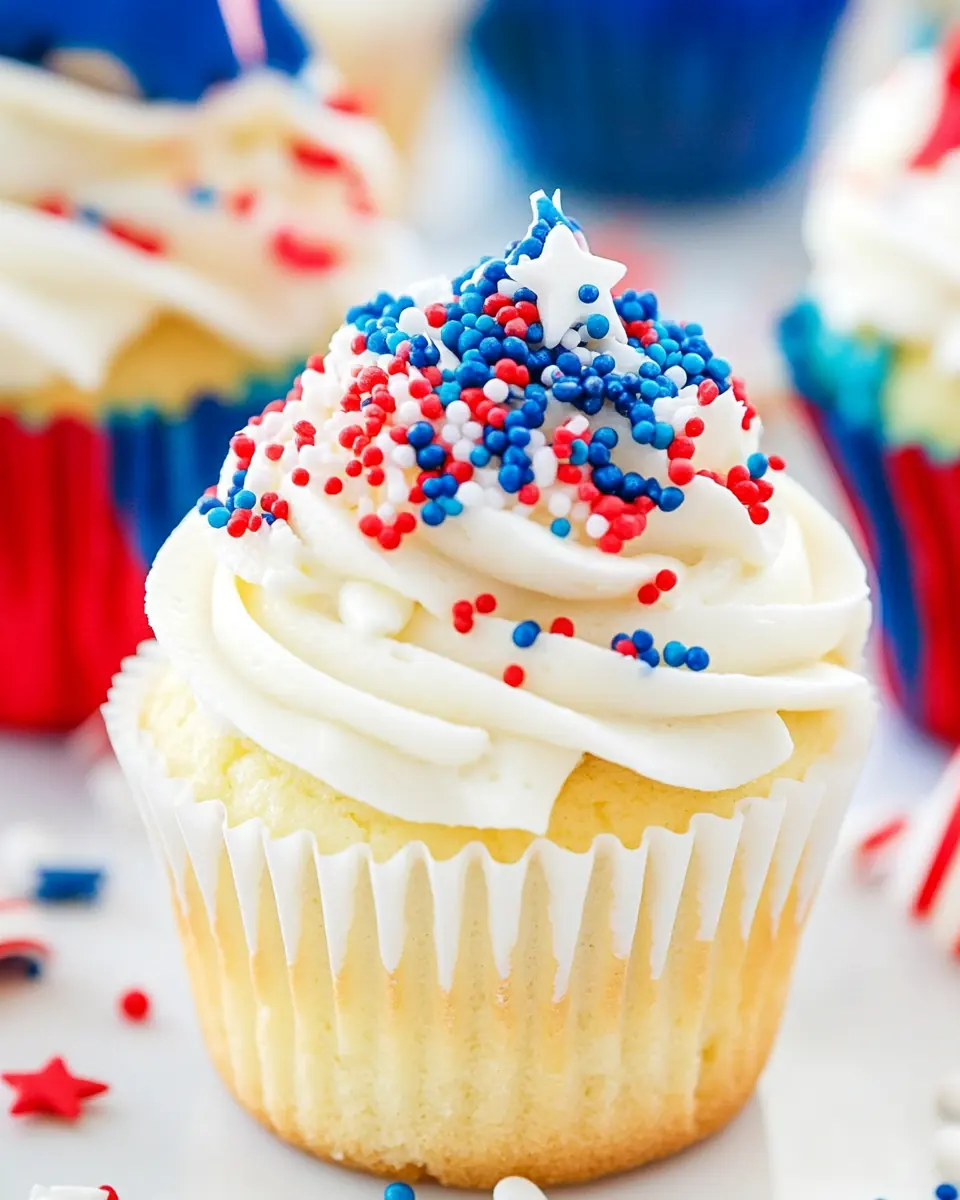
These tips will help you get vibrant color, tidy layers, and picture perfect presentation. I’ve learned these tricks over repeated holiday bake days so you can skip the pitfalls and enjoy more time socializing.
- Use gel food coloring: Gel colors are concentrated, so you get bright red and blue without adding extra liquid to the batter, preserving the intended texture and rise.
- Room temperature ingredients: Bringing your 4 large egg whites and 1 c. buttermilk closer to room temperature helps them incorporate more smoothly and yields a tender crumb.
- Measure batter for consistency: Scoop about 1 1/4 cups per color when dividing, and use the same scoop or measuring cup to fill liners evenly, so every cupcake bakes at the same rate.
- Work with a partner when piping: One person can steady the liner while the other squeezes two bags, keeping the three colors distinct and reducing the chance they blend too much.
- Chill frosting if it’s soft: If your Frosting your favorite seems runny, give it a short rest in the fridge so it firms up for cleaner piping and less slippage during transport.
What to Serve Alongside 4th of July Cupcakes
These cupcakes pair well with casual picnic fare and celebratory beverages, and they fit a variety of summer occasions. Serve them at the end of a barbecue or as the centerpiece of a dessert table, and consider simple accompaniments to balance sweetness and texture.
- Bright fruit platter: Fresh berries or sliced melons make a refreshing counterpoint to the sweet cupcakes and keep the spread light for outdoor heat.
- Ice cold beverages: Sparkling water with citrus or iced tea served in pitchers helps guests cleanse their palate between sweet bites.
- Party style finger foods: Small sandwiches, veggie trays, or chips and dips provide savory balance before dessert, making the cupcakes the celebratory finale.
- Occasions and timing: These are ideal for summer gatherings, neighborhood block parties, and holiday barbecues, and they also work well as a fun dessert for a casual family dinner.
- Storage tips: Keep frosted cupcakes in a single layer in a covered container at cool room temperature for short term, or refrigerate in a sealed container if frosting contains perishable ingredients; bring to room temperature before serving for best texture.
- Seasonal pairings: Pair with light seasonal salads and grilled vegetables for a balanced menu that highlights summer produce alongside the sweet treat.
FAQ
Conclusion
These 4th of July Cupcakes stand out because they combine simple ingredients with a festive visual surprise, producing tender, colorful treats that are quick to assemble and delightful to serve. Give them a try at your next summer gathering; they make an instant party centerpiece and are fun to make with friends or family. I hope you enjoy the process of layering bright batters and decorating each cupcake, and that they bring a little extra joy to your celebration.
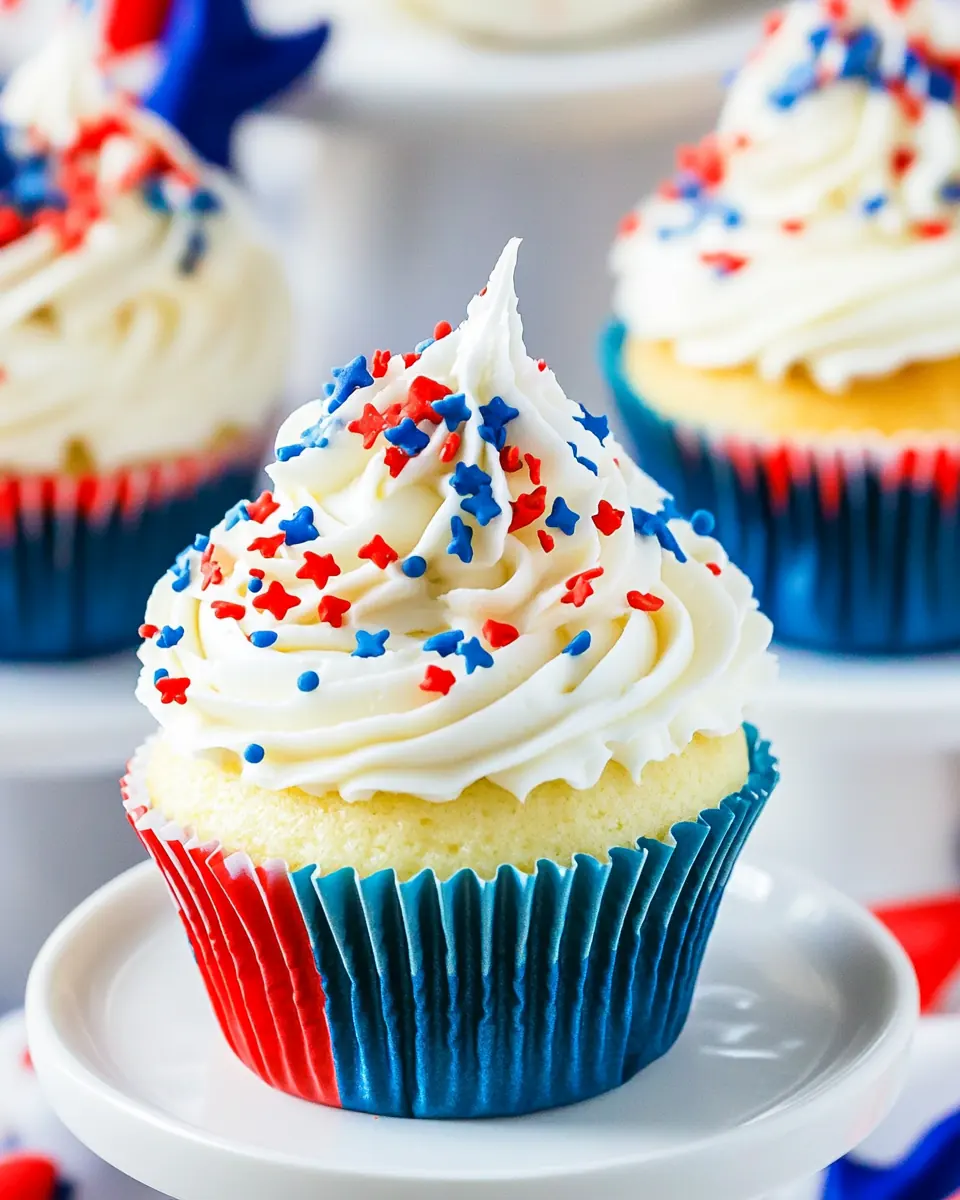
4th of July Cupcakes
Ingredients
Equipment
Method
- Preheat oven to 350 degrees F and add cupcake liners to pan.: Take a moment to preheat fully so the first cupcakes start baking at the right temperature, which gives an even rise and predictable baking time. You will notice the oven warming and a dry, slightly metallic scent from the heating elements, which is normal. Placing liners in the tin ensures uniform shapes and prevents sticking. A common mistake is not positioning the rack in the center of the oven, which can cause uneven browning; avoid opening the oven often while baking.
- In a large mixing bowl, beat together the cake mix, egg whites, buttermilk, and oil. Mix on low until it is smooth, turn up mixer to medium and beat for 2 minutes.: As the ingredients combine, the batter will become glossy and smooth, with no dry pockets of mix. You may hear the mixer humming steadily and see the batter thicken slightly as it aerates. This step hydrates the dry mix and blends the liquids so the texture is uniform. If you overmix at high speed you can develop excess air, which leads to large holes, so stick to the instructed speeds and times.
- Divide batter into 3 bowls, you should have about 1 1/4 cups of batter in each bowl.: Portioning the batter evenly ensures consistent cupcake size and uniform baking across the tray. Use a measuring cup for accuracy; each bowl should feel equally heavy when lifted. Visual cues include a smooth surface in each bowl and similar volume. A common slip is uneven division, which causes some cupcakes to finish earlier; if one bowl is noticeably smaller, redistribute slightly.
- Color one with red and one with blue food coloring.: Add food coloring in small increments and mix until you reach the shade you want, watching the hue deepen as you stir. The batter will darken a bit as it absorbs the dye, and gel colors give the richest tones with minimal liquid. Stir gently to keep air pockets small and maintain a velvety texture. Avoid adding too much liquid dye, because it can thin the batter and impact rise and texture.
- Transfer each color of batter to a disposable decorator bag to make it easier to fill cupcakes.: Filling bags makes piping tidy and controlled, especially when working with three colors. You will feel the weight of the batter in the bag and can control flow with steady pressure. If you lack pastry bags, a resealable plastic bag with a trimmed corner works fine. Watch out for leaks at the seam if you reuse an older bag; twist the top securely before squeezing.
- Squeeze equal amounts of each color of batter into cupcake liners.: As you squeeze, the colors will pool side by side and create a layered or marbled effect inside the liner. You can feel the resistance change as the liner fills, and the visual cue is a roughly dome shaped batter mound centered in each cup. Work steadily so colors stay defined, and if they begin to merge too much, adjust pressure or reduce the amount in the next liners. Avoid overfilling, as this causes spillover and uneven baking.
- Bake at 350 degrees F for 12-14 minutes or until a toothpick inserted in the center comes out clean.: While baking you will notice a sweet, bready aroma filling the kitchen and small domes rising gently. Check at the earliest time to avoid dryness; the toothpick test ensures the centers are set without overbaking. If you see excessive browning on top before the centers are set, your oven may run hot, so reduce temp slightly next time. Resist opening the oven frequently during the first portion of baking as it can cause the cupcakes to sink.
- Cool completely on a wire rack.: Cooling lets the cupcake crumb set so frosting will glide smoothly without melting into the cake. You will feel warmth radiating from the tin, and the tops will firm as they drop to room temperature. Transfer each cupcake carefully to avoid denting the top, and allow full cooling before decorating to prevent sliding frosting. A common mistake is frosting warm cupcakes, which leads to runny decorations and messy presentation.
- Decorate with frosting of your choice, and add sprinkles or other decorations.: When frosting, the texture should be smooth and spreadable, offering slight resistance as your spatula moves across the top. Pipe or spread the frosting to your preferred style, and press sprinkles gently so they adhere. The visual cue of a clean peak or smooth swirl tells you the frosting is the right consistency. If the frosting is too soft, chill briefly to firm up; if too stiff, stir in a tiny splash of liquid to loosen it.
Notes
- Use gel food coloring: Gel colors are concentrated, so you get bright red and blue without adding extra liquid to the batter, preserving the intended texture and rise.
- Room temperature ingredients: Bringing your 4 large egg whites and 1 c. buttermilk closer to room temperature helps them incorporate more smoothly and yields a tender crumb.
- Measure batter for consistency: Scoop about 1 1/4 cups per color when dividing, and use the same scoop or measuring cup to fill liners evenly, so every cupcake bakes at the same rate.
- Work with a partner when piping: One person can steady the liner while the other squeezes two bags, keeping the three colors distinct and reducing the chance they blend too much.
- Chill frosting if it’s soft: If your Frosting your favorite seems runny, give it a short rest in the fridge so it firms up for cleaner piping and less slippage during transport.