Cauliflower Salad with Nectarines Pistachio Dukkah
Cauliflower Salad with Nectarines Pistachio Dukkah began as a late summer experiment the year my neighbor handed me a bag of overripe nectarines and a jar of homemade pistachio mix.
I remember standing at my kitchen counter, the air humid and smelling faintly of backyard basil, thinking about how to honor those juicy nectarines without turning them into a dessert. I wanted something fresh, textural, and slightly unexpected, so I grabbed a head of cauliflower, some avocado, and leaned on a crunchy, nutty pistachio dukkah idea. The first time I tossed it together, the contrast between warm, seared cauliflower and cool, sweet nectarines stopped me midfork.
Over a few more tries I learned to balance the salt, lemon, and the assertive spices in the dukkah, and now this is one of those recipes I pull out when friends drop by or when I want a weeknight meal that feels dressed up without a lot of fuss. The mint brightens everything, and the avocado adds that buttery note that makes the salad feel complete. It is simple, but it sings because of the layers of texture and flavor.
Recipe Snapshot
25 mins
15 mins
10 mins
Easy
250 kcal
Mediterranean
Vegan, Gluten-Free
Salads
Food processor, Cast iron skillet, Spice grinder, Mixing bowl
What’s Great About This Cauliflower Salad with Nectarines Pistachio Dukkah
Crunch and Contrast
I love how the pistachio dukkah provides a crunchy punctuation to tender cauliflower. The toasted seeds and chopped nuts create a variety of textures that keep every bite interesting, and that crunch is what makes this salad memorable.
Seasonal Sweetness
Using ripe summer nectarines brings a juicy sweetness that pairs beautifully with the earthy cauliflower. I think fresh fruit in salads feels celebratory, and the nectarines here add a soft, fragrant counterpoint to the savory spices.
Minimalist Dressing, Maximum Flavor
There is almost no traditional dressing, and I like that. A drizzle of olive oil and a squeeze of lemon juice is all it takes to tie things together, letting the dukkah and seared cauliflower do the heavy lifting. For busy nights, that simplicity is a huge advantage.
Flexible and Crowd Friendly
This salad scales easily for a small dinner or a larger gathering. I often double the dukkah because it keeps well, and guests love sprinkling extra over their portions. It travels well too, which makes it a reliable option for potlucks.
Bright Herb Finish
The thinly sliced mint shifts the whole dish from rustic to vibrant. I always add it last for that fresh aroma and a lift of color. For me, that final herbal note is what nudges this salad from good to great.
Ingredients for Cauliflower Salad with Nectarines Pistachio Dukkah
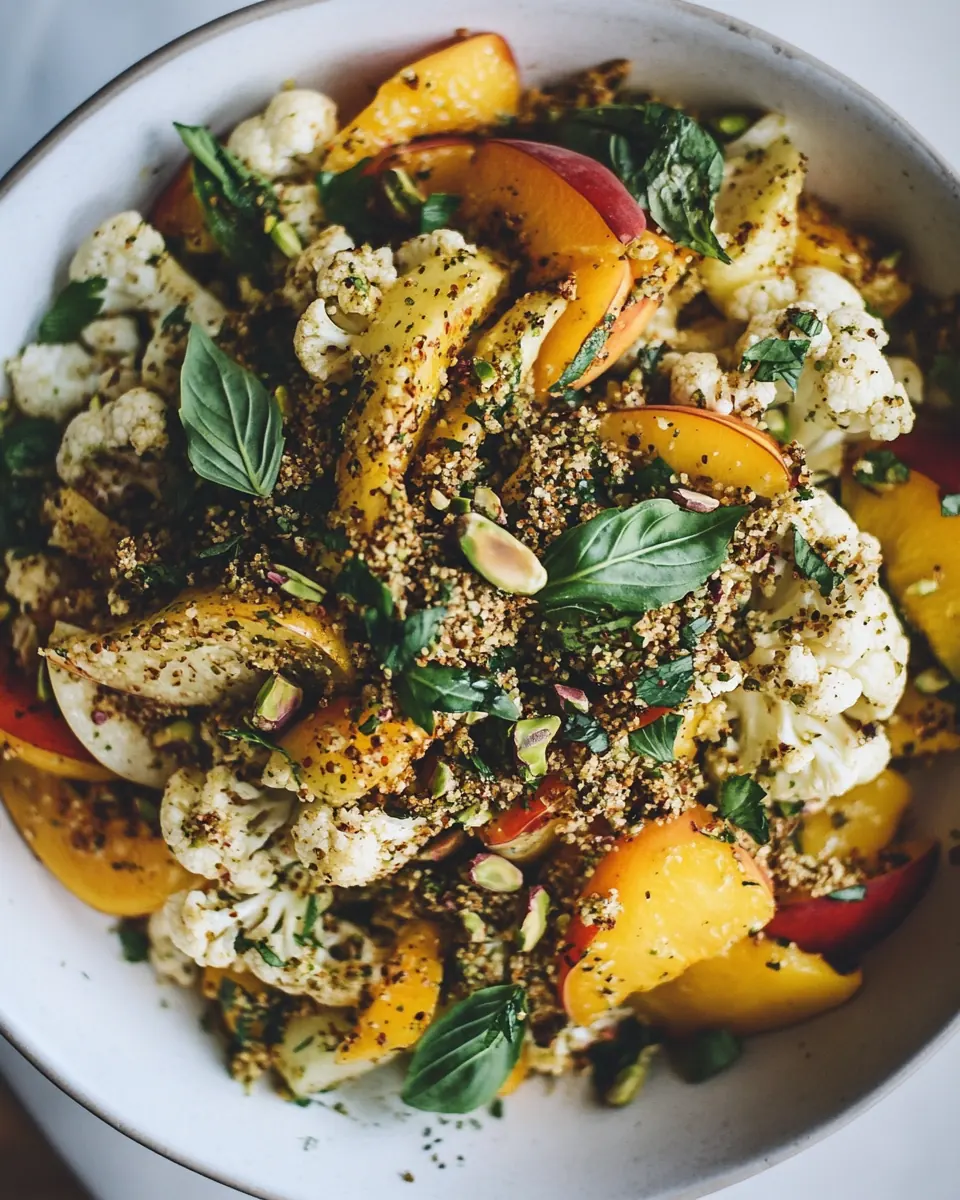
The ingredient list here is built around texture and aroma. I chose components that play well together: a sturdy vegetable to carry heat, sweet stone fruit for balance, a creamy element for richness, and a spiced, nutty dukkah for crunch. Each item has a clear purpose and together they create a composed salad that is both rustic and refined.
- 2 cups roasted & salted pistachios, shells removed (you should have about 3/4 cup of nuts total): Provide rich, crunchy texture and a toasty, buttery flavor when roasted; combine roughly and pulse to create the base of the dukkah, ensuring shells are fully removed for a smooth mix. Store in an airtight container to maintain freshness and add vibrant color and protein to the salad when sprinkled on top.
- 1 tablespoon coriander seeds, toasted: Add warm, citrusy, slightly floral notes when toasted; crush gently to release volatile oils and blend into the dukkah for aromatic complexity. Pair with cumin and sesame to balance the nutty pistachios and enhance the overall spice profile.
- 1 tablespoon cumin seeds, toasted: Contribute earthy, warm, and slightly bitter aromas when toasted; grind or crush into the dukkah to provide depth and a savory backbone. Use sparingly to keep the spice balanced against the freshness of fruit and herbs in the salad.
- 2 tablespoons sesame seeds, toasted: Offer a delicate nutty crunch and subtle sesame aroma when toasted; incorporate whole or lightly crushed into the dukkah for texture contrast and flavor lift. Provide visually appealing flecks and a mild oiliness that complements the pistachios.
- 1 teaspoon nigella seeds() (optional): Introduce an optional savory, onion-like earthiness and slight bitterness; toast lightly and add to the dukkah for an exotic flavor dimension if desired. Use sparingly to avoid overpowering the other seeds and nuts in the mix.
- 1/2 teaspoon chili flakes() (optional): Bring optional heat and a touch of smokiness to the dukkah; sprinkle in small amounts to control the level of spiciness in the salad. Adjust to taste to complement the sweet nectarines and creamy avocado without overwhelming them.
- 1 tablespoon olive oil (I used a garlic-infused olive oil, but that’s ) (optional): Bind and lightly coat the dukkah mixture while adding a fruity, peppery olive flavor; use a garlic–infused variety for extra savory notes if preferred. Drizzle over roasted cauliflower to help seasonings adhere and to enhance mouthfeel.
- 1 head of cauliflower, cored and cut into small florets: Form the hearty base of the salad when cored and cut into small florets; roast or steam until tender and slightly caramelized for best flavor. Serve warm or room temperature so the cauliflower absorbs the dressing and pairs well with the dukkah and fruit.
- sea salt and ground black pepper, to taste: Season to taste to enhance all components; use sea salt to bring out natural flavors and ground black pepper for subtle heat. Add gradually while tasting so the delicate nectarines and avocado remain balanced and fresh.
- 1 tablespoon lemon juice: Brighten and balance the salad with acidic lift; squeeze over the roasted cauliflower and nectarines to cut richness and elevate overall freshness. Lemon juice also helps prevent avocado browning when tossed gently with the fruit.
- 1 2 nectarines, pitted and sliced: Add juicy sweetness and a stone-fruit brightness when pitted and sliced; choose ripe nectarines for fragrant aroma and vibrant color. Arrange slices over the cauliflower to contrast textures and provide refreshing bursts with each bite.
- 1 small ripe avocado, peeled and chopped: Contribute creamy richness and buttery texture when peeled and chopped; scatter over the salad to balance crunchy dukkah and acidic lemon. Use ripe avocado to ensure smooth mouthfeel and to incorporate healthy fats into the dish.
- 1 hearty sprig of mint, leaves thinly sliced: Impart a cool, herbaceous brightness when leaves are thinly sliced; sprinkle over the assembled salad for aromatic freshness. Use a hearty sprig so there are plenty of leaves to distribute flavor evenly throughout the dish.
- big handful of the dukkah: Finish the salad with a generous crunch and concentrated flavor from the dukkah; scatter a big handful over the cauliflower, fruit, and avocado for immediate texture contrast. Allow the dukkah to sit briefly on warm cauliflower so its oils and aromas bloom.
Making Cauliflower Salad with Nectarines Pistachio Dukkah
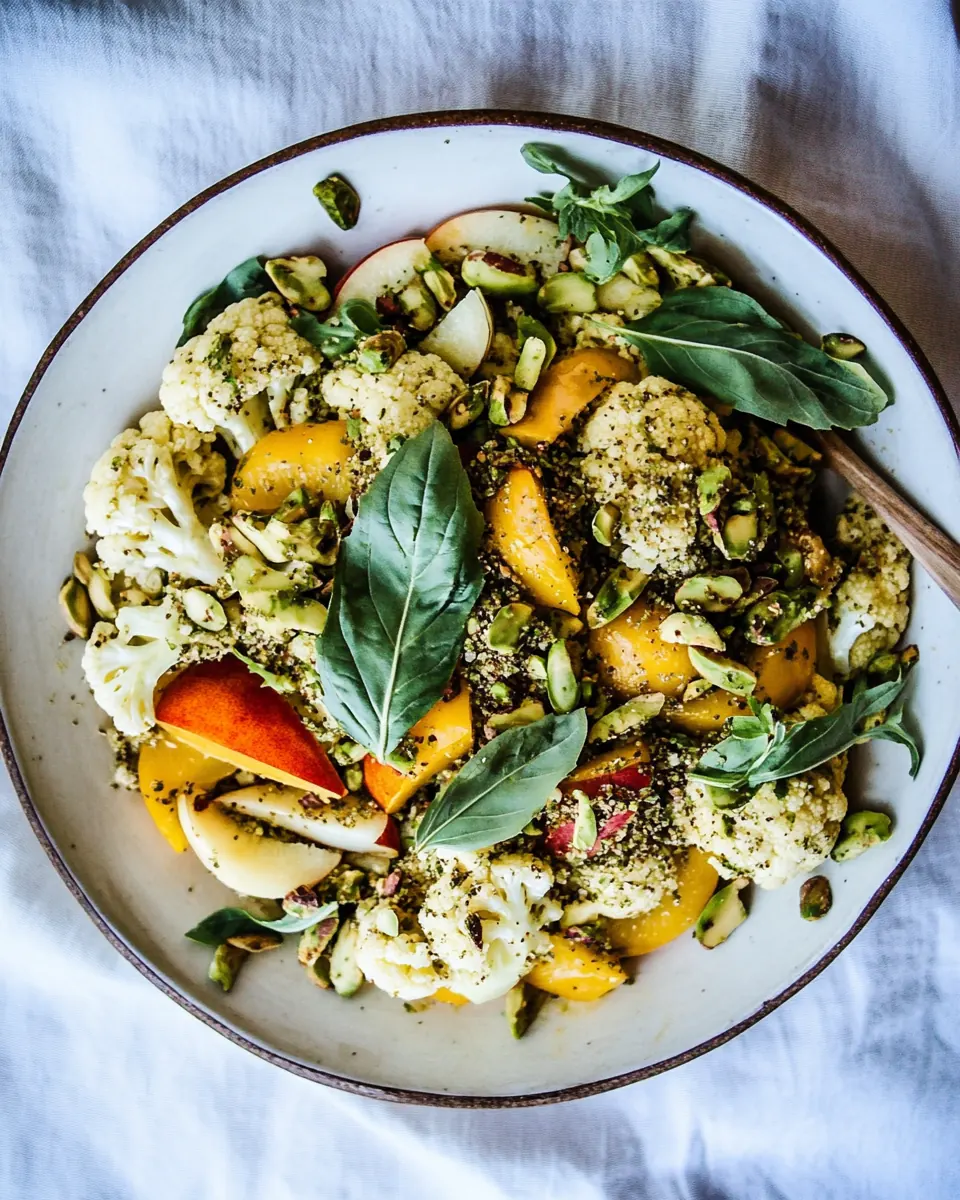
I like to break the process into creating the dukkah first, then focusing on the cauliflower. The work is straightforward, but pacing matters so the pistachio mix and the warm vegetable are both at their best when assembled. Below, the directions are rewritten into clear steps so you can hear the sizzle and see the color changes as you cook.
- Make the dukkah: grind the shelled pistachios in either a mortar and pestle, a food processor, or a dry-blade blender pitcher. You want a chunky/chopped consistency with a few large bits of pistachio in the mix. Transfer the ground pistachios to a medium bowl. Grind the coriander and cumin seeds in a spice grinder and add them to the bowl with the pistachios. Add the sesame seeds, nigella seeds and chili flakes to the bowl as well. Stir to combine. Store dukkah in a sealable jar and set aside.: grind the shelled pistachios in either a mortar and pestle, a food processor, or a dry-blade blender pitcher : You will smell a deep, toasty aroma as the pistachios break down, with small chunks still visible to give the dukkah its signature crunch. Use short pulses in a food processor to avoid turning everything into paste, and stop when you have a mix of coarse and medium bits. The reason you keep it chunky is to preserve textural contrast; overprocessing will produce a paste that loses the delightful crunch. A common mistake is running the motor too long which heats the nuts and makes the oil release, causing a pasty result, so pulse and check frequently. If using a mortar and pestle, you'll feel the seeds and nuts break apart under the rhythm of the pestle, which is satisfying and gives excellent control over the texture.
- Make the cauliflower salad: heat a large cast iron skillet over medium-high heat. Add the oil to the skillet. Add the cauliflower florets and spread them out in an even layer. Let the cauliflower florets sear for a good two minutes. Stir the cauliflower up and season it with salt and pepper. Cook until the cauliflower is just tender and evenly browned, about another 4-5 minutes. Turn off the heat and stir in the lemon juice.: At this point you will notice the roasted, rich green-brown tones of the chopped pistachios and a fragrant nuttiness that signals the base is ready. Moving them to a bowl keeps the processing area tidy and prevents the warm nut oils from affecting anything else you might be doing. This step also lets you visually inspect the texture to decide if you want a few larger pieces for extra crunch. Avoid leaving the nuts in a hot bowl or next to the stove for long periods, as the residual heat can make them oily; instead, keep them at room temperature until you finish the mix.
- Transfer the cauliflower to a serving platter. Top the cauliflower with the sliced nectarines, avocado, mint, and a hearty handful of the dukkah. Serve the cauliflower salad immediately.: Toasted coriander and cumin release bright, aromatic oils when ground, producing scents that hint at citrus and earth. Grinding these seeds fresh gives a livelier flavor than preground spices. The 'why' is simple: freshly ground spices have volatile compounds that lift the whole dukkah, creating dimension. Avoid overgrinding to dust, you want small granules to retain some textural interest, and be careful that the grinder is clean to prevent cross-flavors from previous spices.
- Add the sesame seeds, nigella seeds and chili flakes to the bowl as well: When you fold in the toasted sesame seeds , optional nigella seeds , and optional chili flakes , the mixture will become visually speckled and aromatic. The sesame seeds provide tiny pops, nigella adds subtle savory notes, and chili flakes introduce warmth. Stirring them in by hand helps preserve the integrity of the seeds and ensures even distribution. A frequent oversight is adding too much chili which can overshadow the nuts, so taste cautiously if you decide to include it.
- Stir to combine: As you fold the components together you will hear the gentle clink of seeds and see the dukkah take on a unified, rustic texture. This tactile mixing ensures the flavors meld without losing the distinct pieces that make each bite interesting. The 'why' here is to build an even flavor profile so every spoonful has a balanced spice to nut ratio. If the mixture seems dry, a tiny drizzle of olive oil can help bind it, but do so sparingly to avoid sogginess.
- Store dukkah in a sealable jar and set aside: Transferring the dukkah to a sealed container preserves its crunch and keeps the aroma fresh. Stored in a cool, dry place it will remain lively for several weeks, and I often double the batch so I have extras on hand. A mistake people make is leaving it exposed to humidity which softens the seeds and dulls the crisp texture, so sealing is important.
- Make the cauliflower salad: heat a large cast iron skillet over medium-high heat : You should feel the warmth radiating from the skillet before adding oil, and a properly heated cast iron will create a satisfying sizzle when the olive oil hits the surface. That initial heat is crucial for building good color on the cauliflower , because color correlates with flavor from caramelization. Don't rush this step with a cold pan, as the cauliflower will steam rather than sear, losing desirable browning.
- Add the oil to the skillet: As the olive oil warms you will notice it shimmer slightly, indicating it is ready. The oil acts as the medium for heat transfer and helps develop those golden edges on the cauliflower . If using an infused oil, its aroma will bloom now and scent the kitchen. Overheating the oil can cause smoke and bitter flavors, so keep an eye on temperature and reduce heat if it begins to smoke.
- Add the cauliflower florets and spread them out in an even layer: When the cauliflower hits the hot oil you will hear a clear sizzle, and laying the florets in a single layer ensures they have contact with the pan to brown evenly. Visual cues to watch for are golden edges and a slight translucence in the stems, which indicate they are cooking through. Overcrowding the pan will trap steam and prevent browning, so work in batches if needed.
- Let the cauliflower florets sear for a good two minutes: During these initial two minutes you will smell the sugars in the cauliflower caramelizing, and the edges will take on a toasty aroma. This short sear forms the flavor foundation, so resist the urge to stir immediately. A common pitfall is constant stirring which prevents the development of those deeply flavored browned bits.
- Stir the cauliflower up and season it with salt and pepper: After the initial sear, stirring helps cook the interior while preserving some char. Adding sea salt and ground black pepper now seasons the florets directly and enhances the caramelized flavors. Season lightly and adjust later, because the dukkah may add more salt to the final dish.
- Cook until the cauliflower is just tender and evenly browned, about another 4 to 5 minutes: As you cook the cauliflower further, watch for even browning and a tender bite when pierced with a fork. The smell will deepen into nutty, roasted notes, and visually you will see a mix of golden edges and tender centers. Overcooking results in a mushy texture and lost sweetness, so aim for a balance of tenderness and bite.
- Turn off the heat and stir in the lemon juice: Adding the lemon juice off the heat preserves its bright acid fragrance without cooking off the volatile citrus oils. The juice lifts the flavors and gives the cauliflower a light, lively finish. A mistake here is using too much lemon which can dominate the delicate fruit notes later, so add modestly and taste.
- Transfer the cauliflower to a serving platter: When you move the warm cauliflower to a platter the residual heat will continue to release aromas, creating a welcoming steam that smells of roasted vegetable and citrus. Arrange it so there is space for the fruit and avocado to sit on top without getting lost in the heat. Serving from a flat platter also makes it easy to distribute the crunchy dukkah evenly.
- Top the cauliflower with the sliced nectarines, avocado, mint, and a hearty handful of the dukkah: The contrast is immediate and sensory; the warm, slightly caramelized cauliflower meets cool, juicy nectarines , creamy avocado , and bright mint , while the dukkah delivers a satisfying crunch and spice. Adding the mint last protects its delicate aroma, and scattering the dukkah by hand ensures irregular, enticing clusters of texture. A common misstep is mixing everything too vigorously which bruises the fruit and softens the avocado, so gently nest the toppings on the warm base.
- Serve the cauliflower salad immediately: Serve while the cauliflower is still warm so the contrast with the cool toppings is most pronounced. Each bite should offer hot and cold elements, creamy and crunchy contrasts, and a balance of savory and sweet. If you wait too long to serve, the textures can homogenize and lose the lively tension that makes this dish delightful.
Helpful Notes about Cauliflower Salad with Nectarines Pistachio Dukkah
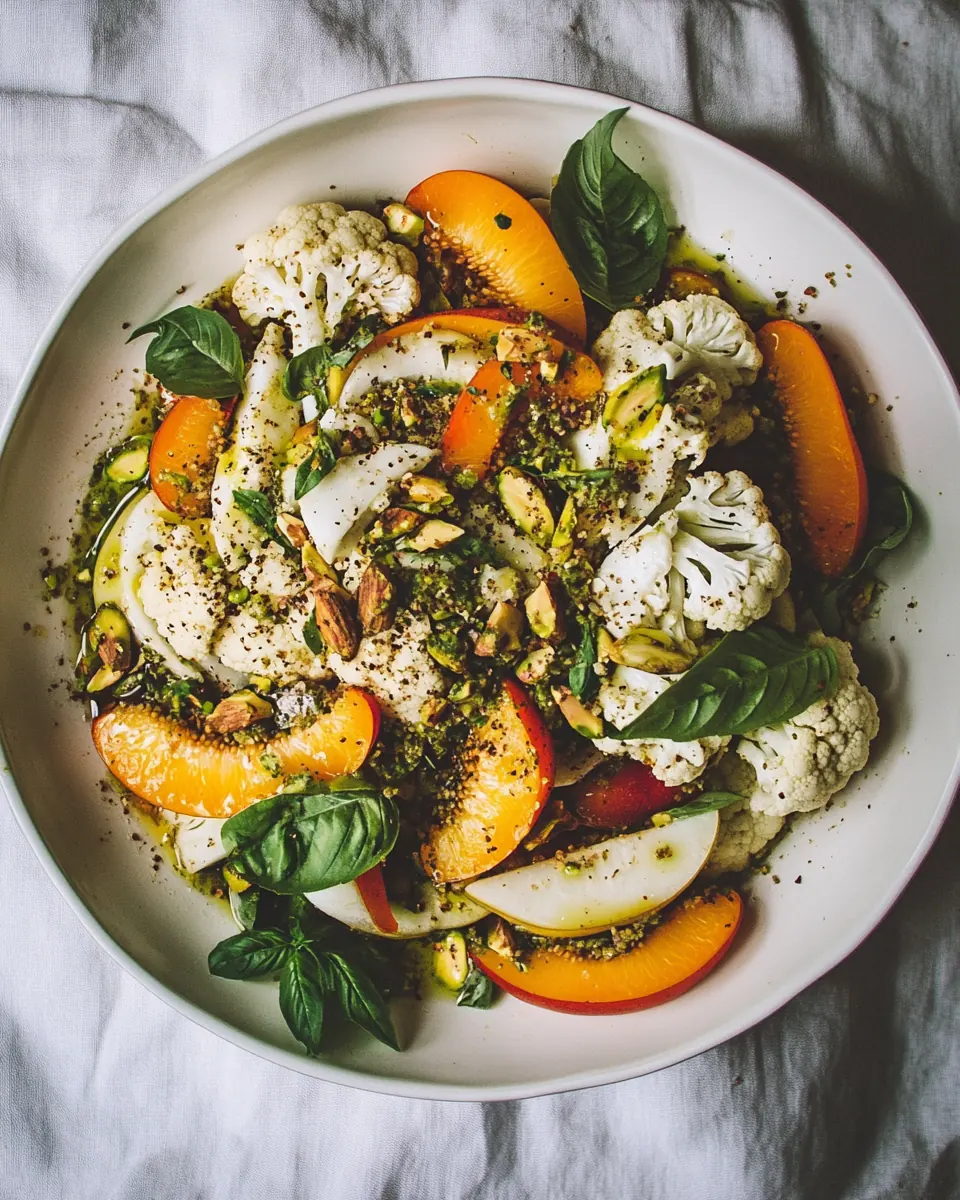
This section expands practical pointers and variations for timing, storage, and small tweaks that lift the final plate. Read these before you begin for a smoother cook and a tastier result.
- Oven roast alternative Roasting the cauliflower in the oven is a hands free option. Toss the florets in about 2 teaspoons of olive oil, salt, and pepper, spread them on a baking sheet, and roast at 400 degrees for about 20 to 25 minutes until evenly golden. This method frees you from standing at the stove and gives consistent caramelization across larger batches.
- Make dukkah ahead The dukkah stores well in a sealed jar for weeks, and I often prepare a larger batch so I have it for toast, hummus, or roasted vegetables. Keep it in a cool, dry place to preserve the crisp texture and to prevent the seeds from softening.
- No dressing by design This salad intentionally lacks a heavy dressing; the combination of sautéed cauliflower, olive oil, and lemon juice creates a light coating that allows the dukkah and fruit to shine. If you prefer more moisture, add a quick spoon of strained yogurt or a light vinaigrette sparingly.
- Salt mindfully Because the roasted and salted pistachios contribute saltiness, season the cauliflower lightly at first and adjust at the end to avoid over salting. Taste before the final sprinkle of dukkah to find the right balance.
- Fruit ripeness matters Use fragrant, slightly yielding nectarines for sweetness and texture contrast. Under ripe fruit will be starchy and overripe fruit may become too soft when combined with warm elements, so choose fruit at peak ripeness.
Accompaniments for Cauliflower Salad with Nectarines Pistachio Dukkah
This salad works well in many settings. Below are serving ideas, seasonal pairings, and storage advice to ensure it shines whether it is a casual lunch or part of a special dinner spread.
- Serve warm or room temperature The salad is best served when the cauliflower is warm and the toppings are cool, creating temperature contrast that highlights textures. For dinner, bring it to the table on a shallow platter so guests can see the vibrant nectarines and sprinkled dukkah.
- Pair with simple grilled proteins For a fuller meal, serve alongside simply grilled fish or chicken, letting the salad act as a bright, textured side. The salad sops up juices and adds refreshing fruit notes to the plate.
- Occasions This is a strong summer lunch option and a lovely addition to weekend picnic spreads, Ramadan iftar tables where lighter, nourishing dishes are welcome, and casual dinner parties where you want something seasonal and striking. It scales up easily for gatherings.
- Storage Store leftover components separately when possible: keep leftover dukkah in a sealed jar at room temperature, refrigerate cut nectarines and chopped avocado separately for up to a day, and refrigerate cooled cauliflower in an airtight container for up to 2 days. Avoid assembling too far in advance to preserve texture.
- Seasonal pairings In summer, emphasize ripe stone fruit like nectarines and peaches; in early fall, try adding pear slices if you want a different sweet profile. The salad’s flexible framework welcomes seasonal changes without losing its core identity.
- Serving style Present on a wide, shallow platter and scatter the dukkah by hand for a rustic, inviting look. Provide extra dukkah on the side so guests can add more crunch at will.
- Make it vegetarian friendly The salad is naturally vegetarian and works well as a main for lighter meals, especially when complemented with a grain side like quinoa or bulgur to add heft.
FAQ
Conclusion
This salad stands out for its interplay of warm, caramelized cauliflower, sweet summer nectarines, creamy avocado, and the crunchy, spiced punch of pistachio dukkah. It feels both effortless and thoughtfully composed, making it a reliable choice when you want something seasonal and impressive without a lot of fuss. Give it a try on a sunny evening or for a casual dinner with friends, and let the contrast of textures and bright flavors do the talking. Keep extra dukkah on hand, because once you taste it you will find plenty of ways to sprinkle it on everything.
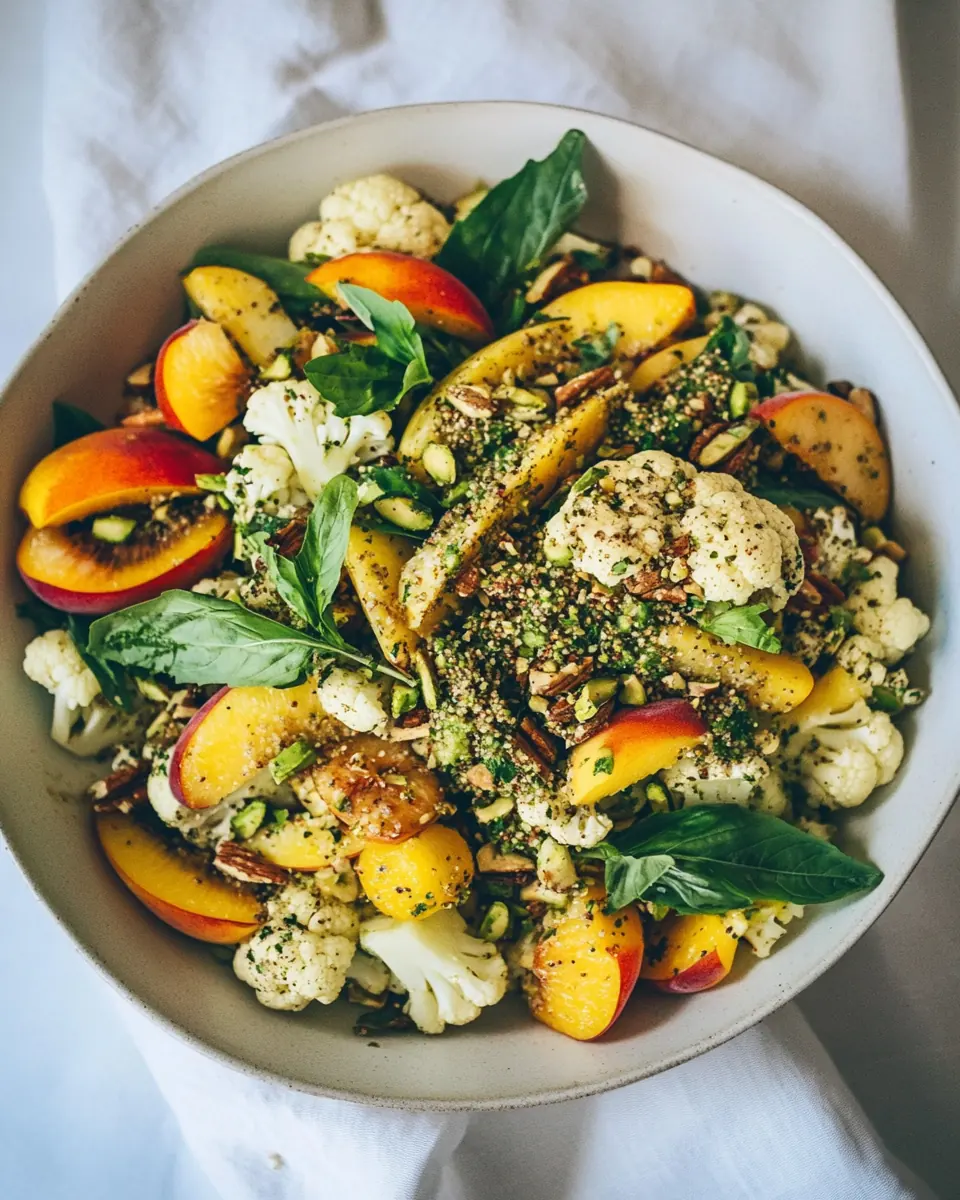
Cauliflower Salad with Nectarines Pistachio Dukkah
Ingredients
Equipment
Method
- Make the dukkah: grind the shelled pistachios in either a mortar and pestle, a food processor, or a dry-blade blender pitcher. You want a chunky/chopped consistency with a few large bits of pistachio in the mix. Transfer the ground pistachios to a medium bowl. Grind the coriander and cumin seeds in a spice grinder and add them to the bowl with the pistachios. Add the sesame seeds, nigella seeds and chili flakes to the bowl as well. Stir to combine. Store dukkah in a sealable jar and set aside.: grind the shelled pistachios in either a mortar and pestle, a food processor, or a dry-blade blender pitcher : You will smell a deep, toasty aroma as the pistachios break down, with small chunks still visible to give the dukkah its signature crunch. Use short pulses in a food processor to avoid turning everything into paste, and stop when you have a mix of coarse and medium bits. The reason you keep it chunky is to preserve textural contrast; overprocessing will produce a paste that loses the delightful crunch. A common mistake is running the motor too long which heats the nuts and makes the oil release, causing a pasty result, so pulse and check frequently. If using a mortar and pestle, you'll feel the seeds and nuts break apart under the rhythm of the pestle, which is satisfying and gives excellent control over the texture.
- Make the cauliflower salad: heat a large cast iron skillet over medium-high heat. Add the oil to the skillet. Add the cauliflower florets and spread them out in an even layer. Let the cauliflower florets sear for a good two minutes. Stir the cauliflower up and season it with salt and pepper. Cook until the cauliflower is just tender and evenly browned, about another 4-5 minutes. Turn off the heat and stir in the lemon juice.: At this point you will notice the roasted, rich green-brown tones of the chopped pistachios and a fragrant nuttiness that signals the base is ready. Moving them to a bowl keeps the processing area tidy and prevents the warm nut oils from affecting anything else you might be doing. This step also lets you visually inspect the texture to decide if you want a few larger pieces for extra crunch. Avoid leaving the nuts in a hot bowl or next to the stove for long periods, as the residual heat can make them oily; instead, keep them at room temperature until you finish the mix.
- Transfer the cauliflower to a serving platter. Top the cauliflower with the sliced nectarines, avocado, mint, and a hearty handful of the dukkah. Serve the cauliflower salad immediately.: Toasted coriander and cumin release bright, aromatic oils when ground, producing scents that hint at citrus and earth. Grinding these seeds fresh gives a livelier flavor than preground spices. The 'why' is simple: freshly ground spices have volatile compounds that lift the whole dukkah, creating dimension. Avoid overgrinding to dust, you want small granules to retain some textural interest, and be careful that the grinder is clean to prevent cross-flavors from previous spices.
- Add the sesame seeds, nigella seeds and chili flakes to the bowl as well: When you fold in the toasted sesame seeds , optional nigella seeds , and optional chili flakes , the mixture will become visually speckled and aromatic. The sesame seeds provide tiny pops, nigella adds subtle savory notes, and chili flakes introduce warmth. Stirring them in by hand helps preserve the integrity of the seeds and ensures even distribution. A frequent oversight is adding too much chili which can overshadow the nuts, so taste cautiously if you decide to include it.
- Stir to combine: As you fold the components together you will hear the gentle clink of seeds and see the dukkah take on a unified, rustic texture. This tactile mixing ensures the flavors meld without losing the distinct pieces that make each bite interesting. The 'why' here is to build an even flavor profile so every spoonful has a balanced spice to nut ratio. If the mixture seems dry, a tiny drizzle of olive oil can help bind it, but do so sparingly to avoid sogginess.
- Store dukkah in a sealable jar and set aside: Transferring the dukkah to a sealed container preserves its crunch and keeps the aroma fresh. Stored in a cool, dry place it will remain lively for several weeks, and I often double the batch so I have extras on hand. A mistake people make is leaving it exposed to humidity which softens the seeds and dulls the crisp texture, so sealing is important.
- Make the cauliflower salad: heat a large cast iron skillet over medium-high heat : You should feel the warmth radiating from the skillet before adding oil, and a properly heated cast iron will create a satisfying sizzle when the olive oil hits the surface. That initial heat is crucial for building good color on the cauliflower , because color correlates with flavor from caramelization. Don't rush this step with a cold pan, as the cauliflower will steam rather than sear, losing desirable browning.
- Add the oil to the skillet: As the olive oil warms you will notice it shimmer slightly, indicating it is ready. The oil acts as the medium for heat transfer and helps develop those golden edges on the cauliflower . If using an infused oil, its aroma will bloom now and scent the kitchen. Overheating the oil can cause smoke and bitter flavors, so keep an eye on temperature and reduce heat if it begins to smoke.
- Add the cauliflower florets and spread them out in an even layer: When the cauliflower hits the hot oil you will hear a clear sizzle, and laying the florets in a single layer ensures they have contact with the pan to brown evenly. Visual cues to watch for are golden edges and a slight translucence in the stems, which indicate they are cooking through. Overcrowding the pan will trap steam and prevent browning, so work in batches if needed.
- Let the cauliflower florets sear for a good two minutes: During these initial two minutes you will smell the sugars in the cauliflower caramelizing, and the edges will take on a toasty aroma. This short sear forms the flavor foundation, so resist the urge to stir immediately. A common pitfall is constant stirring which prevents the development of those deeply flavored browned bits.
- Stir the cauliflower up and season it with salt and pepper: After the initial sear, stirring helps cook the interior while preserving some char. Adding sea salt and ground black pepper now seasons the florets directly and enhances the caramelized flavors. Season lightly and adjust later, because the dukkah may add more salt to the final dish.
- Cook until the cauliflower is just tender and evenly browned, about another 4 to 5 minutes: As you cook the cauliflower further, watch for even browning and a tender bite when pierced with a fork. The smell will deepen into nutty, roasted notes, and visually you will see a mix of golden edges and tender centers. Overcooking results in a mushy texture and lost sweetness, so aim for a balance of tenderness and bite.
- Turn off the heat and stir in the lemon juice: Adding the lemon juice off the heat preserves its bright acid fragrance without cooking off the volatile citrus oils. The juice lifts the flavors and gives the cauliflower a light, lively finish. A mistake here is using too much lemon which can dominate the delicate fruit notes later, so add modestly and taste.
- Transfer the cauliflower to a serving platter: When you move the warm cauliflower to a platter the residual heat will continue to release aromas, creating a welcoming steam that smells of roasted vegetable and citrus. Arrange it so there is space for the fruit and avocado to sit on top without getting lost in the heat. Serving from a flat platter also makes it easy to distribute the crunchy dukkah evenly.
- Top the cauliflower with the sliced nectarines, avocado, mint, and a hearty handful of the dukkah: The contrast is immediate and sensory; the warm, slightly caramelized cauliflower meets cool, juicy nectarines , creamy avocado , and bright mint , while the dukkah delivers a satisfying crunch and spice. Adding the mint last protects its delicate aroma, and scattering the dukkah by hand ensures irregular, enticing clusters of texture. A common misstep is mixing everything too vigorously which bruises the fruit and softens the avocado, so gently nest the toppings on the warm base.
- Serve the cauliflower salad immediately: Serve while the cauliflower is still warm so the contrast with the cool toppings is most pronounced. Each bite should offer hot and cold elements, creamy and crunchy contrasts, and a balance of savory and sweet. If you wait too long to serve, the textures can homogenize and lose the lively tension that makes this dish delightful.
Notes
- Oven roast alternative Roasting the cauliflower in the oven is a hands free option. Toss the florets in about 2 teaspoons of olive oil, salt, and pepper, spread them on a baking sheet, and roast at 400 degrees for about 20 to 25 minutes until evenly golden. This method frees you from standing at the stove and gives consistent caramelization across larger batches.
- Make dukkah ahead The dukkah stores well in a sealed jar for weeks, and I often prepare a larger batch so I have it for toast, hummus, or roasted vegetables. Keep it in a cool, dry place to preserve the crisp texture and to prevent the seeds from softening.
- No dressing by design This salad intentionally lacks a heavy dressing; the combination of sautéed cauliflower, olive oil, and lemon juice creates a light coating that allows the dukkah and fruit to shine. If you prefer more moisture, add a quick spoon of strained yogurt or a light vinaigrette sparingly.
- Salt mindfully Because the roasted and salted pistachios contribute saltiness, season the cauliflower lightly at first and adjust at the end to avoid over salting. Taste before the final sprinkle of dukkah to find the right balance.
- Fruit ripeness matters Use fragrant, slightly yielding nectarines for sweetness and texture contrast. Under ripe fruit will be starchy and overripe fruit may become too soft when combined with warm elements, so choose fruit at peak ripeness.