Blueberry Cupcakes
Blueberry Cupcakes became my go to for summer bake sales the moment I first tested this batter on a sticky July afternoon. I was juggling a tray of warm cupcakes and a toddler determined to taste test each one, and that chaotic gentle applause of tiny hands convinced me these were winners. The first sentence of praise was not about frosting or technique, it was about the way the berries burst, sending perfume and sweet juice through the kitchen.
There is something comforting about the simple chemistry of flour, sugar, and ripe blueberries melding together. Over time I adjusted the balance so the crumb stays tender while the berries remain intact, and that practice made these Blueberry Cupcakes the centerpiece of many backyard gatherings. Friends began requesting them for birthdays and potlucks, and each request nudged me to refine the frosting swirl and the best moment to add a garnish.
When I bake these, I think about texture first, then aroma, then how the frosting sits on the cooled cake without sliding off. There was a season when I overmixed, which yielded a tougher crumb, and another season when underbaking left a gummy center. Both taught me to trust visual cues, and now the recipe is a trust exercise in timing and feel. Every bite should offer a tender cake, a hit of tart blueberry, and a silky tang from the cream cheese frosting.
Recipe Snapshot
45 mins
20 mins
25 mins
Medium
200 kcal
American
Gluten-Free, Low FODMAP
Desserts
Handheld mixer, Mixing bowls, Muffin tins, Wire rack, Rubber spatula, Sifter, Measuring cups and spoons
What Makes This Blueberry Cupcakes Special
1. A balance of sweetness and brightness
I love how Blueberry Cupcakes give you sweetness from the sugar and frosting, while the blueberries cut through with a bright, slightly tart note. That contrast keeps the cupcakes from feeling cloying, and I often find myself reaching for one more because the flavor stays lively.
2. A tender crumb every time
This recipe is forgiving in texture because the batter is mixed gently and includes buttermilk, which helps produce a moist, tender crumb. I appreciate recipes that reliably yield the same soft interior, whether I’m making a dozen or two dozen for a crowd.
3. Cream cheese frosting that complements, not overpowers
The frosting here adds a subtle tang thanks to the cream cheese and a touch of heavy cream for silkiness. I like that it enhances rather than hides the berry flavor, and its creaminess balances the cake perfectly.
4. Visual appeal and easy garnishing
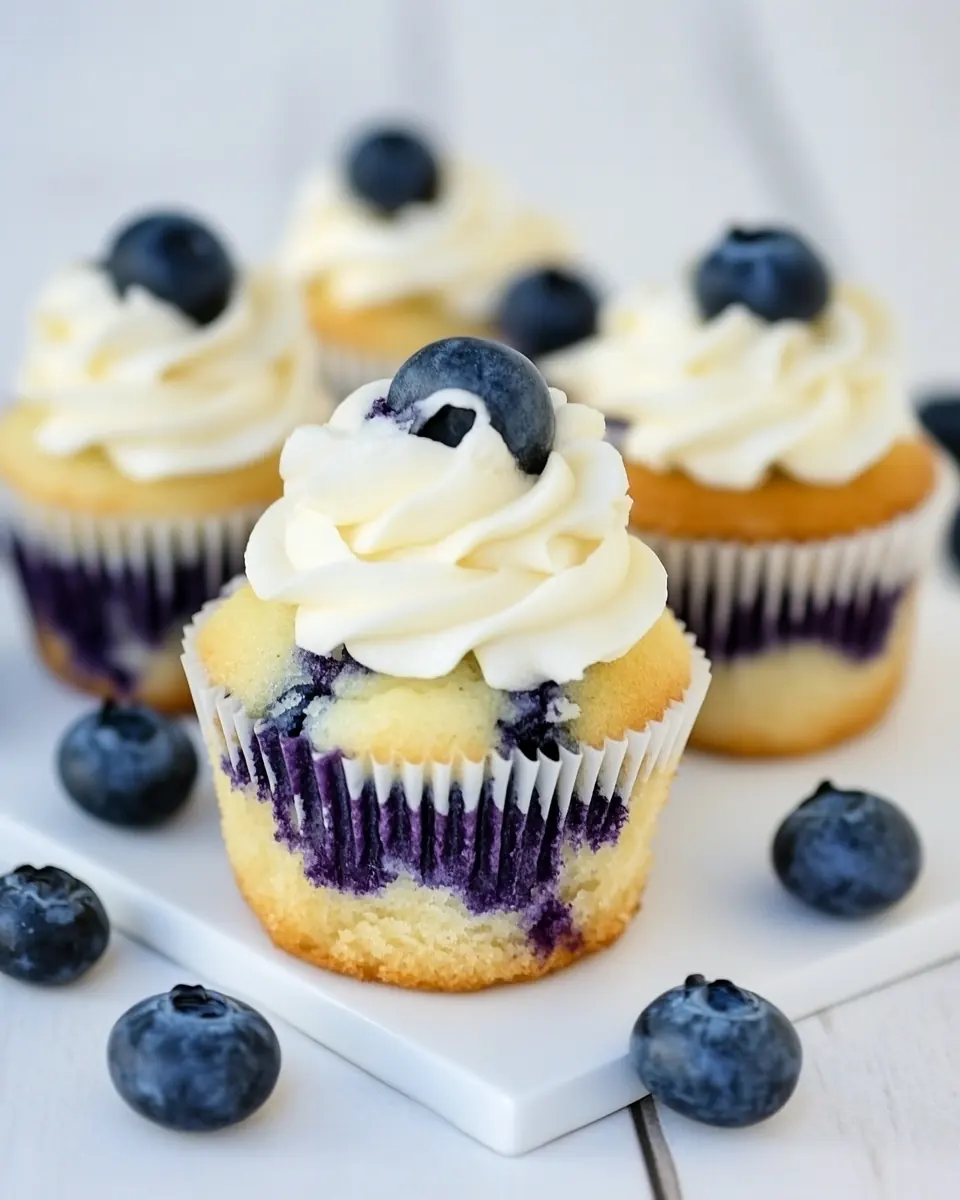
These cupcakes look wonderful with a single blueberry perched on top of each swirl of frosting. The presentation is simple and elegant, and it makes these cupcakes suitable for casual barbecues as well as more formal gatherings.
5. Versatility for bakers of all levels
Whether you are a confident baker or you are trying cupcakes for the first time, the method here is straightforward. I appreciate recipes that teach reliable techniques, and this one walks you through gentle folding of berries and cautious mixing for a dependable result.
What’s In This Blueberry Cupcakes
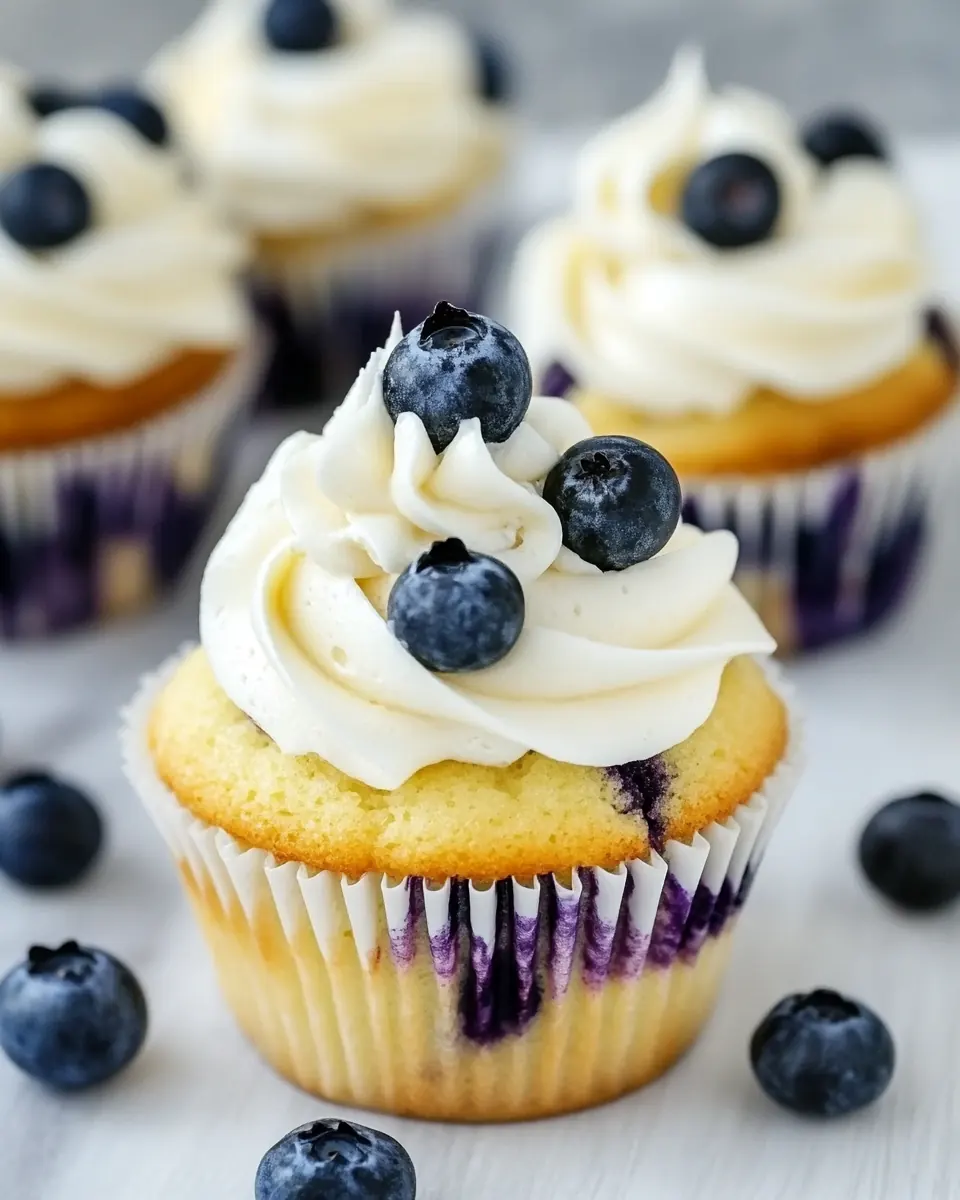
These ingredients are chosen to create a tender, flavorful cupcake that supports fresh blueberries without letting them dominate. I think of the cast as key players: the structure provided by all purpose flour, the lift from baking powder and baking soda, the richness from butter and buttermilk, and the bright punctuation from fresh blueberries. The frosting ingredients add tang and silk to finish.
- 2 1/2 cups of all-purpose flour: Provide structure and bulk to the batter, creating the framework that holds cupcakes together; sifting helps ensure even texture and removes lumps. Combine gently to avoid developing too much gluten for tender crumb and consistent rise.
- 1 teaspoon baking powder: Leaven the cupcakes by releasing carbon dioxide when heated, contributing to lift and lightness; measure carefully to avoid a bitter aftertaste. Use with baking soda for balanced rising and to react with acidic components in the batter.
- 1/2 teaspoon baking soda: Assist in leavening when paired with baking powder, helping cupcakes achieve a soft, open crumb; balance the texture and prevent dense spots. Dissolve evenly into the dry mixture to ensure uniform rise throughout the cupcakes.
- 1/2 teaspoon salt: Enhance overall flavor balance by moderating sweetness and enhancing other flavors; also strengthens gluten slightly to improve texture. Dissolve with the dry ingredients to ensure even distribution and avoid salty pockets.
- 1 1/2 cups fresh blueberries: Contribute bursts of fresh fruit flavor and moisture, adding bright sweetness and textural contrast within each cupcake; fold in gently to prevent crushing berries. Toss with a little flour before folding to help prevent sinking to the bottom during baking.
- 1/2 cup unsalted butter (room temperature): Add rich flavor and tender crumb by introducing fat that shortens gluten strands, promoting moistness and flakiness; room temperature promotes even creaming with sugar. Cream thoroughly with sugar to incorporate air for lightness and uniform texture.
- 1/4 cup canola oil: Provide additional fat to increase tenderness and moistness while keeping a lighter mouthfeel than butter alone; combine with butter for balanced richness. Measure accurately and incorporate into wet ingredients to ensure even fat distribution.
- 1 1/3 cups granulated sugar: Incorporate sweetness and assist in creaming to trap air for lighter cupcakes; sugar also helps with browning and moisture retention. Beat with butter until light and fluffy to create lift and a fine crumb structure.
- 2 large eggs (room temperature): Bind the batter, add moisture, and contribute to structure and richness; room temperature eggs emulsify fats for a smoother batter. Beat in one at a time to maintain an even, stable emulsion and consistent texture.
- 1 1/2 teaspoons vanilla extract: Provide aromatic depth and enhance the overall flavor profile with warm, sweet notes; a small amount goes a long way. Add to wet ingredients to distribute flavor evenly throughout the batter.
- 1 cup buttermilk: Introduce acidity and moisture while reacting with baking soda to aid leavening; buttermilk also tenderizes the crumb for a softer cupcake. Fold in gently with other wet ingredients to maintain a smooth batter consistency.
- 8 ounces cream cheese (room temperature): Create a tangy, creamy base for frosting, adding richness and slight acidity that balances sweetness; room temperature ensures smooth blending. Beat until smooth before adding other frosting ingredients to avoid lumps and achieve silky texture.
- 1/2 cup unsalted butter (room temperature): Contribute additional fat and richness to the frosting, enhancing spreadability and mouthfeel; room temperature prevents curdling when mixed. Cream thoroughly with cream cheese for a glossy, stable frosting consistency.
- 2 tablespoons heavy cream: Loosen the frosting to a pipeable consistency and add richness; heavy cream also helps create a smoother, silkier texture. Add gradually while beating to reach desired firmness and avoid making the frosting too runny.
- 3/4 teaspoon vanilla extract: Enhance the frosting with warm, sweet vanilla aroma and amplify other flavors; a measured amount prevents overpowering. Stir into the frosting after creaming base ingredients to ensure even distribution.
- 1/4 teaspoon salt: Balance sweetness in the frosting and subtly enhance other flavors; a pinch can sharpen the cream cheese flavor and round overall taste. Dissolve into the frosting mixture to avoid salty pockets and maintain smoothness.
- 3 cups powdered sugar (sifted): Sweeten and thicken the frosting to achieve the classic creamy, pipeable consistency; sifting prevents lumps and ensures a silky texture. Add gradually while beating to control firmness and prevent an overly sweet result.
- Garnish (optional): Offer optional visual finish and added freshness for serving, allowing customization with extra garnish like lemon zest or mint. Use sparingly to complement the frosting without overwhelming the cupcake balance.
- 24 fresh blueberries: Provide small, fresh garnish to top each cupcake for a burst of fruity flavor and attractive presentation; place individually on each frosted cupcake. Choose blemish-free berries for best visual appeal and flavor contrast.
The Method for Blueberry Cupcakes
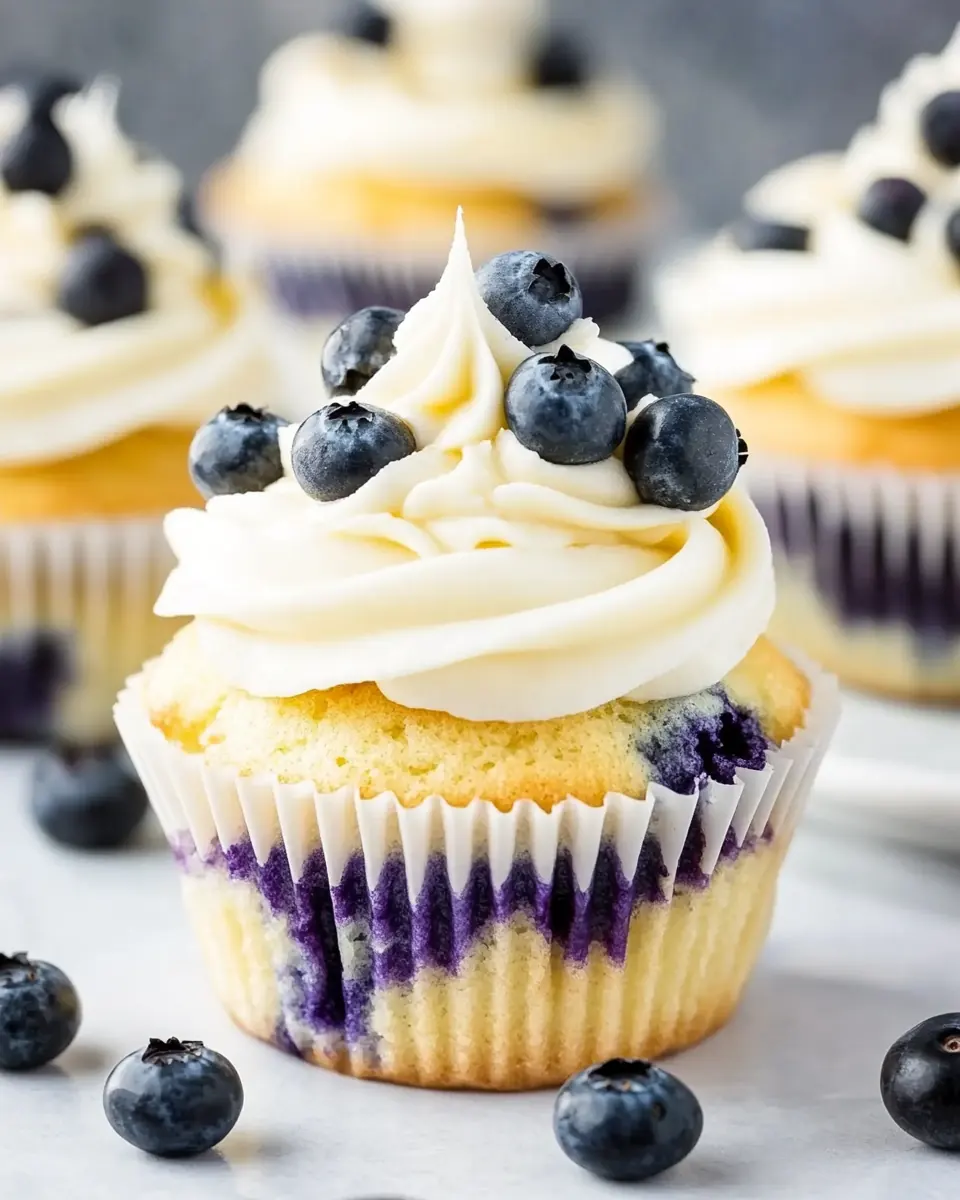
These instructions walk you through preheating and preparing pans, mixing batter while protecting the berries, baking to a perfect golden finish, and making a silky cream cheese frosting. I like to move step by step and pause to check visual cues so each cupcake comes out uniform and tender.
- Preheat the oven to 350°F. Line two (12-cup) standard muffin tins with cupcake liners. Set aside.: As the oven warms you will smell the faint dry warmth that signals readiness, and the liners help the cupcakes release cleanly. I always set racks in the center so heat circulates evenly. A common mistake is not letting the oven fully preheat, which can cause uneven rise; wait until the oven reaches temperature before baking.
- In a small mixing bowl, stir together the all-purpose flour, baking powder, baking soda, and salt.: The dry mix should look uniform, with no streaks of leavening powder. Whisking aerates the mixture slightly, which encourages an even rise. If you skip sifting or whisking, you risk pockets of baking powder that create uneven texture.
- Remove two tablespoons of the flour mixture and add to a small bowl with the fresh blueberries. Toss the berries in the flour mixture to coat them completely. Set aside.: Coating the blueberries creates a thin barrier that helps them stay suspended in the batter rather than sinking. You will notice the berries become slightly dusted and easier to fold in. If you forget this step, the berries can drop to the bottom, concentrating moisture and making the base soggy.
- In a large mixing bowl, using a handheld mixer on medium speed, cream together the unsalted butter, canola oil, and granulated sugar for 1 to 2 minutes or until the mixture is light and fluffy.: You should see the mixture lighten in color and feel airy to the touch, with a gentle ribbon forming when lifted. This aeration creates small pockets that help the cupcakes rise. Undercreaming leads to a heavier cake, while overcreaming can heat the butter and cause separation.
- To the butter mixture, add the eggs, one at a time, followed by the vanilla extract. Be sure to fully incorporate each egg into the batter before adding the next one.: The batter will look glossy and slightly looser as you add eggs, which improves structure and moisture. Mixing thoroughly prevents pockets of egg white that can steam and create holes. Rushing this step risks curdling, especially if ingredients are different temperatures.
- Next, alternate adding the dry ingredients with the buttermilk to the butter mixture. Start by adding 1/3 of the dry ingredients to the bowl. Beat on low for 30 seconds or just until the dry ingredients are incorporated. Then, add 1/2 the buttermilk and beat on low for another 30 seconds or just until incorporated. Repeat by adding the second 1/3 of the dry ingredients, followed by the second half of the buttermilk, and ending with the last 1/3 of the dry ingredients. Make sure to mix each addition just until the ingredients are incorporated. You do not want to overmix this batter, or your cupcakes will be dense and tough. You may want to scrape down the sides and bottom of the bowl between additions to ensure that all the ingredients are evenly incorporated.: You will notice the batter shifting between thicker and creamier textures as you add dry then wet; this controlled incorporation prevents overworking gluten. Stop mixing as soon as streaks disappear; overmixing yields a tough crumb, while undermixing leaves flour pockets.
- Switching to a rubber spatula, gently fold the coated blueberries into the cupcake batter, being very careful not to burst any of the berries when mixing.: The batter should become slightly thicker and you will hear a change in mixer sound as it drags more. This brief mixing prevents gluten from developing excessively. Mixing longer here creates a denser cupcake.
- Fill each cupcake paper 2/3 to 3/4 full with batter. You can use a large ice cream scoop to distribute the batter evenly.: The batter will loosen and become silky; the buttermilk adds tang and tenderness. Keep the speed low to avoid splashing and aerating too much, which can affect rise. A common misstep is adding all liquid at once, which can cause uneven texture.
- Bake for 24 to 26 minutes or until a toothpick inserted into the center comes out clean. Allow the cupcakes to cool in the pans for 5 to 10 minutes before transferring them to a wire rack to cool completely before frosting and serving.: Alternating maintains batter cohesion and gently integrates ingredients, giving a uniform crumb. I scrape the bowl between additions to ensure even incorporation. Failing to scrape can leave bands of flour in the batter.
- While your cupcakes are baking, you can make your cream cheese frosting by adding the cream cheese and unsalted butter to a large mixing bowl.: The batter should be smooth with a few small lumps acceptable; overmixing develops gluten and makes cupcakes tough. Watch closely and stop as soon as the last streaks disappear to preserve tenderness.
- Using a handheld mixer on medium speed, beat together the cream cheese and unsalted butter for 2 to 3 minutes or until the mixture is smooth and fluffy.: You want visible whole berries suspended in batter, and folding keeps them intact. The motion should be deliberate and gentle, scraping the bowl sides and bottom. Stirring aggressively will bruise the berries, releasing juice that can color and moisten the batter excessively.
- Add the heavy cream, vanilla extract, and salt to the butter and cream cheese. Beat again until fully incorporated.: The batter will settle into a nice, domed shape while baking when portions are consistent. Using a scoop gives uniform size and bakes evenly. Overfilling causes spillover and underfilling leads to flat tops, so portion carefully.
- Add the sifted powdered sugar, one cup at a time, to the cream cheese mixture and beat on low speed until all the powdered sugar has been added and your frosting is thick and smooth.: The cupcakes should be golden at the edges and spring back gently when touched. The aroma will become buttery and faintly sweet. If a toothpick comes out with wet batter, bake a few minutes longer; overbaking dries the crumb.
- Cover your bowl of cream cheese frosting with a piece of plastic wrap and store it in the refrigerator while your cupcakes are baking and cooling. Frost the cooled blueberry cupcakes with the cream cheese frosting. You can use a large piping bag fitted with a large decorative tip to pipe out the cream cheese frosting if desired.: Cooling briefly in the pan helps them settle and prevents the tops from tearing when removed. Transfer to a rack to avoid steam making the bottoms soggy. Frosting warm cupcakes will cause the frosting to melt and slide off.
- You can add a fresh blueberry to the tops of each of your frosted cupcakes as garnish.: The cool cream cheese and butter will soften into a creamy base that whips up light. Starting with room temperature ingredients ensures a smooth emulsion. If ingredients are too cold, you will get lumps; too warm and the frosting will be loose.
- Using a handheld mixer on medium speed, beat together the cream cheese and unsalted butter for 2 to 3 minutes or until the mixture is smooth and fluffy.: You will see the texture go from dense to airy, and the sound of the mixer will change as it becomes lighter. This creates a stable base for adding liquid and sugar. Underbeating leaves firmness that resists piping, while overbeating can make the mixture too soft.
- Add the heavy cream, vanilla extract, and salt to the butter and cream cheese. Beat again until fully incorporated.: The frosting will become silkier and slightly lighter; the salt sharpens flavor. Mixing fully ensures even sweetness and spreadability. Adding liquid too quickly can make the frosting runny.
- Add the sifted powdered sugar, one cup at a time, to the cream cheese mixture and beat on low speed until all the powdered sugar has been added and your frosting is thick and smooth.: Sifting prevents lumps and helps the sugar integrate without dust clouds. The frosting will thicken with each addition and achieve a pipeable consistency at the end. If you add sugar too fast you may end up with gritty frosting.
- Cover your bowl of cream cheese frosting with a piece of plastic wrap and store it in the refrigerator while your cupcakes are baking and cooling.: Chilling firms the frosting so it is easier to pipe and hold shape. I chill for at least 15 minutes, but not so long that the mixture becomes rock solid. If overchilled, let it sit at room temperature briefly and rewhip until smooth.
- Frost the cooled blueberry cupcakes with the cream cheese frosting.: The finished look should be neat swirls that sit atop tender crowns; piping creates a professional finish. Work on completely cooled cupcakes so the frosting does not slide. Frosting warm cupcakes will melt the texture and ruin presentation.
- You can add a fresh blueberry to the tops of each of your frosted cupcakes as garnish.: A single blueberry provides a pop of color and a hint of freshness, and it signals the flavor inside. Place garnishes just before serving for the best visual effect. If you add them too early, they can make the frosting moisten and weep.
Tips and Variations
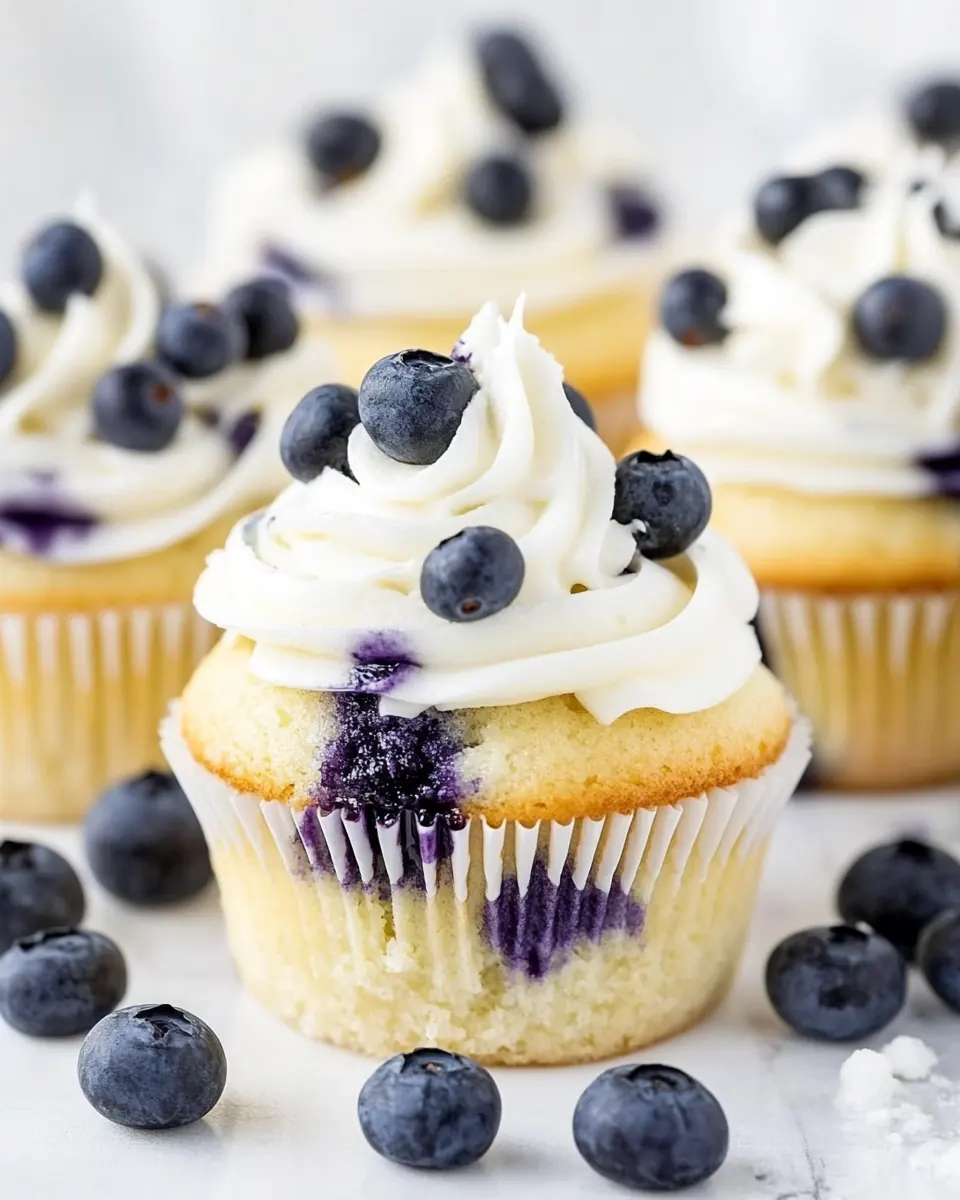
I like to offer practical, simple tweaks that keep the core recipe intact while letting you personalize texture or presentation. Below are ways I use the same basic batter and frosting approach to adapt for crowds or different occasions.
- Double the frosting if you prefer a generous, bakery style top, as noted in the recipe notes, and pipe extra for dramatic presentation.
- Keep berries whole and fold them gently so they provide bursts of flavor rather than a uniform berry color throughout the batter.
- Chill frosting briefly before piping to ensure defined swirls and to prevent the frosting from sliding off the cupcakes.
- Sift powdered sugar to avoid lumps and to produce a smooth, creamy frosting that whips easily.
- Use a scoop to portion batter evenly so cupcakes bake uniformly and look consistent on a platter.
Side Dish Ideas for Blueberry Cupcakes
These cupcakes shine at summer gatherings and pair beautifully with light beverages or simple accompaniments. Think of serving styles that complement the sweet fruity profile, while offering variety on the table.
- For brunch, offer a platter of Blueberry Cupcakes alongside fresh fruit and yogurt for an easy layered spread that appeals to guests who want a sweet bite with morning options.
- For afternoon tea, present the cupcakes with delicate finger sandwiches and a pot of hot tea, creating a refined pairing where the cupcakes offer a sweet contrast to savory bites.
- For a picnic, pack the cupcakes in a single layer container with parchment between rows, pairing them with crisp apples or a simple green salad for a balanced outdoor meal.
- For a birthday, arrange the cupcakes on a tiered stand with edible flowers or extra blueberries for an elevated decoration that feels celebratory without fuss.
- Storage tips include keeping frosted cupcakes in an airtight container in the refrigerator for up to two days, and allowing them to sit at room temperature for 20 minutes before serving to soften the frosting.
- Seasonal pairing suggests serving these during summer gatherings when fresh blueberries are at their peak and produce the best flavor and texture.
FAQ
Conclusion
What makes these Blueberry Cupcakes special is the balance between a tender, moist crumb and the bright pops of fresh blueberries, finished with smooth cream cheese frosting. Give the recipe a try and notice how small technique choices, like tossing berries in flour and gentle folding, transform the final cake. Bake them for a weekend treat or a summer gathering; they travel well and always draw compliments for their classic flavor and pleasing texture.
Blueberry Cupcakes
Ingredients
Equipment
Method
- Preheat the oven to 350°F. Line two (12-cup) standard muffin tins with cupcake liners. Set aside.: As the oven warms you will smell the faint dry warmth that signals readiness, and the liners help the cupcakes release cleanly. I always set racks in the center so heat circulates evenly. A common mistake is not letting the oven fully preheat, which can cause uneven rise; wait until the oven reaches temperature before baking.
- In a small mixing bowl, stir together the all-purpose flour, baking powder, baking soda, and salt.: The dry mix should look uniform, with no streaks of leavening powder. Whisking aerates the mixture slightly, which encourages an even rise. If you skip sifting or whisking, you risk pockets of baking powder that create uneven texture.
- Remove two tablespoons of the flour mixture and add to a small bowl with the fresh blueberries. Toss the berries in the flour mixture to coat them completely. Set aside.: Coating the blueberries creates a thin barrier that helps them stay suspended in the batter rather than sinking. You will notice the berries become slightly dusted and easier to fold in. If you forget this step, the berries can drop to the bottom, concentrating moisture and making the base soggy.
- In a large mixing bowl, using a handheld mixer on medium speed, cream together the unsalted butter, canola oil, and granulated sugar for 1 to 2 minutes or until the mixture is light and fluffy.: You should see the mixture lighten in color and feel airy to the touch, with a gentle ribbon forming when lifted. This aeration creates small pockets that help the cupcakes rise. Undercreaming leads to a heavier cake, while overcreaming can heat the butter and cause separation.
- To the butter mixture, add the eggs, one at a time, followed by the vanilla extract. Be sure to fully incorporate each egg into the batter before adding the next one.: The batter will look glossy and slightly looser as you add eggs, which improves structure and moisture. Mixing thoroughly prevents pockets of egg white that can steam and create holes. Rushing this step risks curdling, especially if ingredients are different temperatures.
- Next, alternate adding the dry ingredients with the buttermilk to the butter mixture. Start by adding 1/3 of the dry ingredients to the bowl. Beat on low for 30 seconds or just until the dry ingredients are incorporated. Then, add 1/2 the buttermilk and beat on low for another 30 seconds or just until incorporated. Repeat by adding the second 1/3 of the dry ingredients, followed by the second half of the buttermilk, and ending with the last 1/3 of the dry ingredients. Make sure to mix each addition just until the ingredients are incorporated. You do not want to overmix this batter, or your cupcakes will be dense and tough. You may want to scrape down the sides and bottom of the bowl between additions to ensure that all the ingredients are evenly incorporated.: You will notice the batter shifting between thicker and creamier textures as you add dry then wet; this controlled incorporation prevents overworking gluten. Stop mixing as soon as streaks disappear; overmixing yields a tough crumb, while undermixing leaves flour pockets.
- Switching to a rubber spatula, gently fold the coated blueberries into the cupcake batter, being very careful not to burst any of the berries when mixing.: The batter should become slightly thicker and you will hear a change in mixer sound as it drags more. This brief mixing prevents gluten from developing excessively. Mixing longer here creates a denser cupcake.
- Fill each cupcake paper 2/3 to 3/4 full with batter. You can use a large ice cream scoop to distribute the batter evenly.: The batter will loosen and become silky; the buttermilk adds tang and tenderness. Keep the speed low to avoid splashing and aerating too much, which can affect rise. A common misstep is adding all liquid at once, which can cause uneven texture.
- Bake for 24 to 26 minutes or until a toothpick inserted into the center comes out clean. Allow the cupcakes to cool in the pans for 5 to 10 minutes before transferring them to a wire rack to cool completely before frosting and serving.: Alternating maintains batter cohesion and gently integrates ingredients, giving a uniform crumb. I scrape the bowl between additions to ensure even incorporation. Failing to scrape can leave bands of flour in the batter.
- While your cupcakes are baking, you can make your cream cheese frosting by adding the cream cheese and unsalted butter to a large mixing bowl.: The batter should be smooth with a few small lumps acceptable; overmixing develops gluten and makes cupcakes tough. Watch closely and stop as soon as the last streaks disappear to preserve tenderness.
- Using a handheld mixer on medium speed, beat together the cream cheese and unsalted butter for 2 to 3 minutes or until the mixture is smooth and fluffy.: You want visible whole berries suspended in batter, and folding keeps them intact. The motion should be deliberate and gentle, scraping the bowl sides and bottom. Stirring aggressively will bruise the berries, releasing juice that can color and moisten the batter excessively.
- Add the heavy cream, vanilla extract, and salt to the butter and cream cheese. Beat again until fully incorporated.: The batter will settle into a nice, domed shape while baking when portions are consistent. Using a scoop gives uniform size and bakes evenly. Overfilling causes spillover and underfilling leads to flat tops, so portion carefully.
- Add the sifted powdered sugar, one cup at a time, to the cream cheese mixture and beat on low speed until all the powdered sugar has been added and your frosting is thick and smooth.: The cupcakes should be golden at the edges and spring back gently when touched. The aroma will become buttery and faintly sweet. If a toothpick comes out with wet batter, bake a few minutes longer; overbaking dries the crumb.
- Cover your bowl of cream cheese frosting with a piece of plastic wrap and store it in the refrigerator while your cupcakes are baking and cooling. Frost the cooled blueberry cupcakes with the cream cheese frosting. You can use a large piping bag fitted with a large decorative tip to pipe out the cream cheese frosting if desired.: Cooling briefly in the pan helps them settle and prevents the tops from tearing when removed. Transfer to a rack to avoid steam making the bottoms soggy. Frosting warm cupcakes will cause the frosting to melt and slide off.
- You can add a fresh blueberry to the tops of each of your frosted cupcakes as garnish.: The cool cream cheese and butter will soften into a creamy base that whips up light. Starting with room temperature ingredients ensures a smooth emulsion. If ingredients are too cold, you will get lumps; too warm and the frosting will be loose.
- Using a handheld mixer on medium speed, beat together the cream cheese and unsalted butter for 2 to 3 minutes or until the mixture is smooth and fluffy.: You will see the texture go from dense to airy, and the sound of the mixer will change as it becomes lighter. This creates a stable base for adding liquid and sugar. Underbeating leaves firmness that resists piping, while overbeating can make the mixture too soft.
- Add the heavy cream, vanilla extract, and salt to the butter and cream cheese. Beat again until fully incorporated.: The frosting will become silkier and slightly lighter; the salt sharpens flavor. Mixing fully ensures even sweetness and spreadability. Adding liquid too quickly can make the frosting runny.
- Add the sifted powdered sugar, one cup at a time, to the cream cheese mixture and beat on low speed until all the powdered sugar has been added and your frosting is thick and smooth.: Sifting prevents lumps and helps the sugar integrate without dust clouds. The frosting will thicken with each addition and achieve a pipeable consistency at the end. If you add sugar too fast you may end up with gritty frosting.
- Cover your bowl of cream cheese frosting with a piece of plastic wrap and store it in the refrigerator while your cupcakes are baking and cooling.: Chilling firms the frosting so it is easier to pipe and hold shape. I chill for at least 15 minutes, but not so long that the mixture becomes rock solid. If overchilled, let it sit at room temperature briefly and rewhip until smooth.
- Frost the cooled blueberry cupcakes with the cream cheese frosting.: The finished look should be neat swirls that sit atop tender crowns; piping creates a professional finish. Work on completely cooled cupcakes so the frosting does not slide. Frosting warm cupcakes will melt the texture and ruin presentation.
- You can add a fresh blueberry to the tops of each of your frosted cupcakes as garnish.: A single blueberry provides a pop of color and a hint of freshness, and it signals the flavor inside. Place garnishes just before serving for the best visual effect. If you add them too early, they can make the frosting moisten and weep.
Notes
- Double the frosting if you prefer a generous, bakery style top, as noted in the recipe notes, and pipe extra for dramatic presentation.
- Keep berries whole and fold them gently so they provide bursts of flavor rather than a uniform berry color throughout the batter.
- Chill frosting briefly before piping to ensure defined swirls and to prevent the frosting from sliding off the cupcakes.
- Sift powdered sugar to avoid lumps and to produce a smooth, creamy frosting that whips easily.
- Use a scoop to portion batter evenly so cupcakes bake uniformly and look consistent on a platter.