Eggnog Eclair Cake
Eggnog Eclair Cake began showing up at holiday tables in my family before I was tall enough to reach the counter, and its layers of pillowy shell, custardy filling, and cloud like topping always felt like a secret celebration. I remember the way my aunt would smile as she sliced into the chilled slab, the faint sweet scent of egg nog filling the kitchen, and how everyone lingered a little longer over their plates. Over the years I adapted the recipe, learning to balance richness and lightness so each bite feels indulgent but never heavy.
When I make Eggnog Eclair Cake now, I think about those small details that turn a simple dessert into a memory. The baked shell needs to be just set and slightly golden, so it provides structure without chalkiness. The filling should taste of creamy egg nog and tang from the cream cheese, with the pudding acting like glue that keeps everything dreamy and sliceable. Finally, the whipped heavy whipping cream on top gives that classic eclair silhouette, ready for a playful drizzle of chocolate syrup.
I like serving it after a relaxed dinner, when conversation is warm and people are ready for something nostalgic. Each forkful offers contrast, and I love watching friends lean in, surprised at how something so simple can be so layered. This recipe has become my go to for holiday gatherings, because it travels well, slices cleanly, and feeds a crowd without fuss. If you have a soft spot for festive flavors and easy assembly, this will probably earn a permanent spot in your dessert rotation too.
Recipe Snapshot
4 hr 25 mins
240 mins
25 mins
Hard
300 kcal
American
Gluten-Free, Low FODMAP
Desserts
9×13 glass baking dish, medium pot, whisk, mixing bowl, stand mixer or handheld mixer
The Charm of This Eggnog Eclair Cake
Comforting seasonal flavor
I love how Eggnog Eclair Cake captures winter in a single dessert. The presence of egg nog gives a warming spice and cream note that feels festive, without needing complicated steps. It evokes holiday nostalgia, and I often hear guests say it tastes like a memory from childhood.
Make ahead ease
This cake is forgiving with timing, you can assemble it a day ahead and it only improves as the layers settle. I enjoy the freedom this gives me on the day of a party, because chilling lets flavors marry and the texture becomes perfectly sliceable. That peace of mind is a big reason I keep this recipe in my arsenal.
Textural contrast
The combination of a baked shell that is tender yet structured, a silky cream cheese and pudding filling, and a fluffy whipped heavy whipping cream topping creates a delightful contrast. I pay attention to this balance because it is what keeps every bite interesting, and guests often comment on the interplay of textures.
Crowd pleasing simplicity
There is very little hands on time once you assemble, and most of the ingredients are pantry friendly. I value recipes that let me focus on company rather than complicated technique, and this one reliably performs without drama. It is easy to scale, which makes it a practical choice for larger gatherings.
Playful finishing touch
A drizzle of chocolate syrup adds visual flair and an extra layer of flavor that complements the spiced egg nog. I like adding that last creative element because it turns a humble sheet into something worth photographing and sharing with friends.
Eggnog Eclair Cake Shopping List
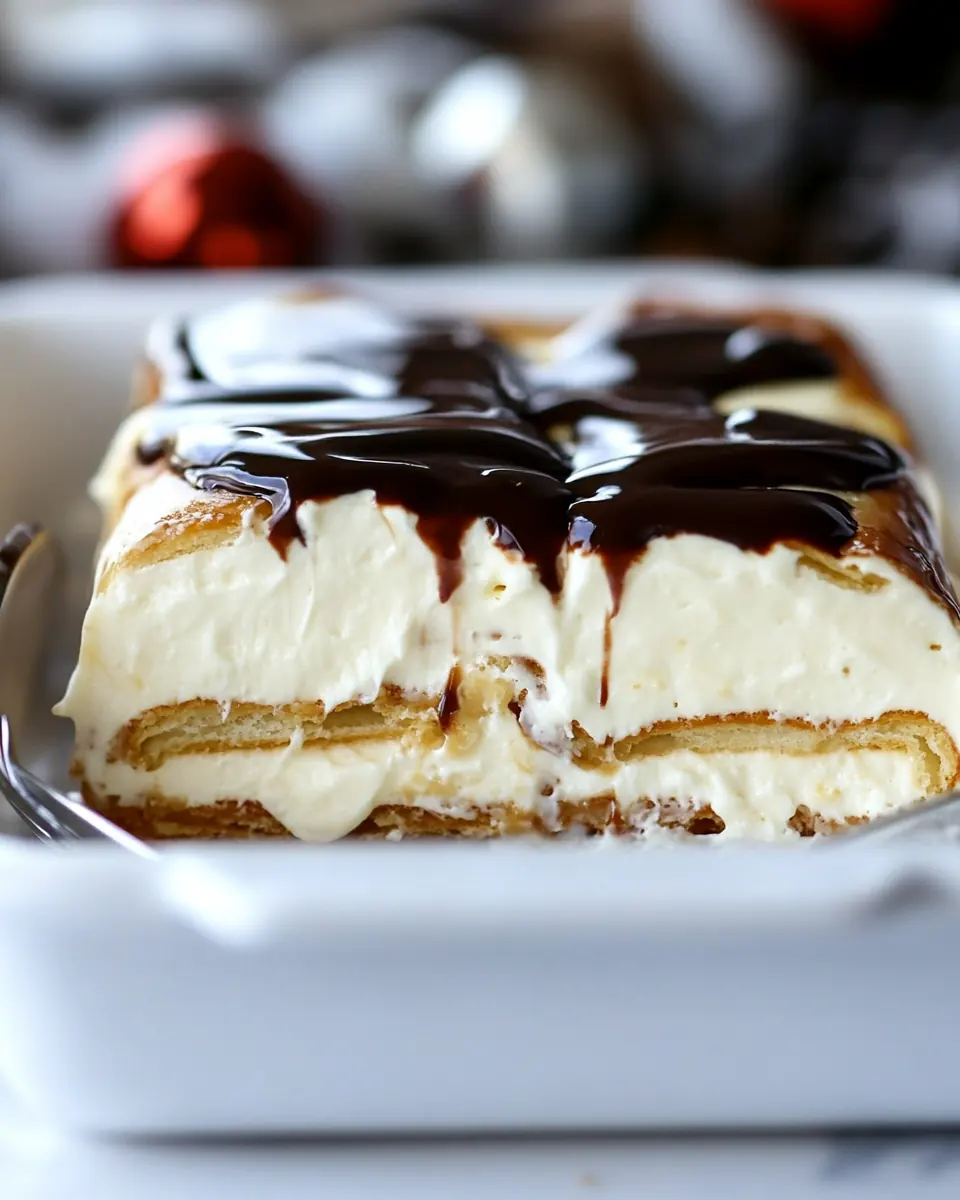
This list is built around a few star players that work together to create a festive, layered dessert. The baked shell forms the structural base, the pudding and cream cheese make a luxuriously smooth filling, and the whipped heavy whipping cream brightens the top. I consider texture, flavor, and ease when selecting these items, aiming for ingredients that marry well without extra fuss.
- 1/2 cup butter: Melted and rich, provides fat and structure to the choux-like pastry while aiding browning and flavor development during baking.
- 1 cup cold water: Cold and measured, used to create steam for leavening the pastry dough and to dissolve salt and sugar for even distribution.
- 1 cup all purpose flour: Sifted and all-purpose, supplies the bulk of the dough, forming gluten that gives the pastry its tender yet structured crumb.
- 1/2 teaspoons salt: Finely measured to balance flavor and strengthen the dough’s structure; helps control yeast-free dough hydration and taste.
- 1 1/2 tablespoons sugar: Lightly sweetens the pastry batter to enhance browning and give a subtle sweetness without overwhelming the custard filling.
- 4 large eggs: Room–temperature eggs whisked into the dough for lift, richness, and stabilization; they create steam and emulsify fats for a glossy, airy pastry.
- 1 small box instant vanilla pudding mix: Instant vanilla pudding powder used as a quick thickening agent and flavor booster for the filling, improving creaminess and stability.
- 1 1/2 cups egg nog: Creamy and spiced, egg nog adds traditional holiday flavor and liquid to hydrate the pudding mix and integrate with the cream base.
- 8 oz cream cheese at room temperature: Softened to room temperature to ensure smooth blending, provides tang and richness to the filling while stabilizing texture.
- 1 cup heavy whipping cream: Whipped to soft peaks, contributes volume and lightness to the filling, making the cream mixture airy and scoopable.
- 1 teaspoon vanilla: Adds aromatic vanilla flavor to the filling and whipped cream, enhancing overall sweetness and depth without additional texture.
- 3 tablespoons powdered sugar: Powdered and sifted into the whipped cream, sweetens gently and helps stabilize the whipped texture for spreadable consistency.
- chocolate syrup to drizzle over the top, if desired: Drizzled sparingly as an optional finishing touch, imparts chocolate richness and visual contrast to complement the eggnog flavors.
Step by Step Guide for Eggnog Eclair Cake
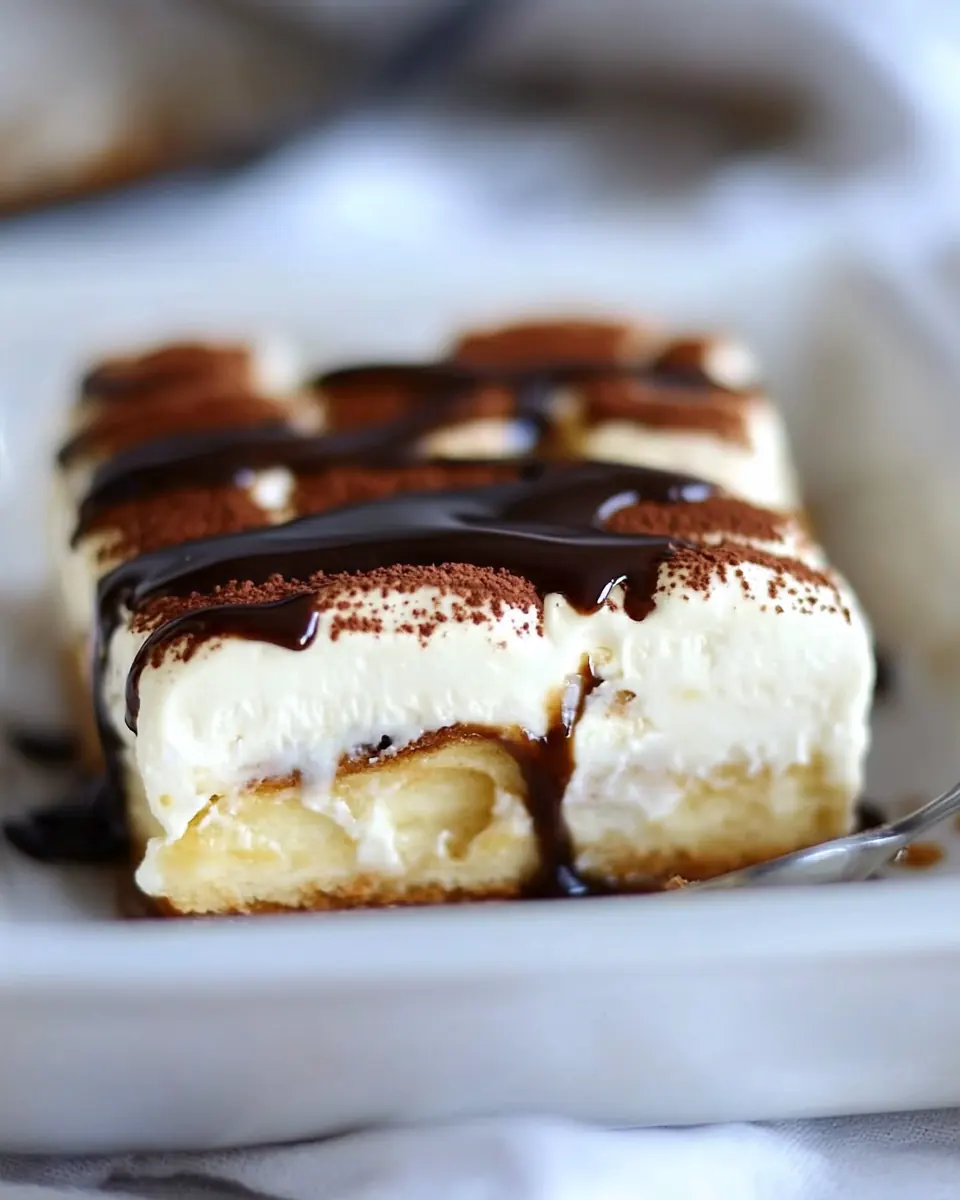
Below I expand each direction into a rich, sensory guide so you know what to look, smell, and feel for at every stage. Take your time with each part, and enjoy how the elements come together as the cake chills and settles.
- Preheat oven to 400 degrees. Spray 9×13 glass baking dish with nonstick cooking spray and set aside.: Warm air fills the kitchen as the oven approaches 400 degrees , and you may notice a faint metallic hum from the heating elements. This temperature jump is important because it helps set the batter quickly, encouraging a pleasantly puffed and lightly golden shell. Avoid opening the oven frequently while it heats, because losing heat can change how evenly the shell bakes. A common mistake is not giving the oven enough time to reach the full temperature, which can result in an under risen base that feels dense instead of tender.
- In a medium pot, bring butter and water to a boil. Remove from heat and whisk in flour, salt and sugar until a dough forms. Cool 10 minutes.: When you spritz the 9×13 glass baking dish , the surface becomes glossy and ready to release the baked shell easily once it cools, which is essential for neat slicing. The glass will retain heat and encourage even browning along the edges, so I like using it for consistent results. A slip up is forgetting to coat the dish fully, which can lead to sticking at the corners when you try to lift or slice the cake; take a moment to cover every area.
- Stir in eggs, 1 at a time, incorporating each time to make a smooth mixture that will seem half way between a dough and a batter.: As the butter melts into the water , you will hear a soft bubbling and smell warm butterfat; when it reaches a lively boil the mixture will shimmer. This step creates the moisture and steam that helps the flour bind correctly, producing the right shell texture. Be careful not to let the butter brown, because that would change the flavor profile of the base. A frequent error is boiling too aggressively, which can cause rapid evaporation and alter the dough consistency.
- Once all eggs are incorporated, pour into prepared baking dish and spread evenly across the bottom and up the sides 3/4 inch or so. Bake for 25 minutes or until puffed and lightly golden. Cool completely.: Off the heat, add the all purpose flour , salt , and sugar , then whisk until the mixture pulls away from the pot as a smooth dough. You will notice a slight glossy sheen and a springy texture when you stir; that signals proper hydration and gluten development for this laminated style shell. If the flour is not fully incorporated you can end up with lumps or a crumbly base, so work quickly and decisively to ensure a uniform dough.
- In a large bowl, whisk vanilla pudding mix with egg nog 2 minutes to thicken. Stir in cream cheese and mix until smooth. A stand mixer or hand held mixer is best for this!: Letting the dough cool for about ten minutes prevents the eggs from cooking when you add them, which keeps the mixture silky and manageable. During this pause the dough relaxes and becomes easier to beat in the eggs without curdling. Rushing this step risks scrambled bits in the dough, and that will affect the final texture of the shell.
- Spread over the bottom of the baked shell.: As you add each large egg , the mixture will change from dense to glossy and slightly flowing, and the rhythm of incorporation is crucial to reach the correct balance. The sound becomes quieter as the batter smooths, and the look shifts to a satiny, cohesive mass. Adding eggs too quickly can give you a separated texture, so pause and fully blend each one before adding the next.
- For the topping, whip heavy whipping cream with vanilla and powdered sugar until stiff peaks form. Spread over filling. Refrigerate up to 3 days {covered completely with plastic wrap}. To serve, cut into squares and drizzle with chocolate syrup.: The batter should be thick yet spreadable, and as you smooth it across the 9×13 glass baking dish you will see gentle ribbons level out. Building the edges a bit helps create that classic eclair rim for holding the filling. If you press too heavily or make the layer uneven, the baked shell can brown unevenly or form thin spots that soak the filling, so aim for an even, moderate thickness.
- Bake for 25 minutes or until puffed and lightly golden.: The oven will fill with a warm, buttery scent, and you will see the shell puff and take on a light golden tone around the edges. The texture should be springy to the touch and set in the center, not wet or doughy. Opening the oven too soon can cause the structure to collapse, so rely on visual cues and the recommended time. A common mistake is underbaking, which leaves a gummy interior that clouds the texture once chilled.
- Cool completely.: Cooling lets the shell firm so the filling will sit neatly without sinking. The surface will lose its initial warmth and return to room temperature, and you may notice the aroma mellow slightly. If you try to assemble while the shell is still warm, the filling may soften too much and migrate, making slices messy; patience here pays off.
- In a large bowl, whisk vanilla pudding mix with egg nog 2 minutes to thicken.: As you whisk the instant vanilla pudding mix into the egg nog , the mixture will turn glossy and begin to thicken within minutes, forming the custardy backbone of the filling. The whisking rhythm builds structure and prevents lumps, producing a smooth, spoonable consistency. If you under whisk you might end up with a runny filling that will not set properly in the shell.
- Stir in cream cheese and mix until smooth.: Adding room temperature 8 oz cream cheese transforms the pudding into a richer, tangy filling; mixing until homogenous ensures there are no pockets of unblended cream cheese . Using a stand mixer or handheld mixer helps achieve a perfectly smooth texture, but you can also beat by hand with elbow grease. A common pitfall is working with cold cream cheese , which leads to lumps and an inconsistent mouthfeel.
- Spread over the bottom of the baked shell.: The filling should glide over the cooled shell in a thick, even layer, forming a creamy plane that will contrast with the whipped topping. Smooth it to the edges so each slice has a balanced ratio of shell to filling. If the filling seems too thin, chilling briefly will help it firm; if it is too stiff, a gentle stir can soften it without sacrificing structure.
- For the topping, whip heavy whipping cream with vanilla and powdered sugar until stiff peaks form.: As you beat cold heavy whipping cream with vanilla and powdered sugar , the volume will rise and the texture will shift from liquid to billowy peaks that hold their shape. The sound becomes lighter and the beater leaves visible trails, signaling readiness. Over whipping can turn the cream grainy and eventually into butter, so stop as soon as firm peaks appear and you see glossy lift.
- Spread over filling.: The whipped topping should sit like a cloud over the filling, smoothing into soft peaks and sealing the dessert. This layer not only adds visual appeal but also a light counterpoint to the rich filling. If you spread too forcefully, you might disrupt the filling beneath, so work gently with broad strokes.
- Refrigerate up to 3 days covered completely with plastic wrap.: Chilling solidifies the layers and lets flavors meld, and covering completely prevents the surface from drying or picking up odors from the fridge. Over time the layers integrate and the texture becomes ideal for slicing, though after a few days the shell may soften slightly. A typical error is storing it uncovered, which can lead to a skin forming on the whipped cream and a less appealing presentation.
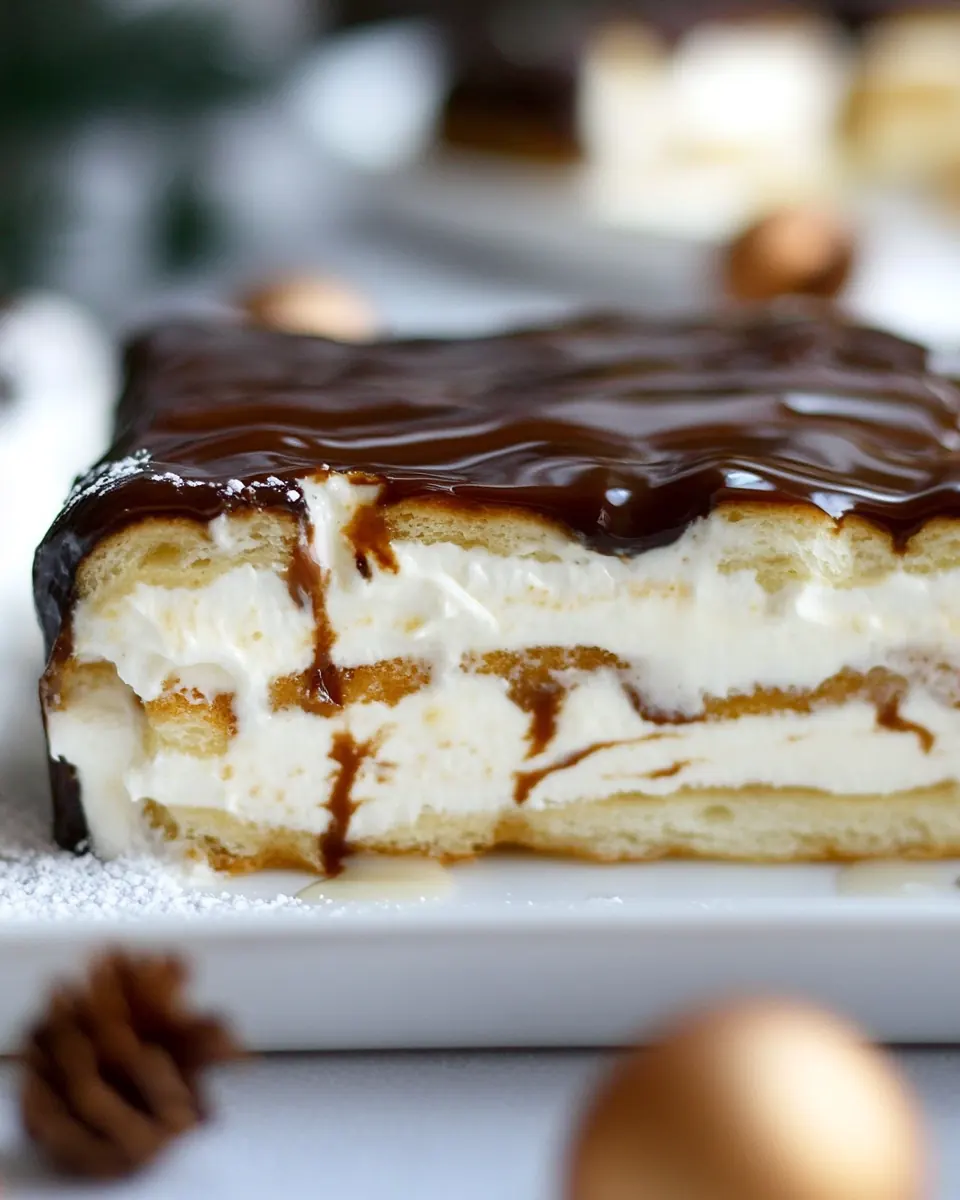
- To serve, cut into squares and drizzle with chocolate syrup.: When you slice chilled squares, the clean edges and layered cross section are satisfying, and a light drizzle of chocolate syrup adds shine and flavor contrast. Use a sharp knife and wipe it between cuts for neat portions. Cutting too soon, or with a dull blade, can create ragged pieces that hide the cake s elegant layers.
Recipe Tips about Eggnog Eclair Cake
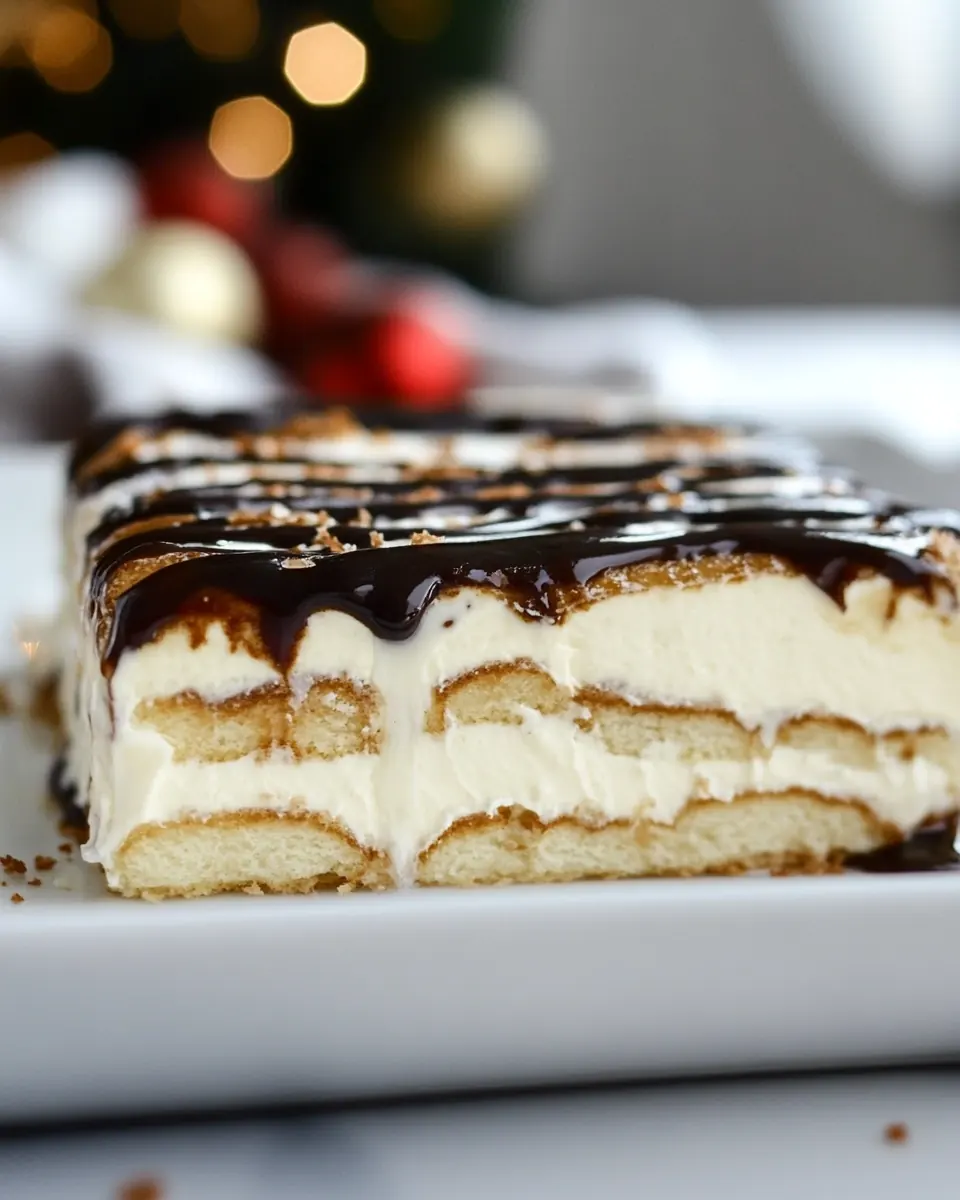
This intro explains why small technique choices matter, and how tiny adjustments can elevate the final result. Read each tip before you begin, and keep these practical notes in mind while assembling and chilling the dessert.
- Temperature matters: Always bring cream cheese to room temperature before mixing to avoid lumps in the filling and to ensure a silky texture.
- Cold tools for cream: Chill your bowl and beaters briefly before whipping the heavy whipping cream to help it reach stiff peaks faster and with more stability.
- Measure flour accurately: Spoon and level the all purpose flour when measuring to prevent a dry, dense shell; too much flour changes the structure dramatically.
- Mix pudding thoroughly: Whisk the instant vanilla pudding mix and egg nog for the full two minutes to avoid any grainy pockets and to ensure a smooth custard like filling.
- Cover well while chilling: Wrap the assembled cake tightly with plastic wrap so the whipped topping does not absorb fridge odors and the layers set uniformly.
- Use a sharp knife for serving: For clean slices, chill thoroughly and cut with a sharp knife, wiping the blade between cuts to preserve neat edges and layered presentation.
What Complements This Eggnog Eclair Cake
This cake works well as a centerpiece dessert for holiday meals, and the pairings below cover occasions, storage, and serving styles. Think about rhythm and contrast when choosing accompaniments, and emphasize simple elements that let the dessert shine.
- Holiday dessert table: Serve slices alongside a selection of small cookies or spiced nuts for variety, letting guests choose between the soft layered cake and crisp, bite sized treats.
- After dinner centerpiece: Present Eggnog Eclair Cake after a cozy family dinner, allowing the chilled slices to offer a cool, creamy finish to heavier mains.
- Casual gatherings: Because it feeds many, this is ideal for potlucks and office parties; cut into squares and arrange on a platter for easy self service.
- Storage tips: Keep the cake covered and refrigerated for up to three days to maintain texture; if you need to freeze, wrap tightly and thaw slowly in the refrigerator to reduce moisture loss.
- Seasonal pairing: The spiced notes of egg nog are most at home in winter, making this dessert great for Christmas or other winter celebrations where warm flavors are appreciated.
FAQ
Conclusion
This Eggnog Eclair Cake is special because it blends festive egg nog flavor with contrasting textures, creating a dessert that feels both nostalgic and elegantly simple. I encourage you to give it a try at your next winter gathering, because it feeds a crowd, requires minimal fuss, and rewards patience with beautifully layered slices. Enjoy the process of assembling it, and take pride in serving a dessert that invites second helpings and warm compliments.
Eggnog Eclair Cake
Ingredients
Equipment
Method
- Preheat oven to 400 degrees. Spray 9×13 glass baking dish with nonstick cooking spray and set aside.: Warm air fills the kitchen as the oven approaches 400 degrees , and you may notice a faint metallic hum from the heating elements. This temperature jump is important because it helps set the batter quickly, encouraging a pleasantly puffed and lightly golden shell. Avoid opening the oven frequently while it heats, because losing heat can change how evenly the shell bakes. A common mistake is not giving the oven enough time to reach the full temperature, which can result in an under risen base that feels dense instead of tender.
- In a medium pot, bring butter and water to a boil. Remove from heat and whisk in flour, salt and sugar until a dough forms. Cool 10 minutes.: When you spritz the 9×13 glass baking dish , the surface becomes glossy and ready to release the baked shell easily once it cools, which is essential for neat slicing. The glass will retain heat and encourage even browning along the edges, so I like using it for consistent results. A slip up is forgetting to coat the dish fully, which can lead to sticking at the corners when you try to lift or slice the cake; take a moment to cover every area.
- Stir in eggs, 1 at a time, incorporating each time to make a smooth mixture that will seem half way between a dough and a batter.: As the butter melts into the water , you will hear a soft bubbling and smell warm butterfat; when it reaches a lively boil the mixture will shimmer. This step creates the moisture and steam that helps the flour bind correctly, producing the right shell texture. Be careful not to let the butter brown, because that would change the flavor profile of the base. A frequent error is boiling too aggressively, which can cause rapid evaporation and alter the dough consistency.
- Once all eggs are incorporated, pour into prepared baking dish and spread evenly across the bottom and up the sides 3/4 inch or so. Bake for 25 minutes or until puffed and lightly golden. Cool completely.: Off the heat, add the all purpose flour , salt , and sugar , then whisk until the mixture pulls away from the pot as a smooth dough. You will notice a slight glossy sheen and a springy texture when you stir; that signals proper hydration and gluten development for this laminated style shell. If the flour is not fully incorporated you can end up with lumps or a crumbly base, so work quickly and decisively to ensure a uniform dough.
- In a large bowl, whisk vanilla pudding mix with egg nog 2 minutes to thicken. Stir in cream cheese and mix until smooth. A stand mixer or hand held mixer is best for this!: Letting the dough cool for about ten minutes prevents the eggs from cooking when you add them, which keeps the mixture silky and manageable. During this pause the dough relaxes and becomes easier to beat in the eggs without curdling. Rushing this step risks scrambled bits in the dough, and that will affect the final texture of the shell.
- Spread over the bottom of the baked shell.: As you add each large egg , the mixture will change from dense to glossy and slightly flowing, and the rhythm of incorporation is crucial to reach the correct balance. The sound becomes quieter as the batter smooths, and the look shifts to a satiny, cohesive mass. Adding eggs too quickly can give you a separated texture, so pause and fully blend each one before adding the next.
- For the topping, whip heavy whipping cream with vanilla and powdered sugar until stiff peaks form. Spread over filling. Refrigerate up to 3 days {covered completely with plastic wrap}. To serve, cut into squares and drizzle with chocolate syrup.: The batter should be thick yet spreadable, and as you smooth it across the 9×13 glass baking dish you will see gentle ribbons level out. Building the edges a bit helps create that classic eclair rim for holding the filling. If you press too heavily or make the layer uneven, the baked shell can brown unevenly or form thin spots that soak the filling, so aim for an even, moderate thickness.
- Bake for 25 minutes or until puffed and lightly golden.: The oven will fill with a warm, buttery scent, and you will see the shell puff and take on a light golden tone around the edges. The texture should be springy to the touch and set in the center, not wet or doughy. Opening the oven too soon can cause the structure to collapse, so rely on visual cues and the recommended time. A common mistake is underbaking, which leaves a gummy interior that clouds the texture once chilled.
- Cool completely.: Cooling lets the shell firm so the filling will sit neatly without sinking. The surface will lose its initial warmth and return to room temperature, and you may notice the aroma mellow slightly. If you try to assemble while the shell is still warm, the filling may soften too much and migrate, making slices messy; patience here pays off.
- In a large bowl, whisk vanilla pudding mix with egg nog 2 minutes to thicken.: As you whisk the instant vanilla pudding mix into the egg nog , the mixture will turn glossy and begin to thicken within minutes, forming the custardy backbone of the filling. The whisking rhythm builds structure and prevents lumps, producing a smooth, spoonable consistency. If you under whisk you might end up with a runny filling that will not set properly in the shell.
- Stir in cream cheese and mix until smooth.: Adding room temperature 8 oz cream cheese transforms the pudding into a richer, tangy filling; mixing until homogenous ensures there are no pockets of unblended cream cheese . Using a stand mixer or handheld mixer helps achieve a perfectly smooth texture, but you can also beat by hand with elbow grease. A common pitfall is working with cold cream cheese , which leads to lumps and an inconsistent mouthfeel.
- Spread over the bottom of the baked shell.: The filling should glide over the cooled shell in a thick, even layer, forming a creamy plane that will contrast with the whipped topping. Smooth it to the edges so each slice has a balanced ratio of shell to filling. If the filling seems too thin, chilling briefly will help it firm; if it is too stiff, a gentle stir can soften it without sacrificing structure.
- For the topping, whip heavy whipping cream with vanilla and powdered sugar until stiff peaks form.: As you beat cold heavy whipping cream with vanilla and powdered sugar , the volume will rise and the texture will shift from liquid to billowy peaks that hold their shape. The sound becomes lighter and the beater leaves visible trails, signaling readiness. Over whipping can turn the cream grainy and eventually into butter, so stop as soon as firm peaks appear and you see glossy lift.
- Spread over filling.: The whipped topping should sit like a cloud over the filling, smoothing into soft peaks and sealing the dessert. This layer not only adds visual appeal but also a light counterpoint to the rich filling. If you spread too forcefully, you might disrupt the filling beneath, so work gently with broad strokes.
- Refrigerate up to 3 days covered completely with plastic wrap.: Chilling solidifies the layers and lets flavors meld, and covering completely prevents the surface from drying or picking up odors from the fridge. Over time the layers integrate and the texture becomes ideal for slicing, though after a few days the shell may soften slightly. A typical error is storing it uncovered, which can lead to a skin forming on the whipped cream and a less appealing presentation.
- To serve, cut into squares and drizzle with chocolate syrup.: When you slice chilled squares, the clean edges and layered cross section are satisfying, and a light drizzle of chocolate syrup adds shine and flavor contrast. Use a sharp knife and wipe it between cuts for neat portions. Cutting too soon, or with a dull blade, can create ragged pieces that hide the cake s elegant layers.
Notes
- Temperature matters: Always bring cream cheese to room temperature before mixing to avoid lumps in the filling and to ensure a silky texture.
- Cold tools for cream: Chill your bowl and beaters briefly before whipping the heavy whipping cream to help it reach stiff peaks faster and with more stability.
- Measure flour accurately: Spoon and level the all purpose flour when measuring to prevent a dry, dense shell; too much flour changes the structure dramatically.
- Mix pudding thoroughly: Whisk the instant vanilla pudding mix and egg nog for the full two minutes to avoid any grainy pockets and to ensure a smooth custard like filling.
- Cover well while chilling: Wrap the assembled cake tightly with plastic wrap so the whipped topping does not absorb fridge odors and the layers set uniformly.
- Use a sharp knife for serving: For clean slices, chill thoroughly and cut with a sharp knife, wiping the blade between cuts to preserve neat edges and layered presentation.