Spinach Pie
Spinach Pie has been one of those recipes that follows me from kitchen to kitchen, a comforting circle of flaky pastry and verdant filling that always brings people together.
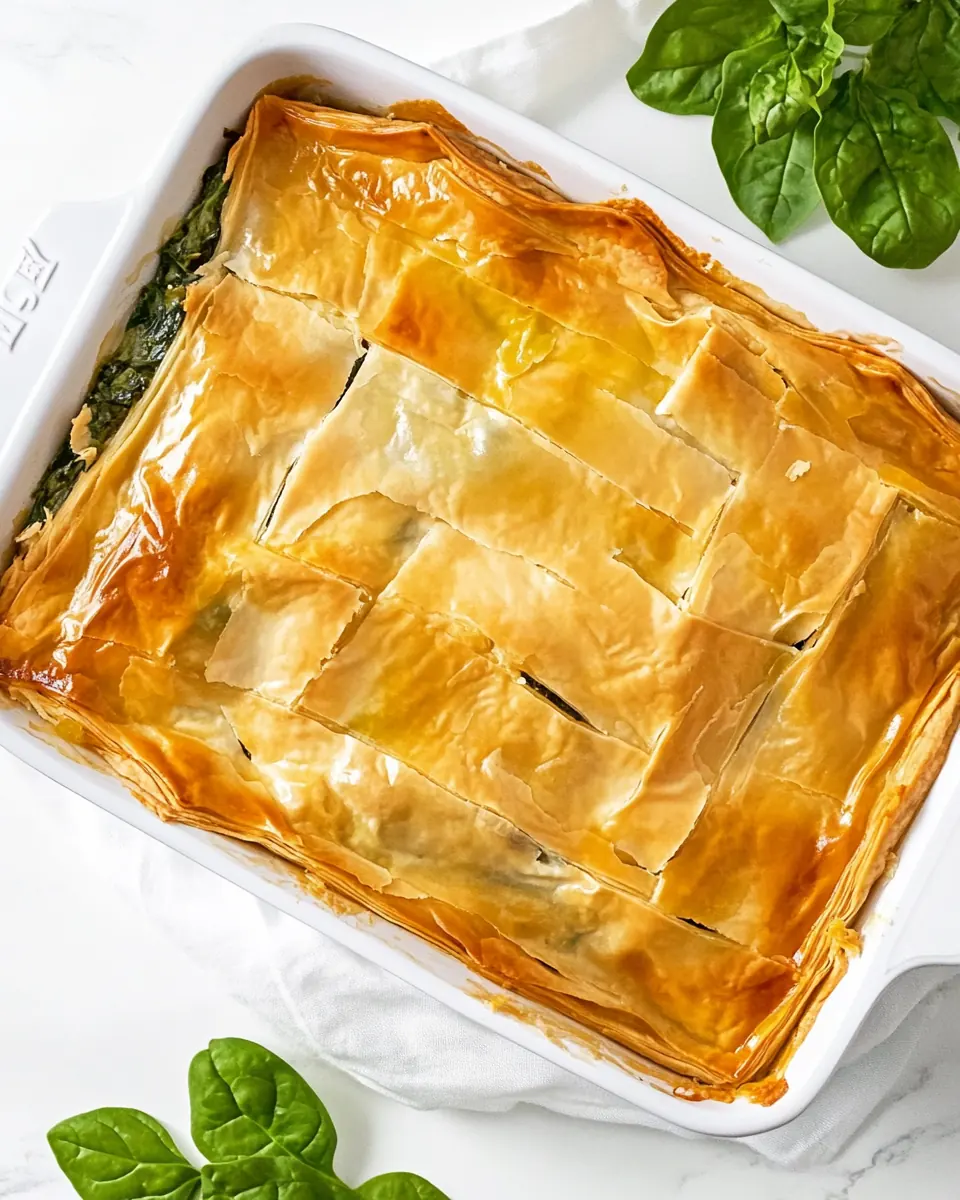
I first learned to make Spinach Pie on an evening when the market stalls were overflowing with baby spinach and herbs, and I wanted something that felt celebratory but not fussy. I remember the way the house filled with the warm scent of sautéed onion and celery, the butter notes rising and softening into the greens as they wilted. There was a slow sense of satisfaction as I pressed the cooked herbs to remove their moisture, knowing that crisp, crackly pastry demands a dry filling. The first time I pulled the pie out of the oven it was a revelation, the top a golden wrinkled blanket hiding a creamy, tangy interior. Guests leaned in for a piece and the room went quiet in the best possible way.
Over the years I have tweaked the ratio of cheeses and herbs, learning how a little extra feta cheese brightens everything, while ricotta cheese keeps the texture lusciously smooth. I love how this dish travels from casual lunch to holiday table, and the way leftovers reheat like a dream. When I make Spinach Pie now, I think about those first evenings, and I try to preserve that balance of crisp pastry, herbal lift, and melty, savory filling.
Recipe Snapshot
1 hr 15 mins
25 mins
50 mins
Medium
300 kcal
Mediterranean
Keto, Gluten-Free
Dinner
Large sauté pan, 9 X 13 inch baking dish, Fine mesh strainer, Pastry brush
The Magic of This Spinach Pie
Flavor that balances richness and brightness
I adore how Spinach Pie marries the creamy tang of ricotta cheese and the salty bite of feta cheese with fresh herbs. The cheeses give you a voluptuous mouthfeel, while the herbs, especially the mint leaves and dill, cut through and keep every bite lively. I find that this contrast makes people reach for seconds.
Herb forward and adaptable
We get an herbal punch from parsley, scallions, and mint leaves, which keeps the filling bright instead of heavy. I often vary amounts based on what looks freshest at the market, and the recipe still sings. The herb mix also helps the pie feel light enough for lunch yet substantial enough for dinner.
Textural delight, thanks to flaky pastry
The delicate, layered sheets of filo dough create a satisfying contrast to the smooth filling. When baked with brushed ghee, the pastry becomes deeply golden and crisp. I love the little crackle as you cut into the pie, and the scattering of crumbs that remind you this is homemade.
Make ahead friendly and crowd pleasing
This pie scales easily, which is why I reach for it when hosting. You can prepare the filling in advance, stack and brush the filo dough ahead of time, and assemble right before baking. It feeds a crowd yet still feels special, which is a rare combo in my kitchen and one reason this recipe has stuck around.
Comfort with an elegant edge
Finally, Spinach Pie feels both homey and refined. There is a slow, comforting familiarity from the cheeses and cooked greens, but the herb mix and flaky pastry give it an elegant finish. I like dishes that can do both, and this recipe does it effortlessly.
Everything You Need for Spinach Pie
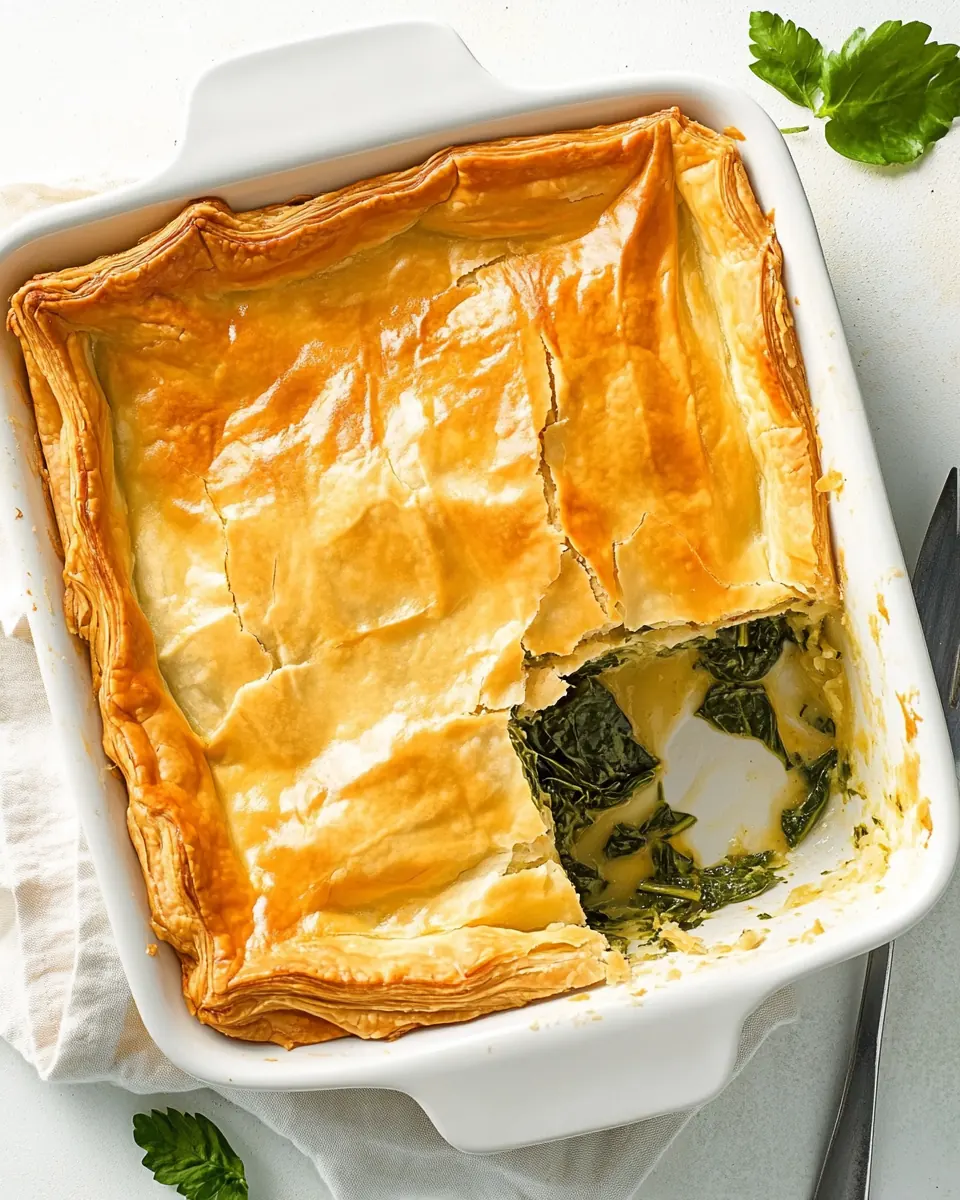
These ingredients are selected to create a balance of texture, flavor, and structure. The cheeses provide cream and tang, the fresh herbs add lift and brightness, the aromatics build savory depth, and the filo dough delivers the irresistible crisp exterior. Together they form a cohesive whole where each ingredient plays a clear role.
- 2 tablespoons ghee + more for brushing (or use half olive oil and half melted butter): Melted and aromatic, used to sauté vegetables and brush the filo for a rich, golden finish; provides a nutty, buttery flavor that enhances the pie’s crust and filling while preventing sticking.
- 16 ounces fresh baby spinach (or swiss chard): Tender and leafy, cooked down to concentrate flavor and provide the bulk of the filling; contributes moisture, green color, and a mild earthy taste that pairs well with cheeses and herbs.
- 1 large sweet onion peeled and chopped: Sweet and aromatic when softened, chopped and sautéed to build the savory base; adds a natural sweetness and depth that balances the greens and cheeses in the filling.
- 1 cup chopped celery: Crisp and aromatic, chopped and sautéed to add texture and a subtle vegetal note; helps lift the overall flavor profile with mild bitterness and structural contrast.
- 1 cup chopped scallions: Mild and oniony, sliced and added for a fresh, bright scallion flavor; enhances overall aroma and adds delicate, springlike sharpness to the filling.
- 1 cup chopped parsley: Bright and herbaceous, finely chopped to add freshness and herb depth; contributes leafy texture and a slightly peppery, clean flavor that complements the cheeses.
- 1/2 cup chopped mint leaves: Cooling and fragrant, chopped to introduce a bright, mentholated lift; balances richness with a refreshing herbal note that lightens the filling.
- 3 tablespoons chopped dill: Fragrant and feathery, chopped finely to bring an anise-like freshness; adds aromatic complexity and pairs particularly well with the other herbs and cheeses.
- 8 ounces ricotta cheese: Creamy and mild, folded into the greens to create a silky, cohesive filling; adds moisture, soft texture, and a subtle dairy sweetness that binds ingredients together.
- 6 ounces shredded cheddar cheese (off the block): Sharp and melty, grated to introduce a bold, savory cheese element; provides gooeyness when heated and a tangy counterpoint to the ricotta and feta.
- 4 ounces crumbled feta cheese: Salty and crumbly, mixed into the filling to add tang and savory complexity; contributes bright, briny notes that cut through richer dairy flavors.
- 2 large eggs: Rich and binding, whisked with cheeses and herbs to help set the filling during baking; adds structure, moisture, and a tender custard-like texture when cooked.
- 1 teaspoon salt: Seasoning the mixture, used to enhance and balance flavors; brings out natural tastes of the vegetables, herbs, and cheeses without overpowering them.
- 1 teaspoon garlic powder: Savory and concentrated, sprinkled into the filling mixture to add depth and a hint of garlic flavor without fresh garlic’s moisture; complements herbs and cheeses.
- 1/2 teaspoon ground black pepper: Warm and peppery, measured into the filling to provide mild heat and contrast; brightens flavors and balances the richness of the cheeses and ghee.
- 12 sheets filo dough thawed (about 9 ounces): Crisp and delicate, layered and brushed with fat to form the flaky exterior; provides a light, paper-thin crust that becomes golden and crunchy when baked.
Instructions for Spinach Pie
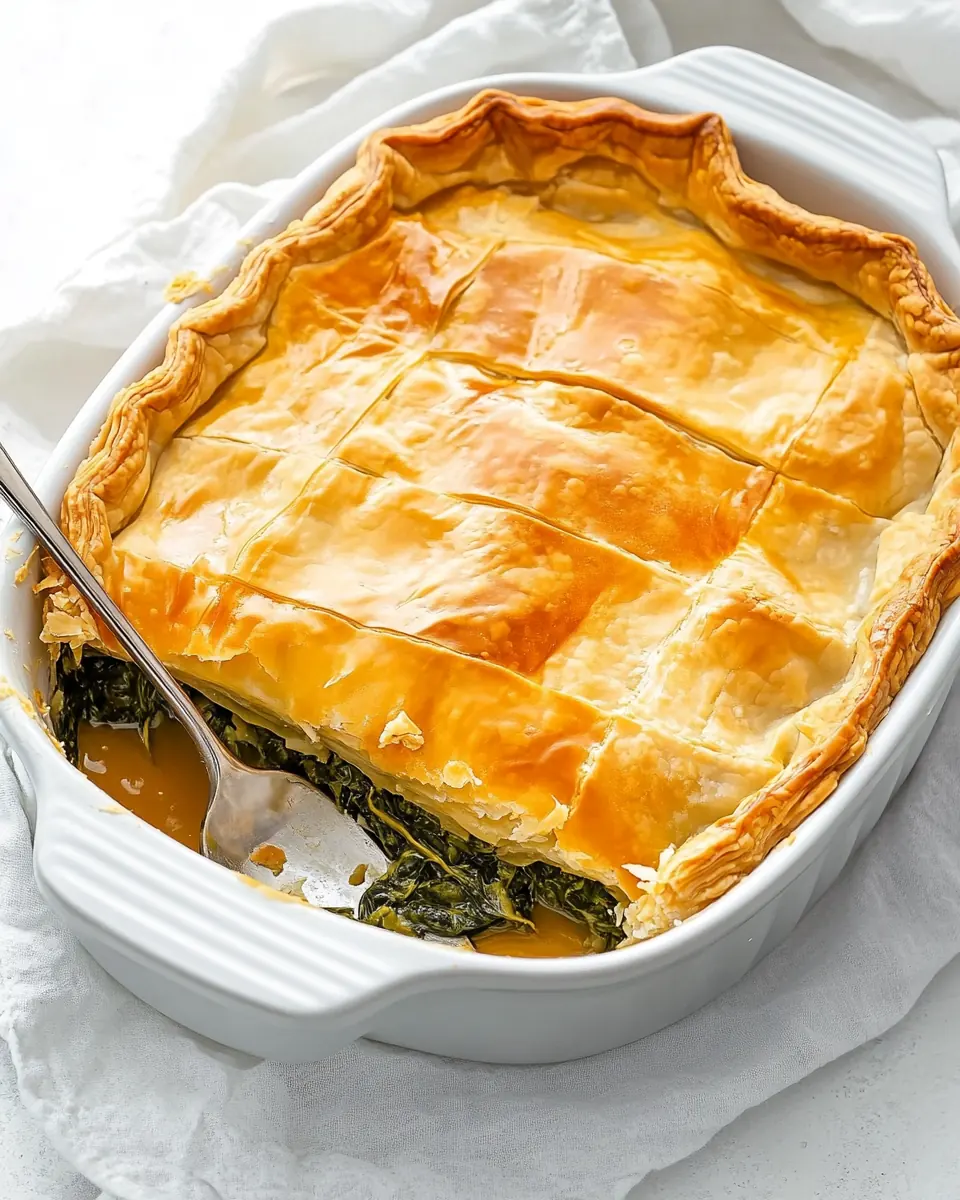
This is a hands on, rewarding bake where timing and texture matter. Follow the steps carefully, keep your filo dough covered, and press the greens well so the pastry stays crisp.
- Preheat the oven to 400 degrees F. Set a large sauté pan over medium-low heat, and set out a 9 X 13 inch baking dish.: The moment you put the oven on you set the stage for the pastry to brown properly, and that first heat pulse ensures even baking. You should hear the oven fan kick in and feel warmth when you open the door after a few minutes, which tells you the environment is ready for the pie. If you skip preheating, the filo dough may take longer to brown and could absorb more moisture, making it less crisp. A common mistake is placing the pie in a cold oven, which changes bake time and texture, so always allow the oven to reach temperature first.
- Add the ghee to the sauté pan. Once melted, add the onions and celery. Sauté for 5-8 minutes to soften and release the moisture.: Heating the pan gently is key to soften aromatics without burning them, while having the dish ready means you can transfer the layered filo dough quickly once assembled. You want to hear a faint sizzle when the fat hits the pan, not a loud roar, which signals the right temperature. If your pan is too hot, the onion and celery will color too quickly and develop bitter notes, so moderate the heat and adjust as you go.
- Next add the spinach. Sauté another 5-8 minutes until the spinach has completely wilted down. Then add the scallions, parsley, mint, and dill. Sauté another 2-3 minutes.: When the ghee melts, it should shimmer but not smoke, releasing a warm nutty scent that enhances the aromatics. This smell is an invitation to add the onions and celery , which will soften and become translucent. If the ghee smokes, reduce the heat immediately to avoid burnt flavors. Overcrowding the pan at this stage can steam the vegetables instead of sautéing them, so give them some room.
- Move the cooked greens to a fine mesh strainer. Press the greens down to remove as much moisture as possible. Then use a paper towel to press again until the greens seem dry. *Too much moisture in the filling will make it difficult for the pastry sheets to stay crisp.: As the vegetables hit the pan you should hear a gentle sizzling and notice the onion softening, releasing a sweet aroma. Sauté for 5 to 8 minutes until they are tender and just starting to pick up color, stirring occasionally to ensure even cooking. The goal is a soft base, not a deeply caramelized one, because the greens will add their own complexity. Burnt or undercooked pieces happen when heat is too high or low, so keep stirring and watch the texture.
- Place the dried greens back in the pan. Add in all cheese, eggs, and seasonings. Mix well.: As the vegetables soften they will give off moisture that helps deglaze the pan and blend flavors, making a mellow base for the greens. You should see small bubbles as moisture evaporates and smell a rounded, savory aroma. If you rush this step, the aromatics will stay raw and harsh; conversely, overcooking will produce bitterness. Timing and attention are the safeguards here.
- Prepare a small bowl of melted ghee. Brush a thin layer of ghee across the bottom of the baking dish. Place a filo sheet out on a clean work surface. Brush the top of the filo sheet with ghee. Then lay another filo sheet across the top. Continue to layer and brush the filo until you have 6 sheets stacked. Move the stack to the baking dish.: When you add the spinach it will initially mound in the pan, then quickly collapse and provide a deep green, earthy scent. Sauté another 5 to 8 minutes until the spinach is fully wilted and glossy, stirring to ensure uniform cooking. You want the leaves to be soft and concentrated in flavor, not stringy or raw. A common error is overcrowding the pan which steams the greens instead of sautéing them; work in batches if needed.
- Spread the spinach and cheese filling evenly over the pastry sheets.: During this time the pan will become fragrant with herbaceous, slightly sweet notes, and the volume will reduce dramatically. Keep an eye on the color, which should be a deep, vibrant green and not dull or muted. Overcooking can make the leaves mushy and cause loss of bright flavor, so stop when fully wilted.
- Then prepare a second filo stack for the top crust. However, this time overlap the filo sheets so they are wider than the top of the baking dish. You want to have a wide enough stack to be able to create wrinkles in the top crust. Brush and overlap 6 filo sheets with a 2-inch lip on either side, so the final stack is 4 inches wider than the bottom stack.: Adding the herbs at this point preserves their fresh aromatics, which release bright, green scents as they warm. Stir for 2 to 3 minutes so the herbs marry with the cooked greens without turning brown. If you add herbs too early they can lose their freshness and become muted, so timing is important to retain lively flavors.
- Move the filo stack to the top of the baking dish. Tuck the edges into the corners and sides. Gently press the top down, just a little, to create wrinkles in the top crust. Brush the top with ghee.: This brief period is enough to soften the herbs and let them infuse the mixture, creating layers of flavor that cut through the richness of the cheeses. You should smell a fragrant, green complexity building. Overexposure to heat will flatten these notes, so be precise and quick with this finish.
- Bake the spinach pie for 35-40 minutes, until golden brown. If the crust starts to look brown too early, cover the top loosely with a piece of foil, and continue baking.: Transferring the greens to a strainer allows gravity and gentle pressure to remove free moisture, which is crucial for a crisp filling. You will see liquid collect beneath the sieve, and pressing gently will expel even more water. If you skip this step, the excess moisture will steam the filo dough and ruin the texture, so be diligent and patient while draining.
- Allow the pie to cool for at least 5 minutes. Then cut into 12 pieces and serve.: Use the back of a spoon or a bowl to press the greens firmly, then press again with paper towels until the greens feel dry. The tactile feedback is clear when the greens stop releasing water, and the filling will be denser and more cohesive. Not pressing enough is the most common mistake, leading to a soggy pie, so take your time here.
- Then use a paper towel to press again until the greens seem dry.: The final press with paper towels should leave the greens slightly tacky but not wet, ensuring the filling will set properly and the pastry will remain crisp. You should see minimal moisture on the towel when done. If the towel is dripping, repeat pressing to avoid a compromised crust.
- Place the dried greens back in the pan.: Returning the greens to the warm pan helps them integrate with residual savory notes and removes any chill, allowing cheeses and eggs to combine smoothly. The pan should be off heat or very low so you do not cook the eggs on contact later. If the pan is too hot, the eggs may scramble when added, changing the intended creamy texture.
- Add in all cheese, eggs, and seasonings.: When you fold in ricotta cheese , cheddar cheese , feta cheese , beaten eggs , salt , garlic powder , and ground black pepper , the mixture should become cohesive and slightly glossy. The cheeses melt into the warmth of the greens, creating a smooth, uniform filling. Mix thoroughly so there are no dry pockets; insufficient mixing can yield uneven seasoning and texture.
- Mix well.: Stir until the filling looks uniform, with flecks of green and pockets of melted cheese. It should feel creamy and hold together when scooped. Taste a small amount to check seasoning, remembering that the feta cheese adds saltiness. Overseasoning is easy at this stage, so adjust cautiously.
- Prepare a small bowl of melted ghee.: Have the melted ghee at hand for layering the filo dough , as brushing needs to be steady and continuous. The warm ghee seals layers and promotes even browning. If the ghee cools and solidifies, rewarm gently, because cold fat will tear the delicate sheets.
- Brush a thin layer of ghee across the bottom of the baking dish.: This base coat prevents sticking and helps the bottom sheets brown evenly. A thin even brush ensures the dish is protected without pooling oil, which would make the bottom soggy. Too much ghee at the bottom can lead to a greasy crust, so keep it light.
- Place a filo sheet out on a clean work surface.: Handle each sheet carefully, keeping the rest covered with a damp towel to prevent drying. The sheet should be pliable and translucent; if edges crack you can patch them by overlapping. Ripping happens when sheets dry, so maintain moisture in the remaining stack.
- Brush the top of the filo sheet with ghee.: A gentle, even brushing ensures even browning and separation of layers. Use a pastry brush and avoid puddles, which create soggy spots. If you brush too forcefully you may tear the sheet, so use light strokes.
- Then lay another filo sheet across the top.: Stacking sheets immediately after brushing creates the layered structure that will puff and crisp in the oven. Align them so edges match, and repeat until you have the bottom stack. Misaligned sheets can create uneven edges, so take a moment to square them up.
- Continue to layer and brush the filo until you have 6 sheets stacked.: The bottom stack acts as a sturdy, flaky base that supports the filling. Each brushed layer separates and crisps independently, producing that signature shattering texture. Skipping layers or under brushing reduces flakiness, so complete the stack as directed.
- Move the stack to the baking dish.: Carefully transfer the prepared stack so it sits flat on the ghee brushed surface. Press it gently to seat the layers, ensuring even contact. If the stack shifts, the filling may pool in spots, so smooth it into place.
- Spread the spinach and cheese filling evenly over the pastry sheets.: Use a spatula to distribute the filling in an even layer, reaching into corners so the pie bakes uniformly. The filling should be level and not mound high, which could crack the top crust while baking. Uneven filling is the typical error here, leading to inconsistent baking, so take time to smooth it out.
- Then prepare a second filo stack for the top crust.: For the top, you want overlap so the stack is wider than the dish, allowing for neat tucking and pleasing wrinkles. Work quickly to keep sheets pliable and cover them while not in use. If the sheets dry, they will tear when you try to tuck.
- Overlap the filo sheets so they are wider than the top of the baking dish.: Creating a 4 inch wider final stack gives you room to tuck edges and form rustic wrinkles, which browns and adds visual interest. Ensure the overlap is even to avoid thin spots that brown faster. Uneven overlap can produce weak areas that flake away while baking.
- Brush and overlap 6 filo sheets with a 2 inch lip on either side, so the final stack is 4 inches wider than the bottom stack.: This lip becomes the tucking allowance that secures the top to the base, and brushing each layer assures crispness across the crust. If you leave the lip too small you may not be able to tuck cleanly, causing gaps where filling could escape.
- Move the filo stack to the top of the baking dish.: Gently place the top stack so it covers the filling and extends over the edges for tucking. Make sure you position it centered to keep the look balanced. If the top is off center the tucks will be uneven and the pie may not hold together as nicely.
- Tuck the edges into the corners and sides.: Tucking secures the top and bottom layers and creates the characteristic wrinkled surface. Work methodically around the dish, making gentle folds until the top sits snugly. Being sloppy here can cause the top to separate during baking, so tidy your tucks.
- Gently press the top down, just a little, to create wrinkles in the top crust.: The wrinkles encourage attractive browning and a rustic texture, and they trap tiny pockets of air that expand and crisp in the oven. Press lightly; pressing too hard will flatten the layers and reduce the flakiness. The correct pressure produces a pleasing, crinkled aesthetic.
- Brush the top with ghee.: A final brushing adds sheen and promotes even golden color. The surface should look glossy and evenly coated, not dripping. Uneven brushing can leave pale spots that look underdone after baking.
- Bake the spinach pie for 35-40 minutes, until golden brown.: As the pie bakes you will notice a rich toasty aroma and the top deepening to a golden brown. The sound of a faint crackle and small flakes falling into the dish indicates crispness. If the crust browns too quickly, tent with foil to avoid burning, and continue baking until the internal filling is set. Pulling the pie too early can result in a loose filling, while overbaking can dry it out, so rely on both color and a slight set in the center.
- If the crust starts to look brown too early, cover the top loosely with a piece of foil, and continue baking.: Shielding the crust prevents over browning while allowing the filling to finish cooking, preserving both color and texture. Tent loosely to keep steam from condensing on the crust. Wrapping too tightly can trap steam and soften the top, so keep the foil loose.
- Allow the pie to cool for at least 5 minutes.: Resting lets the filling set so slices hold their shape and the pastry finishes crisping. You will notice the aroma mellow slightly during this pause, and the pie will be easier to cut. Cutting immediately often causes the filling to spill, so patience is rewarded here.
- Then cut into 12 pieces and serve.: Use a sharp knife and make decisive cuts to preserve the flaky edges, serving warm so you experience the contrast between the crisp crust and the creamy filling. If slices are too hot, they may slump, so allow a short rest before serving. A frequent error is trying to move pieces before they have set, which leads to messy plating.
Tips and Variations
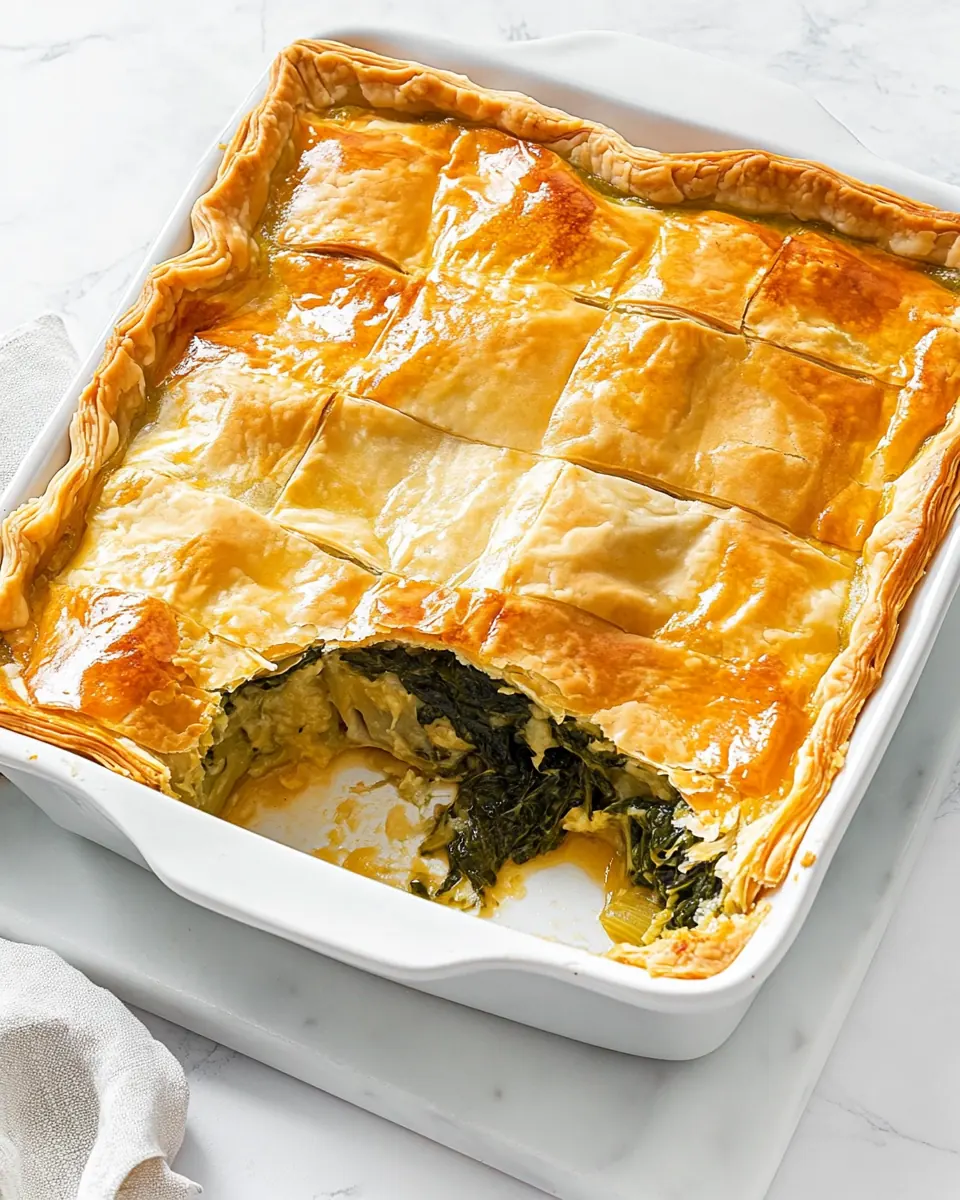
This section explores practical ideas and small shifts that can improve your experience making Spinach Pie. I include ways to save time, enhance texture, and adapt the dish to different occasions.
- Use thawed frozen spinach to save time: If you are short on time, replace the fresh spinach with 10 ounces frozen thawed and well drained. Add it after the onions have softened and sauté briefly to warm through. This shortens cooking by several minutes and still yields a flavorful filling, though the texture will be slightly different from wilted fresh greens.
- Warm the ghee slightly for easy brushing: Keep your melted ghee warm but not hot to allow smooth, even brushing across each filo dough sheet. Warm ghee spreads readily and prevents tearing by reducing friction. If it cools, rewarm gently to maintain workability.
- Mix cheeses for balanced flavor: Combining ricotta cheese, cheddar cheese, and feta cheese gives you creaminess, depth, and bright saltiness. Adjust ratios to taste, but keep a mix so the filling is both creamy and flavorful. Sticking to one cheese may yield a more one dimensional result.
- Make ahead the filling: Prepare the spinach and cheese filling up to a day in advance and refrigerate. Bring it back to room temperature before assembling to avoid chilling the filo dough and risking tears during layering. This strategy is great for hosting and reduces day of assembly stress.
- Brush edges carefully for neat presentation: When tucking and brushing the edges, use light strokes to prevent excess fat from pooling in the seams. Clean, even tucks create a professional looking finish and encourage uniform browning across the pie.
What to Serve With Spinach Pie
Spinach Pie pairs beautifully with a range of sides and occasions, from casual lunches to festive gatherings. Below I outline serving suggestions, storage ideas, and seasonal pairings to help you present this dish with confidence.
- Fresh green salad: A crisp salad of mixed leaves and a light vinaigrette cuts through the richness of the pie and adds textural contrast, making it a lovely lunch combination.
- Yogurt based dip: A cool, tangy yogurt dip with a squeeze of lemon complements the savory filling and adds a refreshing note for warm day meals.
- Roasted vegetables: Seasonal roasted vegetables offer heartiness for a dinner plate when you want a more substantial meal alongside the pie.
- Brunch spread: Include Spinach Pie on a brunch table with sliced fruit, olives, and cheeses for guests to graze and assemble varied plates.
- Holiday table: This pie works well for holiday gatherings as a savory centerpiece for a vegetarian offering, fitting alongside other mains and side dishes.
- Storage tips: Cool completely, then wrap tightly and refrigerate for up to three days. Reheat in a warm oven to restore crispness rather than a microwave, which can soften the filo dough.
- Make ahead for entertaining: Assemble the pie up to the point of baking and keep covered in the refrigerator for a few hours. Bake just before serving to maximize crispness and aroma.
- Seasonal pairing: In spring, highlight fresh herbs and pair with bright salads. In cooler months, serve with heartier roasted root vegetables to complement the pie’s richness.
- Occasions: Works equally well for lunch, casual dinners, Ramadan iftar tables, potlucks, and holiday spreads, due to its crowd friendly nature.
- Portioning: Cut into 12 pieces for party sized servings; for a smaller gathering you can reheat individual slices and serve with a small side salad.
FAQ
Conclusion
This Spinach Pie stands out for the way it balances crisp, golden filo dough with a creamy, herb strewn filling, making it both comforting and elegant. Give it a try the next time you want a dish that travels well from casual lunches to festive tables, and enjoy the mix of textures and bright herb flavors. I hope this recipe becomes one of your go to dishes for feeding a crowd or savoring as leftovers, because it feels like a special treat every time without requiring complicated techniques.
Spinach Pie
Ingredients
Equipment
Method
- Preheat the oven to 400 degrees F. Set a large sauté pan over medium-low heat, and set out a 9 X 13 inch baking dish.: The moment you put the oven on you set the stage for the pastry to brown properly, and that first heat pulse ensures even baking. You should hear the oven fan kick in and feel warmth when you open the door after a few minutes, which tells you the environment is ready for the pie. If you skip preheating, the filo dough may take longer to brown and could absorb more moisture, making it less crisp. A common mistake is placing the pie in a cold oven, which changes bake time and texture, so always allow the oven to reach temperature first.
- Add the ghee to the sauté pan. Once melted, add the onions and celery. Sauté for 5-8 minutes to soften and release the moisture.: Heating the pan gently is key to soften aromatics without burning them, while having the dish ready means you can transfer the layered filo dough quickly once assembled. You want to hear a faint sizzle when the fat hits the pan, not a loud roar, which signals the right temperature. If your pan is too hot, the onion and celery will color too quickly and develop bitter notes, so moderate the heat and adjust as you go.
- Next add the spinach. Sauté another 5-8 minutes until the spinach has completely wilted down. Then add the scallions, parsley, mint, and dill. Sauté another 2-3 minutes.: When the ghee melts, it should shimmer but not smoke, releasing a warm nutty scent that enhances the aromatics. This smell is an invitation to add the onions and celery , which will soften and become translucent. If the ghee smokes, reduce the heat immediately to avoid burnt flavors. Overcrowding the pan at this stage can steam the vegetables instead of sautéing them, so give them some room.
- Move the cooked greens to a fine mesh strainer. Press the greens down to remove as much moisture as possible. Then use a paper towel to press again until the greens seem dry. *Too much moisture in the filling will make it difficult for the pastry sheets to stay crisp.: As the vegetables hit the pan you should hear a gentle sizzling and notice the onion softening, releasing a sweet aroma. Sauté for 5 to 8 minutes until they are tender and just starting to pick up color, stirring occasionally to ensure even cooking. The goal is a soft base, not a deeply caramelized one, because the greens will add their own complexity. Burnt or undercooked pieces happen when heat is too high or low, so keep stirring and watch the texture.
- Place the dried greens back in the pan. Add in all cheese, eggs, and seasonings. Mix well.: As the vegetables soften they will give off moisture that helps deglaze the pan and blend flavors, making a mellow base for the greens. You should see small bubbles as moisture evaporates and smell a rounded, savory aroma. If you rush this step, the aromatics will stay raw and harsh; conversely, overcooking will produce bitterness. Timing and attention are the safeguards here.
- Prepare a small bowl of melted ghee. Brush a thin layer of ghee across the bottom of the baking dish. Place a filo sheet out on a clean work surface. Brush the top of the filo sheet with ghee. Then lay another filo sheet across the top. Continue to layer and brush the filo until you have 6 sheets stacked. Move the stack to the baking dish.: When you add the spinach it will initially mound in the pan, then quickly collapse and provide a deep green, earthy scent. Sauté another 5 to 8 minutes until the spinach is fully wilted and glossy, stirring to ensure uniform cooking. You want the leaves to be soft and concentrated in flavor, not stringy or raw. A common error is overcrowding the pan which steams the greens instead of sautéing them; work in batches if needed.
- Spread the spinach and cheese filling evenly over the pastry sheets.: During this time the pan will become fragrant with herbaceous, slightly sweet notes, and the volume will reduce dramatically. Keep an eye on the color, which should be a deep, vibrant green and not dull or muted. Overcooking can make the leaves mushy and cause loss of bright flavor, so stop when fully wilted.
- Then prepare a second filo stack for the top crust. However, this time overlap the filo sheets so they are wider than the top of the baking dish. You want to have a wide enough stack to be able to create wrinkles in the top crust. Brush and overlap 6 filo sheets with a 2-inch lip on either side, so the final stack is 4 inches wider than the bottom stack.: Adding the herbs at this point preserves their fresh aromatics, which release bright, green scents as they warm. Stir for 2 to 3 minutes so the herbs marry with the cooked greens without turning brown. If you add herbs too early they can lose their freshness and become muted, so timing is important to retain lively flavors.
- Move the filo stack to the top of the baking dish. Tuck the edges into the corners and sides. Gently press the top down, just a little, to create wrinkles in the top crust. Brush the top with ghee.: This brief period is enough to soften the herbs and let them infuse the mixture, creating layers of flavor that cut through the richness of the cheeses. You should smell a fragrant, green complexity building. Overexposure to heat will flatten these notes, so be precise and quick with this finish.
- Bake the spinach pie for 35-40 minutes, until golden brown. If the crust starts to look brown too early, cover the top loosely with a piece of foil, and continue baking.: Transferring the greens to a strainer allows gravity and gentle pressure to remove free moisture, which is crucial for a crisp filling. You will see liquid collect beneath the sieve, and pressing gently will expel even more water. If you skip this step, the excess moisture will steam the filo dough and ruin the texture, so be diligent and patient while draining.
- Allow the pie to cool for at least 5 minutes. Then cut into 12 pieces and serve.: Use the back of a spoon or a bowl to press the greens firmly, then press again with paper towels until the greens feel dry. The tactile feedback is clear when the greens stop releasing water, and the filling will be denser and more cohesive. Not pressing enough is the most common mistake, leading to a soggy pie, so take your time here.
- Then use a paper towel to press again until the greens seem dry.: The final press with paper towels should leave the greens slightly tacky but not wet, ensuring the filling will set properly and the pastry will remain crisp. You should see minimal moisture on the towel when done. If the towel is dripping, repeat pressing to avoid a compromised crust.
- Place the dried greens back in the pan.: Returning the greens to the warm pan helps them integrate with residual savory notes and removes any chill, allowing cheeses and eggs to combine smoothly. The pan should be off heat or very low so you do not cook the eggs on contact later. If the pan is too hot, the eggs may scramble when added, changing the intended creamy texture.
- Add in all cheese, eggs, and seasonings.: When you fold in ricotta cheese , cheddar cheese , feta cheese , beaten eggs , salt , garlic powder , and ground black pepper , the mixture should become cohesive and slightly glossy. The cheeses melt into the warmth of the greens, creating a smooth, uniform filling. Mix thoroughly so there are no dry pockets; insufficient mixing can yield uneven seasoning and texture.
- Mix well.: Stir until the filling looks uniform, with flecks of green and pockets of melted cheese. It should feel creamy and hold together when scooped. Taste a small amount to check seasoning, remembering that the feta cheese adds saltiness. Overseasoning is easy at this stage, so adjust cautiously.
- Prepare a small bowl of melted ghee.: Have the melted ghee at hand for layering the filo dough , as brushing needs to be steady and continuous. The warm ghee seals layers and promotes even browning. If the ghee cools and solidifies, rewarm gently, because cold fat will tear the delicate sheets.
- Brush a thin layer of ghee across the bottom of the baking dish.: This base coat prevents sticking and helps the bottom sheets brown evenly. A thin even brush ensures the dish is protected without pooling oil, which would make the bottom soggy. Too much ghee at the bottom can lead to a greasy crust, so keep it light.
- Place a filo sheet out on a clean work surface.: Handle each sheet carefully, keeping the rest covered with a damp towel to prevent drying. The sheet should be pliable and translucent; if edges crack you can patch them by overlapping. Ripping happens when sheets dry, so maintain moisture in the remaining stack.
- Brush the top of the filo sheet with ghee.: A gentle, even brushing ensures even browning and separation of layers. Use a pastry brush and avoid puddles, which create soggy spots. If you brush too forcefully you may tear the sheet, so use light strokes.
- Then lay another filo sheet across the top.: Stacking sheets immediately after brushing creates the layered structure that will puff and crisp in the oven. Align them so edges match, and repeat until you have the bottom stack. Misaligned sheets can create uneven edges, so take a moment to square them up.
- Continue to layer and brush the filo until you have 6 sheets stacked.: The bottom stack acts as a sturdy, flaky base that supports the filling. Each brushed layer separates and crisps independently, producing that signature shattering texture. Skipping layers or under brushing reduces flakiness, so complete the stack as directed.
- Move the stack to the baking dish.: Carefully transfer the prepared stack so it sits flat on the ghee brushed surface. Press it gently to seat the layers, ensuring even contact. If the stack shifts, the filling may pool in spots, so smooth it into place.
- Spread the spinach and cheese filling evenly over the pastry sheets.: Use a spatula to distribute the filling in an even layer, reaching into corners so the pie bakes uniformly. The filling should be level and not mound high, which could crack the top crust while baking. Uneven filling is the typical error here, leading to inconsistent baking, so take time to smooth it out.
- Then prepare a second filo stack for the top crust.: For the top, you want overlap so the stack is wider than the dish, allowing for neat tucking and pleasing wrinkles. Work quickly to keep sheets pliable and cover them while not in use. If the sheets dry, they will tear when you try to tuck.
- Overlap the filo sheets so they are wider than the top of the baking dish.: Creating a 4 inch wider final stack gives you room to tuck edges and form rustic wrinkles, which browns and adds visual interest. Ensure the overlap is even to avoid thin spots that brown faster. Uneven overlap can produce weak areas that flake away while baking.
- Brush and overlap 6 filo sheets with a 2 inch lip on either side, so the final stack is 4 inches wider than the bottom stack.: This lip becomes the tucking allowance that secures the top to the base, and brushing each layer assures crispness across the crust. If you leave the lip too small you may not be able to tuck cleanly, causing gaps where filling could escape.
- Move the filo stack to the top of the baking dish.: Gently place the top stack so it covers the filling and extends over the edges for tucking. Make sure you position it centered to keep the look balanced. If the top is off center the tucks will be uneven and the pie may not hold together as nicely.
- Tuck the edges into the corners and sides.: Tucking secures the top and bottom layers and creates the characteristic wrinkled surface. Work methodically around the dish, making gentle folds until the top sits snugly. Being sloppy here can cause the top to separate during baking, so tidy your tucks.
- Gently press the top down, just a little, to create wrinkles in the top crust.: The wrinkles encourage attractive browning and a rustic texture, and they trap tiny pockets of air that expand and crisp in the oven. Press lightly; pressing too hard will flatten the layers and reduce the flakiness. The correct pressure produces a pleasing, crinkled aesthetic.
- Brush the top with ghee.: A final brushing adds sheen and promotes even golden color. The surface should look glossy and evenly coated, not dripping. Uneven brushing can leave pale spots that look underdone after baking.
- Bake the spinach pie for 35-40 minutes, until golden brown.: As the pie bakes you will notice a rich toasty aroma and the top deepening to a golden brown. The sound of a faint crackle and small flakes falling into the dish indicates crispness. If the crust browns too quickly, tent with foil to avoid burning, and continue baking until the internal filling is set. Pulling the pie too early can result in a loose filling, while overbaking can dry it out, so rely on both color and a slight set in the center.
- If the crust starts to look brown too early, cover the top loosely with a piece of foil, and continue baking.: Shielding the crust prevents over browning while allowing the filling to finish cooking, preserving both color and texture. Tent loosely to keep steam from condensing on the crust. Wrapping too tightly can trap steam and soften the top, so keep the foil loose.
- Allow the pie to cool for at least 5 minutes.: Resting lets the filling set so slices hold their shape and the pastry finishes crisping. You will notice the aroma mellow slightly during this pause, and the pie will be easier to cut. Cutting immediately often causes the filling to spill, so patience is rewarded here.
- Then cut into 12 pieces and serve.: Use a sharp knife and make decisive cuts to preserve the flaky edges, serving warm so you experience the contrast between the crisp crust and the creamy filling. If slices are too hot, they may slump, so allow a short rest before serving. A frequent error is trying to move pieces before they have set, which leads to messy plating.
Notes
- Use thawed frozen spinach to save time: If you are short on time, replace the fresh spinach with 10 ounces frozen thawed and well drained. Add it after the onions have softened and sauté briefly to warm through. This shortens cooking by several minutes and still yields a flavorful filling, though the texture will be slightly different from wilted fresh greens.
- Warm the ghee slightly for easy brushing: Keep your melted ghee warm but not hot to allow smooth, even brushing across each filo dough sheet. Warm ghee spreads readily and prevents tearing by reducing friction. If it cools, rewarm gently to maintain workability.
- Mix cheeses for balanced flavor: Combining ricotta cheese, cheddar cheese, and feta cheese gives you creaminess, depth, and bright saltiness. Adjust ratios to taste, but keep a mix so the filling is both creamy and flavorful. Sticking to one cheese may yield a more one dimensional result.
- Make ahead the filling: Prepare the spinach and cheese filling up to a day in advance and refrigerate. Bring it back to room temperature before assembling to avoid chilling the filo dough and risking tears during layering. This strategy is great for hosting and reduces day of assembly stress.
- Brush edges carefully for neat presentation: When tucking and brushing the edges, use light strokes to prevent excess fat from pooling in the seams. Clean, even tucks create a professional looking finish and encourage uniform browning across the pie.