Radish Buckwheat Salad with Herby Yogurt Dressing
Radish Buckwheat Salad with Herby Yogurt Dressing came into my weeknight rotation the moment I wanted something bright, textural, and unexpectedly satisfying.
I remember the first time I tossed together this combination, standing at my kitchen counter with a buzzy spring rain outside and a bowl of crisp lettuce waiting. The crunch from the radish, the toasty whisper of crushed buckwheat, and the cool cream of a herby yogurt dressing felt like a small celebration in the middle of an ordinary evening. I was juggling a half dozen things, and this salad was the tiny victory that made dinner feel intentional.
Over the weeks I refined the balance, dialing the lemon and mustard in the dressing so each bite had a little pep, while the herbs brought an aromatic lift that kept me going back for another forkful. I love that this recipe is flexible, yet confident, and it never asks for much fuss. The textures play so well together, so I often make a double batch of the buckwheat to keep in the pantry for salads or grain bowls.
When I serve Radish Buckwheat Salad with Herby Yogurt Dressing to friends, it sparks conversation because it feels both rustic and thoughtful. It’s the sort of dish I make when I want to eat something fresh without feeling like I’m missing out on comfort. The first sentence of praise usually goes to the crunchy buckwheat, and then someone always notes how the herbs make the yogurt dressing sing. That little back and forth is part of why I keep returning to it.
Recipe Snapshot
23 mins
15 mins
8 mins
Easy
250 kcal
American
Gluten-Free, Vegan
Salads
Oven, Baking sheet, Mortar and pestle, Blender or food processor, Large serving bowl
The Charm of This Radish Buckwheat Salad with Herby Yogurt Dressing
Crunch and Contrast
I love how Radish Buckwheat Salad with Herby Yogurt Dressing pairs opposites. The crisp, peppery bite of the radish contrasts with the cool, creamy yogurt dressing, while the toasted buckwheat adds nutty, almost smoky crunch. It keeps each forkful interesting, so you never feel like you are eating the same mouthful twice.
Herbaceous Freshness
Fresh herbs are the unsung heroes here. The basil, parsley, and chives in the dressing lift the entire salad, adding green perfume that makes the lettuce and radish taste brighter. I find that those herb notes are what make the dish feel seasonal and light without sacrificing depth.
Quick, but Impressive
This recipe feels elevated but comes together quickly. Toasting the buckwheat takes a short while, but it transforms the grain’s flavor entirely, and the dressing whips up in one blend. That combination of easy technique and big payoff is exactly why I recommend it for weeknights or casual guests.
Versatile and Light
Because the salad is mostly plant based and uses minimal oil, it fits into many meal plans. You can serve it as a bright starter, a side to a heartier main, or even a light lunch. The texture and flavors make it satisfying enough to stand on its own, yet it plays well alongside other dishes.
Memorable Finishing Touches
The final sprinkle of crushed, toasted buckwheat and a crack of fresh black pepper bring the whole salad together. Those last details are small but essential, and they are what friends always comment on. I always tell people not to skip them, because they are the memory makers of this dish.
What Goes Into Radish Buckwheat Salad with Herby Yogurt Dressing
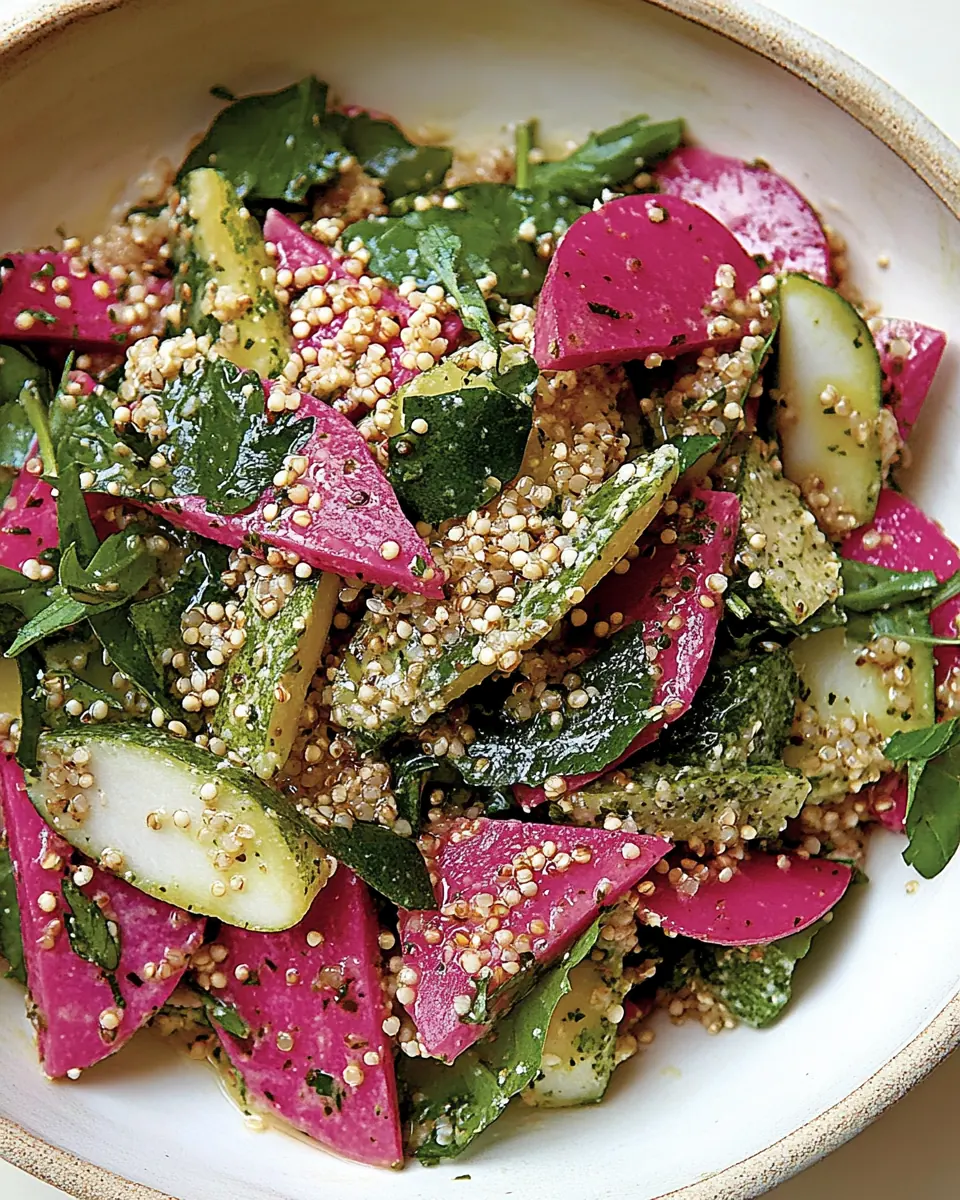
These ingredients combine bright, crunchy, and creamy elements into a harmonious salad. The key players are the toasted buckwheat for nutty texture, crisp sliced radish for peppery snap, a base of fresh lettuce for leafy green balance, and a herby, tangy yogurt dressing that ties everything together. Each component plays a specific role, and together they make a refreshing, layered bite.
- 1/3 cup (60 g) buckwheat: Toasted and cooked until nutty, provides a tender, slightly crunchy base that adds wholesome texture and earthy flavor to the salad; soak or rinse before cooking to remove any debris and simmer until just tender to preserve shape.
- 1/2 (58 g) watermelon radish: Thinly sliced for visual appeal and crisp bite, contributes a mild peppery sweetness and vibrant color contrast; halve or quarter depending on presentation and slice paper-thin to maintain delicate texture.
- 4 cups loosely packed lettuce leaves: Lightly torn to create a soft, leafy bed that balances the denser buckwheat and radish, offering freshness and mild bitterness; chill and dry well to keep the salad crisp and prevent dressing from wilting the leaves.
- Freshly cracked black pepper for finishing: Freshly cracked over the finished dish to add bright, slightly spicy aroma and a hint of heat that elevates other flavors; adjust amount to taste and grind just before serving for best potency.
- 1 garlic clove: Finely minced to infuse the dressing with pungent, savory depth, mellowing when combined with yogurt and lemon; mince small to distribute flavor evenly without creating raw garlic hotspots.
- 1/2 cup (120 g) whole milk plain yogurt: Whisked into the dressing to provide creamy tang, smooth texture, and a subtle lactic sweetness that tames sharper elements like mustard and lemon; choose whole milk yogurt for richness and strain if a thicker consistency is desired.
- 1/4 cup (8 g) packed basil leaves: Coarsely chopped or chiffonaded to lend fresh, sweet herbal notes and bright green color to the dressing, complementing parsley and chives; pack leaves lightly and remove stems for the best texture.
- 3 tablespoons (6 g) packed fresh flat-leaf parsley: Finely chopped to add a clean, slightly peppery herbaceous backbone to the dressing, enhancing depth and freshness; use leaves only and press lightly when measuring to avoid overpowering the yogurt.
- 3 tablespoons (6 g) packed minced chives: Minced to offer a mild onion-like flavor and delicate allium presence that ties the herbs together, providing subtle savory lift without raw sharpness; add last to the dressing to preserve its delicate aroma.
- 1 teaspoon stone-ground mustard: Stirred into the dressing for tangy complexity and subtle grainy texture, helping to emulsify oil and yogurt while contributing a warm mustardy note; use stone–ground for visible texture and nuanced flavor.
- 1 tablespoon lemon juice: Squeezed into the dressing to supply bright acidity and lift, balancing richness from yogurt and oil while enhancing overall freshness; strain seeds if desired and add gradually to taste.
- 2 tablespoons olive oil: Whisked in to create a smooth emulsion in the dressing, adding fruity richness and mouth-coating body that helps herbs cling to greens and buckwheat; use extra-virgin olive oil for best flavor.
- 1/2 teaspoon kosher salt: Sprinkled into the dressing and salad to season evenly, bringing out the natural flavors of the other ingredients while controlling overall saltiness; dissolve fully into the dressing for uniform distribution.
Step by Step Guide for Radish Buckwheat Salad with Herby Yogurt Dressing
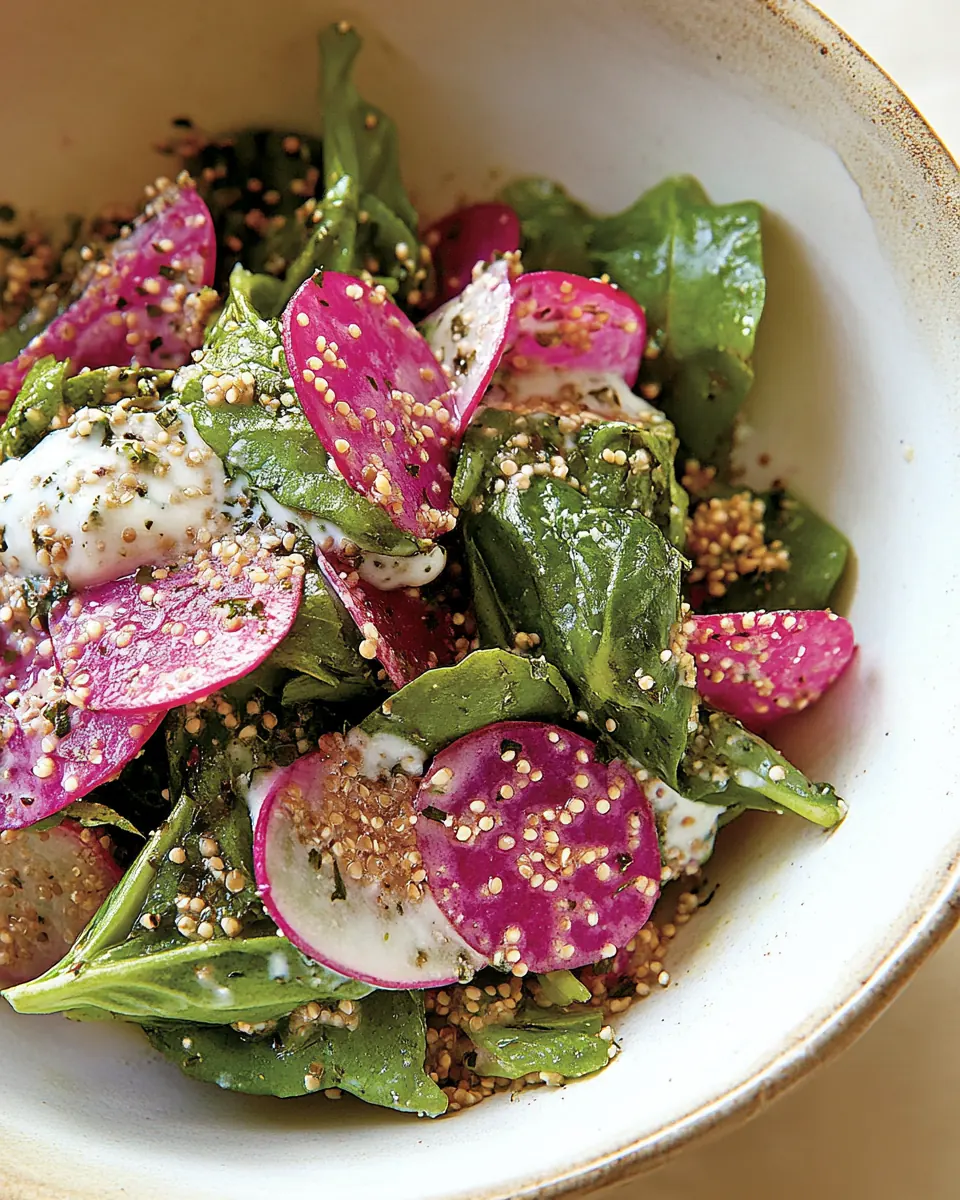
This salad comes together through a few focused techniques that reward patience. Toasting the buckwheat and blending the herby yogurt dressing are the flavor engines, while quick prep of the radish and assembling everything at the end keeps the textures vibrant. Follow the steps carefully for the best results.
- To make the buckwheat: Preheat the oven to 400˚F. Spread out the buckwheat on a baking sheet. Toast in the oven until the buckwheat deepens in color and has a nutty aroma, about 8 minutes. Let cool, then use a mortar and pestle to crush the buckwheat into a texture resembling coarse sand.: As the toasted buckwheat warms on the baking sheet you will notice a deepening color and a fragrance that shifts from grainy to nutty, almost like toasted sunflower seeds. This aroma is your best visual cue that the toasting is working. When you break the cooled kernels with a mortar and pestle into coarse sand they should clatter softly and feel dry, not oily. The reason to crush them after toasting is to preserve that delicate crunch rather than releasing oils prematurely. A common mistake is leaving them in the oven too long, which turns the pleasant nuttiness into bitter char, so check at the eight minute mark and smell for that sweet toastiness.
- To prep the salad ingredients: While the buckwheat is toasting, thinly slice the radish into half-moons and transfer to a small bowl of ice water until ready to use. Place the lettuce in a large serving bowl.: The crisp sound of thinly sliced radish hitting the bowl of ice water is a small reward, and the cold soak helps the slices snap and mellow their peppery edge. Meanwhile, when you move the loose lettuce into a large serving bowl it should look fluffy and airy, ready to cradle the dressing. Drain and dry the radish well so it does not water down the salad, because excess moisture can make the leaves limp. Avoid slicing the radish too thickly, which can overwhelm each bite and throw off the texture balance.
- To make the dressing: Place the garlic in a blender or food processor and pulse it into small pieces. Add the remaining dressing ingredients and blend until smooth.: When you pulse the garlic and blend it with the herbs, yogurt , lemon juice , olive oil , and mustard , the mixture should smell bright and herbaceous, with the garlic softened into the background. The texture should be smooth and glossy, not grainy, indicating the oil has emulsified. This blending step is important because it distributes herb flavor evenly and tames raw garlic. A common pitfall is under blending, which leaves harsh garlic bits or unincorporated oil, so process until silky.
- To assemble the salad: Drain and pat dry the radish slices. Add a handful to the bowl of lettuce along with 1/3 cup of the dressing. Reserve the remaining dressing for another use. Toss until everything is well coated. Top with the remaining radish and a hefty sprinkle of the crushed buckwheat and some black pepper.: As you toss the drained radish with a portion of the dressing and the bed of lettuce , listen for the gentle rustle of coated leaves and note how the dressing clings to surfaces rather than pooling. The initial toss should evenly coat the leaves so each forkful has balance, and reserving dressing allows you to adjust seasoning after tasting. A typical error is overdressing, which overwhelms the delicate greens and masks the crushed buckwheat , so start modestly and add more if needed.
- To finish and serve: The final act of scattering the crushed, toasted buckwheat over the top adds an audible, delicate crunch when you cut through it with a fork, and a final crack of black pepper lifts the whole dish. Visually, the contrast between pale yogurt flecks, bright pink radish slices, and toasted brown bits makes the salad inviting. If the buckwheat feels soft instead of crisp, it likely sat too long with the dressing and lost its texture, so sprinkle it right before serving for maximum crunch.
Tips for Success
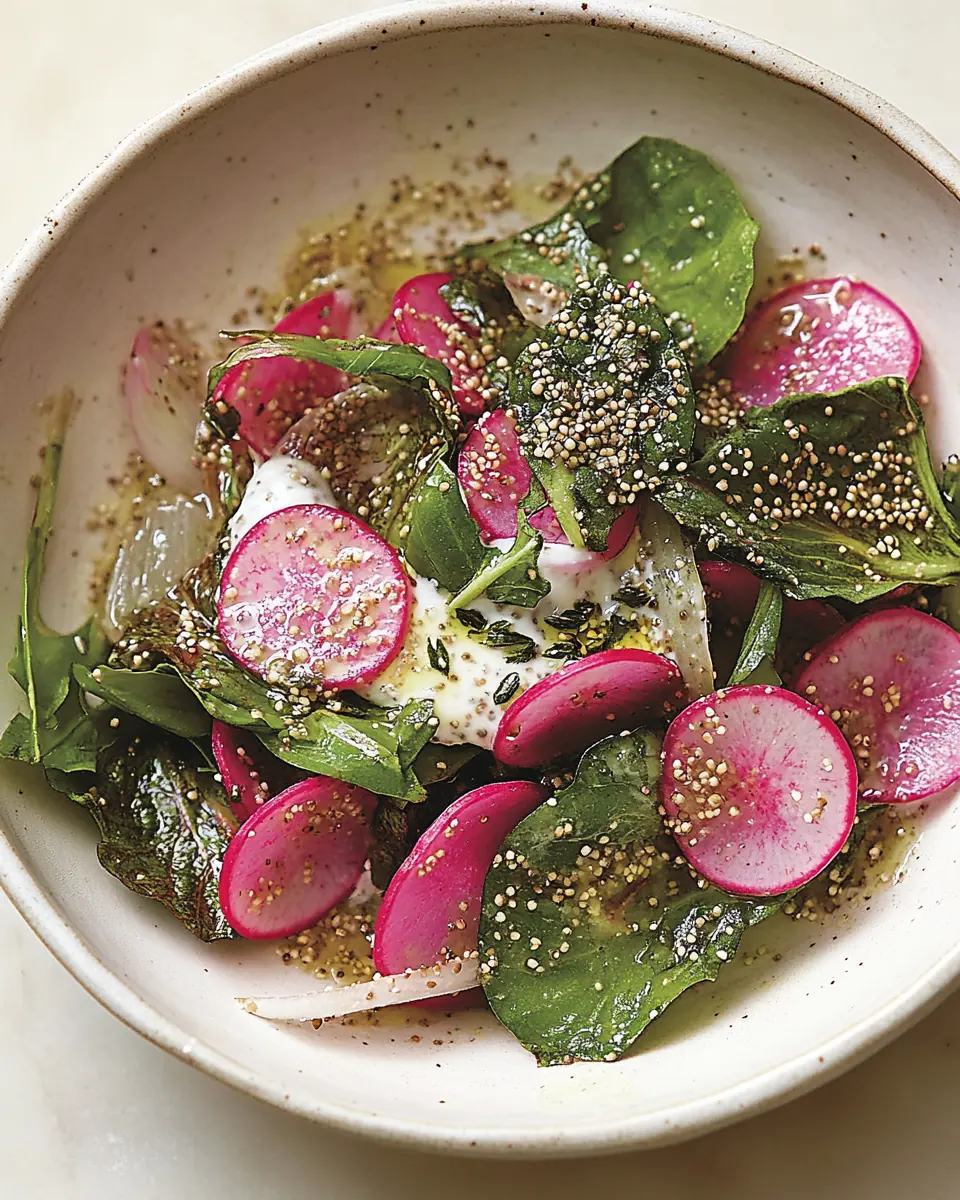
This salad rewards attention to small steps, from toasting to timing. Below are focused tips that will help you maximize flavor and texture.
- Toast cautiously When toasting the buckwheat, stay nearby and stir once or twice to encourage even color, because a few overbrowned kernels can make the whole batch taste bitter.
- Pulse for texture Pulse the garlic first in your blender or food processor so it breaks down evenly, ensuring you get flavor without large raw bites.
- Ice bath trick Use an ice water bath for the radish to keep slices snappy and reduce their peppery punch, which helps the dressing complement rather than overpower.
- Dry thoroughly Pat the radish and lettuce dry after washing to prevent a watery salad that dilutes the dressing and softens textures.
- Adjust in layers Add dressing in stages while tossing so you can control coverage and avoid overdressing the leaves, preserving contrast with the crunchy buckwheat.
- Finish at the table Sprinkle the crushed buckwheat and crack fresh black pepper over the salad right before serving to maintain crunch and aroma.
Perfect Pairings for Radish Buckwheat Salad with Herby Yogurt Dressing
Here are ideas for what to serve alongside this salad, and how to present it for different occasions.
- Light lunch pairing Serve the salad with warm crusty bread and a simple spread for a bright midday meal that feels satisfying but not heavy.
- Spring dinner side Pair with grilled vegetables or a simple roasted fish for a balanced dinner that highlights seasonal produce, making the salad a vivid counterpoint.
- Casual entertaining Present it in a large bowl at a buffet so guests can add crushed buckwheat themselves, preserving the texture and letting people control their dressing amount.
- Meal prep note Keep the dressing separate and the crushed buckwheat in an airtight container, then toss everything together just before serving to keep components fresh.
- Occasion ideas This salad works well for spring gatherings, light brunches, or as part of a Ramadan iftar spread where fresh, herb forward dishes are welcome.
- Storage tip Store leftover components separately, refrigerated, and assemble within two days for the best texture and flavor retention.
FAQ
Conclusion
This salad stands out for its lively textures and herb forward dressing that come together in a few thoughtful steps. It’s an easy, fresh option that feels special yet unpretentious, perfect for spring lunches or as a bright side at dinner. Give it a try when you want something that balances creamy, crunchy, and peppery notes, and enjoy the little ritual of toasting and crushing the buckwheat which makes all the difference. You may find it becomes one of those reliably delicious dishes you make again and again.

Radish Buckwheat Salad with Herby Yogurt Dressing
Ingredients
Equipment
Method
- To make the buckwheat: Preheat the oven to 400˚F. Spread out the buckwheat on a baking sheet. Toast in the oven until the buckwheat deepens in color and has a nutty aroma, about 8 minutes. Let cool, then use a mortar and pestle to crush the buckwheat into a texture resembling coarse sand.: As the toasted buckwheat warms on the baking sheet you will notice a deepening color and a fragrance that shifts from grainy to nutty, almost like toasted sunflower seeds. This aroma is your best visual cue that the toasting is working. When you break the cooled kernels with a mortar and pestle into coarse sand they should clatter softly and feel dry, not oily. The reason to crush them after toasting is to preserve that delicate crunch rather than releasing oils prematurely. A common mistake is leaving them in the oven too long, which turns the pleasant nuttiness into bitter char, so check at the eight minute mark and smell for that sweet toastiness.
- To prep the salad ingredients: While the buckwheat is toasting, thinly slice the radish into half-moons and transfer to a small bowl of ice water until ready to use. Place the lettuce in a large serving bowl.: The crisp sound of thinly sliced radish hitting the bowl of ice water is a small reward, and the cold soak helps the slices snap and mellow their peppery edge. Meanwhile, when you move the loose lettuce into a large serving bowl it should look fluffy and airy, ready to cradle the dressing. Drain and dry the radish well so it does not water down the salad, because excess moisture can make the leaves limp. Avoid slicing the radish too thickly, which can overwhelm each bite and throw off the texture balance.
- To make the dressing: Place the garlic in a blender or food processor and pulse it into small pieces. Add the remaining dressing ingredients and blend until smooth.: When you pulse the garlic and blend it with the herbs, yogurt , lemon juice , olive oil , and mustard , the mixture should smell bright and herbaceous, with the garlic softened into the background. The texture should be smooth and glossy, not grainy, indicating the oil has emulsified. This blending step is important because it distributes herb flavor evenly and tames raw garlic. A common pitfall is under blending, which leaves harsh garlic bits or unincorporated oil, so process until silky.
- To assemble the salad: Drain and pat dry the radish slices. Add a handful to the bowl of lettuce along with 1/3 cup of the dressing. Reserve the remaining dressing for another use. Toss until everything is well coated. Top with the remaining radish and a hefty sprinkle of the crushed buckwheat and some black pepper.: As you toss the drained radish with a portion of the dressing and the bed of lettuce , listen for the gentle rustle of coated leaves and note how the dressing clings to surfaces rather than pooling. The initial toss should evenly coat the leaves so each forkful has balance, and reserving dressing allows you to adjust seasoning after tasting. A typical error is overdressing, which overwhelms the delicate greens and masks the crushed buckwheat , so start modestly and add more if needed.
- To finish and serve: The final act of scattering the crushed, toasted buckwheat over the top adds an audible, delicate crunch when you cut through it with a fork, and a final crack of black pepper lifts the whole dish. Visually, the contrast between pale yogurt flecks, bright pink radish slices, and toasted brown bits makes the salad inviting. If the buckwheat feels soft instead of crisp, it likely sat too long with the dressing and lost its texture, so sprinkle it right before serving for maximum crunch.
Notes
- Toast cautiously When toasting the buckwheat, stay nearby and stir once or twice to encourage even color, because a few overbrowned kernels can make the whole batch taste bitter.
- Pulse for texture Pulse the garlic first in your blender or food processor so it breaks down evenly, ensuring you get flavor without large raw bites.
- Ice bath trick Use an ice water bath for the radish to keep slices snappy and reduce their peppery punch, which helps the dressing complement rather than overpower.
- Dry thoroughly Pat the radish and lettuce dry after washing to prevent a watery salad that dilutes the dressing and softens textures.
- Adjust in layers Add dressing in stages while tossing so you can control coverage and avoid overdressing the leaves, preserving contrast with the crunchy buckwheat.
- Finish at the table Sprinkle the crushed buckwheat and crack fresh black pepper over the salad right before serving to maintain crunch and aroma.