Shaved Brussels Sprouts Salad
Shaved Brussels Sprouts Salad is the sort of bowl I reach for when I want something bright, crunchy, and a little bit unexpected on the table.
One autumn afternoon years ago I pulled together a salad from what felt like pantry odds and ends and a bag of Brussels sprouts I had picked up at the farmer’s market, and that simple combination instantly became a weeknight favorite. I remember standing in the kitchen, the late sun catching the thin shreds of Brussels sprouts as I worked, and how the mix of textures made every bite interesting. I like salads that feel substantial, not flimsy, and this one has the snap of raw Brussels sprouts, the chew of dried cranberries, and the salty pop of Parmesan cheese.
Because I often make this for friends, I’ve learned a few little rituals that elevate the result, like massaging the kale first so it softens and plays nicely with the rest of the ingredients, and whisking the dressing until the Greek yogurt is silky smooth. There is comfort in a salad that makes an impression without demanding hours of work, and this recipe does just that. Over time I have adjusted the lemon and olive oil balance to suit seasonal fruit, and I never skip the sunflower seeds for their toasty crunch.
Recipe Snapshot
30 mins
30 mins
0 mins
Easy
220 kcal
American
Gluten-Free, Keto
Salads
The Well Plated Cookbook, Mandoline Slicer
Why This Shaved Brussels Sprouts Salad Is a Winner
I love the texture contrast
The crunch of thinly shredded Brussels sprouts against the tender ribbons of kale is irresistible. I like to think of texture as the backbone of a great salad, and here each bite delivers a satisfying snap, a tender chew, and a little pop from the sunflower seeds. That combination keeps the salad from feeling monotonous, and it holds up well if you need to prep ahead.
Bright, simple dressing that sings
The dressing blends Greek yogurt, lemon, olive oil, and a touch of honey to create a creamy but bright finish. I often prefer this to heavy creamy dressings because it lets the natural flavor of the vegetables shine. The balance of acid and oil wakes up the palate, while the honey rounds out the lemon‘s sharpness, making it pleasing to a wide range of diners.
Easy to scale and serve
I frequently double this for gatherings, and it scales beautifully because the shaved vegetables remain lively and crisp. The components are pantry friendly too, like dried cranberries and sunflower seeds, which means you can put this together quickly without a special trip to the store. I find it especially handy for potlucks because it transports well when chilled.
Healthful without sacrificing flavor
With kale, Brussels sprouts, and a yogurt based dressing, this salad is nutrient dense and satisfying. It feels indulgent because of the Parmesan cheese, but the overall profile is light and bright. I serve it when I want something wholesome that also impresses guests who might expect heavier sides.
Versatile and forgiving
This recipe adapts to what you have on hand. I often tweak quantities to taste, adding more lemon for brightness or extra sunflower seeds for crunch. The dressing can be made in advance and kept chilled, which makes assembly quick. I appreciate recipes that are forgiving, and this one rewards small adjustments while still tasting cohesive.
Ingredients You’ll Need for Shaved Brussels Sprouts Salad
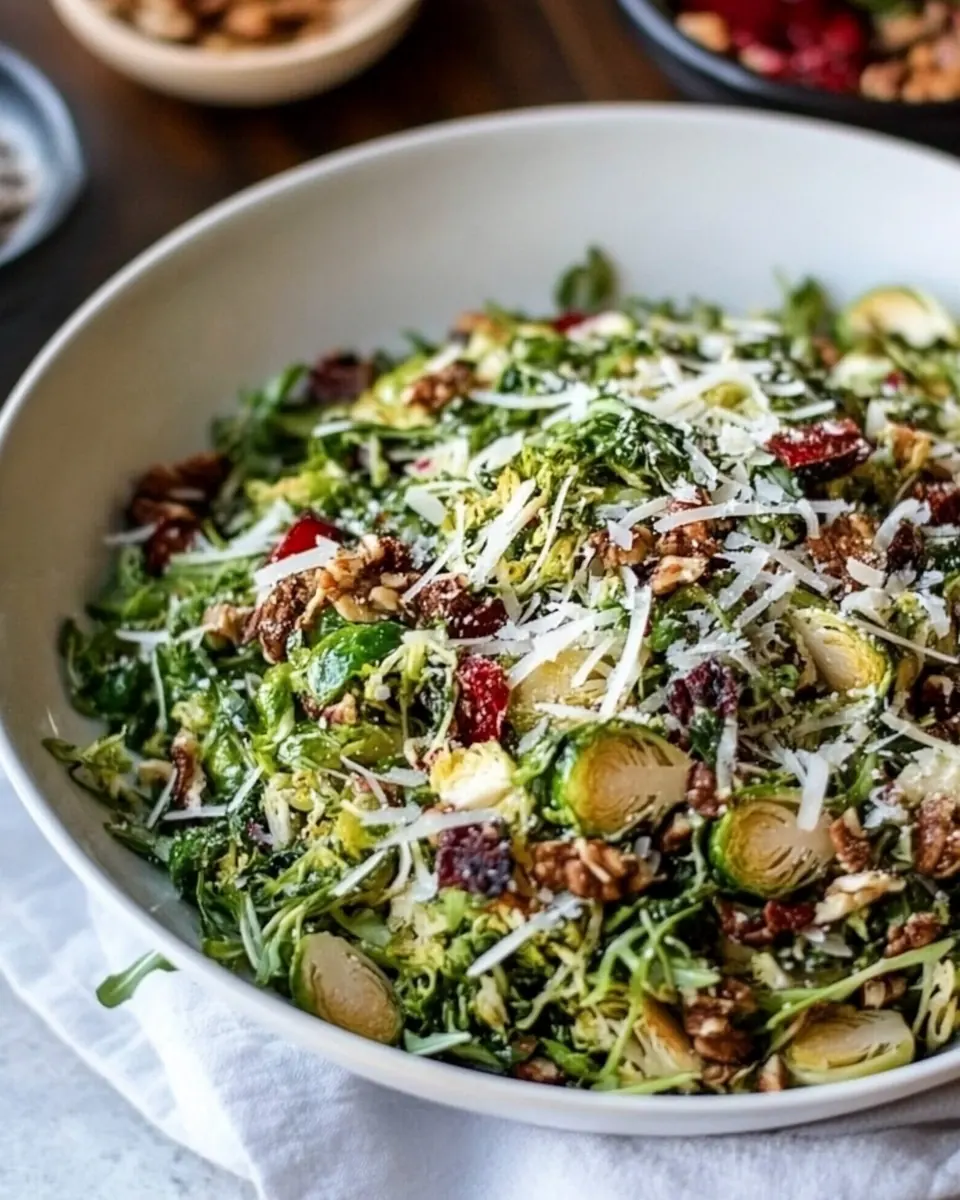
These ingredients work together to create a salad that is balanced in texture and flavor. The shaved Brussels sprouts and finely chopped kale provide a sturdy green base, while the Parmesan cheese adds savory depth. Dried cranberries contribute a sweet chew, and dry roasted sunflower seeds bring a toasty crunch. The dressing made from Greek yogurt, lemon, olive oil, and honey ties everything together with bright acidity and a touch of creaminess.
- 8 oz . curly kale stems removed and finely chopped (about 6 cups): Finely chopped to add hearty texture and a mild, earthy base that holds dressing well and adds bulk to the salad; stems provide fiber and nutrients while blending with shredded Brussels sprouts for a rustic mouthfeel.
- 1/4 tsp . kosher salt: Measured sparingly to enhance overall seasoning balance and bring out the flavors of greens and citrus without overpowering; helps draw out moisture from vegetables and highlights savory notes.
- 1/8 tsp . ground black pepper: Used in small amounts to provide a subtle pungent warmth and depth that complements the sweetness of cranberries and honey while rounding the dressing’s flavor profile.
- 1 lb . Brussels sprouts finely shredded or very thinly sliced (about 4 cups): Finely shredded to create a tender, crunchy core for the salad that offers a slightly bitter, nutty flavor; thin slicing ensures easy tossing and even coating with dressing.
- 2/3 c. shaved or shredded Parmesan cheese about 2.5 ounces: Shaved or shredded to contribute a salty, umami-rich creaminess that contrasts the crisp vegetables and enriches each bite; adds a nutty, savory finish and visual appeal.
- 1/2 c. dried cranberries: Added for bursts of concentrated sweetness and chewy texture that balance the bitterness of Brussels sprouts and the tang of lemon; also provides color contrast and fruity notes.
- 1/3 c. dry-roasted sunflower seeds: Included for crunchy texture and a toasty, nutty flavor that adds contrast to the soft cheese and yogurt; dry-roasting intensifies aroma and prevents sogginess in the salad.
- 1/2 c. nonfat plain Greek yogurt: Used as a lighter creamy base to bind the dressing, add tang, and create a silky coating for the greens; nonfat Greek yogurt contributes protein and a bright, acidic backdrop.
- zest of 2 medium lemons about 2 teaspoons: Zested to release fragrant citrus oils that lift the salad’s aroma and add a bright, floral lemon character; fine zest disperses evenly throughout without adding extra acidity.
- 1/4 c. freshly squeezed lemon juice from about 1 of the medium lemons above: Freshly squeezed to supply vibrant acidity that balances richness from cheese and oil, brightens flavors, and helps tenderize the greens slightly for better melding with the dressing.
- 2 T. extra virgin olive oil: Drizzled to add smooth mouthfeel and a fruity, slightly peppery richness that carries fat-soluble flavors; extra virgin olive oil helps emulsify the yogurt-based dressing.
- 2 tsp . honey: Stirred in to provide gentle sweetness that complements dried fruit and offsets lemon acidity, helping to balance the dressing’s flavor while enhancing overall harmony.
- 1 large clove garlic very finely minced or grated: Very finely minced to impart sharp, savory pungency and aromatics that permeate the dressing; small pieces ensure even distribution without overpowering the salad.
- 1/2 tsp . kosher salt: Added in a modest amount to season the salad components and round out flavors; helps control overall saltiness and amplifies savory notes from cheese and oil.
- 1/4 tsp . ground black pepper: Used sparingly to finish and balance the seasoning with a touch of heat; helps highlight other flavors while maintaining subtlety in the overall taste profile.
How to Make Shaved Brussels Sprouts Salad
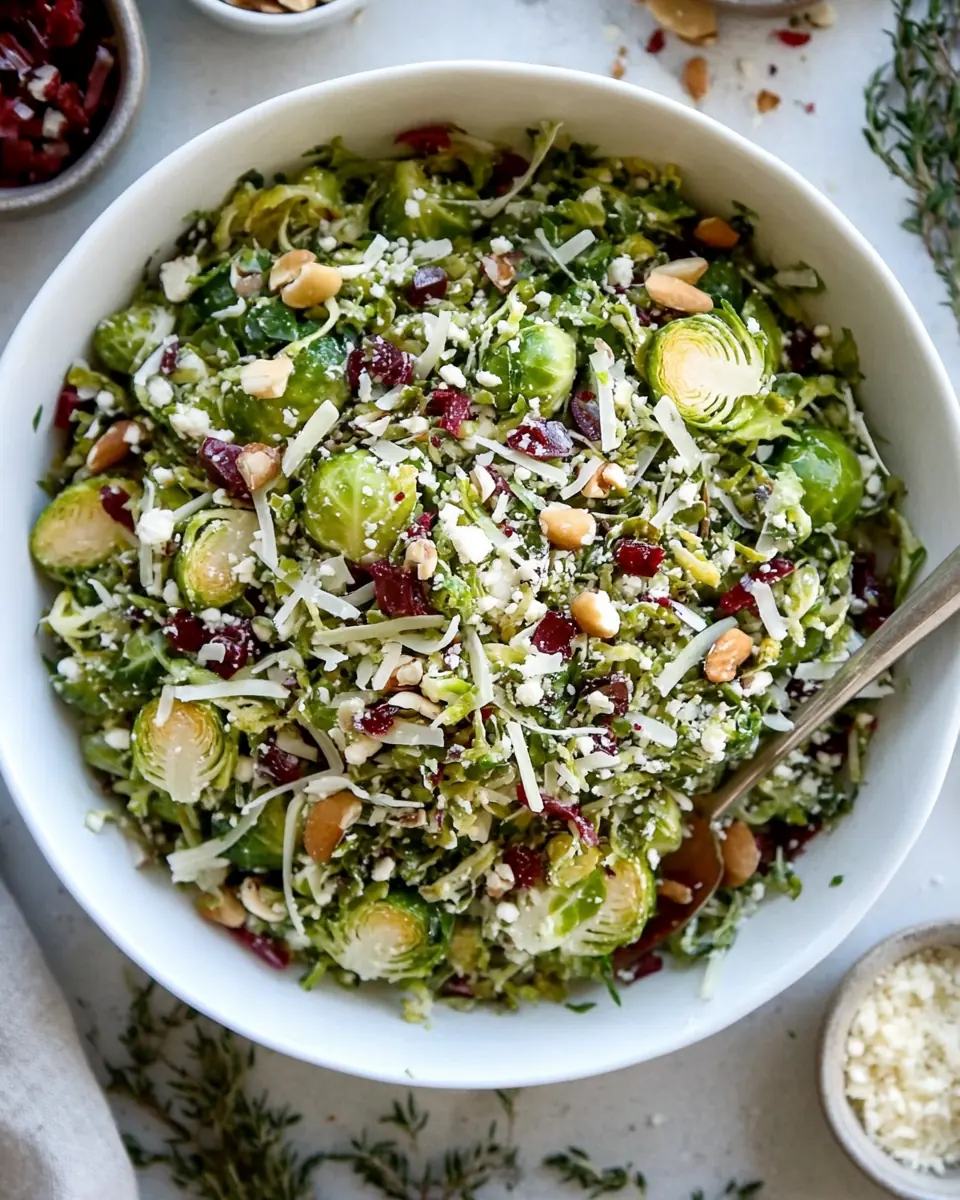
This salad comes together in a few focused stages, and taking your time with the prep yields the best texture and flavor. Start by treating the kale gently so it softens, then move on to shredding the Brussels sprouts and finishing with the dressing and assembly. The steps are straightforward, but attention to sensory cues will make a difference in the final result.
- For the salad: Place chopped kale in a large serving bowl. Top with salt and pepper. Massage kale by grabbing large handfuls and squeezing gently until the kale is darker in color, softened, and more fragrant. Repeat several times, grabbing fresh handfuls of kale as you go. This will make the kale more tender and less bitter – don’t skip this step!: As you massage the chopped kale , notice how the leaves darken and release a faint, green aroma, and listen for a subtle change in texture as the fibers relax; this signals tenderness. The why is simple, massaging breaks down tough fibers so the leaves are pleasant to eat with raw components. If you skip this the kale can taste fibrous and strong. Common mistake to avoid, massaging too briefly which leaves the kale coarse and chewy instead of soft.
- Add shaved Brussels sprouts to bowl, fluffing the strands with your fingers to separate the shreds. Toss to combine Brussels sprouts with the kale.: When you sprinkle the kosher salt and ground black pepper onto the greens, the salt will draw out a slight sheen of moisture and amplify the kale's natural flavor, while pepper adds a warm note. This subtle seasoning helps the dressing adhere and marry flavors. The why is that early seasoning starts flavor development and reduces the need for adjustments later. Troubleshooting tip, do not over-salt since the Parmesan cheese will add more salt at the end.
- For the dressing: In a small mixing bowl, whisk together all dressing ingredients. Taste and adjust the seasoning as desired. Use immediately or refrigerate in an airtight jar for up to 1 week.: As you grip bunches of kale and squeeze, you should feel the leaves give and a fragrant, almost herbaceous scent will emerge; that tells you the cell walls are loosening. This technique reduces bitterness and creates a tender mouthfeel that contrasts nicely with raw Brussels sprouts . The why is texture, softened kale blends seamlessly into the salad and is easier to chew. A frequent error is massaging too aggressively which can bruise the greens and make them limp rather than tender.
- To assemble the salad: Drizzle two-thirds of the dressing over the top and toss to combine.: Working in fresh sections ensures all the leaves receive attention and soften evenly, creating consistent texture throughout the bowl. The sensory cue is uniform color and softer stems when you run your fingers along the pieces. The reason to do this in batches is that cramming everything at once makes it harder to massage thoroughly. Avoid the mistake of working only the top layer which leaves the bottom leaves tough.
- Sprinkle salad with Parmesan, cranberries, and sunflower seeds over the top. Toss lightly. Season with additional salt and pepper to taste and add as much extra dressing as you like. Enjoy immediately or refrigerate until ready to serve.: After a few massages, the bitterness will mellow and the kale will have a silkier bite, which improves interplay with sweeter ingredients like dried cranberries. The why is chemical, as the cell walls break down mild compounds that can taste sharp are released and mellow. Common troubleshooting, if the kale still tastes bitter, a light sprinkle of lemon before assembly can help balance it.
- Add shaved Brussels sprouts to bowl, fluffing the strands with your fingers to separate the shreds: When you add the thinly shredded Brussels sprouts , use your fingers to tease apart the strands so they do not clump, creating airy pieces that catch dressing evenly. Visually they should look like fine green threads that move freely in the bowl. The why is better coating and mouthfeel, as separated shreds pick up dressing and mix with kale more uniformly. A common mistake is pressing them in, which causes compaction and uneven dressing distribution.
- Toss to combine Brussels sprouts with the kale: Gently toss until you see a uniform mix of greens and an even distribution of color and texture; this tactile motion ensures both components are balanced in every bite. The why is consistency, ensuring each forkful has kale and Brussels sprouts together. Avoid over-tossing, which can bruise the greens and make the salad droop prematurely.
- For the dressing: As you whisk the Greek yogurt , lemon juice, zest, extra virgin olive oil , honey, minced garlic , salt, and pepper, pay attention to the dressing becoming glossy and smooth, indicating proper emulsification. The citrus scent should come forward, and the yogurt should feel silky. The why is texture and coating ability; a well-emulsified dressing clings to leaves without pooling. A common error is adding oil too quickly which prevents emulsification, leading to separation.
- In a small mixing bowl, whisk together all dressing ingredients: Whisk until the mixture is homogenous and has a pleasant balance of tang and sweetness, with no visible streaks of oil. Smell the bright lemon and taste for balance, adjusting honey or salt sparingly. The reason to whisk well is to aerate the dressing slightly and build texture. Troubleshooting note, if the dressing is too tart, add a small additional pinch of honey; if too thick, whisk in a teaspoon of water at a time.
- Taste and adjust the seasoning as desired: Always taste the dressing and tweak acid, salt, or sweetness to your preference before adding it to the greens, because small adjustments can transform the profile. The sensory check is crucial, noticing how acidity and salt interact with the dairy creaminess. Why take this step, pre-tasting prevents over or under seasoning the entire salad. A mistake people make is skipping this and ending up with a dressing that overwhelms the salad.
- Use immediately or refrigerate in an airtight jar for up to 1 week: If storing, the dressing will thicken slightly when chilled and can be brought back to pourable texture by stirring or letting it sit at room temperature briefly. The why is convenience, having dressing ready speeds assembly. Common issue, refrigerated dressings can separate slightly; just whisk before using to recombine.
- To assemble the salad: Drizzle two-thirds of the dressing over the top and toss to combine, watching how the greens take on a light sheen, indicating they are properly coated but not drenched. The visual cue is a glossy finish and leaves that still hold shape. The reason for using most but not all the dressing is to reserve some for additional seasoning after the cheese and seeds are added. Avoid adding all the dressing at once which can make the salad soggy.
- Sprinkle salad with Parmesan, cranberries, and sunflower seeds over the top: Scatter the Parmesan cheese , dried cranberries, and dry roasted sunflower seeds evenly so you get balanced bites of salty, sweet, and crunchy. The crunchy seeds should remain audible when you bite, and the cheese will add savory depth. The why is layering finishing textures last preserves their character. A frequent mistake is mixing them in too early which softens the seeds and buries the crunchy notes.
- Toss lightly: Give the salad a gentle toss so the toppings integrate without losing their individual textures, and then taste for final seasoning adjustments; you may want a touch more salt or pepper. The sensory moment is the first bite where all components should harmonize. Why toss lightly, you preserve the crispness of the toppings and avoid bruising the greens. Avoid over-handling which mashes delicate shreds.
- Season with additional salt and pepper to taste and add as much extra dressing as you like: Finish by tasting a forkful and adding small amounts of seasoning if needed, remembering that the Parmesan cheese contributes salt. The why is final balance, tailoring the salad to your palate. Troubleshooting, if it tastes flat, add a squeeze of fresh lemon to lift the flavors immediately.
- Enjoy immediately or refrigerate until ready to serve: If you plan to serve later, chill the salad briefly and add any remaining dressing just before serving to keep the textures lively. The sensory cue for readiness is bright aroma and crisp texture. The reason is peak freshness and contrast; stored too long the salad will wilt. A common mistake is storing fully dressed salad overnight, which can lead to soggy greens.
Customization Ideas
This salad is flexible, and small swaps can shift the flavor while keeping the spirit of the dish intact. Below are practical ideas to customize texture, sweetness, and seasoning for different occasions or personal preferences.
- Swap nuts or seeds by replacing the sunflower seeds with toasted walnuts or sliced almonds for a different nutty character and richer mouthfeel.
- Adjust sweetness by increasing or decreasing the quantity of dried cranberries to suit your taste, or soak them briefly to plump them if they seem tough.
- Make it creamier by using full fat Greek yogurt instead of nonfat, which yields a richer dressing that clings more luxuriously to the greens.
- Boost the umami by adding a few more tablespoons of shaved Parmesan cheese for deeper savory notes, but reduce salt elsewhere to compensate.
- Brighten flavors by adding more lemon zest or a touch more fresh lemon juice for heightened citrusy lift, especially if your lemons are less fragrant.
Side Dish Ideas for Shaved Brussels Sprouts Salad
This salad pairs well with many mains and occasions because it is bright and textural. Use the suggestions below to plan meals for weeknights, gatherings, or seasonal menus. The list includes serving styles and practical storage tips so you can adapt this recipe to different contexts.
- Weeknight dinners, serve alongside roasted chicken or grilled fish for a simple, balanced plate where the salad adds freshness and crunch.
- Holiday side, add to your Thanksgiving or fall menu as a lighter counterpoint to heavier dishes, its bright lemon notes complement roasted mains.
- Lunch bowls, toss with cooked grains like farro or quinoa for a heartier grain bowl; the yogurt dressing clings well and the seeds add needed texture.
- Potluck friendly, bring the components separately and toss at the venue to keep the salad crisp and visually appealing, especially the sunflower seeds.
- Make ahead tips, store the dressing in an airtight jar and keep the dressed salad chilled for a short time, but add crunchy toppings just before serving to maintain texture.
- Seasonal pairing, this is ideal in fall when Brussels sprouts are at their best, but it also works well any time you want a vibrant green salad that stands up to heartier plates.
FAQ
Conclusion
This salad stands out because of its lively textures and bright, balanced dressing that lets the vegetables shine. It brings together massaged kale, shaved Brussels sprouts, savory Parmesan, and crunchy sunflower seeds for a side that is both satisfying and refreshing. I encourage you to give it a try, whether for a weeknight meal or as part of a festive spread, because it comes together quickly and rewards thoughtful prep with great flavor. Take a moment to taste and adjust the dressing to your liking, and enjoy the contrast of crisp greens and toasty seeds in every bite.
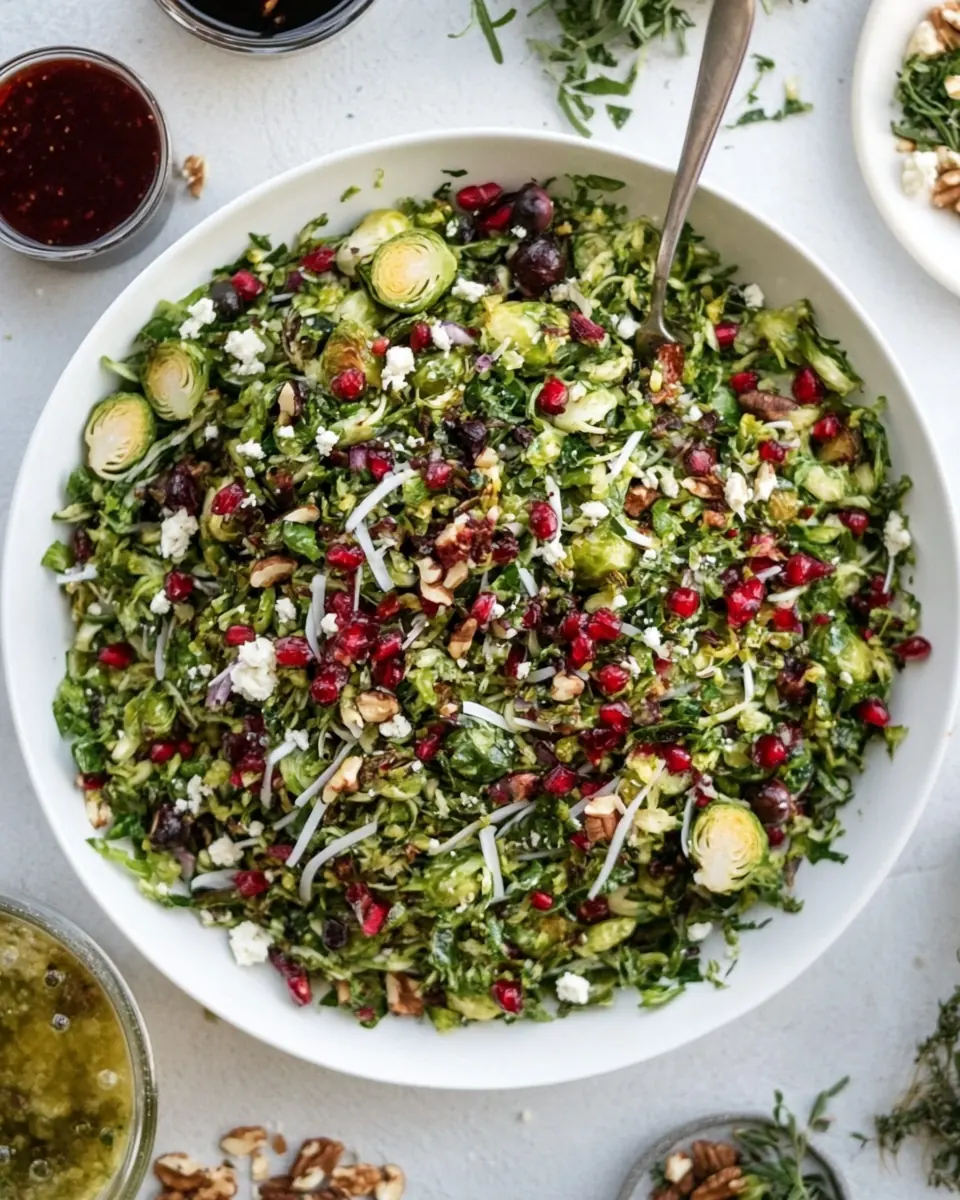
Shaved Brussels Sprouts Salad
Ingredients
Equipment
Method
- For the salad: Place chopped kale in a large serving bowl. Top with salt and pepper. Massage kale by grabbing large handfuls and squeezing gently until the kale is darker in color, softened, and more fragrant. Repeat several times, grabbing fresh handfuls of kale as you go. This will make the kale more tender and less bitter – don’t skip this step!: As you massage the chopped kale , notice how the leaves darken and release a faint, green aroma, and listen for a subtle change in texture as the fibers relax; this signals tenderness. The why is simple, massaging breaks down tough fibers so the leaves are pleasant to eat with raw components. If you skip this the kale can taste fibrous and strong. Common mistake to avoid, massaging too briefly which leaves the kale coarse and chewy instead of soft.
- Add shaved Brussels sprouts to bowl, fluffing the strands with your fingers to separate the shreds. Toss to combine Brussels sprouts with the kale.: When you sprinkle the kosher salt and ground black pepper onto the greens, the salt will draw out a slight sheen of moisture and amplify the kale's natural flavor, while pepper adds a warm note. This subtle seasoning helps the dressing adhere and marry flavors. The why is that early seasoning starts flavor development and reduces the need for adjustments later. Troubleshooting tip, do not over-salt since the Parmesan cheese will add more salt at the end.
- For the dressing: In a small mixing bowl, whisk together all dressing ingredients. Taste and adjust the seasoning as desired. Use immediately or refrigerate in an airtight jar for up to 1 week.: As you grip bunches of kale and squeeze, you should feel the leaves give and a fragrant, almost herbaceous scent will emerge; that tells you the cell walls are loosening. This technique reduces bitterness and creates a tender mouthfeel that contrasts nicely with raw Brussels sprouts . The why is texture, softened kale blends seamlessly into the salad and is easier to chew. A frequent error is massaging too aggressively which can bruise the greens and make them limp rather than tender.
- To assemble the salad: Drizzle two-thirds of the dressing over the top and toss to combine.: Working in fresh sections ensures all the leaves receive attention and soften evenly, creating consistent texture throughout the bowl. The sensory cue is uniform color and softer stems when you run your fingers along the pieces. The reason to do this in batches is that cramming everything at once makes it harder to massage thoroughly. Avoid the mistake of working only the top layer which leaves the bottom leaves tough.
- Sprinkle salad with Parmesan, cranberries, and sunflower seeds over the top. Toss lightly. Season with additional salt and pepper to taste and add as much extra dressing as you like. Enjoy immediately or refrigerate until ready to serve.: After a few massages, the bitterness will mellow and the kale will have a silkier bite, which improves interplay with sweeter ingredients like dried cranberries. The why is chemical, as the cell walls break down mild compounds that can taste sharp are released and mellow. Common troubleshooting, if the kale still tastes bitter, a light sprinkle of lemon before assembly can help balance it.
- Add shaved Brussels sprouts to bowl, fluffing the strands with your fingers to separate the shreds: When you add the thinly shredded Brussels sprouts , use your fingers to tease apart the strands so they do not clump, creating airy pieces that catch dressing evenly. Visually they should look like fine green threads that move freely in the bowl. The why is better coating and mouthfeel, as separated shreds pick up dressing and mix with kale more uniformly. A common mistake is pressing them in, which causes compaction and uneven dressing distribution.
- Toss to combine Brussels sprouts with the kale: Gently toss until you see a uniform mix of greens and an even distribution of color and texture; this tactile motion ensures both components are balanced in every bite. The why is consistency, ensuring each forkful has kale and Brussels sprouts together. Avoid over-tossing, which can bruise the greens and make the salad droop prematurely.
- For the dressing: As you whisk the Greek yogurt , lemon juice, zest, extra virgin olive oil , honey, minced garlic , salt, and pepper, pay attention to the dressing becoming glossy and smooth, indicating proper emulsification. The citrus scent should come forward, and the yogurt should feel silky. The why is texture and coating ability; a well-emulsified dressing clings to leaves without pooling. A common error is adding oil too quickly which prevents emulsification, leading to separation.
- In a small mixing bowl, whisk together all dressing ingredients: Whisk until the mixture is homogenous and has a pleasant balance of tang and sweetness, with no visible streaks of oil. Smell the bright lemon and taste for balance, adjusting honey or salt sparingly. The reason to whisk well is to aerate the dressing slightly and build texture. Troubleshooting note, if the dressing is too tart, add a small additional pinch of honey; if too thick, whisk in a teaspoon of water at a time.
- Taste and adjust the seasoning as desired: Always taste the dressing and tweak acid, salt, or sweetness to your preference before adding it to the greens, because small adjustments can transform the profile. The sensory check is crucial, noticing how acidity and salt interact with the dairy creaminess. Why take this step, pre-tasting prevents over or under seasoning the entire salad. A mistake people make is skipping this and ending up with a dressing that overwhelms the salad.
- Use immediately or refrigerate in an airtight jar for up to 1 week: If storing, the dressing will thicken slightly when chilled and can be brought back to pourable texture by stirring or letting it sit at room temperature briefly. The why is convenience, having dressing ready speeds assembly. Common issue, refrigerated dressings can separate slightly; just whisk before using to recombine.
- To assemble the salad: Drizzle two-thirds of the dressing over the top and toss to combine, watching how the greens take on a light sheen, indicating they are properly coated but not drenched. The visual cue is a glossy finish and leaves that still hold shape. The reason for using most but not all the dressing is to reserve some for additional seasoning after the cheese and seeds are added. Avoid adding all the dressing at once which can make the salad soggy.
- Sprinkle salad with Parmesan, cranberries, and sunflower seeds over the top: Scatter the Parmesan cheese , dried cranberries, and dry roasted sunflower seeds evenly so you get balanced bites of salty, sweet, and crunchy. The crunchy seeds should remain audible when you bite, and the cheese will add savory depth. The why is layering finishing textures last preserves their character. A frequent mistake is mixing them in too early which softens the seeds and buries the crunchy notes.
- Toss lightly: Give the salad a gentle toss so the toppings integrate without losing their individual textures, and then taste for final seasoning adjustments; you may want a touch more salt or pepper. The sensory moment is the first bite where all components should harmonize. Why toss lightly, you preserve the crispness of the toppings and avoid bruising the greens. Avoid over-handling which mashes delicate shreds.
- Season with additional salt and pepper to taste and add as much extra dressing as you like: Finish by tasting a forkful and adding small amounts of seasoning if needed, remembering that the Parmesan cheese contributes salt. The why is final balance, tailoring the salad to your palate. Troubleshooting, if it tastes flat, add a squeeze of fresh lemon to lift the flavors immediately.
- Enjoy immediately or refrigerate until ready to serve: If you plan to serve later, chill the salad briefly and add any remaining dressing just before serving to keep the textures lively. The sensory cue for readiness is bright aroma and crisp texture. The reason is peak freshness and contrast; stored too long the salad will wilt. A common mistake is storing fully dressed salad overnight, which can lead to soggy greens.
Notes
- Swap nuts or seeds by replacing the sunflower seeds with toasted walnuts or sliced almonds for a different nutty character and richer mouthfeel.
- Adjust sweetness by increasing or decreasing the quantity of dried cranberries to suit your taste, or soak them briefly to plump them if they seem tough.
- Make it creamier by using full fat Greek yogurt instead of nonfat, which yields a richer dressing that clings more luxuriously to the greens.
- Boost the umami by adding a few more tablespoons of shaved Parmesan cheese for deeper savory notes, but reduce salt elsewhere to compensate.
- Brighten flavors by adding more lemon zest or a touch more fresh lemon juice for heightened citrusy lift, especially if your lemons are less fragrant.