Red Velvet Donuts with Glaze
Red Velvet Donuts with Glaze are one of those treats I always reach for when I want something a little nostalgic and a little showy at the same time.
I remember the first time I made these, a chilly afternoon when the neighborhood smelled like wet leaves and I wanted to cheer up the house. The scent of warm milk and sugar mingled with the faint chocolatey note from the unsweetened cocoa powder, and I found myself smiling as the dough came together. Rolling the dough and cutting out perfect rounds felt almost meditative, and frying them until the edges turned a delicate golden hue made the kitchen feel like a small bakery. Friends stopped by, and we traded stories while dipping the still warm donuts into a shiny, simple glaze.
Over the years I have adjusted the method so the crumb stays tender and the color stays vibrant without tasting artificial. Using a paste made from red liquid food color and cocoa powder gives the donuts that signature hue while keeping the flavor balanced. I like that these donuts are celebratory enough for a special occasion, yet simple enough for an ordinary morning when you want to pull out something extra. There is patience in the rise, but the payoff is worth it, every time.
Recipe Snapshot
2 hr 10 mins
120 mins
10 mins
Hard
250 kcal
American
Gluten-Free, Low FODMAP
Desserts
Mixer with paddle attachment, Dough hook, Dutch oven, 3-inch round cookie cutter, Small round cutter, Thermometer, Wire rack
What’s Great About This Red Velvet Donuts with Glaze
Playful but classic profile
I love how Red Velvet Donuts with Glaze manage to feel both retro and modern. The tender, yeasted dough gives a soft interior, while the cocoa and food color combine to create that unmistakable red velvet look. It is a dessert that nods to tradition, yet it still surprises people when they bite in.
Versatile for occasions
We have served these for brunch, birthdays, and even as a sweet offering for special holidays like Valentine’s Day. The shape and glaze make them easy to display, and they transport well to gatherings, so I often bring a batch to potlucks.
Texture that delights
The dough is enriched with eggs and shortening, which keeps the crumb tender and slightly more pillowy than plain fried bread. When fried properly, you get a thin crisp exterior that gives way to a soft, springy center, and that contrast is what keeps people coming back for another bite.
Simple glaze, big impact
A basic glaze of confectioners’ sugar, milk, and vanilla extract transforms the donuts with a glossy finish. It adds just enough sweetness without overpowering the cocoa note, and it sets quickly so you can stack or serve without long waits.
Rewarding hands on process
I find the hands on moments rewarding, from kneading the dough to cutting perfect rounds. There is real joy in frying small batches and seeing the color deepen, then watching the glaze set. The process invites patience and yields reliable, delicious results.
Ingredients Overview for Red Velvet Donuts with Glaze
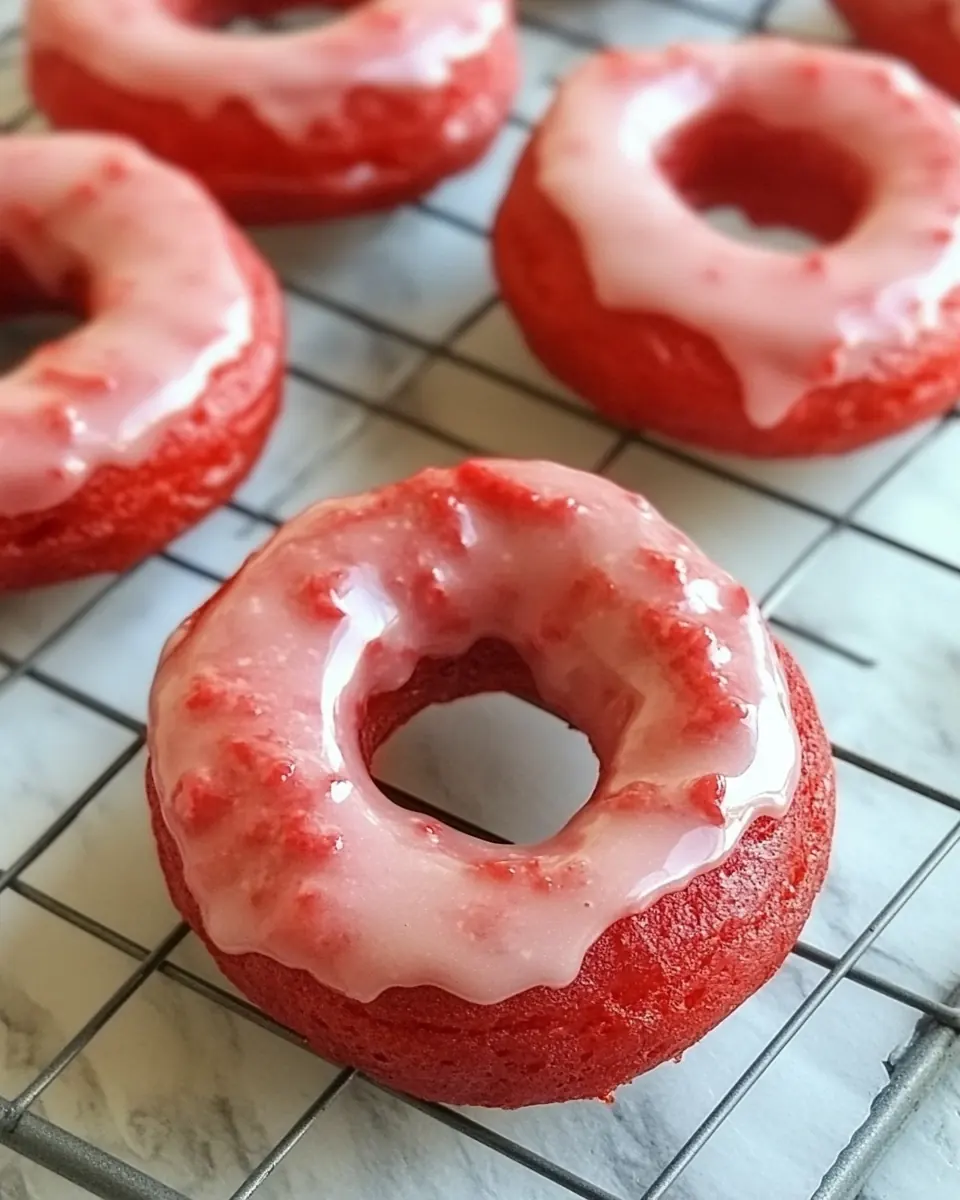
These components work together to build a tender, yeasted donut with a classic red velvet profile. The yeast leavens and lightens the flour, while the eggs and shortening enrich the dough for a soft interior. The cocoa and food color create the signature tone and flavour, and the simple glaze finishes with a bright, sweet sheen.
- 2 packages active dry yeast, (1/4-ounce): Activate the yeast by dissolving it in warm water to create a foamy starter that helps the dough rise; ensure water temperature is around 105–115°F for best activity. Allow the mixture to sit for several minutes until bubbles appear to confirm yeast viability.
- 1/4 cup warm water: Warm the water gently to provide a hospitable environment for yeast activation and to help dissolve sugar and salt when combined; avoid overheating which can kill the yeast. Measure accurately to maintain dough hydration and fermentation timing.
- 1 1/2 cups lukewarm milk: Provide lukewarm milk to tenderize the dough and contribute to a soft crumb, with fats and proteins that enrich flavor and texture. Ensure the temperature is comfortable to touch so it aids yeast fermentation without shocking or killing the yeast.
- 1/2 cups sugar: Sweeten the dough and feed the yeast with sugar to support fermentation while contributing to browning and flavor development during frying or baking. Adjust measurements carefully, as too much sugar can slow yeast activity and alter texture.
- 1 teaspoons salt: Season the dough with salt to balance sweetness and strengthen gluten structure, improving dough handling and final texture. Dissolve salt evenly to avoid localized inhibition of yeast activity.
- 2 large eggs: Incorporate eggs to add richness, structure, and moisture, contributing to a tender crumb and improved color in the finished donuts. Beat eggs lightly before mixing to ensure even distribution throughout the dough.
- 1/3 cup vegetable shortening: Use vegetable shortening to introduce fat that creates a tender, flaky texture and helps produce a soft interior; it also aids in frying performance and shelf stability. Soften or measure precisely to achieve consistent dough consistency.
- 5 cups all-purpose flour: Provide the primary structure and bulk with all-purpose flour, supplying proteins that form gluten when hydrated and kneaded to give the donuts their chew and shape. Sift or measure properly to maintain consistent dough hydration and texture.
- 1 tablespoon unsweetened cocoa powder: Add unsweetened cocoa powder to impart a subtle chocolate flavor and contribute to the signature red velvet taste and color balance; it also slightly affects acidity which interacts with other ingredients. Use a light hand so chocolate notes complement rather than overpower.
- 1 tablespoon red liquid food color: Introduce red liquid food color to achieve the vivid red hue characteristic of red velvet donuts; liquid dye disperses quickly for uniform coloration. Add gradually and mix thoroughly until the desired shade is reached without altering dough consistency.
- Vegetable oil: Heat vegetable oil for frying to cook the donuts quickly, creating a crisp exterior and a tender, evenly cooked interior; choose a neutral oil with a suitable smoke point. Maintain consistent temperature to prevent greasy or undercooked results.
- 2 cups confectioners' sugar: Sweeten and thicken the glaze with confectioners' sugar to create a smooth, glossy coating that adheres well to the donuts and provides sweetness. Sift the sugar if necessary to avoid lumps and achieve a silky texture.
- 2 tablespoons milk: Thin the glaze with milk to reach a spreadable or drizzling consistency that sets with a tender sheen on the donuts; milk also adds a touch of dairy flavor. Add milk incrementally until the glaze reaches the desired thickness.
- 1/2 teaspoon vanilla extract: Flavor the glaze with vanilla extract to enhance sweetness and provide aromatic depth, balancing the sugar and complementing the red velvet profile. Stir the extract in at the end to preserve its delicate aroma.
Directions for Red Velvet Donuts with Glaze
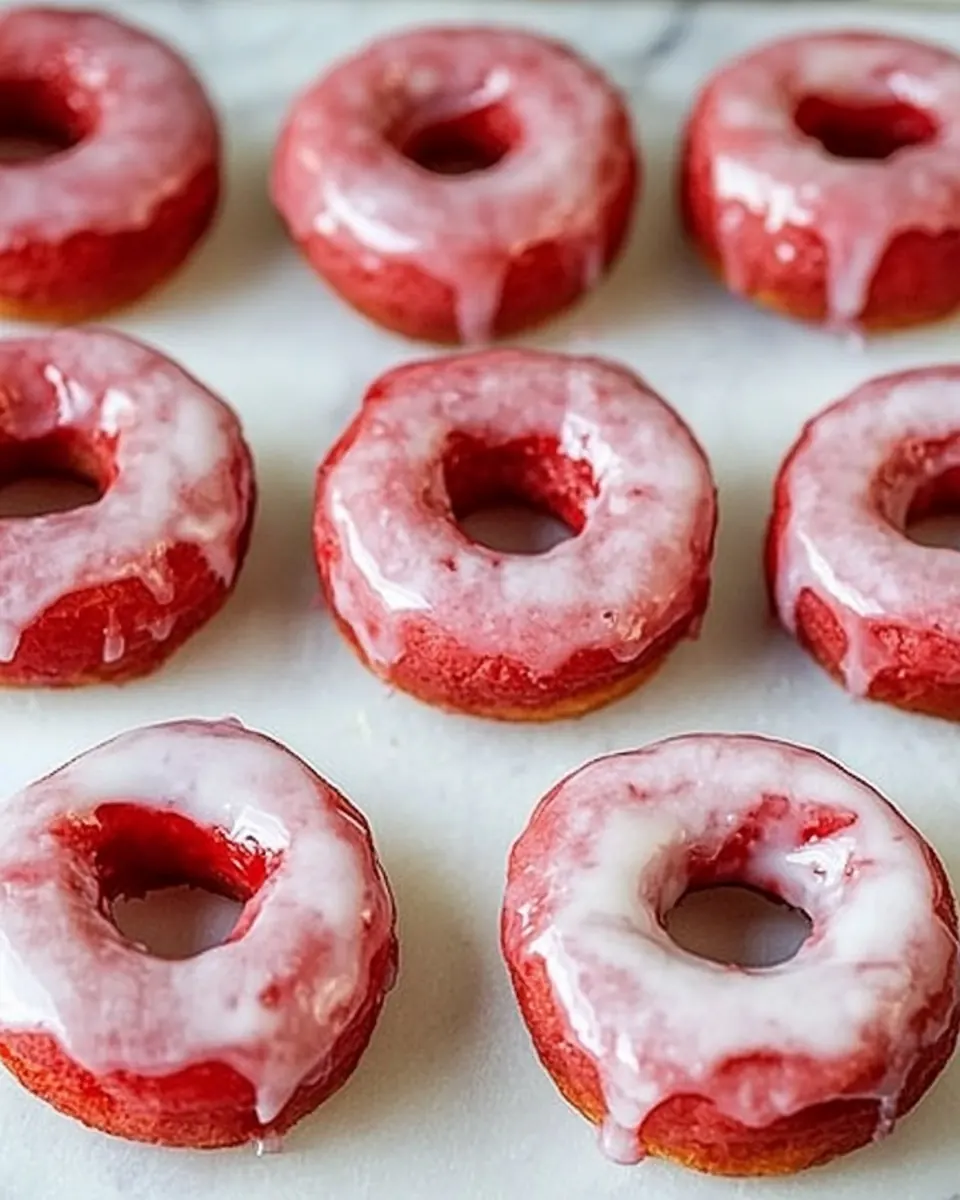
This recipe requires attention during mixing, rising, and frying, but each stage is forgiving when you pay attention to sensory cues. I find talking through the steps out loud helps me maintain rhythm, and small batches in the oil give the best results.
- Stir the yeast into the warm water and let sit for 5 minutes.: You should notice tiny bubbles forming and a yeasty aroma as the mixture becomes frothy; this indicates active yeast . If nothing happens, the yeast may be old or the water too hot or cold, and you should start over to avoid dense dough. Proper activation ensures the dough rises predictably.
- In a mixing bowl, combine milk, sugar, and salt. Using a mixer with a paddle attachment, beat in eggs one at a time, stopping to scrape down the sides of the bowl after each addition.: The batter will look glossy and slightly thick as the eggs emulsify with the milk and sugar , and you should hear a steady motor hum from the mixer; it helps incorporate air. Scraping prevents pockets of unmixed ingredients. If you skip scraping, you may end up with uneven texture in the dough.
- Beat in shortening and 2 cups of flour.: At this point the bowl will feel heavier and the mixture will start to take on body, with the shortening creating a satiny texture. Adding the first measure of flour gives the dough structure without becoming stiff. Overworking now can develop too much gluten, making the final donut tough.
- In a small bowl, stir together cocoa powder and food coloring to make a paste.: The paste should be smooth and intensely colored, and the cocoa aroma will sharpen. Making a paste prevents streaks and ensures even distribution of the red liquid food color . If the paste is lumpy, strain or remix to avoid speckled dough.
- Add food coloring paste to dough and mix well.: As the paste blends in, the dough will deepen to a red hue and you may smell the cocoa more distinctly; this visual cue signals even color. Mix until you have uniform shading without overmixing. Incomplete mixing yields marbled color and inconsistent flavor.
- Keep adding flour, 1/2 cup at a time, until dough begins to pull away from sides of bowl.: The dough will transition from sticky to tacky and you will see it start to climb the paddle a little, signaling the right consistency for kneading. Adding flour gradually prevents over-drying. Adding too much at once risks a dry, crumbly dough.
- Switch to a dough hook and knead dough for 5 to 8 minutes, until soft but not sticky.: You will hear a change in the mixer tone as the dough becomes smoother and more elastic, and it should feel supple to the touch. Proper kneading develops gluten for structure and chew without making the crumb tight. Under kneading produces a slack dough that will not hold its shape in the fryer.
- Place dough in a lightly oiled bowl, turning dough to coat it in oil.: Coating the surface prevents crust formation during the rise, and the dough will glisten faintly where the oil touched it. This keeps the exterior soft and encourages even rising. Forgetting to oil the bowl can create a dry film that inhibits full expansion.
- Cover bowl with plastic wrap and let rise until it doubles in bulk, about 1 1/2 hours.: Look for a visible increase that is pillowy and soft to the touch, with small surface bubbles; that indicates sufficient fermentation. The aroma will become slightly fermented and sweet. If it does not double, give it more time in a warmer spot, as rushing will produce dense donuts.
- Fill a Dutch oven with about 2 inches of oil and heat to 350 degrees.: The oil should shimmer slightly and register steady at 350 degrees , which creates fast set of the exterior while cooking the interior. Use a thermometer to maintain temperature, and avoid overcrowding which drops the oil temp. Oil below target yields greasy donuts, while too hot will brown too quickly without cooking through.
- Cut dough into four pieces, and working 1 piece at a time, roll dough out on a lightly floured surface to a thickness of 1/4-inch. Use a 3-inch round cookie cutter and a small round cutter to cut donuts. You can use the small round cutter to make more donut holes out of the scraps.: The rolled dough should feel springy and hold the cut edges cleanly; the donuts should relax slightly before frying. Keep scraps covered to prevent drying as you work. Rolling too thin makes fragile donuts that absorb oil, and rolling too thick leads to undercooked centers.
- Carefully slide a few donuts into the oil. Fry for 35 to 45 seconds and then flip over. Cook the second side about 30 seconds and then place on a rack or a paper towel-lined baking sheet.: Listen for a gentle sizzle that quiets as the donut cooks, and look for a light golden edge before flipping; the interior will remain soft and aromatic. Draining on a rack prevents sogginess from trapped steam. Frying too many at once will lower oil temperature and create oily, undercooked donuts.
- For glaze, combine confectioners' sugar, milk, and vanilla extract in a bowl and whisk until smooth.: The glaze should be velvety and pourable, without lumps, and it will have a sweet milky scent with vanilla notes. A smooth glaze sets quickly into a glossy shell on warm donuts. If the glaze is too thick add a splash more milk , and if too thin add more confectioners' sugar ; avoid adding too much liquid at once.
- Drizzle glaze on top of donuts.: The warm donuts will take the glaze and create a thin, shiny coat that slightly firms as it cools, giving a pleasant bite. Use a spoon or fork to control coverage and allow excess to drip off before stacking. Donuts that are too hot may melt the glaze into a thin coat, while donuts too cool may not take the glaze evenly.
Recipe Tips about Red Velvet Donuts with Glaze
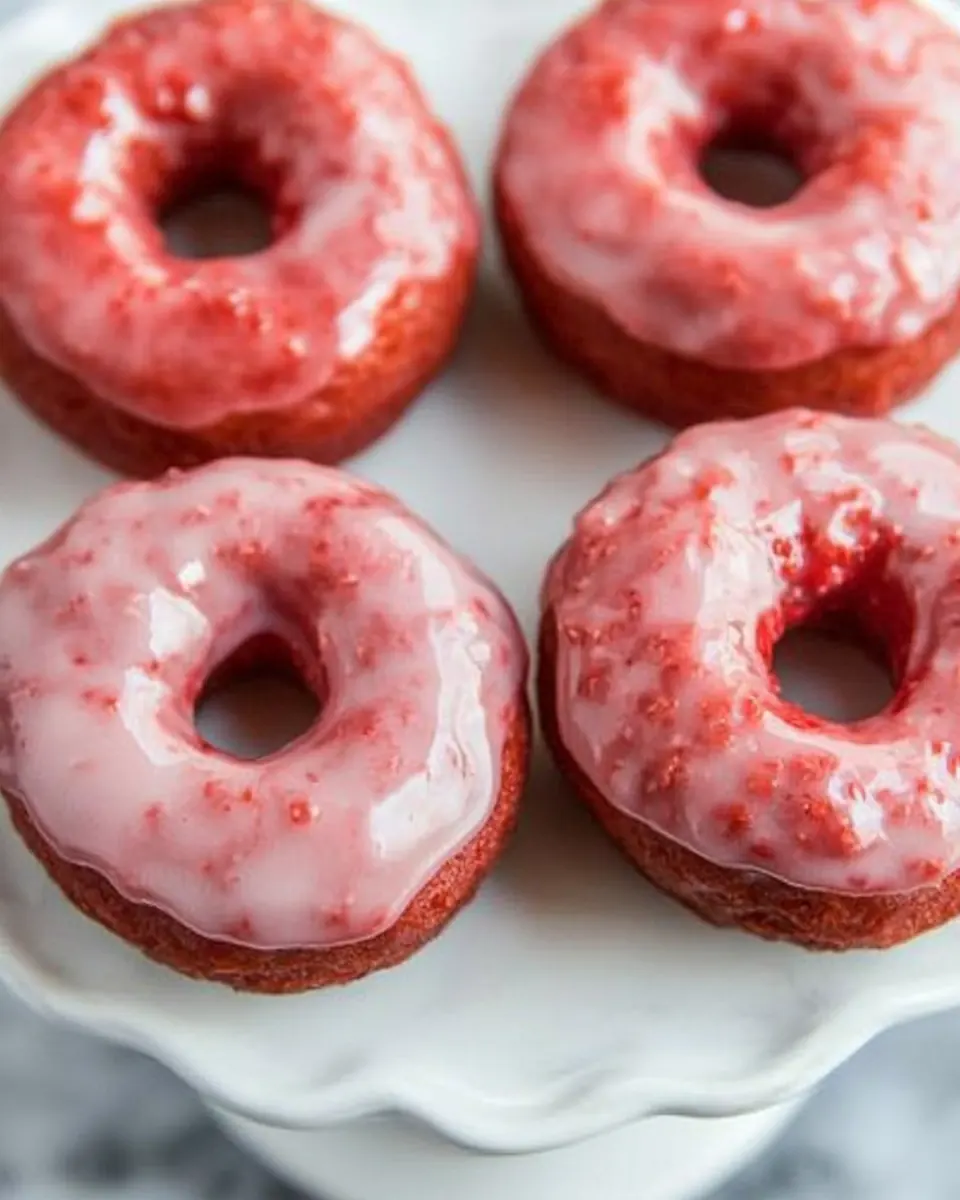
These tips collect what I have learned over many batches, from proofing to frying and glazing. They will help you avoid common pitfalls and get consistent results every time.
- Proof yeast visually When the yeast blooms into a foamy cap after sitting in the warm water for a few minutes, you know it is active and ready to leaven the dough.
- Temperature matters Keep your milk and water lukewarm to encourage steady yeast activity without shocking the culture, which preserves rise time and texture.
- Add flour gradually Incorporate the remaining flour in increments so the dough reaches a soft, tacky stage, preventing a dry, crumbly result from adding too much at once.
- Monitor oil with a thermometer Maintaining around 350 degrees ensures a crisp exterior and fully cooked interior; fluctuations lead to greasy or undercooked donuts.
- Dry glaze lightly Allow glazed donuts to cool briefly on a rack so the glaze can set to a sheen without pooling underneath, which helps with presentation and stacking.
- Use small batches Fry a few at a time so the oil temperature stays steady and you can flip and drain each donut carefully for uniform results.
What to Serve Alongside Red Velvet Donuts with Glaze
These donuts pair well with simple beverages and other light bites for celebrations or casual mornings. Below are serving suggestions, occasion ideas, and storage tips to help you plan presentation and timing.
- Fresh brewed coffee A classic pairing, coffee cuts through the sweetness and complements the cocoa hint; serve in a carafe for brunch guests.
- Assorted teas Offer black and herbal options so guests can choose a bolder or lighter accompaniment to the sweet glaze and tender crumb.
- Fresh fruit platter Seasonal berries and sliced fruit bring brightness and balance to the richness of the donuts, making the spread feel more varied.
- Party presentation Arrange the donuts on a tiered stand for a celebratory display, perfect for Valentine’s Day or birthday mornings.
- Storage tips Keep leftover donuts in an airtight container at room temperature for one to two days; to refresh, warm briefly in a low oven until slightly soft before glazing.
- Occasion ideas Serve these for brunch, dessert tables, or festive gatherings where a sweet centerpiece is welcome, adjusting glaze coverage for a polished look.
- Seasonal twist Pair with warm spices in the drink selection during colder months to create a cozy pairing without altering the donut recipe itself.
FAQ
Conclusion
These Red Velvet Donuts with Glaze stand out for their tender yeasted crumb, vibrant color, and shiny, simple glaze. They are rewarding to make because the hands on process from kneading to frying yields reliably delicious results and a warm, bakery like aroma. Try them when you want a special breakfast, a festive dessert, or a homemade treat to share with friends. I hope you enjoy the ritual of making them as much as the first bite.
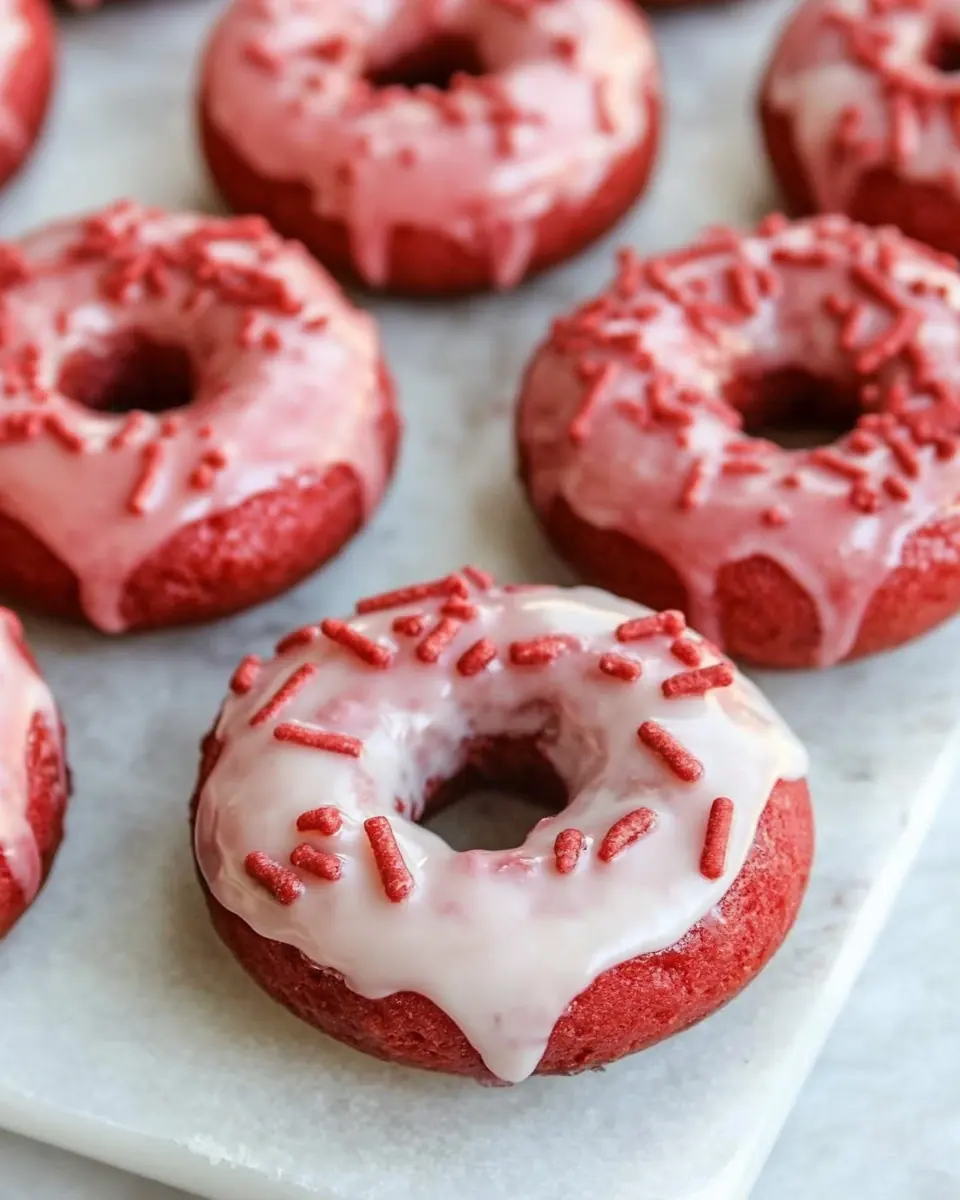
Red Velvet Donuts with Glaze
Ingredients
Equipment
Method
- Stir the yeast into the warm water and let sit for 5 minutes.: You should notice tiny bubbles forming and a yeasty aroma as the mixture becomes frothy; this indicates active yeast . If nothing happens, the yeast may be old or the water too hot or cold, and you should start over to avoid dense dough. Proper activation ensures the dough rises predictably.
- In a mixing bowl, combine milk, sugar, and salt. Using a mixer with a paddle attachment, beat in eggs one at a time, stopping to scrape down the sides of the bowl after each addition.: The batter will look glossy and slightly thick as the eggs emulsify with the milk and sugar , and you should hear a steady motor hum from the mixer; it helps incorporate air. Scraping prevents pockets of unmixed ingredients. If you skip scraping, you may end up with uneven texture in the dough.
- Beat in shortening and 2 cups of flour.: At this point the bowl will feel heavier and the mixture will start to take on body, with the shortening creating a satiny texture. Adding the first measure of flour gives the dough structure without becoming stiff. Overworking now can develop too much gluten, making the final donut tough.
- In a small bowl, stir together cocoa powder and food coloring to make a paste.: The paste should be smooth and intensely colored, and the cocoa aroma will sharpen. Making a paste prevents streaks and ensures even distribution of the red liquid food color . If the paste is lumpy, strain or remix to avoid speckled dough.
- Add food coloring paste to dough and mix well.: As the paste blends in, the dough will deepen to a red hue and you may smell the cocoa more distinctly; this visual cue signals even color. Mix until you have uniform shading without overmixing. Incomplete mixing yields marbled color and inconsistent flavor.
- Keep adding flour, 1/2 cup at a time, until dough begins to pull away from sides of bowl.: The dough will transition from sticky to tacky and you will see it start to climb the paddle a little, signaling the right consistency for kneading. Adding flour gradually prevents over-drying. Adding too much at once risks a dry, crumbly dough.
- Switch to a dough hook and knead dough for 5 to 8 minutes, until soft but not sticky.: You will hear a change in the mixer tone as the dough becomes smoother and more elastic, and it should feel supple to the touch. Proper kneading develops gluten for structure and chew without making the crumb tight. Under kneading produces a slack dough that will not hold its shape in the fryer.
- Place dough in a lightly oiled bowl, turning dough to coat it in oil.: Coating the surface prevents crust formation during the rise, and the dough will glisten faintly where the oil touched it. This keeps the exterior soft and encourages even rising. Forgetting to oil the bowl can create a dry film that inhibits full expansion.
- Cover bowl with plastic wrap and let rise until it doubles in bulk, about 1 1/2 hours.: Look for a visible increase that is pillowy and soft to the touch, with small surface bubbles; that indicates sufficient fermentation. The aroma will become slightly fermented and sweet. If it does not double, give it more time in a warmer spot, as rushing will produce dense donuts.
- Fill a Dutch oven with about 2 inches of oil and heat to 350 degrees.: The oil should shimmer slightly and register steady at 350 degrees , which creates fast set of the exterior while cooking the interior. Use a thermometer to maintain temperature, and avoid overcrowding which drops the oil temp. Oil below target yields greasy donuts, while too hot will brown too quickly without cooking through.
- Cut dough into four pieces, and working 1 piece at a time, roll dough out on a lightly floured surface to a thickness of 1/4-inch. Use a 3-inch round cookie cutter and a small round cutter to cut donuts. You can use the small round cutter to make more donut holes out of the scraps.: The rolled dough should feel springy and hold the cut edges cleanly; the donuts should relax slightly before frying. Keep scraps covered to prevent drying as you work. Rolling too thin makes fragile donuts that absorb oil, and rolling too thick leads to undercooked centers.
- Carefully slide a few donuts into the oil. Fry for 35 to 45 seconds and then flip over. Cook the second side about 30 seconds and then place on a rack or a paper towel-lined baking sheet.: Listen for a gentle sizzle that quiets as the donut cooks, and look for a light golden edge before flipping; the interior will remain soft and aromatic. Draining on a rack prevents sogginess from trapped steam. Frying too many at once will lower oil temperature and create oily, undercooked donuts.
- For glaze, combine confectioners' sugar, milk, and vanilla extract in a bowl and whisk until smooth.: The glaze should be velvety and pourable, without lumps, and it will have a sweet milky scent with vanilla notes. A smooth glaze sets quickly into a glossy shell on warm donuts. If the glaze is too thick add a splash more milk , and if too thin add more confectioners' sugar ; avoid adding too much liquid at once.
- Drizzle glaze on top of donuts.: The warm donuts will take the glaze and create a thin, shiny coat that slightly firms as it cools, giving a pleasant bite. Use a spoon or fork to control coverage and allow excess to drip off before stacking. Donuts that are too hot may melt the glaze into a thin coat, while donuts too cool may not take the glaze evenly.
Notes
- Proof yeast visually When the yeast blooms into a foamy cap after sitting in the warm water for a few minutes, you know it is active and ready to leaven the dough.
- Temperature matters Keep your milk and water lukewarm to encourage steady yeast activity without shocking the culture, which preserves rise time and texture.
- Add flour gradually Incorporate the remaining flour in increments so the dough reaches a soft, tacky stage, preventing a dry, crumbly result from adding too much at once.
- Monitor oil with a thermometer Maintaining around 350 degrees ensures a crisp exterior and fully cooked interior; fluctuations lead to greasy or undercooked donuts.
- Dry glaze lightly Allow glazed donuts to cool briefly on a rack so the glaze can set to a sheen without pooling underneath, which helps with presentation and stacking.
- Use small batches Fry a few at a time so the oil temperature stays steady and you can flip and drain each donut carefully for uniform results.