Vegan Cauliflower Rice Risotto with Asparagus Mushrooms
Vegan Cauliflower Rice Risotto with Asparagus Mushrooms snagged my attention on a damp spring evening when I wanted something comforting yet light. I remember standing in my kitchen, the windows fogged slightly from the steam of a kettle, thinking about how to coax deep savory flavor from humble vegetables. That first bite convinced me that a dish can be both soothing and bright, creamy from coconut milk, and fragrant from herbs and vinegar.
That night I started tinkering, swapping a splash of balsamic into the pan and pushing the mushrooms until their edges turned caramelized, which gave the whole skillet a toasty backbone. I kept reaching for the green onions as garnish, savoring the crisp pop against the velvety cauliflower rice. It’s become a go to when I want something nourishing that still feels a little special.
Recipe Snapshot
30 mins
10 mins
20 mins
Easy
350 kcal
Vegan
Gluten-Free, Keto
Dinner
Large skillet, Dutch oven, Food processor, Box grater
The Charm of This Vegan Cauliflower Rice Risotto with Asparagus Mushrooms
Comfort without heaviness
I love that Vegan Cauliflower Rice Risotto with Asparagus Mushrooms gives you the creaminess you crave without weighing you down. The coconut milk creates a luscious mouthfeel while keeping the meal light, so it works for a cozy solo dinner or a relaxed weeknight for two.
Fast and approachable technique
One reason I keep coming back to this recipe is the straightforward method. Sautéing onion, mushrooms, and asparagus builds layers of flavor quickly, and the cauliflower rice brings it all together in minutes. If you value speed without sacrificing depth, this fits perfectly into a busy evening.
Layered flavors that feel gourmet
Adding a spoonful of balsamic vinegar and thyme near the end brightens the dish like a secret trick. The vinegar cuts through the richness, while the herb adds an aromatic lift. I use these little moves whenever I want a simple meal to feel thoughtfully plated.
Flexible and forgiving
I appreciate recipes that let you adapt on the fly. This one accepts store bought cauliflower rice or freshly pulsed florets, and you can easily scale quantities. It forgives a slightly longer sauté or a brief simmer, so even beginners can pull off impressive results.
Beautiful for spring meals
With seasonal asparagus and spring produce, this dish reads bright and celebratory. I often make it when friends pop by, because it looks lovely spooned into bowls, finished with a scattering of sliced green onions and a crack of black pepper.
Essential Ingredients for Vegan Cauliflower Rice Risotto with Asparagus Mushrooms
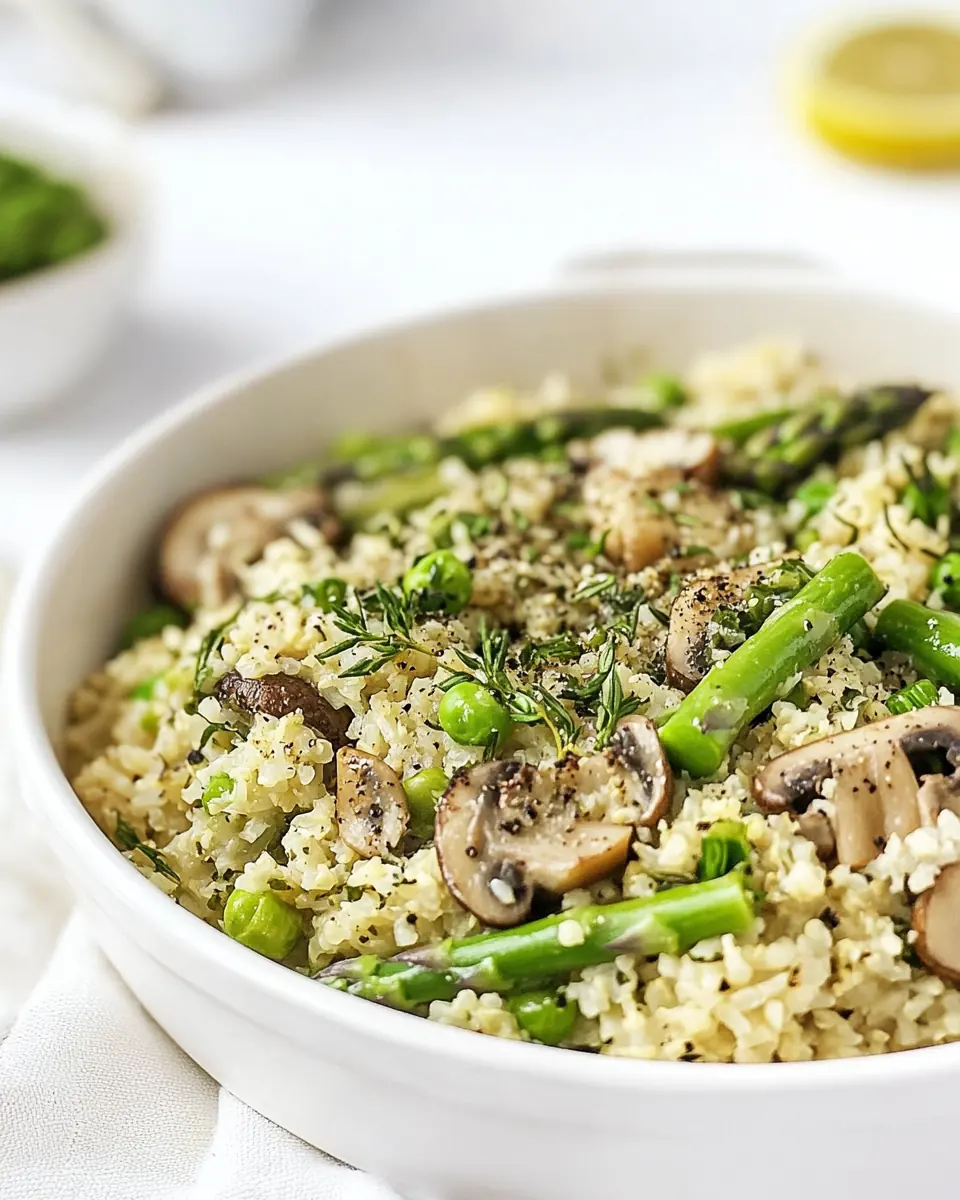
These ingredients are chosen to create a balance between creamy texture, umami depth, and fresh brightness. The cauliflower rice acts as the tender base, while mushrooms and onion lend savory richness. Asparagus brings a light vegetal snap and the balsamic vinegar gives a tangy lift. Together they form a satisfying, well rounded plate.
- 1 tablespoon extra virgin olive oil: Enhance flavor and prevent sticking by coating the pan with rich extra virgin olive oil; its mild fruitiness balances the savory vegetables and helps gently sauté onions and mushrooms to build the risotto base. Use it sparingly to keep the dish light while providing healthy monounsaturated fats and a silky mouthfeel.
- 1 large yellow onion, diced: Provide sweet, aromatic depth by finely dicing a large yellow onion and slowly caramelizing it; the softened onion creates foundational savory-sweet notes that support the cauliflower rice while releasing natural sugars. Cook until translucent or slightly browned to maximize flavor integration without overpowering the delicate coconut milk.
- 8 ounces mushrooms, sliced: Add earthy umami and meaty texture by slicing mushrooms and sautéing until golden; their browned edges contribute savory complexity and absorb the balsamic and thyme for layered taste. Choose a firm variety and avoid overcrowding the pan to encourage caramelization rather than steaming.
- 12 ounces asparagus, cut into 1-inch pieces: Introduce fresh, tender-crisp brightness by cutting asparagus into 1-inch pieces and lightly cooking until just tender; the vegetal pop and slight bitterness contrast the creamy risotto for balance. Add near the end of cooking to preserve color, texture, and subtle spring flavor.
- 1 clove garlic: Infuse aromatic pungency by mincing a clove of garlic and briefly sautéing to release fragrant oils; garlic brightens and lifts the overall savory profile without dominating. Add after the onions have softened to prevent burning and preserve a mellow garlicky note.
- 1 tablespoon high quality balsamic vinegar: Concentrate sweet-tart complexity by incorporating a tablespoon of high quality balsamic vinegar; its acidity brightens the dish and balances the coconut milk’s richness. Drizzle in during deglazing to dissolve browned bits and unify flavors across the risotto.
- 1/2 teaspoon dried thyme (or 1 teaspoon fresh): Provide herbal warmth and slightly floral notes using dried thyme (or fresh if preferred); its savory character complements mushrooms and cauliflower while adding subtle Mediterranean aroma. Crumble dried leaves between your fingers before adding to release essential oils and better integrate into the sauce.
- 1 pound cauliflower rice: Form the bulk and risotto-like texture with one pound of cauliflower rice; its neutral, slightly nutty flavor and rice-like grains create a low-carb base that soaks up coconut milk and seasonings. Pulse to uniform size and briefly cook so it remains tender but not mushy, maintaining a pleasant bite.
- 3/4 cup coconut milk: Contribute creamy richness and subtle sweetness with 3/4 cup coconut milk, binding ingredients into a velvety sauce; it replicates traditional risotto creaminess while keeping the recipe vegan. Stir gradually to achieve desired consistency and to meld with the balsamic and aromatics.
- Fine sea salt: Season to taste using fine sea salt to enhance and balance all flavors; a pinch during cooking and an adjustment at the end ensures vegetables and coconut milk are fully seasoned without becoming flat. Use measured amounts and taste as you go to avoid over-salting delicate ingredients.
- Sliced green onions, for garnish: Provide fresh oniony brightness and a crisp garnish by thinly slicing green onions; scatter over the finished risotto to add color contrast and a mild sharpness. Add just before serving to preserve their crunch and vibrant appearance.
- Black pepper, for garnish: Finish with freshly ground black pepper for warm, piquant heat and aromatic lift; a few grinds brighten the creamy elements and highlight savory components. Season at the end to control spice level and retain the pepper’s fragrance.
Making Vegan Cauliflower Rice Risotto with Asparagus Mushrooms
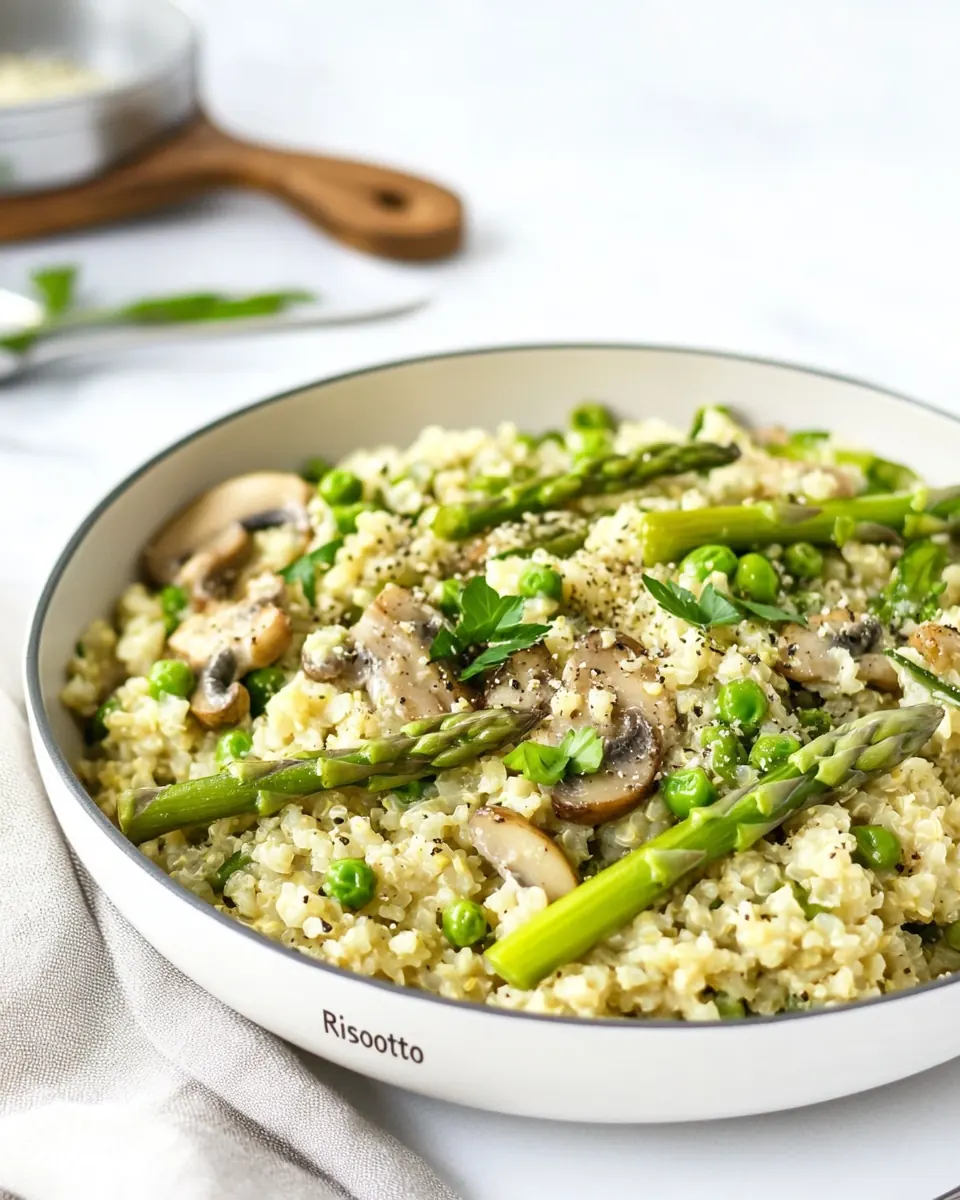
I like to approach the skillet with attention to rhythm and timing so every element finishes together. The process is straightforward but pays off when you watch for visual and aromatic cues. Keep tools within reach and taste as you go to adjust seasoning gently.
- Heat the olive oil in a large skillet or Dutch oven over medium heat. Sauté the onion until it starts to soften, about 5 minutes, then add in the mushrooms and asparagus and cook for 5 more minutes.: Warmth should be noticeable when you hover your hand above the pan and the oil develops a subtle shimmer, not smoke. As the oil heats it carries aromas and ensures the onion and mushrooms brown evenly. You will hear a gentle sizzle when vegetables meet the surface, and that sound tells you the pan is hot enough. If the oil smokes, lower the heat immediately to avoid bitter, burnt flavors. A common misstep is cranking the heat to speed things up, which often results in uneven browning and dry edges rather than a rich, fond.
- If you haven't purchased prepared cauliflower rice for convenience, this would be a good time to prepare the rice while the vegetables are sautéing. Simply break up a head of cauliflower into florets and then pulse them in a food processor, or grate them with a box grater, to create a rice-like texture.: As the onion sweats it releases sweet, aromatic vapors and the pan will smell lightly caramelized. When you add the mushrooms , listen for a louder sizzle and watch their edges darken, signaling that their moisture is evaporating and flavor is concentrating. Introducing the asparagus at this point keeps its color vibrant and texture tender crisp. If you crowd the pan, everything will steam rather than brown, losing depth. Stir occasionally to promote even contact with the surface and tilt the pan to redistribute oil if one area seems dry.
- Add in the garlic, balsamic vinegar, and thyme and sauté for another minute. Add in the prepared cauliflower rice, coconut milk, and 1 teaspoon of salt, then stir well.: During this prep you should notice the cauliflower taking on a fluffy, granular consistency that will mimic rice. The smell is fresh and green, and handling the florets gives a tactile sense of readiness once pieces are roughly the size of grains. Avoid over processing into a puree, which makes the final texture mushy. A common error is leaving large chunks that wont soften evenly, so pulse in short bursts and check frequently for uniformity.
- Bring the coconut milk to a simmer and cover the pot with a lid. Lower the heat and let the vegetables cook until the cauliflower rice is tender, about 10 minutes. Remove the lid. If any excess liquid remains at the bottom of the pan, you can raise the heat to simmer it off. Adjust any seasoning to taste, adding more salt if desired.: Right after adding the garlic , the skillet will bloom with pungent, garlicky perfume, but it burns quickly so keep it moving. The splash of balsamic vinegar will hiss and evaporate slightly, lending a bright, sweet acidity that lifts the pan. As you fold in the cauliflower rice and coconut milk , you will see the mixture go from separate elements into a unified pot with gentle gloss. Stir until the coconut milk coats each grain and the salt dissolves. Over stirring can break the rice down excessively, so be deliberate. A frequent misstep here is adding too much liquid too fast which prevents the rice from absorbing properly.
- Serve warm with sliced green onions and black pepper on top. Leftovers can be stored in an airtight container in the fridge for up to 4 days.: When the pot reaches a simmer you will see small bubbles around the edges and gentle steam rising, carrying a complex scent of coconut and roasted vegetables. Lowering the heat allows the cauliflower rice to soften gently and soak up flavor without breaking apart. Peek occasionally to test tenderness; the grains should be yielding but still hold shape. If liquid pools, return to medium heat briefly so it reduces and the texture firms to a risotto like consistency. Tasting is crucial here because salt levels change as the liquid concentrates. A common pitfall is assuming time alone will fix texture, when in fact controlling the simmer and reduction is what creates the right body.
- Serve warm with sliced green onions and black pepper on top Leftovers can be stored in an airtight container in the fridge for up to 4 days: As you plate, notice the steam lifting and the way the glossy coconut restrained by reduction clings to the grains and vegetables. The chopped green onions add a lively, fresh snap and the freshly ground black pepper gives a warm finish. For leftovers the texture will tighten slightly, so you may refresh it with a splash of water or a small spoon of coconut milk when reheating. A typical mistake is overheating leftovers which makes the cauliflower mushy, so reheat gently over low heat stirring frequently.
Helpful Hints
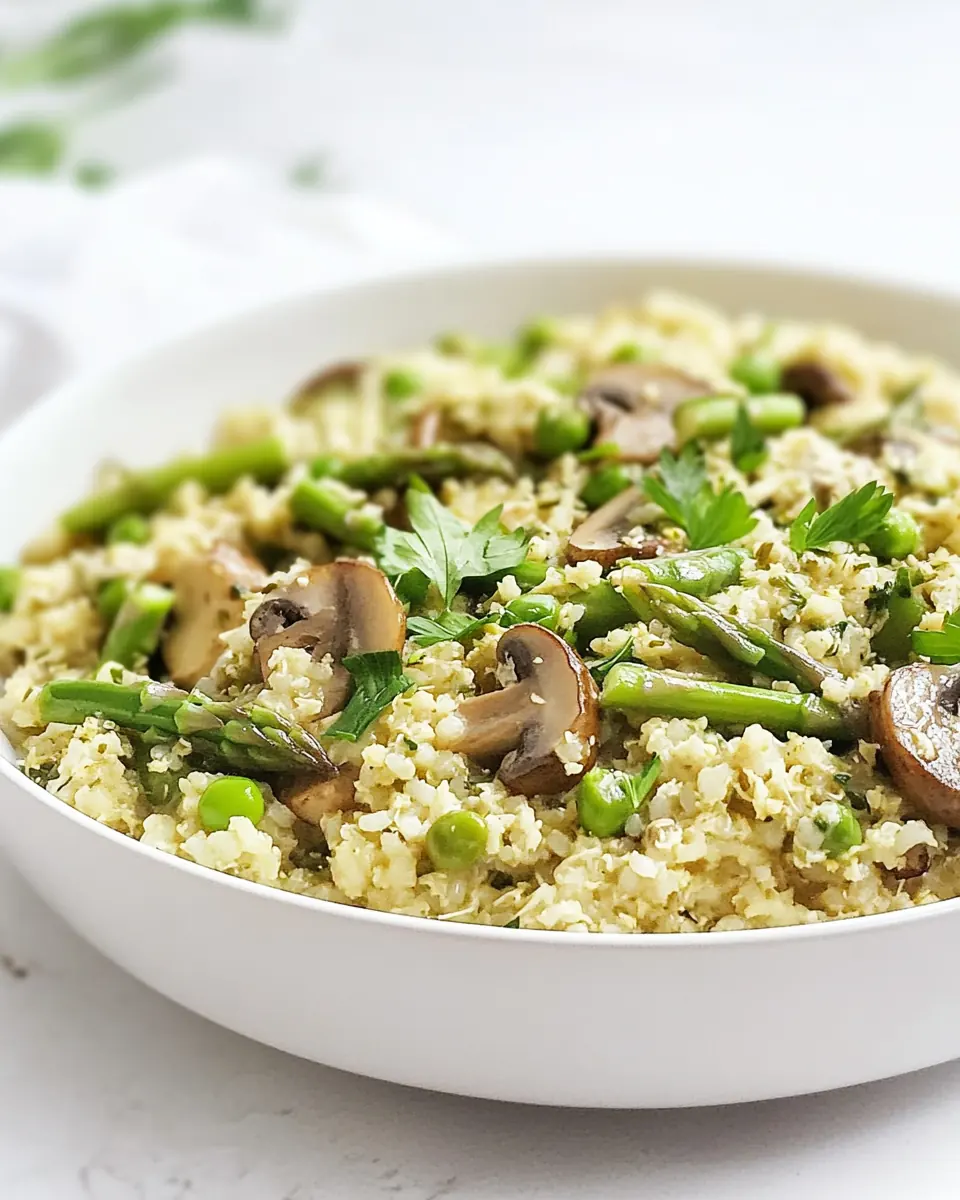
I like to keep a handful of practical tricks on hand when I make this dish, small adjustments that lift the final bowl. These tips are rooted in technique and real kitchen tests, and they help preserve texture and flavor during both cook and reheat.
- Warm your pan: Preheating the skillet ensures immediate contact browning which builds deep flavor, so heat the pan until the oil shimmers before adding vegetables.
- Pulse cauliflower carefully: Short pulses in the food processor produce rice sized bits, avoid turning it into a paste by checking frequently between pulses.
- Keep ingredients uniform: Slice mushrooms and chop asparagus evenly to ensure simultaneous cooking and consistent texture in every bite.
- Control the simmer: Once coconut milk joins the pan, maintain a gentle simmer to allow absorption without breaking down the cauliflower into mush.
- Finish with aromatics: Scatter sliced green onions and a crack of black pepper at the last moment so their brightness remains vibrant on the warm risotto.
Serving This Vegan Cauliflower Rice Risotto with Asparagus Mushrooms
This recipe works beautifully across casual and slightly dressed up occasions. Below I outline serving ideas and storage notes so you can present it with confidence.
- Weeknight dinner: Serve the risotto warm in shallow bowls with a scatter of sliced green onions and a twist of black pepper for a simple, satisfying meal.
- Light lunch: Offer the risotto alongside a crisp green salad for contrast, making it a balanced midday plate that still feels nourishing.
- Spring gatherings: Present it as a vegetable forward side dish with bright garnishes, highlighting the seasonal asparagus for a fresh spread.
- Storage tips: Keep leftovers in an airtight container for up to 4 days in the fridge; reheat gently over low heat with a splash of water or a spoon of coconut milk to revive creaminess.
- Occasion pairing: This risotto suits vegetarian or vegan menus during Ramadan if you want something nourishing and easy to digest, and it also works well for casual dinner parties where you need a make ahead vegetable centerpiece.
FAQ
Conclusion
This Vegan Cauliflower Rice Risotto with Asparagus Mushrooms shines because it balances creamy texture with bright, spring produce and layered savory notes. Give it a try when you crave something that feels indulgent yet light, and enjoy how simple techniques produce a complex bowl. I hope this recipe becomes a reliable favorite in your rotation, one that comforts and refreshes at the same time.
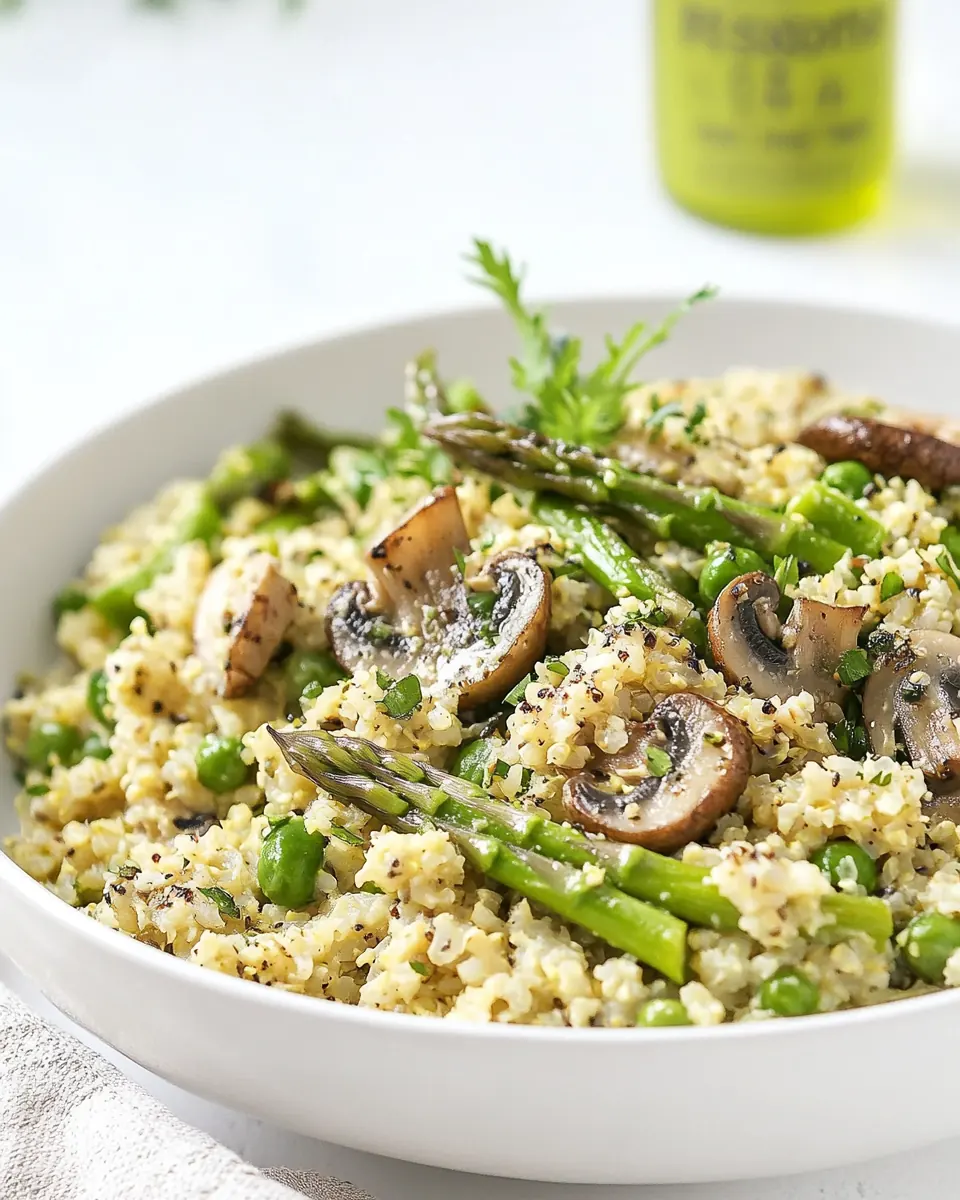
Vegan Cauliflower Rice Risotto with Asparagus Mushrooms
Ingredients
Equipment
Method
- Heat the olive oil in a large skillet or Dutch oven over medium heat. Sauté the onion until it starts to soften, about 5 minutes, then add in the mushrooms and asparagus and cook for 5 more minutes.: Warmth should be noticeable when you hover your hand above the pan and the oil develops a subtle shimmer, not smoke. As the oil heats it carries aromas and ensures the onion and mushrooms brown evenly. You will hear a gentle sizzle when vegetables meet the surface, and that sound tells you the pan is hot enough. If the oil smokes, lower the heat immediately to avoid bitter, burnt flavors. A common misstep is cranking the heat to speed things up, which often results in uneven browning and dry edges rather than a rich, fond.
- If you haven't purchased prepared cauliflower rice for convenience, this would be a good time to prepare the rice while the vegetables are sautéing. Simply break up a head of cauliflower into florets and then pulse them in a food processor, or grate them with a box grater, to create a rice-like texture.: As the onion sweats it releases sweet, aromatic vapors and the pan will smell lightly caramelized. When you add the mushrooms , listen for a louder sizzle and watch their edges darken, signaling that their moisture is evaporating and flavor is concentrating. Introducing the asparagus at this point keeps its color vibrant and texture tender crisp. If you crowd the pan, everything will steam rather than brown, losing depth. Stir occasionally to promote even contact with the surface and tilt the pan to redistribute oil if one area seems dry.
- Add in the garlic, balsamic vinegar, and thyme and sauté for another minute. Add in the prepared cauliflower rice, coconut milk, and 1 teaspoon of salt, then stir well.: During this prep you should notice the cauliflower taking on a fluffy, granular consistency that will mimic rice. The smell is fresh and green, and handling the florets gives a tactile sense of readiness once pieces are roughly the size of grains. Avoid over processing into a puree, which makes the final texture mushy. A common error is leaving large chunks that wont soften evenly, so pulse in short bursts and check frequently for uniformity.
- Bring the coconut milk to a simmer and cover the pot with a lid. Lower the heat and let the vegetables cook until the cauliflower rice is tender, about 10 minutes. Remove the lid. If any excess liquid remains at the bottom of the pan, you can raise the heat to simmer it off. Adjust any seasoning to taste, adding more salt if desired.: Right after adding the garlic , the skillet will bloom with pungent, garlicky perfume, but it burns quickly so keep it moving. The splash of balsamic vinegar will hiss and evaporate slightly, lending a bright, sweet acidity that lifts the pan. As you fold in the cauliflower rice and coconut milk , you will see the mixture go from separate elements into a unified pot with gentle gloss. Stir until the coconut milk coats each grain and the salt dissolves. Over stirring can break the rice down excessively, so be deliberate. A frequent misstep here is adding too much liquid too fast which prevents the rice from absorbing properly.
- Serve warm with sliced green onions and black pepper on top. Leftovers can be stored in an airtight container in the fridge for up to 4 days.: When the pot reaches a simmer you will see small bubbles around the edges and gentle steam rising, carrying a complex scent of coconut and roasted vegetables. Lowering the heat allows the cauliflower rice to soften gently and soak up flavor without breaking apart. Peek occasionally to test tenderness; the grains should be yielding but still hold shape. If liquid pools, return to medium heat briefly so it reduces and the texture firms to a risotto like consistency. Tasting is crucial here because salt levels change as the liquid concentrates. A common pitfall is assuming time alone will fix texture, when in fact controlling the simmer and reduction is what creates the right body.
- Serve warm with sliced green onions and black pepper on top Leftovers can be stored in an airtight container in the fridge for up to 4 days: As you plate, notice the steam lifting and the way the glossy coconut restrained by reduction clings to the grains and vegetables. The chopped green onions add a lively, fresh snap and the freshly ground black pepper gives a warm finish. For leftovers the texture will tighten slightly, so you may refresh it with a splash of water or a small spoon of coconut milk when reheating. A typical mistake is overheating leftovers which makes the cauliflower mushy, so reheat gently over low heat stirring frequently.
Notes
- Warm your pan: Preheating the skillet ensures immediate contact browning which builds deep flavor, so heat the pan until the oil shimmers before adding vegetables.
- Pulse cauliflower carefully: Short pulses in the food processor produce rice sized bits, avoid turning it into a paste by checking frequently between pulses.
- Keep ingredients uniform: Slice mushrooms and chop asparagus evenly to ensure simultaneous cooking and consistent texture in every bite.
- Control the simmer: Once coconut milk joins the pan, maintain a gentle simmer to allow absorption without breaking down the cauliflower into mush.
- Finish with aromatics: Scatter sliced green onions and a crack of black pepper at the last moment so their brightness remains vibrant on the warm risotto.