Turmeric Basmati Rice with Peas
Turmeric Basmati Rice with Peas is one of those comforting, fragrant dishes that I always turn to when I want something simple but special.
Years ago I learned to make this on a weeknight when I had nowhere near enough energy to assemble a full meal, yet I wanted the house to smell like something warm and inviting. I remember stirring the sizzling olive oil and onion while the kids did homework at the kitchen island, the kitchen filling with a soft, peppery aroma from the turmeric. The tiny green pops of peas added a burst of color, and the long, slender grains of basmati rice stayed light and separate, not gluey, which felt like a small victory.
What I love most is how forgiving this recipe is. On some nights I had to improvise with what was in the pantry, swapping one bouillon brand for another, and it still turned out flavorful. I learned the hard way to respect heat and steam here, because that patient resting period after the flame is off makes the biggest difference in texture. Once, in a rush, I lifted the lid too soon and paid for it with damp, sticky rice. After that I promised myself to let the steam finish the job.
Recipe Snapshot
30 mins
10 mins
20 mins
Easy
250 kcal
Indian
Gluten-Free, Vegan
Dinner
medium heavy pot
Why We Love This Turmeric Basmati Rice with Peas
Fragrant, gentle spice that never overpowers
I love that Turmeric Basmati Rice with Peas carries a warm, earthy aroma from turmeric without being hot or aggressive. The spice lifts the rice with color and a subtle peppery note, and I find it pairs beautifully with many mains, which is why I keep it in my regular rotation.
Perfect texture when you respect steam
The technique of bringing the water down to just skim the top of the rice, then turning the heat to very low and letting steam do the rest yields grains that are tender yet separate. I always notice the difference between rushed rice and rice that was allowed to rest five minutes off the heat. That last hold gives you fluffy, non gummy basmati rice every time.
Versatile and pantry friendly
I usually have the required items on hand, like basmati rice, olive oil, and a bouillon option. Because of that, Turmeric Basmati Rice with Peas becomes my fallback for weekday dinners, lunch sides, or impromptu guests. It adapts to additions or different bouillon types without losing its identity.
Bright pops of color and nutrition
The frozen peas add a cheerful green pop and a mild sweetness that balances the earthy turmeric. I appreciate that this dish is not only attractive on the plate, but also brings a little vegetable content to the meal with very little effort.
Minimal fuss for consistent results
I value recipes that reward patience rather than technique. With Turmeric Basmati Rice with Peas, the essential skills are simple: sauté gently, control the boil, and trust the steam. That low bar for technique makes it accessible while still delivering a reliably delicious side or base for a main.
What You’ll Need for Turmeric Basmati Rice with Peas
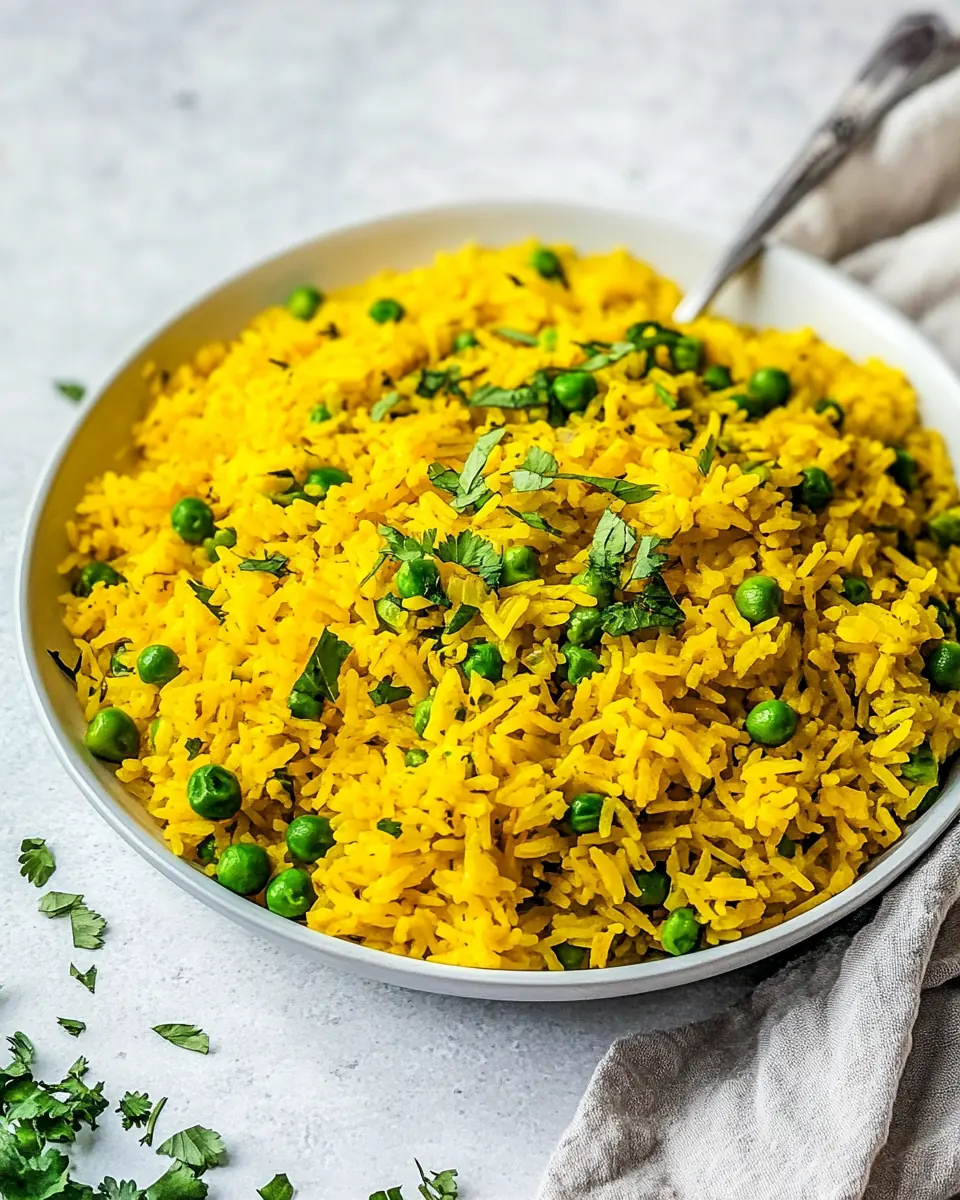
These ingredients are humble, yet they work together like a small orchestra. The long grain basmati rice provides an aromatic, fluffy base, while turmeric gives color and a warm, earthy tone. The peas bring freshness and a tender pop, and the bouillon deepens the savory profile so the rice tastes intrinsically seasoned rather than bland.
- 4 teaspoon olive oil: Sauté gently in a pan to provide the cooking fat and help bloom aromatics, creating a flavorful base for the rice; olive oil adds a subtle fruity note and helps prevent sticking during toasting and simmering. Use a moderate amount to balance richness without overpowering the other elements, and warm it before adding onion and garlic for best flavor release.
- 1/2 cup chopped onion: Cook until translucent to build sweetness and depth, contributing savory complexity and texture contrast to the finished dish; chopped onion also releases moisture that helps the rice steam evenly. Adjust the size of the chop to control how noticeable the onion pieces are in each bite and sauté until soft but not browned for a milder flavor.
- 2 garlic cloves, minced: Mince finely and cook briefly to release aromatic sulfur compounds that enhance savory flavors and complement the turmeric; garlic provides pungency and warmth to the rice. Add near the end of the sauté stage to avoid burning and to preserve its bright, garlicky character.
- 1 teaspoon ground turmeric: Toast briefly with the aromatics to release its warm, earthy, slightly bitter flavor and to give the rice its characteristic color; ground turmeric also contributes subtle anti-inflammatory notes. Use sparingly to avoid overpowering the dish and stir into the oil and onions so its color disperses evenly.
- 2 cups basmati rice: Rinse and toast briefly if desired, then simmer with the seasoned liquid to form the main bulk of the dish; basmati rice provides a fragrant, long-grain texture that stays fluffy when cooked. Measure carefully and follow water ratios for ideal separate, tender grains.
- 4 cups water: Bring to a boil and then simmer with the rice and seasonings to cook the grains through; water is the cooking medium that hydrates and softens the basmati. Use the specified amount for correct texture, and adjust slightly if rice has been rinsed heavily or soaked beforehand.
- 1 cup frozen peas: Stir in near the end of cooking to add a burst of color, sweetness, and tender texture; frozen peas supply fresh vegetable contrast and quick-cooking convenience. Thaw or add during the last few minutes of simmering so peas remain bright and not mushy.
- 2 large veggie bouillon cubes, or chicken bouillon (such as knorrs or maggi) or 4 teaspoons Better than Bouillon: Dissolve into the cooking liquid to impart concentrated savory, salty, and umami flavors that mimic stock; use vegetable or chicken bouillon depending on desired richness. Adjust quantity to taste, accounting for salt content, and crumble or dilute thoroughly so it blends evenly with the water.
- 2 dry bay leaves: Simmer with the rice to infuse subtle herbal and slightly floral notes, contributing background complexity without dominating the dish; bay leaves should be removed before serving. Use whole and add at the start of simmering so their gentle flavor can permeate the grains.
- 1/4 teaspoon black pepper: Grind over the dish to provide mild heat and aromatic sharpness, balancing the earthiness of turmeric and the sweetness of onions and peas; black pepper enhances overall flavor perception. Add to taste during cooking or at the finish for a fresher peppery kick.
- kosher salt, to taste: Season to personal preference to enhance and balance all flavors, preventing the dish from tasting flat; kosher salt dissolves evenly and brings out natural sweetness and savory elements. Add gradually while tasting near the end of cooking to avoid over-salting, especially when using bouillon.
Cooking Method for Turmeric Basmati Rice with Peas
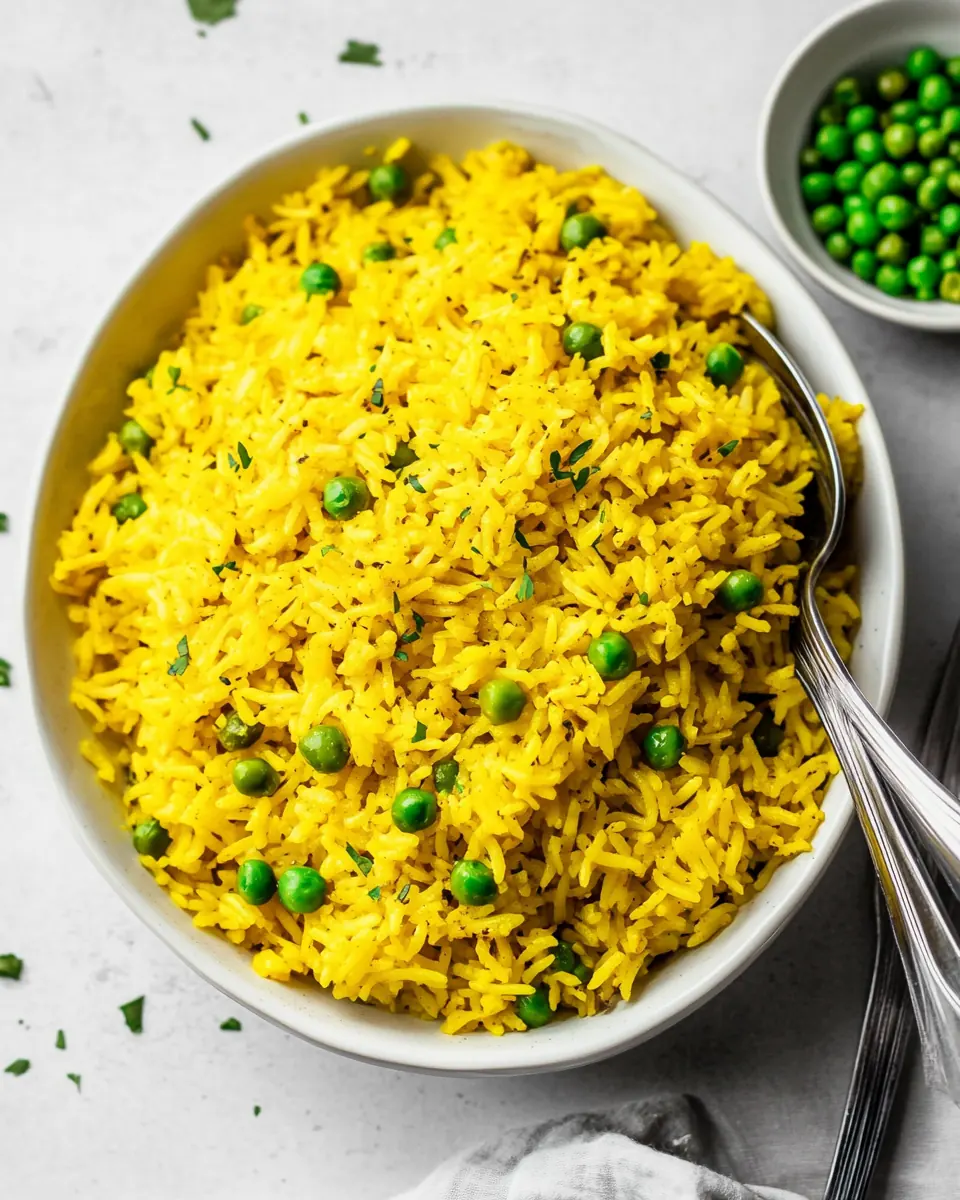
I approach the cooking like a small ritual that rewards attention more than technique. This introduction is quick because the method itself is straightforward, yet each moment matters: the initial sauté, the careful boil, the low simmer, and the final rest. Keep a lid close and resist the urge to peek, because steam is the invisible finishing touch.
- In a medium heavy pot with a tight fitting lid, heat oil on medium heat and saute onions, garlic and turmeric for about 2 minutes, until tender.: You will notice the sound of a gentle sizzle as the olive oil warms and the surface of the onion begins to glisten. Aromas of sweet softened onion and warm turmeric will rise, offering a fragrant preview of the final dish. This step softens fibrous cell walls, releasing sugars and essential oils that form the flavor base. Watch the color closely so the turmeric does not darken too quickly; burned spice tastes bitter. If the pan gets too hot, lower the heat immediately, because overheated spices and garlic will ruin the balance here.
- Add the rice and stir, saute 2 minutes longer, stirring frequently. Add the water, peas, bouillon cubes, bay leaves, black pepper, and taste for salt, it should be flavorful and salty enough like a soup, adjust as needed.: As you add the rinsed basmati rice , you will hear a soft change in the pan as grains toast lightly, producing a nutty scent. Stirring briefly helps coat each grain in oil and aromatics so they cook more evenly. When you pour in the water and drop in the peas and bouillon, you will see the liquid turn richer in color while the surface shimmers. Taste the broth before sealing the pot, because the bouillon may already provide a lot of saltiness. A common error is under seasoning the liquid at this stage, which leads to bland rice later, so adjust gradually and remember you can always add salt but you cannot take it away.
- Let the water boil on a medium-high heat stirring once at this point. As the water boils down and just barely skims the top of the rice, reduce heat to very low and cover 15 minutes.: You'll watch larger bubbles form as the pot comes to a rolling boil, the steam rising in soft plumes. Stirring once ensures nothing sticks to the bottom, then allow the surface to calm as the water level drops. When the liquid reaches the point where it just skims the rice crowns, lowering to very low heat and covering traps the steam to finish cooking. The sound quiets to a gentle whisper and the aroma deepens. Avoid tempting fate by lifting the lid early, because lost steam equals unevenly cooked grains. One frequent mistake is keeping heat too high under the covered pot, which can scorch the bottom while leaving the tops undercooked.
- The steam will cook the rice so do not open the lid. After 15 minutes, shut the flame off and let it sit at least 5 more minutes without touching the lid. The steam will finish cooking the rice without burning the bottom. Then fluff with a fork and enjoy.: After the covered simmer, the pot will feel warm and steady, and a soft steam may escape from the edges if not sealed perfectly. Turning the flame off and leaving the pot undisturbed allows residual heat to continue gentle cooking. This resting time is the quiet magic where the grain interiors finish softening and separate properly. Resist the urge to stir or lift the lid, because agitation crushes fragile grains and releases starch, creating clumps. A typical mistake is peeking too early, which short circuits the gentle steaming and results in sticky or underdone rice.
- The steam will finish cooking the rice without burning the bottom Then fluff with a fork and enjoy: When you finally lift the lid you will be greeted by a fragrant cloud, and visually the rice should look plump with distinct, glossy grains dotted by bright peas . Use a fork to gently rake through the rice, separating grains with airy, lifting motions rather than mashing. This preserves the light texture and prevents clumping. If you find wet pockets, let it rest uncovered for a minute or two, because trapped steam may need a brief release. Avoid aggressive stirring, which compresses grains and makes the dish heavy instead of light.
Pro Tips and Tweaks
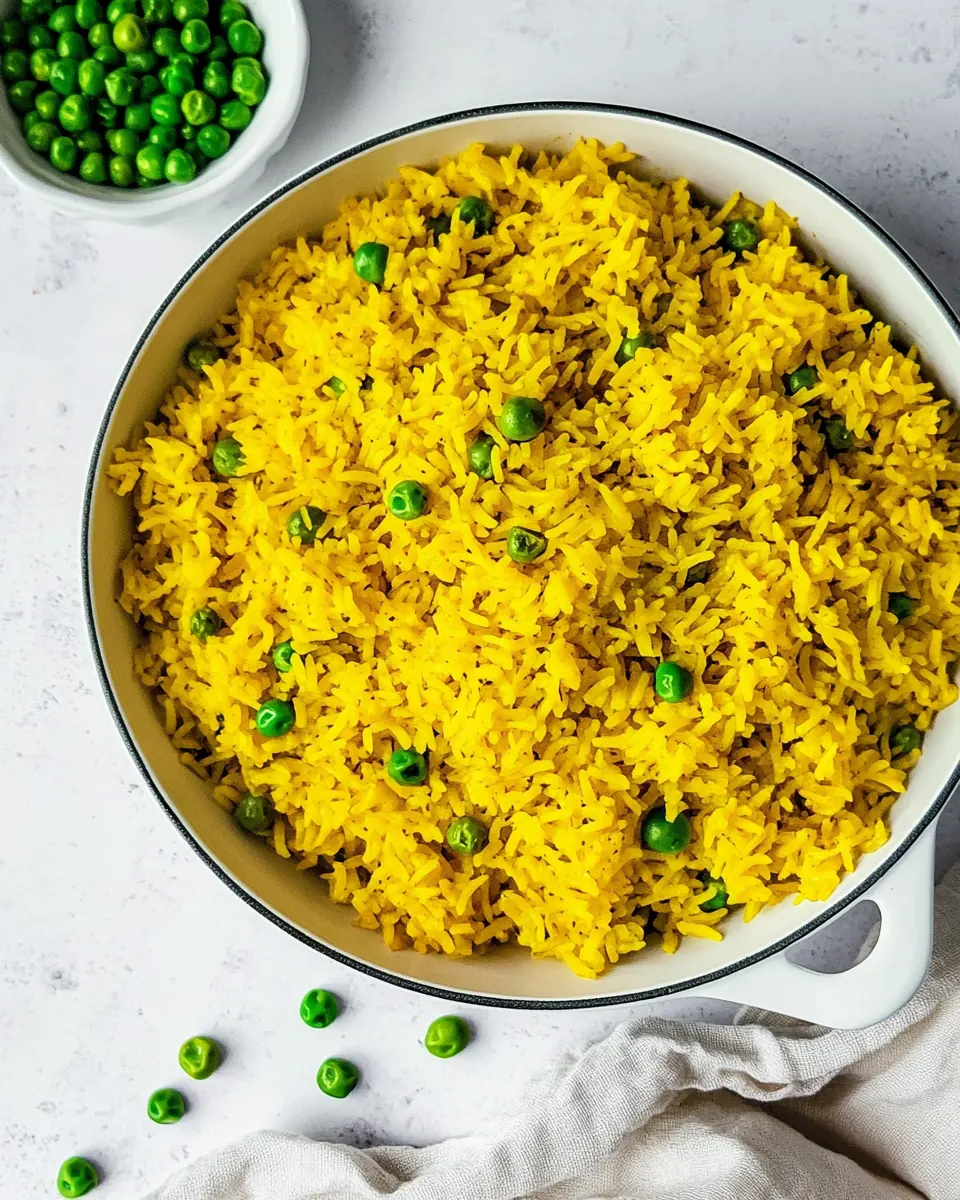
I always keep a few extra tricks in my back pocket to make this recipe foolproof. These tips focus on timing texture and small flavor wins that elevate the dish with minimal effort.
- Rinse and drain: Rinsing basmati rice removes excess starch so the final grains stay separate and light.
- Bloom the spice: Toasting turmeric briefly in oil with onion and garlic unlocks its color and aroma without burning it.
- Monitor the boil: Bring the pot to a medium high boil and then watch the water level so you can reduce heat at the precise moment it just skims the rice.
- Rest before fluffing: Let the pot sit at least five minutes with the lid on after turning off heat so steam finishes cooking evenly.
- Salt carefully: Taste the cooking liquid after adding bouillon, then season with kosher salt as needed, adding gradually.
- Use the right equipment: A heavy pot with a tight fitting lid ensures even heat distribution and minimal steam loss for consistent results.
Serving Ideas for Turmeric Basmati Rice with Peas
This rice makes an excellent foundation for many meals, from casual weeknights to more formal dinners. It pairs well with saucy mains, grilled proteins, or can stand alone as a vegetarian main when combined with a salad or yogurt. I often serve it for family dinners and festive gatherings alike.
- As a side with roasted vegetables: Serve the rice next to oven roasted vegetables for a balanced and colorful plate.
- With grilled proteins: Plate with grilled chicken or fish for a simple and elegant weeknight dinner.
- For lunch bowls: Use as a base and add chopped salad elements for a quick satisfying bowl.
- During Ramadan or festive meals: The aromatic nature and pleasing color make it suitable for special occasions and communal meals.
- Storage and reheating: Store cooled rice in an airtight container for up to four days Refrigerate promptly and reheat with a splash of water to revive steam and fluffness.
- Seasonal pairings: In spring and summer emphasize bright salads and grilled vegetables In cooler months pair with braised mains or richly spiced stews.
FAQ
Conclusion
This recipe stands out because it transforms a handful of pantry staples into a fragrant, colorful dish with minimal effort. I encourage you to try it soon, because the technique rewards patience and gives reliably fluffy, aromatic rice that complements many meals. It’s an easy way to add both flavor and a touch of color to your dinner table, and once you master the simple steps you’ll find yourself returning to it again and again.
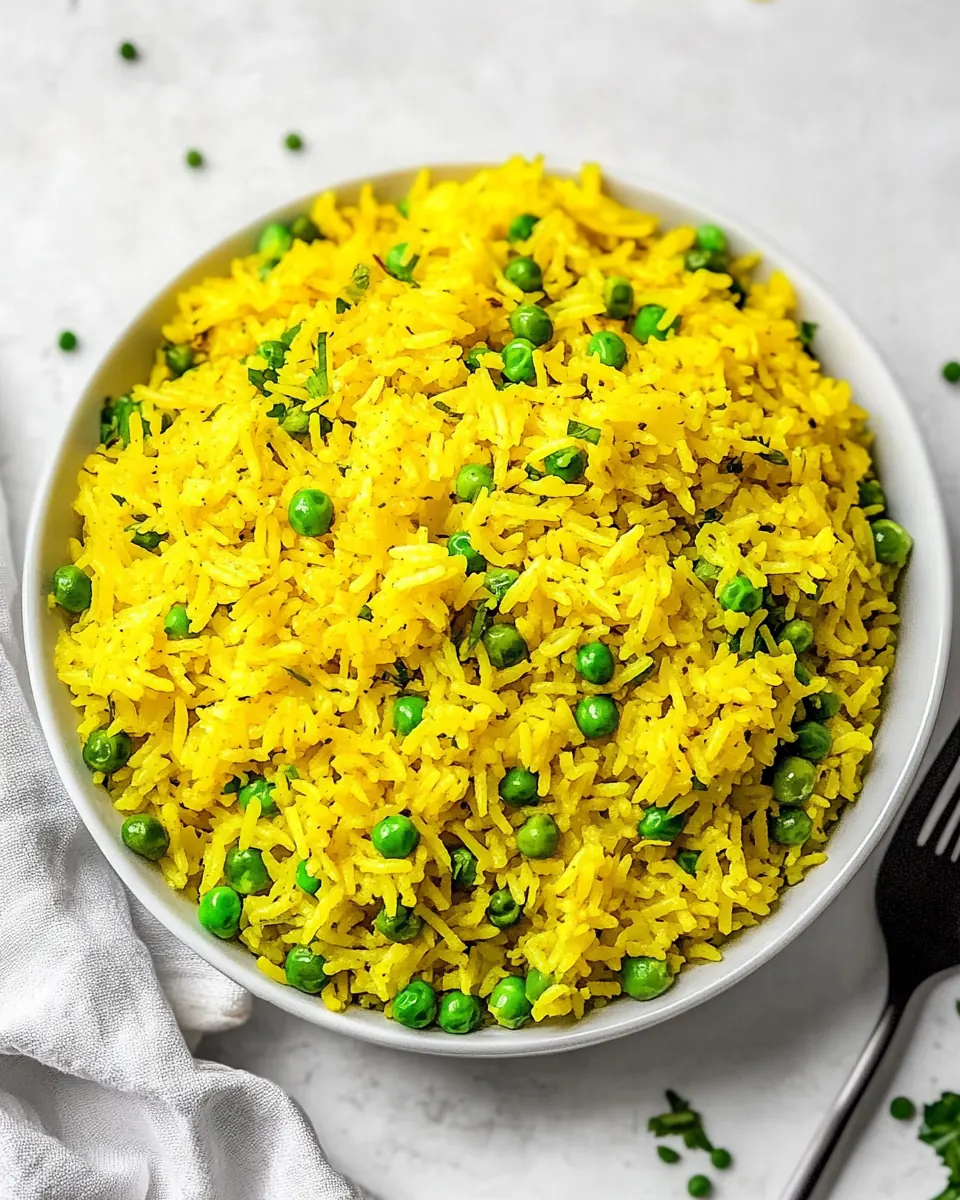
Turmeric Basmati Rice with Peas
Ingredients
Equipment
Method
- In a medium heavy pot with a tight fitting lid, heat oil on medium heat and saute onions, garlic and turmeric for about 2 minutes, until tender.: You will notice the sound of a gentle sizzle as the olive oil warms and the surface of the onion begins to glisten. Aromas of sweet softened onion and warm turmeric will rise, offering a fragrant preview of the final dish. This step softens fibrous cell walls, releasing sugars and essential oils that form the flavor base. Watch the color closely so the turmeric does not darken too quickly; burned spice tastes bitter. If the pan gets too hot, lower the heat immediately, because overheated spices and garlic will ruin the balance here.
- Add the rice and stir, saute 2 minutes longer, stirring frequently. Add the water, peas, bouillon cubes, bay leaves, black pepper, and taste for salt, it should be flavorful and salty enough like a soup, adjust as needed.: As you add the rinsed basmati rice , you will hear a soft change in the pan as grains toast lightly, producing a nutty scent. Stirring briefly helps coat each grain in oil and aromatics so they cook more evenly. When you pour in the water and drop in the peas and bouillon, you will see the liquid turn richer in color while the surface shimmers. Taste the broth before sealing the pot, because the bouillon may already provide a lot of saltiness. A common error is under seasoning the liquid at this stage, which leads to bland rice later, so adjust gradually and remember you can always add salt but you cannot take it away.
- Let the water boil on a medium-high heat stirring once at this point. As the water boils down and just barely skims the top of the rice, reduce heat to very low and cover 15 minutes.: You'll watch larger bubbles form as the pot comes to a rolling boil, the steam rising in soft plumes. Stirring once ensures nothing sticks to the bottom, then allow the surface to calm as the water level drops. When the liquid reaches the point where it just skims the rice crowns, lowering to very low heat and covering traps the steam to finish cooking. The sound quiets to a gentle whisper and the aroma deepens. Avoid tempting fate by lifting the lid early, because lost steam equals unevenly cooked grains. One frequent mistake is keeping heat too high under the covered pot, which can scorch the bottom while leaving the tops undercooked.
- The steam will cook the rice so do not open the lid. After 15 minutes, shut the flame off and let it sit at least 5 more minutes without touching the lid. The steam will finish cooking the rice without burning the bottom. Then fluff with a fork and enjoy.: After the covered simmer, the pot will feel warm and steady, and a soft steam may escape from the edges if not sealed perfectly. Turning the flame off and leaving the pot undisturbed allows residual heat to continue gentle cooking. This resting time is the quiet magic where the grain interiors finish softening and separate properly. Resist the urge to stir or lift the lid, because agitation crushes fragile grains and releases starch, creating clumps. A typical mistake is peeking too early, which short circuits the gentle steaming and results in sticky or underdone rice.
- The steam will finish cooking the rice without burning the bottom Then fluff with a fork and enjoy: When you finally lift the lid you will be greeted by a fragrant cloud, and visually the rice should look plump with distinct, glossy grains dotted by bright peas . Use a fork to gently rake through the rice, separating grains with airy, lifting motions rather than mashing. This preserves the light texture and prevents clumping. If you find wet pockets, let it rest uncovered for a minute or two, because trapped steam may need a brief release. Avoid aggressive stirring, which compresses grains and makes the dish heavy instead of light.
Notes
- Rinse and drain: Rinsing basmati rice removes excess starch so the final grains stay separate and light.
- Bloom the spice: Toasting turmeric briefly in oil with onion and garlic unlocks its color and aroma without burning it.
- Monitor the boil: Bring the pot to a medium high boil and then watch the water level so you can reduce heat at the precise moment it just skims the rice.
- Rest before fluffing: Let the pot sit at least five minutes with the lid on after turning off heat so steam finishes cooking evenly.
- Salt carefully: Taste the cooking liquid after adding bouillon, then season with kosher salt as needed, adding gradually.
- Use the right equipment: A heavy pot with a tight fitting lid ensures even heat distribution and minimal steam loss for consistent results.