Lemon Cheesecake Bars
Lemon Cheesecake Bars are the kind of treat I reach for when I want a bright, creamy dessert that still feels homey and honest. I remember the first time I made these, juggling a busy morning and an unexpected visit from a friend, and how the citrus cut through the richness in the best way, making everyone ask for seconds. That first batch taught me that a simple crust and a silky cheesecake layer can make an ordinary day feel celebratory.
Since then, I keep a mental checklist of what makes these bars sing: a cold, crumbly crust that gives a satisfying snap, a smooth cheesecake layer that melts on the tongue, and a lemon topping that adds lift and clarity. I love how the recipe lets you work in stages, so you can breathe between steps and actually enjoy the process. When I serve these, I often slice them small because each bite is intensely flavorful, and people tend to savor them slowly, which is exactly how dessert should be.
Recipe Snapshot
1 hr 15 mins
20 mins
55 mins
Medium
250 kcal
American
Gluten-Free, Low FODMAP
Desserts
Food processor, 9×13 inch pan, Oven, Mixing bowl
Why Try This Lemon Cheesecake Bars
Bright, Balanced Flavor
I love that Lemon Cheesecake Bars balance tart lemon with creamy richness, giving every bite both lift and comfort. The lemon juice and zest cut through the dairy, so the bars never feel heavy, even though they are indulgent. When I want a dessert that is lively rather than cloying, this is my go to.
Two Textures That Work Together
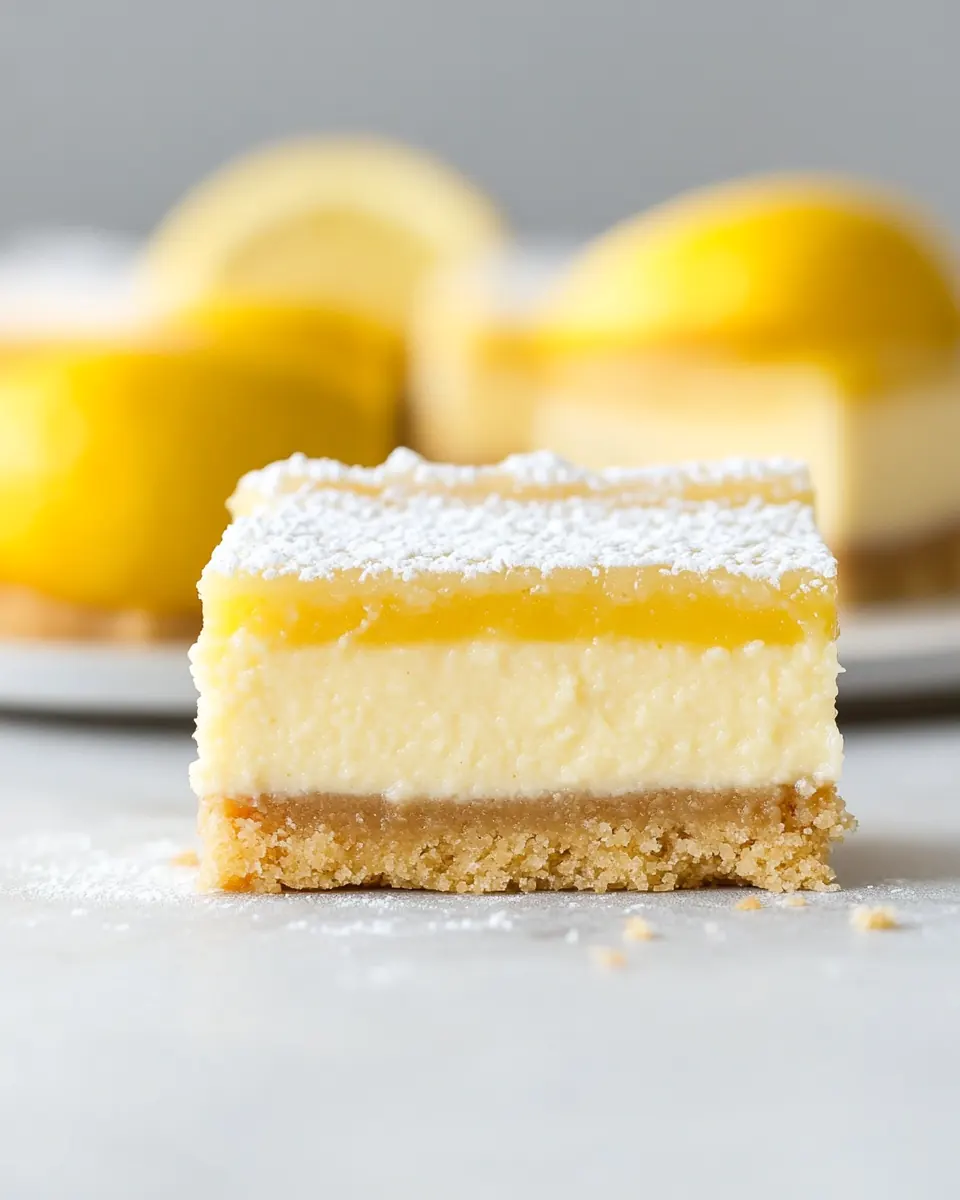
The crumbly, buttery crust contrasts beautifully with the silky cheesecake layer and the slightly firmer lemon topping. That interplay of textures makes each mouthful interesting, and it keeps people coming back for another piece. I find that the cold butter in the crust is the secret to getting that ideal crumb.
Easy, Make Ahead Friendly
One thing I appreciate is how forgiving these bars are for prepping in advance. You can bake and chill them ahead of time, which makes them perfect for gatherings. I often make them a day before a dinner and let them set overnight in the refrigerator, which improves the texture and the flavor meld.
Approachable Techniques
You do not need specialized tools to pull this off, just attention to temperature and timing. I like that the recipe uses straightforward mixing and baking steps, so home bakers feel confident. Small technique notes, like pouring the lemon layer slowly, make a big difference in the final look, and they are easy to master.
Versatile Serving Options
Whether you want a casual snack with coffee or a pretty dessert for guests, these bars fit the bill. They store well, transport easily, and slice neatly when chilled. I often dust them with powdered sugar right before serving to add a simple, elegant finish.
What to Buy for Lemon Cheesecake Bars
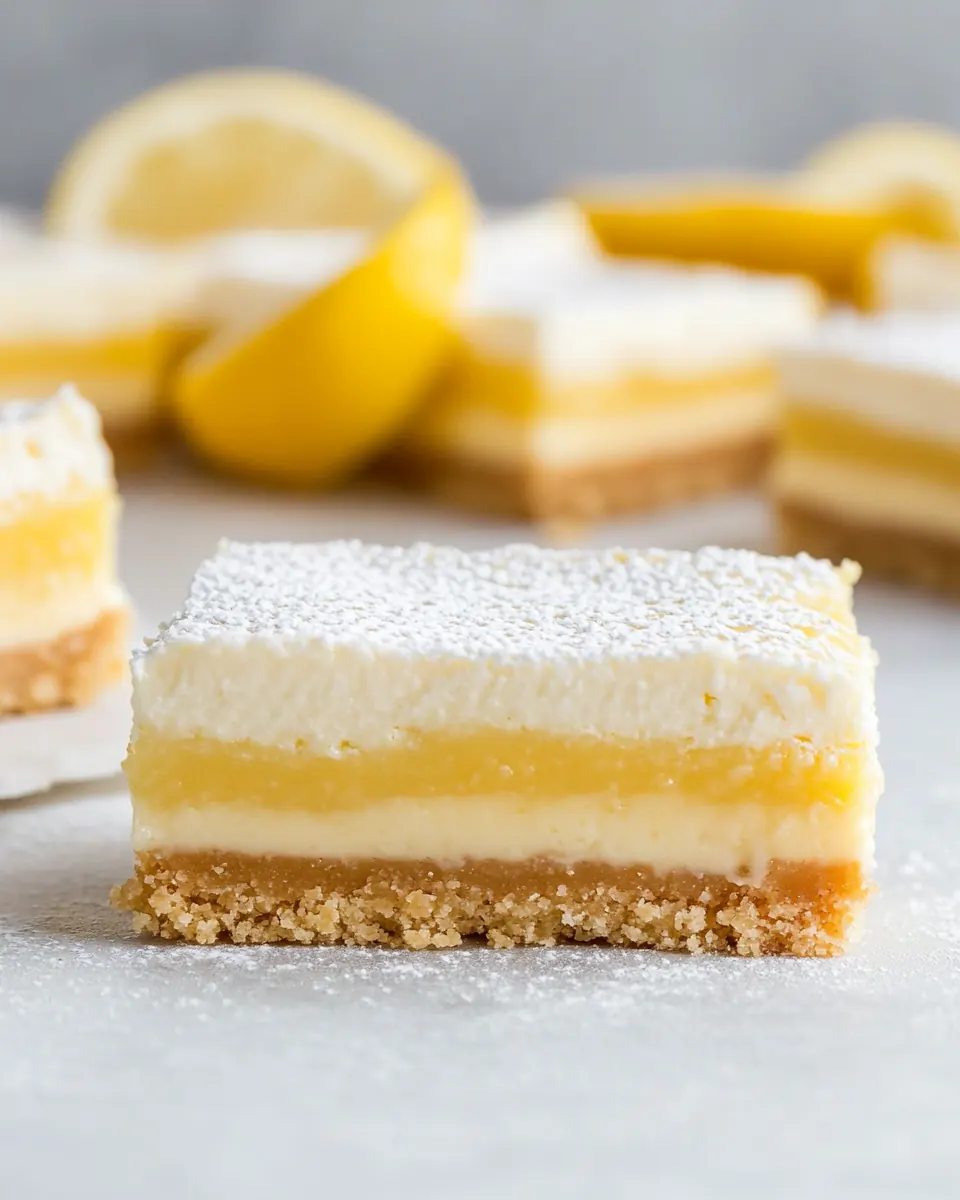
These ingredients are intentionally straightforward, designed to work together to create contrast in flavor and texture. The crust provides a buttery, tender base, while the cheesecake layer brings creaminess. The lemon layer brightens everything, and a little flour and eggs help the topping set with a pleasant, sliceable texture. Each component plays a role in the balance of richness and lift.
- 3/4 cup butter cold: Cold butter provides a flaky, tender shortbread-like crust; cutting or grating it into flour yields pea-sized pieces that bake into a crisp base. Keep chilled until baking to prevent overworking the dough and ensure a rich, buttery flavor that supports the cheesecake layer.
- 2 cups flour: All-purpose flour creates the structural backbone of the crust and filling; it absorbs fats and liquids to form a cohesive dough and a sturdy cake-like bar. Measure carefully and gently incorporate to avoid developing too much gluten, which can toughen the crust or cake layer.
- 1/2 cup light brown sugar packed: Light brown sugar packed adds mild molasses notes and moisture to the crust, helping produce a slightly caramelized flavor and tender texture. Pack it into the measuring cup for accurate sweetness and distribute evenly with the flour for uniform browning.
- 1/4 teaspoons salt: Salt enhances and balances sweetness while rounding out other flavors in both crust and filling; it also helps to tighten dough structure subtly. Use the specified small amount to avoid salinity and to amplify the bright lemon and creamy cheese flavors.
- 8 ounces cream cheese softened: Softened cream cheese creates the smooth, tangy cheesecake layer; beating it until silky ensures a lump-free filling and a velvety mouthfeel. Bring it to room temperature for easier mixing and to achieve a light, airy texture without overbeating.
- 1/2 cup sugar: Sugar sweetens and stabilizes the cheesecake filling, helping to create a balanced sweet-tart profile when paired with lemon. Gradual incorporation prevents graininess and promotes a glossy, even filling that sets properly.
- 1 large egg: Large egg binds and enriches the cheesecake layer, providing structure and a silkier texture during baking. Use at room temperature to blend smoothly into the cream cheese without causing curdling or lumps.
- 2 tablespoons milk: Milk lightens the filling slightly and adjusts batter consistency, contributing to a smoother, creamier texture. Add gradually to reach the desired viscosity and to ensure even baking and set.
- 1 tablespoon lemon juice: Lemon juice gives fresh acidity and bright citrus flavor to the cheesecake, cutting through the richness of the cream cheese for a balanced taste. Use freshly squeezed juice for the cleanest, most vibrant lemon character.
- 1 teaspoon vanilla: Vanilla adds warm, aromatic depth to the filling, complementing the lemon and cream cheese while rounding flavors. Use pure vanilla extract for the best quality and subtle complexity without overpowering the citrus notes.
- 4 large eggs: Large eggs add structure and help the lemon custard set into firm, sliceable bars while contributing richness and smoothness. Beat them into the lemon mixture gradually to maintain a uniform texture and to avoid over-aerating the batter.
- 1 1/2 cups sugar: Sugar sweetens the lemon custard and helps produce a glossy, well-set top; it also influences the custard’s firmness and mouthfeel. Dissolve thoroughly into the eggs and lemon juice to prevent grittiness and ensure even sweetness throughout.
- 1/2 cup lemon juice: Lemon juice supplies concentrated citrus flavor and acidity for the top lemon layer, creating a bright, tangy contrast to the sweet base. Use fresh juice for peak flavor and to ensure the correct acidity for proper setting.
- zest of one lemon: Zest of one lemon delivers concentrated citrus oils that intensify aroma and add vibrant lemon flavor without extra acidity. Finely grate just the yellow peel to avoid bitterness from the pith and fold into the batter for uniform distribution.
- 1/3 cup flour: Flour helps thicken and stabilize the lemon topping, giving body to the custard so it cuts cleanly into bars; it also absorbs some moisture for proper setting. Sift or whisk in to prevent lumps and ensure a smooth, even texture.
How to Make Lemon Cheesecake Bars
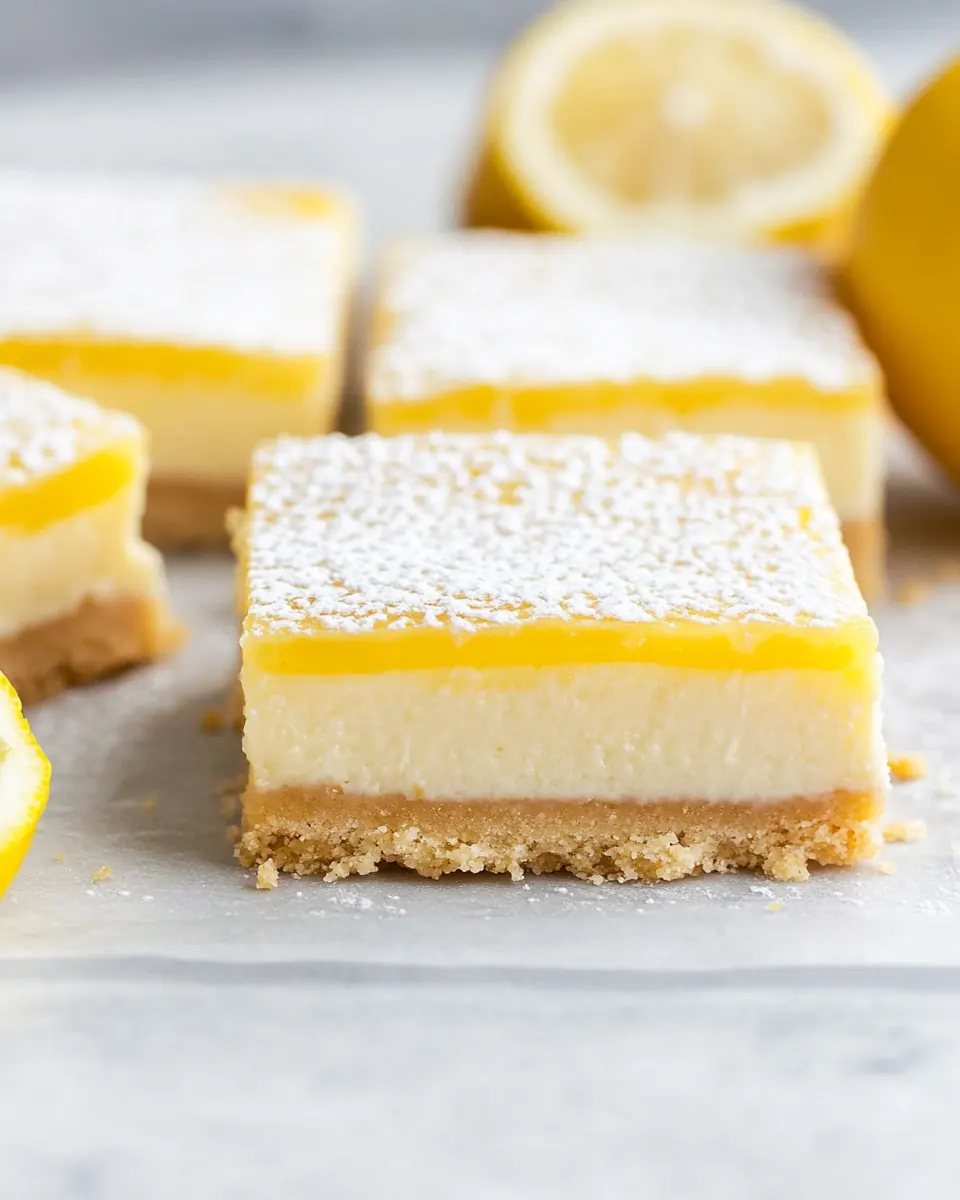
These bars bake in stages, so patience pays off. I like to prep ingredients and equipment first, then follow the sequence carefully to achieve clean layers. The directions that follow are faithful to the original method, but I expand on sensory cues and technique so you know what to expect at every turn.
- Preheat oven to 325 degrees. In a food processor or blender, combine cold butter, flour, brown sugar and salt. Pulse until it is incorporated and the pieces are tiny and coarse.: Warm air fills the kitchen and you can feel the anticipation building, that subtle heat prepares the pan so the crust starts to set as soon as it hits the oven. You want the oven fully up to temperature before the crust goes in, otherwise the texture will be off and the edges may bake unevenly. A common mistake is placing the pan in while the oven is still coming to temperature, which can result in a soggy base; use an oven thermometer if yours is unreliable. The correct temperature will produce a faint toasty aroma within ten to fifteen minutes, a cue the oven is ready.
- Press into the bottom of a 9×13 inch pan and bake for 12 minutes. Remove from oven.: When you pulse this mixture, listen for short bursts and watch the mixture break into pea sized crumbs that glisten slightly, those small pieces of butter are what create the tender flake in the crust. The cold butter should not warm or melt as you work; if it does, pop the bowl in the fridge for a few minutes. Avoid over processing into a smooth dough, as that will yield a denser crust rather than a delicate crumb.
- Combine cream cheese and sugar. Beat until smooth and creamy. Add the egg, milk, lemon juice, and vanilla. Pour cheesecake over warm crust and bake for 15 minutes. Remove and reduce oven to 300 degrees.: Press the crumb mixture firmly and evenly into the pan so it bakes into a cohesive layer, you should feel resistance under your fingers as you compact it. After twelve minutes of baking the surface will take on a light golden hue and release a warm, toasty aroma; that is your signal to remove it. If the crust browns too quickly at the edges, your oven rack may be too close to the heat; rotate the pan and tent edges with foil on subsequent bakes to avoid burning.
- Whisk together eggs, sugar, lemon juice, lemon zest and flour until combined. Pour CAREFULLY over the warm cheesecake layer. If you pour too fast the cheesecake layer will lift. If it does lift a little, (mine did) it is ok! It will still taste amazing.: The cream cheese mixture should become glossy and free of lumps, and you will smell a faint sweet dairy aroma as the sugar dissolves. Pouring this over a warm crust helps the layers adhere, and fifteen minutes of baking sets the filling so it is slightly jiggly but not liquid. After baking, reducing the oven temperature to three hundred degrees prevents the delicate lemon layer from overcooking. A pitfall is using cold cream cheese , which leads to lumps, so always bring it to room temperature and scrape the bowl to ensure smoothness.
- Bake for an additional 25-30 minutes until lemon layer is set. Remove from the oven and let cool. You can refrigerate for 3 hours and serve cold if desired. I think that way is best. Sprinkle powdered sugar on top and enjoy!: When you whisk these ingredients, the mixture should look glossy with tiny flecks of zest , and you will smell bright citrus oils. Pour slowly and aim for the center, allowing the lemon custard to flow evenly; a gentle stream prevents disturbing the cheesecake beneath. If you pour too quickly, you may see a slight separation as the bottom layer lifts, which can be disconcerting but does not ruin flavor. To minimize air bubbles, tap the pan gently on the counter once after pouring to settle the liquid.
- Bake for an additional 25-30 minutes until lemon layer is set. Remove from the oven and let cool. You can refrigerate for 3 hours and serve cold if desired. I think that way is best. Sprinkle powdered sugar on top and enjoy: As the lemon layer bakes, it will firm from the edges toward the center and the surface will become matte rather than glossy; that matte finish is your visual cue that the custard is set. You should see a slight jiggle but no liquid wobble when gently shaken, and the aroma will shift from raw citrus to baked, floral lemon. Remove the pan and cool on a wire rack so steam escapes and condensation does not soften the top. Refrigerating for at least three hours firms the bars for clean slicing and intensifies the melding of flavors. A common oversight is slicing while still warm, which causes the bars to collapse or smear, so patience here ensures neat, attractive squares.
How to Switch It Up
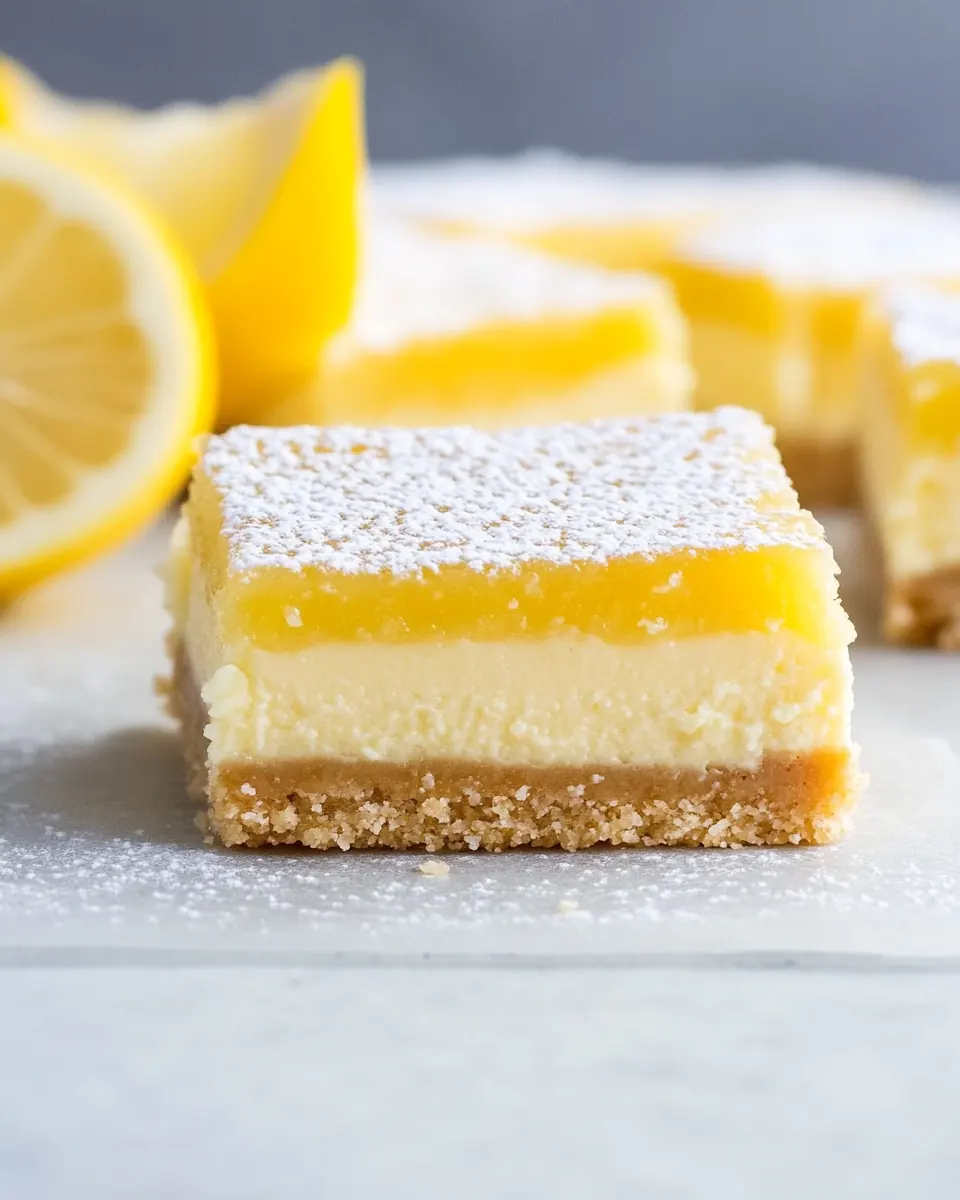
I like to tweak small details to keep this dessert feeling fresh for different occasions. Below are practical variations and serving ideas that preserve the core character while offering new textures, flavors, and presentations. Each tip begins with a bold phrase to make it easy to scan and apply.
- Switch the crust texture — Press the crust mixture more firmly for a compact base, or leave it slightly looser for a more crumbly bite; both approaches change the mouthfeel and presentation.
- Use different citrus — Substitute some or all of the lemon juice and zest with lime or orange to create a new aromatic profile, adjusting the sweetness if needed to keep balance.
- Adjust sugar levels — Reduce the sugar in the lemon layer slightly if your lemons are very sweet, this keeps the tartness lively without being cloying.
- Make mini portions — Bake in a muffin tin lined with parchment squares for portable, single serving bars that are easy to gift or serve at parties.
- Add texture at serving — Lightly dust with powdered sugar, or add a tiny spoonful of fruit compote on top for contrast just before serving to elevate the visual appeal.
- Prep and store ahead — Bake a day ahead and keep refrigerated; chilled bars slice cleaner and the flavors meld for a more cohesive bite the next day.
Pairing Suggestions for Lemon Cheesecake Bars
These bars pair well with a variety of accompaniments and occasions, and they are flexible enough for casual or more formal settings. The suggestions below highlight serving styles, seasonal matches, and storage ideas to make the most of this dessert.
- Afternoon tea or coffee service — Serve small squares of Lemon Cheesecake Bars with a pot of strong coffee or a selection of teas for a light afternoon treat.
- Spring gatherings and brunch — Their citrus brightness makes these bars ideal for springtime events, pairing beautifully with fresh fruit and lighter pastries on a brunch table.
- Portion control for parties — Cut into smaller pieces and lay out on a dessert platter so guests can sample without committing to a large slice.
- Make ahead for events — Bake and refrigerate up to twenty four hours in advance; store in an airtight container to keep the edges from drying and slice just before serving for the best presentation.
- Holiday dessert table — Include these bars among richer desserts to provide a citrus contrast that refreshes the palate between bites.
- Seasonal produce pairing — Serve with fresh berries when they are in season to add a juicy, tart complement to the creamy bars.
- Storage tips — Keep chilled in an airtight container for up to four days, and freeze cut bars between sheets of parchment in a single layer for up to two months, thawing overnight in the fridge before serving.
FAQ
Conclusion
These Lemon Cheesecake Bars stand out because they combine a tender buttery crust, a silky cheesecake center, and a bright lemon topping that keeps each bite lively. Give them a try when you want a dessert that feels both elegant and approachable, especially for gatherings where you want something memorable but easy to serve. I hope you enjoy making them as much as I do, and that they become a go to recipe for spring and special occasions alike.
Lemon Cheesecake Bars
Ingredients
Equipment
Method
- Preheat oven to 325 degrees. In a food processor or blender, combine cold butter, flour, brown sugar and salt. Pulse until it is incorporated and the pieces are tiny and coarse.: Warm air fills the kitchen and you can feel the anticipation building, that subtle heat prepares the pan so the crust starts to set as soon as it hits the oven. You want the oven fully up to temperature before the crust goes in, otherwise the texture will be off and the edges may bake unevenly. A common mistake is placing the pan in while the oven is still coming to temperature, which can result in a soggy base; use an oven thermometer if yours is unreliable. The correct temperature will produce a faint toasty aroma within ten to fifteen minutes, a cue the oven is ready.
- Press into the bottom of a 9×13 inch pan and bake for 12 minutes. Remove from oven.: When you pulse this mixture, listen for short bursts and watch the mixture break into pea sized crumbs that glisten slightly, those small pieces of butter are what create the tender flake in the crust. The cold butter should not warm or melt as you work; if it does, pop the bowl in the fridge for a few minutes. Avoid over processing into a smooth dough, as that will yield a denser crust rather than a delicate crumb.
- Combine cream cheese and sugar. Beat until smooth and creamy. Add the egg, milk, lemon juice, and vanilla. Pour cheesecake over warm crust and bake for 15 minutes. Remove and reduce oven to 300 degrees.: Press the crumb mixture firmly and evenly into the pan so it bakes into a cohesive layer, you should feel resistance under your fingers as you compact it. After twelve minutes of baking the surface will take on a light golden hue and release a warm, toasty aroma; that is your signal to remove it. If the crust browns too quickly at the edges, your oven rack may be too close to the heat; rotate the pan and tent edges with foil on subsequent bakes to avoid burning.
- Whisk together eggs, sugar, lemon juice, lemon zest and flour until combined. Pour CAREFULLY over the warm cheesecake layer. If you pour too fast the cheesecake layer will lift. If it does lift a little, (mine did) it is ok! It will still taste amazing.: The cream cheese mixture should become glossy and free of lumps, and you will smell a faint sweet dairy aroma as the sugar dissolves. Pouring this over a warm crust helps the layers adhere, and fifteen minutes of baking sets the filling so it is slightly jiggly but not liquid. After baking, reducing the oven temperature to three hundred degrees prevents the delicate lemon layer from overcooking. A pitfall is using cold cream cheese , which leads to lumps, so always bring it to room temperature and scrape the bowl to ensure smoothness.
- Bake for an additional 25-30 minutes until lemon layer is set. Remove from the oven and let cool. You can refrigerate for 3 hours and serve cold if desired. I think that way is best. Sprinkle powdered sugar on top and enjoy!: When you whisk these ingredients, the mixture should look glossy with tiny flecks of zest , and you will smell bright citrus oils. Pour slowly and aim for the center, allowing the lemon custard to flow evenly; a gentle stream prevents disturbing the cheesecake beneath. If you pour too quickly, you may see a slight separation as the bottom layer lifts, which can be disconcerting but does not ruin flavor. To minimize air bubbles, tap the pan gently on the counter once after pouring to settle the liquid.
- Bake for an additional 25-30 minutes until lemon layer is set. Remove from the oven and let cool. You can refrigerate for 3 hours and serve cold if desired. I think that way is best. Sprinkle powdered sugar on top and enjoy: As the lemon layer bakes, it will firm from the edges toward the center and the surface will become matte rather than glossy; that matte finish is your visual cue that the custard is set. You should see a slight jiggle but no liquid wobble when gently shaken, and the aroma will shift from raw citrus to baked, floral lemon. Remove the pan and cool on a wire rack so steam escapes and condensation does not soften the top. Refrigerating for at least three hours firms the bars for clean slicing and intensifies the melding of flavors. A common oversight is slicing while still warm, which causes the bars to collapse or smear, so patience here ensures neat, attractive squares.
Notes
- Switch the crust texture — Press the crust mixture more firmly for a compact base, or leave it slightly looser for a more crumbly bite; both approaches change the mouthfeel and presentation.
- Use different citrus — Substitute some or all of the lemon juice and zest with lime or orange to create a new aromatic profile, adjusting the sweetness if needed to keep balance.
- Adjust sugar levels — Reduce the sugar in the lemon layer slightly if your lemons are very sweet, this keeps the tartness lively without being cloying.
- Make mini portions — Bake in a muffin tin lined with parchment squares for portable, single serving bars that are easy to gift or serve at parties.
- Add texture at serving — Lightly dust with powdered sugar, or add a tiny spoonful of fruit compote on top for contrast just before serving to elevate the visual appeal.
- Prep and store ahead — Bake a day ahead and keep refrigerated; chilled bars slice cleaner and the flavors meld for a more cohesive bite the next day.