Snowball Cookies
Snowball Cookies have been a holiday staple in my kitchen for as long as I can remember, a recipe I reach for whenever a cold evening calls for something comforting and a little bit magical. The first time I made these I hid a tiny surprise inside each one, and watching the look on my neighbor’s face when they bit into a warm, chocolatey center convinced me that stuffed cookies are one of life’s simplest joys. Over the years I’ve tweaked textures and chilling times until the outer crumb and the hidden filling are perfectly balanced.
There is something so satisfying about the slow rhythm of making these cookies: chilling, shaping, and baking while the house fills with the scent of browned butter and toasted nuts. I like to make the dough in the afternoon, then tuck everything into the fridge and bake in the evening when the light is low. These little rituals transform a straightforward bake into a small celebration, and I get a kick out of sending friends home with a box that feels like a warm invitation.
Recipe Snapshot
46 mins
30 mins
16 mins
Medium
150 kcal
American
Gluten-Free, Low FODMAP
Desserts
Kitchen Scale (optional), Baking Sheet, Food Processor (optional), Stand Mixer
What Makes This Snowball Cookies Special
Irresistible Texture Contrast
I love that Snowball Cookies deliver a delicate, crumbly exterior with a soft, almost molten center. The powdered sugar casing gives a pleasant initial sweetness and melt in the mouth feel, while the chopped nuts provide a faint crunch that keeps each bite interesting. I often mention to friends that the textural juxtaposition is what makes these cookies memorable, and it’s the reason I assemble them carefully and chill the dough well before baking.
Simple Ingredients, Big Impact
What amazes me is how pantry staples like all-purpose flour, unsalted butter, and powdered sugar turn into something special when combined thoughtfully. The minimal ingredient list means you can improvise without losing the soul of the cookie. I prefer to measure precisely because little tweaks in butter temperature or nut grind affect the final crumb, and paying attention here really pays off.
Fun Surprise Inside
Stuffing each cookie with a tiny dollop of Nutella creates playful moments when you serve them. I enjoy watching guests discover the gooey center, and that element of surprise makes these perfect for parties and gift boxes. The hidden filling also encourages careful assembly, which helps the cookies keep their round, snowball-like shape during baking.
Make Ahead and Share
These cookies are wonderfully make ahead friendly. I often portion the Nutella into small balls and freeze them, then shape dough and refrigerate so I can bake whenever I need a quick batch. This flexibility means you can prepare cookies in stages and avoid last minute stress, which is something I always recommend for holiday baking marathons.
Customizable and Crowd Friendly
I appreciate how adaptable the recipe is. The chopped pecans can be swapped for other nuts if you want to change the flavor profile, or you can experiment with different fillings while keeping the basic method the same. Because the cookie yields are generous, they’re ideal for sharing, and I like giving them away in festive tins as a simple, homemade present.
What You Need for Snowball Cookies
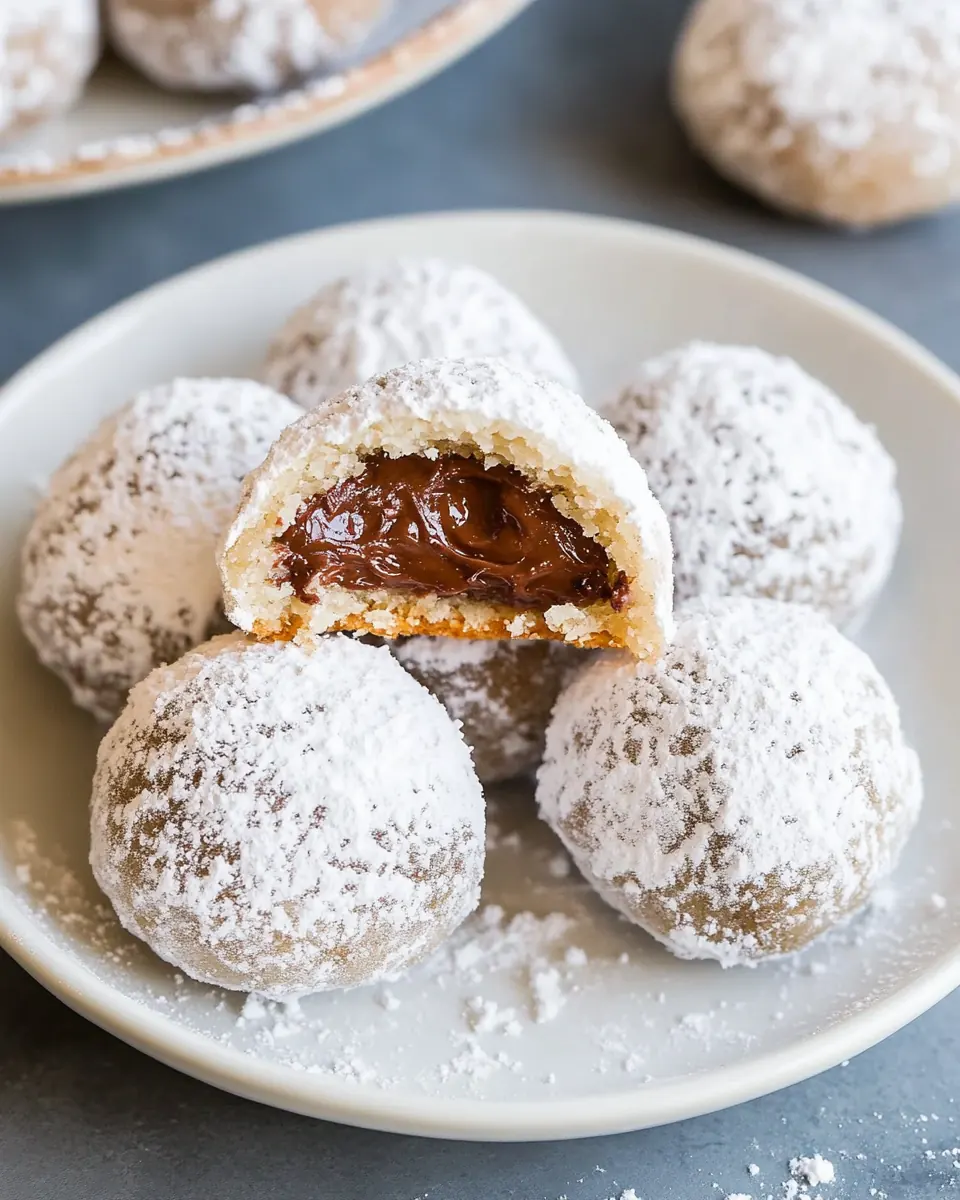
These ingredients form a concise, harmonious team. The backbone is all-purpose flour, which builds structure, while unsalted butter provides richness and a tender crumb. Pecans lend toasty flavor and texture, and the two portions of powdered sugar work together to sweeten and finish the cookies with that signature snowy look. The tiny additions of vanilla extract and kosher salt round out the flavors and keep everything balanced.
- 1/4 1/2 cup Nutella 68-135 grams: Provide a creamy, chocolate-hazelnut center or swirl that adds rich sweetness and helps bind the cookie dough when used in smaller amounts; adjust quantity for a more pronounced Nutella flavor or softer texture.
- 3/4 cup very finely chopped or ground pecans 63 grams: Add a toasty, crunchy texture and nutty flavor while contributing natural oils that enrich the dough; finely chopping or grinding ensures even distribution and a delicate mouthfeel.
- 8 1/2 tablespoons unsalted butter 120 grams, room temperature and cubed: Contribute a tender, rich crumb and proper creaming structure when softened; cubed and room–temperature butter whips with sugar to incorporate air for a lighter cookie.
- 1 1/2 cups powdered sugar 170 grams, divided into 1/2 cup (57 grams) and 1 cup (113 grams) portions: Supply concentrated sweetness and a melt-in-the-mouth coating while also helping with structure when divided between dough and dusting; use the smaller portion for mixing and the larger for rolling after baking.
- 1/2 teaspoon pure vanilla extract 2 grams: Provide a warm, aromatic note that enhances sweetness and rounds flavors; a small amount elevates the overall profile without overpowering the other ingredients.
- 1/4 teaspoon kosher salt: Enhance and balance the sweetness by bringing out the other flavors and controlling the overall taste; a pinch prevents the cookie from tasting flat.
- 1 1/4 cups all-purpose flour 150 grams: Offer the structural base and bulk of the cookie, giving it body and stability; all-purpose flour develops just enough gluten for a tender yet cohesive texture.
Preparation Steps for Snowball Cookies
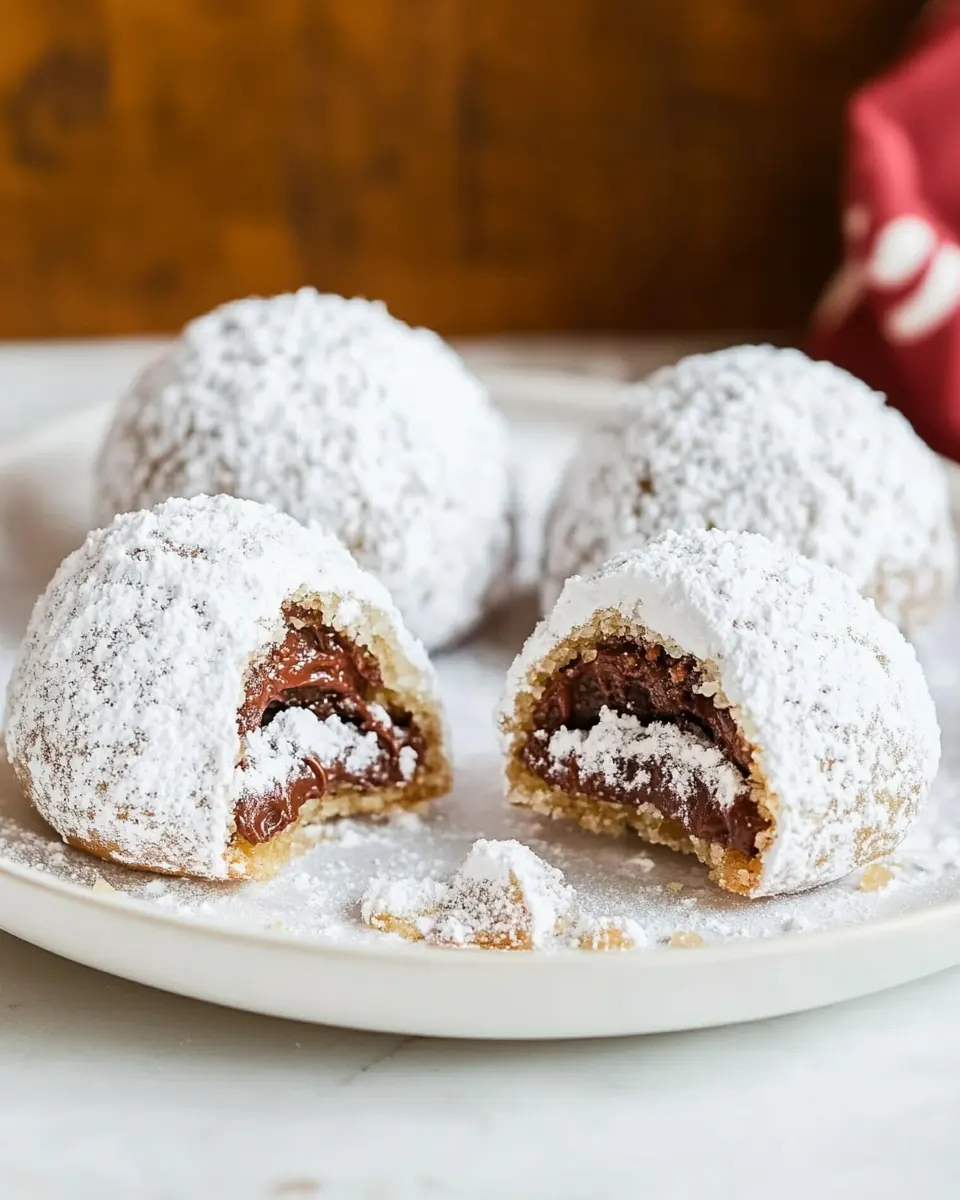
These directions guide you from chilling to coating, with attention to technique and small sensory cues that reveal readiness. I like to move deliberately and pay attention to texture, because those subtle moments make the difference between a good cookie and a memorable one.
- Line 2 baking sheets with parchment paper.: The aroma of lined sheets is not dramatic, but you will appreciate how easily the baked cookies release when the parchment is used. This prevents sticking and makes cleanup smoother, which is handy when you are baking multiple trays. A common mistake is skipping the parchment and then struggling to lift cookies while they are still warm, which can flatten them or break their shape.
- Spray another baking sheet with nonstick spray. Divide the Nutella into 1/2-teaspoon-sized balls and place the balls on the sprayed baking sheet. Be sure they aren’t touching. Freeze for at least 30 minutes.: Cold Nutella balls are essential because they stay intact when wrapped in dough, giving you that hidden, gooey center after baking. You will notice the chocolate scent intensify slightly as they chill; a little condensation can form if your kitchen is humid, so keep them spaced. Avoid making the balls too large or they may melt during handling and leak out of the cookie.
- Chop the pecans in a food processor until fine. Don’t process too much or the nuts will turn oily. Set aside. (If a food processor isn’t available, place the pecans in a resealable bag and roll or pound until the nuts are finely chopped.): The sound of nuts hitting the processor is a cue you are close, and the visual change to a finer grain tells you when to stop. Over-processing liberates oils and can result in a greasy dough, so pulse and check frequently. If you do not have a processor, use a rolling pin method, and be mindful to keep the pieces uniform to avoid uneven texture.
- In the bowl of a stand mixer, beat the butter and 1/2 cup powdered sugar on medium-high speed until the mixture is light. Add in the vanilla extract, salt, and ground pecans.: As you beat, watch the mixture transform from dense to airy and notice the pale color forming, which indicates that air has been incorporated. This aeration helps the cookies have a tender crumb. When you add the vanilla extract , its scent should bloom. Avoid overbeating after adding the nuts, as their oils can deflate the mixture and make the dough greasy.
- Add the flour and mix on low speed until the flour has been incorporated. Roll the dough onto a clean work surface and knead gently for 30 seconds. Form the dough into a ball, cover loosely with plastic wrap, press gently to flatten into a disc, and place in the refrigerator for 30 minutes to firm up.: The dough will look slightly shaggy at first, then come together; mixing on low avoids developing gluten which would toughen the cookie. The brief gentle knead smooths the texture without overworking, and chilling firms the dough making it easier to shape. A common error is skipping the chill, which can lead to spreading and loss of the stuffed center.
- Preheat oven to 375°F.: Preheating ensures consistent heat from the start so the cookies set properly and color evenly, leading to a light golden edge rather than a pale, underbaked center. You should feel a warm shift in the kitchen and hear the oven fan cycle; that steady heat is what gives the cookies their proper rise. Avoid putting cookies into a cold oven because they will spread unpredictably and the texture will suffer.
- Remove the Nutella balls and cookie dough from the fridge. (If the Nutella balls start to soften, place them in the freezer for a few minutes.) Pinch off a 2-inch piece of the dough and divide it in half. Slightly flatten one half in the palm of your hand and place a Nutella ball in the middle of the dough. Top it with the other dough half and wrap the 2 sides together around the Nutella ball. Gently roll the cookie in your hands to seal the edges and to form a ball. Place the cookie ball on a parchment-lined cookie sheet, 2 inches apart, and repeat until all cookies are made.: When shaping, note the cool, slightly tacky texture of the dough; it should not be sticky. Sealing the edges well is critical so the Nutella remains inside while baking. If edges are not sealed, filling can leak and make a mess or flatten the cookie. Work quickly if your hands are warm; keep the dough chilled to maintain structure.
- Place the trays of cookies in the refrigerator for 30 minutes.: This step firms the assembled cookies so they hold their round shape and prevents excessive spreading. You will notice the dough becoming firmer to the touch, which is the signal that the cookies are ready for the oven. Omitting this rest can cause the cookies to spread too thin and compromise the hidden center.
- After 30 minutes, place the cookies in the hot oven and bake 14-16 minutes or until they are light golden brown and firm to the touch. Remove from the oven and let rest 3 minutes on the baking sheet.: Watch for a delicate color change at the edges, and a slight set in the middle when you gently press with a fingertip. The gentle golden hue is the cue that they are done; baking longer will dry them out. A common slip is overbaking which results in a crumbly cookie rather than a tender one.
- Place 1/2 cup powdered sugar in a bowl and roll the warm cookies, one-at-a-time, in the sugar. Return them to the still-hot baking sheet to cool another 5 minutes. Roll the cookies with a second coating of powdered sugar. Allow to completely dry.: Rolling warm cookies in powdered sugar creates a base layer that adheres nicely, and the second roll after cooling sets the signature snowy look. The tactile contrast of warm cookie to cool sugar is satisfying, and letting them dry fully prevents smudging when packed. If you roll them while too hot or too cold you may not get an even coating.
- If a third coat of powdered sugar is desired, place powdered sugar in a small wire sieve and sprinkle it over the cookies.: Sifting a light dusting gives a refined, even finish and helps fill any tiny gaps left by handling. The fine falling sugar looks like fresh snow and adds a professional touch. Avoid clumping in the sieve by tapping gently; clumps can ruin the delicate dusting and create uneven patches.
Recipe Tips about Snowball Cookies
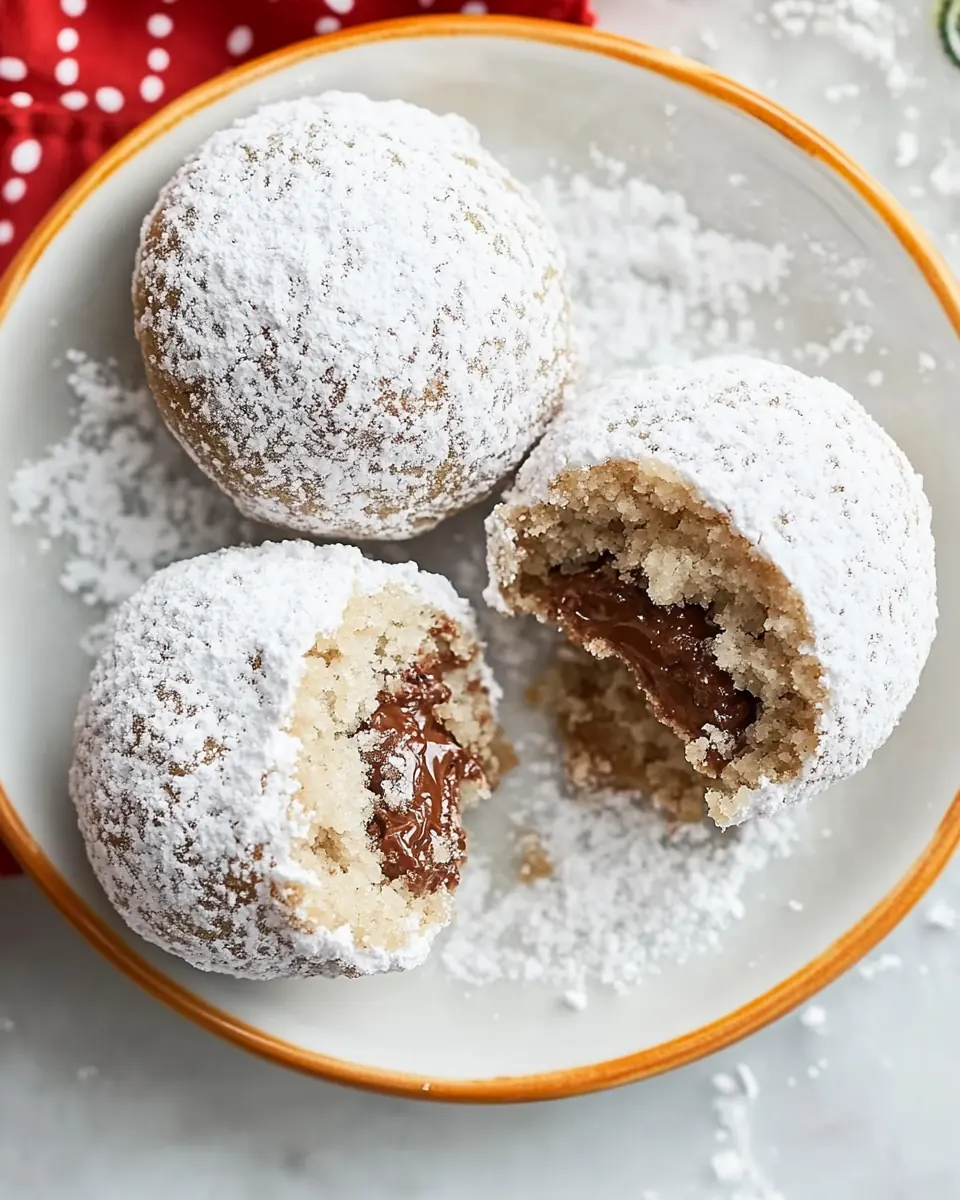
I like to round up a handful of practical tips before I bake, so the process feels calm and organized. Below you will find detailed pointers that cover temperature, timing, and small tricks I rely on to ensure consistency from batch to batch.
- Keep everything cool — Maintain cold Nutella balls and chilled dough to prevent leakage and spreading, especially if your kitchen is warm.
- Measure accurately — Use a scale for the flour and nuts so the dough texture is consistent, which helps the cookies hold their shape.
- Pulse, do not overprocess — When chopping pecans, stop frequently to check the texture so you avoid turning nuts into oily paste.
- Double coating matters — Rolling once while warm and again after a short cool gives the classic snowy finish and prevents the sugar from sliding off.
- Work in small batches — If you are making a large batch, shape cookies in stages and keep extra dough chilled so you do not overwork the butter.
Serving Options for Snowball Cookies
These cookies are versatile and can be served in many settings, from intimate tea time to festive holiday gatherings. Here are serving suggestions, pairing ideas, and storage guidance to keep them fresh and presentable.
- Gift boxes — Arrange cooled cookies in layers with parchment between them for sharing at holiday parties or as hostess gifts.
- Tea or coffee pairing — Serve with a warm beverage to complement the nutty and sweet filling, creating a cozy midday treat.
- Party platters — Combine with other small cookies for a varied dessert table, placing Snowball Cookies near lighter bite sized sweets to balance richness.
- Storage — Keep in an airtight container at room temperature for up to 5 days, or freeze once fully cooled and sugar coated for longer storage.
- Occasions — These are perfect for winter holidays like Christmas, cookie exchanges, or anytime you want an elegant homemade treat to share.
- Presentation — Dust lightly with extra powdered sugar right before serving for a fresh snowy appearance that looks festive and refined.
FAQ
Conclusion
Snowball Cookies stand out for their tender, nutty crumb and the playful surprise of a creamy center. I encourage you to give them a try this season, because the combination of textures and the snowy finish makes them both comforting and festive. Baking them in small batches and paying attention to chilling steps will reward you with consistently shaped cookies that are perfect for gifting or enjoying with a warm drink. Have fun with the process, and share the results with people you care about.
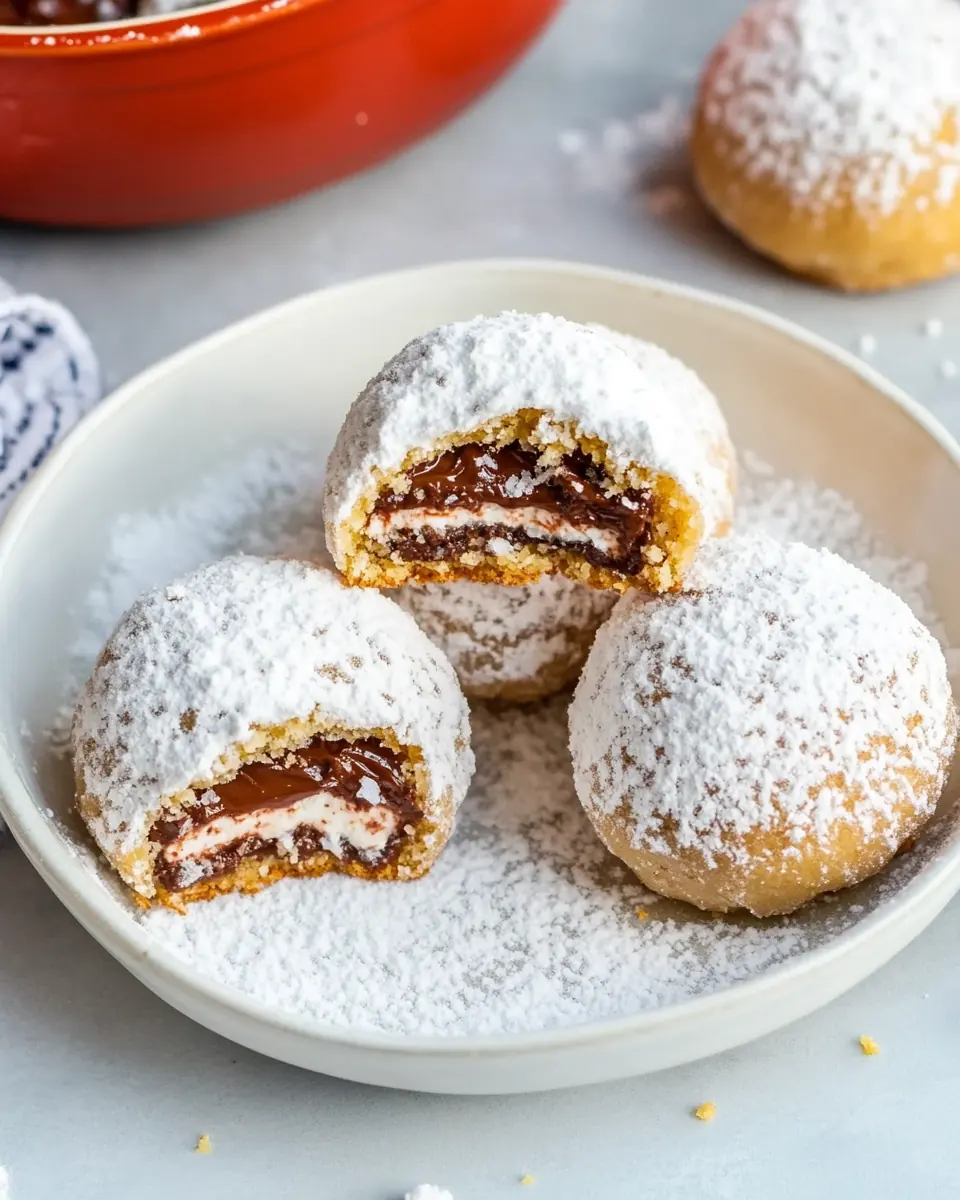
Snowball Cookies
Ingredients
Equipment
Method
- Line 2 baking sheets with parchment paper.: The aroma of lined sheets is not dramatic, but you will appreciate how easily the baked cookies release when the parchment is used. This prevents sticking and makes cleanup smoother, which is handy when you are baking multiple trays. A common mistake is skipping the parchment and then struggling to lift cookies while they are still warm, which can flatten them or break their shape.
- Spray another baking sheet with nonstick spray. Divide the Nutella into 1/2-teaspoon-sized balls and place the balls on the sprayed baking sheet. Be sure they aren’t touching. Freeze for at least 30 minutes.: Cold Nutella balls are essential because they stay intact when wrapped in dough, giving you that hidden, gooey center after baking. You will notice the chocolate scent intensify slightly as they chill; a little condensation can form if your kitchen is humid, so keep them spaced. Avoid making the balls too large or they may melt during handling and leak out of the cookie.
- Chop the pecans in a food processor until fine. Don’t process too much or the nuts will turn oily. Set aside. (If a food processor isn’t available, place the pecans in a resealable bag and roll or pound until the nuts are finely chopped.): The sound of nuts hitting the processor is a cue you are close, and the visual change to a finer grain tells you when to stop. Over-processing liberates oils and can result in a greasy dough, so pulse and check frequently. If you do not have a processor, use a rolling pin method, and be mindful to keep the pieces uniform to avoid uneven texture.
- In the bowl of a stand mixer, beat the butter and 1/2 cup powdered sugar on medium-high speed until the mixture is light. Add in the vanilla extract, salt, and ground pecans.: As you beat, watch the mixture transform from dense to airy and notice the pale color forming, which indicates that air has been incorporated. This aeration helps the cookies have a tender crumb. When you add the vanilla extract , its scent should bloom. Avoid overbeating after adding the nuts, as their oils can deflate the mixture and make the dough greasy.
- Add the flour and mix on low speed until the flour has been incorporated. Roll the dough onto a clean work surface and knead gently for 30 seconds. Form the dough into a ball, cover loosely with plastic wrap, press gently to flatten into a disc, and place in the refrigerator for 30 minutes to firm up.: The dough will look slightly shaggy at first, then come together; mixing on low avoids developing gluten which would toughen the cookie. The brief gentle knead smooths the texture without overworking, and chilling firms the dough making it easier to shape. A common error is skipping the chill, which can lead to spreading and loss of the stuffed center.
- Preheat oven to 375°F.: Preheating ensures consistent heat from the start so the cookies set properly and color evenly, leading to a light golden edge rather than a pale, underbaked center. You should feel a warm shift in the kitchen and hear the oven fan cycle; that steady heat is what gives the cookies their proper rise. Avoid putting cookies into a cold oven because they will spread unpredictably and the texture will suffer.
- Remove the Nutella balls and cookie dough from the fridge. (If the Nutella balls start to soften, place them in the freezer for a few minutes.) Pinch off a 2-inch piece of the dough and divide it in half. Slightly flatten one half in the palm of your hand and place a Nutella ball in the middle of the dough. Top it with the other dough half and wrap the 2 sides together around the Nutella ball. Gently roll the cookie in your hands to seal the edges and to form a ball. Place the cookie ball on a parchment-lined cookie sheet, 2 inches apart, and repeat until all cookies are made.: When shaping, note the cool, slightly tacky texture of the dough; it should not be sticky. Sealing the edges well is critical so the Nutella remains inside while baking. If edges are not sealed, filling can leak and make a mess or flatten the cookie. Work quickly if your hands are warm; keep the dough chilled to maintain structure.
- Place the trays of cookies in the refrigerator for 30 minutes.: This step firms the assembled cookies so they hold their round shape and prevents excessive spreading. You will notice the dough becoming firmer to the touch, which is the signal that the cookies are ready for the oven. Omitting this rest can cause the cookies to spread too thin and compromise the hidden center.
- After 30 minutes, place the cookies in the hot oven and bake 14-16 minutes or until they are light golden brown and firm to the touch. Remove from the oven and let rest 3 minutes on the baking sheet.: Watch for a delicate color change at the edges, and a slight set in the middle when you gently press with a fingertip. The gentle golden hue is the cue that they are done; baking longer will dry them out. A common slip is overbaking which results in a crumbly cookie rather than a tender one.
- Place 1/2 cup powdered sugar in a bowl and roll the warm cookies, one-at-a-time, in the sugar. Return them to the still-hot baking sheet to cool another 5 minutes. Roll the cookies with a second coating of powdered sugar. Allow to completely dry.: Rolling warm cookies in powdered sugar creates a base layer that adheres nicely, and the second roll after cooling sets the signature snowy look. The tactile contrast of warm cookie to cool sugar is satisfying, and letting them dry fully prevents smudging when packed. If you roll them while too hot or too cold you may not get an even coating.
- If a third coat of powdered sugar is desired, place powdered sugar in a small wire sieve and sprinkle it over the cookies.: Sifting a light dusting gives a refined, even finish and helps fill any tiny gaps left by handling. The fine falling sugar looks like fresh snow and adds a professional touch. Avoid clumping in the sieve by tapping gently; clumps can ruin the delicate dusting and create uneven patches.
Notes
- Keep everything cool — Maintain cold Nutella balls and chilled dough to prevent leakage and spreading, especially if your kitchen is warm.
- Measure accurately — Use a scale for the flour and nuts so the dough texture is consistent, which helps the cookies hold their shape.
- Pulse, do not overprocess — When chopping pecans, stop frequently to check the texture so you avoid turning nuts into oily paste.
- Double coating matters — Rolling once while warm and again after a short cool gives the classic snowy finish and prevents the sugar from sliding off.
- Work in small batches — If you are making a large batch, shape cookies in stages and keep extra dough chilled so you do not overwork the butter.