M&M Sugar Cookies
M&M Sugar Cookies are the kind of treat I reach for when I want something nostalgic, festive, and reliably cheerful.
My first memory of these cookies is standing on a stool in my grandmother’s kitchen, rolling sticky dough between my palms while she hummed and arranged colorful candies on top. I still chase that simple pleasure, the tiny ritual of pressing in a bright M&Ms and watching the sugar crystals catch the light. Baking them now feels like a conversation across time, where texture and color do the talking. I love how the exterior gets a delicate crunch from the sugar coating while the center stays tender and buttery, and those pockets of chocolate create little bursts of comfort in every bite.
Over the years, I have fine tuned how I handle the dough, when I chill the trays, and how I nudge the edges into perfect rounds right after they come out of the oven. These choices make M&M Sugar Cookies reliably pretty and pleasantly chewy, whether I am baking a small batch for an afternoon tea or a tray for a school party. I savor the small, domestic moments: the smell of butter and sugar warming in the oven, the gentle clink when a cookie cutter smooths the surface, and the way kids inevitably crowd the cooling rack to snag the warmest ones. It is easy to make these cookies feel celebratory without fuss, and I hope this version helps you bake with confidence and a little joy.
Recipe Snapshot
28 mins
15 mins
13 mins
Medium
150 kcal
American
Gluten-Free, Low FODMAP
Desserts
Mixing bowl, Stand mixer with paddle attachment, Baking sheets, Parchment paper, Cookie scoop, Wire rack, Small bowl for rolling sugar, Cookie cutter
The Appeal of This M&M Sugar Cookies
Bright, fun, and crowd pleasing
I always reach for M&M Sugar Cookies when I want a visually joyful cookie. The colorful M&Ms make every tray look festive, and guests rarely resist a second helping. I find they are perfect for celebrations because the appearance saves time on decoration, yet still delivers a handcrafted charm.
Textural balance
The recipe balances a crisp exterior and a tender center through a thoughtful combination of unsalted butter, flavored vegetable shortening, and a light sugar coating. I notice the contrast between the crunchy sugar shell and the soft interior in every bite, which keeps the cookies interesting and comforting.
Reliable technique for even baking
I love that the method includes an optional chill step, which helps control spreading and yields uniformly shaped cookies. In my experience, taking this moment to cool the trays reduces frustrating thin, flat cookies and produces ones with rounded, puffy tops that bake into the best texture.
Simple pantry-friendly ingredients
This version uses everyday staples like all purpose flour, granulated sugar, and eggs. Because the ingredients are familiar, I seldom need substitutions, and I can pull together a batch quickly for last minute gatherings. The short ingredient list also makes it approachable for new bakers.
Customizable and forgiving
While the recipe calls for milk chocolate M&Ms, I like that you can adjust how many you fold in and how many you press on top to get exactly the color and chocolate intensity you want. The dough is forgiving, so if you need to chill it longer or scoop slightly different sizes, the results still stay delicious.
Shopping List for M&M Sugar Cookies
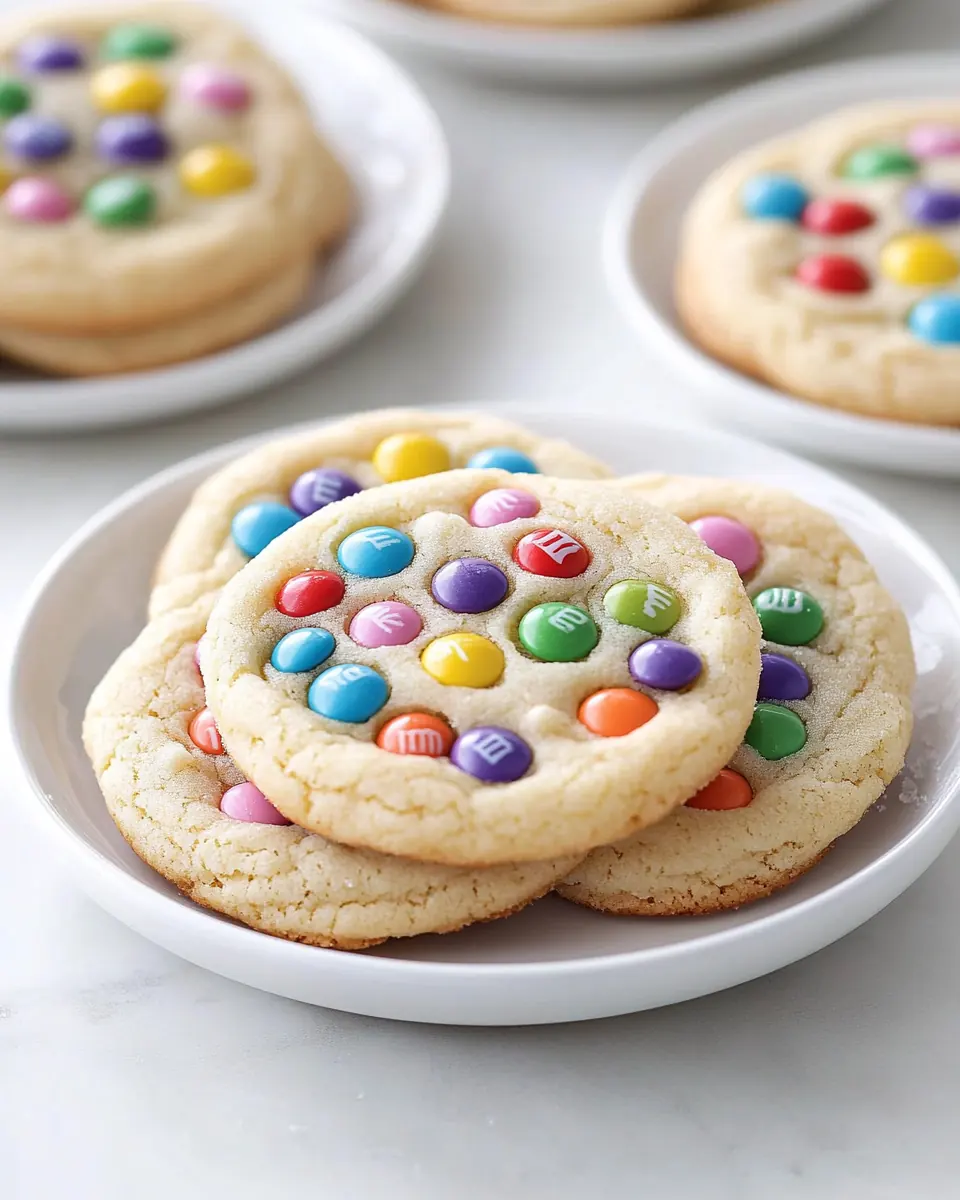
These ingredients are a classic lineup that work together to make cookies with a tender crumb, a slightly crisp exterior, and cheerful pockets of chocolate. The key players are the dry structure builders like all purpose flour, the leaveners such as baking soda and cream of tartar, and the fats, which include both unsalted butter and flavored vegetable shortening. The sugar does double duty, sweetening and creating a crunchy coating, while the M&Ms add color and chocolate bursts.
- 2 1/2 cup 312 g all-purpose flour: Combine and sift to create the cookie structure; provides bulk, gluten for chew, and tender crumb when measured precisely. Use at room temperature ingredients to ensure even distribution and proper dough consistency. Weighing yields more consistent cookies than volumetric cups.
- 1 teaspoon fine sea salt: Enhance flavor balance and control sweetness; contributes subtle mineral note and strengthens dough gluten slightly. Dissolve evenly through dry ingredients to prevent pockets of salt and to highlight other flavors. Use fine sea salt for even incorporation.
- 3/4 teaspoon baking soda: Introduce leavening control to produce slight lift and spread; reacts with other ingredients to create tender, airy texture. Measure carefully to avoid overly puffy or bitter cookies. Combine with other dry ingredients for even distribution.
- 1/4 teaspoon cream of tartar: Stabilize and add slight chew by controlling acidity; helps prevent excessive browning and supports texture. Use sparingly as it provides a mild tartness that balances the sweet dough. Whisk into dry mix for uniformity.
- 3/4 cup 168 g unsalted butter, at room temperature: Cream to incorporate air and contribute richness; provides flavor, moisture, and helps with spread during baking. Use at room temperature so it blends smoothly with sugar and shortening for proper creaming. Avoid overheating to prevent greasy dough.
- 1/4 cup 58 g flavored vegetable shortening, at room temperature: Balance texture and increase tenderness while reducing spread; contributes neutral fat that helps create a softer bite. Use at room temperature to cream easily with butter and sugar. Flavored shortening can add a subtle additional aroma.
- 1 1/4 cup 250 g granulated sugar, plus more for rolling: Cream with fats to aerate dough, add sweetness, and contribute to cookie color and caramelization; extra used for rolling gives a slight crisp exterior. Measure precisely to control sweetness and spread during baking. Granulated sugar also aids structure by interacting with fats.
- 1 large egg, at room temperature: Bind ingredients and add moisture; contributes to structure through coagulation when baked and helps with spread and chew. Use at room temperature to ensure even mixing and to avoid chilling the creamed fats. Beaten lightly for even incorporation.
- 1 large egg yolk, at room temperature: Enrich and tenderize the dough while adding concentrated fat for richness; yolk increases chewiness and color of the baked cookie. Use at room temperature to combine smoothly with the egg and fats. Adds extra emulsifiers for better texture.
- 1 1/2 teaspoons vanilla extract: Flavor the dough with aromatic sweetness and roundness; enhances overall perception of sweetness and complements chocolate. Add after eggs are partially mixed to preserve volatile aroma compounds. Use pure extract for consistent results.
- 2/3 cup 130 g milk chocolate M&Ms, plus more for topping (you'll need about 200 g total): Add chocolatey crunch and colorful sweetness while providing texture contrast; fold in most and reserve extras for pressing on tops before baking. Measure by weight for consistent candy distribution and visual appeal. Reserve about 200 g total if topping additional cookies.
How to Cook M&M Sugar Cookies
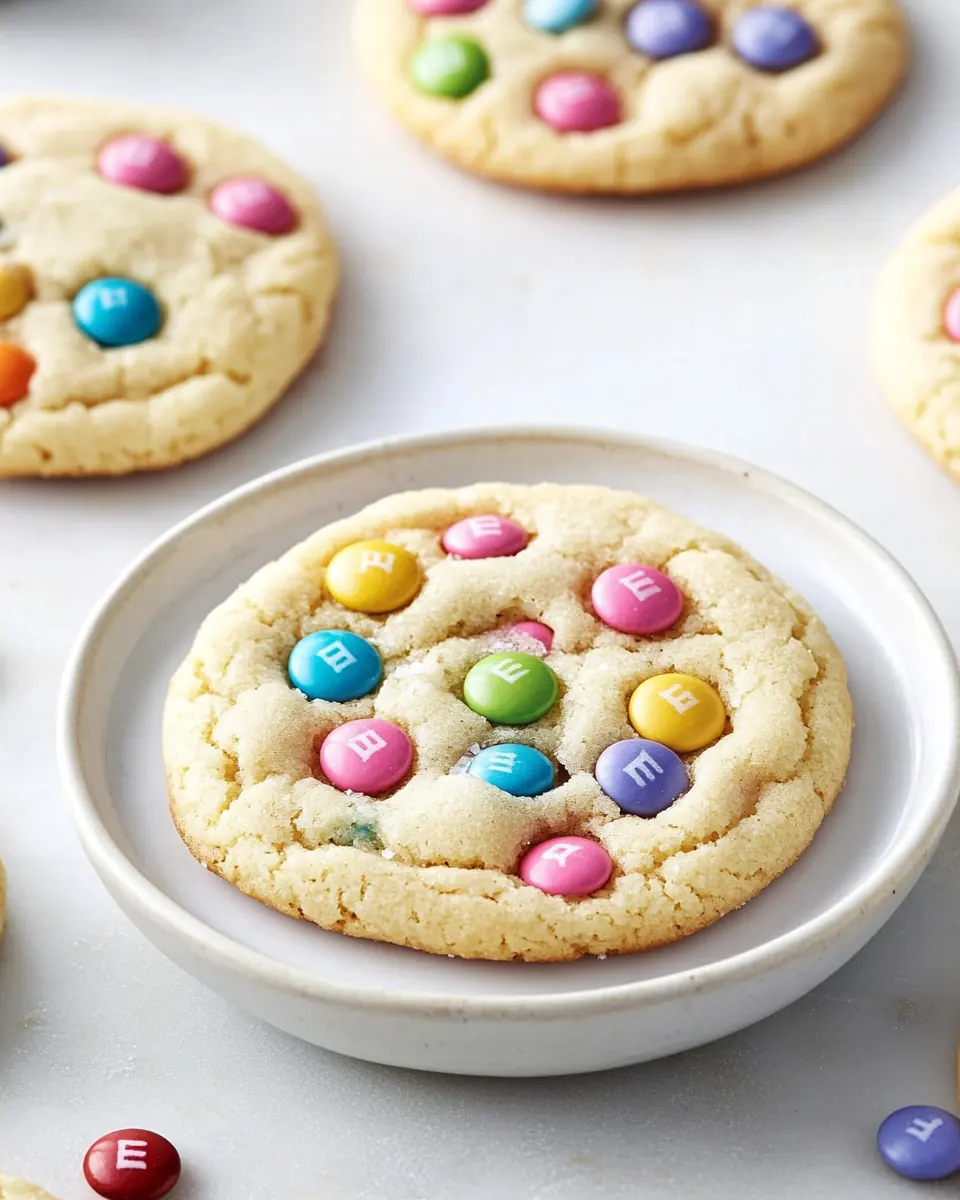
Baking these cookies is a comforting, rhythmic process. I like to set up my station with bowls for dry and wet ingredients, a scoop for portioning, and a small bowl of granulated sugar for rolling. Follow the sequence below and pay attention to sensory clues to know when each step is complete.
- Preheat oven to 350 degrees F. Line two heavy, light or medium colored baking sheets with parchment paper.: You should notice a faint warmth in the air as the oven comes up to temperature, and this preheating ensures consistent oven spring and even baking. The reason it matters is that starting with the correct temperature gives the cookies the lift they need before the edges set, so they bake with pleasant rounded tops rather than spreading into thin discs. A common mistake is skipping full preheat, which can produce unevenly baked cookies. If your oven runs hot, rotate the baking sheet halfway through to avoid overly browned edges.
- In a bowl, whisk together flour, baking soda, cream of tartar, and salt and set aside.: When you line pans, you'll notice a smoother surface for cookies to glide on and easier cleanup after baking. Using parchment prevents sticking and encourages even browning on the bottoms. I prefer medium colored sheets to avoid over browning when using thin pans. A frequent slip is placing cookies on warm sheets, which can start spreading early; always cool pans between batches if needed.
- In a mixing bowl or the bowl of a stand mixer fitted with the paddle attachment, cream butter, shortening, and sugar until light and fluffy, 2 to 3 minutes. Add egg and egg yolk and beat on high speed for 30-60 seconds until smooth. Mix in vanilla.: As you whisk, pay attention to the flour becoming evenly speckled with the leaveners and salt, which signals uniform distribution. This step ensures every bite rises and seasons consistently. Poorly mixed dry ingredients can create pockets of unbalanced flavor or inconsistent texture, so whisk until homogeneous.
- Dump in dry ingredients and mix on low speed until incorporated and no streaks of dry ingredients remain. Add 2/3 cup M&Ms and fold until evenly distributed.: You will see the mixture lighten in color and increase slightly in volume, taking on a pale, whipped look, and the sugar will become well incorporated. This creaming traps tiny air bubbles that help with the cookies' tender lift. Overbeating can produce too much air and cause collapse, while undercreaming leaves a dense texture, so aim for 2 to 3 minutes.
- Scoop dough into 50 g balls (a generous scoop of dough with a medium #40 cookie scoop, or approximately 2 tablespoons worth). Roll into a ball between your palms, then roll in a small bowl filled with granulated sugar until evenly coated.: The batter will become glossy and cohesive, and you'll hear a steadier, smoother mixing sound indicating full incorporation. Eggs add structure and moisture, making the dough pliable and rich. Mixing too long can overwork the batter, so stop once it looks smooth and uniform.
- Place on cookie sheet with 2 to 3 inches of space between cookies to allow for spreading. Press a few more M&Ms into the top of each dough ball for a prettier baked cookie (you can place them pretty close together as they will spread out in the oven).: The aroma of vanilla will lift the mixture, adding warmth and depth. Stirring this in helps distribute flavor evenly, and it contributes to the cookie's inviting scent while baking. Forgetting to add vanilla will mute the overall flavor profile, so be deliberate about this small but impactful addition.
- While you can bake the cookies immediately without chilling, I recommend popping the entire cookie sheet in the fridge for 10 to 15 minutes; this will help the cookies bake more evenly and not spread quite as much. If you find your cookies are spreading too much still, chill the dough balls for up to 30 minutes as needed.: At this stage, you'll see the dough come together and thicken, and the dusty flour will disappear into the batter. Mixing gently protects the cookie's tender crumb by avoiding gluten overdevelopment. A common error is mixing too vigorously, which can make the cookies tough, so keep the mixer on low and stop as soon as the streaks are gone.
- Bake for 12 to 13 minutes (10 to 11 minutes if baking from room temperature dough) or until tops are puffed and edges are just barely golden brown. I recommend checking on the cookies at around 9 minutes; rotate the cookie sheet, also give it a good hard rap on the oven rack once or twice to deflate the tops and ruffle the edges, then bake for a few more minutes as needed.: Folding should be gentle and purposeful, so you feel pockets of colorful candy distributed without breaking them. The visual cue is an even scattering of little chocolate dots throughout the dough. Overfolding crushes the candies and bleeds color into the dough, while underfolding leaves some cookies without M&Ms, so fold until even.
- Immediately after removing from the oven, swirl a large round cookie cutter around the warm cookies, tucking in the uneven edges to create perfectly circular cookies. Let cool on cookie sheets for 15 minutes, then transfer to a wire rack to cool completely.: As you portion, notice the dough's tacky, slightly soft texture that holds shape when scooped. Rolling into smooth balls helps them bake evenly, and using a consistent 50 g size produces uniform cookies. A common mistake is inconsistent scoops, resulting in uneven bake times, so weigh or use a consistently sized scoop for uniformity.
- Freshly baked cookies are best enjoyed the same day, or refrigerated in a bag or airtight container for up to 3 days. For longer storage, wrap tightly in plastic wrap and place in a zip top bag in the freezer for up to a month. Let come to room temperature for 30 minutes before serving.: The sugar coating gives a sparkling crust and a delicate crunch. You will feel the sugar crystals adhere and see the surface take on a slight sheen. Rolling too roughly can flatten the dough, so be gentle to preserve the shape.
- Place on cookie sheet with 2 to 3 inches of space between cookies to allow for spreading: Arrange the dough balls so the cookies have room to expand and bake into neat rounds. Visually, you want equal spacing and no touching. Overcrowding leads to merged cookies, so leave adequate distance and use multiple sheets if necessary.
- Press a few more M&Ms into the top of each dough ball for a prettier baked cookie: Pressing extras creates an attractive mosaic on top after baking and adds extra chocolate on the surface. Do this gently so the candies remain visible without being pushed too deep. Be careful not to press so hard that the cookie shape is distorted.
- Chill the entire cookie sheet in the fridge for 10 to 15 minutes: The chill firms the fats and helps control spreading, resulting in thicker cookies with rounded tops. You will notice the dough feel cooler and slightly firmer to the touch after chilling. A common oversight is skipping chill entirely; unchilled dough often spreads more, yielding thinner cookies.
- Bake for 12 to 13 minutes: Watch for puffed tops and just barely golden edges, and expect the aroma of warm butter and sugar to fill the kitchen. The middle should look set yet soft to the touch, which signals doneness. Overbaking will dry them out, so remove them when edges are light gold and centers are still slightly soft.
- Check at around 9 minutes; rotate the cookie sheet, rap the oven rack once or twice to deflate tops and ruffle edges: This trick encourages even browning and gives the cookies a classic ruffled edge. You will hear a slight clatter when you rap the rack, and you should return the tray to finish baking. Missing this step can leave domed tops that crack unevenly.
- Immediately after removing from the oven, swirl a large round cookie cutter around the warm cookies: The cutter smooths uneven edges into perfect circles while the cookies are malleable, and you can see the warm chocolate glisten as the surface relaxes. Pressing too hard can flatten them, so use a gentle swirling motion to tuck edges back in.
- Let cool on cookie sheets for 15 minutes, then transfer to a wire rack to cool completely: During this resting period, the cookies finish setting and firm up enough to move without breaking. You will smell the lingering sweetness and notice the chocolate begin to set. Moving them too soon can cause tearing, so wait the full 15 minutes.
- Store freshly baked cookies in a bag or airtight container for up to 3 days: Stored properly, the cookies maintain a pleasant texture for several days, and refrigeration can slow staling. For longer storage, wrap tightly and freeze for up to a month, then bring to room temperature for 30 minutes before serving. A common mistake is leaving them unsealed, which leads to rapid softening or drying.
Recipe Tips about M&M Sugar Cookies
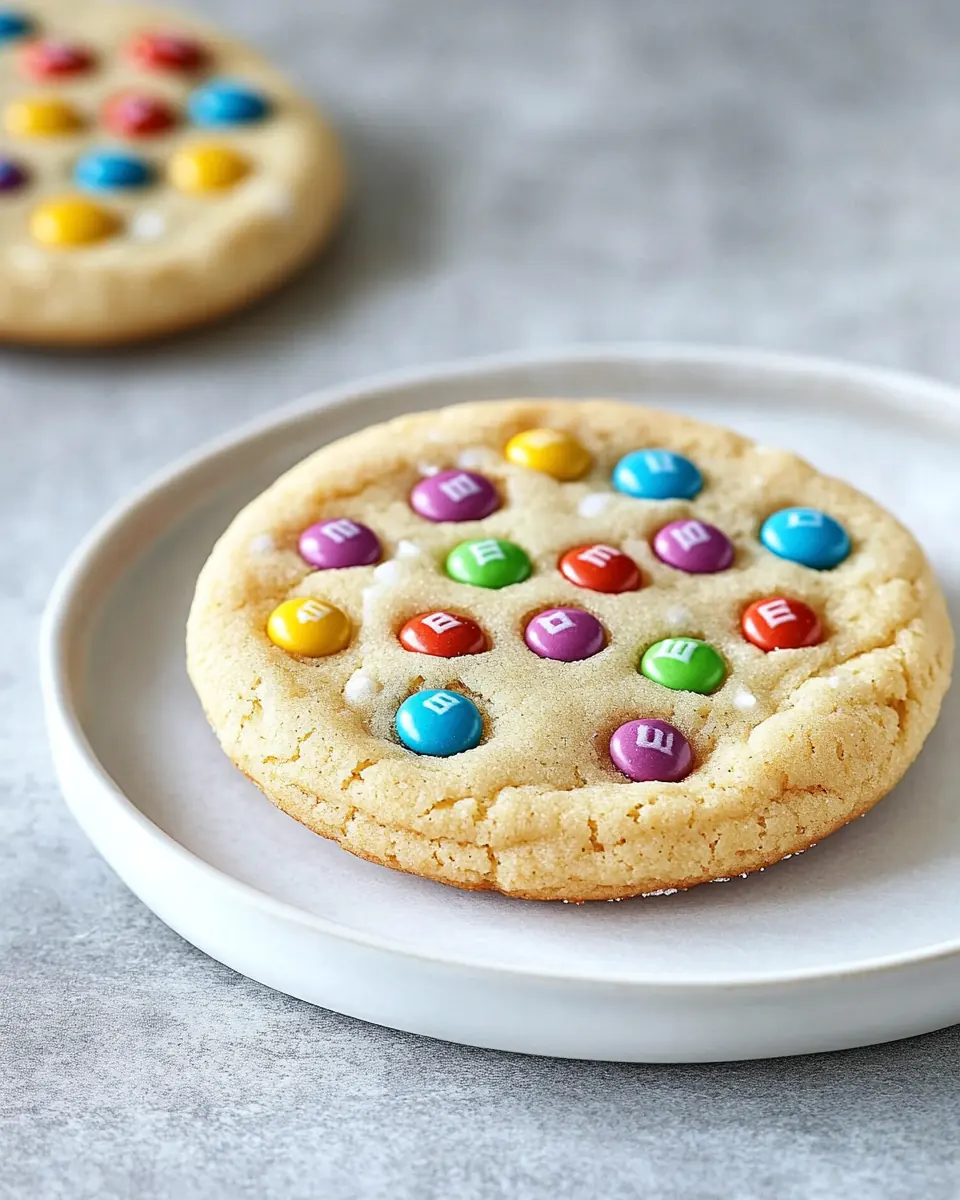
Here are practical tips I rely on to get consistent results when making M&M Sugar Cookies. These pointers come from repeated batches and small refinements that made a big difference for texture, appearance, and timing.
- Measure flour correctly, spoon it into the cup and level off to avoid packing, which can lead to dense cookies and a dry texture.
- Keep butter at true room temperature, soft but not greasy, so it creams evenly with sugar and traps the right amount of air for tender cookies.
- Weigh or use a consistent scoop, a 50 g portion yields uniform cookie size and reliable baking times across the tray.
- Chill trays when in doubt, a 10 to 15 minute chill helps control spread; if cookies still flatten, extend chilling up to 30 minutes.
- Watch for visual doneness, look for puffed tops and barely golden edges rather than relying solely on time, to avoid overbaking and dryness.
- Press extra candies on top after scooping, it improves presentation and guarantees colorful pockets of chocolate on every cookie.
How to Enjoy M&M Sugar Cookies
These cookies are versatile and fun to serve. Whether you are planning a casual afternoon with friends or a festive gathering, they fit many occasions and pair well with simple beverages. Below are ideas for serving, storage, and occasions where these cookies shine.
- Casual snack, serve at room temperature on a platter for school lunches, coffee breaks, or an after school treat. The bright M&Ms make them appealing to kids and adults alike.
- Party platter, arrange on a decorative tray for birthday parties, potlucks, or cookie exchanges. Their colorful appearance works well with themed parties and seasonal celebrations.
- Gift packaging, wrap stacks in cellophane with a ribbon for neighbor gifts or bake sale contributions. They travel well when placed in an airtight container and make a cheerful homemade present.
- Storage tips, keep in an airtight container at room temperature for up to three days for best texture, or freeze tightly wrapped for up to one month and thaw for 30 minutes before serving.
- Serving suggestions, offer alongside other small sweets to create a dessert board, or box them individually for party favors and little thank you gifts.
- Occasions, ideal for school functions, Ramadan dessert tables where sweets are shared at iftar, holiday cookie swaps, and casual weekend baking sessions with family.
FAQ
Conclusion
These M&M Sugar Cookies stand out because they deliver playful color, comforting buttery flavor, and a tender center with a lightly crisp sugar shell. Give them a try the next time you want a simple project that yields cheerful results, whether you’re baking alone for calm or with family for shared joy. I hope this recipe brings a little extra color to your kitchen and becomes one of your go to cookie recipes for gatherings and cozy afternoons.
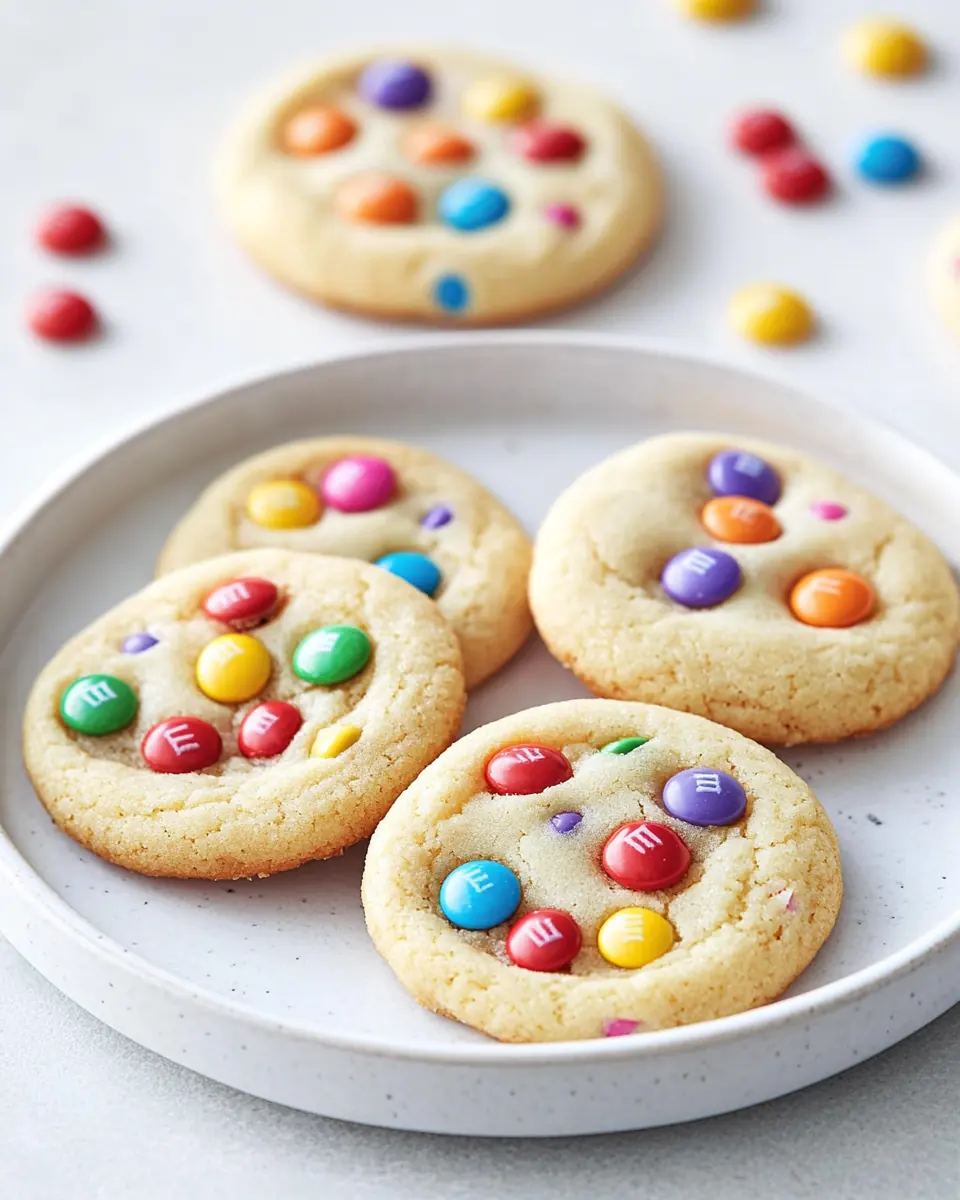
M&M Sugar Cookies
Ingredients
Equipment
Method
- Preheat oven to 350 degrees F. Line two heavy, light or medium colored baking sheets with parchment paper.: You should notice a faint warmth in the air as the oven comes up to temperature, and this preheating ensures consistent oven spring and even baking. The reason it matters is that starting with the correct temperature gives the cookies the lift they need before the edges set, so they bake with pleasant rounded tops rather than spreading into thin discs. A common mistake is skipping full preheat, which can produce unevenly baked cookies. If your oven runs hot, rotate the baking sheet halfway through to avoid overly browned edges.
- In a bowl, whisk together flour, baking soda, cream of tartar, and salt and set aside.: When you line pans, you'll notice a smoother surface for cookies to glide on and easier cleanup after baking. Using parchment prevents sticking and encourages even browning on the bottoms. I prefer medium colored sheets to avoid over browning when using thin pans. A frequent slip is placing cookies on warm sheets, which can start spreading early; always cool pans between batches if needed.
- In a mixing bowl or the bowl of a stand mixer fitted with the paddle attachment, cream butter, shortening, and sugar until light and fluffy, 2 to 3 minutes. Add egg and egg yolk and beat on high speed for 30-60 seconds until smooth. Mix in vanilla.: As you whisk, pay attention to the flour becoming evenly speckled with the leaveners and salt, which signals uniform distribution. This step ensures every bite rises and seasons consistently. Poorly mixed dry ingredients can create pockets of unbalanced flavor or inconsistent texture, so whisk until homogeneous.
- Dump in dry ingredients and mix on low speed until incorporated and no streaks of dry ingredients remain. Add 2/3 cup M&Ms and fold until evenly distributed.: You will see the mixture lighten in color and increase slightly in volume, taking on a pale, whipped look, and the sugar will become well incorporated. This creaming traps tiny air bubbles that help with the cookies' tender lift. Overbeating can produce too much air and cause collapse, while undercreaming leaves a dense texture, so aim for 2 to 3 minutes.
- Scoop dough into 50 g balls (a generous scoop of dough with a medium #40 cookie scoop, or approximately 2 tablespoons worth). Roll into a ball between your palms, then roll in a small bowl filled with granulated sugar until evenly coated.: The batter will become glossy and cohesive, and you'll hear a steadier, smoother mixing sound indicating full incorporation. Eggs add structure and moisture, making the dough pliable and rich. Mixing too long can overwork the batter, so stop once it looks smooth and uniform.
- Place on cookie sheet with 2 to 3 inches of space between cookies to allow for spreading. Press a few more M&Ms into the top of each dough ball for a prettier baked cookie (you can place them pretty close together as they will spread out in the oven).: The aroma of vanilla will lift the mixture, adding warmth and depth. Stirring this in helps distribute flavor evenly, and it contributes to the cookie's inviting scent while baking. Forgetting to add vanilla will mute the overall flavor profile, so be deliberate about this small but impactful addition.
- While you can bake the cookies immediately without chilling, I recommend popping the entire cookie sheet in the fridge for 10 to 15 minutes; this will help the cookies bake more evenly and not spread quite as much. If you find your cookies are spreading too much still, chill the dough balls for up to 30 minutes as needed.: At this stage, you'll see the dough come together and thicken, and the dusty flour will disappear into the batter. Mixing gently protects the cookie's tender crumb by avoiding gluten overdevelopment. A common error is mixing too vigorously, which can make the cookies tough, so keep the mixer on low and stop as soon as the streaks are gone.
- Bake for 12 to 13 minutes (10 to 11 minutes if baking from room temperature dough) or until tops are puffed and edges are just barely golden brown. I recommend checking on the cookies at around 9 minutes; rotate the cookie sheet, also give it a good hard rap on the oven rack once or twice to deflate the tops and ruffle the edges, then bake for a few more minutes as needed.: Folding should be gentle and purposeful, so you feel pockets of colorful candy distributed without breaking them. The visual cue is an even scattering of little chocolate dots throughout the dough. Overfolding crushes the candies and bleeds color into the dough, while underfolding leaves some cookies without M&Ms, so fold until even.
- Immediately after removing from the oven, swirl a large round cookie cutter around the warm cookies, tucking in the uneven edges to create perfectly circular cookies. Let cool on cookie sheets for 15 minutes, then transfer to a wire rack to cool completely.: As you portion, notice the dough's tacky, slightly soft texture that holds shape when scooped. Rolling into smooth balls helps them bake evenly, and using a consistent 50 g size produces uniform cookies. A common mistake is inconsistent scoops, resulting in uneven bake times, so weigh or use a consistently sized scoop for uniformity.
- Freshly baked cookies are best enjoyed the same day, or refrigerated in a bag or airtight container for up to 3 days. For longer storage, wrap tightly in plastic wrap and place in a zip top bag in the freezer for up to a month. Let come to room temperature for 30 minutes before serving.: The sugar coating gives a sparkling crust and a delicate crunch. You will feel the sugar crystals adhere and see the surface take on a slight sheen. Rolling too roughly can flatten the dough, so be gentle to preserve the shape.
- Place on cookie sheet with 2 to 3 inches of space between cookies to allow for spreading: Arrange the dough balls so the cookies have room to expand and bake into neat rounds. Visually, you want equal spacing and no touching. Overcrowding leads to merged cookies, so leave adequate distance and use multiple sheets if necessary.
- Press a few more M&Ms into the top of each dough ball for a prettier baked cookie: Pressing extras creates an attractive mosaic on top after baking and adds extra chocolate on the surface. Do this gently so the candies remain visible without being pushed too deep. Be careful not to press so hard that the cookie shape is distorted.
- Chill the entire cookie sheet in the fridge for 10 to 15 minutes: The chill firms the fats and helps control spreading, resulting in thicker cookies with rounded tops. You will notice the dough feel cooler and slightly firmer to the touch after chilling. A common oversight is skipping chill entirely; unchilled dough often spreads more, yielding thinner cookies.
- Bake for 12 to 13 minutes: Watch for puffed tops and just barely golden edges, and expect the aroma of warm butter and sugar to fill the kitchen. The middle should look set yet soft to the touch, which signals doneness. Overbaking will dry them out, so remove them when edges are light gold and centers are still slightly soft.
- Check at around 9 minutes; rotate the cookie sheet, rap the oven rack once or twice to deflate tops and ruffle edges: This trick encourages even browning and gives the cookies a classic ruffled edge. You will hear a slight clatter when you rap the rack, and you should return the tray to finish baking. Missing this step can leave domed tops that crack unevenly.
- Immediately after removing from the oven, swirl a large round cookie cutter around the warm cookies: The cutter smooths uneven edges into perfect circles while the cookies are malleable, and you can see the warm chocolate glisten as the surface relaxes. Pressing too hard can flatten them, so use a gentle swirling motion to tuck edges back in.
- Let cool on cookie sheets for 15 minutes, then transfer to a wire rack to cool completely: During this resting period, the cookies finish setting and firm up enough to move without breaking. You will smell the lingering sweetness and notice the chocolate begin to set. Moving them too soon can cause tearing, so wait the full 15 minutes.
- Store freshly baked cookies in a bag or airtight container for up to 3 days: Stored properly, the cookies maintain a pleasant texture for several days, and refrigeration can slow staling. For longer storage, wrap tightly and freeze for up to a month, then bring to room temperature for 30 minutes before serving. A common mistake is leaving them unsealed, which leads to rapid softening or drying.
Notes
- Measure flour correctly, spoon it into the cup and level off to avoid packing, which can lead to dense cookies and a dry texture.
- Keep butter at true room temperature, soft but not greasy, so it creams evenly with sugar and traps the right amount of air for tender cookies.
- Weigh or use a consistent scoop, a 50 g portion yields uniform cookie size and reliable baking times across the tray.
- Chill trays when in doubt, a 10 to 15 minute chill helps control spread; if cookies still flatten, extend chilling up to 30 minutes.
- Watch for visual doneness, look for puffed tops and barely golden edges rather than relying solely on time, to avoid overbaking and dryness.
- Press extra candies on top after scooping, it improves presentation and guarantees colorful pockets of chocolate on every cookie.