Whole Meyer Lemon Tart
Whole Meyer Lemon Tart is one of those recipes that feels like a sunny afternoon folded into pastry, and I came to it after a morning at the farmer’s market when the Meyer lemons smelled almost floral against my palm. I remember carrying a small crate of perfect yellow orbs, thinking about a simple tart that would let their perfume shine without too many competing ingredients. That first bite taught me that citrus can be velvet smooth, bright, and soothing all at once, and it changed how I approach desserts that rely on one star ingredient.
I have a soft spot for recipes that reward patience, and this tart is that kind of reward. The crust is tender, not fussy, and the filling is glossy and clean, with the faintest perfume of butter and sugar to round the edges. Over the years I have made it for neighborhood potlucks, quiet dinners, and times when I needed something elegant but not showy. Each time, friends ask for the recipe because the balance between the shortbread like base and the slightly jiggly filling is just right.
One memory stays with me: I brought a freshly cooled tart to a spring brunch and watched people hesitate, then close their eyes after the first forkful. We talked about how Meyer lemons taste different from regular lemons, more floral and a touch sweeter, which makes them perfect for a dessert that is not trying to be too tart. That day I also experimented with slicing the lemons thin and removing seeds by hand, which made a dramatic difference in texture and clarity of flavor. It felt like sharing a small secret, and now I share it with you.
Recipe Snapshot
1 hr 20 mins
20 mins
60 mins
Medium
320 kcal
American
Gluten-Free, Low FODMAP
Desserts
Electric mixer, Food processor, 9-inch removable bottom tart pan, Wire rack, Baking sheet
The Beauty of This Whole Meyer Lemon Tart
Bright, balanced flavor that sings
I love how Whole Meyer Lemon Tart captures the bright floral notes of Meyer lemons without becoming overly sour. The filling is silky, with real lemon pieces processed into a smooth custard, and that gives a layered citrus flavor that keeps you coming back for another bite. I often tell friends that this is citrus done with restraint, because the sugar and butter soften the acids just enough to let the lemon vibrate instead of shout.
Simple technique, impressive results
What appeals to me is how manageable the process is, even when you want a dessert that looks polished. The crust is straightforward to make in a mixer, and the filling comes together quickly in a food processor. Because the technique is accessible, I feel confident making this tart for guests, which elevates weeknight menus into something memorable.
Textural contrast that matters
The tender, slightly crumbly crust sets up a delightful contrast with the glossy, just set filling. When you slice into the tart, the crust holds its shape without being tough, and the filling offers that gentle jiggle that signals perfect doneness. I always appreciate a dessert that provides a clear textural conversation on the plate.
Seasonal star that shows off spring
Because Meyer lemons peak in spring, this tart feels seasonal and celebratory. I enjoy making it when citrus crates appear at markets, and serving it for brunches, light dinners, or gatherings where something bright and pretty is welcome. It showcases a single ingredient in a way that feels intentional and fresh.
Minimalist, adaptable presentation
I value recipes that let you choose how fancy you want to be. Serve the Whole Meyer Lemon Tart simply dusted with powdered sugar, or dress it up with a delicate garnish. Either way, it reads as effortless and refined, and that versatility makes it a go to when I want to impress without fuss.
What to Gather for Whole Meyer Lemon Tart
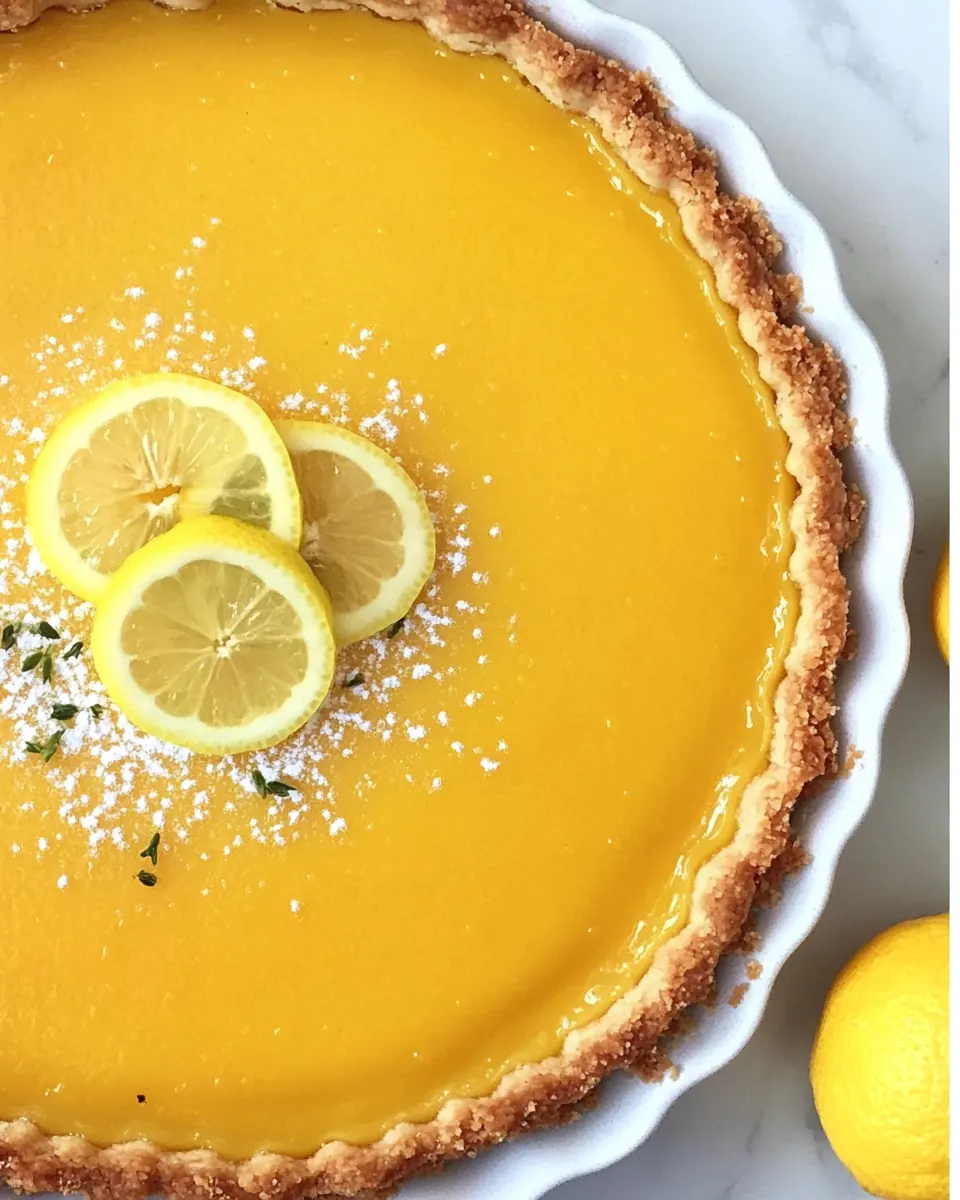
These ingredients are intentionally simple and work together to create a delicate interplay of texture and flavor. The crust ingredients provide a tender, slightly crumbly base that supports the citrus filling, while the filling ingredients combine to make a smooth, glossy custard that holds its shape yet stays silky. Key players are the Meyer lemons for bright floral acidity, the butter for richness, and the eggs and cornstarch for structure.
- 1 1/2 sticks unsalted butter, room temperature: Softened to spread easily and incorporate into dough, providing a tender, flaky crust and rich mouthfeel when creamed with sugar.
- 1/3 cup powdered sugar: Sifted and beaten with butter to lend delicate sweetness and help create a light, melt-in-the-mouth shortcrust texture for the tart base.
- 1 1/2 cups all-purpose flour: Measured and combined with butter and sugar to build the structure of the pastry, supplying gluten for strength while remaining neutral in flavor.
- 1/4 teaspoon kosher salt: Sprinkled into the dry mix to enhance overall flavor balance and strengthen the dough by tightening gluten bonds slightly for better handling.
- 4 1/2 ounces sliced Meyer lemons, seeds removed: Thinly sliced and deseeded to add bright, citrusy flavor and aromatic complexity when cooked down or layered, contributing both texture and visual appeal.
- 1 1/2 cups sugar: Granulated and mixed into the lemon filling to provide sweetness, help with caramelization, and balance the lemons' acidity for a smooth custard.
- 1 stick unsalted butter, cut into cubes: Cubed and incorporated into the filling so it melts evenly, adding richness and a silky texture while binding flavors together during cooking.
- 4 large eggs: Beaten and blended into the lemon curd to set the filling through coagulation, supplying structure, richness, and a custardy mouthfeel when cooked.
- 2 tablespoons cornstarch: Mixed with the eggs and sugar to thicken the filling by stabilizing the custard and preventing separation, yielding a glossy, smooth consistency.
- 1/4 teaspoon kosher salt: Added to both dough and filling as a seasoning agent to heighten flavors and contrast sweetness while helping to balance the tart's overall taste.
Directions for Whole Meyer Lemon Tart
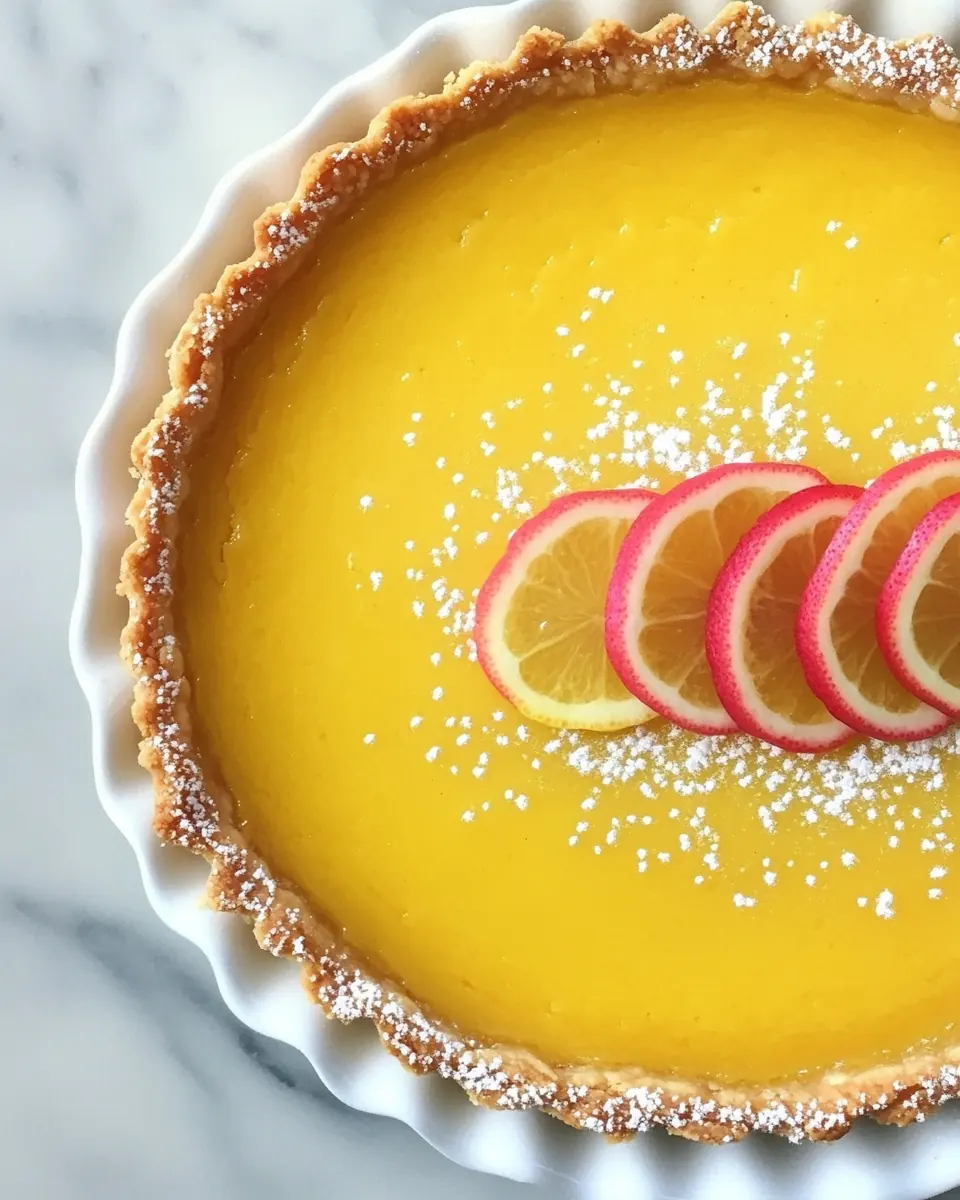
I like to move through the steps deliberately, enjoying the rhythm of mixing, pressing, and watching the tart come together in the oven. Below are the cleaned steps, expanded with sensory cues, reasoning, and common troubleshooting notes to help you feel confident at every turn.
- Preheat oven to 350 degrees F and spray a 9-inch non-stick removable bottom tart pan with non-stick spray.: Warm air fills the kitchen as the oven comes to temperature, and preheating to 350 degrees F ensures the crust starts baking immediately and evenly, creating a tender edge and slight golden color. Use a removable bottom tart pan so the presentation is clean when you release the tart. A common mistake is skipping the spray, which can cause the crust to stick, making it difficult to remove the tart intact. You should hear the faint click of the oven thermostat as it reaches temp, and the heat should feel steady before you put the crust in. If your oven runs hot or cold, use an oven thermometer to confirm the true temperature, because even small variances can change baking time and the final texture of the crust.
- In the bowl of your electric mixer cream the butter and sugar until light and fluffy.: As you cream the butter and sugar , the mixture will lighten in color and become aerated, carrying tiny air pockets that help produce a shortbread like crumb. Listen for a gentle whirring and watch for the change from glossy butter to pale, whipped texture. The reason we cream is to incorporate air for tenderness and to ensure even distribution of sugar. A common error here is under creaming, which leaves the crust dense, or over creaming, which can make it too soft. Scrape the bowl occasionally to ensure everything mixes evenly.
- Add the flour and salt and beat until the dough just comes together.: Once you add the flour and salt , the texture will shift from creamy to crumbly and then to a cohesive dough. You want it to barely come together so the crust stays tender rather than tough. The sound will change to a quieter thud as the dry ingredients absorb the fat. Overworking at this stage can develop gluten and make the crust chewy, so stop mixing when you see the dough cling together.
- When making this crust the dough will first look very crumbly but just keep mixing until you see it come together in the bowl. This takes around 3 minutes.: Keep a close eye on texture because this transitional stage can be confusing. The dough often looks dry for a moment, then suddenly binds as the butter warms and hydrates the flour. This step matters because a correctly bound dough will press smoothly into the pan and bake with an even structure. A typical mistake is abandoning the mixer too soon and ending up with an uneven crust; if that happens, press the crumbs firmly into the pan to help them adhere.
- Press crust into the bottom of your greased pan and bake for about 20 minutes, or until lightly browned.: As you press the crust into the pan, feel for an even thickness and gently press up the sides if you like a small edge. When baking, watch for a faint golden rim and a set surface; the smell will shift from raw flour to a warm, toasty note. This bake firms the base so it holds the filling. A common problem is uneven pressing which causes thin spots; take an extra minute to smooth the dough before baking for uniform results.
- Remove from oven and place on a wire rack to cool while you make the filling.: Cooling on a wire rack lets air circulate under the tart and prevents condensation that can make the crust soggy. You will notice steam dissipating and the tart losing some of its heat. Letting the shell cool is crucial because adding hot filling can melt the crust and alter texture. Resist the urge to hurry this step, since rushing can compromise the final set and appearance.
- In a bowl of a food processor add lemon slices, sugar, and butter.: Putting the Meyer lemons , sugar , and cubed butter into the food processor combines flavor and fat right from the start, leading to a smooth, integrated filling. As you pulse, the citrus aroma will become stronger and the butter will begin to break down. This technique creates an emulsion that carries the lemon flavor throughout the filling. A pitfall is overfilling the processor; work in batches if necessary to ensure an even texture.
- Process together until completely smooth. Scraping down the sides when needed.: When the mixture becomes silky and uniform, stop processing and scrape down the sides to incorporate any hidden bits. The sound will shift from choppy to a steady puree, and the scent will be rich and bright. Smoothness matters because it prevents grainy or chunky spots in the custard, giving you a glossy finish. Avoid running the processor too long without scraping, as that can trap chunks on the bowl walls and create uneven texture.
- Add in eggs, cornstarch, and kosher salt and process until combined and smooth.: Adding the eggs , cornstarch , and kosher salt builds structure and stabilizes the filling. Process until the mixture is homogenous and slightly thickened; the color will be pale and the surface glossy. This step ensures the filling sets properly in the oven and has that delicate jiggle when done. A common mistake is under mixing, which leaves streaks or pockets of uncooked egg, so process until smooth and uniform.
- Carefully pour the lemon mixture into the crust. Be careful to not fill the crust over the top or it will not remove correctly.: As you pour, watch how the filling settles into the shell and avoids overfilling the rim. The filling should come close to the edge but not overflow. The visual cue is a smooth, level surface within the border of the crust. Overfilling can spill during baking and prevent clean removal from the pan, so leave a small gap for expansion.
- Add tart to a baking sheet and bake for about 35 minutes until the filling is set and the center of the tart is just slightly jiggly. The top should also be a light golden color.: Placing the tart on a baking sheet helps catch any spills and makes handling easier. As the tart bakes, you will notice the surface gaining a pale gold hue and the center holding a faint wobble when you gently shake the pan. This is the sign of perfect set, where the edges are firm and the center will finish as it cools. A common misstep is overbaking, which leaves the filling dry and rubbery, so check for the slight jiggle rather than a hard set.
- Let the tart completely cool before popping it out of the tart mold.: Cooling fully allows the custard to firm up and makes release safer and cleaner. You may feel a faint give initially, then the tart will slowly stabilize. Rushing this step can cause the tart to break apart, so be patient. Using a removable bottom pan helps, but only after the tart is cool will it slide out in one piece.
- Serve room temperature lightly sprinkled with powdered sugar.: Serving at room temperature reveals the texture and flavor most clearly; the powdered sugar provides a soft visual contrast and a touch of extra sweetness. The aroma will be gentle and inviting, and each slice will show clean lines between crust and filling. Avoid serving straight from the fridge, which can mute the citrus perfume and stiffen the custard.
Make It Your Own
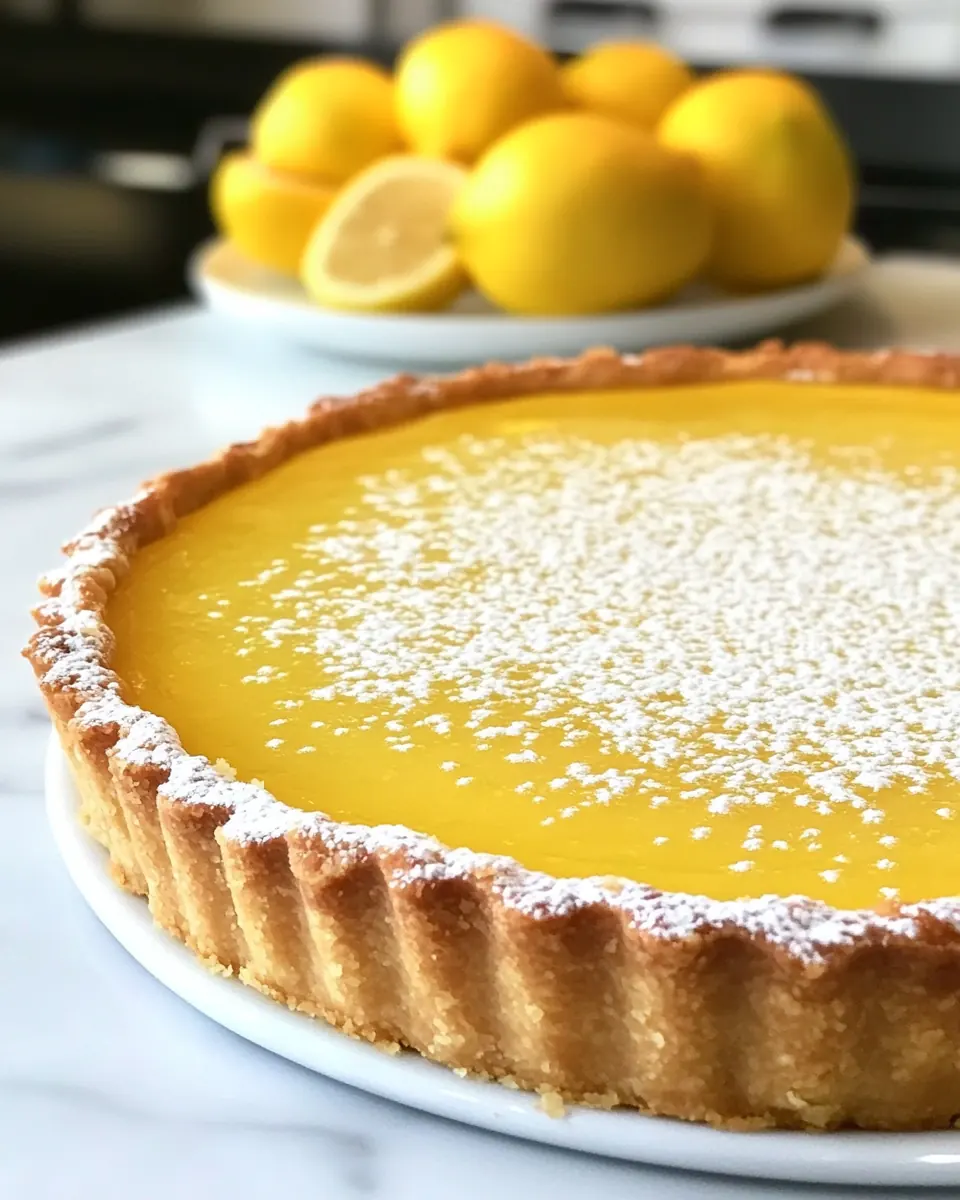
I like offering practical ways to personalize this tart without changing its essence. Below are tips that maintain the recipe’s integrity while allowing slight tweaks for texture and presentation.
- Use thinly sliced Meyer lemons to preserve the citrus perfume and ensure a smooth processed filling, removing seeds carefully to avoid bitterness.
- Room temperature ingredients make mixing easier and provide a silkier filling, especially the butter and eggs.
- Evenly press the crust into the pan to prevent thin spots that can burn or crumble when sliced.
- Process in batches if needed to avoid overfilling the food processor and to ensure a uniformly smooth filling.
- Use a removable bottom pan for the cleanest presentation, and place it on a baking sheet for stability while baking.
- Dust with powdered sugar just before serving to keep the surface clean and prevent the sugar from dissolving into the filling.
- Let the tart rest completely before unmolding to achieve neat slices and a stable custard center.
How to Enjoy Whole Meyer Lemon Tart
This tart shines in many settings, from a casual afternoon tea to a spring brunch or a special family gathering. Below are detailed serving ideas, storage tips, and pairing suggestions to help you plan the perfect moment for this dessert.
- Serve at room temperature, which highlights the floral notes of the Meyer lemons and ensures the filling has a gentle, creamy texture rather than being overly firm from refrigeration.
- Light presentation with a simple dusting of powdered sugar keeps the focus on the tart’s clean lines and bright flavor, ideal for brunch or a light dessert after a lemon forward meal.
- Pair with mild accompaniments such as a dollop of lightly sweetened whipped cream or a small scoop of vanilla free frozen dessert, which complements the lemon without overpowering it.
- Occasion ideas include spring gatherings, Ramadan iftar tables where a citrus dessert is welcomed after savory courses, afternoon teas, and celebratory brunches where a bright, elegant dessert is desired.
- Storage tips: cover the tart loosely with plastic wrap and keep in the refrigerator for up to three days. Bring slices to room temperature before serving to recover the texture and peak aroma.
- Make ahead by baking the crust and preparing the filling a day ahead, then baking and cooling on the day you want to serve for the freshest aroma and best texture.
- Seasonal pairing works well with spring salads, light fish entrees, or coffee service, where the tart acts as a bright, refreshing finish to the meal.
FAQ
Conclusion
This tart is special because it celebrates the floral brightness of Meyer lemons with a tender crust and a glossy, just set filling. It strikes a lovely balance between simple technique and striking results, so it always feels appropriate for both casual gatherings and special occasions. Give it a try the next time Meyer lemons are in season, and enjoy the way a few thoughtful steps deliver a dessert that feels both elegant and homey. I hope you have fun making it and that it becomes one of your go to citrus desserts.
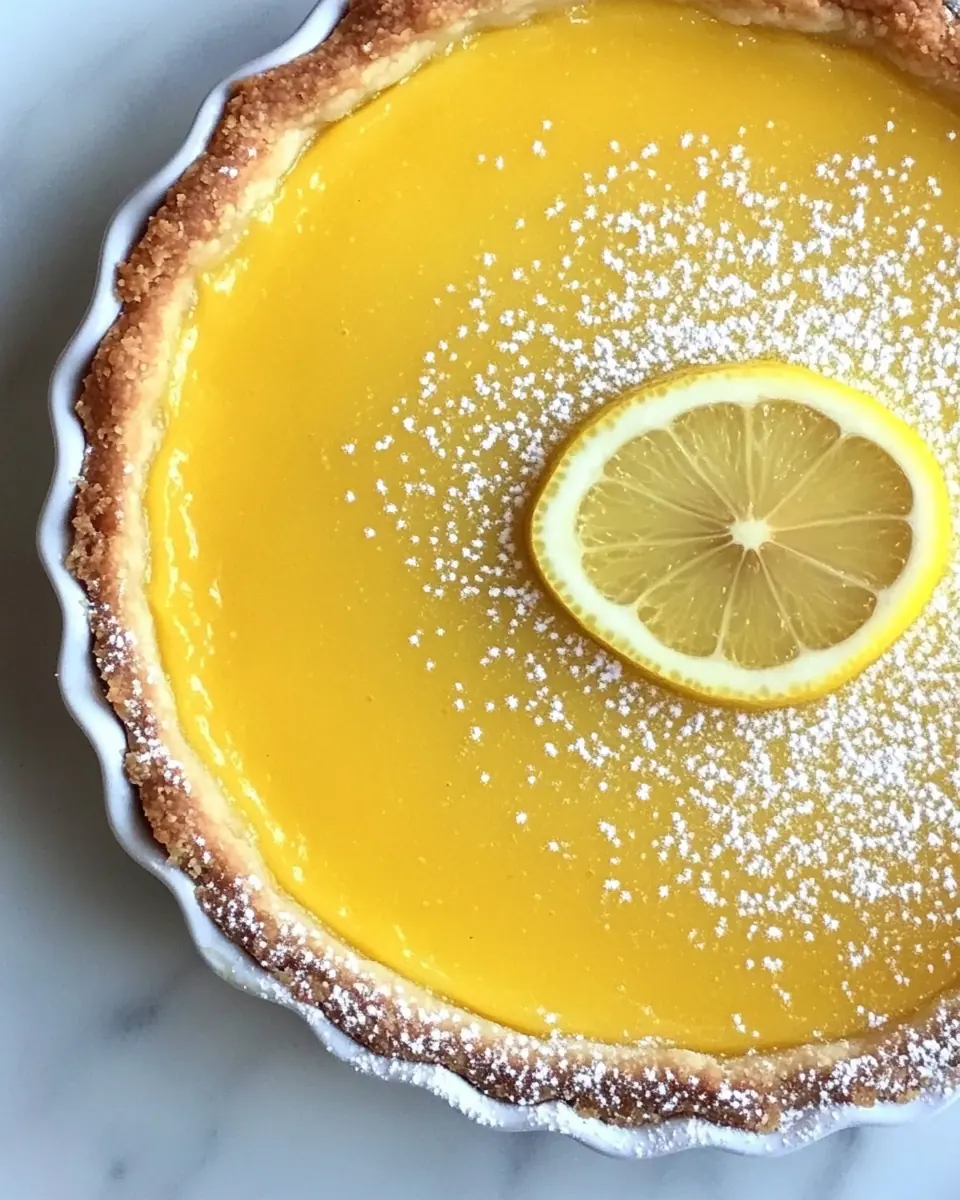
Whole Meyer Lemon Tart
Ingredients
Equipment
Method
- Preheat oven to 350 degrees F and spray a 9-inch non-stick removable bottom tart pan with non-stick spray.: Warm air fills the kitchen as the oven comes to temperature, and preheating to 350 degrees F ensures the crust starts baking immediately and evenly, creating a tender edge and slight golden color. Use a removable bottom tart pan so the presentation is clean when you release the tart. A common mistake is skipping the spray, which can cause the crust to stick, making it difficult to remove the tart intact. You should hear the faint click of the oven thermostat as it reaches temp, and the heat should feel steady before you put the crust in. If your oven runs hot or cold, use an oven thermometer to confirm the true temperature, because even small variances can change baking time and the final texture of the crust.
- In the bowl of your electric mixer cream the butter and sugar until light and fluffy.: As you cream the butter and sugar , the mixture will lighten in color and become aerated, carrying tiny air pockets that help produce a shortbread like crumb. Listen for a gentle whirring and watch for the change from glossy butter to pale, whipped texture. The reason we cream is to incorporate air for tenderness and to ensure even distribution of sugar. A common error here is under creaming, which leaves the crust dense, or over creaming, which can make it too soft. Scrape the bowl occasionally to ensure everything mixes evenly.
- Add the flour and salt and beat until the dough just comes together.: Once you add the flour and salt , the texture will shift from creamy to crumbly and then to a cohesive dough. You want it to barely come together so the crust stays tender rather than tough. The sound will change to a quieter thud as the dry ingredients absorb the fat. Overworking at this stage can develop gluten and make the crust chewy, so stop mixing when you see the dough cling together.
- When making this crust the dough will first look very crumbly but just keep mixing until you see it come together in the bowl. This takes around 3 minutes.: Keep a close eye on texture because this transitional stage can be confusing. The dough often looks dry for a moment, then suddenly binds as the butter warms and hydrates the flour. This step matters because a correctly bound dough will press smoothly into the pan and bake with an even structure. A typical mistake is abandoning the mixer too soon and ending up with an uneven crust; if that happens, press the crumbs firmly into the pan to help them adhere.
- Press crust into the bottom of your greased pan and bake for about 20 minutes, or until lightly browned.: As you press the crust into the pan, feel for an even thickness and gently press up the sides if you like a small edge. When baking, watch for a faint golden rim and a set surface; the smell will shift from raw flour to a warm, toasty note. This bake firms the base so it holds the filling. A common problem is uneven pressing which causes thin spots; take an extra minute to smooth the dough before baking for uniform results.
- Remove from oven and place on a wire rack to cool while you make the filling.: Cooling on a wire rack lets air circulate under the tart and prevents condensation that can make the crust soggy. You will notice steam dissipating and the tart losing some of its heat. Letting the shell cool is crucial because adding hot filling can melt the crust and alter texture. Resist the urge to hurry this step, since rushing can compromise the final set and appearance.
- In a bowl of a food processor add lemon slices, sugar, and butter.: Putting the Meyer lemons , sugar , and cubed butter into the food processor combines flavor and fat right from the start, leading to a smooth, integrated filling. As you pulse, the citrus aroma will become stronger and the butter will begin to break down. This technique creates an emulsion that carries the lemon flavor throughout the filling. A pitfall is overfilling the processor; work in batches if necessary to ensure an even texture.
- Process together until completely smooth. Scraping down the sides when needed.: When the mixture becomes silky and uniform, stop processing and scrape down the sides to incorporate any hidden bits. The sound will shift from choppy to a steady puree, and the scent will be rich and bright. Smoothness matters because it prevents grainy or chunky spots in the custard, giving you a glossy finish. Avoid running the processor too long without scraping, as that can trap chunks on the bowl walls and create uneven texture.
- Add in eggs, cornstarch, and kosher salt and process until combined and smooth.: Adding the eggs , cornstarch , and kosher salt builds structure and stabilizes the filling. Process until the mixture is homogenous and slightly thickened; the color will be pale and the surface glossy. This step ensures the filling sets properly in the oven and has that delicate jiggle when done. A common mistake is under mixing, which leaves streaks or pockets of uncooked egg, so process until smooth and uniform.
- Carefully pour the lemon mixture into the crust. Be careful to not fill the crust over the top or it will not remove correctly.: As you pour, watch how the filling settles into the shell and avoids overfilling the rim. The filling should come close to the edge but not overflow. The visual cue is a smooth, level surface within the border of the crust. Overfilling can spill during baking and prevent clean removal from the pan, so leave a small gap for expansion.
- Add tart to a baking sheet and bake for about 35 minutes until the filling is set and the center of the tart is just slightly jiggly. The top should also be a light golden color.: Placing the tart on a baking sheet helps catch any spills and makes handling easier. As the tart bakes, you will notice the surface gaining a pale gold hue and the center holding a faint wobble when you gently shake the pan. This is the sign of perfect set, where the edges are firm and the center will finish as it cools. A common misstep is overbaking, which leaves the filling dry and rubbery, so check for the slight jiggle rather than a hard set.
- Let the tart completely cool before popping it out of the tart mold.: Cooling fully allows the custard to firm up and makes release safer and cleaner. You may feel a faint give initially, then the tart will slowly stabilize. Rushing this step can cause the tart to break apart, so be patient. Using a removable bottom pan helps, but only after the tart is cool will it slide out in one piece.
- Serve room temperature lightly sprinkled with powdered sugar.: Serving at room temperature reveals the texture and flavor most clearly; the powdered sugar provides a soft visual contrast and a touch of extra sweetness. The aroma will be gentle and inviting, and each slice will show clean lines between crust and filling. Avoid serving straight from the fridge, which can mute the citrus perfume and stiffen the custard.
Notes
- Use thinly sliced Meyer lemons to preserve the citrus perfume and ensure a smooth processed filling, removing seeds carefully to avoid bitterness.
- Room temperature ingredients make mixing easier and provide a silkier filling, especially the butter and eggs.
- Evenly press the crust into the pan to prevent thin spots that can burn or crumble when sliced.
- Process in batches if needed to avoid overfilling the food processor and to ensure a uniformly smooth filling.
- Use a removable bottom pan for the cleanest presentation, and place it on a baking sheet for stability while baking.
- Dust with powdered sugar just before serving to keep the surface clean and prevent the sugar from dissolving into the filling.
- Let the tart rest completely before unmolding to achieve neat slices and a stable custard center.