Sheet Pan Strawberry Shortcake
Sheet Pan Strawberry Shortcake is one of those recipes that makes summer feel instantly at hand, and the first time I baked it I remember the kitchen filling with a warm, buttery aroma that felt like a hug. I was hosting a small get together and wanted something easy to scale, something that let me enjoy my guests rather than fuss over individual biscuits. This sheet pan version changed the game for me, because it turns what used to be a labor intensive dessert into something joyful and almost carefree.
I like how this version keeps the spirit of a classic shortcake, while trimming the fuss. The crumbly base has a tender, biscuit like texture, the strawberries macerate into bright, juicy pieces, and the whipped topping makes the whole tray feel celebratory. Over time I learned little tricks that keep the shortcake from becoming soggy, and they helped me serve perfect squares every single time. I still get a little thrill when someone takes the first bite and their eyes light up.
Recipe Snapshot
40 mins
20 mins
20 mins
Easy
250 kcal
American
Gluten-Free, Low FODMAP
Desserts
9×13 Sheet Pan
The Beauty of This Sheet Pan Strawberry Shortcake
Easy scalability
I love that Sheet Pan Strawberry Shortcake scales effortlessly, which is why I reach for it whenever I have a crowd. You can double or halve the components and still end up with the same lovely texture, because the technique of pressing a single dough layer into a pan keeps things consistent. When I host friends, I can prep everything the day before and finish quickly, which makes entertaining calm.
Simple, familiar ingredients
The ingredient list is friendly and approachable. With staples like all purpose flour, granulated sugar, and butter, you do not need specialty supplies to produce something that tastes elevated. I often find guests feel reassured by the recognizable elements, and that makes them more excited to try a dessert they think they could bake at home too.
Great texture contrast
This dessert shines because of contrast. The base is crisp at the edges and tender in the center, while the strawberries are juicy and the whipped topping is airy. When I bite into a square, I notice the slight crunch where the crust met the oven, followed by a soft, creamy finish. That variety in mouthfeel is exactly what keeps people coming back for another piece.
Speed without compromise
I often need desserts that come together quickly, and Sheet Pan Strawberry Shortcake answers that call. From mixing to serving, the timeline is compact, but the result does not feel rushed. I appreciate recipes that let me spend more time with family and less time hovering over the oven, and this one reliably gives me both quality and convenience.
Perfect for seasonal fruit
When strawberries are at their peak, this recipe truly sings. I love how a simple toss with a little lemon juice and sugar brings out the berry flavor so vividly. I find myself making it repeatedly during spring and early summer, because the bright fruit lifts the whole dessert into something fresh and celebratory.
Everything You Need for Sheet Pan Strawberry Shortcake
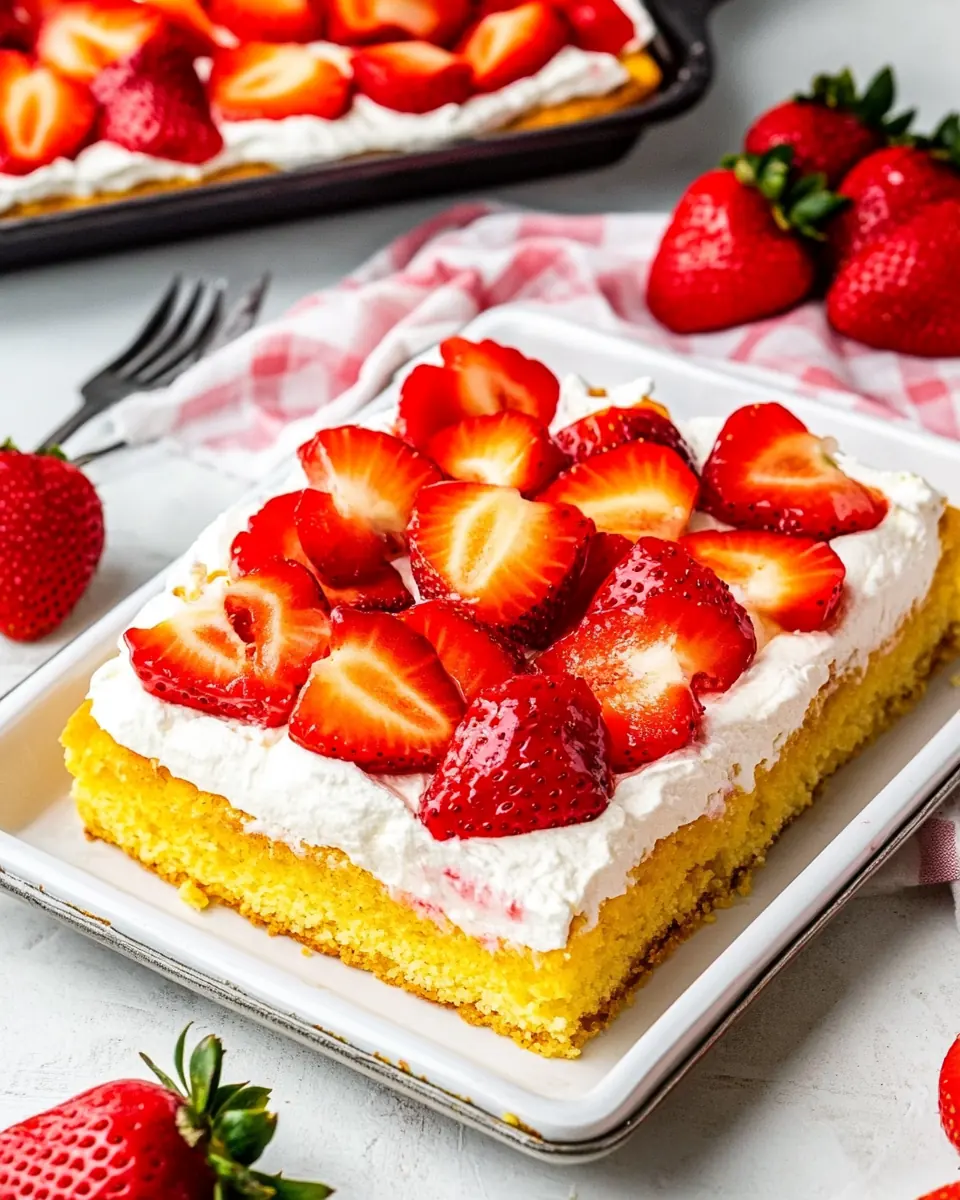
These ingredients form a straightforward, harmonious team. The base is built to be tender yet sturdy, the fruit topping is bright and juicy, and the whipped component brings a cloud like finish. Each element plays a clear role, and they work together to deliver a dessert that is both comforting and lively.
- 2 cups all-purpose flour: Provide structure and bulk to the shortcake batter, developing gluten when mixed just enough for tenderness. Measure accurately to ensure the correct dough consistency and crumb for a sheet pan bake.
- 1/4 cup granulated sugar: Add light sweetness to the dough, balancing flavors and aiding in browning during baking. Sprinkle into dry ingredients so it disperses evenly without overworking the batter.
- 1 tablespoon baking powder: Create lift and aeration in the shortcake, reacting with moisture and heat to produce a light crumb. Sift or mix thoroughly with dry ingredients to ensure even distribution and prevent uneven rising.
- 1/2 teaspoons salt: Enhance overall flavor by balancing sweetness and strengthening dough structure; help control gluten development when combined with fats. Dissolve evenly into the dry mix to avoid pockets of salt.
- 1/2 cup unsalted butter cold, cut into cubes: Introduce rich fat that tenderizes the shortcake, contributing to flakiness and a buttery flavor when cut into the flour. Keep cold and work quickly so small pieces remain in the dough, producing layers as it bakes.
- 3/4 cup heavy cream cold: Provide moisture and fat to the dough, helping bind ingredients and create a tender, slightly rich crumb. Keep chilled to prevent excessive butter melting and preserve the dough's flaky texture.
- 1 teaspoon vanilla extract: Impart aromatic sweetness and deepen the flavor profile of the shortcake, complementing the strawberries and cream. Add to the wet ingredients to evenly distribute its flavor throughout the batter.
- 4 cups fresh strawberries hulled and sliced: Bring fresh fruity brightness and natural sweetness to the topping, offering texture and color contrast against the shortcake. Hull and slice uniformly so the berries macerate evenly with added sugar and lemon.
- 1/4 cup granulated sugar: Sweeten the strawberries and draw out their juices to create a macerated topping that soaks into the shortcake slightly. Sprinkle over sliced berries and allow time to rest for optimal flavor release.
- 1 tablespoon lemon juice: Give acidity and brightness to the strawberry mixture, balancing sweetness and enhancing the berries' natural flavors. Add just enough to lift the fruit's taste without overpowering its freshness.
- 1 1/2 cups frozen whipped topping thawed: Serve as a light, airy topping that mimics whipped cream for an easy, stable finish on the shortcake. Thaw gently and fold or dollop onto the assembled dessert just before serving for best texture.
Directions for Sheet Pan Strawberry Shortcake
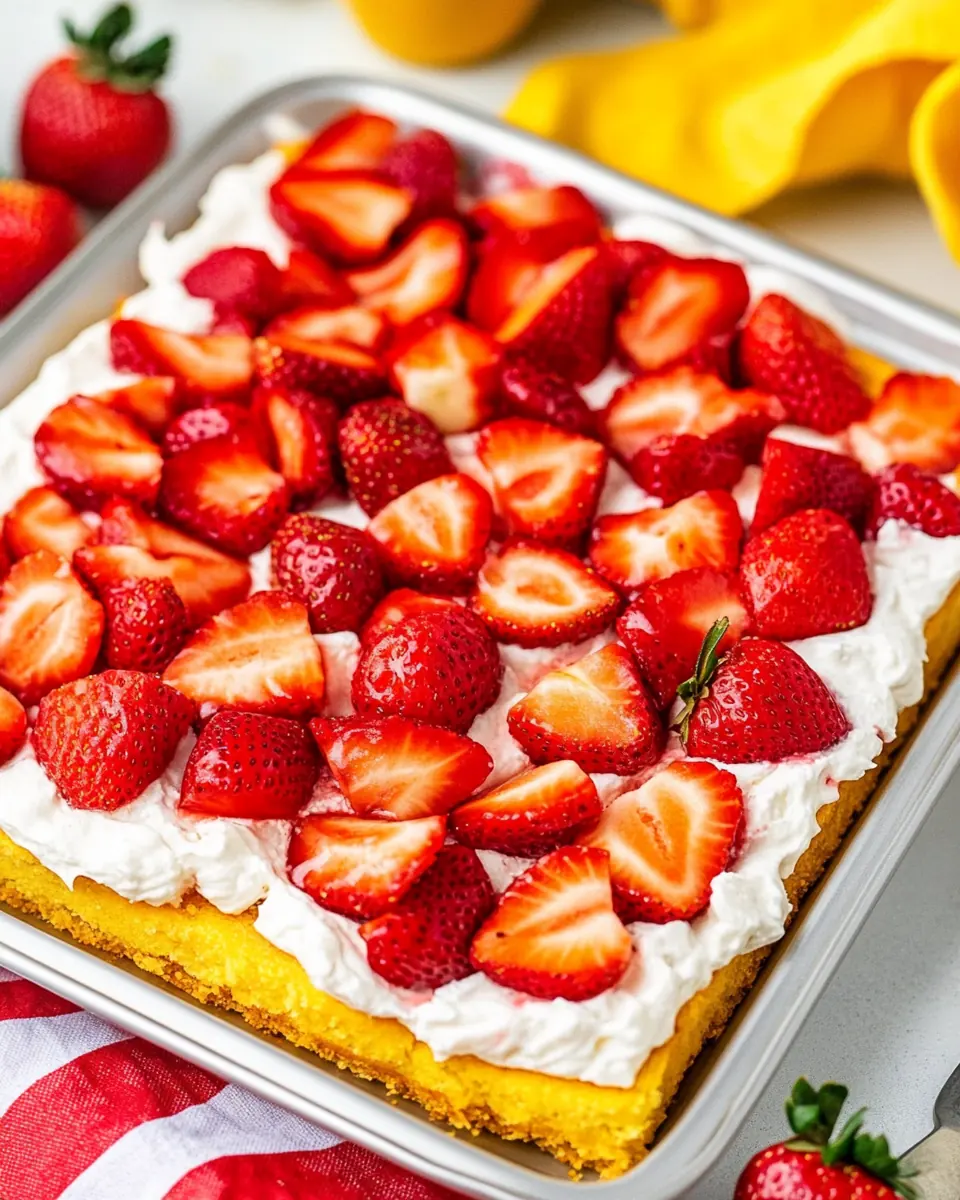
These directions guide you through baking a sheet pan shortcake and assembling it into perfect squares. Read through the steps so you feel confident, then work steadily and enjoy the sensory cues as the dessert comes together.
- Start by preheating the oven to 400°F. Grab a 9×13 inch sheet pan and line it with parchment paper. Set aside.: You will notice the warmth of the oven beginning to circulate, and that steady oven hum reassures you that the environment is ready for baking. Preheating to 400°F ensures the crust begins browning quickly, creating a slightly crisp exterior while preserving tenderness inside. Prepare the 9×13 sheet pan with parchment to prevent sticking and to make removal cleaner, and keep a light dusting of flour nearby in case the dough is tacky during pressing. A common mistake is skipping preheating, which causes uneven rise and a dense center. If your oven runs hot, rotate the pan halfway through baking to promote even color.
- In a large mixing bowl, add the flour, sugar, baking powder, and salt. Whisk together until combined. Add the cold cubes of butter to the flour mixture and combine with your hands or a pastry cutter. The texture should resemble crumbs.: As you whisk the dry ingredients, enjoy the faint, powdery scent of the flour and the subtle sweetness from the sugar. When you add the cold butter , either using a pastry cutter or your fingers, you should feel small, cool lumps breaking into the mixture; these are the future flaky pockets. The visual cue is a coarse, sandy texture dotted with pea sized butter pieces. The reason this matters is that the butter will steam in the oven, creating lift and tenderness. Avoid over working the mixture, which melts the butter and leads to a dense result. If it becomes greasy, chill the bowl briefly before continuing.
- In a separate medium mixing bowl, add the cold heavy cream and vanilla extract. Stir to combine. Add this to the flour mixture and mix everything together until just combined. Don’t over mix, the dough will be thick.: The mixture of cold heavy cream and vanilla will smell rich and slightly sweet; when added, the dough should come together into a cohesive mass without being wet. You will feel resistance as you fold it in, and the dough will retain a slightly shaggy texture. This is intentional because minimal mixing keeps the final shortcake tender. Over mixing activates gluten and results in chewiness, so stop when the dough holds together. If the dough feels too dry, add a splash more cream, but proceed cautiously. A sticky dough can be gently floured on the surface for pressing.
- Evenly press the dough into the parchment lined sheet pan until about 1/2 an inch thick. Bake for 15-20 minutes or until golden brown and cooked all the way through. Let it cool in the pan while working on the topping.: Pressing the dough should feel satisfying, as you create an even canvas that will brown uniformly. The surface will transform in the oven, producing a warm, buttery aroma and a golden surface. Visual cues for doneness include a firm center and golden edges; when you press lightly the crust should spring back slightly. Cooling in the pan prevents breaking and helps the structure set. A common pitfall is under baking, which leaves a doughy center; if you see pale spots, give it another few minutes. Resist slicing while it is too hot, as it can crumble or compress badly.
- In a bowl, add the sliced strawberries, lemon juice, and sugar. Combine, then cover and let it sit in the fridge for 10-15 minutes.: As the strawberries mingle with the sugar and lemon juice , you will hear a faint clink as juices begin to form and see the berries release a glossy syrup. The aroma becomes brighter and fruit forward, and the texture softens just enough to be spoonable without turning to mush. This maceration step draws out flavor and creates a sauce that contrasts beautifully with the crumbly base. Avoid letting them sit too long, which can make the berries limp; the ideal balance is juicy but still holding shape. If the mixture seems very watery, drain a bit of excess liquid before assembly to prevent sogginess.
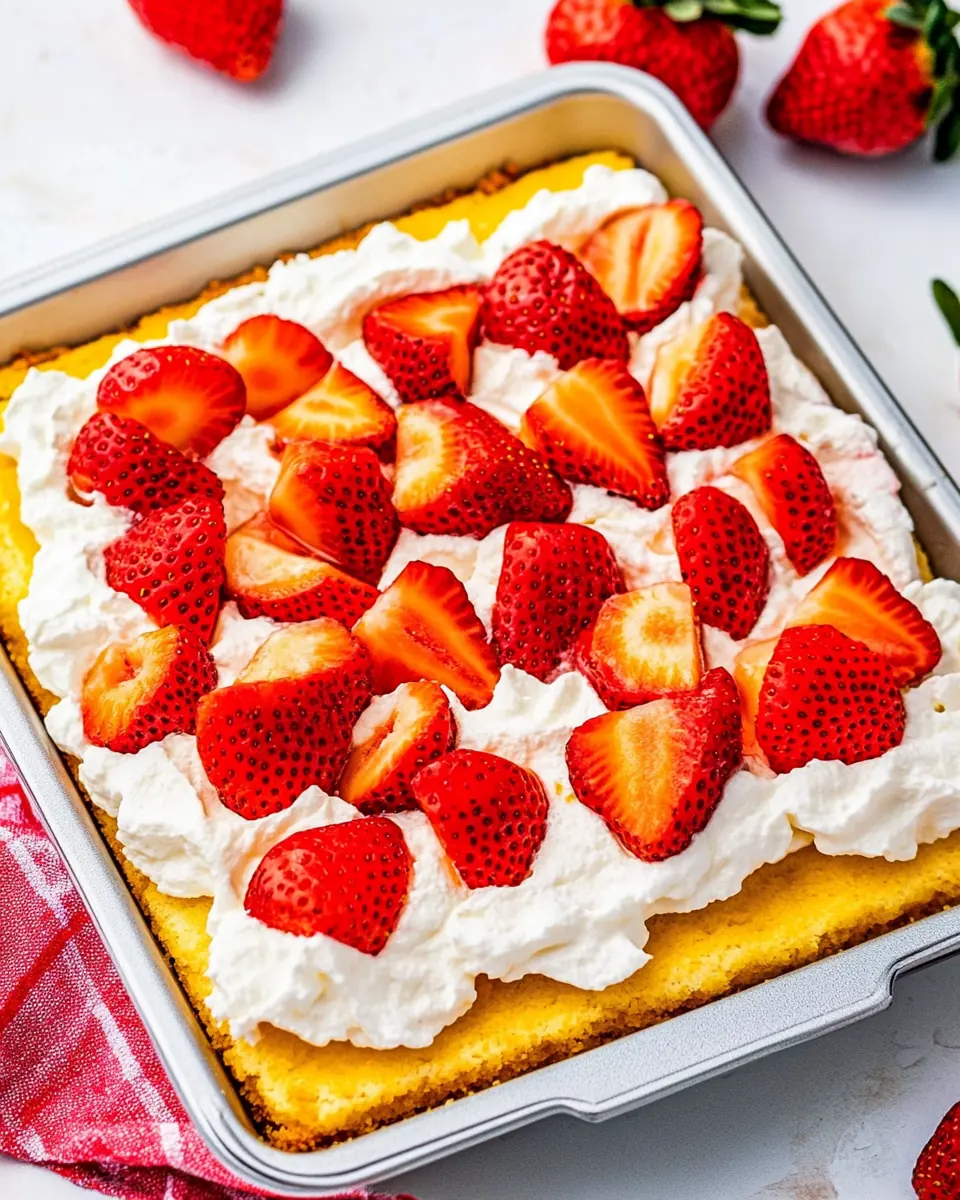
- Once the shortcake has completely cooled, spread the whipped cream so it covers the entire cake. Then, spoon the strawberries evenly over the whipped cream. Slice the cake into even squares and serve!: The cooled shortcake should feel room temperature and firm to the touch, which makes spreading the whipped topping easy and tidy. As you spread, the topping will stay pillowy and reflect light, offering a creamy contrast to the golden base. Spoon the macerated strawberries across the surface in a single layer, letting their syrup pool slightly at the edges for visual appeal. When slicing into squares, use a sharp knife for clean edges, wiping between cuts if needed. A typical error is assembling before the base cools, which leads to melting and sliding; patience here preserves layers and texture.
Helpful Notes about Sheet Pan Strawberry Shortcake
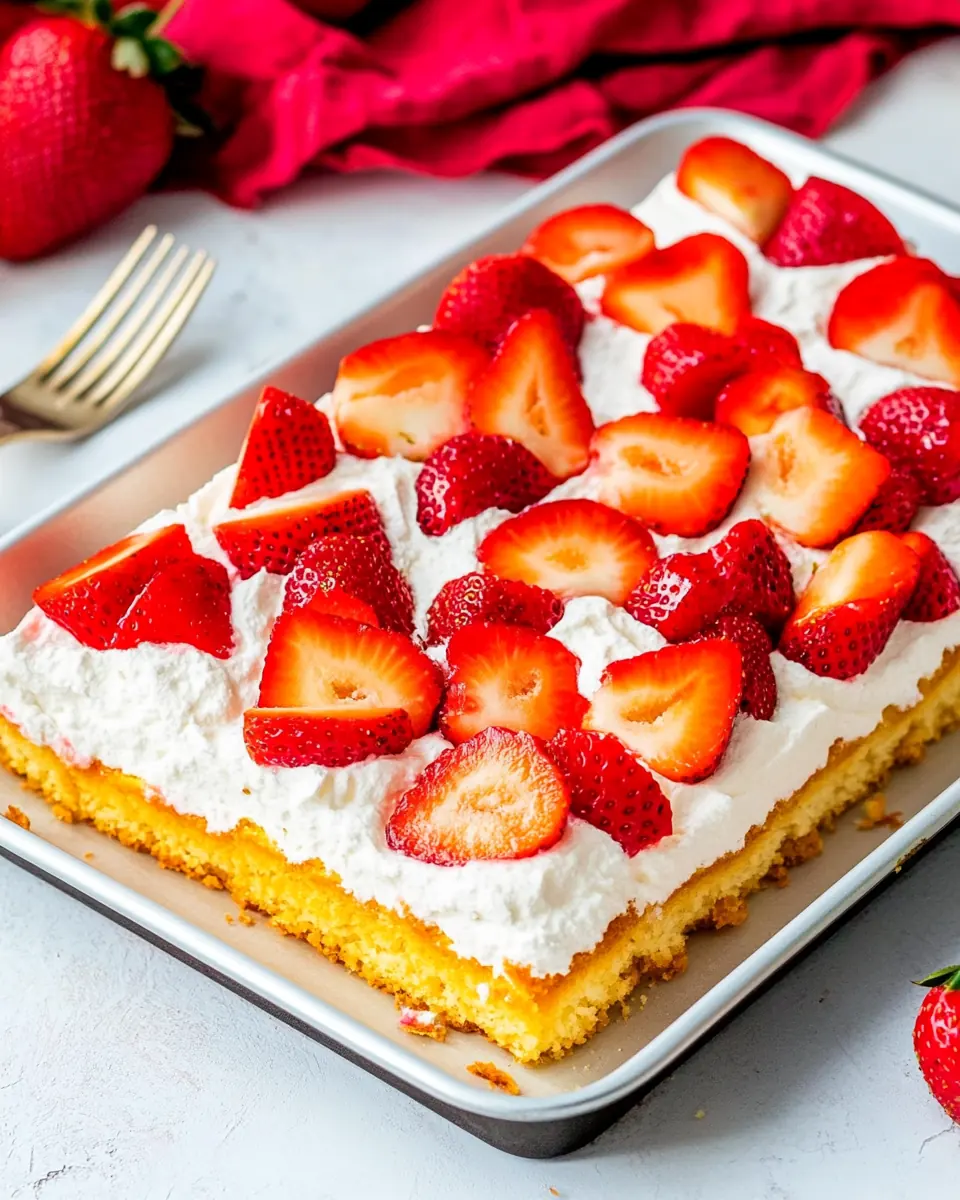
I like to think of these notes as the small decisions that make the difference between good and memorable. Each point below highlights a practical tweak or storage idea that I use regularly to get consistent results.
- Chill the butter: Keep the butter in the fridge until you are ready to cut it in, this preserves pockets that steam in the oven and create flakiness.
- Measure carefully: Spoon and level the all purpose flour rather than scooping directly from the bag to avoid a heavy, dry base.
- Even pressing: Press the dough with a flat bottomed glass to create a level surface, which results in uniform baking and tidy squares when slicing.
- Macration timing: Macerate the strawberries for 10 to 15 minutes only, just long enough to release juices while retaining berry shape and freshness.
- Store smart: If you will not eat the whole tray within a day or two, store components separately, then assemble before serving to preserve texture and freshness.
Great Combinations for Sheet Pan Strawberry Shortcake
This dessert is versatile for occasions and pairings. It works for casual brunches, spring gatherings, or holiday tables where a lighter dessert is welcome. Below are serving ideas, storage suggestions, and seasonal pairings to help you present it beautifully.
- Serve chilled or room temperature: I often let squares sit at room temperature for 10 minutes before serving to let flavors bloom without losing the coolness of the topping.
- Brunch favorite: Pair with fresh fruit and coffee for a spring or summer brunch, the bright berries complement savory morning dishes.
- Potluck friendly: This sheet pan format is ideal for potlucks and picnics because it is easy to transport and slice into portions ahead of time.
- Seasonal adaptation: When strawberries are in season, lean into them; in cooler months consider other fresh fruit that pairs similarly for color and acidity.
- Storage tips: Keep leftovers in the fridge covered for 1 to 2 days, or store assembled components separately for up to 3 to 4 days to maintain texture.
- Occasion ideas: This dessert is great for spring gatherings, Mother’s Day, casual dinners, or simple weeknight celebrations when you want something sweet but not fussy.
FAQ
Conclusion
This recipe stands out for its simplicity and the way it turns a traditional shortcake into a breeze to serve to a crowd. The combination of a tender sheet pan base, bright macerated strawberries, and a cloud like whipped topping creates a dessert that feels celebratory without being fussy. Give it a try the next time you want a sweet that is quick to assemble and easy to scale, and enjoy the compliments that follow.
Sheet Pan Strawberry Shortcake
Ingredients
Equipment
Method
- Start by preheating the oven to 400°F. Grab a 9×13 inch sheet pan and line it with parchment paper. Set aside.: You will notice the warmth of the oven beginning to circulate, and that steady oven hum reassures you that the environment is ready for baking. Preheating to 400°F ensures the crust begins browning quickly, creating a slightly crisp exterior while preserving tenderness inside. Prepare the 9×13 sheet pan with parchment to prevent sticking and to make removal cleaner, and keep a light dusting of flour nearby in case the dough is tacky during pressing. A common mistake is skipping preheating, which causes uneven rise and a dense center. If your oven runs hot, rotate the pan halfway through baking to promote even color.
- In a large mixing bowl, add the flour, sugar, baking powder, and salt. Whisk together until combined. Add the cold cubes of butter to the flour mixture and combine with your hands or a pastry cutter. The texture should resemble crumbs.: As you whisk the dry ingredients, enjoy the faint, powdery scent of the flour and the subtle sweetness from the sugar. When you add the cold butter , either using a pastry cutter or your fingers, you should feel small, cool lumps breaking into the mixture; these are the future flaky pockets. The visual cue is a coarse, sandy texture dotted with pea sized butter pieces. The reason this matters is that the butter will steam in the oven, creating lift and tenderness. Avoid over working the mixture, which melts the butter and leads to a dense result. If it becomes greasy, chill the bowl briefly before continuing.
- In a separate medium mixing bowl, add the cold heavy cream and vanilla extract. Stir to combine. Add this to the flour mixture and mix everything together until just combined. Don’t over mix, the dough will be thick.: The mixture of cold heavy cream and vanilla will smell rich and slightly sweet; when added, the dough should come together into a cohesive mass without being wet. You will feel resistance as you fold it in, and the dough will retain a slightly shaggy texture. This is intentional because minimal mixing keeps the final shortcake tender. Over mixing activates gluten and results in chewiness, so stop when the dough holds together. If the dough feels too dry, add a splash more cream, but proceed cautiously. A sticky dough can be gently floured on the surface for pressing.
- Evenly press the dough into the parchment lined sheet pan until about 1/2 an inch thick. Bake for 15-20 minutes or until golden brown and cooked all the way through. Let it cool in the pan while working on the topping.: Pressing the dough should feel satisfying, as you create an even canvas that will brown uniformly. The surface will transform in the oven, producing a warm, buttery aroma and a golden surface. Visual cues for doneness include a firm center and golden edges; when you press lightly the crust should spring back slightly. Cooling in the pan prevents breaking and helps the structure set. A common pitfall is under baking, which leaves a doughy center; if you see pale spots, give it another few minutes. Resist slicing while it is too hot, as it can crumble or compress badly.
- In a bowl, add the sliced strawberries, lemon juice, and sugar. Combine, then cover and let it sit in the fridge for 10-15 minutes.: As the strawberries mingle with the sugar and lemon juice , you will hear a faint clink as juices begin to form and see the berries release a glossy syrup. The aroma becomes brighter and fruit forward, and the texture softens just enough to be spoonable without turning to mush. This maceration step draws out flavor and creates a sauce that contrasts beautifully with the crumbly base. Avoid letting them sit too long, which can make the berries limp; the ideal balance is juicy but still holding shape. If the mixture seems very watery, drain a bit of excess liquid before assembly to prevent sogginess.
- Once the shortcake has completely cooled, spread the whipped cream so it covers the entire cake. Then, spoon the strawberries evenly over the whipped cream. Slice the cake into even squares and serve!: The cooled shortcake should feel room temperature and firm to the touch, which makes spreading the whipped topping easy and tidy. As you spread, the topping will stay pillowy and reflect light, offering a creamy contrast to the golden base. Spoon the macerated strawberries across the surface in a single layer, letting their syrup pool slightly at the edges for visual appeal. When slicing into squares, use a sharp knife for clean edges, wiping between cuts if needed. A typical error is assembling before the base cools, which leads to melting and sliding; patience here preserves layers and texture.
Notes
- Chill the butter: Keep the butter in the fridge until you are ready to cut it in, this preserves pockets that steam in the oven and create flakiness.
- Measure carefully: Spoon and level the all purpose flour rather than scooping directly from the bag to avoid a heavy, dry base.
- Even pressing: Press the dough with a flat bottomed glass to create a level surface, which results in uniform baking and tidy squares when slicing.
- Macration timing: Macerate the strawberries for 10 to 15 minutes only, just long enough to release juices while retaining berry shape and freshness.
- Store smart: If you will not eat the whole tray within a day or two, store components separately, then assemble before serving to preserve texture and freshness.