Homemade Pasta Sauce
Homemade Pasta Sauce is the kind of recipe I reach for when the summer tomatoes are at their peak and the kitchen smells like sun warmed fruit and herbs.
I remember the year my neighbor gave me a box of Roma tomatoes and I decided to turn them into something that would keep all winter. I set up a simple assembly line on my counter, a pot of boiling water, an ice bath, and a radio playing old records, and I felt an instant calm settle over me. There is a rhythm to working with tomatoes, a sequence of small actions that add up to something comforting and nourishing. That afternoon I learned how much patience and small adjustments matter, and how little tweaks make the sauce sing.
Over the years I have tweaked the balance between sweet and bright, learned when to gently mash for texture, and figured out how to coax out the deepest tomato flavor without overcooking the fresh brightness. When I make this sauce I think about family dinners, about jars lined up like tiny lanterns on my counter, and about the simple satisfaction of a spoonful of hot sauce with a piece of crusty bread. This recipe is hands on, a bit meditative, and very forgiving. I’ve written down each step the way I actually do it in my kitchen, so you can make it your own.
Recipe Snapshot
1 hr 45 mins
60 mins
45 mins
Medium
150 kcal
Italian
Vegan, Gluten-Free
Dinner
Large pot, Ice bath bowl, Colander, Large sauté pot, Canning bath, Jar lifter, Funnel
Why This Homemade Pasta Sauce Works
Fresh tomato flavor that lasts
I love this sauce because it captures the pure, sun ripened taste of tomatoes. Using mostly tomatoes gives a natural, layered sweetness that canned sauces often lack, and the brief blanching step preserves brightness while making skins disappear. When you bottle or freeze jars of this sauce, you keep a piece of summer for months.
Customizable texture and intensity
I appreciate how forgiving the method is. You can mash the cooked tomatoes for a rustic texture, or simmer longer to concentrate flavors. Adding a small can of tomato paste if needed lets you thicken without losing freshness. This flexibility makes the recipe useful for many dishes, from chunky ragus to smooth pizza sauces.
Layered aromatics and balance
The combination of sautéed onions, red bell pepper, and garlic builds a savory backbone that supports the tomatoes. Fresh basil and dried herbs like oregano and parsley add herbal lift, while a pinch of sugar tames acidity. A dash of Worcestershire sauce and a squeeze of lemon juice finish the sauce with subtle umami and the right amount of brightness.
Built for preserving
I enjoy how this recipe is written with home canning in mind. Sterilizing jars and processing times are included so you can store pints safely, which is perfect if you want jars on hand for quick weeknight dinners. The canning process also concentrates flavor, giving you a ready made base for many recipes.
Comfort in ritual
There is something grounding about making sauce from scratch. From blanching to bottling, each step invites you to slow down and pay attention. I always feel proud and a little bit nostalgic handing someone a jar of this sauce, and that’s worth a lot.
What Goes Into Homemade Pasta Sauce
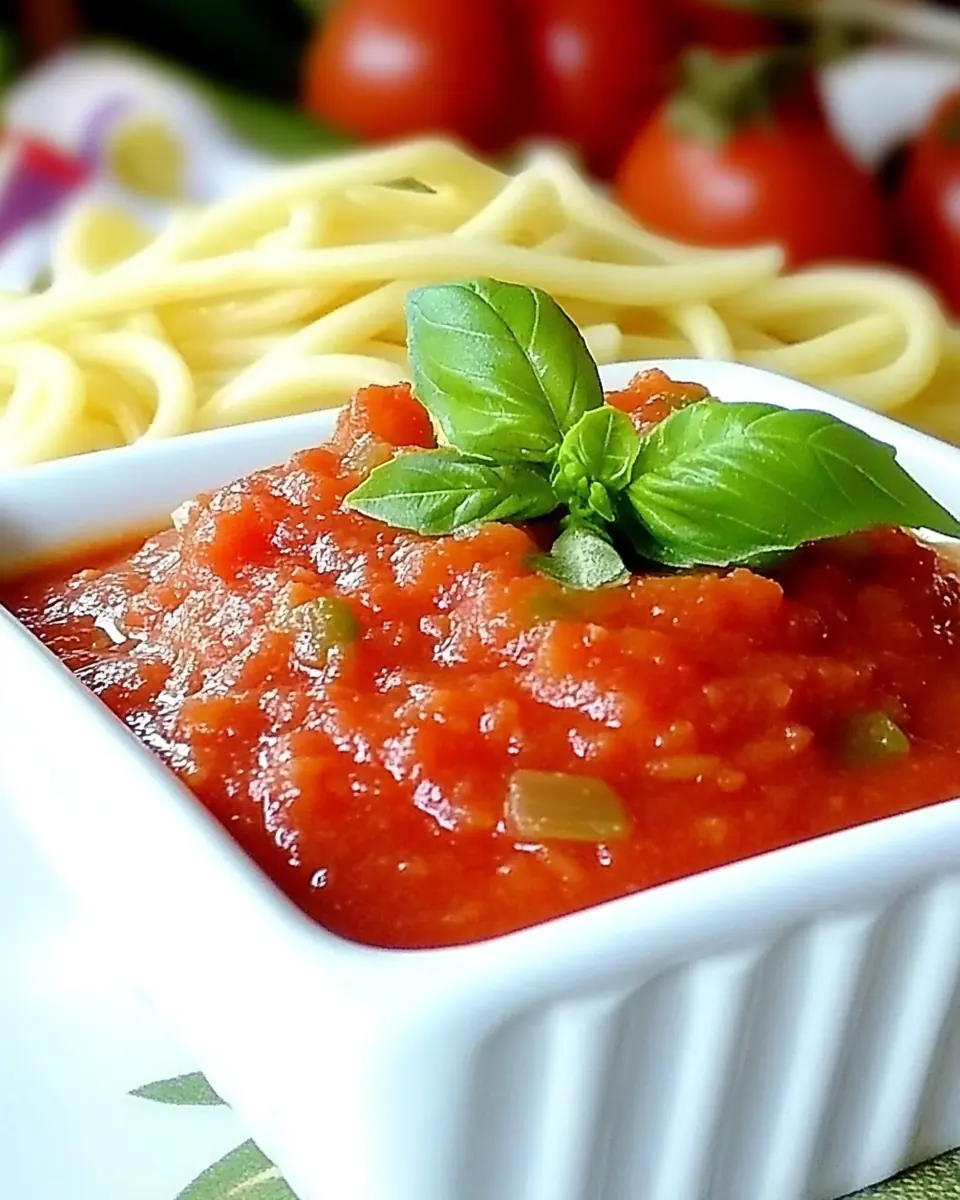
These ingredients are chosen to create a sauce that is both vibrant and shelf stable. The bulk of the recipe is tomatoes, which bring natural sweetness and body. Aromatics like onions, red bell pepper, and garlic form the savory base while a combination of fresh and dried herbs layers complexity. Acidifiers and small sweeteners are included to balance flavor and ensure safe canning.
- 15 lbs tomatoes I used mostly Roma: Provide fresh, meaty texture and natural sweetness to form the sauce base; simmer down to concentrate flavor and remove excess water, yielding a rich tomato backbone for the recipe.
- 2 onions medium – chopped: Offer a savory aromatic layer when sautéed; release natural sugars that deepen the sauce's flavor and create a soft, slightly sweet foundation for the tomatoes.
- 1 red bell pepper chopped: Contribute a bright, slightly sweet peppery note and add body when softened; enhance the sauce's complexity and complement the tomatoes and onions.
- 5 cloves garlic minced: Impart pungent, aromatic depth and savory warmth when minced and lightly cooked; meld into the sauce to boost overall flavor and aroma.
- 1 tbsp vegetable oil: Facilitate even sautéing of aromatics and prevent sticking; deliver a neutral cooking medium that helps extract and distribute flavors without overwhelming them.
- 2 tbsp fresh basil: Add fresh herbaceous brightness and a sweet, peppery lift when stirred in near the end; preserve delicate aroma and elevate the sauce's freshness.
- 1 tsp salt: Enhance and balance flavors by amplifying savory notes; help season the sauce throughout cooking so flavors are consistent and well-rounded.
- 1/2 tsp black pepper: Provide mild heat and earthy complexity; sharpen and balance the sauce while complementing herbs and tomato richness.
- 1 tbsp sugar: Balance acidity and round out flavors; counteract bitterness and enhance perception of sweetness for a smoother, more harmonious sauce.
- 1 tsp dried parsley: Offer gentle herbal flavor and subtle green notes; contribute background complexity that supports basil and oregano without dominating the profile.
- 1/2 tsp red pepper flakes (optional): Introduce a spicier kick and warming heat if used; allow control over the sauce's heat level and add a lively accent to the flavor profile.
- 2 tbsp dried oregano: Deliver robust Mediterranean herb character and savory depth; strengthen the classic Italian seasoning profile and complement tomatoes beautifully.
- 2 bay leaves: Impart subtle bitterness and aromatic warmth while infusing the sauce during simmering; remove before serving to avoid overly leathery leaves.
- 1 dash Worcestershire sauce: Add umami depth and a touch of savory tang; balance sweetness and acidity for a more rounded, restaurant-style flavor.
- 6 oz tomato paste 1 small can – ; use if your sauce is not thick enough for you (optional): Thicken and intensify tomato flavor when added as needed; provide concentrated tomato richness to adjust texture and color of the sauce.
- 1/4 cup lemon juice from a bottle; used to acidify: Acidify and brighten the sauce while stabilizing flavor; sharpen and balance the overall profile to make flavors pop and preserve freshness.
The Method for Homemade Pasta Sauce
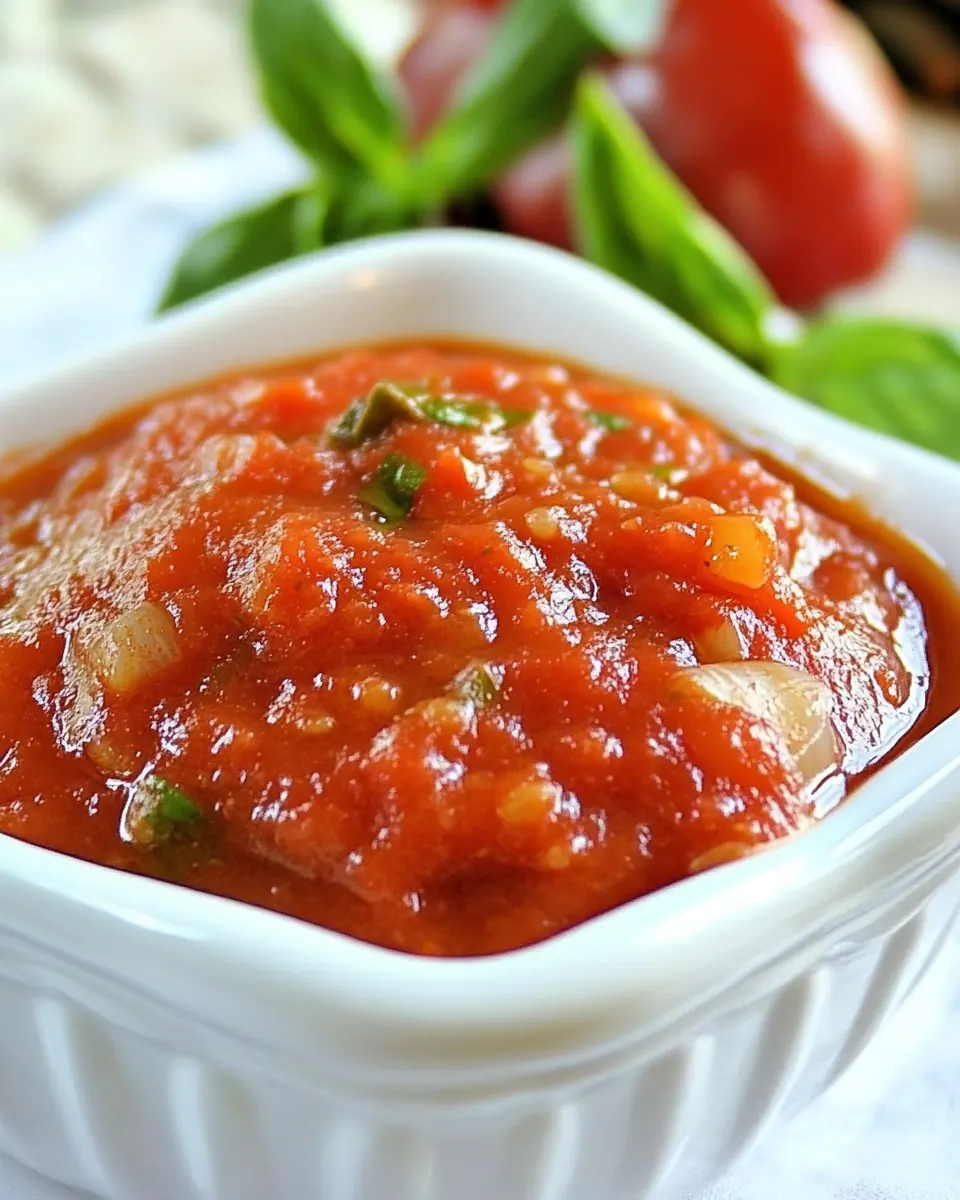
Making this sauce is a hands on, sensory rich process that rewards attention. The steps below reflect how I work through blanching, seeding, sautéing, simmering, and canning, with notes to help you avoid common pitfalls. Take your time and enjoy the aromas that evolve at each stage.
- First we are going to remove the skins. Get a pot of water boiling and prepare an ice bath {a large bowl filled with ice and water}. Submerge the tomatoes {5-6 at a time} in the boiling water for about 45 seconds. Immediately remove to the ice bath. The skin can now be removed very easily – most of my tomato skins just slid right off!: The moment the water hits a rolling boil you will sense the kitchen heat and hear the lively bubbling, which signals readiness to blanch the tomatoes . Submerging batches for about forty five seconds loosens skins so they slip away in the cool shock of the ice bath, leaving glossy, tender flesh. The contrast of hot to cold preserves the tomato flesh and keeps it from becoming mealy. If you blanch too long the fruit will start to collapse, making it harder to handle, so time carefully and work in small batches to avoid over cooking.
- Next up is removing the seeds and excess tomato juice. I'm sure there is a more technical way to do this, such as cutting open the tomatoes and scraping the seeds out, but how I actually did it was to use my hands to open the tomato up and shake those seeds out. Once I removed the seeds and squeezed the tomatoes to get rid of the juice, I placed the tomatoes into a colander so more tomato juice could drip out. Why get rid of the tomato juice? Because we're looking for a nice thick sauce and the longer you cook the tomatoes letting the juices evaporate, the more vitamins we lose from the tomatoes. By ridding the tomatoes of excess liquids early on, we actually cut down on the cooking time and increase the nutritional value of the sauce. Pretty smart huh?: The brief plunge into boiling water makes the skins detach and releases a fresh, steamy perfume in the pot. You will notice the skin beginning to split, an obvious visual cue that the tomatoes are done. Remove them promptly to the ice bath to halt cooking and maintain texture. Leaving them in longer will soften the tomatoes too much and can make seeding messy, so keep to the timing.
- Saute the onions and peppers in the oil in a large pot for several minutes until they are translucent and soft. Add in the garlic and saute for another few minutes.: The ice bath brings an audible hiss and a cool hush to the fruit, locking in color and texture. Cool tomatoes are easier to hold and peel without losing the flesh. Work with a slotted spoon or tongs to avoid scalds. If you skip the ice bath the tomatoes will keep cooking and become mushy, making the next steps less effective.
- Add the tomatoes and let them cook for 10-15 minutes before adding all the other ingredients. Stir to combine and let simmer until the sauce has cooked down to your desired thickness. If you want to use a masher to speed the break-down of the tomatoes that's totally fine. Mine took a little over an hour to get nice and thick but it will totally depend on the type of tomatoes you are using and the amount of liquid you start with.: Using your hands to open and shake out seeds is tactile and direct, and you will feel the seeds slip away while the flesh stays intact. Letting the tomatoes drain in a colander helps reduce excess liquid and saves time on simmering. The reason we remove juice early is to concentrate solids, shortening cooking time and preserving nutrients. A common mistake is rushing this step, which leaves extra liquid and forces a long reduction on the stove.
- Before canning it's important to sterilize every utensil, jar, and lid you will be using. I read a lot about people using their dishwasher but I like to see my water boiling so I know it's really doing what it's supposed to. I used my canning bath to sanitize my jars and then it was ready to go for the actual canning process.: Gravity is your friend here, as gentle draining further lowers moisture content. You will see a puddle of juice collect below, and the remaining tomato pieces will be noticeably thicker. This reduces the time needed to reach desired body while protecting delicate flavors from over exposure to heat. Do not press too hard if you want some texture; overly squeezing makes the fruit stringy.
- Once everything has been sterilized you will want to set up your jars and funnel. The jars should still be warm/hot and the sauce going into it should be hot as well. Get the canning bath up to a full boil while you are filling your jars. I found the funnel to be indispensable. It made the process so easy and kept the mess to a minimum. {Trust me, there is enough of a mess with all those tomato skins!} Note: If you are freezing your sauce, just let the sauce cool and ladle into freezer bags, remove all the air, and freeze.: As the onions and red bell pepper meet the warm vegetable oil , you will hear a gentle sizzle and smell a sweet, vegetal aroma as sugars awaken. Cook them until soft and translucent, which should take several minutes, stirring occasionally so nothing sticks or browns. This step builds a sweet, savory bed for the sauce and prevents raw sharpness. Avoid high heat that browns too quickly, because charred aromatics will shift the flavor toward bitter.
- Once the jars have been filled to within 1/4 inch from the top, wipe the top of the jar with a towel to remove any sauce that may get in the way of a tight seal. Place the lid on and hand-tighten the ring. Now the filled jars go into the canner where they need to be covered with at least 1 inch of water – the more the better! Keep that water boiling for the entire duration of the process. For pints you need to have the jars in a boiling water bath for 35 minutes and 40 minutes for quarts. If at any time the water stops boiling for any reason, start your time over again.: When you add minced garlic the aroma becomes immediate and penetrating, and the pan releases a fragrant, nutty scent as the garlic softens. Keep the heat moderate and stir so the garlic becomes fragrant without burning. Burnt garlic develops bitterness that can linger through the entire batch, so watch the color closely and remove from heat if it starts to darken excessively.
- When the time is up lift the jars out of the water using jar tongs and let them cool. DO NOT touch the jars, bump the jars, move the jars, for 24 HOURS. The rings can then be removed or loosened so they do not rust in place. Once the jars have cooled you can verify that they have sealed properly by checking to see if the lid has been sucked down. Press lightly in the center and if the lid pops up and down – it did not seal. Put the jar immediately into the fridge and you can still use it. All of mine successfully sealed so you shouldn't have a problem.: When the prepared tomatoes join the pot you will see steam lift and hear a soft simmer start. Ten to fifteen minutes of initial cooking helps the fruit break down and integrate with the aromatics before herbs and seasonings deepen the profile. This also allows for easy mashing if you prefer a smoother texture. A mistake here is adding everything at once which can mute individual notes, so give the tomatoes their moment to begin breaking down.
- Stir to combine and let simmer until the sauce has cooked down to your desired thickness: As the sauce simmers the kitchen fills with a richer, concentrated tomato scent and you'll notice the volume reduce and the surface develop slow bubbles. Stir occasionally to prevent sticking, and adjust heat so the simmer is gentle rather than a rolling boil. If you want a smoother result, use a masher to break the tomatoes during this stage. Over simmering at high heat can evaporate too much liquid and make the sauce overly thick or sticky, so keep it steady.
- If you want to use a masher to speed the break-down of the tomatoes that's totally fine: Mashing produces a rustic texture and releases juices and seeds into the pot, accelerating body development and aroma. You will hear a softer sound than the simmer and feel the pot become slightly heavier as the sauce thickens. Using a masher is practical if time is limited, but be mindful of over working the fruit, which can create a very uniform texture that lacks contrast.
- Mine took a little over an hour to get nice and thick but it will totally depend on the type of tomatoes you are using and the amount of liquid you start with: Expect variation, as some tomatoes are juicier and will need longer to reduce. The sauce should become glossy and coat a spoon. Trust visual and tactile cues rather than the clock alone. A common error is impatience, trying to force thickness with excessive heat which flattens flavors, so be patient and low and slow if possible.
- Before canning it's important to sterilize every utensil, jar, and lid you will be using: Sterilization offers a clean, reassuring simmering steam and the confidence that jars will store safely. Bring water to a rolling boil for utensils and jars, or use a canning bath to sanitize. Cleanliness prevents spoilage and off flavors in stored sauce. Cutting corners on sanitation risks jars not sealing or later developing spoilage, which is a safety concern.
- I used my canning bath to sanitize my jars and then it was ready to go for the actual canning process: A canning bath not only sterilizes but also keeps jars warm while filling, minimizing thermal shock that can crack glass. Warm jars plus hot sauce help retain a strong vacuum seal. If jars are cold you risk breakage when filling with hot liquid, so keep them preheated in the bath until use.
- Once everything has been sterilized you will want to set up your jars and funnel: Having a tidy station with a funnel, jar lifter, and a towel makes the process efficient and less messy. Filling hot jars with hot sauce ensures a proper seal, and the funnel helps direct sauce without threading it up the jar lip. Omitting a funnel leads to sticky rims and compromised seals, so use one whenever possible.
- The jars should still be warm/hot and the sauce going into it should be hot as well: Matching temperatures reduces the risk of jar breakage and helps form a vacuum that seals as jars cool. Bring the canner to a full boil while filling, and maintain that boil during processing. If the water stops boiling during the processing time you must restart timing to ensure safe pasteurization. Skipping this precaution is a common canning error.
- Once the jars have been filled to within 1/4 inch from the top wipe the top of the jar with a towel to remove any sauce that may get in the way of a tight seal: Clean rims are essential for a reliable seal, and when you hand tighten rings the lids should sit flat. Process pints in a boiling water bath for thirty five minutes, ensuring jars are covered by at least one inch of water. If you do not maintain a full rolling boil or allow the water to fall below the jars the processing time may be insufficient, so monitor heat closely.
- When the time is up lift the jars out of the water using jar tongs and let them cool: Lifting jars out produces a soft hiss as steam escapes and the lids begin to settle. Set them upright on a towel and avoid moving them for twenty four hours while seals form. After cooling, check seals by pressing the center of each lid; a proper sealed lid will not flex. If a lid pops, refrigerate and use that jar first, as an unsealed jar is not shelf stable.
Pro Tips and Tweaks
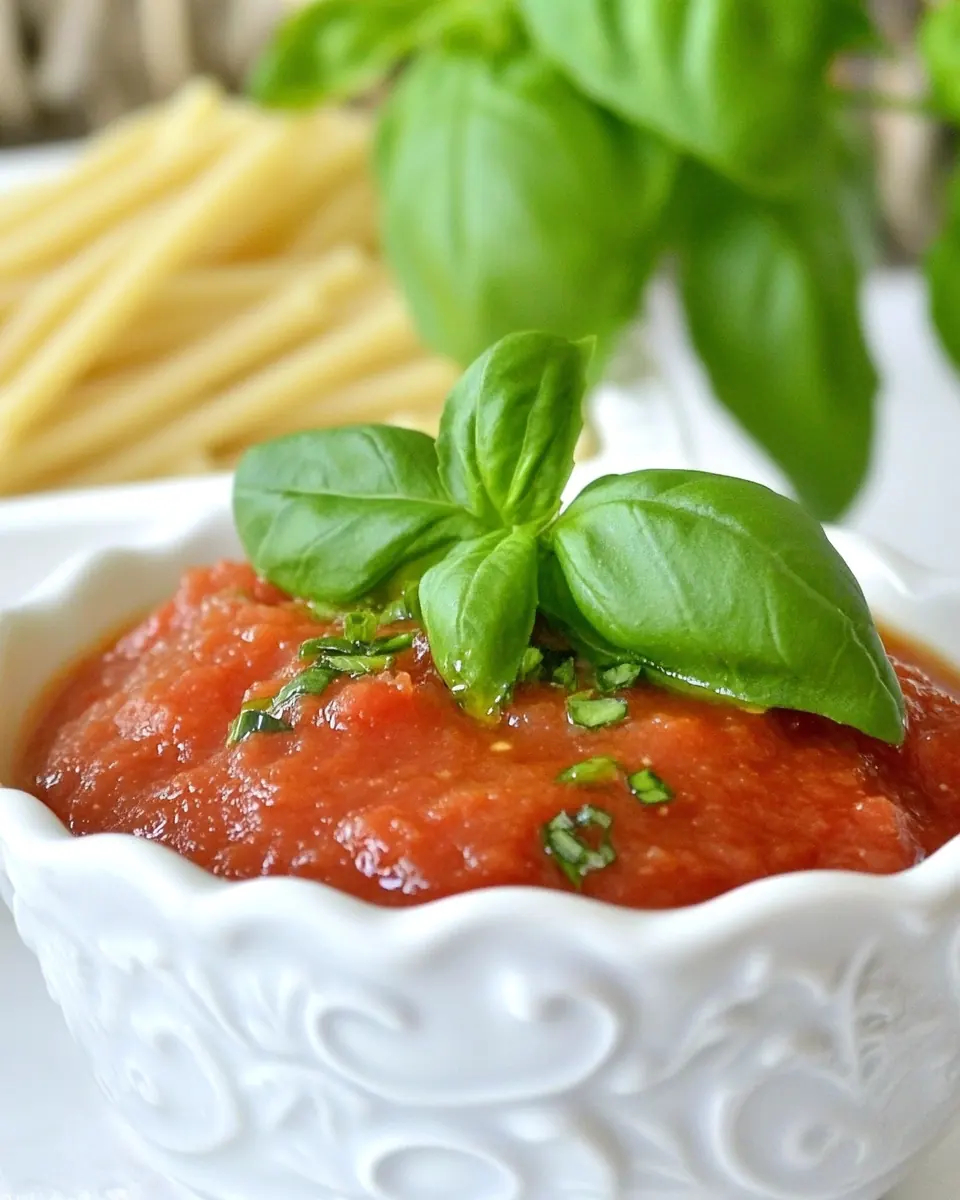
I like to share practical tips that I actually use when making a large batch of sauce. These are things I learned the hard way and now rely on to make every batch consistent and flavorful.
- Trim and core efficiently — Use a small paring knife to remove cores and any tough stem shoulders quickly; this speeds seeding and reduces bitter bits in the sauce.
- Reserve some fresh basil — Stir a little fresh basil in at the end and save a few leaves to drop into jars just before sealing for an aromatic lift.
- Adjust acid for safety — Use the measured amount of bottled lemon juice to ensure proper acidity for water bath canning; it is safer than relying on variable tomato acidity.
- Test thickness before canning — If your sauce seems watery, simmer uncovered until it coats the back of a spoon, then proceed to fill jars so you avoid watery final products.
- Label jars immediately — Write the contents and date on each jar after cooling so you can rotate stock and use the oldest first.
Serving This Homemade Pasta Sauce
This sauce is wonderfully versatile and can be served in many ways. Below I list serving ideas, suitable occasions, and storage tips for the jars you will produce.
- Serve over pasta — Toss with your favorite cooked pasta for an easy weeknight dinner, finishing with a drizzle of olive oil and fresh basil leaves for brightness.
- Use as a pizza base — Spread onto pizza dough as a fresh, flavorful sauce, adding your chosen toppings for a quick homemade pizza night.
- Simmer with proteins — Gently fold into simmering meatballs or vegetables for a comforting casserole or stew, making it ideal for family dinners.
- Freeze for convenience — For long term storage, ladle cooled sauce into freezer bags, remove the air, and freeze flat for space efficient storage.
- Gift jars for holidays — Homemade jars make thoughtful presents for neighbors or friends during summer harvest season or holiday gatherings.
- Storage tips — Store sealed jars in a cool, dark place; once opened keep refrigerated and use within a week for best flavor.
FAQ
Conclusion
This Homemade Pasta Sauce brings concentrated summer tomato flavor and layered aromatics into a single, versatile sauce. Give it a try to preserve the season, simplify weeknight dinners, and enjoy the satisfaction of jars ready to pull from the pantry. I hope you find it as comforting and dependable as I do, and that it becomes one of the recipes you make again and again.
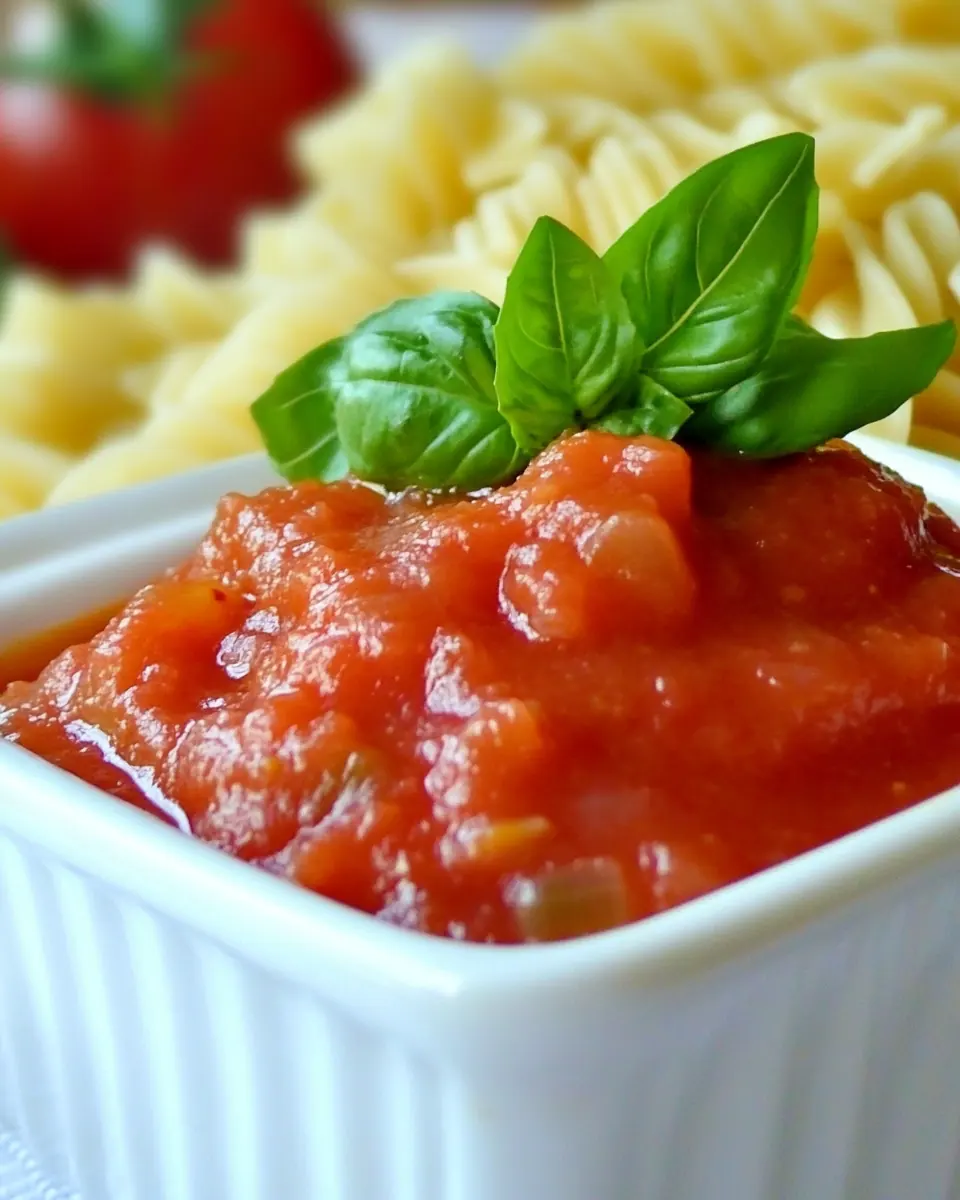
Homemade Pasta Sauce
Ingredients
Equipment
Method
- First we are going to remove the skins. Get a pot of water boiling and prepare an ice bath {a large bowl filled with ice and water}. Submerge the tomatoes {5-6 at a time} in the boiling water for about 45 seconds. Immediately remove to the ice bath. The skin can now be removed very easily - most of my tomato skins just slid right off!: The moment the water hits a rolling boil you will sense the kitchen heat and hear the lively bubbling, which signals readiness to blanch the tomatoes . Submerging batches for about forty five seconds loosens skins so they slip away in the cool shock of the ice bath, leaving glossy, tender flesh. The contrast of hot to cold preserves the tomato flesh and keeps it from becoming mealy. If you blanch too long the fruit will start to collapse, making it harder to handle, so time carefully and work in small batches to avoid over cooking.
- Next up is removing the seeds and excess tomato juice. I'm sure there is a more technical way to do this, such as cutting open the tomatoes and scraping the seeds out, but how I actually did it was to use my hands to open the tomato up and shake those seeds out. Once I removed the seeds and squeezed the tomatoes to get rid of the juice, I placed the tomatoes into a colander so more tomato juice could drip out. Why get rid of the tomato juice? Because we're looking for a nice thick sauce and the longer you cook the tomatoes letting the juices evaporate, the more vitamins we lose from the tomatoes. By ridding the tomatoes of excess liquids early on, we actually cut down on the cooking time and increase the nutritional value of the sauce. Pretty smart huh?: The brief plunge into boiling water makes the skins detach and releases a fresh, steamy perfume in the pot. You will notice the skin beginning to split, an obvious visual cue that the tomatoes are done. Remove them promptly to the ice bath to halt cooking and maintain texture. Leaving them in longer will soften the tomatoes too much and can make seeding messy, so keep to the timing.
- Saute the onions and peppers in the oil in a large pot for several minutes until they are translucent and soft. Add in the garlic and saute for another few minutes.: The ice bath brings an audible hiss and a cool hush to the fruit, locking in color and texture. Cool tomatoes are easier to hold and peel without losing the flesh. Work with a slotted spoon or tongs to avoid scalds. If you skip the ice bath the tomatoes will keep cooking and become mushy, making the next steps less effective.
- Add the tomatoes and let them cook for 10-15 minutes before adding all the other ingredients. Stir to combine and let simmer until the sauce has cooked down to your desired thickness. If you want to use a masher to speed the break-down of the tomatoes that's totally fine. Mine took a little over an hour to get nice and thick but it will totally depend on the type of tomatoes you are using and the amount of liquid you start with.: Using your hands to open and shake out seeds is tactile and direct, and you will feel the seeds slip away while the flesh stays intact. Letting the tomatoes drain in a colander helps reduce excess liquid and saves time on simmering. The reason we remove juice early is to concentrate solids, shortening cooking time and preserving nutrients. A common mistake is rushing this step, which leaves extra liquid and forces a long reduction on the stove.
- Before canning it's important to sterilize every utensil, jar, and lid you will be using. I read a lot about people using their dishwasher but I like to see my water boiling so I know it's really doing what it's supposed to. I used my canning bath to sanitize my jars and then it was ready to go for the actual canning process.: Gravity is your friend here, as gentle draining further lowers moisture content. You will see a puddle of juice collect below, and the remaining tomato pieces will be noticeably thicker. This reduces the time needed to reach desired body while protecting delicate flavors from over exposure to heat. Do not press too hard if you want some texture; overly squeezing makes the fruit stringy.
- Once everything has been sterilized you will want to set up your jars and funnel. The jars should still be warm/hot and the sauce going into it should be hot as well. Get the canning bath up to a full boil while you are filling your jars. I found the funnel to be indispensable. It made the process so easy and kept the mess to a minimum. {Trust me, there is enough of a mess with all those tomato skins!} Note: If you are freezing your sauce, just let the sauce cool and ladle into freezer bags, remove all the air, and freeze.: As the onions and red bell pepper meet the warm vegetable oil , you will hear a gentle sizzle and smell a sweet, vegetal aroma as sugars awaken. Cook them until soft and translucent, which should take several minutes, stirring occasionally so nothing sticks or browns. This step builds a sweet, savory bed for the sauce and prevents raw sharpness. Avoid high heat that browns too quickly, because charred aromatics will shift the flavor toward bitter.
- Once the jars have been filled to within 1/4 inch from the top, wipe the top of the jar with a towel to remove any sauce that may get in the way of a tight seal. Place the lid on and hand-tighten the ring. Now the filled jars go into the canner where they need to be covered with at least 1 inch of water - the more the better! Keep that water boiling for the entire duration of the process. For pints you need to have the jars in a boiling water bath for 35 minutes and 40 minutes for quarts. If at any time the water stops boiling for any reason, start your time over again.: When you add minced garlic the aroma becomes immediate and penetrating, and the pan releases a fragrant, nutty scent as the garlic softens. Keep the heat moderate and stir so the garlic becomes fragrant without burning. Burnt garlic develops bitterness that can linger through the entire batch, so watch the color closely and remove from heat if it starts to darken excessively.
- When the time is up lift the jars out of the water using jar tongs and let them cool. DO NOT touch the jars, bump the jars, move the jars, for 24 HOURS. The rings can then be removed or loosened so they do not rust in place. Once the jars have cooled you can verify that they have sealed properly by checking to see if the lid has been sucked down. Press lightly in the center and if the lid pops up and down - it did not seal. Put the jar immediately into the fridge and you can still use it. All of mine successfully sealed so you shouldn't have a problem.: When the prepared tomatoes join the pot you will see steam lift and hear a soft simmer start. Ten to fifteen minutes of initial cooking helps the fruit break down and integrate with the aromatics before herbs and seasonings deepen the profile. This also allows for easy mashing if you prefer a smoother texture. A mistake here is adding everything at once which can mute individual notes, so give the tomatoes their moment to begin breaking down.
- Stir to combine and let simmer until the sauce has cooked down to your desired thickness: As the sauce simmers the kitchen fills with a richer, concentrated tomato scent and you'll notice the volume reduce and the surface develop slow bubbles. Stir occasionally to prevent sticking, and adjust heat so the simmer is gentle rather than a rolling boil. If you want a smoother result, use a masher to break the tomatoes during this stage. Over simmering at high heat can evaporate too much liquid and make the sauce overly thick or sticky, so keep it steady.
- If you want to use a masher to speed the break-down of the tomatoes that's totally fine: Mashing produces a rustic texture and releases juices and seeds into the pot, accelerating body development and aroma. You will hear a softer sound than the simmer and feel the pot become slightly heavier as the sauce thickens. Using a masher is practical if time is limited, but be mindful of over working the fruit, which can create a very uniform texture that lacks contrast.
- Mine took a little over an hour to get nice and thick but it will totally depend on the type of tomatoes you are using and the amount of liquid you start with: Expect variation, as some tomatoes are juicier and will need longer to reduce. The sauce should become glossy and coat a spoon. Trust visual and tactile cues rather than the clock alone. A common error is impatience, trying to force thickness with excessive heat which flattens flavors, so be patient and low and slow if possible.
- Before canning it's important to sterilize every utensil, jar, and lid you will be using: Sterilization offers a clean, reassuring simmering steam and the confidence that jars will store safely. Bring water to a rolling boil for utensils and jars, or use a canning bath to sanitize. Cleanliness prevents spoilage and off flavors in stored sauce. Cutting corners on sanitation risks jars not sealing or later developing spoilage, which is a safety concern.
- I used my canning bath to sanitize my jars and then it was ready to go for the actual canning process: A canning bath not only sterilizes but also keeps jars warm while filling, minimizing thermal shock that can crack glass. Warm jars plus hot sauce help retain a strong vacuum seal. If jars are cold you risk breakage when filling with hot liquid, so keep them preheated in the bath until use.
- Once everything has been sterilized you will want to set up your jars and funnel: Having a tidy station with a funnel, jar lifter, and a towel makes the process efficient and less messy. Filling hot jars with hot sauce ensures a proper seal, and the funnel helps direct sauce without threading it up the jar lip. Omitting a funnel leads to sticky rims and compromised seals, so use one whenever possible.
- The jars should still be warm/hot and the sauce going into it should be hot as well: Matching temperatures reduces the risk of jar breakage and helps form a vacuum that seals as jars cool. Bring the canner to a full boil while filling, and maintain that boil during processing. If the water stops boiling during the processing time you must restart timing to ensure safe pasteurization. Skipping this precaution is a common canning error.
- Once the jars have been filled to within 1/4 inch from the top wipe the top of the jar with a towel to remove any sauce that may get in the way of a tight seal: Clean rims are essential for a reliable seal, and when you hand tighten rings the lids should sit flat. Process pints in a boiling water bath for thirty five minutes, ensuring jars are covered by at least one inch of water. If you do not maintain a full rolling boil or allow the water to fall below the jars the processing time may be insufficient, so monitor heat closely.
- When the time is up lift the jars out of the water using jar tongs and let them cool: Lifting jars out produces a soft hiss as steam escapes and the lids begin to settle. Set them upright on a towel and avoid moving them for twenty four hours while seals form. After cooling, check seals by pressing the center of each lid; a proper sealed lid will not flex. If a lid pops, refrigerate and use that jar first, as an unsealed jar is not shelf stable.
Notes
- Trim and core efficiently — Use a small paring knife to remove cores and any tough stem shoulders quickly; this speeds seeding and reduces bitter bits in the sauce.
- Reserve some fresh basil — Stir a little fresh basil in at the end and save a few leaves to drop into jars just before sealing for an aromatic lift.
- Adjust acid for safety — Use the measured amount of bottled lemon juice to ensure proper acidity for water bath canning; it is safer than relying on variable tomato acidity.
- Test thickness before canning — If your sauce seems watery, simmer uncovered until it coats the back of a spoon, then proceed to fill jars so you avoid watery final products.
- Label jars immediately — Write the contents and date on each jar after cooling so you can rotate stock and use the oldest first.