Baked Rigatoni
Baked Rigatoni has been the kind of dish that turns ordinary nights into slow smiling dinners at my table. The first time I made Baked Rigatoni I was racing home after a long day and wanted something forgiving, comforting, and substantial. I remember stirring the cheese mixture while the kitchen filled with that warm, tomatoey aroma, and thinking how a single pan could deliver so much satisfaction.
Over the years I have made Baked Rigatoni for potlucks, weeknight suppers, and for the times when I wanted to feed friends without fuss. Each batch taught me tiny lessons about timing, layering, and how to coax the best texture from the pasta and cheeses. There is a rhythm to it, from browning the meat until it sizzles, to the soft scrape of a spoon as you fold the ricotta into the rigatoni.
Recipe Snapshot
1 hr 15 mins
25 mins
50 mins
Medium
450 kcal
Italian
Keto, Gluten-Free
Dinner
9 x 13 baking dish, Large skillet, Medium bowl, Colander
Why This Baked Rigatoni Stands Out
Comfort in a Pan
I love that Baked Rigatoni feels like a hug on a plate. The combination of rigatoni, saucy meat, and melted mozzarella makes it a real crowd pleaser, and I always notice how folks reach for seconds before dessert is even mentioned.
Simple Ingredients, Big Impact
The ingredients are straightforward, yet they play off each other beautifully. The slightly chewy rigatoni holds sauce in its ridges, while the creamy ricotta adds silkiness and the parmesan brings a sharp, savory lift. Together they create a layered texture that feels indulgent but familiar.
Flexible and Forgiving
I appreciate how adaptable this recipe is. You can time it around your schedule and still get a great result. If you have unexpected guests, you can assemble ahead and bake when ready, and the dish still finishes with a bubbly, golden top that makes everyone smile.
Great for Sharing
There is something communal about a casserole style pasta like Baked Rigatoni. I like serving it straight from the baking dish, inviting people to scoop generous portions. It creates an easy, unpretentious vibe that encourages relaxed conversation and full plates.
Textural Joys
The contrast between the saucy meat, the creamy ricotta, and the stretchy mozzarella is why I keep coming back to this recipe. Each bite combines warm tomato notes, savory meat, and that pull of melted cheese, and I always find a new reason to make it for friends and family.
Baked Rigatoni Ingredients
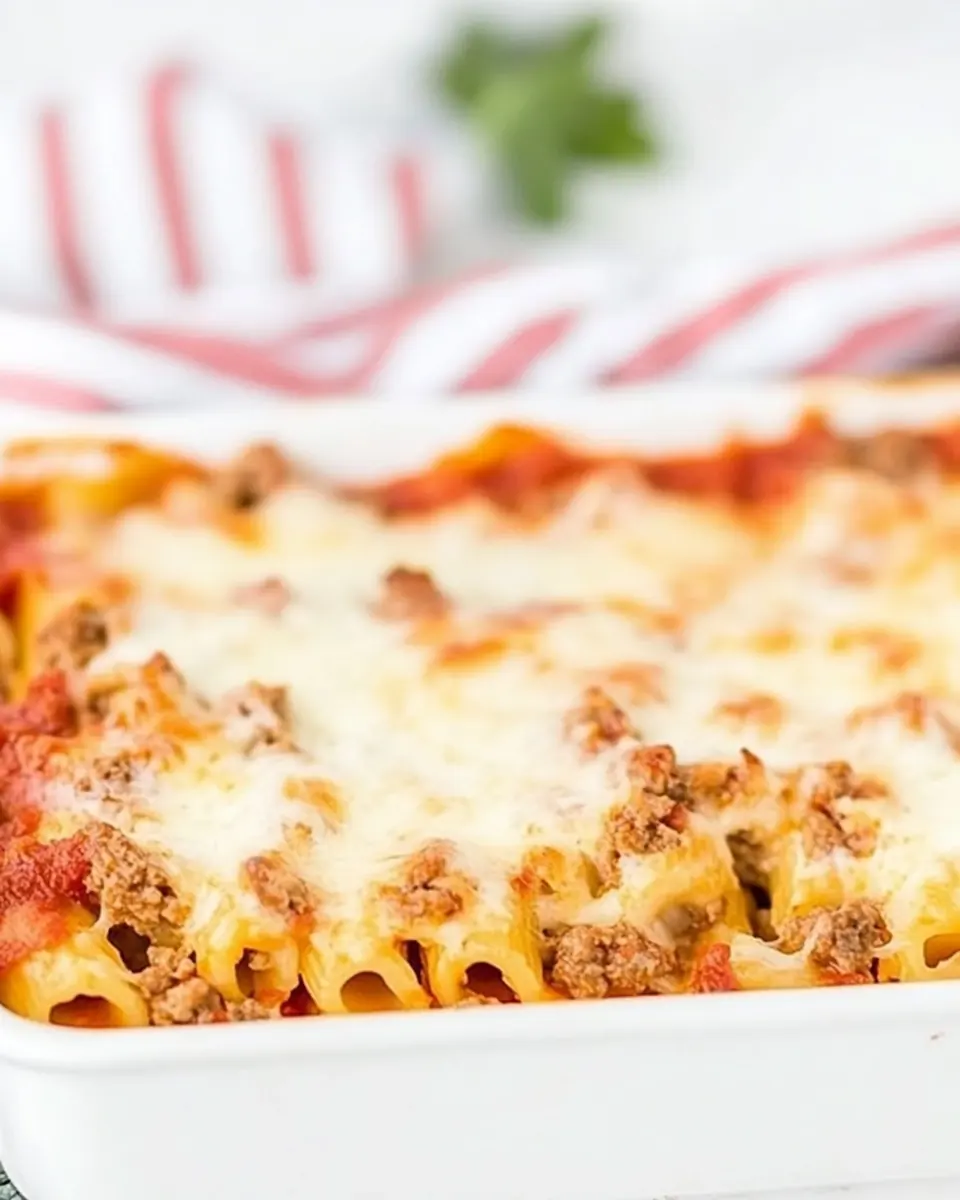
These ingredients form a simple but well balanced cast. The pasta supplies structure, the meat and sauce provide savory depth, and the trio of cheeses gives a creamy, salty finish. I view each component as a key player in texture and flavor, and together they create a hearty, cohesive dish.
- 1 pound rigatoni, cooked according to package directions: Cooked until al dente and tossed with sauce to provide the pasta base and hearty texture for the baked dish. Ensures the casserole holds shape while absorbing flavors without becoming mushy. Works as the primary carbohydrate and bulk component that pairs with cheeses and sauce.
- 1 pound ground turkey, or ground beef: Browned and seasoned to contribute savory depth and protein, creating a meaty backbone for the dish. Offers a lean or richer flavor depending on turkey or beef selection, while releasing juices that meld with the tomato sauce. Helps make the casserole filling and satisfying.
- 1 small onion, diced: Diced finely and sautéed to add aromatic sweetness and subtle crunch that enhances overall flavor. Provides a mild oniony base that complements garlic and meat, softening as it cooks into the sauce. Balances acidity and richness within the baked rigatoni.
- 2 teaspoons minced garlic: Minced and cooked briefly to release pungent, aromatic oils that boost savory notes throughout the dish. Adds complexity and a warm, slightly spicy undertone when combined with sautéed onion and meat. Small amount prevents overpowering while enhancing overall flavor.
- 1 (24-ounce) jar spaghetti sauce: Poured in as the tomatoey sauce element that coats the pasta and melds the components together. Introduces acidity, herbs, and savory notes that form the primary saucy matrix for the casserole. Provides moisture and depth while preventing dryness during baking.
- 1 (30-ounce) tub ricotta cheese: Spoonable cheese mixed with eggs and seasonings to create a creamy, rich filling that contrasts with the pasta and sauce. Adds tangy, milky flavor and smooth texture which becomes slightly firm when baked, helping to bind the rigatoni. Contributes a luscious mouthfeel and richer cheese profile.
- 2 eggs: Beaten and combined with ricotta to act as a binder, lending structure and a silkier texture when baked. Helps set the cheese mixture so it adheres to pasta rather than separating. Adds a touch of richness and stabilizes the casserole slices.
- 1 1/2 teaspoons salt: Measured to season evenly and enhance all flavors, controlling the overall saltiness of the dish. Balances acidity from the sauce and accentuates savory notes from meat and cheese. Important to adjust slightly if using a high-sodium sauce or cheeses.
- 1/2 teaspoon pepper: Ground into the seasoning to provide mild heat and peppery brightness that lifts flavors. Used sparingly to avoid overpowering, echoing the savory elements of meat and cheese. Contributes subtle warmth and aromatic complexity.
- 1/4 cup grated parmesan cheese: Grated finely and sprinkled in to offer nutty, umami-rich sharpness that brightens the cheese blend. Adds a salty, savory finish that complements ricotta and mozzarella while helping to thicken the filling slightly. Enhances depth and gives a classic Italian flavor.
- 4 cups shredded mozzarella, divided: Shredded and divided to supply gooey, melty cheesiness on top and mixed within for creaminess. Creates a golden, bubbling crust when baked while also contributing stretchy texture in every bite. Balances moisture and richness across the casserole components.
How to Prepare Baked Rigatoni
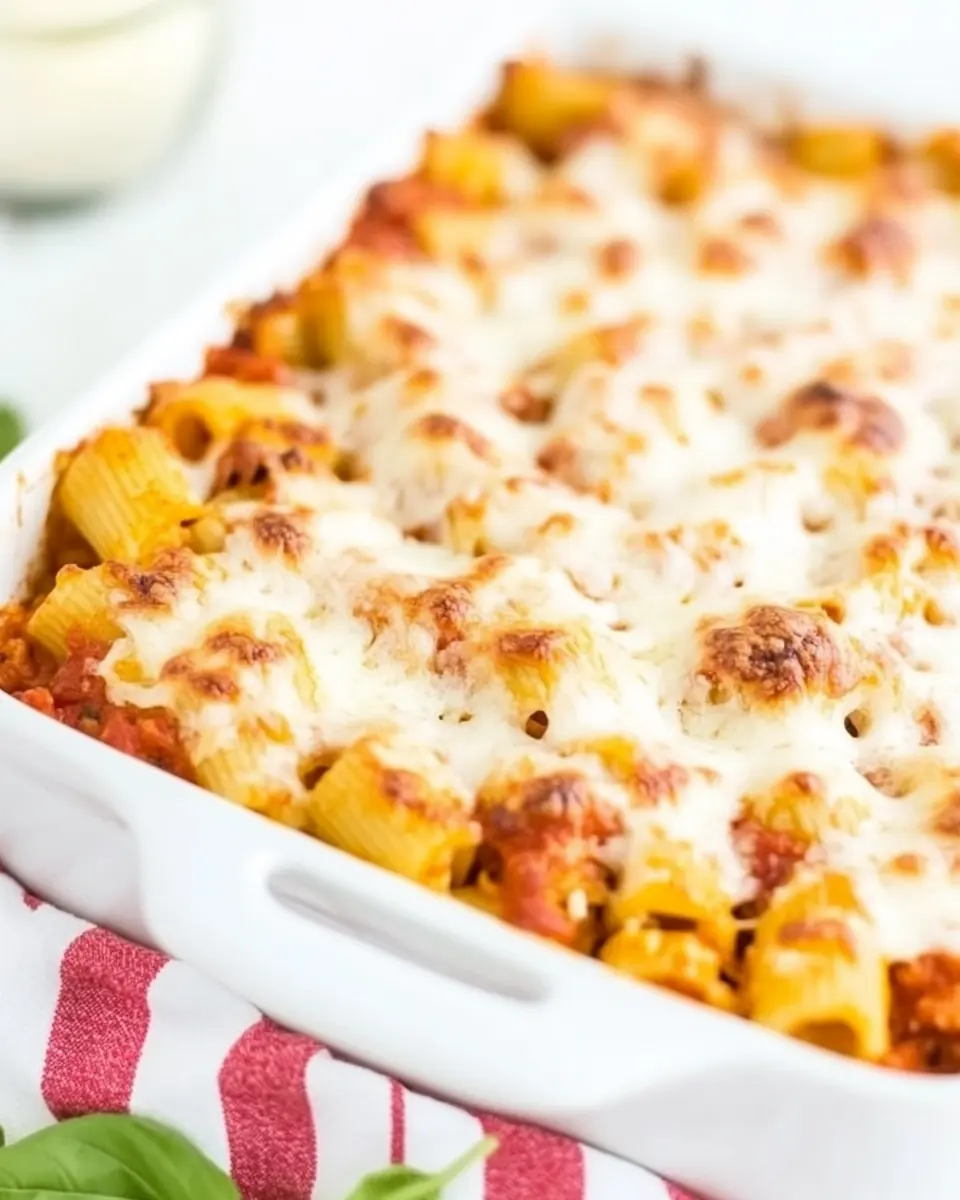
Getting this dish from stovetop to oven is straightforward, and the pay off is a bubbling, golden topped pasta that smells like celebration. Below I expand each original direction into rich, sensory driven guidance so you can feel confident at every step.
- Preheat the oven to 350°F. Spray a 9 x 13 baking dish with cooking spray and set aside. Cook rigatoni according to package directions.: The oven should be noticeably warm and steady so the casserole heats through evenly and the cheeses melt into a cohesive topping. You want a gentle, consistent heat so the center reaches the proper temperature without drying the edges. A common error is placing the dish in an oven that is still heating up, which can lengthen bake time and affect texture. If your oven runs hot, consider lowering to 325°F to avoid over browning while still allowing the interior to become piping hot.
- In a large skillet, cook the ground meat, onions, and garlic until the meat is browned and the onions are translucent. Add the spaghetti sauce and bring to a simmer. Remove from heat.: The inner surface of the dish will feel lightly slick, which prevents sticking and makes serving neater. A thin coating also helps the exterior edges release cleanly. Rubbing too much oil can pool and create greasy spots, so a light even spray is best. Use a dish with even heat conduction to avoid hot spots that cause uneven browning.
- In a medium bowl, mix the ricotta, eggs, salt, pepper, and parmesan. Toss the rigatoni with the ricotta mixture.: As the water roils and the pasta tumbles, its scent will shift from raw starch to a warm, wheaty aroma. Drain the rigatoni when it is al dente, just firm to the bite, because it will soften further while baking and soaking up the sauce. Overcooking in the boiling pot results in a mushy final bake; undercooking gives a chalky interior. Salt the boiling water well so the pasta is seasoned from within.
- Spread half of the rigatoni in the bottom of the prepared baking dish. Spread half of the meat sauce mixture over the top of the rigatoni. Sprinkle two cups of mozzarella over the top.: You will hear a satisfying sizzle as the meat hits the pan and the aroma of searing develops. Allow the meat to brown without constant stirring so browned bits form and contribute deep flavor. Add the onion early so it softens and sweetens; add the garlic toward the end to keep it from burning. A frequent mistake is crowding the pan, which steams instead of browns, so use a large skillet and cook in batches if necessary.
- Repeat with the remaining rigatoni and meat sauce, then top with remaining mozzarella cheese.: When the sauce hits the skillet, it will hiss and then gently simmer, softening the browned bits into the sauce. Simmering integrates the flavors and concentrates the tomato notes. Remove from heat once the sauce is glossy and the edges bubble gently. If you skip simmering, the sauce can taste flat and disconnected from the meat.
- Cover and bake 30 minutes, then remove the cover and bake an additional ten minutes.: Letting the skillet cool slightly halts active browning and prevents the egg in the cheese mixture from cooking prematurely. The residual heat will keep the sauce warm for assembly. Don t let it sit too long or it will cool below an ideal temperature for layering, making the bake take longer to heat through.
- In a medium bowl, mix the ricotta, eggs, salt, pepper, and parmesan: As you whisk, the mixture becomes glossy and unified, smelling of dairy and savory cheese. The eggs bind and the parmesan adds a salty, umami lift. Make sure the ricotta is smooth to avoid lumps that can create pockets of separated moisture. Overmixing will make the mixture overly loose, while undermixing leaves uneven seasoning.
- Toss the rigatoni with the ricotta mixture: When you fold the warm rigatoni into the cheese blend, it will take on a silken coating that looks glossy and evenly speckled with seasoning. Work quickly so the pasta warms through and the mixture coats every tube. If the pasta is too hot it can loosen the mixture, so aim for warm rather than piping hot at this stage. Ensure each piece gets coated to avoid dry pockets in the bake.
- Spread half of the rigatoni in the bottom of the prepared baking dish: As you layer, the pasta will settle into a bed that supports the sauce. Press gently so the pieces nest without smashing. Creating an even first layer ensures even heating and a balanced bite of pasta and filling in every scoop. A mistake here is piling one section higher than the rest, which leads to uneven cooking.
- Spread half of the meat sauce mixture over the top of the rigatoni: Spoon the warm, fragrant sauce across the pasta in an even layer, letting it seep into the hollows of the tubes. The scent should be rich with tomato and browned meat. Aim for coverage that is generous but not soupy, because excess liquid can make the final texture runny. If the sauce seems thin, simmer a bit longer to concentrate it before layering.
- Sprinkle two cups of mozzarella over the top: The first layer of mozzarella should form a blanket that will melt into the sauce and create a cohesive layer. You will see it begin to soften and meld as the dish warms in the oven. Even distribution helps the top bubble uniformly and brown attractively. Avoid clumps of cheese that can remain gooey and not brown evenly.
- Repeat with the remaining rigatoni and meat sauce, then top with remaining mozzarella cheese: Building the second layer brings structure and ensures each serving has balanced proportions. The final layer of mozzarella creates that signature golden, stretchy top. Make sure the top is evenly distributed so browning is consistent; uneven cheese coverage leads to patchy color and texture.
- Cover and bake 30 minutes, then remove the cover and bake an additional ten minutes: While covered, the casserole steams gently so the interior heats thoroughly and the cheeses bind. When you remove the cover, the top will begin to bubble and develop a golden brown crust, releasing a toasty, savory aroma. If you leave it covered for too long, the top will not brown; too long uncovered can dry the edges. Let it rest briefly after baking so the casserole firms for cleaner serving.
Helpful Hints
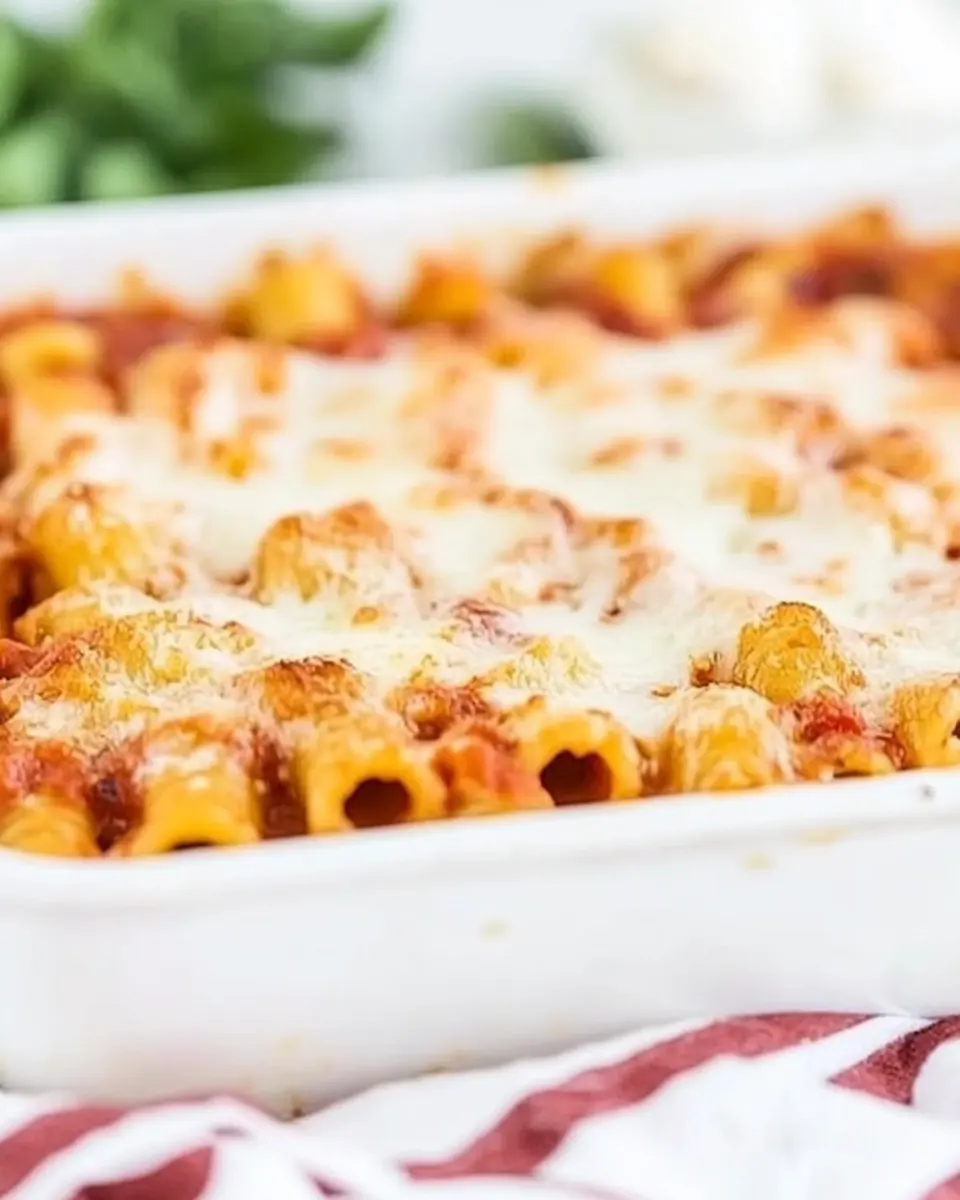
I like to think of these hints as little chef nudges that make the difference between a good bake and a memorable one. Each tip is practical and rooted in experience, things I do every time I make Baked Rigatoni.
- Salt your pasta water well, it seasons the rigatoni from within and prevents a flat tasting base.
- Don t overcook the rigatoni, stop a minute or two before package al dente so it stays firm in the bake.
- Brown the meat thoroughly, those caramelized bits add depth and complexity to the sauce.
- Use whole milk mozzarella for better melt and stretch, it browns more attractively and tastes creamier.
- Let the casserole rest for a short time after baking, this makes slicing and serving much cleaner.
Serving Options for Baked Rigatoni
This dish is wonderfully flexible, fitting casual dinners or relaxed gatherings. Below are serving suggestions, storage notes, and pairing ideas that highlight how to present Baked Rigatoni for different occasions.
- Family dinner, serve straight from the baking dish with simple plated sides like a crisp green salad to cut through the richness.
- Potluck or buffet, keep it in the casserole dish and provide a serving spatula so guests can help themselves to generous portions.
- Weeknight meal, pair with steamed vegetables and a piece of crusty bread to mop up any sauce, making it a balanced plate without extra fuss.
- Make ahead, assemble the casserole up to the point of baking, cover, and refrigerate for several hours before popping into the oven when ready.
- Storage, refrigerate leftovers in an airtight container for one to two days; reheat gently in a 350°F oven until warmed through.
- Freezing, portion into airtight containers and freeze up to three months; thaw overnight in the fridge before reheating for best texture.
FAQ
Conclusion
Baked Rigatoni stands out because it combines simple pantry ingredients into a warm, cheesy, and deeply satisfying casserole that feeds a crowd with minimal fuss. Give it a try on a busy weeknight or when friends drop by, and you will appreciate the way the layers of pasta, ricotta, meat, and melted mozzarella come together. It s an approachable, timeless dish that reliably comforts and impresses without needing elaborate prep. I hope you enjoy baking and sharing it as much as I do.
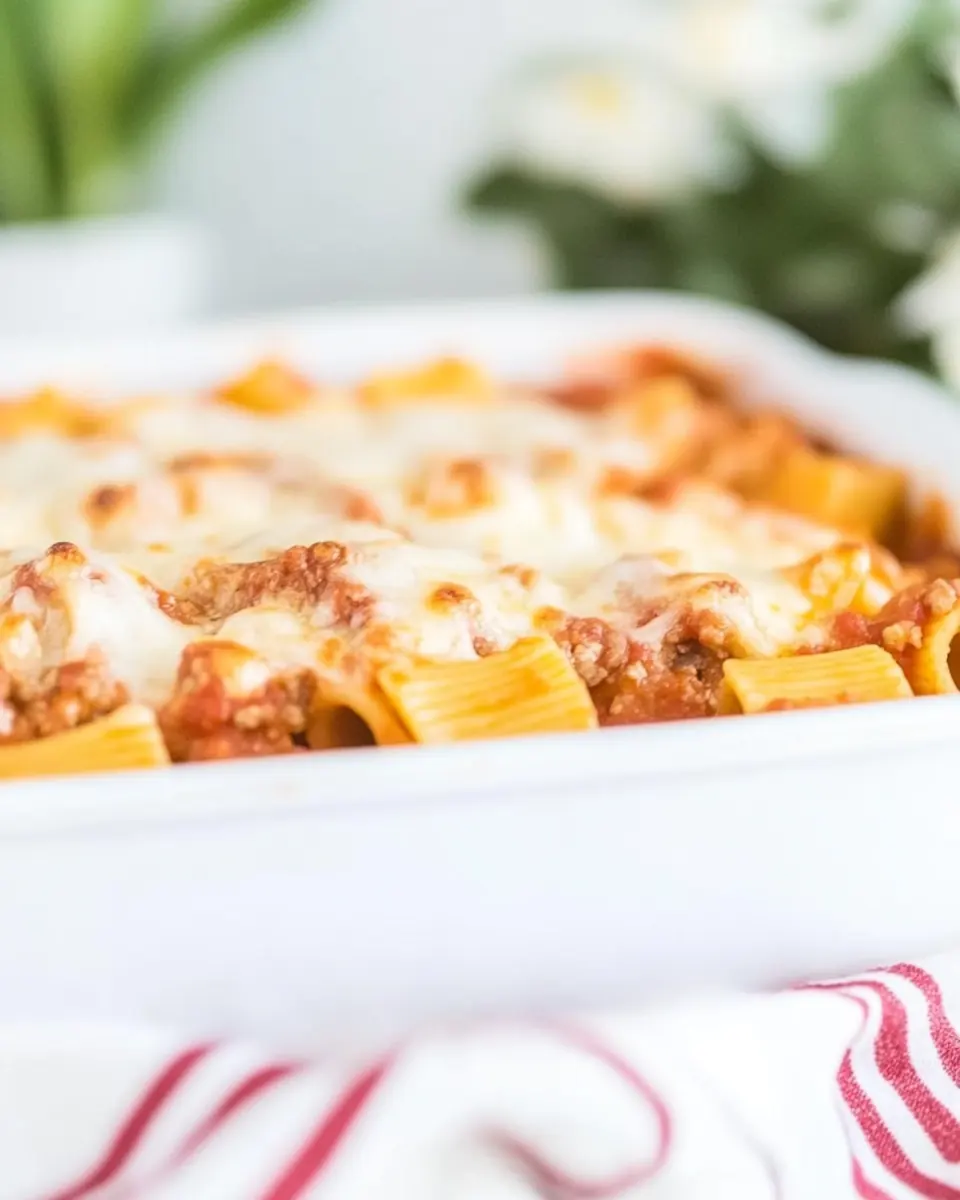
Baked Rigatoni
Ingredients
Equipment
Method
- Preheat the oven to 350°F. Spray a 9 x 13 baking dish with cooking spray and set aside. Cook rigatoni according to package directions.: The oven should be noticeably warm and steady so the casserole heats through evenly and the cheeses melt into a cohesive topping. You want a gentle, consistent heat so the center reaches the proper temperature without drying the edges. A common error is placing the dish in an oven that is still heating up, which can lengthen bake time and affect texture. If your oven runs hot, consider lowering to 325°F to avoid over browning while still allowing the interior to become piping hot.
- In a large skillet, cook the ground meat, onions, and garlic until the meat is browned and the onions are translucent. Add the spaghetti sauce and bring to a simmer. Remove from heat.: The inner surface of the dish will feel lightly slick, which prevents sticking and makes serving neater. A thin coating also helps the exterior edges release cleanly. Rubbing too much oil can pool and create greasy spots, so a light even spray is best. Use a dish with even heat conduction to avoid hot spots that cause uneven browning.
- In a medium bowl, mix the ricotta, eggs, salt, pepper, and parmesan. Toss the rigatoni with the ricotta mixture.: As the water roils and the pasta tumbles, its scent will shift from raw starch to a warm, wheaty aroma. Drain the rigatoni when it is al dente, just firm to the bite, because it will soften further while baking and soaking up the sauce. Overcooking in the boiling pot results in a mushy final bake; undercooking gives a chalky interior. Salt the boiling water well so the pasta is seasoned from within.
- Spread half of the rigatoni in the bottom of the prepared baking dish. Spread half of the meat sauce mixture over the top of the rigatoni. Sprinkle two cups of mozzarella over the top.: You will hear a satisfying sizzle as the meat hits the pan and the aroma of searing develops. Allow the meat to brown without constant stirring so browned bits form and contribute deep flavor. Add the onion early so it softens and sweetens; add the garlic toward the end to keep it from burning. A frequent mistake is crowding the pan, which steams instead of browns, so use a large skillet and cook in batches if necessary.
- Repeat with the remaining rigatoni and meat sauce, then top with remaining mozzarella cheese.: When the sauce hits the skillet, it will hiss and then gently simmer, softening the browned bits into the sauce. Simmering integrates the flavors and concentrates the tomato notes. Remove from heat once the sauce is glossy and the edges bubble gently. If you skip simmering, the sauce can taste flat and disconnected from the meat.
- Cover and bake 30 minutes, then remove the cover and bake an additional ten minutes.: Letting the skillet cool slightly halts active browning and prevents the egg in the cheese mixture from cooking prematurely. The residual heat will keep the sauce warm for assembly. Don t let it sit too long or it will cool below an ideal temperature for layering, making the bake take longer to heat through.
- In a medium bowl, mix the ricotta, eggs, salt, pepper, and parmesan: As you whisk, the mixture becomes glossy and unified, smelling of dairy and savory cheese. The eggs bind and the parmesan adds a salty, umami lift. Make sure the ricotta is smooth to avoid lumps that can create pockets of separated moisture. Overmixing will make the mixture overly loose, while undermixing leaves uneven seasoning.
- Toss the rigatoni with the ricotta mixture: When you fold the warm rigatoni into the cheese blend, it will take on a silken coating that looks glossy and evenly speckled with seasoning. Work quickly so the pasta warms through and the mixture coats every tube. If the pasta is too hot it can loosen the mixture, so aim for warm rather than piping hot at this stage. Ensure each piece gets coated to avoid dry pockets in the bake.
- Spread half of the rigatoni in the bottom of the prepared baking dish: As you layer, the pasta will settle into a bed that supports the sauce. Press gently so the pieces nest without smashing. Creating an even first layer ensures even heating and a balanced bite of pasta and filling in every scoop. A mistake here is piling one section higher than the rest, which leads to uneven cooking.
- Spread half of the meat sauce mixture over the top of the rigatoni: Spoon the warm, fragrant sauce across the pasta in an even layer, letting it seep into the hollows of the tubes. The scent should be rich with tomato and browned meat. Aim for coverage that is generous but not soupy, because excess liquid can make the final texture runny. If the sauce seems thin, simmer a bit longer to concentrate it before layering.
- Sprinkle two cups of mozzarella over the top: The first layer of mozzarella should form a blanket that will melt into the sauce and create a cohesive layer. You will see it begin to soften and meld as the dish warms in the oven. Even distribution helps the top bubble uniformly and brown attractively. Avoid clumps of cheese that can remain gooey and not brown evenly.
- Repeat with the remaining rigatoni and meat sauce, then top with remaining mozzarella cheese: Building the second layer brings structure and ensures each serving has balanced proportions. The final layer of mozzarella creates that signature golden, stretchy top. Make sure the top is evenly distributed so browning is consistent; uneven cheese coverage leads to patchy color and texture.
- Cover and bake 30 minutes, then remove the cover and bake an additional ten minutes: While covered, the casserole steams gently so the interior heats thoroughly and the cheeses bind. When you remove the cover, the top will begin to bubble and develop a golden brown crust, releasing a toasty, savory aroma. If you leave it covered for too long, the top will not brown; too long uncovered can dry the edges. Let it rest briefly after baking so the casserole firms for cleaner serving.
Notes
- Salt your pasta water well, it seasons the rigatoni from within and prevents a flat tasting base.
- Don t overcook the rigatoni, stop a minute or two before package al dente so it stays firm in the bake.
- Brown the meat thoroughly, those caramelized bits add depth and complexity to the sauce.
- Use whole milk mozzarella for better melt and stretch, it browns more attractively and tastes creamier.
- Let the casserole rest for a short time after baking, this makes slicing and serving much cleaner.