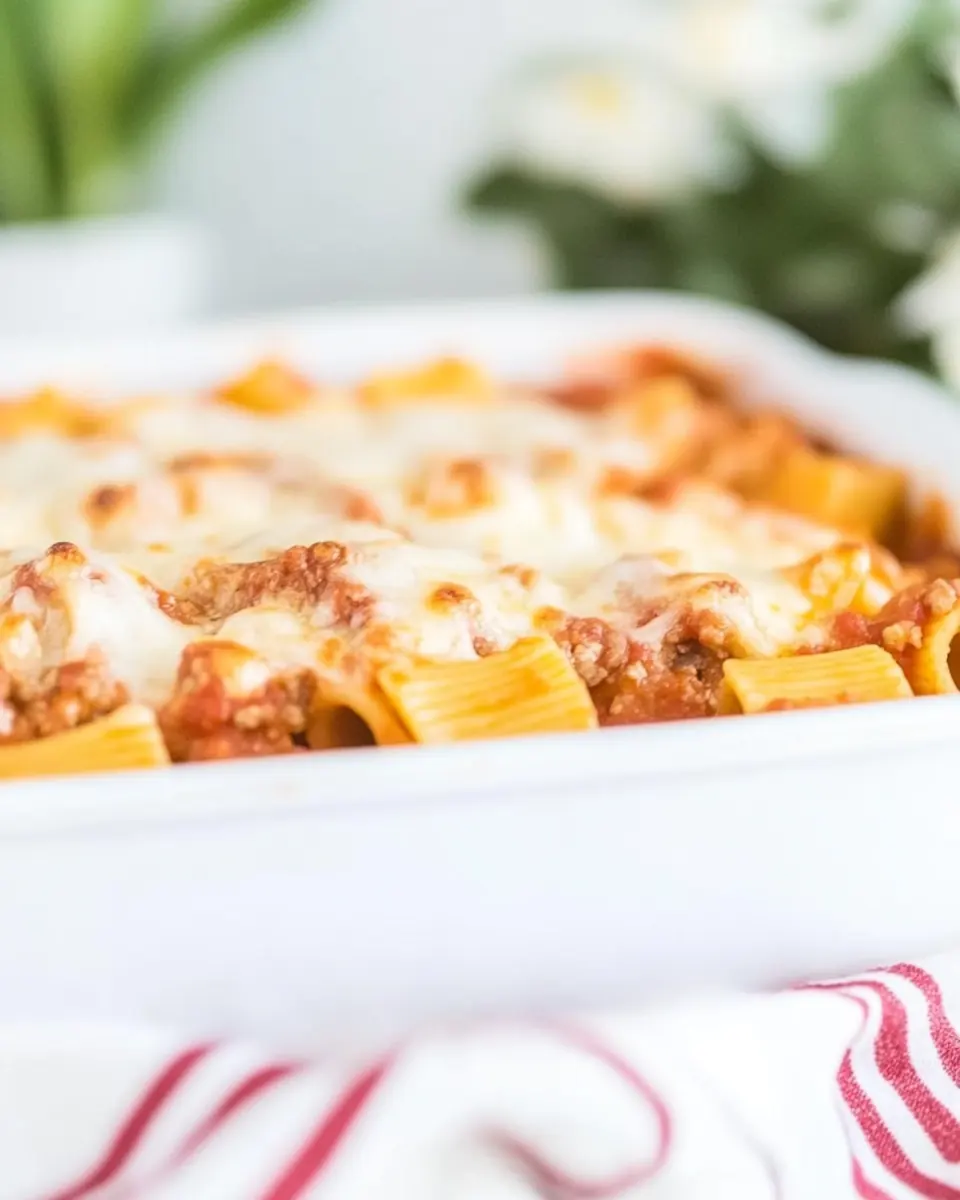
Preheat the oven to 350°F. Spray a 9 x 13 baking dish with cooking spray and set aside. Cook rigatoni according to package directions.: The oven should be noticeably warm and steady so the casserole heats through evenly and the cheeses melt into a cohesive topping. You want a gentle, consistent heat so the center reaches the proper temperature without drying the edges. A common error is placing the dish in an oven that is still heating up, which can lengthen bake time and affect texture. If your oven runs hot, consider lowering to 325°F to avoid over browning while still allowing the interior to become piping hot.
In a large skillet, cook the ground meat, onions, and garlic until the meat is browned and the onions are translucent. Add the spaghetti sauce and bring to a simmer. Remove from heat.: The inner surface of the dish will feel lightly slick, which prevents sticking and makes serving neater. A thin coating also helps the exterior edges release cleanly. Rubbing too much oil can pool and create greasy spots, so a light even spray is best. Use a dish with even heat conduction to avoid hot spots that cause uneven browning.
In a medium bowl, mix the ricotta, eggs, salt, pepper, and parmesan. Toss the rigatoni with the ricotta mixture.: As the water roils and the pasta tumbles, its scent will shift from raw starch to a warm, wheaty aroma. Drain the rigatoni when it is al dente, just firm to the bite, because it will soften further while baking and soaking up the sauce. Overcooking in the boiling pot results in a mushy final bake; undercooking gives a chalky interior. Salt the boiling water well so the pasta is seasoned from within.
Spread half of the rigatoni in the bottom of the prepared baking dish. Spread half of the meat sauce mixture over the top of the rigatoni. Sprinkle two cups of mozzarella over the top.: You will hear a satisfying sizzle as the meat hits the pan and the aroma of searing develops. Allow the meat to brown without constant stirring so browned bits form and contribute deep flavor. Add the onion early so it softens and sweetens; add the garlic toward the end to keep it from burning. A frequent mistake is crowding the pan, which steams instead of browns, so use a large skillet and cook in batches if necessary.
Repeat with the remaining rigatoni and meat sauce, then top with remaining mozzarella cheese.: When the sauce hits the skillet, it will hiss and then gently simmer, softening the browned bits into the sauce. Simmering integrates the flavors and concentrates the tomato notes. Remove from heat once the sauce is glossy and the edges bubble gently. If you skip simmering, the sauce can taste flat and disconnected from the meat.
Cover and bake 30 minutes, then remove the cover and bake an additional ten minutes.: Letting the skillet cool slightly halts active browning and prevents the egg in the cheese mixture from cooking prematurely. The residual heat will keep the sauce warm for assembly. Don t let it sit too long or it will cool below an ideal temperature for layering, making the bake take longer to heat through.
In a medium bowl, mix the ricotta, eggs, salt, pepper, and parmesan: As you whisk, the mixture becomes glossy and unified, smelling of dairy and savory cheese. The eggs bind and the parmesan adds a salty, umami lift. Make sure the ricotta is smooth to avoid lumps that can create pockets of separated moisture. Overmixing will make the mixture overly loose, while undermixing leaves uneven seasoning.
Toss the rigatoni with the ricotta mixture: When you fold the warm rigatoni into the cheese blend, it will take on a silken coating that looks glossy and evenly speckled with seasoning. Work quickly so the pasta warms through and the mixture coats every tube. If the pasta is too hot it can loosen the mixture, so aim for warm rather than piping hot at this stage. Ensure each piece gets coated to avoid dry pockets in the bake.
Spread half of the rigatoni in the bottom of the prepared baking dish: As you layer, the pasta will settle into a bed that supports the sauce. Press gently so the pieces nest without smashing. Creating an even first layer ensures even heating and a balanced bite of pasta and filling in every scoop. A mistake here is piling one section higher than the rest, which leads to uneven cooking.
Spread half of the meat sauce mixture over the top of the rigatoni: Spoon the warm, fragrant sauce across the pasta in an even layer, letting it seep into the hollows of the tubes. The scent should be rich with tomato and browned meat. Aim for coverage that is generous but not soupy, because excess liquid can make the final texture runny. If the sauce seems thin, simmer a bit longer to concentrate it before layering.
Sprinkle two cups of mozzarella over the top: The first layer of mozzarella should form a blanket that will melt into the sauce and create a cohesive layer. You will see it begin to soften and meld as the dish warms in the oven. Even distribution helps the top bubble uniformly and brown attractively. Avoid clumps of cheese that can remain gooey and not brown evenly.
Repeat with the remaining rigatoni and meat sauce, then top with remaining mozzarella cheese: Building the second layer brings structure and ensures each serving has balanced proportions. The final layer of mozzarella creates that signature golden, stretchy top. Make sure the top is evenly distributed so browning is consistent; uneven cheese coverage leads to patchy color and texture.
Cover and bake 30 minutes, then remove the cover and bake an additional ten minutes: While covered, the casserole steams gently so the interior heats thoroughly and the cheeses bind. When you remove the cover, the top will begin to bubble and develop a golden brown crust, releasing a toasty, savory aroma. If you leave it covered for too long, the top will not brown; too long uncovered can dry the edges. Let it rest briefly after baking so the casserole firms for cleaner serving.