Ceviche
Ceviche has been one of those recipes that takes me right back to sunlit market stalls and salty sea air, and the first bite still surprises me every time.
I remember the afternoon I learned to make it properly, standing over a kitchen counter with a crate of fresh fish and a pile of limes, feeling that eager mix of impatience and curiosity. The acid bath of lime juice felt almost magical, transforming translucent cubes of fish into something firm and bright, while the sharp snap of red onion and the herbaceous hit of cilantro kept each mouthful lively. I kept checking the texture, tasting for balance, and adjusting tiny things until it sang.
Over time I made small changes to honor the ingredients, like using just enough lime juice to cover the fish and waiting the exact right amount of time so the pieces stayed tender not rubbery. Friends began requesting it for weekend lunches, and I started bringing bowls to backyard gatherings where it disappeared fast. The creamy counterpoint of diced avocado at the end felt like the finishing brushstroke, mellowing the bright citrus while adding a rich mouthfeel.
Recipe Snapshot
40 mins
10 mins
30 mins
Easy
200 kcal
Mexican
Keto, Paleo
Appetizers
Non reactive bowl, Knife, Cutting board, Citrus juicer
What Sets This Ceviche Apart
Bright, clean flavor profile
I love how Ceviche sings with citrus, letting the natural flavors of the fish shine without heavy sauces. The acid from the lime juice makes the dish taste fresh and lively, and it never overwhelms the other elements when balanced correctly. I find this brightness perfect for warm weather, when heavier dishes feel tiring.
Fast and impressive
One reason I keep this recipe in rotation is that it feels elegant but comes together quickly. With just a handful of steps you can create something that looks like it took all afternoon. I often bring it to gatherings because people always ask how it can be ready so fast, and I enjoy revealing my little secret that no long cooking is needed.
Textural play
The contrast between the tender, citrus cured fish, crisp red onion, juicy tomatoes, and creamy avocado makes every bite interesting. I purposely keep the components in slightly different sizes so you notice the interplay of textures, and that attention to dimension is what keeps the dish engaging from the first forkful to the last.
Flexible and communal
I appreciate how adaptable Ceviche is, letting you scale it for an intimate dinner or a larger get together. It travels well to picnics when kept chilled, and it invites sharing, which I always enjoy. Preparing it becomes a social ritual for me, chopping and stirring while swapping stories with friends.
Fresh ingredient focus
This recipe is a celebration of simple, quality ingredients. When the fish, lime juice, and herbs are good, the result is far greater than the sum of its parts. That minimalism is why I return to it again and again, especially in the heat of summer, when fresh produce is at its peak.
Essential Ingredients for Ceviche
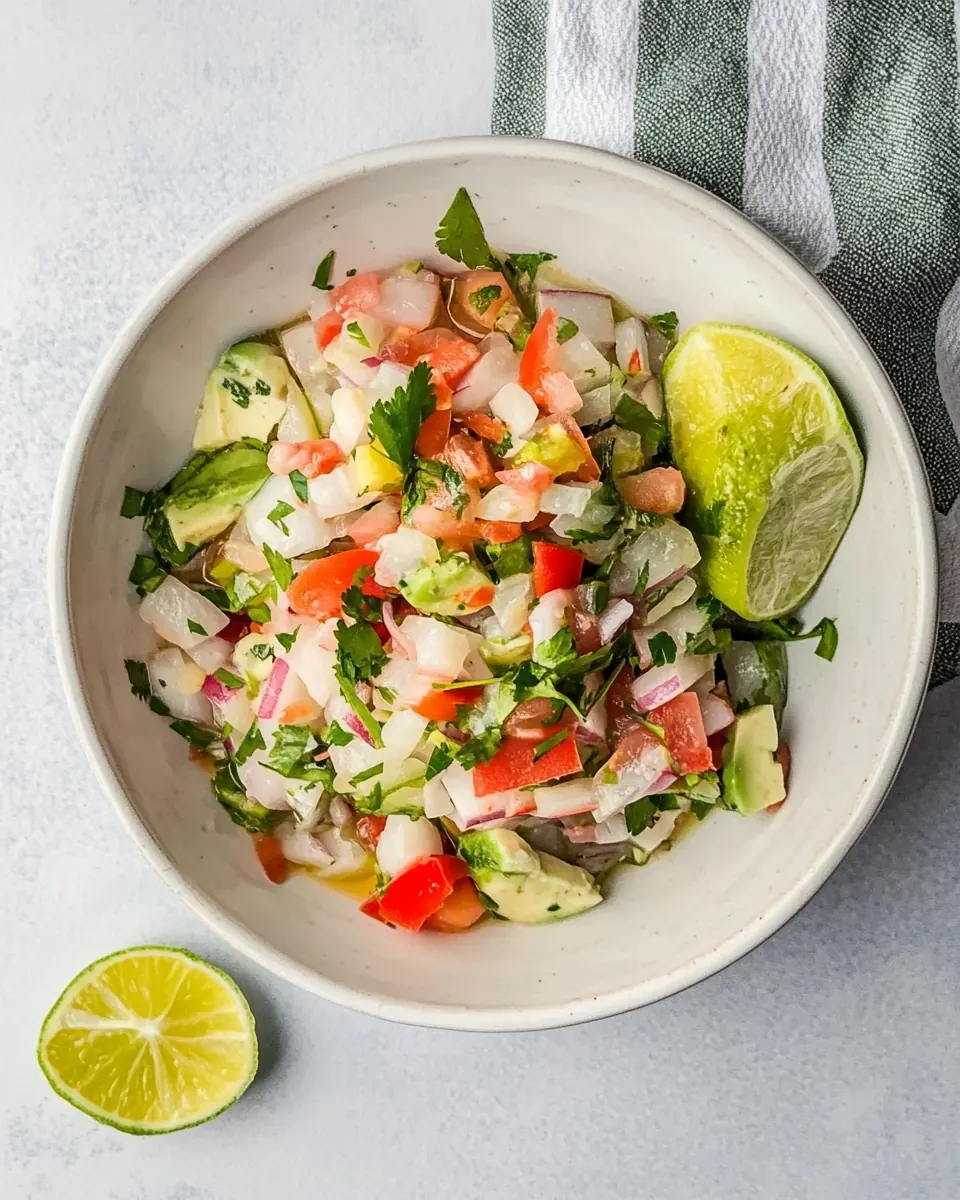
These items form the foundation of the dish. I believe in keeping the lineup small so each part can do its job. The key players are the acid, which “cooks” the fish, the aromatics that build flavor, and the creamy element that softens the edges. Together they create a balanced bowl that is both bright and comforting.
- 1 pound fresh firm white fish such as sea bass or snapper, diced into 1/2-inch pieces: Dice into uniform 1/2-inch pieces to ensure even acid penetration; provides the primary protein and delicate texture that cures in the lime juice, forming the ceviche base. Handle gently and keep chilled until marinating to maintain freshness and firmness.
- 3/4 cup fresh lime juice from about 6-8 limes: Squeeze fresh juice from ripe limes and pour over the fish to cure it; supplies bright acidity that 'cooks' the protein and balances flavors. Use freshly squeezed juice for best freshness and avoid bottled juice for optimal citrus aroma.
- 1/2 medium red onion thinly sliced: Thinly slice to add crisp, mildly pungent bite that contrasts with the tender cured fish; contributes sharpness and a slight sweetness when raw. Rinse briefly and pat dry if you want to reduce some intensity, then add for texture and flavor contrast.
- 1 cup diced ripe tomatoes: Dice ripe tomatoes to bring juicy sweetness and a refreshing, slightly acidic element that complements the lime; adds color and a pleasant textural contrast. Choose firm, ripe tomatoes to avoid excess liquid and to preserve salad-like consistency.
- 1 medium jalapeño seeded and finely chopped: Seed and finely chop to introduce a bright, grassy heat that elevates the overall flavor without overpowering; can be adjusted for desired spice level. Remove seeds for milder heat and include membrane for more kick, distributing evenly through the ceviche.
- 1/2 cup chopped fresh cilantro: Chop fresh leaves to impart herbaceous, citrusy notes that brighten the dish and tie flavors together; adds aromatic freshness and visual appeal. Add near the end of marination to preserve color and fragrance.
- 1 medium avocado diced: Dice ripe avocado to contribute creamy richness and a silky mouthfeel that mellows the citrus and heat; provides a luxurious counterpoint to the acidic cured fish. Add just before serving to prevent browning and maintain texture.
- Salt to taste: Season to taste with a pinch or two to enhance and balance the dish; small amounts of salt help lift flavors and bring out natural sweetness. Add gradually and taste after marination to avoid over-salting the cured fish.
How to Assemble Ceviche
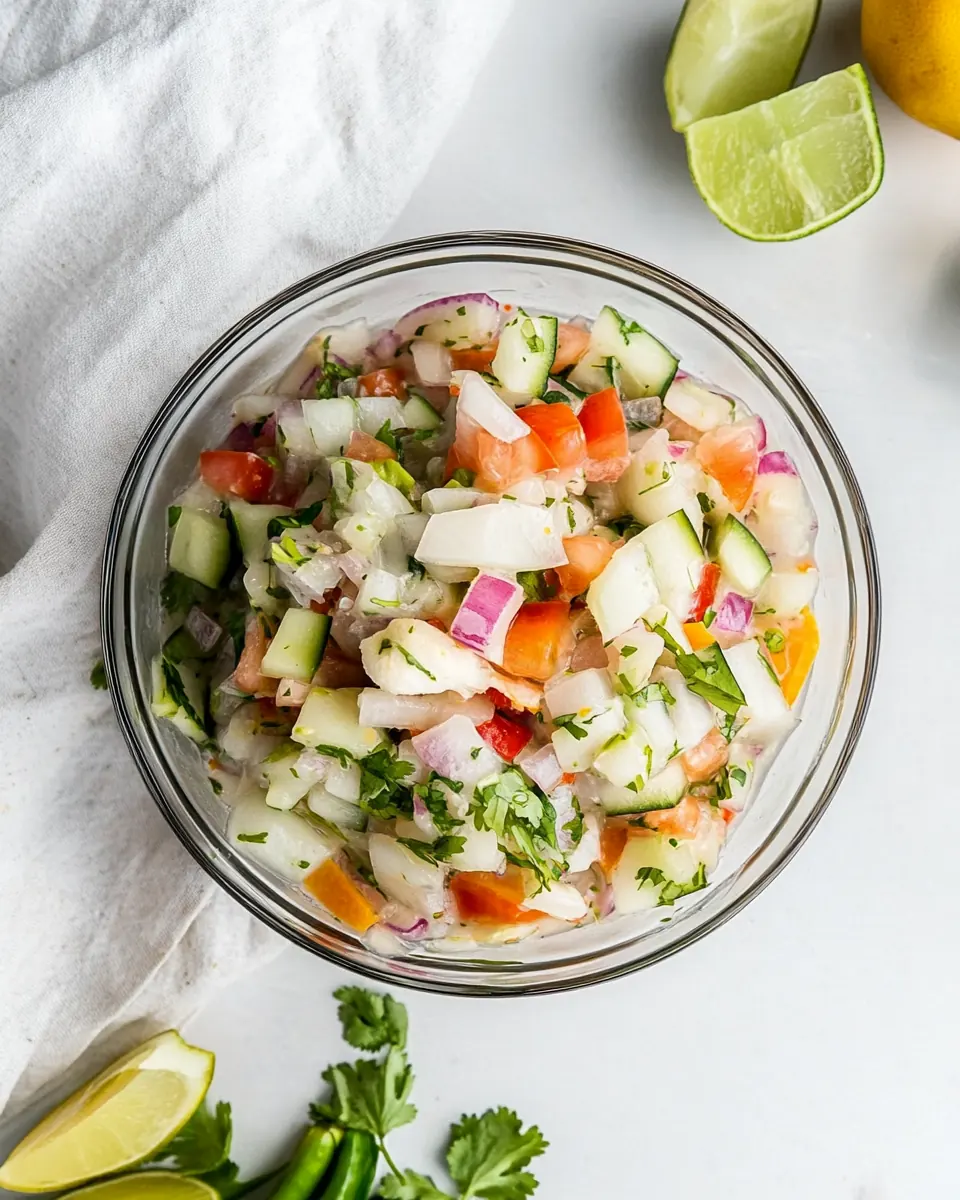
This is a hands on yet forgiving assembly. You will see the transformation as the fish firms in the lime juice, and the mix of textures comes together. I like to work methodically, preparing the produce first so adding everything to the marinated fish is quick and deliberate.
- Combine the diced fish with lime juice in a non-reactive bowl, ensuring the fish is fully submerged. Cover and refrigerate for 15-30 minutes to ‘cook’ the fish.: When you first mix the fish with the lime juice you will notice the liquid glossing the pieces, and after a few minutes the edges begin to turn opaque, signaling that the proteins are tightening. I always use a glass or ceramic bowl because metal can react with citrus and alter the flavor. Listen for the quiet hush of chilled ingredients settling into the marinade, and watch the color shift as a visual cue the curing is working. This step is essential because the acid firms the texture and infuses flavor; rushing it will leave the fish overly soft and under flavored. A frequent mistake is leaving the fish in the juice too long, which makes it tough, so check texture at about 15 minutes and taste to judge doneness.
- Mix in the red onion, tomatoes, jalapeño, and cilantro with the marinated fish, then season with salt to taste.: As you fold these components into the marinated fish , you will hear gentle rustling and see bursts of color as the tomatoes and herbs mingle. The aroma brightens immediately, with herbal notes from the cilantro and a sharp onion perfume cutting through the citrus. This is where layers of flavor assemble, so add the red onion and jalapeño gradually to control heat and bite. I recommend tasting before salting heavily because the acids and juices concentrate as they sit. A common error is over stirring which can bruise the tomatoes and make the mixture watery, so fold gently until just combined.
- Gently fold in the diced avocado just before serving to maintain its texture and freshness.: The moment you add the avocado , the bowl changes from zesty and bright to luxuriously smooth in places, with soft green cubes punctuating each spoonful. I always add it at the last second to prevent browning and to ensure it keeps its clean shape. Use a light hand when folding, so the avocado remains intact and the marinade does not become creamy and homogenized. Smell for the subtle sweet earthiness of the avocado as it meets the citrus, and stop folding once the pieces are evenly distributed. A typical misstep is mixing the avocado in too early, which both colours the marinade and flattens the textures.
Recipe Notes about Ceviche
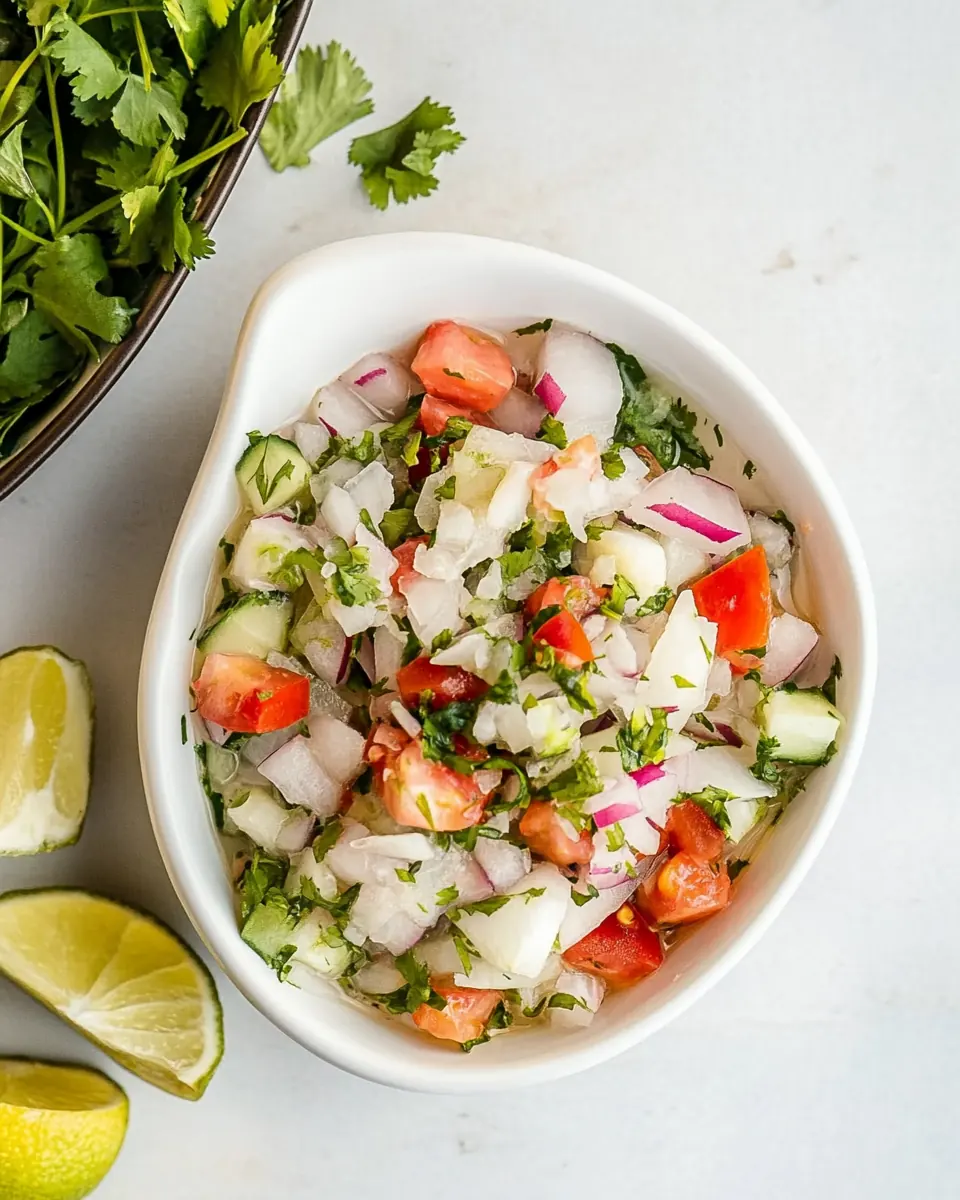
Ceviche rewards attention to detail, and a few small practices make a big difference. Below are compact, practical notes I use every time I prepare this dish to ensure clarity of flavor, good texture, and safe handling.
- Freshness first, always check that the fish smells like the sea not like ammonia, and use the firmest fillets available for the best texture.
- Measure citrus, use about 3 quarter cup of fresh lime juice for each pound of fish and adjust slightly if your limes are especially small or large.
- Temperature matters, keep everything well chilled during curing and serve immediately or within a short window to maintain safety and texture.
- Control the heat, seed the jalapeño if you prefer mild spice and add seeds or extra pepper later for more intensity.
- Store properly, keep leftovers in an airtight container for up to 24 hours, but note the texture of the fish and avocado will change over time.
Perfect Matches for Ceviche
This dish pairs beautifully with light, crisp accompaniments and warm weather occasions. Below I outline serving ideas, occasions, and storage notes to help you present it with confidence.
- Serve with crisp tostadas, they give a crunchy base that contrasts the tender cured fish and creamy avocado, making each bite satisfying.
- Offer as an appetizer for summer gatherings, its bright profile is perfect for outdoor lunches or sunset cocktails, and it scales well for groups.
- Plate for a light lunch, pair a bowl of Ceviche with a simple salad and chilled mineral water for a refreshing midday meal.
- Include in Ramadan iftar, it’s light yet nourishing, and the clean flavors make it a thoughtful option to break a fast gently.
- Storage tip, refrigerate in an airtight container and consume within 24 hours, adding fresh diced avocado only when serving if you expect leftovers.
- Seasonal pairing, this shines in summer when limes, tomatoes, and herbs are at their peak, creating the best flavor balance.
FAQ
Conclusion
Ceviche stands out because it transforms a few fresh ingredients into a bright, layered dish that celebrates texture and citrus. Try it to enjoy the satisfying contrast of tender cured fish, crisp aromatics, and creamy avocado in every bite. Give yourself permission to taste and adjust as you assemble it, and you will find it rewards patience with a lively, memorable bowl that showcases the best of summer produce.
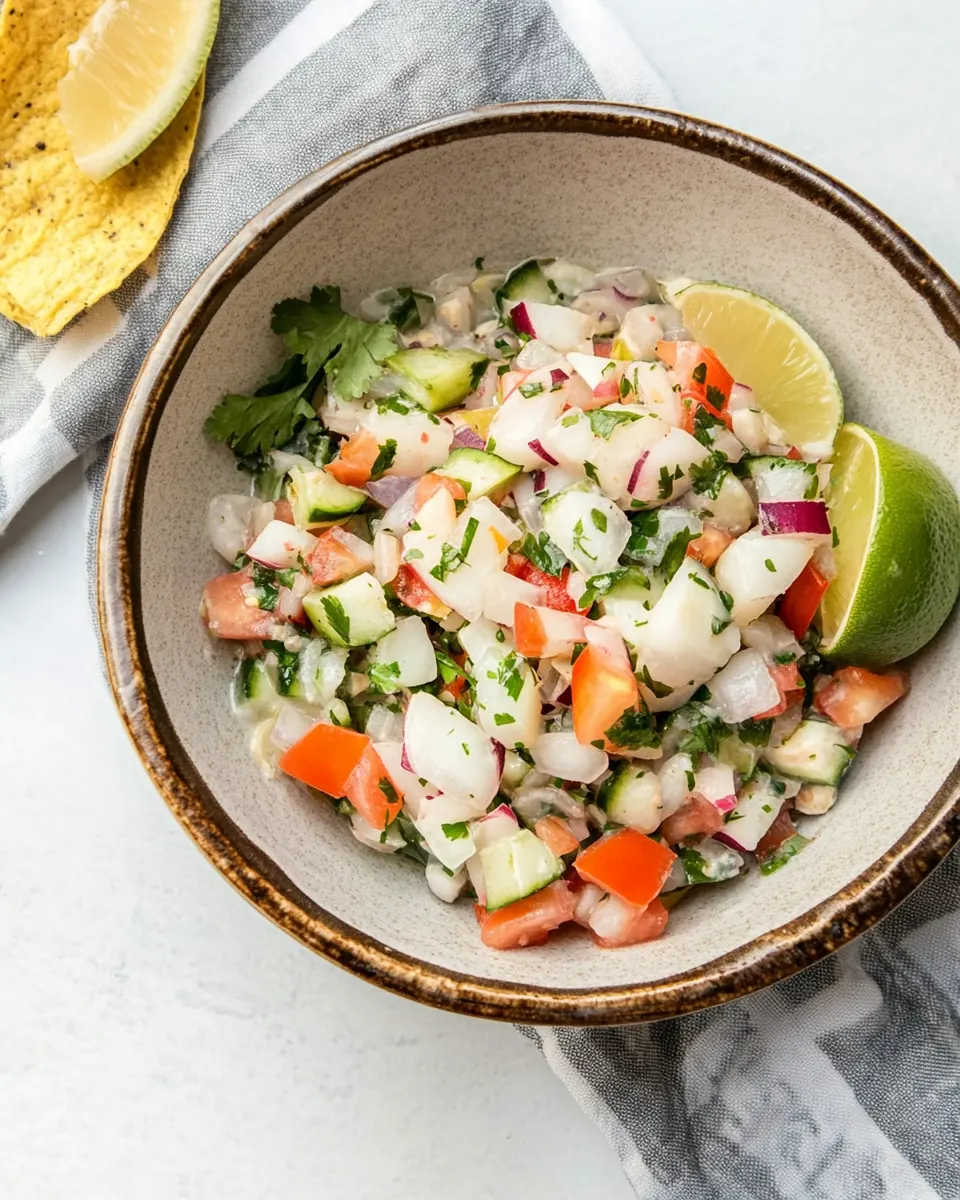
Ceviche
Ingredients
Equipment
Method
- Combine the diced fish with lime juice in a non-reactive bowl, ensuring the fish is fully submerged. Cover and refrigerate for 15-30 minutes to ‘cook’ the fish.: When you first mix the fish with the lime juice you will notice the liquid glossing the pieces, and after a few minutes the edges begin to turn opaque, signaling that the proteins are tightening. I always use a glass or ceramic bowl because metal can react with citrus and alter the flavor. Listen for the quiet hush of chilled ingredients settling into the marinade, and watch the color shift as a visual cue the curing is working. This step is essential because the acid firms the texture and infuses flavor; rushing it will leave the fish overly soft and under flavored. A frequent mistake is leaving the fish in the juice too long, which makes it tough, so check texture at about 15 minutes and taste to judge doneness.
- Mix in the red onion, tomatoes, jalapeño, and cilantro with the marinated fish, then season with salt to taste.: As you fold these components into the marinated fish , you will hear gentle rustling and see bursts of color as the tomatoes and herbs mingle. The aroma brightens immediately, with herbal notes from the cilantro and a sharp onion perfume cutting through the citrus. This is where layers of flavor assemble, so add the red onion and jalapeño gradually to control heat and bite. I recommend tasting before salting heavily because the acids and juices concentrate as they sit. A common error is over stirring which can bruise the tomatoes and make the mixture watery, so fold gently until just combined.
- Gently fold in the diced avocado just before serving to maintain its texture and freshness.: The moment you add the avocado , the bowl changes from zesty and bright to luxuriously smooth in places, with soft green cubes punctuating each spoonful. I always add it at the last second to prevent browning and to ensure it keeps its clean shape. Use a light hand when folding, so the avocado remains intact and the marinade does not become creamy and homogenized. Smell for the subtle sweet earthiness of the avocado as it meets the citrus, and stop folding once the pieces are evenly distributed. A typical misstep is mixing the avocado in too early, which both colours the marinade and flattens the textures.
Notes
- Freshness first, always check that the fish smells like the sea not like ammonia, and use the firmest fillets available for the best texture.
- Measure citrus, use about 3 quarter cup of fresh lime juice for each pound of fish and adjust slightly if your limes are especially small or large.
- Temperature matters, keep everything well chilled during curing and serve immediately or within a short window to maintain safety and texture.
- Control the heat, seed the jalapeño if you prefer mild spice and add seeds or extra pepper later for more intensity.
- Store properly, keep leftovers in an airtight container for up to 24 hours, but note the texture of the fish and avocado will change over time.