Chicken Broccoli Alfredo
Chicken Broccoli Alfredo has been my weekday lifesaver on nights when the calendar is full and my stomach is louder than my patience. The first time I made it, I was running late from work and grabbed leftover chicken in the fridge and a bag of frozen broccoli, and what came together in that warm, saucy pan felt like a small, culinary miracle. I remember the steam rising as I stirred the sauce, and how the aroma of melted butter and Parmesan cheese wrapped the whole kitchen in a cozy, familiar comfort.
Over time this dish became my go to when friends stop by unexpectedly, because it scales easily and still tastes indulgent even when I keep things simple. I like that it feels fancy enough for company but comfortable enough for a solo dinner with a glass of sparkling water. Sometimes I tell myself that comfort food does not need to be complicated, and this recipe proves that a handful of quality ingredients can deliver a rich, creamy bowl that everyone asks about.
Recipe Snapshot
22 mins
10 mins
12 mins
Easy
650 kcal
Italian
Gluten-Free, Low FODMAP
Dinner
Large pot, Large skillet, Whisk, Wooden spoon
The Appeal of This Chicken Broccoli Alfredo
Comfort with speed
I adore how Chicken Broccoli Alfredo delivers a luxurious, creamy sauce in under half an hour, so I can go from pan to table without sacrificing the cozy factor. The texture of a well made sauce, velvety and clinging to pasta, makes it feel like you took your time, even when you did not.
Balanced protein and veg
Using cooked chicken and hot, steamed broccoli makes this dish feel complete. I like that each forkful has protein, fat, and green vegetables, so it works as a satisfying dinner even on busy nights.
Customizable but forgiving
I’ve found this recipe is flexible, so if I am short on time I keep a shredded rotisserie chicken handy. The sauce is forgiving, too, and a few small adjustments can rescue it if it gets too thick or too thin.
Deep flavor from few ingredients
The combination of butter, heavy whipping cream, and Parmesan cheese creates richness without needing dozens of steps. I love recipes that coax big flavor from a short ingredient list, because they make weeknight cooking feel achievable and special.
Kid and crowd friendly
I often see this disappear fast at family dinners, because it checks boxes for picky eaters and grown ups alike. It’s easy to scale, and it reheats well, which means leftovers usually do not last long in my house.
Ingredients for Chicken Broccoli Alfredo
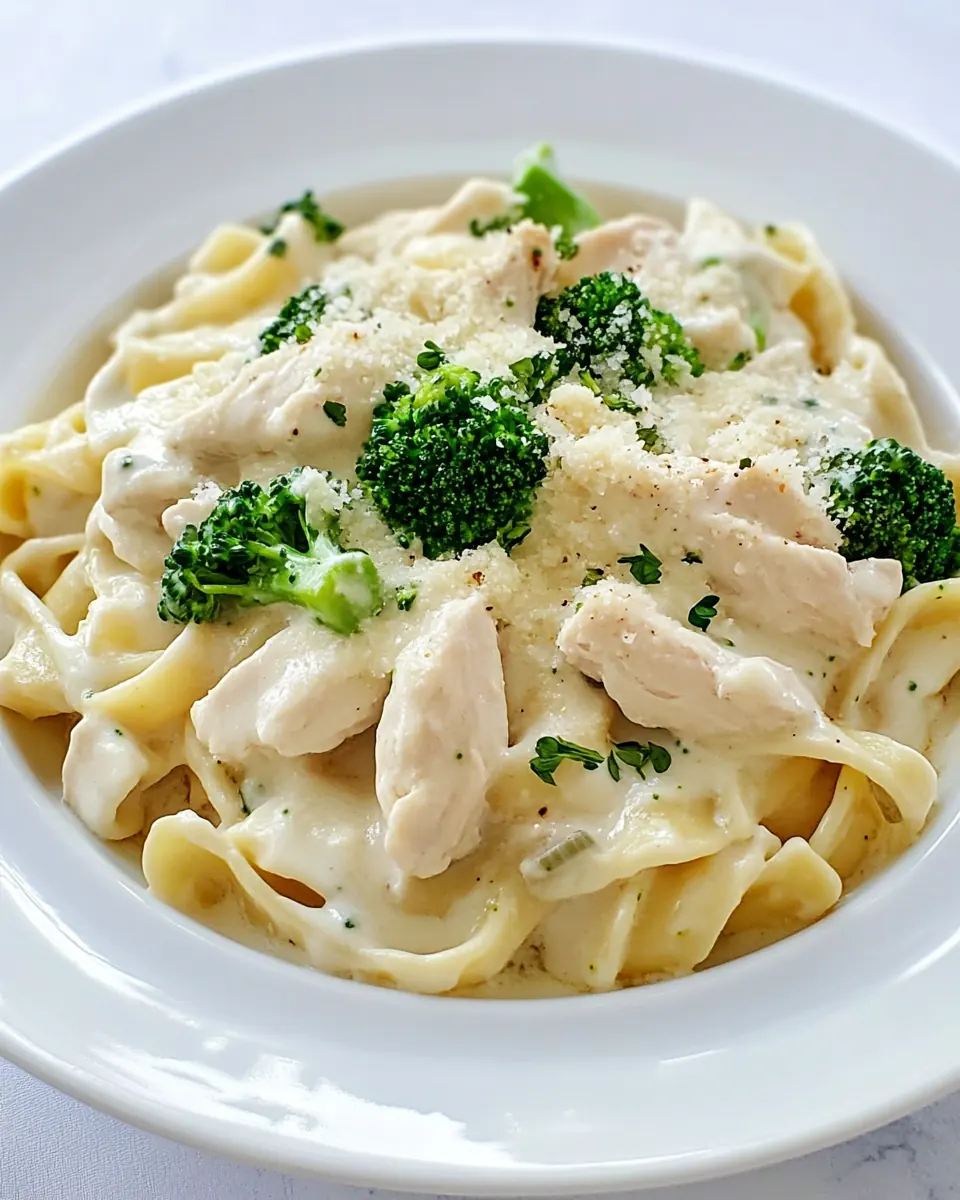
These ingredients form the backbone of a classic, satisfying pasta dish. I think of key players as the creamy base, the savory lift, and the fresh green contrast. When combined properly the sauce becomes silk, the chicken adds hearty texture, and the broccoli gives a bright pop that keeps each bite balanced.
- 2 cups cooked chicken breasts, diced: Adds tender protein and savory texture to the dish while providing a hearty base; diced cooked chicken breasts contribute richness and help make the meal more filling, pairing well with creamy sauces and vegetables.
- 2 cups fresh chopped broccoli, steamed and hot: Provides bright color, fresh flavor, and a tender-crisp contrast while supplying vitamins and fiber; steaming while hot helps the broccoli absorb the sauce and maintain appealing texture.
- 1 lb pasta of your choice, cooked according to package directions: Serves as the carbohydrate foundation and bulk of the dish, delivering chewiness and body; cooked pasta soaks up the sauce and balances the richness for a satisfying meal.
- 1/2 cup butter: Contributes a silky mouthfeel and buttery flavor that helps create a smooth sauce; melting butter releases fats that carry aromatics and bind dairy elements into a cohesive Alfredo.
- 1/2 teaspoon minced garlic: Imparts pungent, aromatic flavor and depth when minced finely; adding minced garlic early releases savory compounds that enhance the overall sauce profile without becoming overpowering.
- 2 cups heavy whipping cream: Provides the primary creamy base and contributes richness, body, and a velvety texture; heavy whipping cream helps stabilize the sauce and allows it to coat pasta and chicken evenly.
- 4 ounces cream cheese, softened: Adds tangy creaminess and helps thicken the sauce while providing a smooth, cohesive texture; softened cream cheese incorporates easily into warm liquids to create a luscious consistency.
- 1 teaspoon garlic powder: Delivers concentrated roasted garlic flavor and helps season the sauce consistently; garlic powder blends uniformly into dairy, boosting savory notes without altering texture.
- 1 teaspoon Italian seasoning: Infuses a blend of herbs and Mediterranean aromatics that complement the creamy sauce; Italian seasoning introduces balanced herbal complexity and elevates overall flavor.
- salt and pepper to taste: Balances and enhances flavors by adjusting seasoning levels; salt and pepper to taste allow customization of savory depth and brightness to suit preferences.
- 1 cup freshly grated Parmesan cheese: Provides nutty, salty umami and helps thicken and finish the sauce with a glossy texture; freshly grated Parmesan melts into the cream for authentic Alfredo flavor.
How to Prepare Chicken Broccoli Alfredo
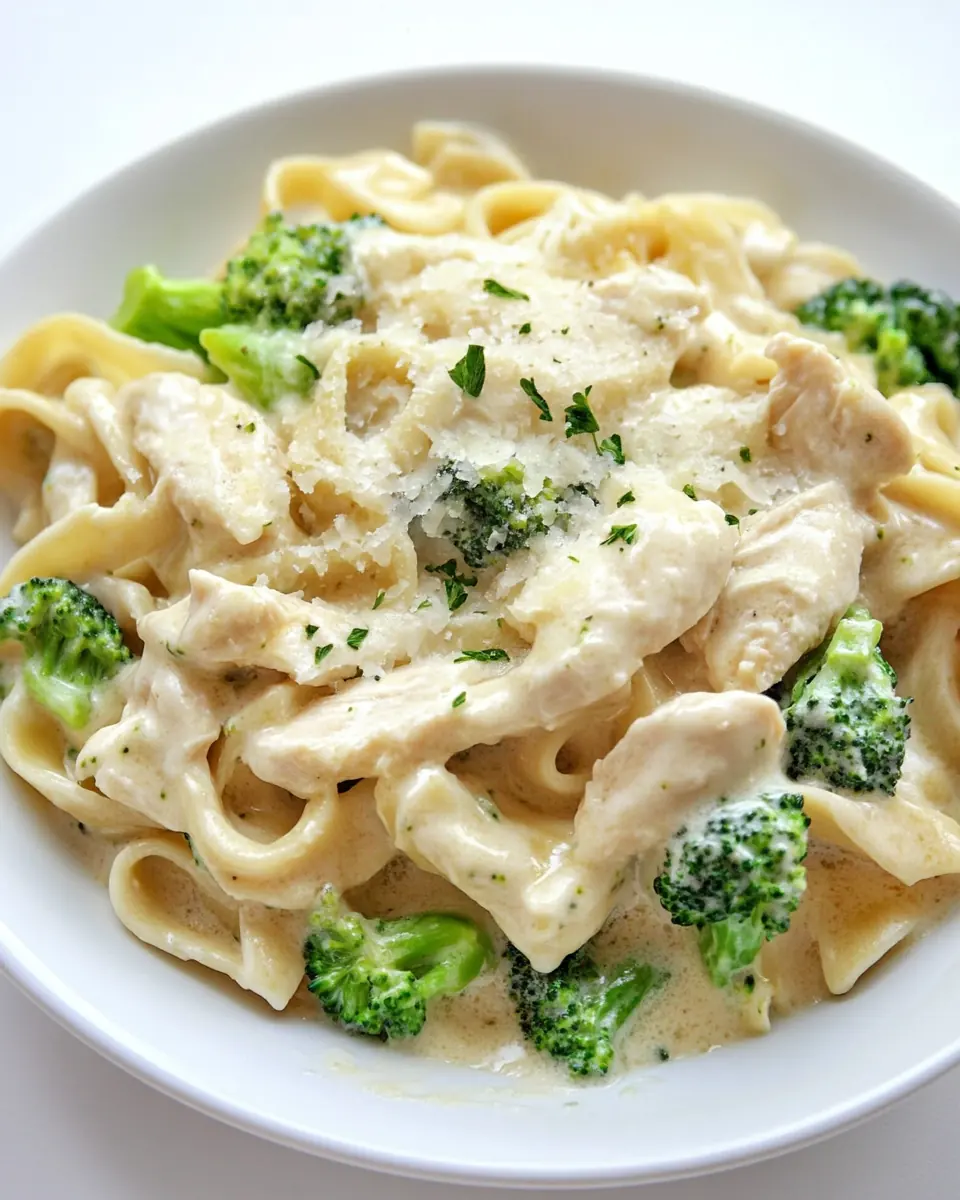
This recipe comes together quickly if you have everything ready, so pace yourself and enjoy the process. The directions below expand on each action with sensory cues, reasons behind techniques, and tips to avoid common mistakes. Keep a whisk and a wooden spoon handy.
- Cook the pasta according to the package directions.: The pot should smell faintly of starch and steam as the water roils, and you will hear a steady bubbling rhythm. Cook to an al dente texture where the pasta yields slightly under your teeth, because it will continue to soften when tossed with the sauce. A common mistake is overcooking, which results in mushy noodles that cannot hold the sauce, so taste a strand a couple of minutes before the package time ends. Reserve a cup of the starchy cooking water before draining, because a splash can rescue a sauce that is too thick and helps the sauce adhere to the pasta .
- In a large skillet, melt butter in medium saucepan over medium-high heat. Add minced garlic with the butter. Add cream, cream cheese, garlic powder, and Italian seasonings. Simmer, uncovered, for 10 to 12 minutes or until thick, stirring frequently. Add salt and pepper to taste. When sauce has reached desired consistency, stir in Parmesan cheese.: As the butter melts you should detect a warm, nutty aroma and gentle foaming at the edges, signaling it is hot enough to begin building flavor. The pan surface will shimmer slightly, indicating correct temperature. If the butter starts darkening, lower the heat, since browned or burnt butter will alter the flavor profile. Use steady medium heat so you can control the subsequent additions without shocking the dairy.
- Serve over pasta, broccoli, and chicken.: When the garlic hits the hot fat it will hiss softly and release a fragrant, savory perfume within seconds. Listen for a brief sizzle, then stir gently so the garlic infuses the butter, becoming glossy and aromatic. Avoid letting it brown because that creates a bitter edge, and if you notice any browning, reduce the heat and skim off the darker bits to keep the sauce clean tasting.
- Add cream, cream cheese, garlic powder, and Italian seasonings.: Pour in the heavy whipping cream so the pan quiets into a gentle simmer, then add the softened cream cheese in smaller pieces so it melts evenly. You will see the mixture become silkier as the solid cheese dissolves, and the aroma will shift to a rich, dairy sweetness. The dried seasonings will float at first then bloom into the sauce as you whisk, so stir patiently to create a uniform texture. A lump forming is a sign the cheese was too cold or the heat too high, so reduce the flame and whisk briskly to smooth it out.
- Simmer, uncovered, for 10 to 12 minutes or until thick, stirring frequently.: During this gentle simmer the surface will form a few slow, steady bubbles and the sauce will reduce, becoming visibly thicker and coating the back of a spoon. Keep stirring to prevent sticking and to encourage even thickening. If the sauce appears to be separating or getting grainy, lower the heat and whisk continuously, adding a splash of reserved pasta water or a touch more heavy whipping cream to bring it back together. Over simmering at too high a heat is the usual culprit for breaking, so monitor temperature closely.
- Add salt and pepper to taste.: Taste a small spoonful to evaluate the seasoning balance, because the Parmesan cheese added later will increase saltiness. Season gently and build up gradually, letting the flavors meld for a minute before adjusting further. A common oversight is salting only at the beginning, which can lead to over seasoned sauce once the cheese is incorporated, so wait until the sauce has reduced somewhat before final adjustments.
- When sauce has reached desired consistency, stir in Parmesan cheese.: As you fold in the freshly grated Parmesan cheese the sauce will become glossy and slightly thicker, with an umami warmth rising in the aroma. Stir until the cheese fully melts into a silky emulsion, watching for any tiny clumps which indicate high heat or rushed incorporation. If lumps appear, remove from heat and whisk in a tablespoon of reserved pasta water to smooth it out. The cheese also helps bind the sauce to the pasta and chicken , so take your time for a seamless texture.
- Serve over pasta, broccoli, and chicken.: When plating, layer hot, drained pasta first, then add the steamed broccoli and diced warm chicken , finally spooning the sauce generously on top. The steam will carry the sauce into the pasta crevices, and you will hear a subtle soft hiss as heat and sauce meet. Toss gently so every strand is coated, and finish with a few extra grates of Parmesan cheese if you like. A mistake to avoid is adding cold chicken or broccoli , which can cool the sauce and make it appear congealed, so ensure the components are hot when combined.
Tips for Success
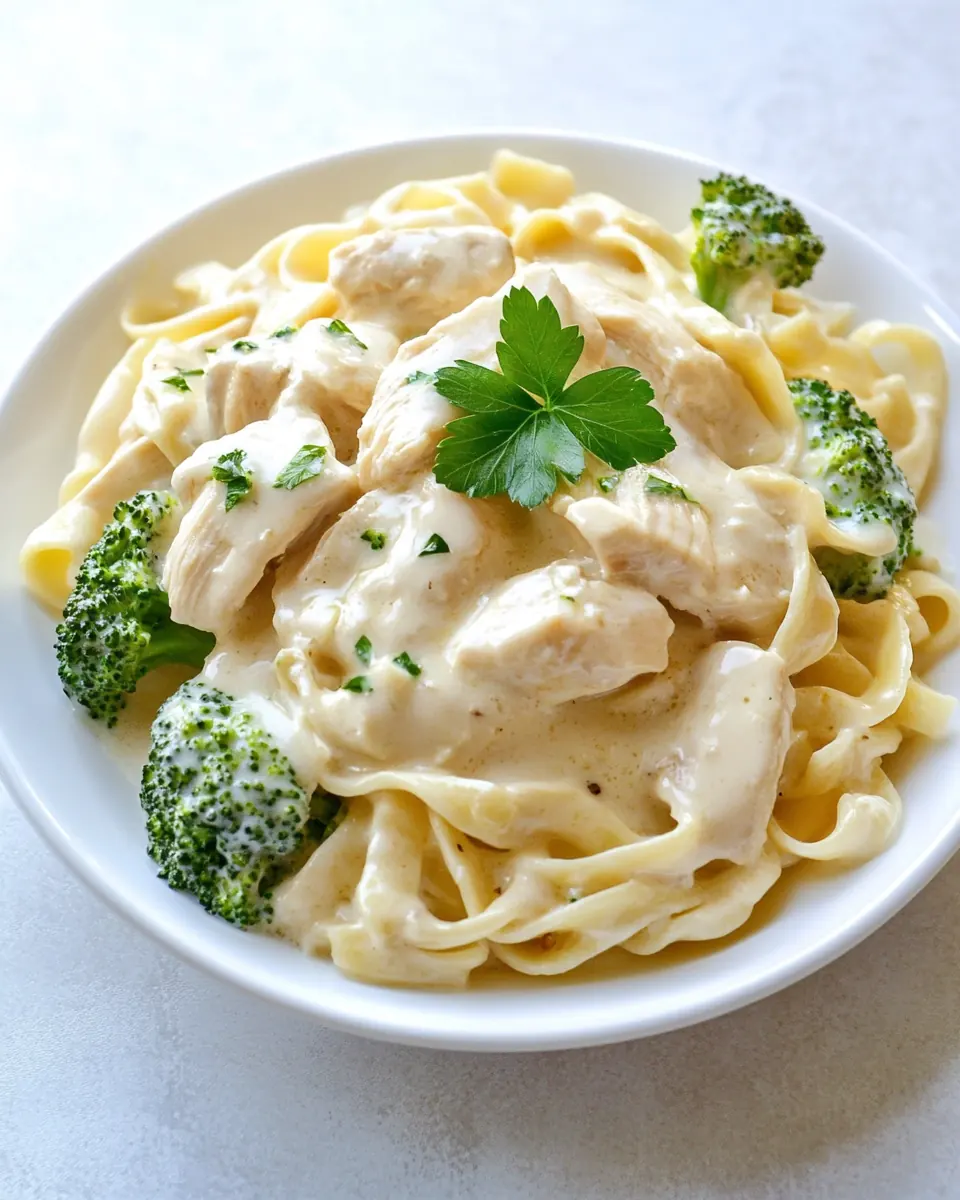
These tips reflect the small, practical habits I use to keep this dish consistent and rewarding. They are things I learned by doing, and they often prevent the most common tangles when making a cream based sauce.
- Control the heat: Keep the pan at a gentle simmer rather than a rolling boil so the dairy does not split, adjusting the flame as needed while you stir.
- Prepare ingredients ahead: Have your chicken diced, broccoli steamed and Parmesan cheese grated before you start the sauce to make the process smooth and stress free.
- Use room temperature cream cheese: Softened cream cheese blends more easily into warm cream, avoiding lumps that can be hard to fix later.
- Reserve pasta water: A small splash of starchy water can thin a sauce that has tightened too much, while also helping the sauce cling to the pasta.
- Adjust seasoning last: Since the Parmesan cheese contributes salt, taste and finish seasoning after the cheese is incorporated to prevent over salting.
Great Combinations for Chicken Broccoli Alfredo
I like pairing this dish with accompaniments that bring texture, freshness, or a contrasting profile. The list below covers practical serving ideas, storage notes, and occasions where this recipe shines.
- Light green salad: A crisp salad with a simple vinaigrette adds acidity and crunch to balance the creamy sauce, especially useful for a family dinner when you want freshness.
- Garlic bread or crusty loaf: Warm bread is perfect for soaking up extra sauce, making the meal feel cozy and communal for casual gatherings.
- Weeknight dinner: This is an ideal easy weeknight dinner since it cooks quickly and satisfies both kids and adults without complicated prep.
- Make ahead and reheat: Store in an airtight container in the fridge for up to three days, reheating gently over low heat and adding a splash of cream or reserved pasta water to restore saucy texture.
- Occasions: Serve this at family meals, potlucks, or when hosting friends who appreciate comforting, familiar flavors. It scales well for small dinner parties and informal gatherings.
- Seasonal pairing: While great any time, I especially enjoy it in cooler months like winter because the warm, creamy sauce feels soothing and filling.
FAQ
Conclusion
What makes this recipe special is the way a few straightforward ingredients transform into a comforting, restaurant style bowl with minimal fuss. Give it a try on a busy evening when you want something that feels indulgent but is still practical to make. I hope this becomes one of your go to dinners, delivering warm, creamy satisfaction with every forkful.
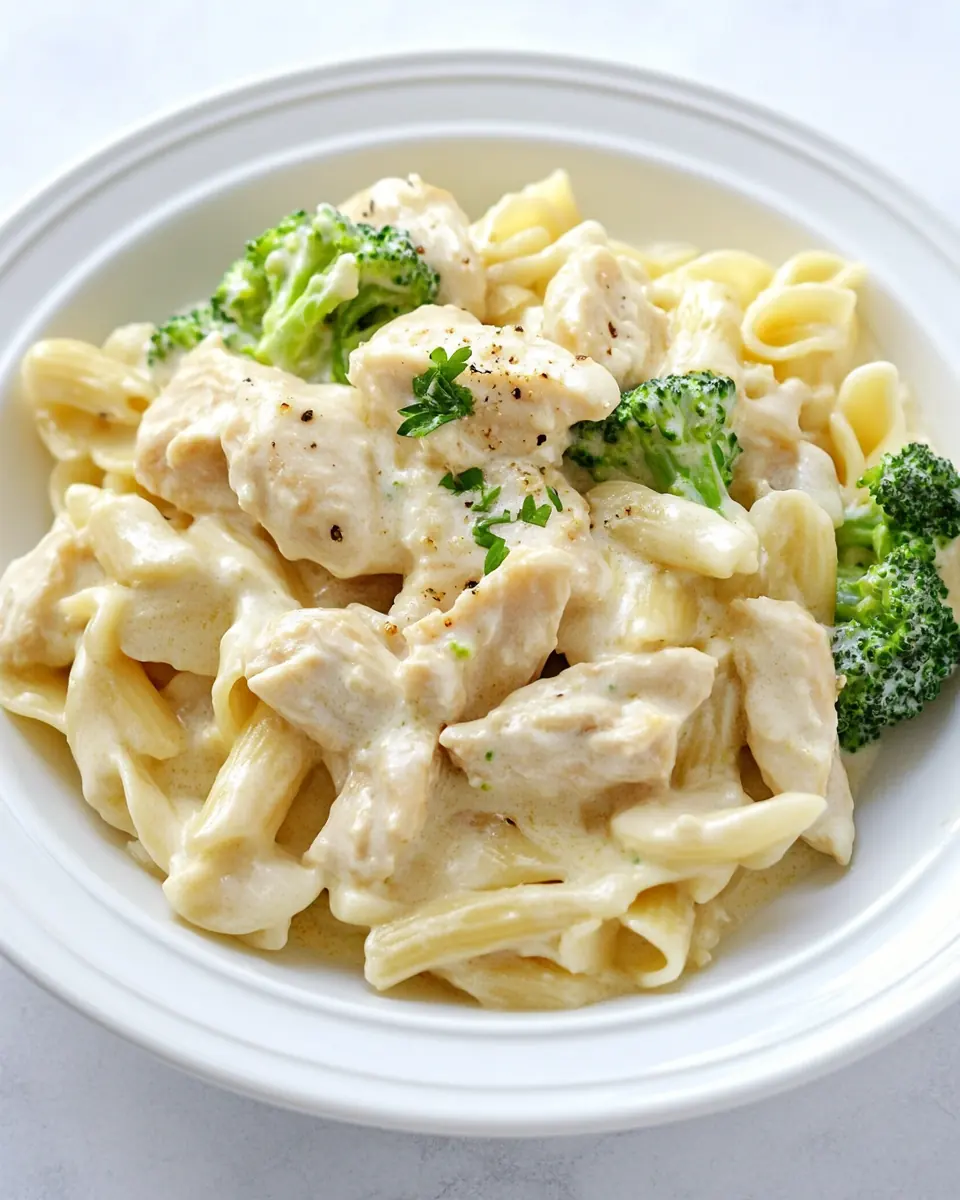
Chicken Broccoli Alfredo
Ingredients
Equipment
Method
- Cook the pasta according to the package directions.: The pot should smell faintly of starch and steam as the water roils, and you will hear a steady bubbling rhythm. Cook to an al dente texture where the pasta yields slightly under your teeth, because it will continue to soften when tossed with the sauce. A common mistake is overcooking, which results in mushy noodles that cannot hold the sauce, so taste a strand a couple of minutes before the package time ends. Reserve a cup of the starchy cooking water before draining, because a splash can rescue a sauce that is too thick and helps the sauce adhere to the pasta .
- In a large skillet, melt butter in medium saucepan over medium-high heat. Add minced garlic with the butter. Add cream, cream cheese, garlic powder, and Italian seasonings. Simmer, uncovered, for 10 to 12 minutes or until thick, stirring frequently. Add salt and pepper to taste. When sauce has reached desired consistency, stir in Parmesan cheese.: As the butter melts you should detect a warm, nutty aroma and gentle foaming at the edges, signaling it is hot enough to begin building flavor. The pan surface will shimmer slightly, indicating correct temperature. If the butter starts darkening, lower the heat, since browned or burnt butter will alter the flavor profile. Use steady medium heat so you can control the subsequent additions without shocking the dairy.
- Serve over pasta, broccoli, and chicken.: When the garlic hits the hot fat it will hiss softly and release a fragrant, savory perfume within seconds. Listen for a brief sizzle, then stir gently so the garlic infuses the butter, becoming glossy and aromatic. Avoid letting it brown because that creates a bitter edge, and if you notice any browning, reduce the heat and skim off the darker bits to keep the sauce clean tasting.
- Add cream, cream cheese, garlic powder, and Italian seasonings.: Pour in the heavy whipping cream so the pan quiets into a gentle simmer, then add the softened cream cheese in smaller pieces so it melts evenly. You will see the mixture become silkier as the solid cheese dissolves, and the aroma will shift to a rich, dairy sweetness. The dried seasonings will float at first then bloom into the sauce as you whisk, so stir patiently to create a uniform texture. A lump forming is a sign the cheese was too cold or the heat too high, so reduce the flame and whisk briskly to smooth it out.
- Simmer, uncovered, for 10 to 12 minutes or until thick, stirring frequently.: During this gentle simmer the surface will form a few slow, steady bubbles and the sauce will reduce, becoming visibly thicker and coating the back of a spoon. Keep stirring to prevent sticking and to encourage even thickening. If the sauce appears to be separating or getting grainy, lower the heat and whisk continuously, adding a splash of reserved pasta water or a touch more heavy whipping cream to bring it back together. Over simmering at too high a heat is the usual culprit for breaking, so monitor temperature closely.
- Add salt and pepper to taste.: Taste a small spoonful to evaluate the seasoning balance, because the Parmesan cheese added later will increase saltiness. Season gently and build up gradually, letting the flavors meld for a minute before adjusting further. A common oversight is salting only at the beginning, which can lead to over seasoned sauce once the cheese is incorporated, so wait until the sauce has reduced somewhat before final adjustments.
- When sauce has reached desired consistency, stir in Parmesan cheese.: As you fold in the freshly grated Parmesan cheese the sauce will become glossy and slightly thicker, with an umami warmth rising in the aroma. Stir until the cheese fully melts into a silky emulsion, watching for any tiny clumps which indicate high heat or rushed incorporation. If lumps appear, remove from heat and whisk in a tablespoon of reserved pasta water to smooth it out. The cheese also helps bind the sauce to the pasta and chicken , so take your time for a seamless texture.
- Serve over pasta, broccoli, and chicken.: When plating, layer hot, drained pasta first, then add the steamed broccoli and diced warm chicken , finally spooning the sauce generously on top. The steam will carry the sauce into the pasta crevices, and you will hear a subtle soft hiss as heat and sauce meet. Toss gently so every strand is coated, and finish with a few extra grates of Parmesan cheese if you like. A mistake to avoid is adding cold chicken or broccoli , which can cool the sauce and make it appear congealed, so ensure the components are hot when combined.
Notes
- Control the heat: Keep the pan at a gentle simmer rather than a rolling boil so the dairy does not split, adjusting the flame as needed while you stir.
- Prepare ingredients ahead: Have your chicken diced, broccoli steamed and Parmesan cheese grated before you start the sauce to make the process smooth and stress free.
- Use room temperature cream cheese: Softened cream cheese blends more easily into warm cream, avoiding lumps that can be hard to fix later.
- Reserve pasta water: A small splash of starchy water can thin a sauce that has tightened too much, while also helping the sauce cling to the pasta.
- Adjust seasoning last: Since the Parmesan cheese contributes salt, taste and finish seasoning after the cheese is incorporated to prevent over salting.