Cook the pasta according to the package directions.: The pot should smell faintly of starch and steam as the water roils, and you will hear a steady bubbling rhythm. Cook to an al dente texture where the pasta yields slightly under your teeth, because it will continue to soften when tossed with the sauce. A common mistake is overcooking, which results in mushy noodles that cannot hold the sauce, so taste a strand a couple of minutes before the package time ends. Reserve a cup of the starchy cooking water before draining, because a splash can rescue a sauce that is too thick and helps the sauce adhere to the pasta .
In a large skillet, melt butter in medium saucepan over medium-high heat. Add minced garlic with the butter. Add cream, cream cheese, garlic powder, and Italian seasonings. Simmer, uncovered, for 10 to 12 minutes or until thick, stirring frequently. Add salt and pepper to taste. When sauce has reached desired consistency, stir in Parmesan cheese.: As the butter melts you should detect a warm, nutty aroma and gentle foaming at the edges, signaling it is hot enough to begin building flavor. The pan surface will shimmer slightly, indicating correct temperature. If the butter starts darkening, lower the heat, since browned or burnt butter will alter the flavor profile. Use steady medium heat so you can control the subsequent additions without shocking the dairy.
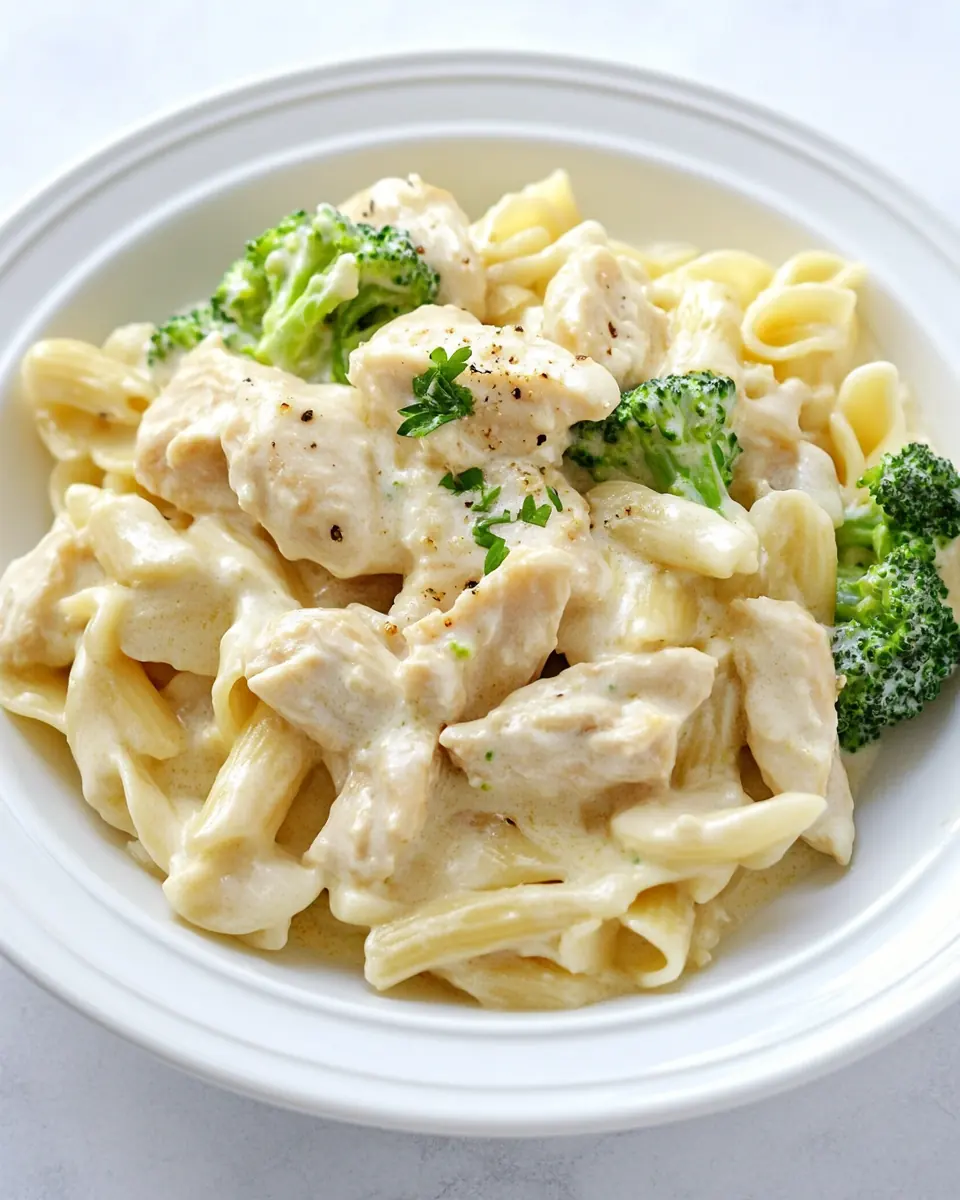
Serve over pasta, broccoli, and chicken.: When the garlic hits the hot fat it will hiss softly and release a fragrant, savory perfume within seconds. Listen for a brief sizzle, then stir gently so the garlic infuses the butter, becoming glossy and aromatic. Avoid letting it brown because that creates a bitter edge, and if you notice any browning, reduce the heat and skim off the darker bits to keep the sauce clean tasting.
Add cream, cream cheese, garlic powder, and Italian seasonings.: Pour in the heavy whipping cream so the pan quiets into a gentle simmer, then add the softened cream cheese in smaller pieces so it melts evenly. You will see the mixture become silkier as the solid cheese dissolves, and the aroma will shift to a rich, dairy sweetness. The dried seasonings will float at first then bloom into the sauce as you whisk, so stir patiently to create a uniform texture. A lump forming is a sign the cheese was too cold or the heat too high, so reduce the flame and whisk briskly to smooth it out.
Simmer, uncovered, for 10 to 12 minutes or until thick, stirring frequently.: During this gentle simmer the surface will form a few slow, steady bubbles and the sauce will reduce, becoming visibly thicker and coating the back of a spoon. Keep stirring to prevent sticking and to encourage even thickening. If the sauce appears to be separating or getting grainy, lower the heat and whisk continuously, adding a splash of reserved pasta water or a touch more heavy whipping cream to bring it back together. Over simmering at too high a heat is the usual culprit for breaking, so monitor temperature closely.
Add salt and pepper to taste.: Taste a small spoonful to evaluate the seasoning balance, because the Parmesan cheese added later will increase saltiness. Season gently and build up gradually, letting the flavors meld for a minute before adjusting further. A common oversight is salting only at the beginning, which can lead to over seasoned sauce once the cheese is incorporated, so wait until the sauce has reduced somewhat before final adjustments.
When sauce has reached desired consistency, stir in Parmesan cheese.: As you fold in the freshly grated Parmesan cheese the sauce will become glossy and slightly thicker, with an umami warmth rising in the aroma. Stir until the cheese fully melts into a silky emulsion, watching for any tiny clumps which indicate high heat or rushed incorporation. If lumps appear, remove from heat and whisk in a tablespoon of reserved pasta water to smooth it out. The cheese also helps bind the sauce to the pasta and chicken , so take your time for a seamless texture.
Serve over pasta, broccoli, and chicken.: When plating, layer hot, drained pasta first, then add the steamed broccoli and diced warm chicken , finally spooning the sauce generously on top. The steam will carry the sauce into the pasta crevices, and you will hear a subtle soft hiss as heat and sauce meet. Toss gently so every strand is coated, and finish with a few extra grates of Parmesan cheese if you like. A mistake to avoid is adding cold chicken or broccoli , which can cool the sauce and make it appear congealed, so ensure the components are hot when combined.