Chocolate Pomegranate Bark
Chocolate Pomegranate Bark is one of those simple treats I turn to when I want something festive but unfussy. The first time I made it, I was scrambling to pull together a last minute dessert for a small gathering and had a bag of pomegranate seeds leftover from a salad, a half opened bar of dark chocolate, and a handful of almonds. I remember standing at the counter, swirling warm, glossy chocolate and thinking how little effort it took to transform those humble ingredients into something that looked and tasted special.
I like that Chocolate Pomegranate Bark feels both elegant and homey. It travels well, which made it my go to for potlucks, and it never fails to spark a conversation when guests see the jewel like seeds studding the glossy surface. I’ve learned small tricks over the years, like warming the bowl gently so the chocolate stays silky, and pressing the seeds in with my fingertips so they nestle just right. Those tiny adjustments make a big difference in texture and presentation.
When I make this now, I usually play with the thickness depending on the mood. Sometimes I spread it thin for a crisp, candy like bite, other times I make thick chunks for a more indulgent chew. Either way, the crunch from the almonds and the bright pop of the pomegranate seeds balance the bittersweet dark chocolate beautifully. I think you will enjoy how adaptable and forgiving this recipe is, whether you are gifting it or keeping it for yourself.
Recipe Snapshot
2 hr 5 mins
120 mins
5 mins
Hard
200 kcal
American
Keto, Paleo
Desserts
Microwave or double boiler, Mixing bowl, Spatula, Glass baking dish, Parchment paper
The Appeal of This Chocolate Pomegranate Bark
Bright contrast of flavors
I love how Chocolate Pomegranate Bark pairs deeply flavored dark chocolate with the tart burst of pomegranate seeds. That contrast creates a lively bite, and I find it more interesting than a straight sweet candy. When I bite into it, the initial cocoa bitterness melts into the juicy acidity of the seeds, creating a layered tasting experience.
Texture play
The crushed, dry roasted almonds add a satisfying crunch that keeps each morsel exciting. I enjoy the way the seeds offer a little juice against the crisp snap of the chocolate. In gatherings, people always comment on the variety of textures, which makes the bark feel thoughtfully constructed despite its simplicity.
Fast, flexible preparation
I often make this on short notice because the technique is forgiving. You can melt the dark chocolate in a microwave or double boiler, and the rest is assembly. That flexibility means you can scale it up or down, make thin shards or thick chunks, and still get a reliably beautiful result.
Visual appeal
There is something celebratory about the jewel like pomegranate seeds scattered across glossy chocolate. I like serving this during holidays and small get togethers because it photographs well and looks artisanal, even when I make it in a hurry.
Long lasting and shareable
Once chilled, the bark stores well in the refrigerator, so it’s great for prepping ahead. I often portion it into little boxes as gifts, and it holds up in transit without getting messy. That reliability makes it a staple in my dessert rotation.
Essential Ingredients for Chocolate Pomegranate Bark
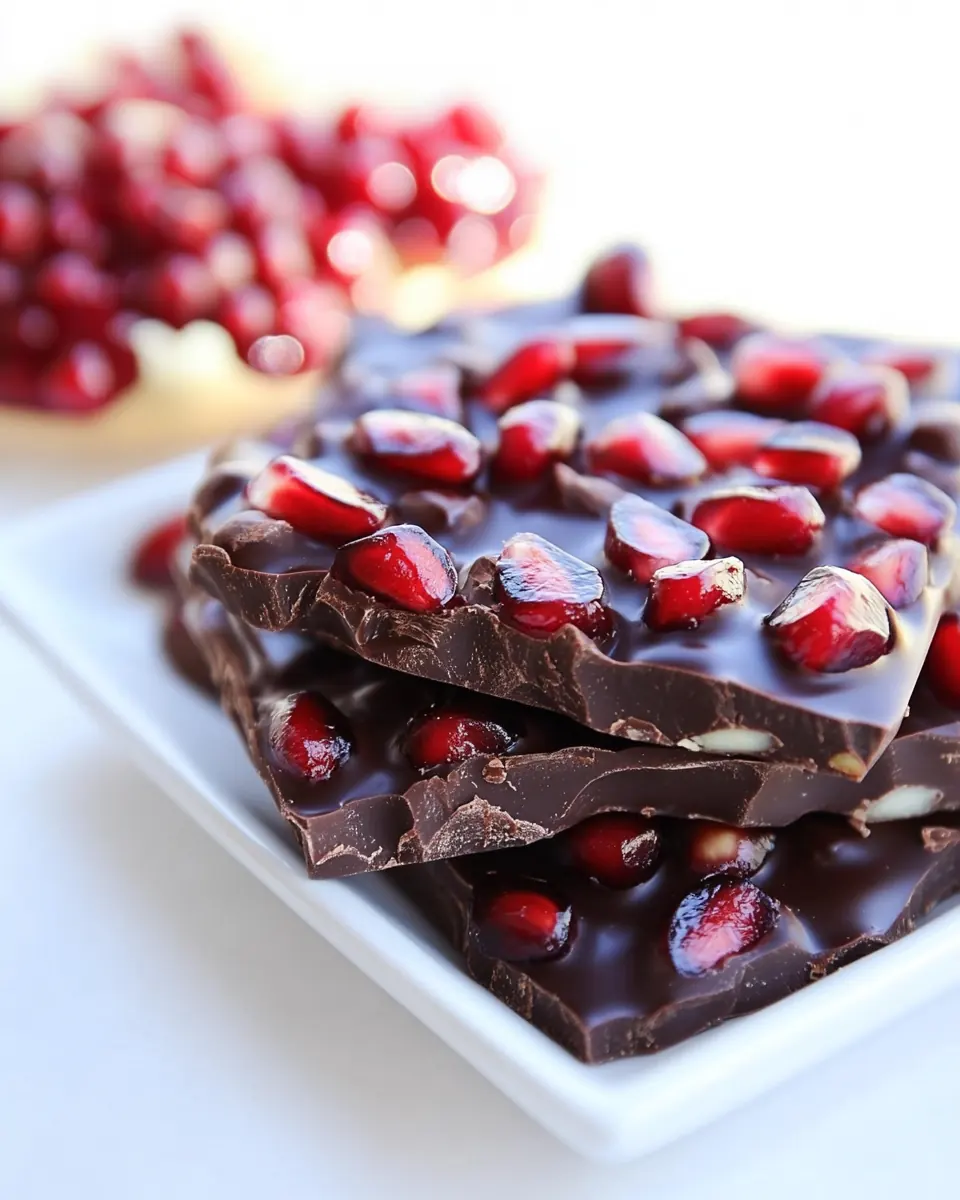
The philosophy behind these ingredients is delightfully straightforward. A few high quality components work together to create contrast in flavor and texture. The dark chocolate provides a rich, slightly bitter base that anchors the recipe, while the bright, jewel like pomegranate seeds cut through the richness. The toasted crunch of the almonds gives structure and makes each bite satisfyingly substantial.
- 7 ounces dark chocolate or 3 ingredient homemade chocolate recipe: Melted to create the smooth chocolate base that binds and sets the bark; provides rich cocoa flavor and a glossy finish when tempered properly. Choose high-quality dark chocolate or a simple homemade three-ingredient version to control sweetness and cocoa intensity. Use gentle, even heat to avoid seizing and pour promptly for an even layer that will hold toppings.
- 1/2 to 1 cup pomegranate seeds: Forms a bright, jewel-like contrast that adds bursts of juicy, tart flavor and a pleasant crunch when sprinkled over the chocolate. Pomegranate seeds contribute a fresh acidity that balances the bitterness of dark chocolate and enhance visual appeal with vibrant color. Scatter them while the chocolate is still tacky so they adhere well and retain their juicy texture after chilling.
- 1/2 cup dry roasted almonds: Adds crunchy texture and nutty, toasty flavor while contributing healthy fats and protein to the bark. Dry roasting intensifies the almond’s aroma and makes them sturdier for chopping or scattering; chop or halve to distribute evenly across the chocolate surface. Press nuts lightly into the chocolate so they stay embedded during setting and slicing.
Making Chocolate Pomegranate Bark
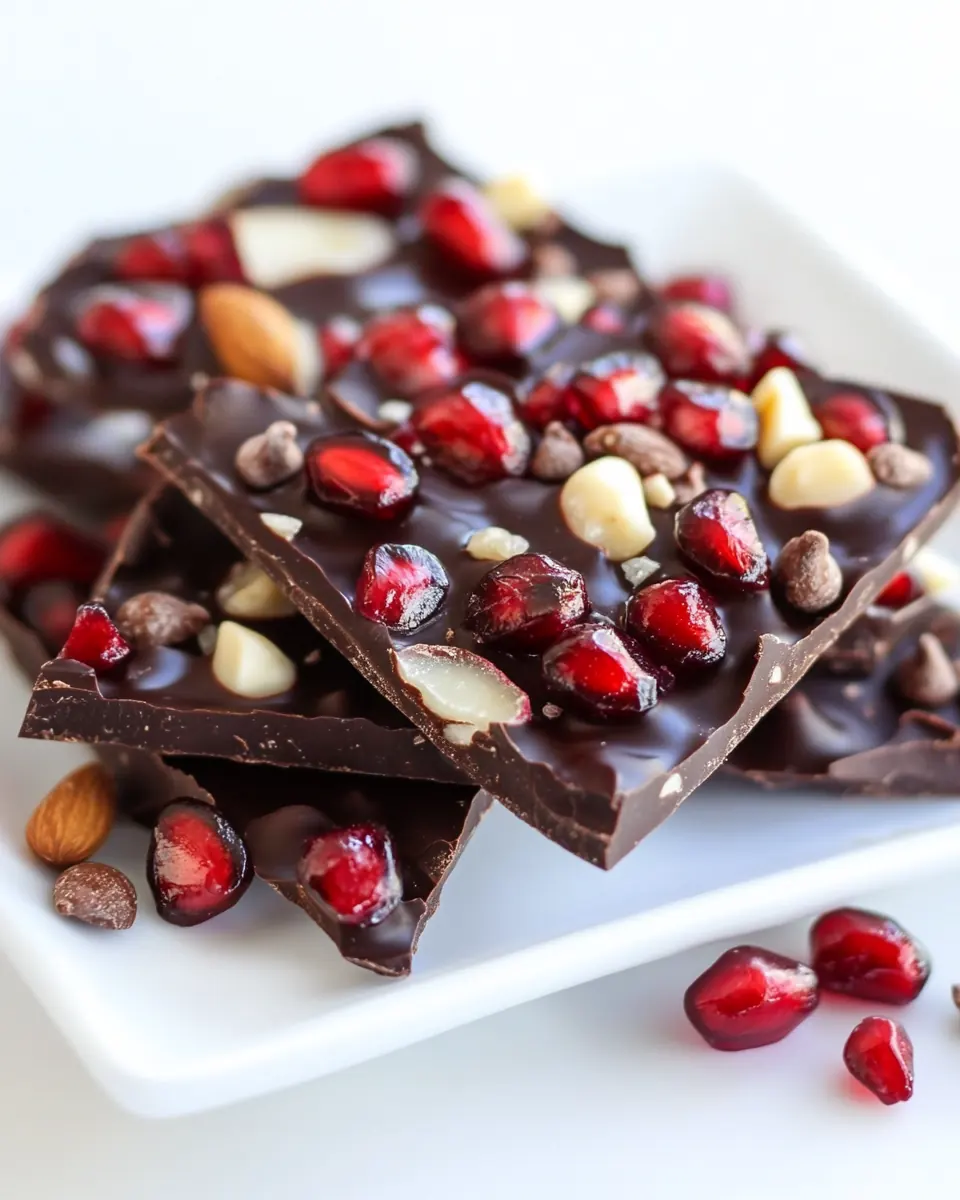
These instructions keep things conversational and friendly, so you can follow along without stress. The process is mostly about watching textures, trusting your senses, and assembling with intention. Gather your ingredients and a lined dish, and we will work through melting, mixing, and chilling step by step.
- Melt the dark chocolate (about two bars worth) in the microwave or a double broiler. Or, if you’re using homemade chocolate, just mix together all the ingredients.: The moment you melt dark chocolate you will notice how glossy and fragrant it becomes, releasing deep cocoa notes that smell almost caramel like. Use short bursts in the microwave, stirring between each interval, to maintain a smooth, velvety texture. If you use a double boiler, a faint steam aroma will swirl up, and the chocolate will warm gradually which reduces the risk of scorching. A common error is overheating, which causes the chocolate to seize or become grainy. If your chocolate tightens, add a tiny bit of neutral oil or a pinch of cocoa butter to bring it back, but prevention by gentle heat is the best route. Keep the bowl warm while you prepare other components so the chocolate does not set prematurely.
- Mix half of the pomegranate seeds and almonds into the chocolate.: As you fold in the first portion of the pomegranate seeds and almonds , pay attention to how the seeds release a faint fruity scent that lightens the chocolate aroma. Use a spatula to evenly distribute them without crushing the seeds, unless you want their juice to streak the chocolate. The combined textures should look varied, with nut fragments and ruby specks visible throughout. Avoid adding too many seeds while the chocolate is still hot, or they may soften and lose their pop. If moisture is present, blot the seeds gently beforehand to preserve snap.
- Spread the mixture into a glass baking dish lined with parchment paper. You can spread it as thin or thickly as you wish.: When you pour the chocolate mixture into the prepared dish, notice how it levels out and forms glossy peaks that settle into a smooth surface. Use an offset spatula or the back of a spoon to guide it, and decide whether you want delicate shards by keeping it thin or chunkier pieces by making it thicker. Thicker bark will feel more fudgy and indulgent, while thinner bark will crack with a crisp bite. A frequent mistake is leaving uneven thickness which affects setting time, so aim for a consistent layer for even chilling.
- Top with the remaining seeds and nuts and press down gently so that they will stick.: As you arrange the remaining pomegranate seeds and almonds on the surface, the visual contrast becomes striking, like tiny gems embedded in a dark field. Press them down with gentle pressure, enough to seat them into the chocolate but not so much that you flatten the seeds. You should see the seeds glisten against the chocolate. Avoid pressing too hard which can push pieces through the layer, and steer clear of leaving areas uncovered if you want a uniform look.
- Refrigerate for 2-3 hours or until firm.: Placing the tray in the refrigerator chills the chocolate into a glossy, firm state, and you will feel the difference when you touch the underside of the dish it should feel cool and set. The chilling also helps the seeds keep their texture rather than releasing juice into the chocolate. Rapid cooling in the freezer is tempting, but that can create condensation when you return it to room temperature, which dulls the shine. Be patient, and let it firm fully for clean breaks.
- Cut roughly with a knife or break the bark into uneven pieces. No need to be perfect.: When the bark is fully set, the sound of a clean break is satisfying, a crisp snap that tells you it chilled properly. Use a knife for rough cuts, or lift the parchment to bend and let it fracture naturally for a rustic look. Irregular pieces make a charming presentation and are easier to portion. A common oversight is warm hands during handling which can leave fingerprints or soften edges, so work briskly and chill again if needed.
- Store in an airtight container in the refrigerator for up to two weeks, or freeze for up to 6 months.: The chilled bark keeps well, and storing it in layers separated by parchment prevents sticking. In the refrigerator it will hold its texture, and if you decide to freeze, wrap tightly to avoid freezer burn and protect the glossy surface. Thaw slowly in the refrigerator to prevent condensation. A typical mistake is leaving it at room temperature for too long, which can cause the seeds to weep and the chocolate to soften unpredictably.
Customization Ideas
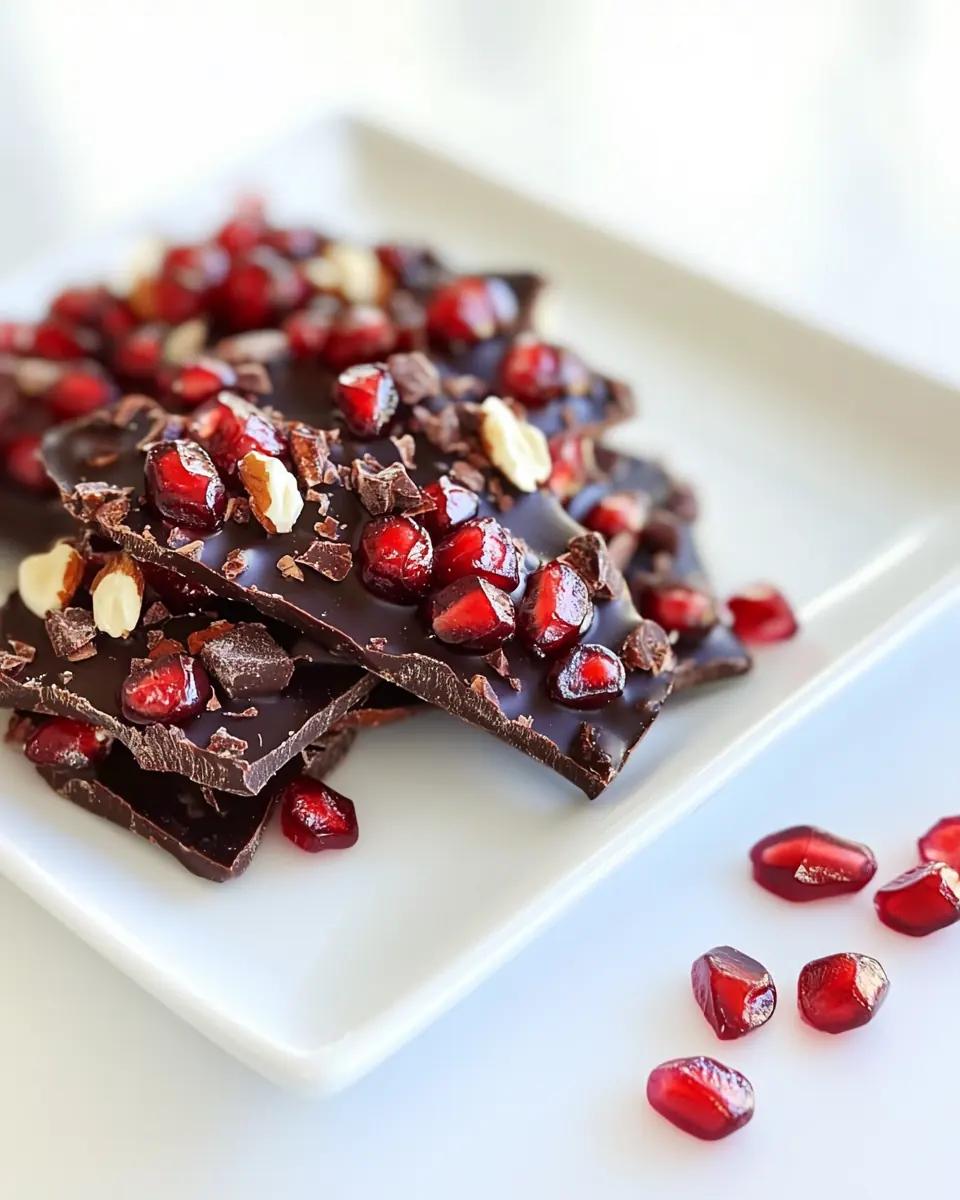
This section offers creative ways to adapt the recipe while staying true to the simple spirit of the bark. Each idea starts with a highlighted phrase to make it easy to scan and implement. Use these suggestions to match the occasion or pantry items you have on hand.
- Swap chocolate intensity: Try a higher percentage dark chocolate for a more bitter, sophisticated profile, or a milder bar if you prefer sweeter bites.
- Change nut shapes: Rough chop the almonds for mixed texture, or leave them whole for dramatic, crunchy contrast.
- Adjust seed quantity: Use closer to 1 cup of pomegranate seeds if you want frequent fruity pops in every bite, or 1/2 cup for subtler bursts.
- Make thin or thick: Spread the chocolate thinner for crisp shards perfect for sprinkling over desserts, or thicker for chunkier, more indulgent pieces.
- Presentation idea: Press more seeds on top in decorative lines or clusters to create a gift worthy appearance without extra effort.
- Storage tip: Freeze portions for long term storage and thaw in the fridge to prevent condensation that can dull the chocolate’s shine.
What to Pair With Chocolate Pomegranate Bark
This section helps you decide when and how to serve the bark with care. Think about texture contrasts and occasions when a small, flavorful sweet is most welcome. Below are practical pairing ideas and serving tips for different settings.
- Holiday platters: Arrange pieces with other small sweets and nuts on a festive board for gatherings, where the glossy pomegranate seeds add seasonal color.
- After dinner treat: Serve small shards as a light finish to a meal, the dark chocolate and seeds provide a palate cleansing bite that feels refined and not too heavy.
- Gifting: Wrap in small boxes or cellophane bags with ribbon; the bark stores well in the refrigerator, making it a thoughtful homemade gift.
- Potluck or tea: Bring a platter to share at afternoon tea or a potluck, where the mix of textures will stand out among typical cookies and bars.
- Storage advice: Keep in an airtight container in the fridge for up to two weeks, or freeze for up to six months, and thaw in the fridge before serving to preserve shine and texture.
- Seasonal touch: Use this for winter holidays when the ruby seeds look festive, or anytime you want a bright, jewel like accent to a dessert spread.
FAQ
Conclusion
What makes this recipe special is how a handful of quality ingredients come together to create a visually stunning, texturally fun treat that is both simple and impressive. Give Chocolate Pomegranate Bark a try when you want a last minute dessert that still feels thoughtful and festive. You will likely find yourself tweaking thickness or seed amounts each time, and that playful flexibility is part of the recipe’s charm. Enjoy sharing it with friends, or savor a few pieces for yourself as a bright little reward.
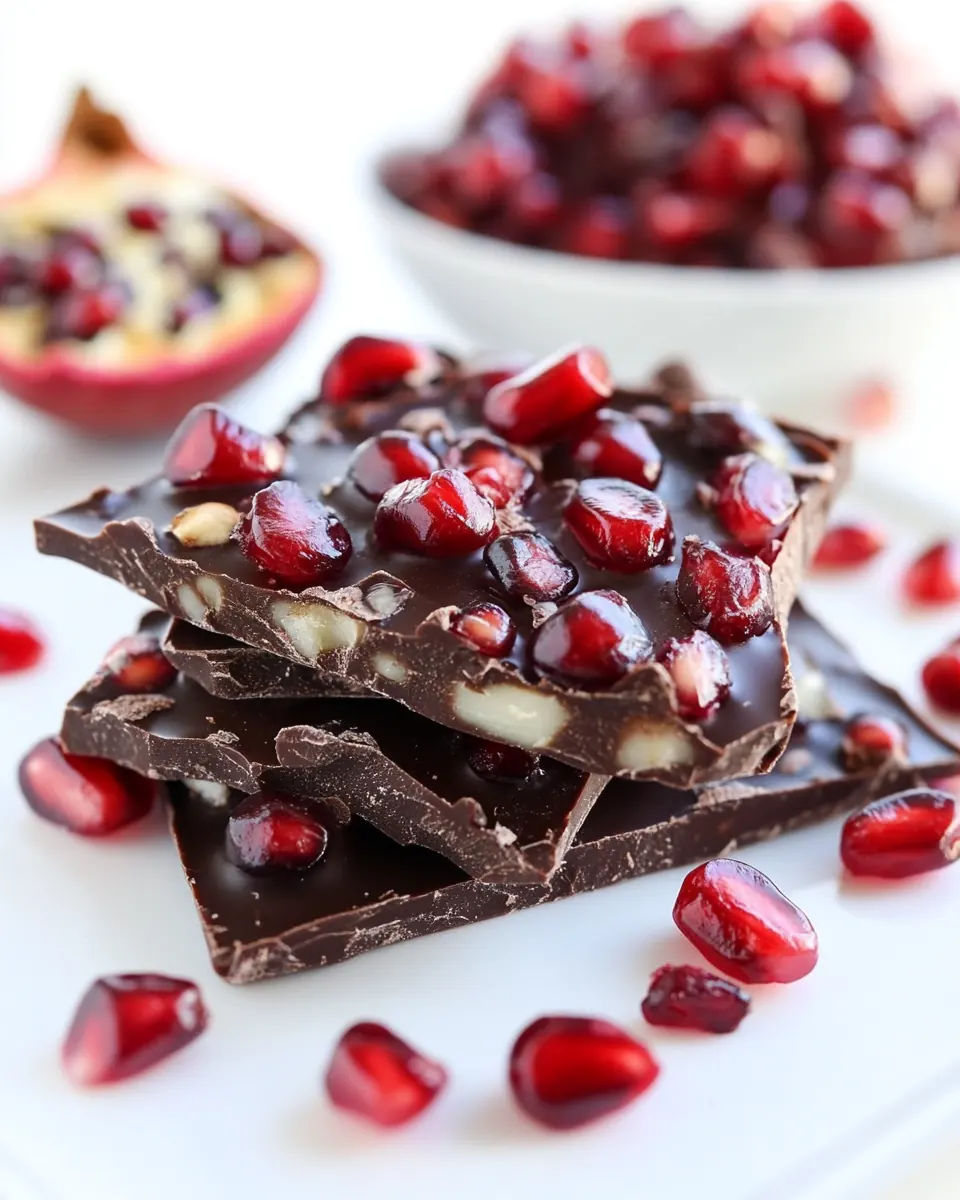
Chocolate Pomegranate Bark
Ingredients
Equipment
Method
- Melt the dark chocolate (about two bars worth) in the microwave or a double broiler. Or, if you’re using homemade chocolate, just mix together all the ingredients.: The moment you melt dark chocolate you will notice how glossy and fragrant it becomes, releasing deep cocoa notes that smell almost caramel like. Use short bursts in the microwave, stirring between each interval, to maintain a smooth, velvety texture. If you use a double boiler, a faint steam aroma will swirl up, and the chocolate will warm gradually which reduces the risk of scorching. A common error is overheating, which causes the chocolate to seize or become grainy. If your chocolate tightens, add a tiny bit of neutral oil or a pinch of cocoa butter to bring it back, but prevention by gentle heat is the best route. Keep the bowl warm while you prepare other components so the chocolate does not set prematurely.
- Mix half of the pomegranate seeds and almonds into the chocolate.: As you fold in the first portion of the pomegranate seeds and almonds , pay attention to how the seeds release a faint fruity scent that lightens the chocolate aroma. Use a spatula to evenly distribute them without crushing the seeds, unless you want their juice to streak the chocolate. The combined textures should look varied, with nut fragments and ruby specks visible throughout. Avoid adding too many seeds while the chocolate is still hot, or they may soften and lose their pop. If moisture is present, blot the seeds gently beforehand to preserve snap.
- Spread the mixture into a glass baking dish lined with parchment paper. You can spread it as thin or thickly as you wish.: When you pour the chocolate mixture into the prepared dish, notice how it levels out and forms glossy peaks that settle into a smooth surface. Use an offset spatula or the back of a spoon to guide it, and decide whether you want delicate shards by keeping it thin or chunkier pieces by making it thicker. Thicker bark will feel more fudgy and indulgent, while thinner bark will crack with a crisp bite. A frequent mistake is leaving uneven thickness which affects setting time, so aim for a consistent layer for even chilling.
- Top with the remaining seeds and nuts and press down gently so that they will stick.: As you arrange the remaining pomegranate seeds and almonds on the surface, the visual contrast becomes striking, like tiny gems embedded in a dark field. Press them down with gentle pressure, enough to seat them into the chocolate but not so much that you flatten the seeds. You should see the seeds glisten against the chocolate. Avoid pressing too hard which can push pieces through the layer, and steer clear of leaving areas uncovered if you want a uniform look.
- Refrigerate for 2-3 hours or until firm.: Placing the tray in the refrigerator chills the chocolate into a glossy, firm state, and you will feel the difference when you touch the underside of the dish it should feel cool and set. The chilling also helps the seeds keep their texture rather than releasing juice into the chocolate. Rapid cooling in the freezer is tempting, but that can create condensation when you return it to room temperature, which dulls the shine. Be patient, and let it firm fully for clean breaks.
- Cut roughly with a knife or break the bark into uneven pieces. No need to be perfect.: When the bark is fully set, the sound of a clean break is satisfying, a crisp snap that tells you it chilled properly. Use a knife for rough cuts, or lift the parchment to bend and let it fracture naturally for a rustic look. Irregular pieces make a charming presentation and are easier to portion. A common oversight is warm hands during handling which can leave fingerprints or soften edges, so work briskly and chill again if needed.
- Store in an airtight container in the refrigerator for up to two weeks, or freeze for up to 6 months.: The chilled bark keeps well, and storing it in layers separated by parchment prevents sticking. In the refrigerator it will hold its texture, and if you decide to freeze, wrap tightly to avoid freezer burn and protect the glossy surface. Thaw slowly in the refrigerator to prevent condensation. A typical mistake is leaving it at room temperature for too long, which can cause the seeds to weep and the chocolate to soften unpredictably.
Notes
- Swap chocolate intensity: Try a higher percentage dark chocolate for a more bitter, sophisticated profile, or a milder bar if you prefer sweeter bites.
- Change nut shapes: Rough chop the almonds for mixed texture, or leave them whole for dramatic, crunchy contrast.
- Adjust seed quantity: Use closer to 1 cup of pomegranate seeds if you want frequent fruity pops in every bite, or 1/2 cup for subtler bursts.
- Make thin or thick: Spread the chocolate thinner for crisp shards perfect for sprinkling over desserts, or thicker for chunkier, more indulgent pieces.
- Presentation idea: Press more seeds on top in decorative lines or clusters to create a gift worthy appearance without extra effort.
- Storage tip: Freeze portions for long term storage and thaw in the fridge to prevent condensation that can dull the chocolate’s shine.