Melt the dark chocolate (about two bars worth) in the microwave or a double broiler. Or, if you’re using homemade chocolate, just mix together all the ingredients.: The moment you melt dark chocolate you will notice how glossy and fragrant it becomes, releasing deep cocoa notes that smell almost caramel like. Use short bursts in the microwave, stirring between each interval, to maintain a smooth, velvety texture. If you use a double boiler, a faint steam aroma will swirl up, and the chocolate will warm gradually which reduces the risk of scorching. A common error is overheating, which causes the chocolate to seize or become grainy. If your chocolate tightens, add a tiny bit of neutral oil or a pinch of cocoa butter to bring it back, but prevention by gentle heat is the best route. Keep the bowl warm while you prepare other components so the chocolate does not set prematurely.
Mix half of the pomegranate seeds and almonds into the chocolate.: As you fold in the first portion of the pomegranate seeds and almonds , pay attention to how the seeds release a faint fruity scent that lightens the chocolate aroma. Use a spatula to evenly distribute them without crushing the seeds, unless you want their juice to streak the chocolate. The combined textures should look varied, with nut fragments and ruby specks visible throughout. Avoid adding too many seeds while the chocolate is still hot, or they may soften and lose their pop. If moisture is present, blot the seeds gently beforehand to preserve snap.
Spread the mixture into a glass baking dish lined with parchment paper. You can spread it as thin or thickly as you wish.: When you pour the chocolate mixture into the prepared dish, notice how it levels out and forms glossy peaks that settle into a smooth surface. Use an offset spatula or the back of a spoon to guide it, and decide whether you want delicate shards by keeping it thin or chunkier pieces by making it thicker. Thicker bark will feel more fudgy and indulgent, while thinner bark will crack with a crisp bite. A frequent mistake is leaving uneven thickness which affects setting time, so aim for a consistent layer for even chilling.
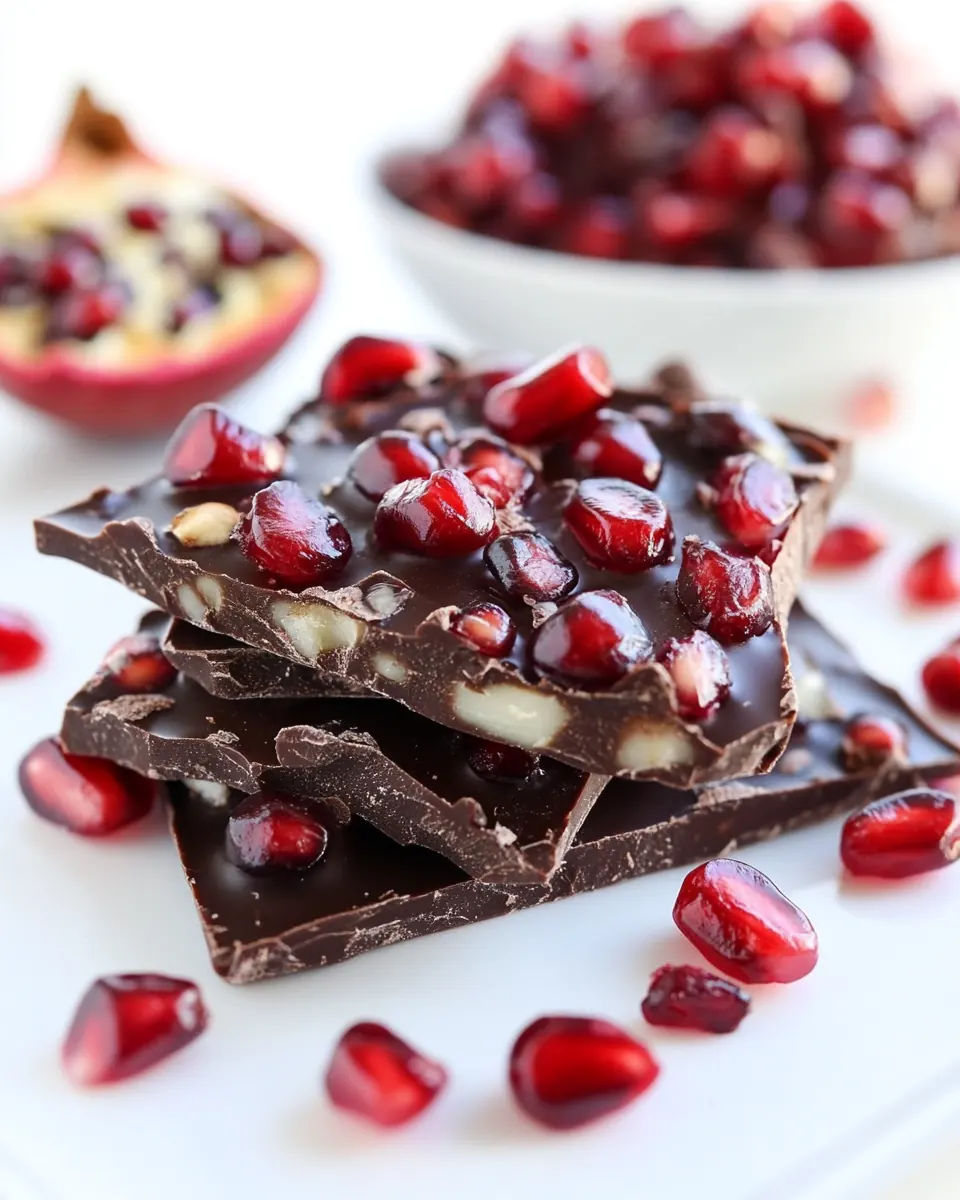
Top with the remaining seeds and nuts and press down gently so that they will stick.: As you arrange the remaining pomegranate seeds and almonds on the surface, the visual contrast becomes striking, like tiny gems embedded in a dark field. Press them down with gentle pressure, enough to seat them into the chocolate but not so much that you flatten the seeds. You should see the seeds glisten against the chocolate. Avoid pressing too hard which can push pieces through the layer, and steer clear of leaving areas uncovered if you want a uniform look.
Refrigerate for 2-3 hours or until firm.: Placing the tray in the refrigerator chills the chocolate into a glossy, firm state, and you will feel the difference when you touch the underside of the dish it should feel cool and set. The chilling also helps the seeds keep their texture rather than releasing juice into the chocolate. Rapid cooling in the freezer is tempting, but that can create condensation when you return it to room temperature, which dulls the shine. Be patient, and let it firm fully for clean breaks.
Cut roughly with a knife or break the bark into uneven pieces. No need to be perfect.: When the bark is fully set, the sound of a clean break is satisfying, a crisp snap that tells you it chilled properly. Use a knife for rough cuts, or lift the parchment to bend and let it fracture naturally for a rustic look. Irregular pieces make a charming presentation and are easier to portion. A common oversight is warm hands during handling which can leave fingerprints or soften edges, so work briskly and chill again if needed.
Store in an airtight container in the refrigerator for up to two weeks, or freeze for up to 6 months.: The chilled bark keeps well, and storing it in layers separated by parchment prevents sticking. In the refrigerator it will hold its texture, and if you decide to freeze, wrap tightly to avoid freezer burn and protect the glossy surface. Thaw slowly in the refrigerator to prevent condensation. A typical mistake is leaving it at room temperature for too long, which can cause the seeds to weep and the chocolate to soften unpredictably.