Preheat a non stick skillet over medium low heat or an electric griddle. Brush the surface with the oil and then use a tissue to gently wipe the excess oil.: You will notice a gentle, even sheen of warmth when the cooking surface reaches the right temperature, not smoking or scorching. This careful medium low heat helps the pancakes cook through without burning, allowing the centers to stay tender while the edges set. If the pan is too hot the exterior will brown too quickly and the inside will remain undercooked, so test by dropping a small dollop of batter first. A lightly oiled surface should sizzle softly, not roar, which tells you the heat is correct.
In a small bowl, mix the dry ingredients together. Set aside.: The tactile action of brushing and wiping leaves a whisper of lubrication that prevents sticking while avoiding greasy pancakes. You should see a faint sheen on the skillet and feel almost nothing when you glide the paper towel across it. Leaving too much oil will make the pancakes fry at the edge and become heavy instead of airy. The wipe keeps the surface uniform so each pancake browns evenly.
In a bigger bowl, mix the wet ingredients together and set aside.: As you stir, inhale the faint scent of flour and the subtle aroma of baking powder and baking soda as they blend. This step ensures the leaveners are evenly distributed so pockets of lift appear consistently across every cake. A uniform dry mix prevents uneven rising and odd metallic notes from concentrated leavening. Whisk lightly to break up clumps and lend air to the Flour , which aids tenderness.
Take a spatula and then add the dry ingredients bowl to the wet ingredients bowl. Mix until they blend together. Avoid over mixing the batter, a few lumps are ok to remain.: Letting the mixed dry ingredients rest briefly allows you to prepare the wet ingredients without rushing, and it gives a moment for any stray lumps to settle. This pause is practical and helps you stay organized. Avoid leaving the mixture exposed to moist air for too long, which could cause premature activation of the leaveners.
Take a 1/4 cup measuring scoop and fill it with the batter, then pour that over the preheated skillet or griddle. Wait for a few seconds until the edges start to bubble, then gently flip the pancake and cook for another 30 seconds or so until golden. Repeat with the remaining batter, oiling the skillet and swiping any excess oil after each pancake.: When you blend the egg , melted butter or oil , Yogurt , sugar , and vanilla , the kitchen will fill with a warm, creamy aroma. The wet mix should be smooth and homogenous so it can hydrate the dry ingredients evenly. If the Yogurt is very thick, give it a quick whisk with a splash of milk to loosen it. Overworking this mix is unnecessary; gentle motion yields the best final texture.
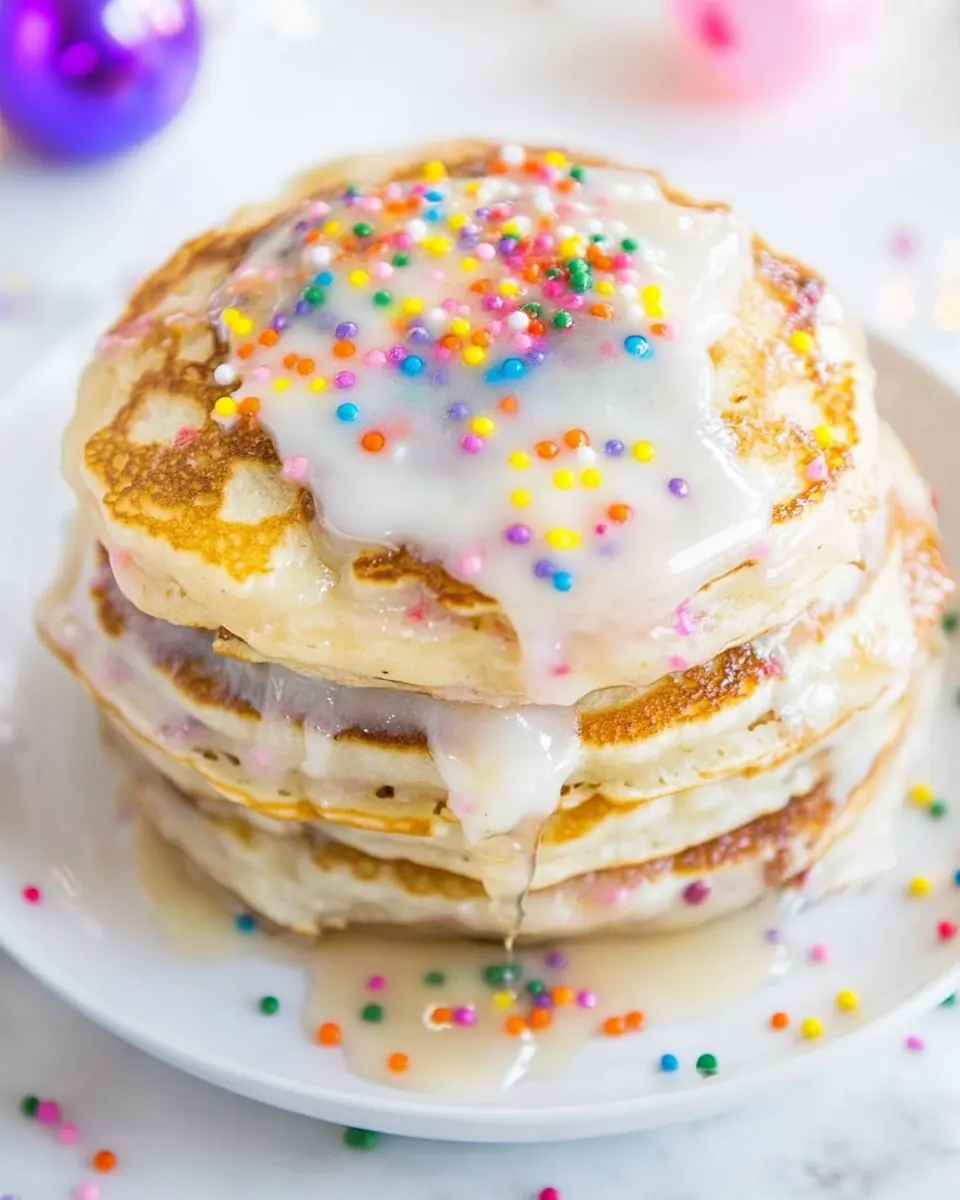
Stack your pancakes in two's, three's or more and glaze with the cream cheese vanilla glaze, adding extra sprinkles if you like 🙂 Enjoy!: Combine with a spatula by folding the dry into the wet, and you will see the batter thicken into a pale, lumpy mass. These few lumps are good, they indicate minimal gluten development which keeps the pancakes tender. Avoid aggressive stirring which creates a dense, chewy interior. If the batter feels too stiff, a tablespoon of milk will loosen it without diluting the structure.
For the Cream Cheese Glaze: Place all the ingredients in a bowl and whisk them up. If the icing feels too thick, add milk a little bit at a time and whisk to make sure it doesn’t thin out. If you feel the icing is too thin, add a tablespoon of cream cheese with a tablespoon of confectioner sugar and whisk it in. For the citrus flavours, add the zest of 1 citrus of your choice and substitute the milk with the juice of that citrus.: The sound here is quiet, a soft scraping as the spatula moves through the batter and the mixture becomes uniform. You are aiming for a batter that is cohesive but still slightly lumpy, which yields the best crumb after cooking. A common mistake is overmixing, which tightens the gluten and produces rubbery pancakes, so stop when the major dry streaks are gone but small lumps remain.
Avoid over mixing the batter, a few lumps are ok to remain: Trust the texture, not perfection. Those tiny lumps relax during cooking and result in a tender interior. If you find the batter overly lumpy from clumps of Flour , press them through a sieve before combining, but otherwise accept gentle imperfection for better mouthfeel. Overhandling here is the fastest route to dense cakes.
Take a 1/4 cup measuring scoop and fill it with the batter, then pour that over the preheated skillet or griddle: As the batter hits the hot surface you will hear a faint, pleasant hiss and see the batter spread into a neat round. The 1/4 cup gives consistent size for even cooking across batches. If you pour too much, the center may stay raw when the edges finish, so keep to the measure for predictable results. Watch how the batter behaves; a slow spread is a sign the pan is at good temperature.
Wait for a few seconds until the edges start to bubble, then gently flip the pancake and cook for another 30 seconds or so until golden: Tiny bubbles forming at the edges are your cue that the interior is setting and it is ready to flip. After turning, the surface should take on an even golden tone in roughly 30 seconds, depending on your heat. The smell will shift from raw batter to a warm, toasty aroma. Flipping too early yields a gummy center, while flipping too late risks overbrowning, so trust the bubbles and the feel of the pancake when you nudge it with a spatula.
Repeat with the remaining batter, oiling the skillet and swiping any excess oil after each pancake: Each new pancake may cook slightly differently as the pan temperature settles, so refresh that thin layer of Oil and wipe excess to maintain balance. You should notice consistent browning and a soft interior as you continue. A common error is letting the surface get oily between batches, which causes uneven frying; wiping keeps the finish light and consistent.
Stack your pancakes in two's, three's or more and glaze with the cream cheese vanilla glaze, adding extra sprinkles if you like 🙂 Enjoy!: When the pancakes are warm the glaze will melt just enough to coat and cling, producing a glossy finish and a slightly tangy sweetness. The contrast between the warm cake and the cool, creamy glaze is delightful, and the extra Rainbow sprinkles add playful texture. Serve immediately for the best mouthfeel, as pancakes lose their airy charm when left to sit for too long.
For the Cream Cheese Glaze: Place all the ingredients in a bowl and whisk them up : As you whisk softened cream cheese with confectioner s sugar , vanilla extract , and milk , the mixture will transform from lumpy to silky. This process releases a subtle dairy perfume and creates a thick but pourable glaze. If it seems too thick add milk a bit at a time, and if too thin, stir in a little more confectioner s sugar or cream cheese to rebalance. The right texture clings without sliding right off.
If the icing feels too thick, add milk a little bit at a time and whisk to make sure it does not thin out: The consistency should be glossy and able to drizzle slowly. Adding milk slowly helps you hit the sweet spot between spreadable and runny. A common mistake is dumping too much liquid at once, which forces you to overcorrect and can lead to a sugary or overly thin finish.
If you feel the icing is too thin, add a tablespoon of cream cheese with a tablespoon of confectioner sugar and whisk it in: This small adjustment brings body back to the glaze and deepens its flavor. Work it in thoroughly until the mixture smooths out and gains structure. Avoid adding too much powdered sugar which can make the glaze grainy; incremental adjustments maintain balance.
For the citrus flavours, add the zest of 1 citrus of your choice and substitute the milk with the juice of that citrus: Incorporating citrus zest and juice brightens the glaze and adds a lively counterpoint to the sweet base. You will smell a fresh, vibrant aroma that complements the pancakes without overwhelming them. Be cautious using too much juice, as it can thin the glaze excessively; a little goes a long way.