Heart Shaped Strawberry Hand Pies
Heart Shaped Strawberry Hand Pies are the kind of treat I reach for when I want to make someone feel special with very little fuss. The first time I made these, I was juggling a school project and a last minute idea to surprise my neighbor, and these little pastries came together like a tiny love letter. I remember the smell of warm strawberry filling brightening the kitchen while the flaky pastry browned at the oven edge, and how that simple moment turned an ordinary afternoon into something memorable.
Over the years I have refined this simple concept, learning small tricks that make the texture flakier and the filling shine. There is something quietly festive about a stack of small hand pies arranged on a plate, the sugar catching the light, and you instantly want to share them. When I bring out a batch, conversations slow down, forks are forgotten, and people tend to grin before they even take a bite.
Recipe Snapshot
37 mins
25 mins
12 mins
Medium
180 kcal
American
Gluten-Free, Low FODMAP
Desserts
Oven, Baking sheet, Parchment paper, 3 inch heart cookie cutter, Small bowl, Wire rack
Why This Heart Shaped Strawberry Hand Pies Works
They look like a celebration
I love making Heart Shaped Strawberry Hand Pies because their shape says celebration without needing a banner. Whether it is a small gesture for a friend, a classroom treat, or a cozy coffee date, these little hearts make any moment feel considered. The presentation is instant, and you can arrange them in clusters to amplify the effect.
Portable joy
Because each pie is handheld, they’re perfect for taking to picnics or passing around at a party. I often pack them into a small box with parchment, and the flaky pastry holds up beautifully. The filling stays contained, and you can eat them standing up, which makes them practical as well as pretty.
Simple ingredient list, big payoff
One of the reasons I keep this recipe close is how little it asks for, while delivering so much flavor. Using a quality pie dough and real strawberry filling means you get an honest, bright flavor. The lemon zest adds a lift that makes the fruit pop, and the turbinado sugar gives a pleasing crunch on the surface.
Easy to scale and customize
I appreciate recipes that are forgiving, and these hand pies are exactly that. You can make a few or a platter, and the process scales without drama. I sometimes add a touch more zest, or vary the filling, and it still works. For me, that flexibility is a big reason this recipe has stayed in rotation.
Comfort of homemade pastry
There is something grounding about rolling dough and pressing hearts together. I find the sensory rhythm of rolling, cutting, sealing, and brushing to be calming. It also makes the final bites taste like care rather than convenience, and that sentiment is often the most delicious ingredient of all.
What You’ll Need for Heart Shaped Strawberry Hand Pies

These ingredients are lean and purposeful, each playing a clear role. The prepared pastry provides a flaky vessel, the strawberry pie filling supplies sweet and slightly tart body, and the lemon zest lifts the flavor so the fruit does not taste flat. The egg wash makes the crust shine and helps the edges seal, while the coarse turbinado sugar adds a bright, crunchy finish.
- Prepared pastry pie dough enough to yield 2, 9-inch rounds: Rolled and chilled to provide flakiness and structure, prepared pastry pie dough yields two 9-inch rounds for cutting into heart shapes; it creates the crisp, buttery layers that encase the filling and holds up during baking. Handle gently to avoid overworking, and keep chilled to prevent shrinkage and toughness during assembly and bake time.
- 1/2 cups strawberry Pie Filling or your favorite fruit pie filling: Sweetened fruit mixture concentrated with sugars and fruit pieces, 1/2 cups strawberry pie filling adds vibrant flavor, juiciness, and texture to the hand pies while helping to create a glossy, jam-like center. Use a thick filling to minimize leaking during baking and adjust proportions if your filling is particularly loose.
- 1 teaspoon lemon zest: Finely grated citrus peel, 1 teaspoon lemon zest brightens and balances the sweetness of the strawberry filling with fresh, aromatic acidity; it enhances overall flavor complexity without adding liquid. Sprinkle evenly into the filling before assembling to distribute the citrus lift throughout each pastry.
- 1 large egg beaten: Lightly beaten to an even consistency, 1 large egg beaten serves as an egg wash to promote golden browning and help pastry edges seal securely; it also adds a subtle sheen to the baked pies. Brush onto the dough just before sprinkling sugar and baking for best visual and functional results.
- Coarse Turbinado sugar for sprinkling: Large, coarse turbinado sugar provides crunchy texture and a sparkling finish when sprinkled over the egg-washed pastry; it adds a hint of molasses-like flavor and attractive visual contrast. Apply sparingly to avoid excessive sweetness while enhancing bite and presentation.
Preparation Steps for Heart Shaped Strawberry Hand Pies
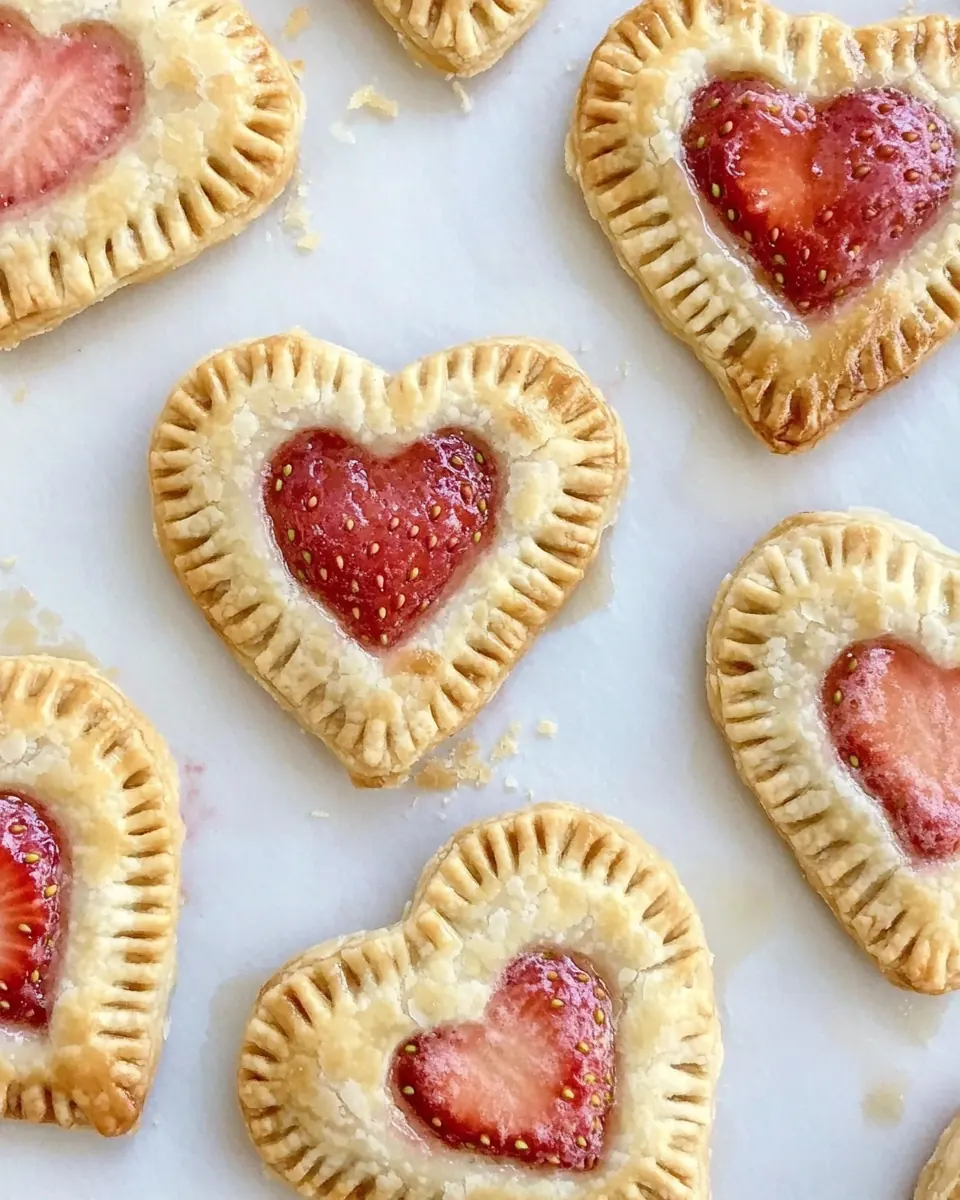
I like to approach baking these pies methodically yet warmly, treating each step as part of a small ritual. The directions below are expanded with sensory cues, reasons behind techniques, and what to watch for so your batch turns out reliably golden and flavorful.
- Place racks in the upper third and center of the oven, then preheat the oven to 400 degrees F. Line two baking sheets with parchment paper or silicone mats.: Warm oven air creates steady browning on the pastry , giving you that golden, slightly crisp exterior. When you slide trays in, you'll hear a faint sizzle as the fat in the dough begins to render, and the aroma will shift from flour to toasted butter. Preheating fully is vital; putting cold dough into a cool oven can lead to greasy, dense crusts. A common mistake is underestimating the oven time, so always wait until the oven reaches the full temperature before baking.
- In a small bowl, stir together the pie filling and lemon zest. Set aside.: Lined sheets prevent sticking and encourage even browning, so the bottoms of your hearts crisp without burning. Parchment offers a dry surface that allows moisture to escape, while silicone will give a slightly slower browning but excellent release. Be sure the sheets are clean and level; a warped sheet can cause uneven baking. Avoid greasing the paper, which can cause sugar to caramelize too quickly and lead to dark spots.
- Place the first pie crust on a well-floured surface and roll into a 1/8-inch thickness.: Combining the strawberry filling with zest lets the citrus oils perfume the fruit, brightening every bite. As you stir, inhale the fragrant lift, and note the glossy texture that indicates the filling is ready to spoon. Mixing also distributes any larger fruit pieces so each pocket gets even flavor. If the filling seems excessively runny, chill it a touch to firm up; too wet a filling can make the bottom of the pies soggy during baking.
- With a 3-inch heart-shaped cookie cutter, cut 12 to 14 hearts from the rolled crust. Transfer the hearts to a plate or baking sheet and place them in the refrigerator, then roll and cut the second crust. After cutting both crusts, you should have 24 to 28 hearts total.: Rolling to an even thinness ensures uniform baking and delicate layers that flake when you bite in. The sound under the pin is slightly squeaky when the dough is chilled enough, and you should see a smooth, slightly translucent edge when the thickness is right. Flour the surface lightly to avoid sticking, but not so much that the dough dries out. A frequent error is rolling unevenly, which causes some hearts to finish sooner than others, so rotate the dough and check thickness as you go.
- Beat the egg in a small bowl to create an egg wash, then lightly brush over half (12 to 14) of the hearts.: The cutter should pop cleanly through chilled dough, revealing crisp edges that bake into a defined heart shape. Transfer them carefully to a plate or sheet and chill to firm up so they hold their shape when filled. Cutting both rounds should yield 24 to 28 hearts total, giving you matching tops and bottoms. If the hearts become soft during handling, return them to the fridge; soft dough can stretch and deform, making sealing difficult.
- Place 1 heaping teaspoon of the strawberry filling in the center of each egg-washed heart, ensuring that you place a piece of fruit in each.: The scent of the beaten egg is faint but you will notice how it makes the pastry surface glossy and helps the top and bottom pieces adhere. Use a light hand when brushing so you do not saturate the dough. Let any excess drip back into the bowl to avoid pooling which can cause burning. A typical misstep is overbrushing, which can make the finished crust heavy and prone to color imbalance.
- Gently stretch each of the remaining hearts with your fingers to make them slightly larger, then set them on top of the filling-topped hearts. With your fingers, gently press the edges together. With the tines of a fork, press around the edges of the hearts to seal, then use a small knife to cut two small vents in the top of each heart.: The spooned filling should mound slightly, offering a promise of jammy interior without spilling. When you press a piece of fruit into the center you create a lovely textural contrast and make sure each bite has fruit. You will sense a slight tack as the filling meets the egg wash, which helps the top piece adhere. Avoid overfilling, which creates steam pockets that can burst the seal during baking.
- Brush the tops of each complete heart with the beaten egg, then sprinkle with turbinado sugar.: This slight stretching creates an overlap that makes sealing easier and prevents the filling from squeezing out. As you press the edges, the two layers should knit together; you will feel a subtle give as the dough compresses. Use fork tines to crimp the edges, creating a sound crisp impression and a tight seal. A common issue here is pressing too hard, which can force filling out the vents, so be gentle and patient.
- Place the hearts 1 inch apart on the prepared baking sheets. Bake for 12 minutes, until golden and bubbling, rotating the pans’ position halfway through. Remove from the oven and allow to cool on the pan for 10 minutes, then transfer to a wire rack to cool completely.: The egg wash deepens color and the sugar adds sparkle and crunch, creating a pleasing contrast to the tender interior. When you brush, you will notice the paste sheen catching the light, and the sugar crystals will glint on top. Apply sugar lightly to avoid overly sweet bites. If you see large pools of egg, blot lightly with a fingertip, as pooled egg can form dark spots.
- Place the hearts 1 inch apart on the prepared baking sheets: Proper spacing allows hot air to circulate, ensuring even browning and preventing the pastries from fusing together. As they bake you will hear faint popping as steam vents and see the centers bubble slightly before the crust takes on color. Rotate pans halfway so each sheet gets an even exposure to heat. Overcrowding is the usual mistake here, which leads to uneven texture and incomplete browning.
- Bake for 12 minutes until golden and bubbling rotating the pans position halfway through: The first sign of doneness is a warm golden hue at the edges and a gentle bubbling from the vents, releasing a sweet, jammy aroma. The surface should be set and glossy where the egg wash was applied. Rotating ensures both sheets achieve the same finish. Underbaking leaves the centers gummy while overbaking will dry the crust, so watch the color closely in the final minutes.
- Remove from the oven and allow to cool on the pan for 10 minutes then transfer to a wire rack to cool completely: Cooling on the pan helps the filling settle so the pies hold shape when moved, and transferring to a rack prevents the bottoms from steaming and becoming soggy. You will feel the filling firm a touch as it cools, and the aroma will mellow into a warm, settled sweetness. Cutting into them while very hot can cause the filling to spill, so patience yields prettier slices and cleaner hands.
Helpful Hints
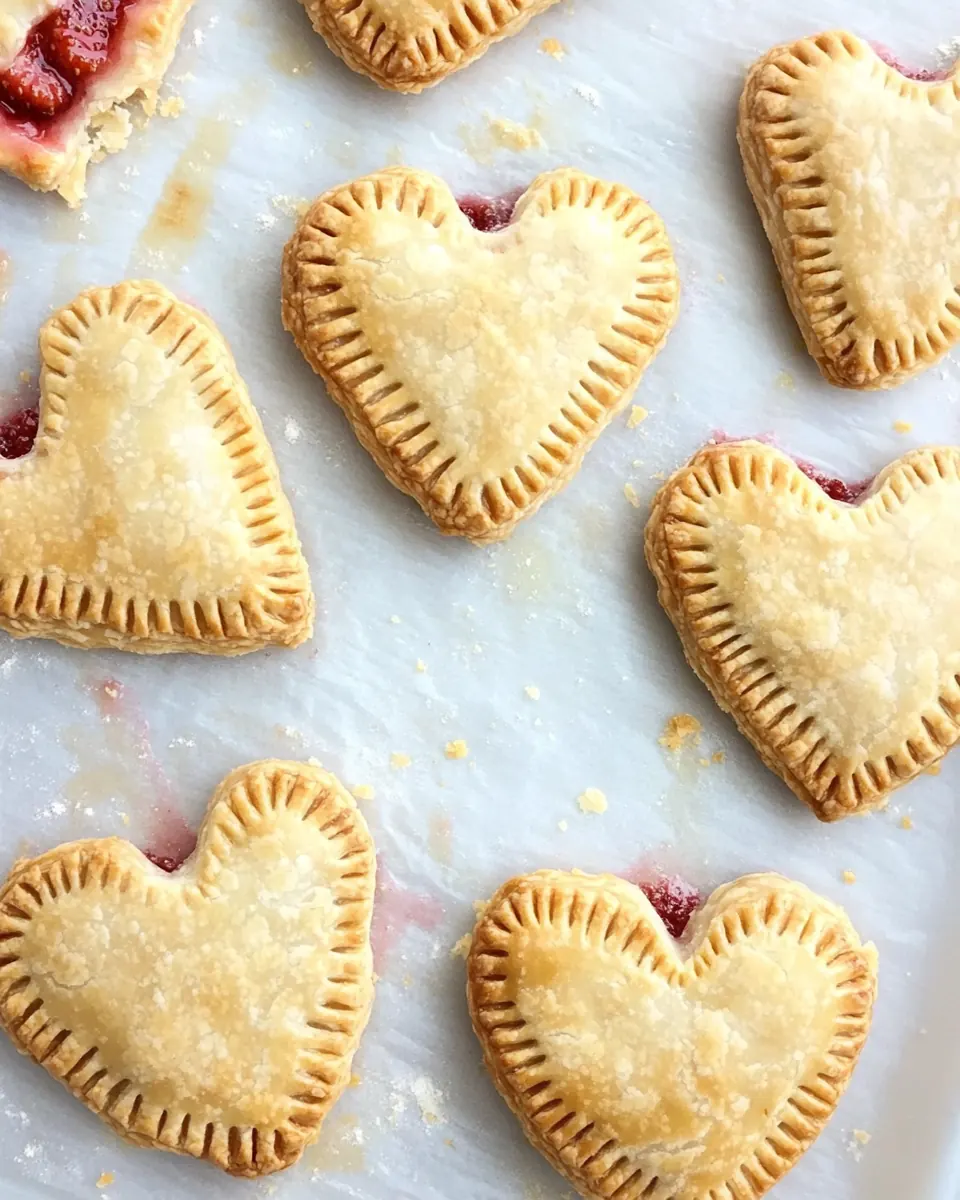
These tips reflect years of small adjustments I use every time I make Heart Shaped Strawberry Hand Pies. Each one starts with a bold phrase, then explains why it matters and how to put it into practice.
- Chill the dough thoroughly, chilling prevents the butter in the pastry from melting prematurely, which yields flakier layers and cleaner edges when cutting. I often work in a cool kitchen or briefly return the dough to the fridge between batches.
- Use a consistent cutter size, a uniform 3 inch cutter helps the tops and bottoms match precisely, making sealing easier and creating consistent baking times. Smaller or larger cutters will require adjustments to filling volume and baking time.
- Sparingly flour your work surface, too much flour dries the dough while too little causes sticking; a light dusting is enough to prevent adhesion while keeping the pastry tender. Clean up excess flour before transferring to avoid burning in the oven.
- Chill cut shapes before filling, chilling firms the dough so it holds shape under the weight of the filling. This is especially helpful if your kitchen is warm, and it reduces stretching when placing the top layer.
- Seal edges with a fork and a little pressure, gentle but firm crimps ensure the pies stay closed while baking. Use the fork tines to create an even seal, and avoid over pressing which can push filling out through the vents.
- Make vents for steam escape, two small slits on each top let steam release and prevent the filling from forcing seams open. Cut clean vents with a sharp knife to avoid ragged openings that can leak.
- Let pies cool slightly before transferring, cooling on the baking sheet for about 10 minutes stabilizes the filling. Moving them too soon can result in deformation and spills, so patience keeps them neat.
What to Serve Alongside Heart Shaped Strawberry Hand Pies
These little pies are versatile and pair well with simple companions. They shine at brunch, picnic spreads, and dessert tables, and their portable nature makes them ideal for casual gatherings. Below are serving suggestions arranged for different occasions, plus storage ideas and seasonal pairings to help you plan.
- Brunch platter pairing, serve with a small bowl of whipped cream and a tray of fresh berries for a soft contrast to the baked sugar crunch. Add a selection of tea or coffee in pretty cups to keep the mood relaxed and unfussy.
- Afternoon tea or coffee break, arrange the pies on a tiered stand with delicate napkins, offering lemon zest on the side for guests who want extra brightness. The tiny hearts fit naturally into a ritual of slow conversation and small bites.
- Picnic friendly setup, pack into a shallow box with parchment and a sprig of fresh herbs for a fragrant touch. They travel well when cooled and are easy to eat outdoors, just be mindful of warm temperatures which can soften the crust.
- Valentine or special occasion dessert, present a plate with a dusting of powdered sugar and a few strategically placed whole strawberries for an elevated feel. The heart shapes make them inherently themed, so simple styling is enough to make a pretty impression.
- Storage and make ahead, store baked pies in an airtight container at room temperature for up to two days, or freeze unfrosted pies for longer keeping. Reheat gently in a warm oven to refresh the crispness of the crust before serving.
- Seasonal pairings, while ideal for spring fruit flavors, these pies also pair nicely with late summer berries or autumn preserves; adjust the filling to reflect seasonal sweetness and acidity for best results.
FAQ
Conclusion
These Heart Shaped Strawberry Hand Pies are special because they pair simple ingredients with an unmistakable presentation, offering flaky crust and jammy fruit in every bite. Give them a try the next time you want a small, thoughtful dessert or a festive treat to share with friends. Baking these pies invites a bit of ceremony into the kitchen, and the rewards are warm, shareable moments that taste like care.
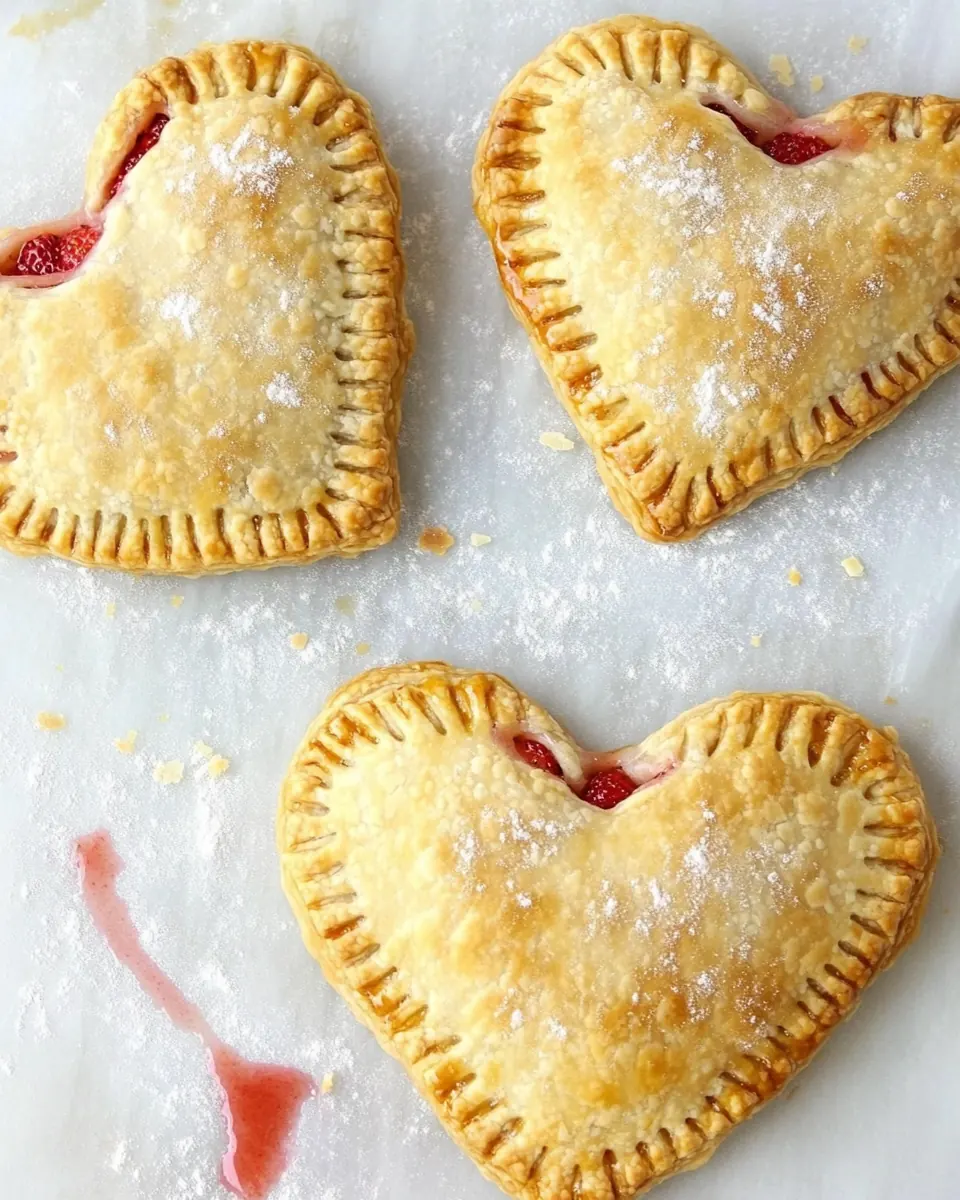
Heart Shaped Strawberry Hand Pies
Ingredients
Equipment
Method
- Place racks in the upper third and center of the oven, then preheat the oven to 400 degrees F. Line two baking sheets with parchment paper or silicone mats.: Warm oven air creates steady browning on the pastry , giving you that golden, slightly crisp exterior. When you slide trays in, you'll hear a faint sizzle as the fat in the dough begins to render, and the aroma will shift from flour to toasted butter. Preheating fully is vital; putting cold dough into a cool oven can lead to greasy, dense crusts. A common mistake is underestimating the oven time, so always wait until the oven reaches the full temperature before baking.
- In a small bowl, stir together the pie filling and lemon zest. Set aside.: Lined sheets prevent sticking and encourage even browning, so the bottoms of your hearts crisp without burning. Parchment offers a dry surface that allows moisture to escape, while silicone will give a slightly slower browning but excellent release. Be sure the sheets are clean and level; a warped sheet can cause uneven baking. Avoid greasing the paper, which can cause sugar to caramelize too quickly and lead to dark spots.
- Place the first pie crust on a well-floured surface and roll into a 1/8-inch thickness.: Combining the strawberry filling with zest lets the citrus oils perfume the fruit, brightening every bite. As you stir, inhale the fragrant lift, and note the glossy texture that indicates the filling is ready to spoon. Mixing also distributes any larger fruit pieces so each pocket gets even flavor. If the filling seems excessively runny, chill it a touch to firm up; too wet a filling can make the bottom of the pies soggy during baking.
- With a 3-inch heart-shaped cookie cutter, cut 12 to 14 hearts from the rolled crust. Transfer the hearts to a plate or baking sheet and place them in the refrigerator, then roll and cut the second crust. After cutting both crusts, you should have 24 to 28 hearts total.: Rolling to an even thinness ensures uniform baking and delicate layers that flake when you bite in. The sound under the pin is slightly squeaky when the dough is chilled enough, and you should see a smooth, slightly translucent edge when the thickness is right. Flour the surface lightly to avoid sticking, but not so much that the dough dries out. A frequent error is rolling unevenly, which causes some hearts to finish sooner than others, so rotate the dough and check thickness as you go.
- Beat the egg in a small bowl to create an egg wash, then lightly brush over half (12 to 14) of the hearts.: The cutter should pop cleanly through chilled dough, revealing crisp edges that bake into a defined heart shape. Transfer them carefully to a plate or sheet and chill to firm up so they hold their shape when filled. Cutting both rounds should yield 24 to 28 hearts total, giving you matching tops and bottoms. If the hearts become soft during handling, return them to the fridge; soft dough can stretch and deform, making sealing difficult.
- Place 1 heaping teaspoon of the strawberry filling in the center of each egg-washed heart, ensuring that you place a piece of fruit in each.: The scent of the beaten egg is faint but you will notice how it makes the pastry surface glossy and helps the top and bottom pieces adhere. Use a light hand when brushing so you do not saturate the dough. Let any excess drip back into the bowl to avoid pooling which can cause burning. A typical misstep is overbrushing, which can make the finished crust heavy and prone to color imbalance.
- Gently stretch each of the remaining hearts with your fingers to make them slightly larger, then set them on top of the filling-topped hearts. With your fingers, gently press the edges together. With the tines of a fork, press around the edges of the hearts to seal, then use a small knife to cut two small vents in the top of each heart.: The spooned filling should mound slightly, offering a promise of jammy interior without spilling. When you press a piece of fruit into the center you create a lovely textural contrast and make sure each bite has fruit. You will sense a slight tack as the filling meets the egg wash, which helps the top piece adhere. Avoid overfilling, which creates steam pockets that can burst the seal during baking.
- Brush the tops of each complete heart with the beaten egg, then sprinkle with turbinado sugar.: This slight stretching creates an overlap that makes sealing easier and prevents the filling from squeezing out. As you press the edges, the two layers should knit together; you will feel a subtle give as the dough compresses. Use fork tines to crimp the edges, creating a sound crisp impression and a tight seal. A common issue here is pressing too hard, which can force filling out the vents, so be gentle and patient.
- Place the hearts 1 inch apart on the prepared baking sheets. Bake for 12 minutes, until golden and bubbling, rotating the pans’ position halfway through. Remove from the oven and allow to cool on the pan for 10 minutes, then transfer to a wire rack to cool completely.: The egg wash deepens color and the sugar adds sparkle and crunch, creating a pleasing contrast to the tender interior. When you brush, you will notice the paste sheen catching the light, and the sugar crystals will glint on top. Apply sugar lightly to avoid overly sweet bites. If you see large pools of egg, blot lightly with a fingertip, as pooled egg can form dark spots.
- Place the hearts 1 inch apart on the prepared baking sheets: Proper spacing allows hot air to circulate, ensuring even browning and preventing the pastries from fusing together. As they bake you will hear faint popping as steam vents and see the centers bubble slightly before the crust takes on color. Rotate pans halfway so each sheet gets an even exposure to heat. Overcrowding is the usual mistake here, which leads to uneven texture and incomplete browning.
- Bake for 12 minutes until golden and bubbling rotating the pans position halfway through: The first sign of doneness is a warm golden hue at the edges and a gentle bubbling from the vents, releasing a sweet, jammy aroma. The surface should be set and glossy where the egg wash was applied. Rotating ensures both sheets achieve the same finish. Underbaking leaves the centers gummy while overbaking will dry the crust, so watch the color closely in the final minutes.
- Remove from the oven and allow to cool on the pan for 10 minutes then transfer to a wire rack to cool completely: Cooling on the pan helps the filling settle so the pies hold shape when moved, and transferring to a rack prevents the bottoms from steaming and becoming soggy. You will feel the filling firm a touch as it cools, and the aroma will mellow into a warm, settled sweetness. Cutting into them while very hot can cause the filling to spill, so patience yields prettier slices and cleaner hands.
Notes
- Chill the dough thoroughly, chilling prevents the butter in the pastry from melting prematurely, which yields flakier layers and cleaner edges when cutting. I often work in a cool kitchen or briefly return the dough to the fridge between batches.
- Use a consistent cutter size, a uniform 3 inch cutter helps the tops and bottoms match precisely, making sealing easier and creating consistent baking times. Smaller or larger cutters will require adjustments to filling volume and baking time.
- Sparingly flour your work surface, too much flour dries the dough while too little causes sticking; a light dusting is enough to prevent adhesion while keeping the pastry tender. Clean up excess flour before transferring to avoid burning in the oven.
- Chill cut shapes before filling, chilling firms the dough so it holds shape under the weight of the filling. This is especially helpful if your kitchen is warm, and it reduces stretching when placing the top layer.
- Seal edges with a fork and a little pressure, gentle but firm crimps ensure the pies stay closed while baking. Use the fork tines to create an even seal, and avoid over pressing which can push filling out through the vents.
- Make vents for steam escape, two small slits on each top let steam release and prevent the filling from forcing seams open. Cut clean vents with a sharp knife to avoid ragged openings that can leak.
- Let pies cool slightly before transferring, cooling on the baking sheet for about 10 minutes stabilizes the filling. Moving them too soon can result in deformation and spills, so patience keeps them neat.