Place racks in the upper third and center of the oven, then preheat the oven to 400 degrees F. Line two baking sheets with parchment paper or silicone mats.: Warm oven air creates steady browning on the pastry , giving you that golden, slightly crisp exterior. When you slide trays in, you'll hear a faint sizzle as the fat in the dough begins to render, and the aroma will shift from flour to toasted butter. Preheating fully is vital; putting cold dough into a cool oven can lead to greasy, dense crusts. A common mistake is underestimating the oven time, so always wait until the oven reaches the full temperature before baking.
In a small bowl, stir together the pie filling and lemon zest. Set aside.: Lined sheets prevent sticking and encourage even browning, so the bottoms of your hearts crisp without burning. Parchment offers a dry surface that allows moisture to escape, while silicone will give a slightly slower browning but excellent release. Be sure the sheets are clean and level; a warped sheet can cause uneven baking. Avoid greasing the paper, which can cause sugar to caramelize too quickly and lead to dark spots.
Place the first pie crust on a well-floured surface and roll into a 1/8-inch thickness.: Combining the strawberry filling with zest lets the citrus oils perfume the fruit, brightening every bite. As you stir, inhale the fragrant lift, and note the glossy texture that indicates the filling is ready to spoon. Mixing also distributes any larger fruit pieces so each pocket gets even flavor. If the filling seems excessively runny, chill it a touch to firm up; too wet a filling can make the bottom of the pies soggy during baking.
With a 3-inch heart-shaped cookie cutter, cut 12 to 14 hearts from the rolled crust. Transfer the hearts to a plate or baking sheet and place them in the refrigerator, then roll and cut the second crust. After cutting both crusts, you should have 24 to 28 hearts total.: Rolling to an even thinness ensures uniform baking and delicate layers that flake when you bite in. The sound under the pin is slightly squeaky when the dough is chilled enough, and you should see a smooth, slightly translucent edge when the thickness is right. Flour the surface lightly to avoid sticking, but not so much that the dough dries out. A frequent error is rolling unevenly, which causes some hearts to finish sooner than others, so rotate the dough and check thickness as you go.
Beat the egg in a small bowl to create an egg wash, then lightly brush over half (12 to 14) of the hearts.: The cutter should pop cleanly through chilled dough, revealing crisp edges that bake into a defined heart shape. Transfer them carefully to a plate or sheet and chill to firm up so they hold their shape when filled. Cutting both rounds should yield 24 to 28 hearts total, giving you matching tops and bottoms. If the hearts become soft during handling, return them to the fridge; soft dough can stretch and deform, making sealing difficult.
Place 1 heaping teaspoon of the strawberry filling in the center of each egg-washed heart, ensuring that you place a piece of fruit in each.: The scent of the beaten egg is faint but you will notice how it makes the pastry surface glossy and helps the top and bottom pieces adhere. Use a light hand when brushing so you do not saturate the dough. Let any excess drip back into the bowl to avoid pooling which can cause burning. A typical misstep is overbrushing, which can make the finished crust heavy and prone to color imbalance.
Gently stretch each of the remaining hearts with your fingers to make them slightly larger, then set them on top of the filling-topped hearts. With your fingers, gently press the edges together. With the tines of a fork, press around the edges of the hearts to seal, then use a small knife to cut two small vents in the top of each heart.: The spooned filling should mound slightly, offering a promise of jammy interior without spilling. When you press a piece of fruit into the center you create a lovely textural contrast and make sure each bite has fruit. You will sense a slight tack as the filling meets the egg wash, which helps the top piece adhere. Avoid overfilling, which creates steam pockets that can burst the seal during baking.
Brush the tops of each complete heart with the beaten egg, then sprinkle with turbinado sugar.: This slight stretching creates an overlap that makes sealing easier and prevents the filling from squeezing out. As you press the edges, the two layers should knit together; you will feel a subtle give as the dough compresses. Use fork tines to crimp the edges, creating a sound crisp impression and a tight seal. A common issue here is pressing too hard, which can force filling out the vents, so be gentle and patient.
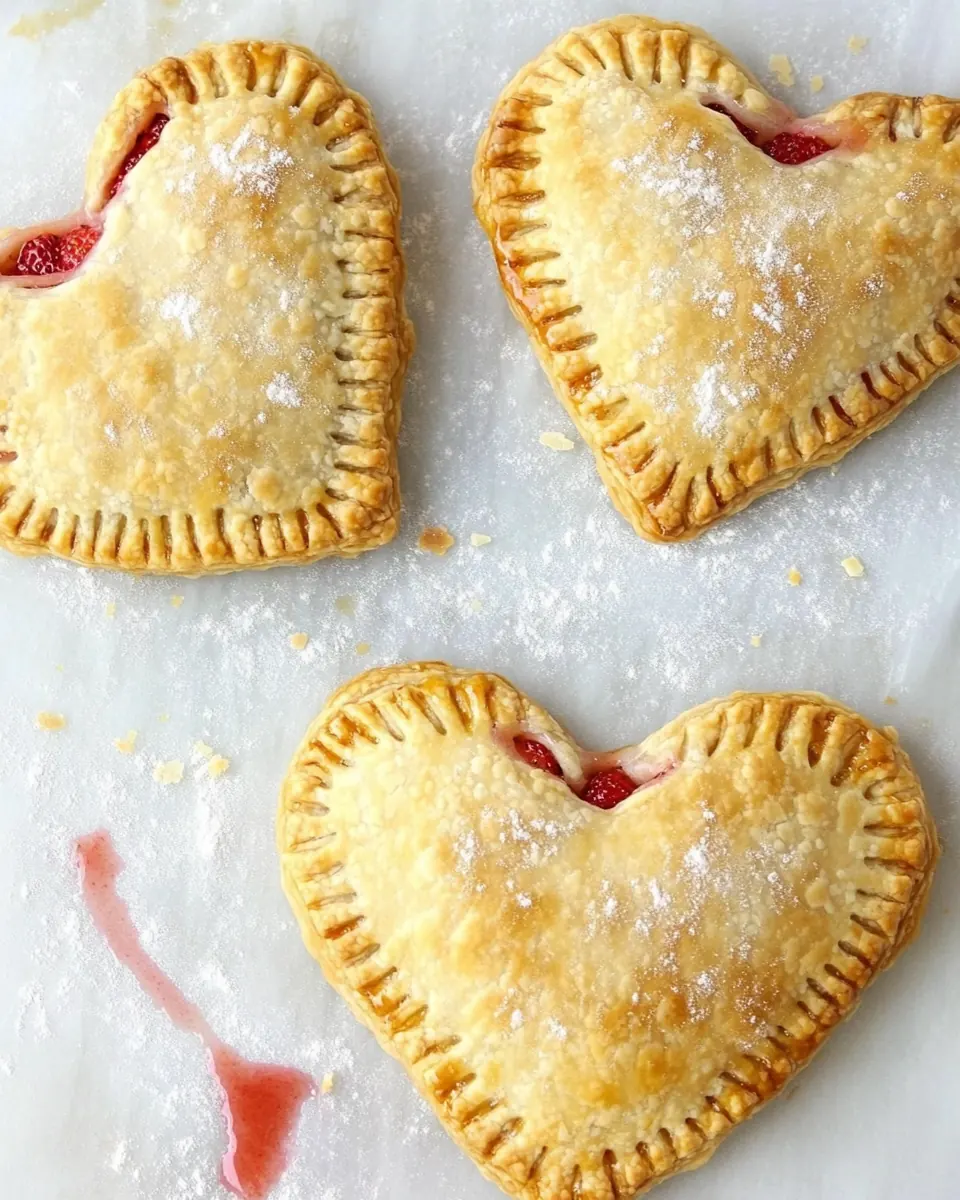
Place the hearts 1 inch apart on the prepared baking sheets. Bake for 12 minutes, until golden and bubbling, rotating the pans’ position halfway through. Remove from the oven and allow to cool on the pan for 10 minutes, then transfer to a wire rack to cool completely.: The egg wash deepens color and the sugar adds sparkle and crunch, creating a pleasing contrast to the tender interior. When you brush, you will notice the paste sheen catching the light, and the sugar crystals will glint on top. Apply sugar lightly to avoid overly sweet bites. If you see large pools of egg, blot lightly with a fingertip, as pooled egg can form dark spots.
Place the hearts 1 inch apart on the prepared baking sheets: Proper spacing allows hot air to circulate, ensuring even browning and preventing the pastries from fusing together. As they bake you will hear faint popping as steam vents and see the centers bubble slightly before the crust takes on color. Rotate pans halfway so each sheet gets an even exposure to heat. Overcrowding is the usual mistake here, which leads to uneven texture and incomplete browning.
Bake for 12 minutes until golden and bubbling rotating the pans position halfway through: The first sign of doneness is a warm golden hue at the edges and a gentle bubbling from the vents, releasing a sweet, jammy aroma. The surface should be set and glossy where the egg wash was applied. Rotating ensures both sheets achieve the same finish. Underbaking leaves the centers gummy while overbaking will dry the crust, so watch the color closely in the final minutes.
Remove from the oven and allow to cool on the pan for 10 minutes then transfer to a wire rack to cool completely: Cooling on the pan helps the filling settle so the pies hold shape when moved, and transferring to a rack prevents the bottoms from steaming and becoming soggy. You will feel the filling firm a touch as it cools, and the aroma will mellow into a warm, settled sweetness. Cutting into them while very hot can cause the filling to spill, so patience yields prettier slices and cleaner hands.