Homemade Croutons
Homemade Croutons are one of those small kitchen victories that make salads, soups, and even snacks feel a touch more thoughtful and homemade. I first started making Homemade Croutons on a rainy afternoon when my fridge held nothing but a slightly stale loaf and my pantry begged for use. I wanted crunch, warmth, and comfort without fuss, so I turned stale bread into something that felt indulgent yet simple to make. The result became my go to when I needed a quick textural lift for any bowl on the table.
Over the years I’ve experimented with breads and fats, and each variation taught me something new about texture and timing. I remember burning a batch early on because I crowded the pan, learning that spacing matters for even browning. Another time I used too much oil and ended up with soggy centers, which led me to carefully measure and toss by hand so each cube gets just enough coating. These little mistakes shaped how I teach this recipe today, and they let me share tricks that save time and make success repeatable.
Recipe Snapshot
25 mins
10 mins
15 mins
Easy
150 kcal
American
Gluten-Free, Low FODMAP
Side Dishes
Baking sheet, Parchment paper, Large bowl, Knife
What You’ll Enjoy About This Homemade Croutons
Crunch on Demand
I love that Homemade Croutons deliver instant crunch to otherwise soft dishes. When I toss a handful onto a salad the sound alone makes a difference, and that tactile contrast elevates every bite.
Customizable Flavor
You can control the seasoning entirely, which is why I make these often. Whether you prefer herb forward, garlicky, or just lightly salted, the base recipe acts like a blank canvas. I often tweak the herbs to match the main dish, which creates harmony on the plate.
Zero Waste Win
Turning an aging loaf into crisp croutons feels economical and rewarding. I always keep an eye on slightly stale bread now, because it means a future batch of Homemade Croutons and fewer trips to the trash can.
Speed and Simplicity
This recipe comes together with minimal fuss and basic pantry items. When I need a quick topper for a weeknight soup, I can make croutons while the soup simmers, which makes them a practical, time savvy choice.
Versatile Storage
Made ahead, these keep well at room temperature, so I often prepare a batch for several meals. That little bit of planning pays off when I want to add polish to lunches without extra work.
Ingredients Overview for Homemade Croutons
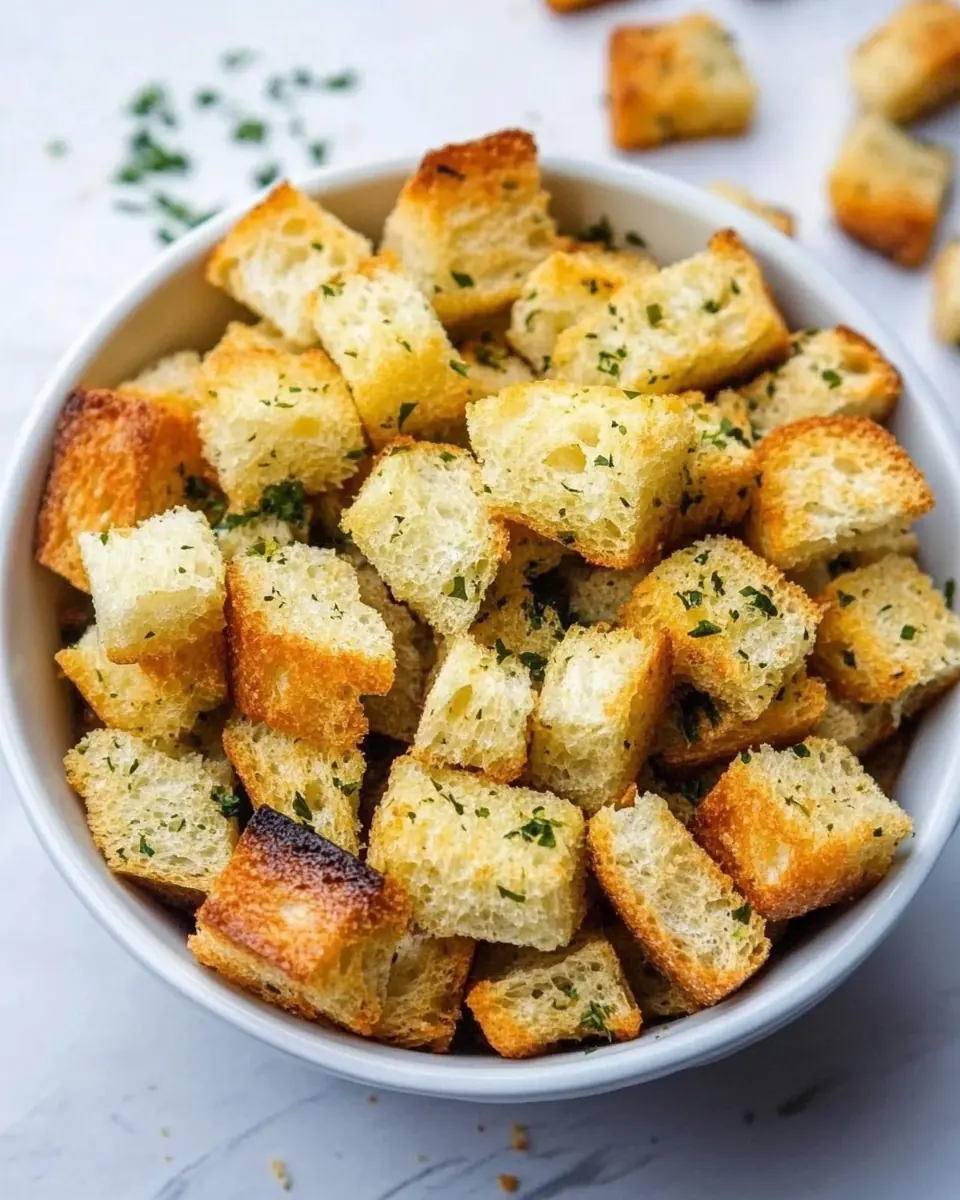
These ingredients form a small, purposeful roster that focuses on texture, fat, and seasoning. The bread gives structure, the olive oil and butter provide fat for browning and flavor depth, and the seasonings tie it all together. I like to think of the loaf as the hero, while the seasonings are the supporting cast that lift every cube.
- 1 loaf crusty French, Italian, or Sourdough bread: Used to provide the base for croutons, offering a sturdy texture that crisps nicely when toasted. Tear or cube into uniform pieces to ensure even browning and absorb the oil and butter mixture effectively.
- 3 tablespoons olive oil: Coats the bread cubes to promote browning and crispness while adding a subtle fruity flavor. Measure and drizzle evenly, tossing the bread so each piece gets a light, consistent layer before baking or pan-toasting.
- 2 tablespoons melted butter: Adds rich, savory flavor and helps create a golden, crisp exterior when combined with oil. Melt gently and mix with the oil and seasonings to distribute buttery taste throughout the bread cubes.
- 1 teaspoon garlic powder: Introduces concentrated garlic flavor in a dry, shelf-stable form, infusing the croutons without adding moisture. Sprinkle and toss thoroughly so the powder adheres to the oiled bread for consistent garlicky notes.
- 1 teaspoon Italian seasoning: Brings a blend of dried herbs for aromatic, savory complexity that complements the bread and garlic. Crack the seasoning between your fingers while sprinkling to release fragrance and ensure even coverage.
- 1/2 teaspoon kosher salt: Enhances overall flavor by balancing and amplifying other seasonings, while also drawing out savory notes. Use measured amounts to avoid over-salting and distribute evenly when tossing the seasoned oil mixture with the bread.
- 1/4 teaspoon freshly ground black pepper: Provides mild heat and peppery depth to round out the seasoning mix and sharpen flavors slightly. Grind fresh and sprinkle sparingly so the pepper complements rather than overpowers the croutons.
Recipe Directions for Homemade Croutons
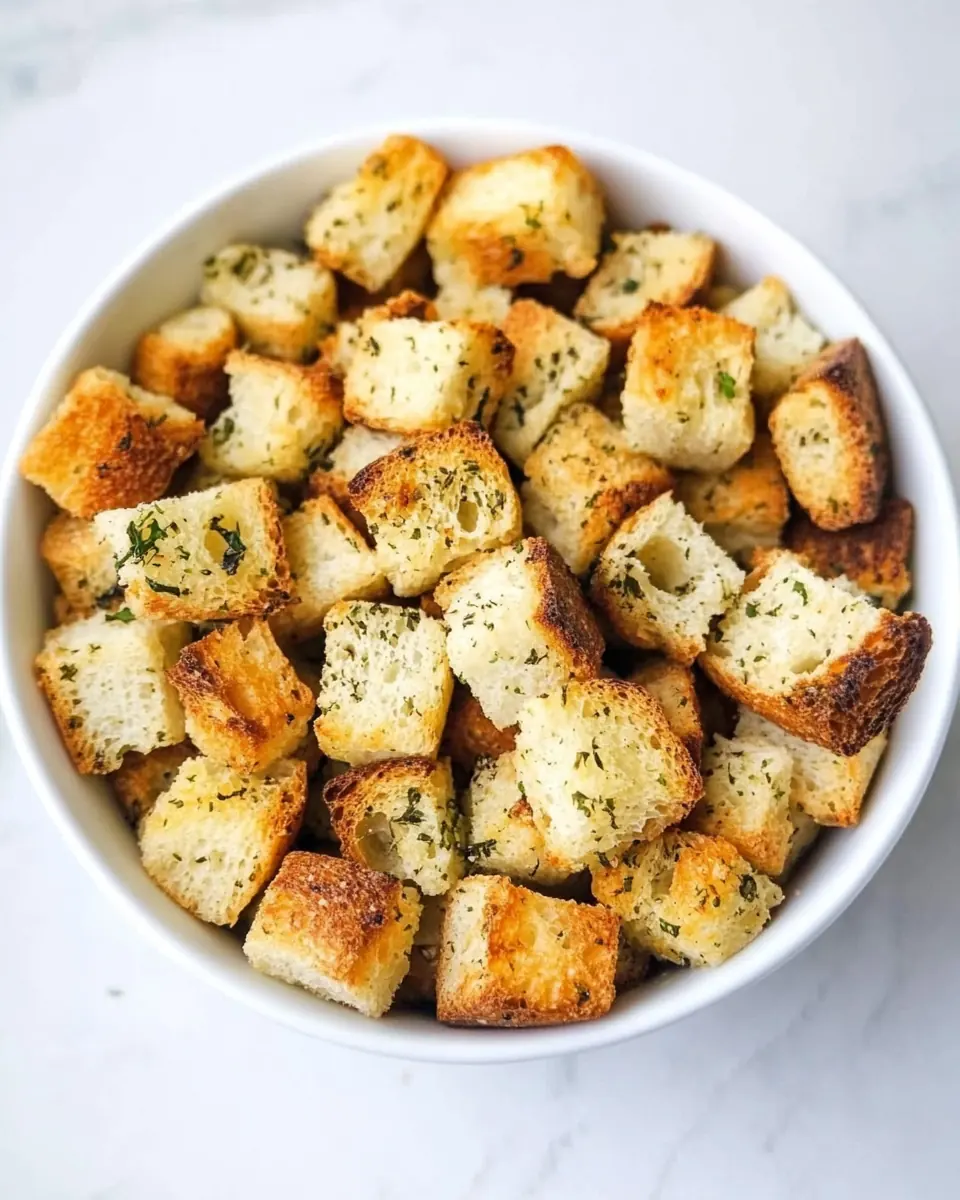
These directions are straightforward yet precise, and they reflect the small techniques that create crisp, golden croutons. As you work, trust your senses and make adjustments for your oven and bread type. The instructions below expand on each step so you can anticipate how the croutons should look, smell, and feel at every stage.
- Preheat oven to 375 degrees F. Line a large baking sheet with parchment paper and set aside.: The air in the oven should feel evenly warm and dry, which helps the cubes crisp rather than steam. You will notice a gentle warmth when you open the oven door at temperature, and the parchment keeps the bottoms from darkening too fast. Preheating is essential because placing bread into a hot environment immediately begins Maillard reactions that produce nutty, complex aromas. A common mistake is skipping preheat, which causes uneven color and longer bake times. If your oven runs hot, rotate the sheet midway to prevent overly dark edges; if it runs cool, you may need a few extra minutes at the end to reach a uniform golden tone.
- Cut the loaf of bread into 3/4-inch cubes and place in a large bowl. Drizzle the bread cubes with olive oil and melted butter. Sprinkle the garlic powder, Italian seasoning, salt, and black pepper over the bread. Toss until all of the bread cubes are well coated.: As you cut, the knife will make a clean sound and the cubes should fall apart with defined edges, not crumble into dust. When you drizzle the olive oil and butter , watch for a light sheen on the surface of the cubes; they should glisten but not sit in oil. The aroma of the melted butter will lift the herbs and garlic powder as you toss. Tossing by hand gives tactile feedback, allowing you to ensure even coverage. If you skip tossing or apply unevenly, some cubes will burn while others stay pale. Avoid over saturating any single cube; if you see pooled oil at the bottom of the bowl, pat the cubes lightly with a paper towel and redistribute on the sheet.
- Spread the bread cubes onto the prepared baking sheet, making sure the bread cubes are in an even layer and not touching.: When the cubes are placed correctly you should see small gaps between pieces so hot air can circulate and the edges can brown evenly. The sound of the cubes settling should be slightly hollow, and visually you want a single layer so each cube gets direct contact with the baking surface and oven heat. Proper spacing prevents steaming, which causes limp centers. A crowded sheet is the most common reason for uneven texture, so use a second sheet if needed rather than stacking cubes. If some cubes are much larger, trim them so baking time is consistent across the tray.
- Bake for 12 to 20 minutes, tossing halfway through, or until the croutons are golden brown. Check early to make sure you don't burn them. Time will depend on the thickness of your bread and your oven. Remove from the oven and let cool completely. Store in an airtight container for up to 1 week.: As they roast you will notice a warm, toasty perfume, and the color will shift from pale beige to a sun kissed gold. Tossing halfway exposes all sides to heat so the browning is uniform, and you may hear a faint crackle as moisture leaves the bread. Time varies based on the bread density and oven performance, so start checking at the earlier end to prevent burning. Overbaked croutons become overly hard and bitter, while underbaked ones remain soft inside. If you see the edges turn deep brown quickly, reduce the temperature slightly and extend the time so the centers have a chance to dry without burning the edges.
- Check early to make sure you don't burn them. Time will depend on the thickness of your bread and your oven. Remove from the oven and let cool completely.: The best indicator of doneness is texture, not clock time. When cool, the croutons should snap cleanly when broken and have an even golden surface. Cooling on the baking sheet prevents condensation from softening the bottoms, and the residual heat finishes the crisping. One common error is transferring hot croutons to a sealed container immediately, which traps steam and makes them soggy. Allow them to cool fully, then store in an airtight container. If any cubes feel slightly under crisp after cooling, a quick return to the oven for a few minutes will finish them without risking burn.
- Store in an airtight container for up to 1 week.: Proper storage keeps croutons crunchy and flavorful, and when sealed you'll notice the preserved aroma each time you open the jar. Place a small sheet of paper towel on top to absorb stray moisture if your kitchen is humid. Avoid refrigerating as the cold can introduce moisture, and never keep them in a sealed container while still warm. The most common storage mistake is adding them to a container that previously held something moist, so ensure the storage vessel is fully dry. If you plan to keep them longer, freezing in a resealable bag extends life without sacrificing texture; thaw at room temperature before using.
Expert Tips about Homemade Croutons
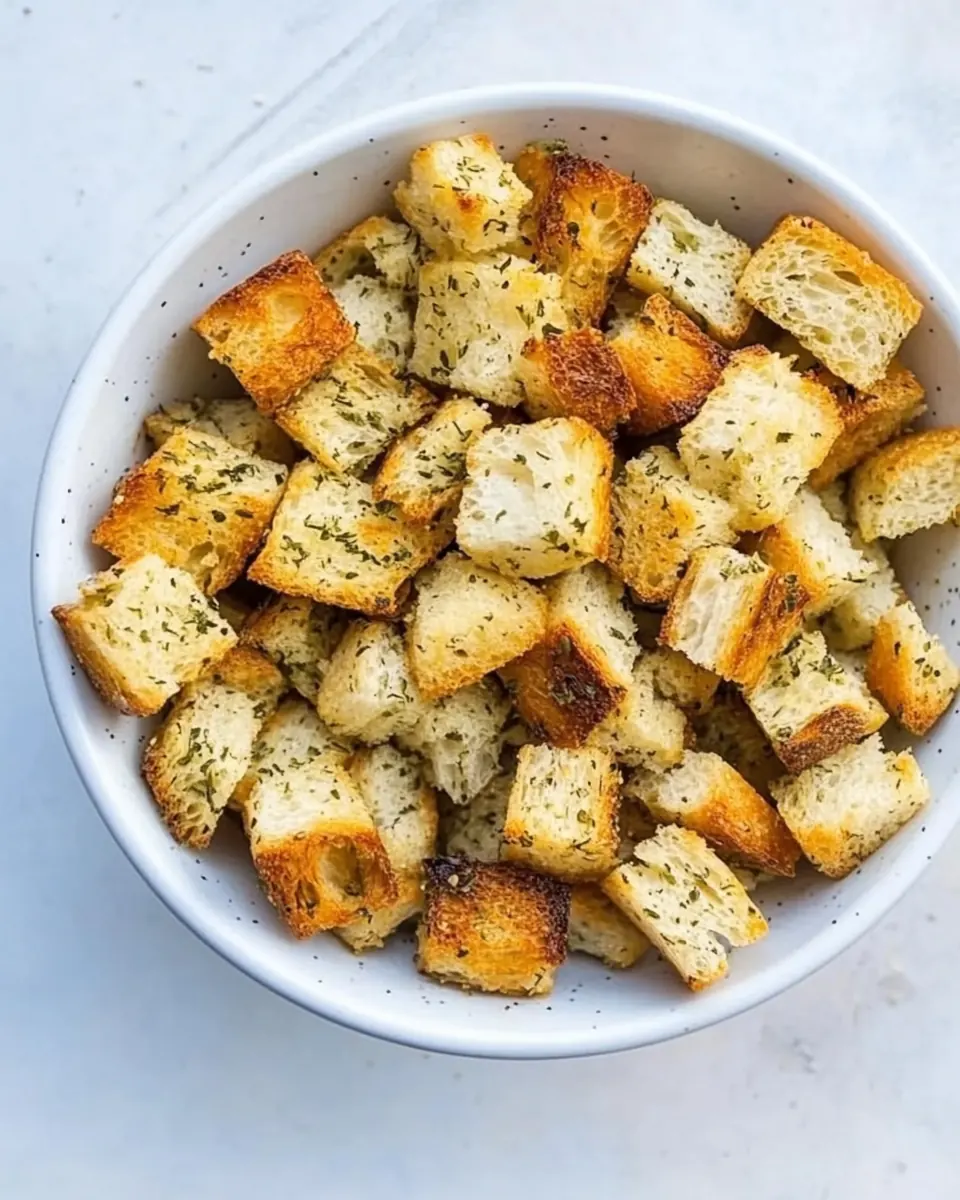
These tips expand on small decisions that make big differences, from bread choice to storage. I include practical notes I use in my kitchen so you can reproduce reliably excellent croutons every time.
- Choose the right bread, dense crusty loaves like French or sourdough hold their shape and produce the best texture for croutons.
- Measure fats carefully, a balanced ratio of oil and butter gives flavor and browning without sogginess, so stick to the recipe amounts.
- Season evenly, sprinkle spices across the bowl and toss thoroughly to avoid pockets of intense flavor that overpower the batch.
- Watch your oven closely, oven performance varies so check early and often the first time you try a new loaf or sheet configuration.
- Store properly, keep croutons in a completely cool, airtight container at room temperature for crispness up to a week.
How to Serve Homemade Croutons
Croutons are a versatile finishing touch, and how you serve them can change the entire eating experience. Below I outline serving ideas, pairings, and storage and occasion suggestions so you can use them across meals and seasons.
- Salad topper, sprinkle a generous handful of Homemade Croutons over green salads or Caesar style bowls for texture contrast and a savory crunch that complements leafy vegetables.
- Soup garnish, add to tomato soup, creamy bisques, or chicken soup to introduce crispness and soak up broth for a pleasing bite variation.
- Snack or nibble, serve a bowl of croutons during casual gatherings or as an appetizer alongside olives and cheese, letting guests enjoy the toasted flavors.
- Lunch enhancement, toss into grain bowls or pasta salads for added texture, using croutons instead of nuts if you want a bread based crunch.
- Storage tips, keep in an airtight jar at room temperature up to five days for best quality, or freeze for longer storage and re crisp in a warm oven before serving.
- Occasions, great for weeknight dinners, potlucks, or holiday salads, they are an easy way to elevate a simple dish without extra cooking time.
FAQ
Conclusion
What makes these croutons special is how a few pantry staples transform ordinary bread into an indispensable crunchy topping. They are quick to make, easy to customize, and save food from going to waste, proving small efforts often yield big rewards. Give them a try next time you have a spare loaf, and enjoy how a simple addition can brighten salads, soups, and bowls. You’ll find yourself keeping them on hand because they reliably add texture and flavor with almost no fuss.
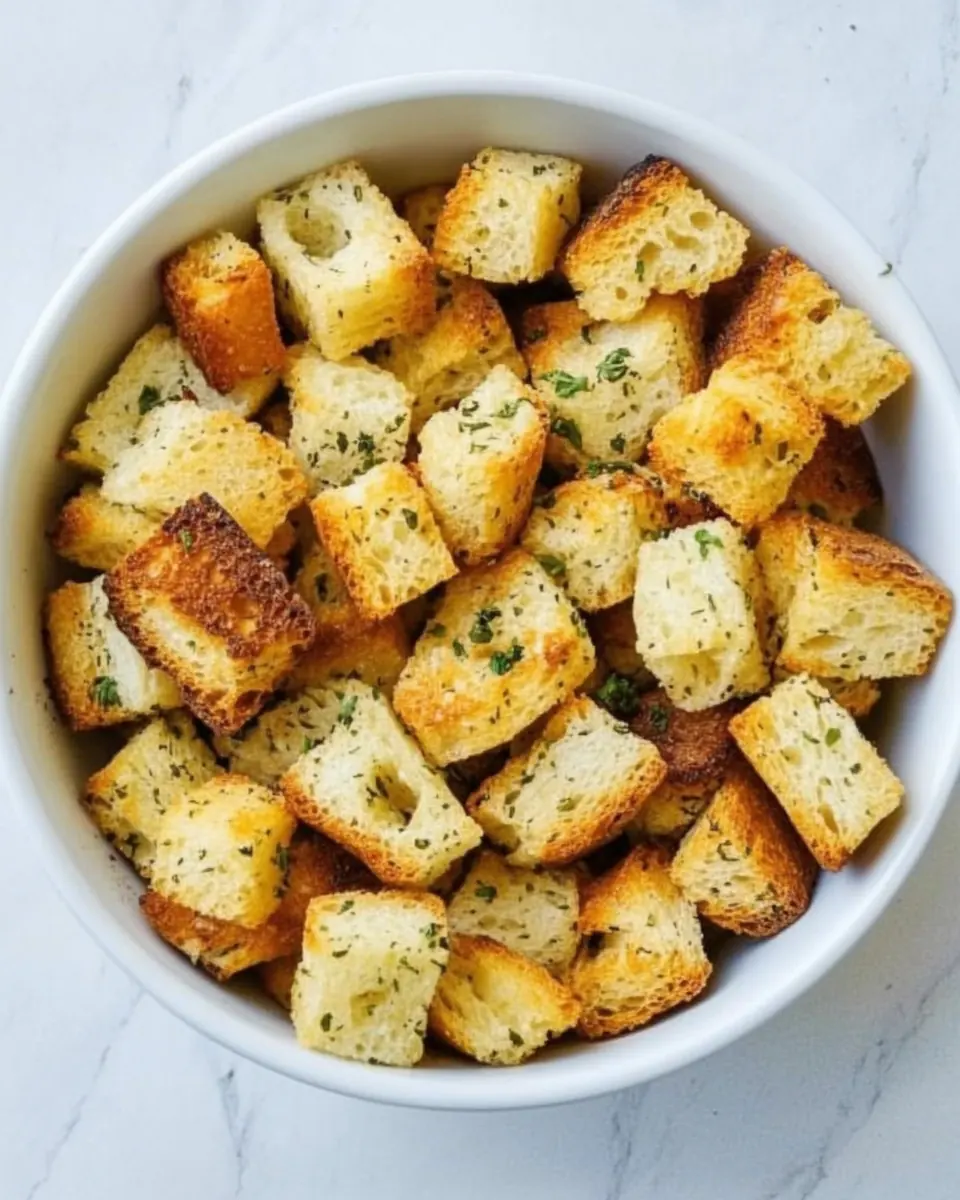
Homemade Croutons
Ingredients
Equipment
Method
- Preheat oven to 375 degrees F. Line a large baking sheet with parchment paper and set aside.: The air in the oven should feel evenly warm and dry, which helps the cubes crisp rather than steam. You will notice a gentle warmth when you open the oven door at temperature, and the parchment keeps the bottoms from darkening too fast. Preheating is essential because placing bread into a hot environment immediately begins Maillard reactions that produce nutty, complex aromas. A common mistake is skipping preheat, which causes uneven color and longer bake times. If your oven runs hot, rotate the sheet midway to prevent overly dark edges; if it runs cool, you may need a few extra minutes at the end to reach a uniform golden tone.
- Cut the loaf of bread into 3/4-inch cubes and place in a large bowl. Drizzle the bread cubes with olive oil and melted butter. Sprinkle the garlic powder, Italian seasoning, salt, and black pepper over the bread. Toss until all of the bread cubes are well coated.: As you cut, the knife will make a clean sound and the cubes should fall apart with defined edges, not crumble into dust. When you drizzle the olive oil and butter , watch for a light sheen on the surface of the cubes; they should glisten but not sit in oil. The aroma of the melted butter will lift the herbs and garlic powder as you toss. Tossing by hand gives tactile feedback, allowing you to ensure even coverage. If you skip tossing or apply unevenly, some cubes will burn while others stay pale. Avoid over saturating any single cube; if you see pooled oil at the bottom of the bowl, pat the cubes lightly with a paper towel and redistribute on the sheet.
- Spread the bread cubes onto the prepared baking sheet, making sure the bread cubes are in an even layer and not touching.: When the cubes are placed correctly you should see small gaps between pieces so hot air can circulate and the edges can brown evenly. The sound of the cubes settling should be slightly hollow, and visually you want a single layer so each cube gets direct contact with the baking surface and oven heat. Proper spacing prevents steaming, which causes limp centers. A crowded sheet is the most common reason for uneven texture, so use a second sheet if needed rather than stacking cubes. If some cubes are much larger, trim them so baking time is consistent across the tray.
- Bake for 12 to 20 minutes, tossing halfway through, or until the croutons are golden brown. Check early to make sure you don't burn them. Time will depend on the thickness of your bread and your oven. Remove from the oven and let cool completely. Store in an airtight container for up to 1 week.: As they roast you will notice a warm, toasty perfume, and the color will shift from pale beige to a sun kissed gold. Tossing halfway exposes all sides to heat so the browning is uniform, and you may hear a faint crackle as moisture leaves the bread. Time varies based on the bread density and oven performance, so start checking at the earlier end to prevent burning. Overbaked croutons become overly hard and bitter, while underbaked ones remain soft inside. If you see the edges turn deep brown quickly, reduce the temperature slightly and extend the time so the centers have a chance to dry without burning the edges.
- Check early to make sure you don't burn them. Time will depend on the thickness of your bread and your oven. Remove from the oven and let cool completely.: The best indicator of doneness is texture, not clock time. When cool, the croutons should snap cleanly when broken and have an even golden surface. Cooling on the baking sheet prevents condensation from softening the bottoms, and the residual heat finishes the crisping. One common error is transferring hot croutons to a sealed container immediately, which traps steam and makes them soggy. Allow them to cool fully, then store in an airtight container. If any cubes feel slightly under crisp after cooling, a quick return to the oven for a few minutes will finish them without risking burn.
- Store in an airtight container for up to 1 week.: Proper storage keeps croutons crunchy and flavorful, and when sealed you'll notice the preserved aroma each time you open the jar. Place a small sheet of paper towel on top to absorb stray moisture if your kitchen is humid. Avoid refrigerating as the cold can introduce moisture, and never keep them in a sealed container while still warm. The most common storage mistake is adding them to a container that previously held something moist, so ensure the storage vessel is fully dry. If you plan to keep them longer, freezing in a resealable bag extends life without sacrificing texture; thaw at room temperature before using.
Notes
- Choose the right bread, dense crusty loaves like French or sourdough hold their shape and produce the best texture for croutons.
- Measure fats carefully, a balanced ratio of oil and butter gives flavor and browning without sogginess, so stick to the recipe amounts.
- Season evenly, sprinkle spices across the bowl and toss thoroughly to avoid pockets of intense flavor that overpower the batch.
- Watch your oven closely, oven performance varies so check early and often the first time you try a new loaf or sheet configuration.
- Store properly, keep croutons in a completely cool, airtight container at room temperature for crispness up to a week.