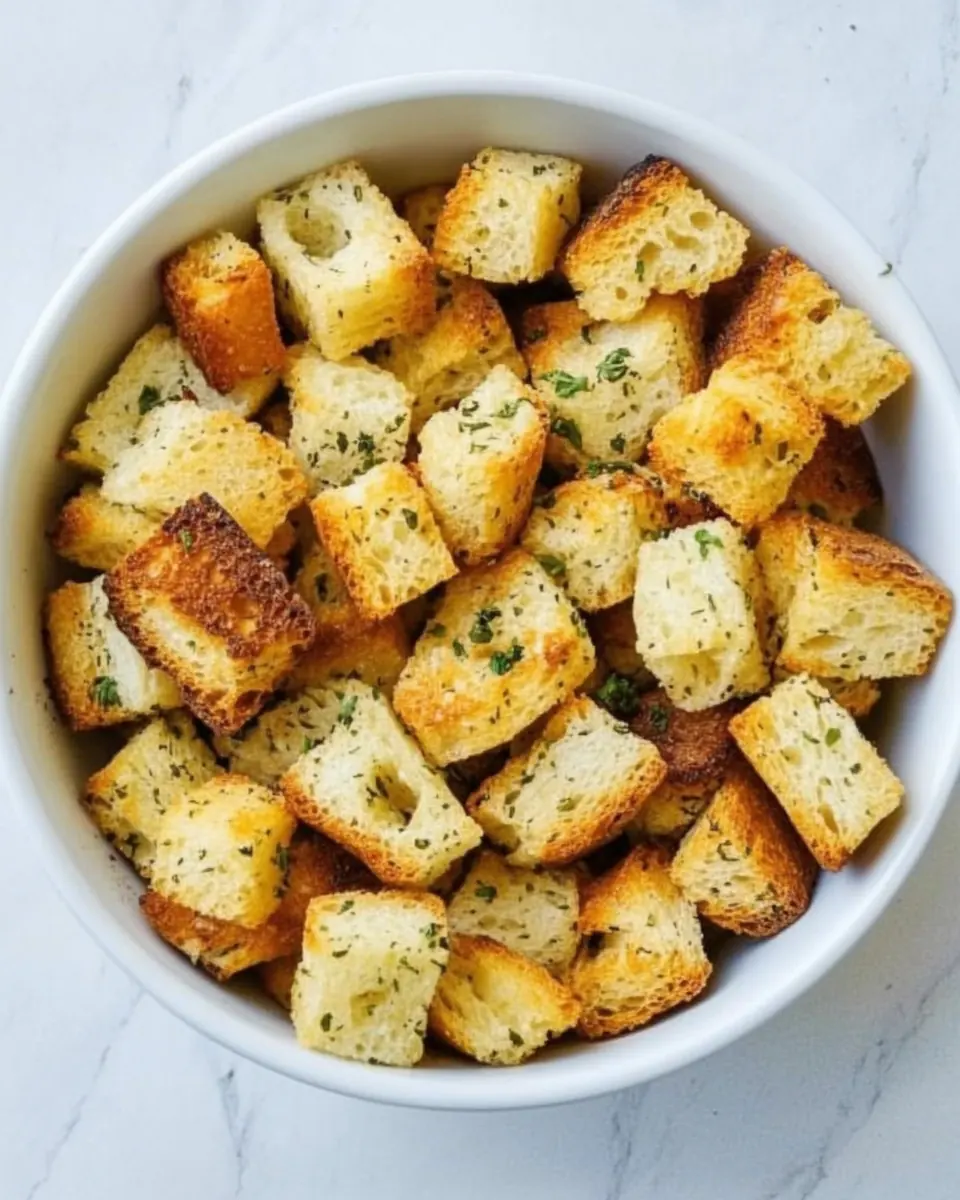
Preheat oven to 375 degrees F. Line a large baking sheet with parchment paper and set aside.: The air in the oven should feel evenly warm and dry, which helps the cubes crisp rather than steam. You will notice a gentle warmth when you open the oven door at temperature, and the parchment keeps the bottoms from darkening too fast. Preheating is essential because placing bread into a hot environment immediately begins Maillard reactions that produce nutty, complex aromas. A common mistake is skipping preheat, which causes uneven color and longer bake times. If your oven runs hot, rotate the sheet midway to prevent overly dark edges; if it runs cool, you may need a few extra minutes at the end to reach a uniform golden tone.
Cut the loaf of bread into 3/4-inch cubes and place in a large bowl. Drizzle the bread cubes with olive oil and melted butter. Sprinkle the garlic powder, Italian seasoning, salt, and black pepper over the bread. Toss until all of the bread cubes are well coated.: As you cut, the knife will make a clean sound and the cubes should fall apart with defined edges, not crumble into dust. When you drizzle the olive oil and butter , watch for a light sheen on the surface of the cubes; they should glisten but not sit in oil. The aroma of the melted butter will lift the herbs and garlic powder as you toss. Tossing by hand gives tactile feedback, allowing you to ensure even coverage. If you skip tossing or apply unevenly, some cubes will burn while others stay pale. Avoid over saturating any single cube; if you see pooled oil at the bottom of the bowl, pat the cubes lightly with a paper towel and redistribute on the sheet.
Spread the bread cubes onto the prepared baking sheet, making sure the bread cubes are in an even layer and not touching.: When the cubes are placed correctly you should see small gaps between pieces so hot air can circulate and the edges can brown evenly. The sound of the cubes settling should be slightly hollow, and visually you want a single layer so each cube gets direct contact with the baking surface and oven heat. Proper spacing prevents steaming, which causes limp centers. A crowded sheet is the most common reason for uneven texture, so use a second sheet if needed rather than stacking cubes. If some cubes are much larger, trim them so baking time is consistent across the tray.
Bake for 12 to 20 minutes, tossing halfway through, or until the croutons are golden brown. Check early to make sure you don't burn them. Time will depend on the thickness of your bread and your oven. Remove from the oven and let cool completely. Store in an airtight container for up to 1 week.: As they roast you will notice a warm, toasty perfume, and the color will shift from pale beige to a sun kissed gold. Tossing halfway exposes all sides to heat so the browning is uniform, and you may hear a faint crackle as moisture leaves the bread. Time varies based on the bread density and oven performance, so start checking at the earlier end to prevent burning. Overbaked croutons become overly hard and bitter, while underbaked ones remain soft inside. If you see the edges turn deep brown quickly, reduce the temperature slightly and extend the time so the centers have a chance to dry without burning the edges.
Check early to make sure you don't burn them. Time will depend on the thickness of your bread and your oven. Remove from the oven and let cool completely.: The best indicator of doneness is texture, not clock time. When cool, the croutons should snap cleanly when broken and have an even golden surface. Cooling on the baking sheet prevents condensation from softening the bottoms, and the residual heat finishes the crisping. One common error is transferring hot croutons to a sealed container immediately, which traps steam and makes them soggy. Allow them to cool fully, then store in an airtight container. If any cubes feel slightly under crisp after cooling, a quick return to the oven for a few minutes will finish them without risking burn.
Store in an airtight container for up to 1 week.: Proper storage keeps croutons crunchy and flavorful, and when sealed you'll notice the preserved aroma each time you open the jar. Place a small sheet of paper towel on top to absorb stray moisture if your kitchen is humid. Avoid refrigerating as the cold can introduce moisture, and never keep them in a sealed container while still warm. The most common storage mistake is adding them to a container that previously held something moist, so ensure the storage vessel is fully dry. If you plan to keep them longer, freezing in a resealable bag extends life without sacrificing texture; thaw at room temperature before using.