Italian Cream Cake
Italian Cream Cake has been a family favorite for as long as I can remember, turning ordinary Sundays into celebratory afternoons with its tender crumb and nutty, coconut flecks.
Growing up I would watch my aunt carefully separate eggs while humming, and those small rituals became part of the memory I cherish whenever I bake this cake. I still recall the warm, buttery aroma as the layers baked, the faint crackle when the toasted pecans hit the sheet pan, and the way the frosting smoothed glossy and cool under my spatula. That sensory collage is why I always reach for this recipe when guests arrive.
Every time I make Italian Cream Cake I find myself adjusting tiny details, from giving the butter a few extra minutes to reach the perfect softness, to folding the whipped egg whites gently until the batter holds light ribbons. These nuances add lift and texture, and I love sharing them with anyone who asks for the secret to a tender cake that still carries plenty of personality. Baking it feels like a conversation with my past, and serving it feels like an invitation.
Recipe Snapshot
52 mins
30 mins
22 mins
Medium
350 kcal
Italian
Gluten-Free, Low FODMAP
Desserts
39-inch cake pans, Stand-mixer, Mixing Bowls
The Magic of This Italian Cream Cake
Light yet rich texture
I love how Italian Cream Cake balances airy lift with rich crumb. The technique of whipping the egg whites separately gives the final cake a delicate rise, while the yolks and butter add depth and moisture. I feel proud when a slice holds together yet feels almost cloudlike on the fork, and that contrast is a reason I bake this for special gatherings.
Complex flavor from simple ingredients
What stands out to me is how modest components like all purpose flour, buttermilk, vanilla, and a touch of almond extract layer into a nuanced taste. The interplay of toasted pecans and sweetened shredded coconut gives the cake character without overpowering the base. I often find guests asking what gives it that slightly nutty, aromatic note, and I smile knowing it comes from those few thoughtful additions.
Frosting that complements rather than overwhelms
The cream cheese frosting here is creamy and tangy, and it never feels cloying. I prefer a frosting that adds lift and contrasts the sweet crumb, and this one does that beautifully. I appreciate how it clings to the layers and offers a clean balance against the crunchy nuts, making each bite interesting and complete.
Great for celebrations and everyday alike
I keep coming back to this cake because it wears many hats. I have served Italian Cream Cake at birthdays, casual brunches, and holiday tables. It looks elegant, yet it is forgiving enough for a home baker to achieve with confidence. That reliability makes it a staple in my repertoire.
Textural finish with toasted toppings
The finishing touch of toasted pecans and shredded coconut pressed up the sides gives a tactile, rustic charm. I like how the toasting amplifies the nutty notes and makes the exterior slightly crunchy while the inside remains tender. That contrast is one of my favorite reasons to bake this cake time and again.
What You Need for Italian Cream Cake
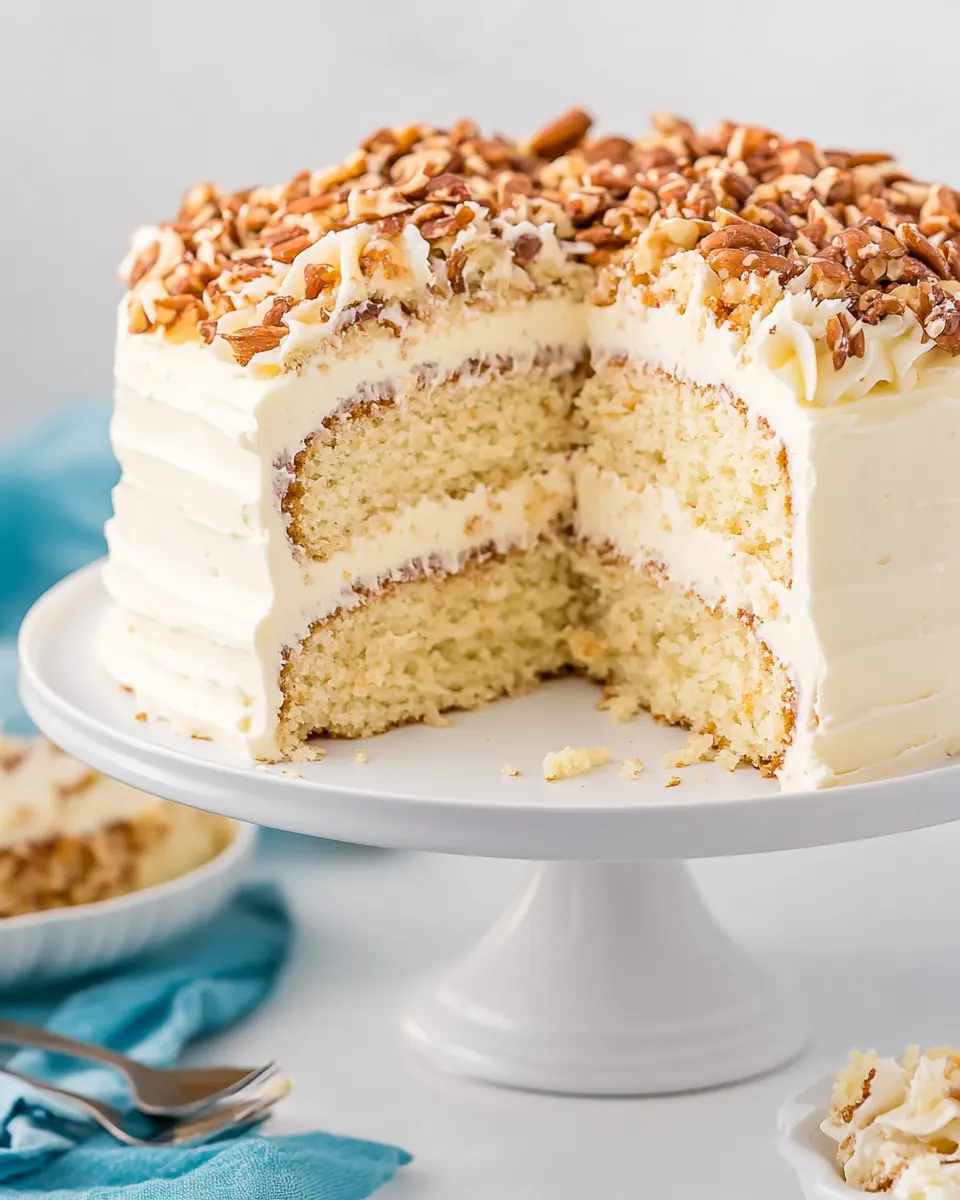
The ingredients for Italian Cream Cake are thoughtfully chosen to produce a tender, moist crumb and a frosting that brightens the whole dessert. Key players like buttermilk and whipped egg whites build lift, while toasted pecans and shredded coconut supply texture and aroma. The frosting relies on cool, soft cream cheese and plenty of powdered sugar for stability and smooth spreadability.
- 2 1/4 cup (270 g) all-purpose flour: Sifted to ensure a light, uniform flour base for the cake batter; provides structure and absorbs moisture while creating a tender crumb when combined properly with liquids and fats.
- 1 teaspoon baking powder: Added to activate and boost leavening alongside baking soda; creates gentle lift and contributes to a finer, evenly risen cake texture when distributed throughout dry ingredients.
- 1/2 teaspoon baking soda: Measured precisely to react with acidic components and create additional lift; balances the baking powder to prevent excessive rise and helps produce a soft, airy crumb.
- 1/2 teaspoon salt: Dissolved into the dry mixture to enhance and balance overall flavor; suppresses bitterness and strengthens gluten formation slightly for controlled texture.
- 5 large eggs separated: Separated so yolks enrich the batter with fat and emulsifiers while whites whip to incorporate air; yolks add richness and moisture, whites provide volume and lightness when folded in.
- 1 cup (225 g) unsalted butter softened to room temperature: Creamed into sugar and other fats to add richness and moisture; contributes to tender crumb and helps create a smooth batter that traps air for a soft cake structure.
- 1 3/4 cup (350 g) granulated sugar: Beaten with butter and eggs to sweeten and stabilize texture; dissolves into the batter, caramelizes slightly during baking, and enhances moisture retention and flavor.
- 1 teaspoon (5 ml) pure vanilla extract: Stirred in for floral, sweet aroma and subtle vanilla flavor; rounds out the cake’s profile and complements other extracts without overpowering.
- 1/2 teaspoon almond extract: Added sparingly to impart a delicate nutty, almond aroma; balances the sweet flavors and enhances the cake’s signature taste when combined with vanilla.
- 1 cup (240 ml) buttermilk room temperature: Folded in to provide tangy moisture that reacts with leaveners; adds brightness and a tender crumb while enriching flavor and thinning the batter for proper consistency.
- 1 cup (80 g) sweetened shredded coconut: Folded into batter to add chewy texture and tropical sweetness; distributes small bursts of coconut flavor and contributes to the cake’s characteristic mouthfeel.
- 1/2 cup (65 g) toasted chopped pecans: Sprinkled into the batter for crunchy, nutty pockets throughout the cake; toasted pecans add depth, buttery flavor, and textural contrast when mixed evenly.
- 16 ounces (450 g) cream cheese softened to room temperature: Softened and beaten into frosting for a tangy, creamy base; provides smoothness, stability, and rich flavor as the primary creamy component of the filling and icing.
- 1 cup (225 g) unsalted butter softened to room temperature: Creamed with cream cheese to create a silky, stable frosting base; adds richness and buttery flavor while helping achieve a spreadable, smooth texture.
- 6 cups (720 g) powdered sugar: Whisked into frosting to sweeten and thicken to pipeable consistency; provides structure, stability, and a melt-in-the-mouth finish while balancing tangy cream cheese.
- 1 teaspoon (5 ml) vanilla extract: Added for subtle vanilla aroma and to round out frosting flavor; enhances sweetness perception and ties together cream cheese and butter notes.
- 1/2 cup (40 g) toasted shredded coconut: Sprinkled over or folded into frosting for toasted coconut crunch and flavor contrast; adds visual appeal and intermittent coconut texture to bites of cake.
- 1/2 cup (65 g) toasted chopped pecans: Used as a garnish and mixed-in element to provide additional toasted nut crunch; offers savory-buttery notes and a pleasant toasted aroma that complements the sweet frosting.
Cooking Method for Italian Cream Cake
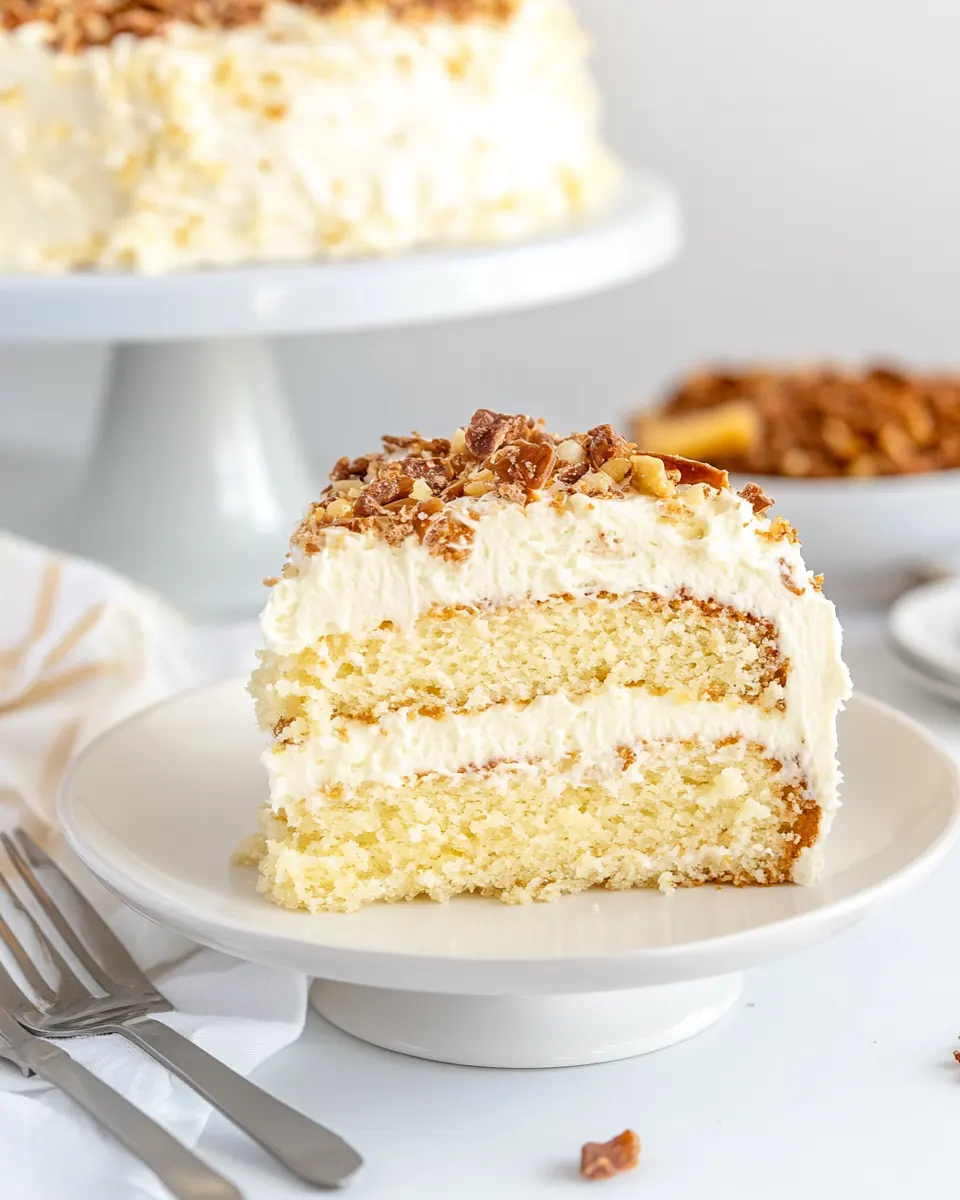
Baking this classic involves a handful of predictable stages, from preparing pans to finishing with toasted toppings. Below, I expand the directions into detailed, sensory-rich steps so you can follow along with confidence and learn why each action matters.
- Preheat the oven to 350°F (180°C), or 160°C if using a fan oven. Grease and line three 9-inch (23 cm) round cake pans with parchment and set aside.: The warmth that fills your kitchen as the oven comes to temperature is your first cue, and properly prepping pans prevents sticking and ensures neat layers. Greasing and lining helps the cakes release cleanly, avoiding torn edges. If you skip parchment, the cakes may cling and break, so take the extra minute to double line. Listen for the oven click and feel the steady heat when you open the door briefly, it confirms an even environment for reliable baking.
- In a medium bowl, whisk together the flour, baking powder, baking soda, and salt.: You will notice a dry, floury scent and the even color of the sifted mix, which signals uniform leavening. Whisking distributes the raising agents so pockets of baking powder do not create uneven rises. A common mistake is not whisking well enough, leading to dense spots; take your time until the mixture looks homogeneous and light.
- In a bowl of a stand mixer fitted with the whisk attachment, whip the egg whites until stiff peaks form, and set aside.: As the whites whip, they transform from glossy to billowy, and you will hear a change from splashy to a steady, airy whipping sound. Stiff peaks mean the whites will hold their shape and contribute lift, so test by lifting the whisk and looking for firm peaks. If any oil or yolk contaminates the whites they will not whip, so always start with clean equipment and room temperature whites for best volume.
- In a separate large bowl, cream the butter and sugar until light and fluffy. Add the egg yolks and beat again until fully mixed. Stir in the vanilla and almond extract.: The creaming step smells buttery and sweet as sugar crystals aerate the butter, creating a paler, pillowy texture. Adding yolks enriches the batter, and mixing until smooth ensures a well emulgated base, preventing grainy pockets. A frequent error is undercreaming, which yields a heavier cake, so beat until the mixture looks visibly lighter and has a soft, ribbon-like consistency.
- Add half the flour mixture and mix, followed by half of the buttermilk, followed by the remaining flour and buttermilk. Mix well after each addition.: Alternating dry and wet ingredients keeps the batter smooth without overdeveloping gluten, so expect the texture to shift from thick to more pourable as you add liquids. You want a cohesive batter, not overly stiff; mixing gently prevents toughness. Overmixing here will yield a tight crumb, so combine until just smooth, scraping the bowl as needed for even incorporation.
- Gently fold in the whipped egg whites in three smaller batches, followed by the coconut and pecans.: Folding preserves the air you worked to create, resulting in a light crumb. The batter should look airy with visible white streaks dissolving as you finish, and you will see specks of coconut and nuts distributed throughout. Use a soft spatula and cut through the center, turn the bowl, and fold rather than stir. A typical mistake is aggressive mixing that knocks out aeration, producing a dense cake, so be patient and gentle.
- Divide the batter evenly between the 3 prepared pans and bake in the oven for 18-22 minutes, or until a toothpick inserted in the center comes out clean.: As the cakes bake you will notice a sweet, toasty aroma and a slight dome forming on top. The surface should spring back lightly when touched and be golden but not dark. Baking times vary by oven, so start checking at 18 minutes; inserting a toothpick and seeing moist crumbs indicates readiness. Overbaking dries the crumb, so remove promptly when the tester is clean with a few moist crumbs.
- Allow it to cool for 10 minutes before removing it to a cooling rack to cool completely.: The initial rest helps the cake firm enough to release without tearing, and the cooling rack allows air to circulate preventing soggy bottoms. You will feel a gentle give when the cake is ready to invert. A common mistake is rushing removal, which can cause breakage; wait the full brief rest and then loosen the edges with a thin offset spatula if needed for safe transfer.
- In a large bowl, cream the cream cheese and butter until smooth.: The texture should be velvety and pale, with a faint tang rising from the cream cheese. Properly softened ingredients blend seamlessly, producing a frosting base that will whip light. If either component is too cold you will see lumps, and if too warm the frosting may be loose, so aim for room temperature. Scrape the bowl to ensure uniform smoothness before adding sugar.
- Add the powdered sugar and mix until smooth. Stir in the vanilla extract.: As powdered sugar incorporates, the aroma sweetens and the frosting thickens to a spreadable consistency. Add sugar gradually to avoid a dusty cloud and to control stiffness. If the frosting appears grainy, continue beating briefly until smooth; overheating from prolonged mixing can introduce air that collapses later, so balance thoroughness with restraint.
- Spread 1 cup of frosting between the cake layers, then spread the remaining frosting on the tops and sides of the cake. Decorate the top border if desired.: The first cup acts as a glue, setting the layers, and the remaining frosting builds a cohesive final look. Smooth with a spatula and use long, confident strokes to avoid tearing the crumb. A frequent issue is overhandling the cake layers while frosting; keep movements gentle and steady to preserve the structure and finish with tidy edges.
- Reserve 1 tablespoon of toasted coconut, then mix together the remaining toasted coconut and toasted pecans. Press the mixture halfway up the sides of the cake, then sprinkle the toasted coconut on top of the cake.: The toasted toppings add crunch and a toasted aroma that contrasts the soft frosting. Pressing the mixture partway up the sides creates a rustic, attractive finish and helps it adhere. If the frosting is too soft the toppings will slide, so chill slightly for better adhesion. Use the reserved tablespoon to highlight the center for a polished final presentation.
Helpful Hints
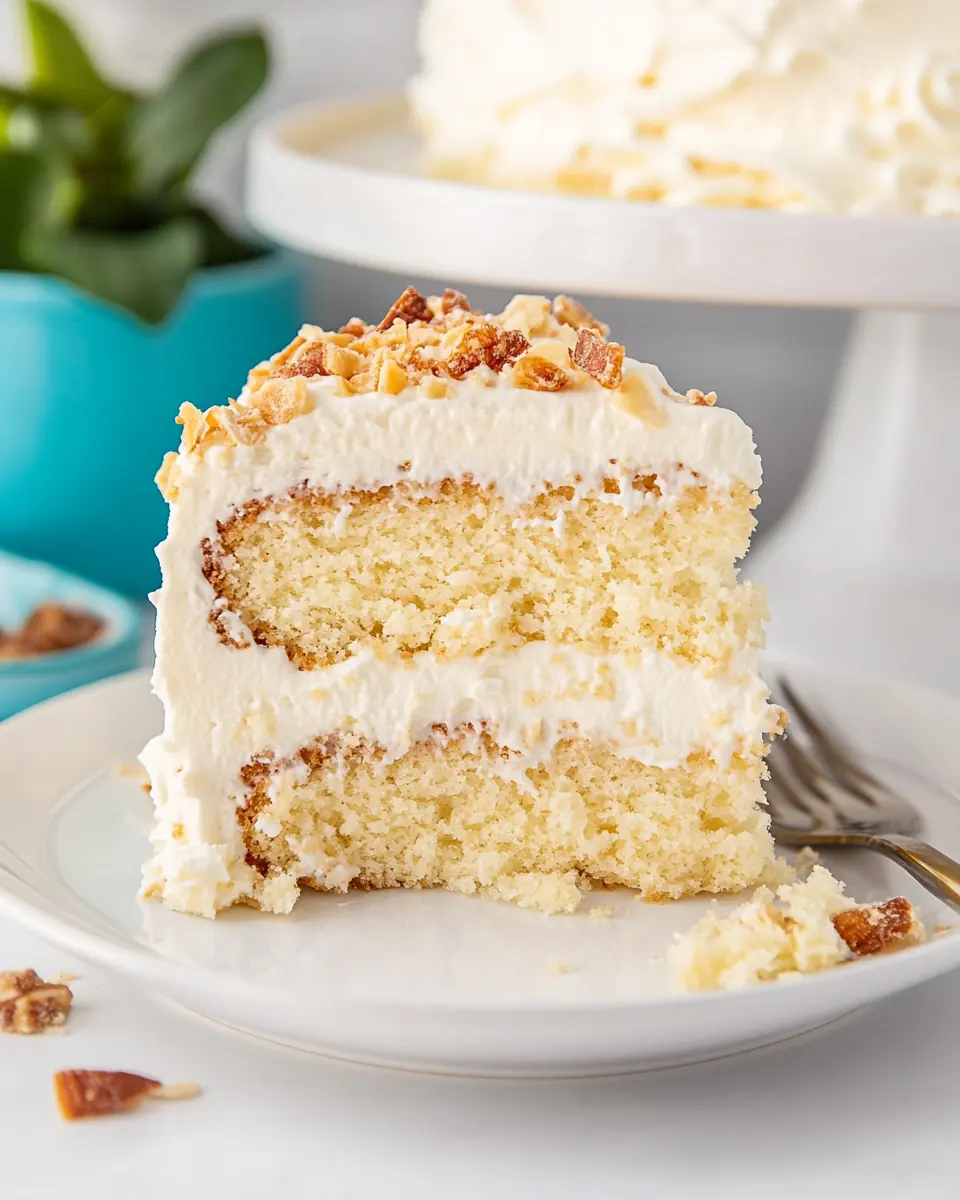
These tips reflect lessons I learned through many bakes. They are practical, easy to implement, and aimed at improving texture and flavor while keeping your process calm and confident.
- Handle egg whites with care Clean, dry equipment and room temperature whites whip faster and higher, giving better lift to the cake. Any trace of yolk or grease will prevent stiff peaks, so crack eggs separately before combining. If whites underperform, you can gently fold until partially incorporated, but volume loss means a slightly denser crumb.
- Alternate dry and wet ingredients Adding flour and buttermilk in turns prevents overworking the batter which keeps the crumb tender. This method reduces gluten development while still allowing a smooth batter. Overmixing will yield a tight, chewy texture, so stop as soon as the mixture is uniform.
- Toast nuts and coconut carefully Use a shallow pan and watch closely as they brown quickly near the end, stirring once or twice for even color. Toasting enhances flavor dramatically, transforming mild notes into deeper, nutty aromas. Burned pieces impart bitterness, so remove the pan a touch early because carryover heat will finish the job.
- Use room temperature dairy Butter, cream cheese, and buttermilk that are not cold incorporate more easily, preventing lumps in your batter and frosting. When components are unified in temperature, you avoid a broken or gritty frosting. If ingredients are too warm, chill briefly; if too cold, allow time on the counter in short increments.
- Measure flour precisely Spoon flour into the measuring cup and level for accuracy, as packed flour leads to a dense cake. A kitchen scale is ideal for consistent results, matching grams in the ingredient list. Accurate measures make repeatable baking and reliable texture.
- Reserve a small amount of topping Setting aside a tablespoon of toasted coconut for the center adds a polished look and a bright contrast. Little finishing touches elevate presentation significantly without extra effort. This small act makes the cake look intentional and cared for.
How to Enjoy Italian Cream Cake
This cake is versatile, fitting both casual and formal occasions. Serve slices slightly chilled or at cool room temperature to best appreciate the frosting texture, and pair with complementary beverages for a balanced dessert experience.
- Occasion pairing Serve Italian Cream Cake at birthdays, bridal showers, or holiday gatherings where its decorative sides and toasted toppings create an elegant centerpiece. The cake’s familiar flavors make it a crowd pleaser and a safe choice for varied guest preferences.
- Serving temperature For the creamiest frosting and neat slices, chill the assembled cake for about 30 minutes before cutting; this firms the frosting and makes clean slices easier. If you prefer a softer mouthfeel, allow slices to rest at room temperature for 10 minutes prior to serving.
- Plate presentation Use a serrated knife heated briefly under hot water and wiped dry for smooth cuts, and place a dollop of extra frosting or a sprinkle of reserved toasted coconut beside each slice for an attractive finish. Contrasting textures on the plate add visual interest and textural variety.
- Storage Keep the cake in the refrigerator in an airtight container for up to 4 days to maintain freshness and prevent the toppings from becoming soggy. For longer storage, freeze individual slices wrapped tightly in plastic and foil; thaw overnight in the refrigerator before serving.
- Occasion ideas This cake pairs well with afternoon tea, festive brunches, or as a dessert after a celebratory dinner. It works nicely during seasons when you want something both comforting and festive, such as spring gatherings or winter holidays.
- Accompaniments Offer light accompaniments like a small scoop of vanilla ice cream or a simple fruit compote to balance the richness, keeping the focus on the cake’s nutty coconut profile. Bright berries also refresh the palate between bites.
FAQ
Conclusion
What makes this cake special is its balance of airy crumb and rich, tangy frosting, finished with toasted coconut and pecans for textural contrast. It carries simple ingredients into a refined dessert that works for both everyday treats and celebratory tables. Give it a try the next time you want a showstopping cake that feels comforting and a little festive. I hope this recipe becomes one of your go to favorites, bringing warm memories to your kitchen and smiles to your guests.
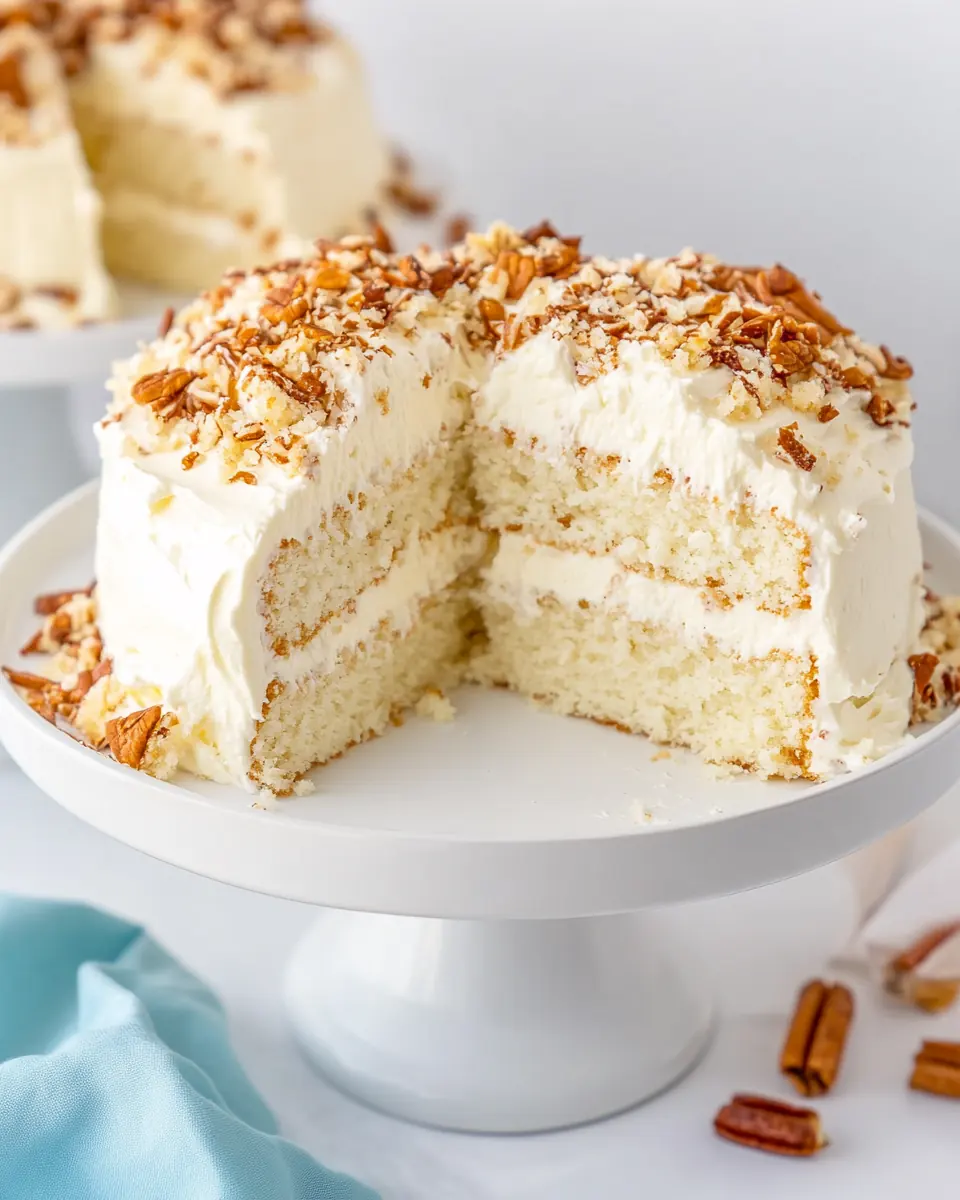
Italian Cream Cake
Ingredients
Equipment
Method
- Preheat the oven to 350°F (180°C), or 160°C if using a fan oven. Grease and line three 9-inch (23 cm) round cake pans with parchment and set aside.: The warmth that fills your kitchen as the oven comes to temperature is your first cue, and properly prepping pans prevents sticking and ensures neat layers. Greasing and lining helps the cakes release cleanly, avoiding torn edges. If you skip parchment, the cakes may cling and break, so take the extra minute to double line. Listen for the oven click and feel the steady heat when you open the door briefly, it confirms an even environment for reliable baking.
- In a medium bowl, whisk together the flour, baking powder, baking soda, and salt.: You will notice a dry, floury scent and the even color of the sifted mix, which signals uniform leavening. Whisking distributes the raising agents so pockets of baking powder do not create uneven rises. A common mistake is not whisking well enough, leading to dense spots; take your time until the mixture looks homogeneous and light.
- In a bowl of a stand mixer fitted with the whisk attachment, whip the egg whites until stiff peaks form, and set aside.: As the whites whip, they transform from glossy to billowy, and you will hear a change from splashy to a steady, airy whipping sound. Stiff peaks mean the whites will hold their shape and contribute lift, so test by lifting the whisk and looking for firm peaks. If any oil or yolk contaminates the whites they will not whip, so always start with clean equipment and room temperature whites for best volume.
- In a separate large bowl, cream the butter and sugar until light and fluffy. Add the egg yolks and beat again until fully mixed. Stir in the vanilla and almond extract.: The creaming step smells buttery and sweet as sugar crystals aerate the butter, creating a paler, pillowy texture. Adding yolks enriches the batter, and mixing until smooth ensures a well emulgated base, preventing grainy pockets. A frequent error is undercreaming, which yields a heavier cake, so beat until the mixture looks visibly lighter and has a soft, ribbon-like consistency.
- Add half the flour mixture and mix, followed by half of the buttermilk, followed by the remaining flour and buttermilk. Mix well after each addition.: Alternating dry and wet ingredients keeps the batter smooth without overdeveloping gluten, so expect the texture to shift from thick to more pourable as you add liquids. You want a cohesive batter, not overly stiff; mixing gently prevents toughness. Overmixing here will yield a tight crumb, so combine until just smooth, scraping the bowl as needed for even incorporation.
- Gently fold in the whipped egg whites in three smaller batches, followed by the coconut and pecans.: Folding preserves the air you worked to create, resulting in a light crumb. The batter should look airy with visible white streaks dissolving as you finish, and you will see specks of coconut and nuts distributed throughout. Use a soft spatula and cut through the center, turn the bowl, and fold rather than stir. A typical mistake is aggressive mixing that knocks out aeration, producing a dense cake, so be patient and gentle.
- Divide the batter evenly between the 3 prepared pans and bake in the oven for 18-22 minutes, or until a toothpick inserted in the center comes out clean.: As the cakes bake you will notice a sweet, toasty aroma and a slight dome forming on top. The surface should spring back lightly when touched and be golden but not dark. Baking times vary by oven, so start checking at 18 minutes; inserting a toothpick and seeing moist crumbs indicates readiness. Overbaking dries the crumb, so remove promptly when the tester is clean with a few moist crumbs.
- Allow it to cool for 10 minutes before removing it to a cooling rack to cool completely.: The initial rest helps the cake firm enough to release without tearing, and the cooling rack allows air to circulate preventing soggy bottoms. You will feel a gentle give when the cake is ready to invert. A common mistake is rushing removal, which can cause breakage; wait the full brief rest and then loosen the edges with a thin offset spatula if needed for safe transfer.
- In a large bowl, cream the cream cheese and butter until smooth.: The texture should be velvety and pale, with a faint tang rising from the cream cheese. Properly softened ingredients blend seamlessly, producing a frosting base that will whip light. If either component is too cold you will see lumps, and if too warm the frosting may be loose, so aim for room temperature. Scrape the bowl to ensure uniform smoothness before adding sugar.
- Add the powdered sugar and mix until smooth. Stir in the vanilla extract.: As powdered sugar incorporates, the aroma sweetens and the frosting thickens to a spreadable consistency. Add sugar gradually to avoid a dusty cloud and to control stiffness. If the frosting appears grainy, continue beating briefly until smooth; overheating from prolonged mixing can introduce air that collapses later, so balance thoroughness with restraint.
- Spread 1 cup of frosting between the cake layers, then spread the remaining frosting on the tops and sides of the cake. Decorate the top border if desired.: The first cup acts as a glue, setting the layers, and the remaining frosting builds a cohesive final look. Smooth with a spatula and use long, confident strokes to avoid tearing the crumb. A frequent issue is overhandling the cake layers while frosting; keep movements gentle and steady to preserve the structure and finish with tidy edges.
- Reserve 1 tablespoon of toasted coconut, then mix together the remaining toasted coconut and toasted pecans. Press the mixture halfway up the sides of the cake, then sprinkle the toasted coconut on top of the cake.: The toasted toppings add crunch and a toasted aroma that contrasts the soft frosting. Pressing the mixture partway up the sides creates a rustic, attractive finish and helps it adhere. If the frosting is too soft the toppings will slide, so chill slightly for better adhesion. Use the reserved tablespoon to highlight the center for a polished final presentation.
Notes
- Handle egg whites with care Clean, dry equipment and room temperature whites whip faster and higher, giving better lift to the cake. Any trace of yolk or grease will prevent stiff peaks, so crack eggs separately before combining. If whites underperform, you can gently fold until partially incorporated, but volume loss means a slightly denser crumb.
- Alternate dry and wet ingredients Adding flour and buttermilk in turns prevents overworking the batter which keeps the crumb tender. This method reduces gluten development while still allowing a smooth batter. Overmixing will yield a tight, chewy texture, so stop as soon as the mixture is uniform.
- Toast nuts and coconut carefully Use a shallow pan and watch closely as they brown quickly near the end, stirring once or twice for even color. Toasting enhances flavor dramatically, transforming mild notes into deeper, nutty aromas. Burned pieces impart bitterness, so remove the pan a touch early because carryover heat will finish the job.
- Use room temperature dairy Butter, cream cheese, and buttermilk that are not cold incorporate more easily, preventing lumps in your batter and frosting. When components are unified in temperature, you avoid a broken or gritty frosting. If ingredients are too warm, chill briefly; if too cold, allow time on the counter in short increments.
- Measure flour precisely Spoon flour into the measuring cup and level for accuracy, as packed flour leads to a dense cake. A kitchen scale is ideal for consistent results, matching grams in the ingredient list. Accurate measures make repeatable baking and reliable texture.
- Reserve a small amount of topping Setting aside a tablespoon of toasted coconut for the center adds a polished look and a bright contrast. Little finishing touches elevate presentation significantly without extra effort. This small act makes the cake look intentional and cared for.