Preheat the oven to 350°F (180°C), or 160°C if using a fan oven. Grease and line three 9-inch (23 cm) round cake pans with parchment and set aside.: The warmth that fills your kitchen as the oven comes to temperature is your first cue, and properly prepping pans prevents sticking and ensures neat layers. Greasing and lining helps the cakes release cleanly, avoiding torn edges. If you skip parchment, the cakes may cling and break, so take the extra minute to double line. Listen for the oven click and feel the steady heat when you open the door briefly, it confirms an even environment for reliable baking.
In a medium bowl, whisk together the flour, baking powder, baking soda, and salt.: You will notice a dry, floury scent and the even color of the sifted mix, which signals uniform leavening. Whisking distributes the raising agents so pockets of baking powder do not create uneven rises. A common mistake is not whisking well enough, leading to dense spots; take your time until the mixture looks homogeneous and light.
In a bowl of a stand mixer fitted with the whisk attachment, whip the egg whites until stiff peaks form, and set aside.: As the whites whip, they transform from glossy to billowy, and you will hear a change from splashy to a steady, airy whipping sound. Stiff peaks mean the whites will hold their shape and contribute lift, so test by lifting the whisk and looking for firm peaks. If any oil or yolk contaminates the whites they will not whip, so always start with clean equipment and room temperature whites for best volume.
In a separate large bowl, cream the butter and sugar until light and fluffy. Add the egg yolks and beat again until fully mixed. Stir in the vanilla and almond extract.: The creaming step smells buttery and sweet as sugar crystals aerate the butter, creating a paler, pillowy texture. Adding yolks enriches the batter, and mixing until smooth ensures a well emulgated base, preventing grainy pockets. A frequent error is undercreaming, which yields a heavier cake, so beat until the mixture looks visibly lighter and has a soft, ribbon-like consistency.
Add half the flour mixture and mix, followed by half of the buttermilk, followed by the remaining flour and buttermilk. Mix well after each addition.: Alternating dry and wet ingredients keeps the batter smooth without overdeveloping gluten, so expect the texture to shift from thick to more pourable as you add liquids. You want a cohesive batter, not overly stiff; mixing gently prevents toughness. Overmixing here will yield a tight crumb, so combine until just smooth, scraping the bowl as needed for even incorporation.
Gently fold in the whipped egg whites in three smaller batches, followed by the coconut and pecans.: Folding preserves the air you worked to create, resulting in a light crumb. The batter should look airy with visible white streaks dissolving as you finish, and you will see specks of coconut and nuts distributed throughout. Use a soft spatula and cut through the center, turn the bowl, and fold rather than stir. A typical mistake is aggressive mixing that knocks out aeration, producing a dense cake, so be patient and gentle.
Divide the batter evenly between the 3 prepared pans and bake in the oven for 18-22 minutes, or until a toothpick inserted in the center comes out clean.: As the cakes bake you will notice a sweet, toasty aroma and a slight dome forming on top. The surface should spring back lightly when touched and be golden but not dark. Baking times vary by oven, so start checking at 18 minutes; inserting a toothpick and seeing moist crumbs indicates readiness. Overbaking dries the crumb, so remove promptly when the tester is clean with a few moist crumbs.
Allow it to cool for 10 minutes before removing it to a cooling rack to cool completely.: The initial rest helps the cake firm enough to release without tearing, and the cooling rack allows air to circulate preventing soggy bottoms. You will feel a gentle give when the cake is ready to invert. A common mistake is rushing removal, which can cause breakage; wait the full brief rest and then loosen the edges with a thin offset spatula if needed for safe transfer.
In a large bowl, cream the cream cheese and butter until smooth.: The texture should be velvety and pale, with a faint tang rising from the cream cheese. Properly softened ingredients blend seamlessly, producing a frosting base that will whip light. If either component is too cold you will see lumps, and if too warm the frosting may be loose, so aim for room temperature. Scrape the bowl to ensure uniform smoothness before adding sugar.
Add the powdered sugar and mix until smooth. Stir in the vanilla extract.: As powdered sugar incorporates, the aroma sweetens and the frosting thickens to a spreadable consistency. Add sugar gradually to avoid a dusty cloud and to control stiffness. If the frosting appears grainy, continue beating briefly until smooth; overheating from prolonged mixing can introduce air that collapses later, so balance thoroughness with restraint.
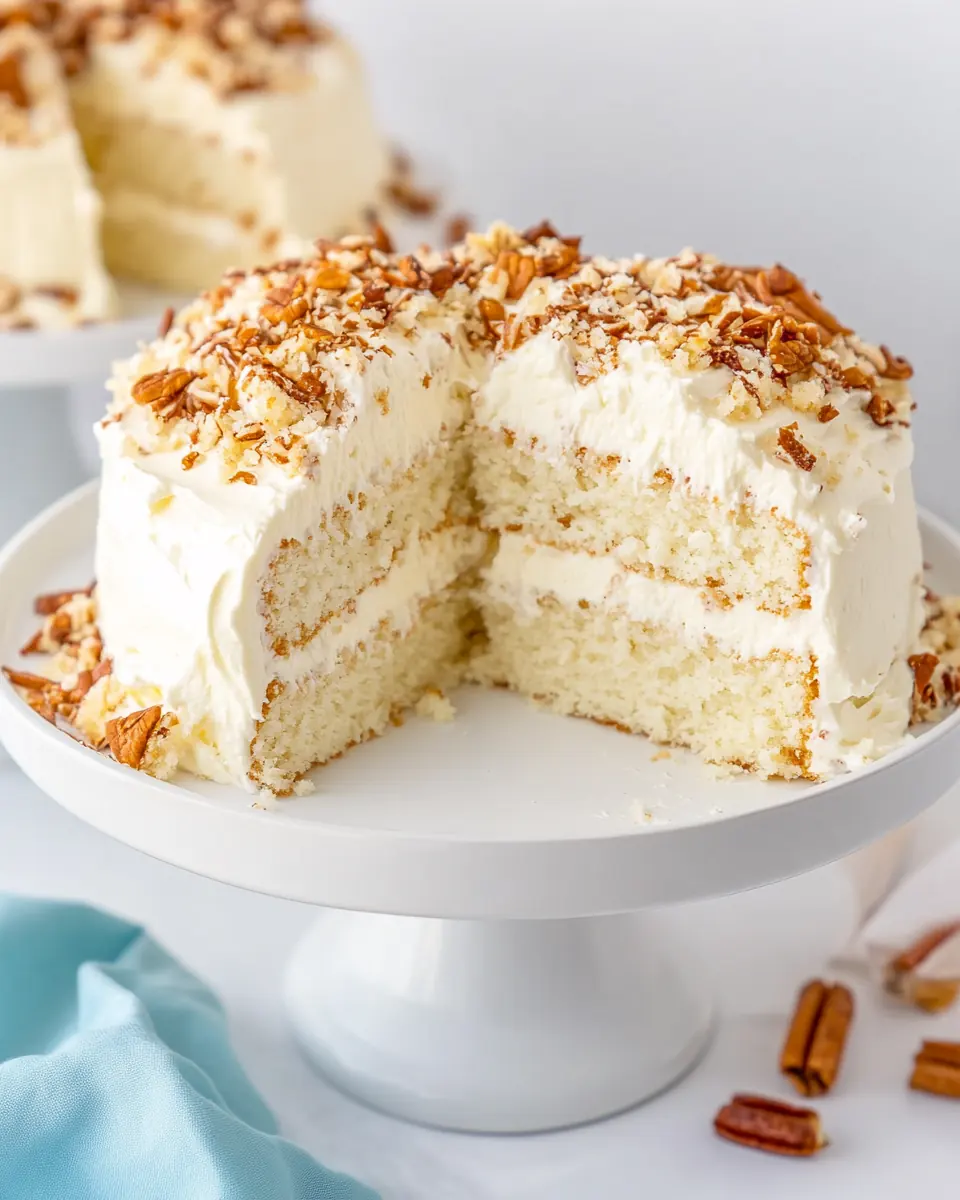
Spread 1 cup of frosting between the cake layers, then spread the remaining frosting on the tops and sides of the cake. Decorate the top border if desired.: The first cup acts as a glue, setting the layers, and the remaining frosting builds a cohesive final look. Smooth with a spatula and use long, confident strokes to avoid tearing the crumb. A frequent issue is overhandling the cake layers while frosting; keep movements gentle and steady to preserve the structure and finish with tidy edges.
Reserve 1 tablespoon of toasted coconut, then mix together the remaining toasted coconut and toasted pecans. Press the mixture halfway up the sides of the cake, then sprinkle the toasted coconut on top of the cake.: The toasted toppings add crunch and a toasted aroma that contrasts the soft frosting. Pressing the mixture partway up the sides creates a rustic, attractive finish and helps it adhere. If the frosting is too soft the toppings will slide, so chill slightly for better adhesion. Use the reserved tablespoon to highlight the center for a polished final presentation.