Kale and Brussels Sprouts Salad
Kale and Brussels Sprouts Salad became my go to when I needed something bright, crunchy, and thoroughly satisfying after long days in the kitchen. I still remember the first time I tossed together the components: the warm toasted nuts hitting the air with a toasty perfume, the shredded Brussels sprouts snapping under the fork, and the kale softened just enough to be approachable. That first bite felt like a little celebration of texture and balance, and I kept tinkering until it felt like home.
Over the years I have served Kale and Brussels Sprouts Salad at casual potlucks and small holiday dinners, and each time someone asks for the recipe. I love how forgiving it is, and how the individual parts each bring their own personality. The tart dried cherries cut through the savory Parmesan cheese, the citrusy dressing brightens the whole bowl, and the toasted nuts add a savory crunch that makes the salad feel complete. I often find myself sharing a quick story about massaging kale at the table, which always gets a laugh and a surprised glance when people taste how tender it becomes.
There is comfort in the ritual too. Toasting nuts, shredding Brussels sprouts, and whisking a simple lemon dressing are small tasks that add up to something impressive without drama. I enjoy the little domestic pause each step requires, and how the final toss always feels rewarding. If you are looking for a salad that travels well, keeps in the fridge, and still tastes fresh when dressed, this is it. You can make parts ahead, and the assembly is reliably quick, which is why I reach for this recipe on busy nights and for gatherings where I want a crowd pleaser that is also wholesome.
Recipe Snapshot
35 mins
25 mins
10 mins
Easy
250 kcal
American
Vegan, Low FODMAP
Salads
Oven, Rimmed baking sheet, Large bowl, Food processor or mandoline or chef’s knife, Small bowl or liquid measuring cup, Tongs
What Sets This Kale and Brussels Sprouts Salad Apart
Vibrant texture contrast
I adore how Kale and Brussels Sprouts Salad balances toothsome, crunchy, and silky textures. The toasted nuts give a satisfying snap, the shredded Brussels sprouts offer crispness, and the massaged kale becomes tender without losing character. That interplay makes every forkful interesting and keeps people reaching back for more.
Bright, balanced flavors
I find the dressing, with fresh lemon juice and a touch of maple syrup, does a beautiful job of tying the salad together. The citrus lifts the bitterness of the kale, while the maple rounds the acid so the dried cherries sing without overpowering. The salty, savory edge from the Parmesan cheese completes the flavor profile.
Make ahead friendly
I love recipes that respect my time, and this salad shines in that regard. You can toast nuts, shred Brussels sprouts, and prepare the dressing a day ahead and still have everything taste fresh at serving. That convenience makes it a reliable option when I am hosting or prepping meals for the week.
Comforting yet elegant
This recipe feels homey without being heavy. The toasted nuts and Parmesan cheese add a comforting savory backbone, while the bright lemon dressing keeps it elegant. It works as a side for weeknight dinners and as an impressive dish at a holiday table.
Healthy and satisfying
I keep coming back to this salad because it nourishes and satisfies. Between the nutrient dense kale, the fiber rich shredded Brussels sprouts, and the healthy fats from the extra virgin olive oil, it feels nourishing while still tasting indulgent. I often recommend it when I want a dish that will please a crowd and also feel good to eat.
Essential Ingredients for Kale and Brussels Sprouts Salad
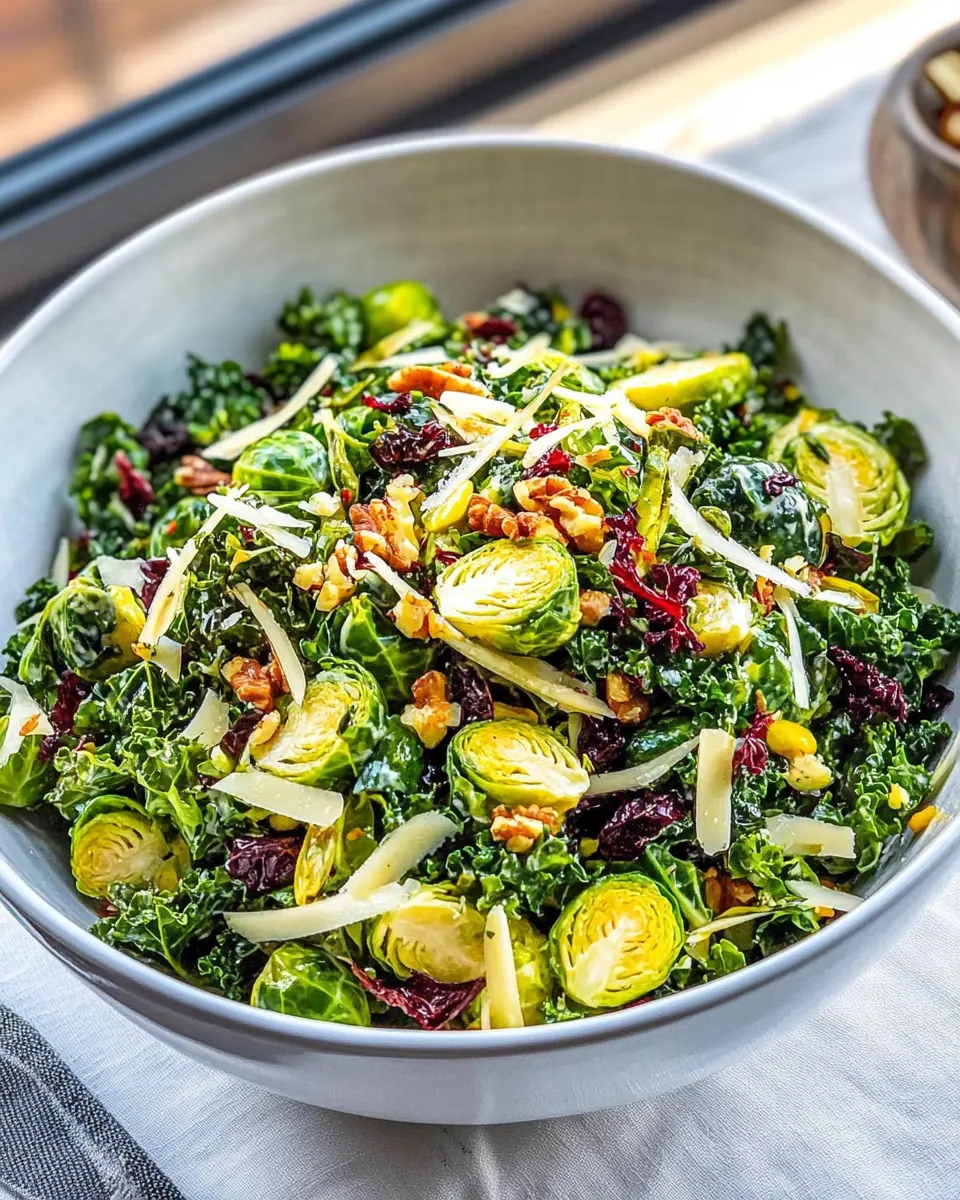
These ingredients are chosen to create a play between textures, bright acidity, and savory richness. The key players are the leafy kale for structure, the shredded Brussels sprouts for crisp bite, the toasted nuts for crunch, and the dressing components for brightness. Together they give balance so every mouthful has contrast and depth.
- 1 1/2 cups raw walnut halves or raw whole almonds: Toast briefly to deepen flavor and add a crunchy, buttery contrast; provide rich, nutty texture that complements the salad and holds up against dressing.
- 1 large or 2 small bunches curly kale about 1 1/4 pounds stems removed and finely chopped: Massage thoroughly after chopping to soften fibrous leaves and reduce bitterness; add hearty, leafy base with robust nutrients and a satisfying chew to the salad.
- 1/4 teaspoon kosher salt: Season sparingly during massaging or dressing to enhance overall flavor; balance bitterness and bring out brightness in the kale and other components.
- 16 ounces Brussels sprouts: Shred or thinly slice to create tender, slightly crisp strands; contribute a sweet, earthy bite and substantial texture that pairs well with nuts and cheese.
- 3/4 cups shredded Parmesan cheese: Grate finely to introduce savory, umami richness and a creamy saltiness; melds with dressing to create cohesive, indulgent flavor throughout the salad.
- 3/4 cup dried cherries or dried cranberries: Scatter evenly to add chewy bursts of fruity sweetness and a tart counterpoint; provide color contrast and a chewy texture that balances crunchy elements.
- 1/4 cup extra virgin olive oil: Whisk into the dressing as the primary fat to emulsify flavors and coat salad components; impart fruity, peppery notes and a silky mouthfeel.
- 1/3 cup fresh lemon juice about 1 1/2 medium lemons: Squeeze fresh and strain if desired to add bright acidity and citrusy aromatics; help balance the oil and cheese while cutting through richness.
- 2 teaspoons Dijon mustard: Whisk into the dressing to add tangy depth and slight pungency; act as an emulsifier to bind oil and lemon juice for a smooth dressing.
- 1 teaspoon pure maple syrup: Stir into the dressing for subtle sweetness and complexity; round out acidity and mustard bite while enhancing the overall balance of flavors.
- 3/4 teaspoon kosher salt: Add with other seasonings to properly salt the dressing and vegetables; enhance flavors, reduce blandness, and help the kale soften during massaging.
- 1/4 teaspoon ground black pepper: Grind fresh over the finished salad to introduce sharp, aromatic heat and balance sweetness; provide a final layer of seasoning that heightens all components.
Step by Step Instructions for Kale and Brussels Sprouts Salad
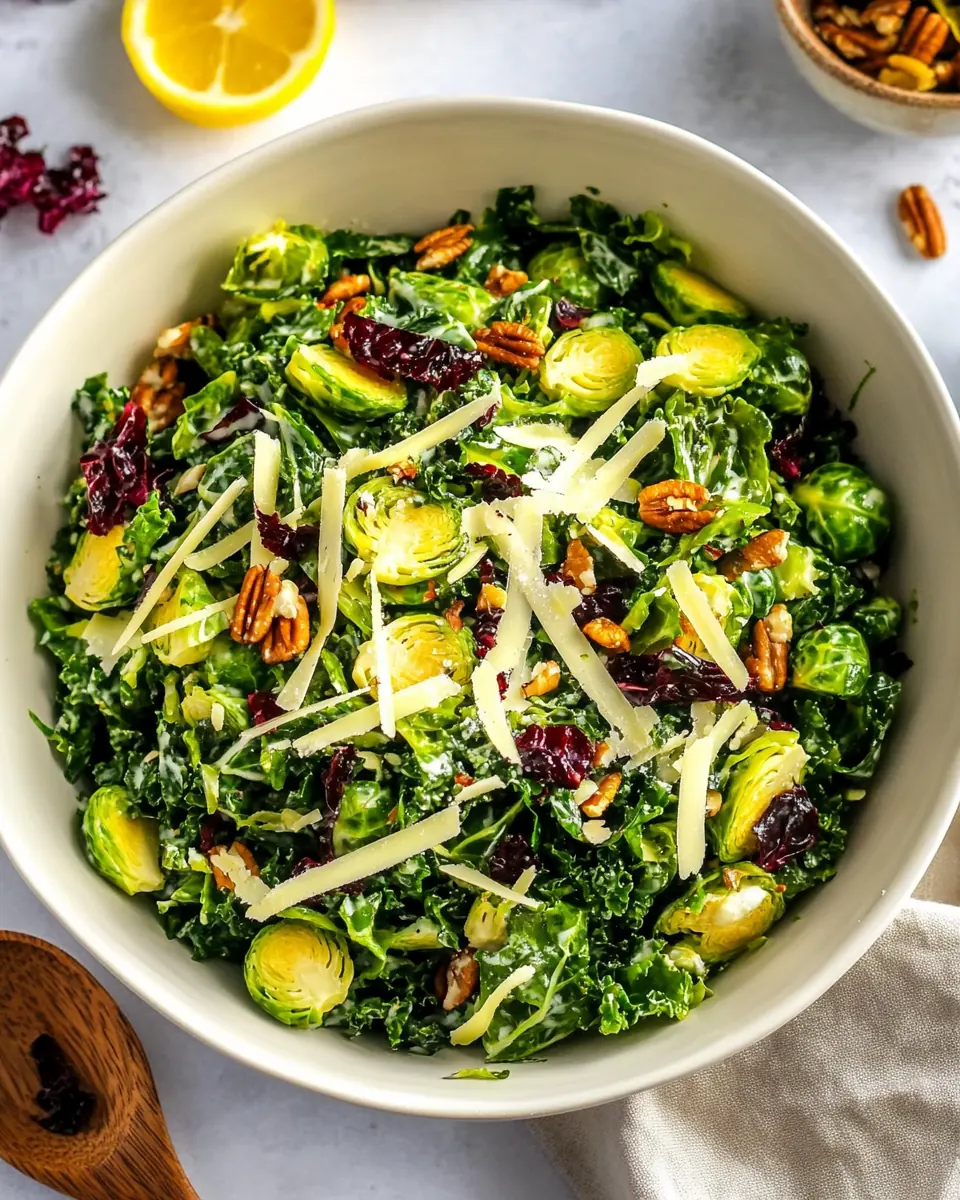
These steps walk you through building layers of flavor and texture, from toasting the nuts to massaging the kale and assembling the salad. I like a relaxed pace so each component has attention and the final toss is confident.
- Preheat the oven to 350 degrees F. Spread the nuts into a single layer on an ungreased, rimmed baking sheet. Toast in the oven for 8 to 10 minutes, until they smell fragrant and toasty and a nut is light tan on the inside when broken in half, tossing once halfway through. Remove to a cutting board. Let cool, then roughly chop.: As the nuts warm, the kitchen will fill with a deep, toasty aroma that signals oils awakening, and when you break one you should see a light tan interior. The sound of the nuts clicking as you move them on the pan is a good cue they are toasting evenly. Why this matters, I tell myself, is that properly toasted nuts add both flavor and crunch without bitterness. If you overtoast, they can smoke or taste burnt, so set a timer and check early, tossing once to promote even coloring. A common mistake here is leaving them in too long because the oven can intensify heat quickly; watch for the first fragrant whiff and golden edges.
- Meanwhile, place the kale in a large bowl. Sprinkle with the salt. Massage the kale with your hands by grabbing large handfuls a few at a time and squeezing gently until the kale is darker in color and more fragrant (this step makes the kale more tender and less bitter in taste—don’t skip it!).: The tactile pleasure of massaging kale is immediate, as the leaves relax, darken, and soften under your hands, releasing a green, almost grassy scent that is less sharp after a minute or two. This step breaks down the fibrous structure so the dressing can cling and the kale becomes pleasantly tender. I emphasize gentle but firm squeezes, rotating hands so every piece receives attention. A frequent error is skimping on time which leaves the kale tough and slightly bitter, so keep at it until the leaves feel pliable and fragrant.
- Shred the Brussels sprouts: For the fastest possible shredding, cut the bottom end off of the Brussels sprouts, then shred them using a food processor slicing blade like this one. Alternatively, you can carefully slice the Brussels sprouts with a mandoline (if using a mandoline, I recommend holding the stem, slicing from the top, and discarding the bottom stem; be careful and watch your fingers). If you do not have a food processor OR a mandoline, you can use a sharp chef's knife: remove the stems and any wilted outer leaves, then slice the sprouts into very thin ribbons. For all methods: once the Brussels sprouts are sliced, place the shreds in a bowl with the kale, then toss and fluff them with a fork or your fingers.: For the fastest possible shredding, cut the bottom end off of the Brussels sprouts, then shred them using a food processor slicing blade like this one. Alternatively, you can carefully slice the Brussels sprouts with a mandoline (if using a mandoline, I recommend holding the stem, slicing from the top, and discarding the bottom stem; be careful and watch your fingers). If you do not have a food processor OR a mandoline, you can use a sharp chef's knife: remove the stems and any wilted outer leaves, then slice the sprouts into very thin ribbons. For all methods: once the Brussels sprouts are sliced, place the shreds in a bowl with the kale, then toss and fluff them with a fork or your fingers : When shredded thinly, the Brussels sprouts release a crisp, cabbage like fragrance and a clean, green flavor. The visual cue to stop is when the pile looks feathery and light, not chunky. This fine texture lets the dressing coat every ribbon and ensures an even mouthfeel against the softened kale . If you slice too thick, the bites become heavy and the salad loses finesse, so aim for thin, consistent ribbons. A common slip is uneven sizing from a dull knife, so keep blades sharp for clean cuts.
- In a small bowl or large liquid measuring cup, stir together the dressing ingredients: the oil, lemon juice, Dijon, maple syrup, salt, and pepper. (Alternatively, you can shake the dressing together in a mason jar with a tight-fitting lid.): the oil, lemon juice, Dijon, maple syrup, salt, and pepper. (Alternatively, you can shake the dressing together in a mason jar with a tight-fitting lid.) : As you whisk, the dressing will take on a glossy sheen and the aroma of lemon will lift, giving you the immediate sense of brightness. The mustard helps bind the oil and lemon into a more stable emulsion so the dressing clings to leaves instead of sliding off. I taste at this stage to check acid balance and sweetness, because adjusting here prevents reworking the whole salad later. A common mistake is not emulsifying enough, which makes the dressing separate; whisk firmly or shake in a jar until the texture is uniform and slightly thickened.
- Dress and assemble the salad: Pour half of the dressing over the salad, then toss to combine (I like to use tongs for this). Sprinkle the Parmesan, cherries, and chopped nuts over the top, then lightly toss again. Drizzle with additional dressing as desired.: Pour half of the dressing over the salad, then toss to combine (I like to use tongs for this). Sprinkle the Parmesan, cherries, and chopped nuts over the top, then lightly toss again. Drizzle with additional dressing as desired : When you pour the first half of the dressing, focus on coating rather than flooding, then use tongs to lift and fold so each shred and leaf is touched by flavor. The first toss will mellow and marry textures, and adding the Parmesan cheese , cherries, and nuts last preserves their shape and contrast. Listen for the soft clatter of nuts settling and notice the glossy sheen on the greens; those are good signals. A typical misstep is overdressing early which can make the salad soggy, so add more sparingly and taste as you go to reach the ideal balance.
How to Switch It Up
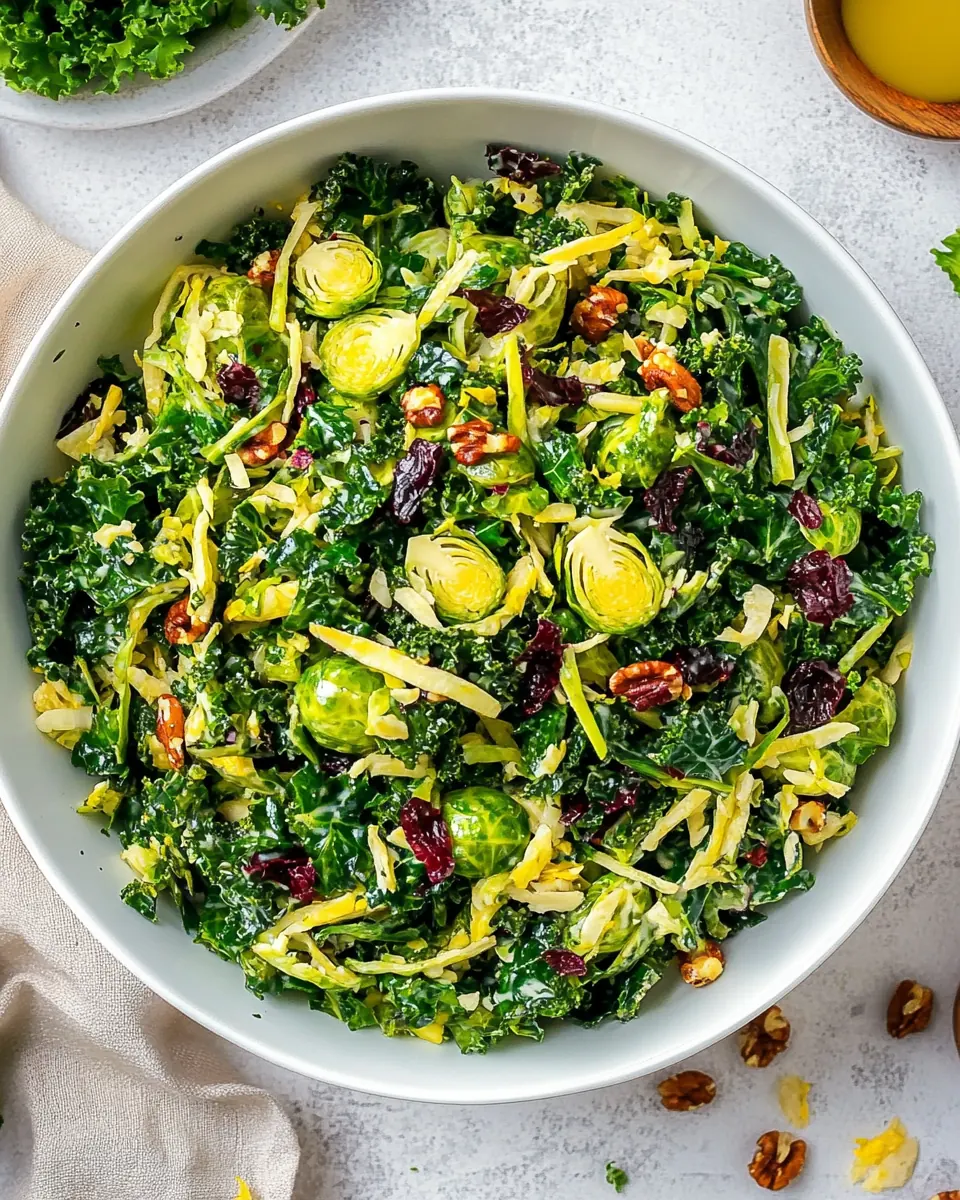
I like offering small variations so you can adapt the salad to your pantry and the season. Below are practical ideas that change texture, brightness, or the overall profile while keeping the heart of Kale and Brussels Sprouts Salad intact.
- Swap the nuts: Try almonds instead of walnuts for a milder crunch and slightly sweeter note; toast them lightly for that same toasty aroma without overpowering the salad.
- Change the dried fruit: Use dried cranberries or chopped dried apricots to shift the sweet tartness, soaking briefly if they seem too chewy so they integrate more smoothly.
- Boost the tang: Increase the lemon juice by one to two teaspoons for a brighter, more assertive dressing, but taste first so you do not overwhelm the other elements.
- Make it nut free: Omit the nuts and add roasted chickpeas for crunch, keeping the overall structure but making the salad suitable for nut restricted guests.
- Use different cheese: Substitute Pecorino for Parmesan cheese if you want a sharper, sheep milk profile; shave it thinly so it melds evenly with the greens.
What Goes Well With This Kale and Brussels Sprouts Salad
This salad pairs nicely with a range of mains and fits many occasions, from weeknight dinners to holiday spreads. Below are serving suggestions, occasions, storage notes, and seasonal pairing ideas to help you present it well.
- Weeknight mains: Serve alongside roasted chicken or grilled fish for an easy balanced dinner, the salad’s bright acidity cutting through richer proteins.
- Holiday table: Place it as a colorful side with roasted root vegetables and a grain dish, where the crunchy texture adds variety to traditional warm plates.
- Make ahead storage: Store shredded Brussels sprouts and chopped kale separately in the refrigerator for up to one day, and keep dressing chilled in a jar; dress only before serving to maintain crispness.
- Leftover revival: Keep extra dressing to refresh leftovers, and add a splash before serving so the salad tastes lively again.
- Seasonal touches: In fall, use dried cherries or cranberries and toasted walnuts for a cozy feel; in spring, lighter dried fruits and toasted almonds give a fresher profile.
- Occasions: Works well for lunch spreads, potlucks, brunches, or family dinners, offering a satisfying vegetarian option that guests often request seconds of.
FAQ
Conclusion
What makes this recipe special is its effortless balance of textures and bright, layered flavors that come together without fuss. It’s a dependable dish that feels both hearty and fresh, perfect for weeknights or when you want a salad that stands out on a festive table. Give it a try and you may find it becomes one of your go to salads for gatherings and relaxed dinners alike; the small prep effort is rewarded by consistent, crowd pleasing results.
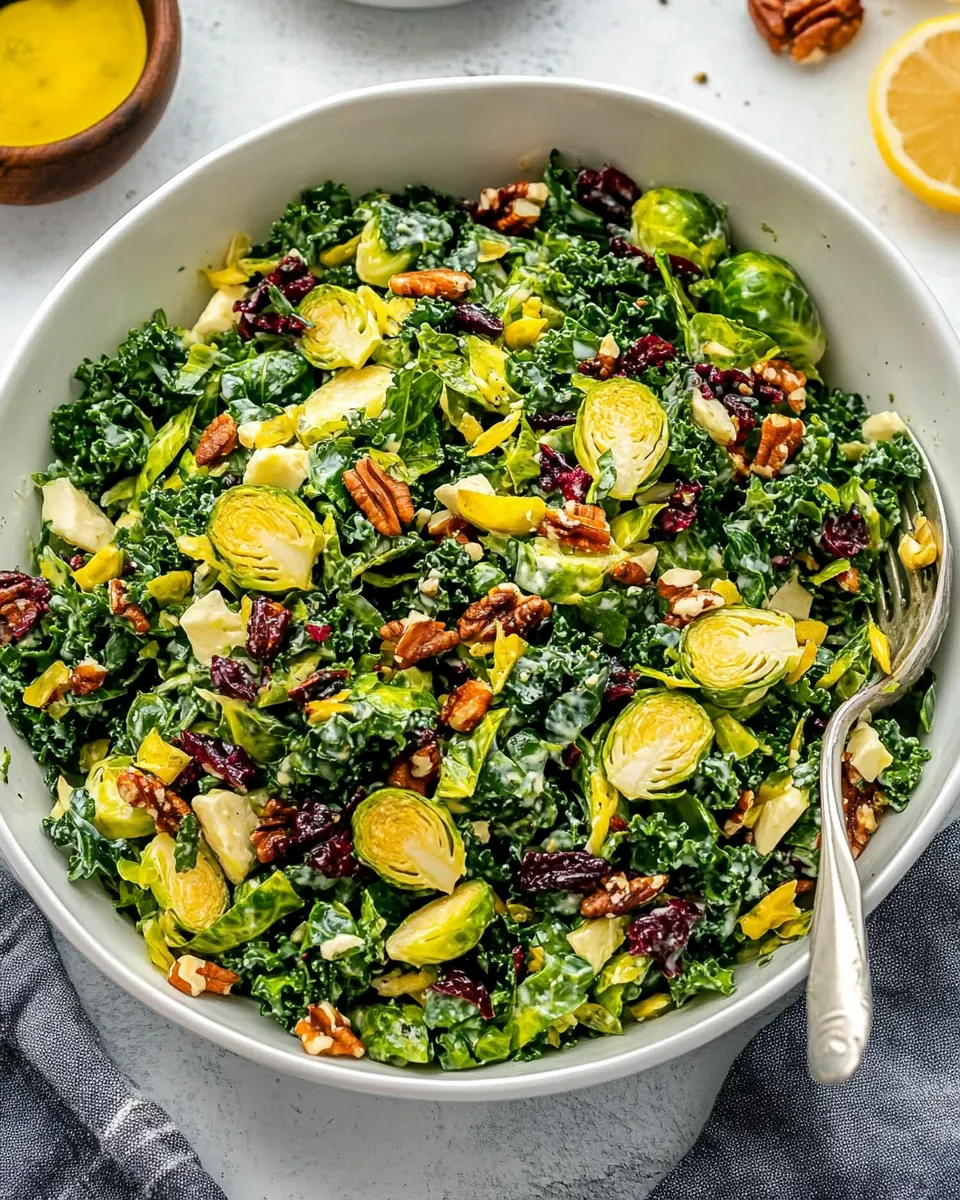
Kale and Brussels Sprouts Salad
Ingredients
Equipment
Method
- Preheat the oven to 350 degrees F. Spread the nuts into a single layer on an ungreased, rimmed baking sheet. Toast in the oven for 8 to 10 minutes, until they smell fragrant and toasty and a nut is light tan on the inside when broken in half, tossing once halfway through. Remove to a cutting board. Let cool, then roughly chop.: As the nuts warm, the kitchen will fill with a deep, toasty aroma that signals oils awakening, and when you break one you should see a light tan interior. The sound of the nuts clicking as you move them on the pan is a good cue they are toasting evenly. Why this matters, I tell myself, is that properly toasted nuts add both flavor and crunch without bitterness. If you overtoast, they can smoke or taste burnt, so set a timer and check early, tossing once to promote even coloring. A common mistake here is leaving them in too long because the oven can intensify heat quickly; watch for the first fragrant whiff and golden edges.
- Meanwhile, place the kale in a large bowl. Sprinkle with the salt. Massage the kale with your hands by grabbing large handfuls a few at a time and squeezing gently until the kale is darker in color and more fragrant (this step makes the kale more tender and less bitter in taste—don’t skip it!).: The tactile pleasure of massaging kale is immediate, as the leaves relax, darken, and soften under your hands, releasing a green, almost grassy scent that is less sharp after a minute or two. This step breaks down the fibrous structure so the dressing can cling and the kale becomes pleasantly tender. I emphasize gentle but firm squeezes, rotating hands so every piece receives attention. A frequent error is skimping on time which leaves the kale tough and slightly bitter, so keep at it until the leaves feel pliable and fragrant.
- Shred the Brussels sprouts: For the fastest possible shredding, cut the bottom end off of the Brussels sprouts, then shred them using a food processor slicing blade like this one. Alternatively, you can carefully slice the Brussels sprouts with a mandoline (if using a mandoline, I recommend holding the stem, slicing from the top, and discarding the bottom stem; be careful and watch your fingers). If you do not have a food processor OR a mandoline, you can use a sharp chef's knife: remove the stems and any wilted outer leaves, then slice the sprouts into very thin ribbons. For all methods: once the Brussels sprouts are sliced, place the shreds in a bowl with the kale, then toss and fluff them with a fork or your fingers.: For the fastest possible shredding, cut the bottom end off of the Brussels sprouts, then shred them using a food processor slicing blade like this one. Alternatively, you can carefully slice the Brussels sprouts with a mandoline (if using a mandoline, I recommend holding the stem, slicing from the top, and discarding the bottom stem; be careful and watch your fingers). If you do not have a food processor OR a mandoline, you can use a sharp chef's knife: remove the stems and any wilted outer leaves, then slice the sprouts into very thin ribbons. For all methods: once the Brussels sprouts are sliced, place the shreds in a bowl with the kale, then toss and fluff them with a fork or your fingers : When shredded thinly, the Brussels sprouts release a crisp, cabbage like fragrance and a clean, green flavor. The visual cue to stop is when the pile looks feathery and light, not chunky. This fine texture lets the dressing coat every ribbon and ensures an even mouthfeel against the softened kale . If you slice too thick, the bites become heavy and the salad loses finesse, so aim for thin, consistent ribbons. A common slip is uneven sizing from a dull knife, so keep blades sharp for clean cuts.
- In a small bowl or large liquid measuring cup, stir together the dressing ingredients: the oil, lemon juice, Dijon, maple syrup, salt, and pepper. (Alternatively, you can shake the dressing together in a mason jar with a tight-fitting lid.): the oil, lemon juice, Dijon, maple syrup, salt, and pepper. (Alternatively, you can shake the dressing together in a mason jar with a tight-fitting lid.) : As you whisk, the dressing will take on a glossy sheen and the aroma of lemon will lift, giving you the immediate sense of brightness. The mustard helps bind the oil and lemon into a more stable emulsion so the dressing clings to leaves instead of sliding off. I taste at this stage to check acid balance and sweetness, because adjusting here prevents reworking the whole salad later. A common mistake is not emulsifying enough, which makes the dressing separate; whisk firmly or shake in a jar until the texture is uniform and slightly thickened.
- Dress and assemble the salad: Pour half of the dressing over the salad, then toss to combine (I like to use tongs for this). Sprinkle the Parmesan, cherries, and chopped nuts over the top, then lightly toss again. Drizzle with additional dressing as desired.: Pour half of the dressing over the salad, then toss to combine (I like to use tongs for this). Sprinkle the Parmesan, cherries, and chopped nuts over the top, then lightly toss again. Drizzle with additional dressing as desired : When you pour the first half of the dressing, focus on coating rather than flooding, then use tongs to lift and fold so each shred and leaf is touched by flavor. The first toss will mellow and marry textures, and adding the Parmesan cheese , cherries, and nuts last preserves their shape and contrast. Listen for the soft clatter of nuts settling and notice the glossy sheen on the greens; those are good signals. A typical misstep is overdressing early which can make the salad soggy, so add more sparingly and taste as you go to reach the ideal balance.
Notes
- Swap the nuts: Try almonds instead of walnuts for a milder crunch and slightly sweeter note; toast them lightly for that same toasty aroma without overpowering the salad.
- Change the dried fruit: Use dried cranberries or chopped dried apricots to shift the sweet tartness, soaking briefly if they seem too chewy so they integrate more smoothly.
- Boost the tang: Increase the lemon juice by one to two teaspoons for a brighter, more assertive dressing, but taste first so you do not overwhelm the other elements.
- Make it nut free: Omit the nuts and add roasted chickpeas for crunch, keeping the overall structure but making the salad suitable for nut restricted guests.
- Use different cheese: Substitute Pecorino for Parmesan cheese if you want a sharper, sheep milk profile; shave it thinly so it melds evenly with the greens.