Preheat the oven to 350 degrees F. Spread the nuts into a single layer on an ungreased, rimmed baking sheet. Toast in the oven for 8 to 10 minutes, until they smell fragrant and toasty and a nut is light tan on the inside when broken in half, tossing once halfway through. Remove to a cutting board. Let cool, then roughly chop.: As the nuts warm, the kitchen will fill with a deep, toasty aroma that signals oils awakening, and when you break one you should see a light tan interior. The sound of the nuts clicking as you move them on the pan is a good cue they are toasting evenly. Why this matters, I tell myself, is that properly toasted nuts add both flavor and crunch without bitterness. If you overtoast, they can smoke or taste burnt, so set a timer and check early, tossing once to promote even coloring. A common mistake here is leaving them in too long because the oven can intensify heat quickly; watch for the first fragrant whiff and golden edges.
Meanwhile, place the kale in a large bowl. Sprinkle with the salt. Massage the kale with your hands by grabbing large handfuls a few at a time and squeezing gently until the kale is darker in color and more fragrant (this step makes the kale more tender and less bitter in taste—don’t skip it!).: The tactile pleasure of massaging kale is immediate, as the leaves relax, darken, and soften under your hands, releasing a green, almost grassy scent that is less sharp after a minute or two. This step breaks down the fibrous structure so the dressing can cling and the kale becomes pleasantly tender. I emphasize gentle but firm squeezes, rotating hands so every piece receives attention. A frequent error is skimping on time which leaves the kale tough and slightly bitter, so keep at it until the leaves feel pliable and fragrant.
Shred the Brussels sprouts: For the fastest possible shredding, cut the bottom end off of the Brussels sprouts, then shred them using a food processor slicing blade like this one. Alternatively, you can carefully slice the Brussels sprouts with a mandoline (if using a mandoline, I recommend holding the stem, slicing from the top, and discarding the bottom stem; be careful and watch your fingers). If you do not have a food processor OR a mandoline, you can use a sharp chef's knife: remove the stems and any wilted outer leaves, then slice the sprouts into very thin ribbons. For all methods: once the Brussels sprouts are sliced, place the shreds in a bowl with the kale, then toss and fluff them with a fork or your fingers.: For the fastest possible shredding, cut the bottom end off of the Brussels sprouts, then shred them using a food processor slicing blade like this one. Alternatively, you can carefully slice the Brussels sprouts with a mandoline (if using a mandoline, I recommend holding the stem, slicing from the top, and discarding the bottom stem; be careful and watch your fingers). If you do not have a food processor OR a mandoline, you can use a sharp chef's knife: remove the stems and any wilted outer leaves, then slice the sprouts into very thin ribbons. For all methods: once the Brussels sprouts are sliced, place the shreds in a bowl with the kale, then toss and fluff them with a fork or your fingers : When shredded thinly, the Brussels sprouts release a crisp, cabbage like fragrance and a clean, green flavor. The visual cue to stop is when the pile looks feathery and light, not chunky. This fine texture lets the dressing coat every ribbon and ensures an even mouthfeel against the softened kale . If you slice too thick, the bites become heavy and the salad loses finesse, so aim for thin, consistent ribbons. A common slip is uneven sizing from a dull knife, so keep blades sharp for clean cuts.
In a small bowl or large liquid measuring cup, stir together the dressing ingredients: the oil, lemon juice, Dijon, maple syrup, salt, and pepper. (Alternatively, you can shake the dressing together in a mason jar with a tight-fitting lid.): the oil, lemon juice, Dijon, maple syrup, salt, and pepper. (Alternatively, you can shake the dressing together in a mason jar with a tight-fitting lid.) : As you whisk, the dressing will take on a glossy sheen and the aroma of lemon will lift, giving you the immediate sense of brightness. The mustard helps bind the oil and lemon into a more stable emulsion so the dressing clings to leaves instead of sliding off. I taste at this stage to check acid balance and sweetness, because adjusting here prevents reworking the whole salad later. A common mistake is not emulsifying enough, which makes the dressing separate; whisk firmly or shake in a jar until the texture is uniform and slightly thickened.
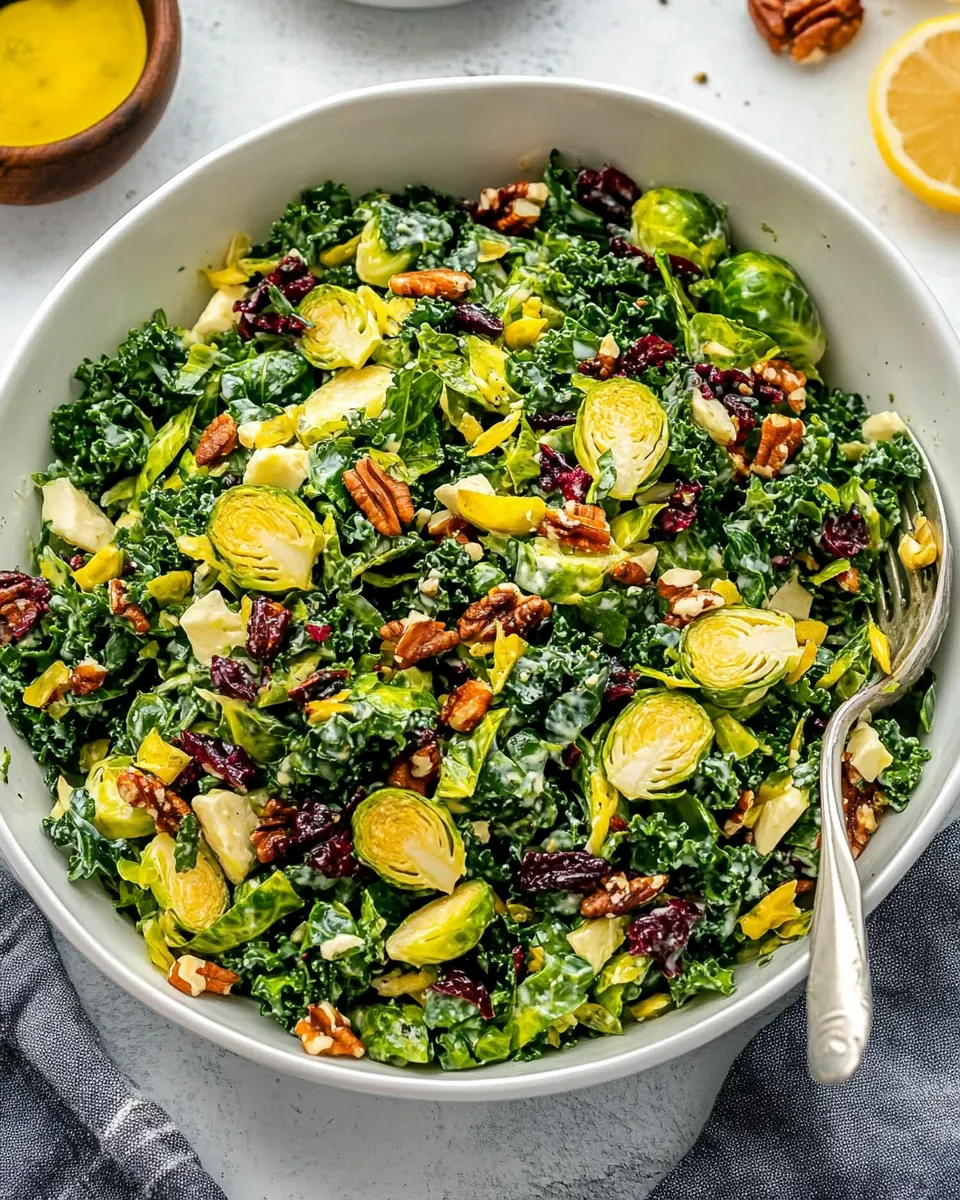
Dress and assemble the salad: Pour half of the dressing over the salad, then toss to combine (I like to use tongs for this). Sprinkle the Parmesan, cherries, and chopped nuts over the top, then lightly toss again. Drizzle with additional dressing as desired.: Pour half of the dressing over the salad, then toss to combine (I like to use tongs for this). Sprinkle the Parmesan, cherries, and chopped nuts over the top, then lightly toss again. Drizzle with additional dressing as desired : When you pour the first half of the dressing, focus on coating rather than flooding, then use tongs to lift and fold so each shred and leaf is touched by flavor. The first toss will mellow and marry textures, and adding the Parmesan cheese , cherries, and nuts last preserves their shape and contrast. Listen for the soft clatter of nuts settling and notice the glossy sheen on the greens; those are good signals. A typical misstep is overdressing early which can make the salad soggy, so add more sparingly and taste as you go to reach the ideal balance.