Lasagna Soup
Lasagna Soup has been a cozy fallback in my kitchen for years, the kind of recipe I turn to when the weather is damp and I want something that hugs from the inside out.
I first made Lasagna Soup on a snowy evening when errands ran late and dinner needed to be comforting without a lot of fuss. I remember the kitchen filling with the rich scent of browned ground beef and crushed garlic, while the canned diced tomatoes simmered into a thick, tomato forward broth. It felt like a cheat on lasagna assembly, but every spoonful brought the familiar layering of flavors I loved.
Over time I learned small tricks that keep this version reliable. I now brown the ground beef until it has tiny crisped bits, and I let the soup bubble gently so the flavors marry slowly. The green bell pepper and onion add bright, sweet notes that cut through the savory base, and finishing with grated cheese transforms each bowl into a melty, comforting treat. It is an easy weeknight solution when you want lasagna flavors without the assembly.
When friends come over, I serve this in deep bowls with crusty bread, and they always ask for the recipe. That familiarity made me refine the steps so it is forgiving for new cooks but satisfying for anyone who appreciates layered, hearty meals. I hope when you try my version of Lasagna Soup, it becomes a reliable dinner that warms the whole room.
Recipe Snapshot
1 hr 10 mins
10 mins
60 mins
Medium
400 kcal
Italian
Keto, Paleo
Soups
Large pot, Wooden spoon, Colander
Why This Lasagna Soup Works
Classic Lasagna Flavor without the Fuss
I love how Lasagna Soup captures the same comforting, layered flavors of baked lasagna, but in a single pot. Instead of building sheets and layering sauce, cheese, and meat, you get that same savory depth in every spoonful. For busy evenings this is a real win, because it delivers maximum satisfaction with minimal time and cleanup.
Hearty and Family Friendly
My family gravitates toward bold, familiar tastes, and this soup answers that call every time. The combination of browned ground beef, simmered diced tomatoes, and melted cheese yields a bowl that kids and adults both enjoy. I often make extra because it reheats beautifully, and leftovers taste even better the next day as the flavors continue to meld.
Flexible and Forgiving
What I appreciate most is how forgiving the technique is. You can brown the ground beef a little longer for crispier bits, or simmer a touch longer for a thicker broth, and it still turns out great. It adapts to what you have on hand, so if you need to stretch a meal or feed a crowd, this soup scales without drama.
Comfort Meets Freshness
Adding chopped green bell pepper and diced onion brings just enough freshness to balance the rich meat and tomato base. Those vegetable notes keep the soup from feeling heavy, while basil and crushed garlic provide aromatic highlights that make each spoonful sing.
Weeknight Hero
This recipe is one of my weeknight heroes because it is straightforward and satisfying. It needs only basic pantry staples and simple techniques, yet it delivers a meal that feels special. If you want something that feeds a family and feels like comfort food, this hits the mark.
Recipe Ingredients for Lasagna Soup
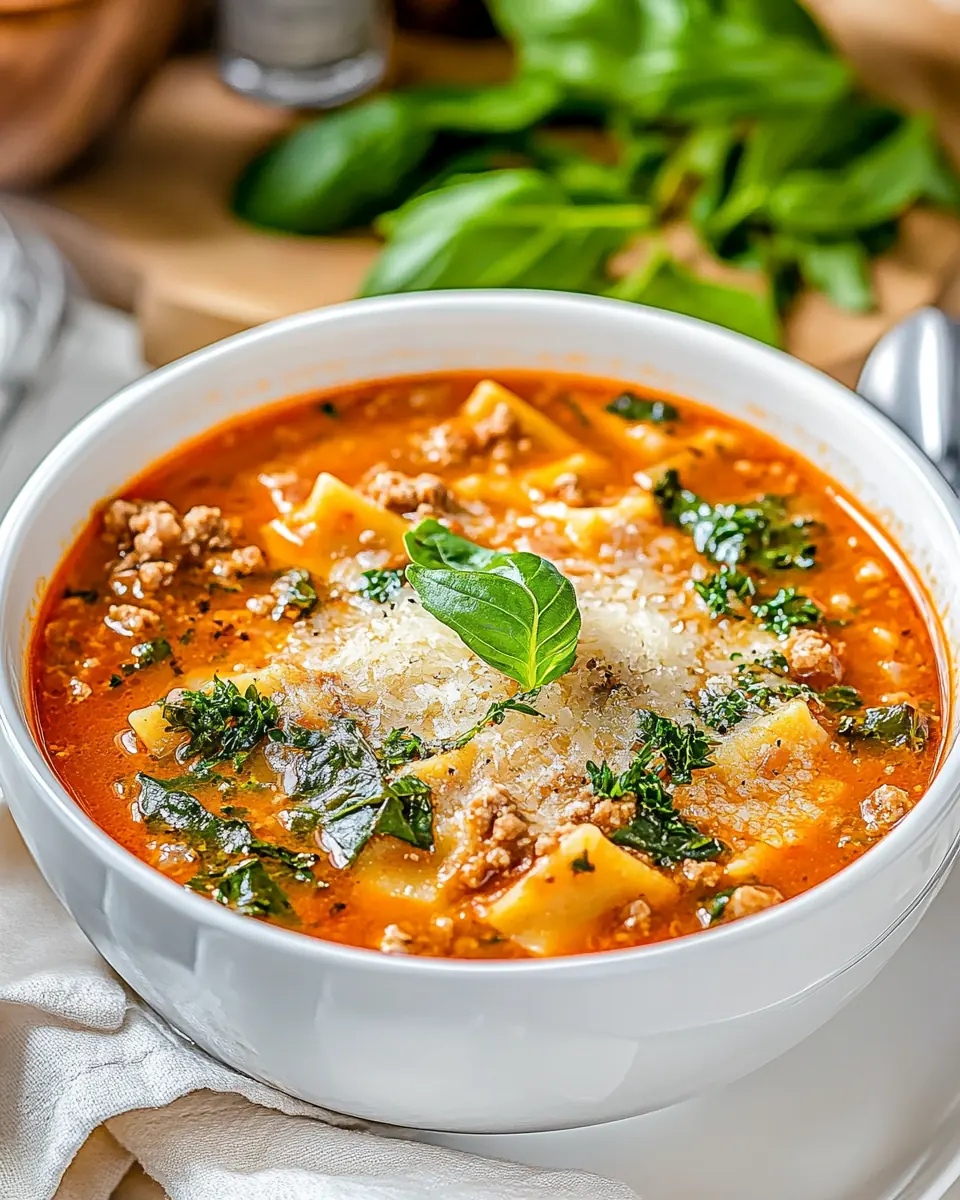
These ingredients are built to work together with clear roles: the ground beef adds richness and umami, the diced tomatoes form the tomato forward backbone, while the green bell pepper and onion add bright aromatic contrast. The crushed garlic and basil lift the flavor, and salt and pepper let you finish to taste. Together they recreate lasagna notes in a simple, simmered format.
- 1 pound ground beef: Brown and crumble to develop rich savory flavor and provide the primary protein base for the soup; cook until no pink remains and drain excess fat if desired to control richness. Season while browning to infuse the meat with herbs and spices so the broth absorbs robust meaty notes.
- 5 cup s water: Measure and add to create the broth volume and cook ingredients together so flavors meld; water serves as the soup’s liquid medium allowing components to simmer and combine. Adjust amount slightly if reducing or concentrating flavors to achieve desired soup consistency.
- 1 (14.5 ounce) can diced tomatoes, drained: Drain and stir in to add concentrated tomato flavor and bits of acidity that brighten the soup; tomatoes contribute umami and a subtle sweetness that balances savory elements. Chop further if desired to create smaller tomato pieces that distribute evenly through the broth.
- 3/4 cup chopped green bell pepper: Chop and sauté to contribute a crisp, slightly sweet pepper flavor and a fresh vegetal note; green bell pepper also adds texture and color contrast to the soup. Cook until softened to release aromatics without losing all structure for pleasant mouthfeel.
- 1/2 cup diced onion: Dice and sweat or sauté to add aromatic depth and sweetness when caramelized; onion provides a flavorful base that enhances overall savory complexity. Cook until translucent to integrate its flavor smoothly into the broth and complement other vegetables.
- 1 clove garlic, crushed: Crush and mince to release pungent, aromatic oils that add savory sharpness and depth; garlic sharpens and brightens the soup when briefly sautéed with the aromatics. Add later in cooking to preserve its fragrance while avoiding bitterness from overcooking.
- 1 teaspoon basil: Measure and sprinkle to introduce an herbal, slightly sweet and peppery note that complements the tomato and meat; basil lifts the overall flavor profile and ties components together. Add partway through or near the end of cooking to preserve its fragrant qualities.
- salt and pepper to taste: Season and adjust to enhance overall flavor balance, using salt to bring out savory elements and pepper to add mild heat; taste as you go to avoid over-seasoning. Add gradually since liquids concentrate during cooking and flavors can intensify.
Preparation Steps for Lasagna Soup
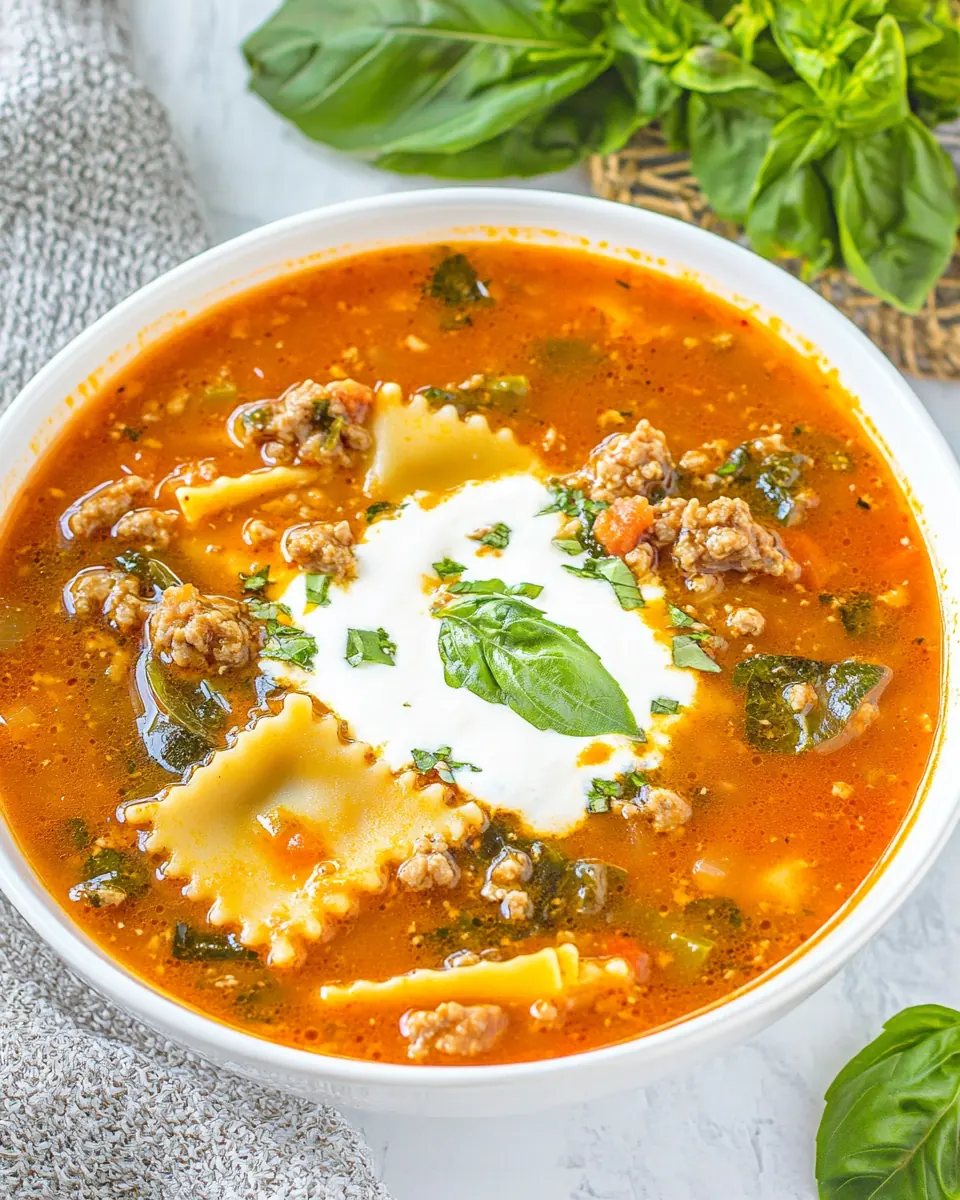
These steps are meant to be straightforward but detailed enough so you can cook with confidence. I will walk you through each stage so you can rely on sensory cues and avoid common pitfalls.
- Over medium heat, cook the ground beef in a large pot until browned; drain.: The smell of browning ground beef is rich and savory, with caramelized notes that signal Maillard reactions in progress. As the beef sizzles, you'll hear light popping and see the meat change color from pink to a deep brown with small browned bits forming on the surface. This step builds the foundation of flavor, so aim for an even browning, stirring occasionally to break the meat into small pieces. When the beef is uniformly browned, there will be rendered fat pooling in the pot, which you can drain to avoid a greasy soup. A good technique is to tilt the pot slightly and spoon off excess fat, or carefully drain into a heatproof container. The main reason we brown first is to develop depth and savory complexity that cannot be achieved by simmering alone. One common mistake is turning up the heat too high to rush the process, which risks burning the exterior while leaving inner pieces less cooked. Keep the heat at medium, and be patient for the best flavor.
- Add the remaining ingredients EXCEPT the cheese.: After the browned ground beef is in the pot and drained, add the corrected list of other elements: water , drained diced tomatoes , chopped green bell pepper , diced onion , crushed garlic , basil, and salt and pepper to taste. As these join the pot, you will notice a shift from the concentrated roasted aroma of the beef to a brighter, more herbaceous bouquet as the garlic and basil mingle with tomato. Stir gently to combine, scraping any flavorful browned bits from the bottom, because those bits dissolve into the liquid and enrich the broth. This mixing step ensures even distribution of flavors so every spoonful contains the intended balance. A typical oversight is adding cheese too early, which can clump or melt improperly, so keep it aside until later.
- Bring to a boil, reduce heat, and simmer 45 minutes.: When the pot comes to a boil you will observe active bubbling and steam rising, carrying the aroma of simmering tomatoes and herbs. Immediately reduce the heat to maintain a gentle simmer, where small bubbles periodically break the surface. This gentle activity allows flavors to marry and the onion and green bell pepper to soften and integrate their sweetness into the broth. During simmering the liquid may reduce slightly, concentrating flavor and thickening the mouthfeel. Stir occasionally to prevent sticking and to check texture. The visual cue to look for is a slightly reduced volume and a broth that clings a bit to the back of a spoon. A common pitfall here is letting it boil too vigorously, which can evaporate too much liquid or break down ingredients unevenly, so keep it low and patient.
- Add the cheese and continue cooking for another 15 minutes.: After the main simmer, stir in your chosen grated cheese, which will melt into the hot broth and add creaminess and savory saltiness. As the cheese incorporates, the surface may form ribbons of melted dairy and the aroma will take on a richer, slightly toasted note. Continue cooking for an additional 15 minutes so the cheese fully integrates, smoothing the texture and marrying with the tomato base. You will notice a thicker body and a glossy sheen when the soup is ready. If you add cheese too cold or in large clumps it can clump instead of melting, so grate finely and stir steadily. The reason this final cook matters is to ensure the dairy becomes part of the broth rather than floating as separate pieces, giving you that lasagna inspired finish.
Make It Your Own
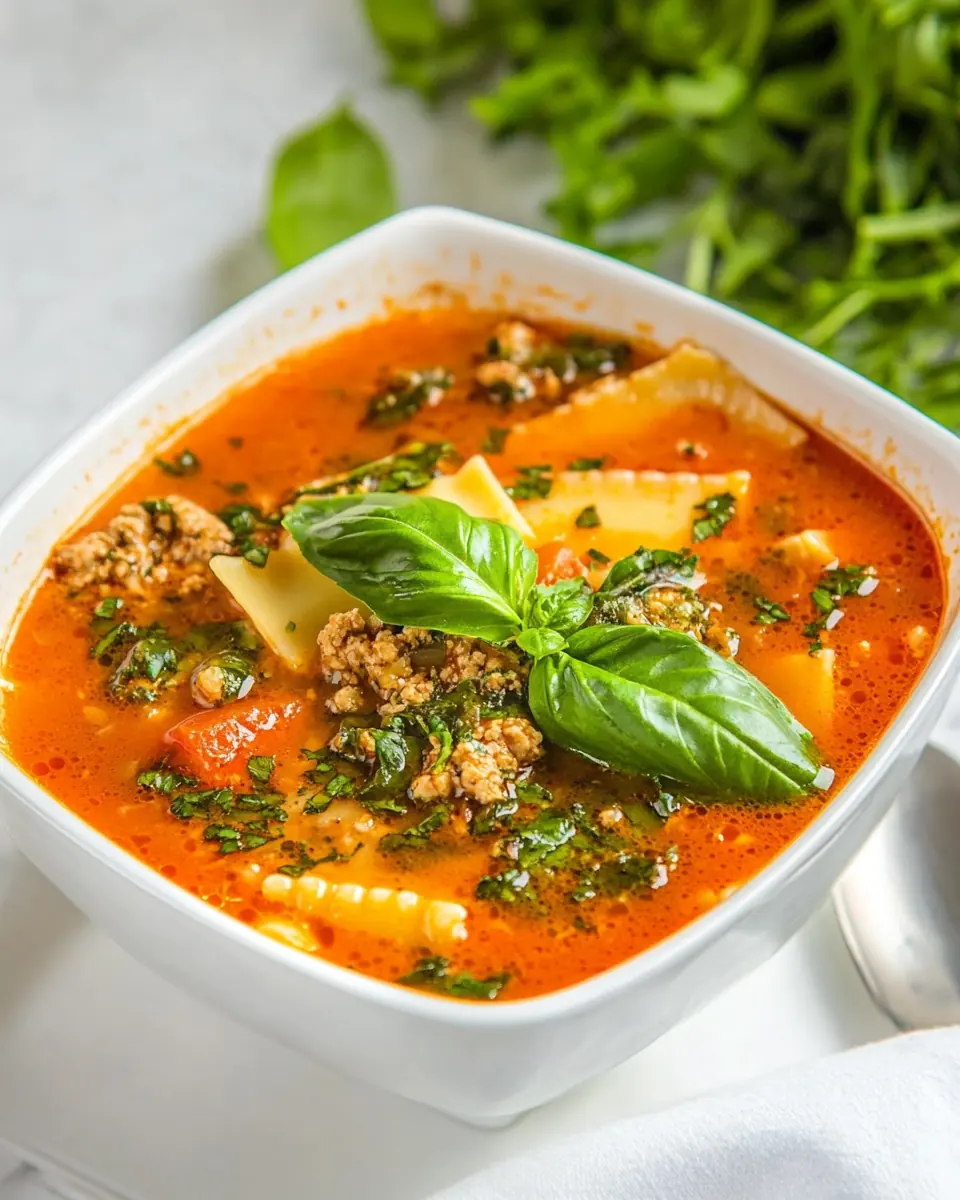
I like to share ways you can personalize this soup without losing its comforting identity. These ideas focus on technique and subtle adjustments to suit your household.
- Toast for depth: Lightly toast the dried basil in the pot for a few seconds before adding liquids to deepen its aroma, but avoid browning it to the point of bitterness.
- Control richness: If the broth tastes overly fatty after browning the ground beef, remove excess rendered fat with a spoon or paper towel to keep the soup balanced.
- Vegetable texture: Chop the green bell pepper and diced onion uniformly so they cook evenly during the simmer and avoid surprise crunchy bites.
- Tomato consistency: Drain the canned diced tomatoes if you want a thicker broth, or leave some juice if you prefer a looser, more brothy soup.
- Finish thoughtfully: Add cheese toward the end off heat if you prefer pockets of melty dairy, or add while simmering for a fully integrated creamy texture.
Serving Suggestions
This soup is versatile for weeknights and special meals. Serve it in deep bowls with simple accompaniments and clear presentation ideas to make it feel intentional and homey.
- Serve hot in deep bowls, spooning the soup so each bowl gets a balance of ground beef, diced tomatoes, and softened vegetables. Present with napkins because it is hearty and satisfying.
- Offer grated cheese on the side so guests can add extra melting cheese to their taste for an indulgent finish that echoes baked lasagna.
- Pair with crusty bread to soak up the savory broth, which turns leftovers into a nearly complete handheld bite when you mop up the last spoonfuls.
- Occasion ideas: This is perfect for casual dinners, cold evenings, or anytime you need a reliable family friendly meal that feels comforting and familiar.
- Storage tips: Cool and refrigerate in an airtight container for up to three days; reheat gently on low heat to preserve texture, stirring occasionally until warmed through.
- Seasonal pairing: In winter, serve it with a small crisp salad for contrast, while in cooler months it stands alone as a hearty main without extra sides.
FAQ
Conclusion
Lasagna Soup is a comforting, streamlined take on classic lasagna that delivers all the familiar flavors in a single, easy pot. I encourage you to try it when you want a hearty, family friendly meal with minimal cleanup and maximum satisfaction. Give it a go on a chill evening or when you need a reliable weeknight winner, and enjoy the way lasagna flavors are transformed into a warm, spoonable experience.
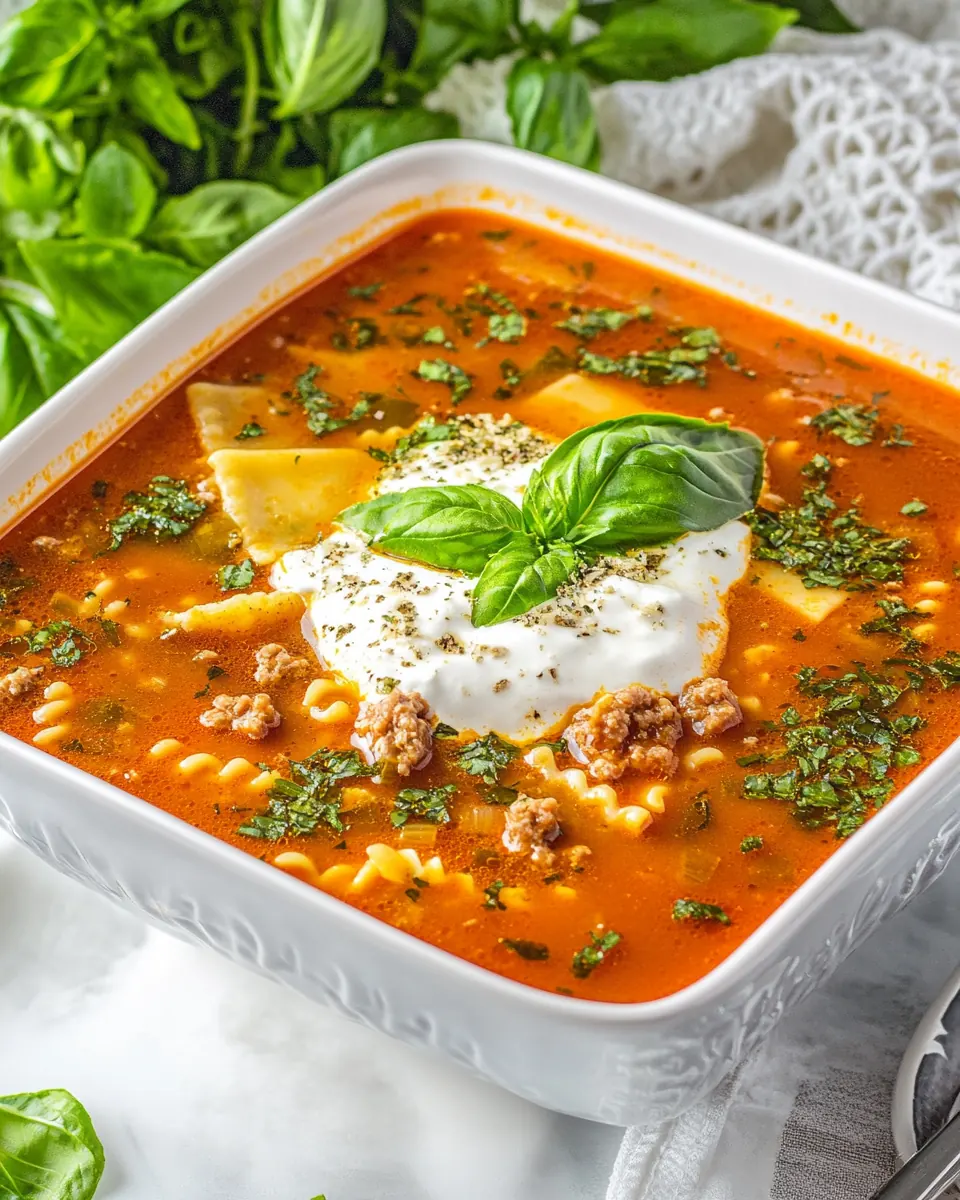
Lasagna Soup
Ingredients
Equipment
Method
- Over medium heat, cook the ground beef in a large pot until browned; drain.: The smell of browning ground beef is rich and savory, with caramelized notes that signal Maillard reactions in progress. As the beef sizzles, you'll hear light popping and see the meat change color from pink to a deep brown with small browned bits forming on the surface. This step builds the foundation of flavor, so aim for an even browning, stirring occasionally to break the meat into small pieces. When the beef is uniformly browned, there will be rendered fat pooling in the pot, which you can drain to avoid a greasy soup. A good technique is to tilt the pot slightly and spoon off excess fat, or carefully drain into a heatproof container. The main reason we brown first is to develop depth and savory complexity that cannot be achieved by simmering alone. One common mistake is turning up the heat too high to rush the process, which risks burning the exterior while leaving inner pieces less cooked. Keep the heat at medium, and be patient for the best flavor.
- Add the remaining ingredients EXCEPT the cheese.: After the browned ground beef is in the pot and drained, add the corrected list of other elements: water , drained diced tomatoes , chopped green bell pepper , diced onion , crushed garlic , basil, and salt and pepper to taste. As these join the pot, you will notice a shift from the concentrated roasted aroma of the beef to a brighter, more herbaceous bouquet as the garlic and basil mingle with tomato. Stir gently to combine, scraping any flavorful browned bits from the bottom, because those bits dissolve into the liquid and enrich the broth. This mixing step ensures even distribution of flavors so every spoonful contains the intended balance. A typical oversight is adding cheese too early, which can clump or melt improperly, so keep it aside until later.
- Bring to a boil, reduce heat, and simmer 45 minutes.: When the pot comes to a boil you will observe active bubbling and steam rising, carrying the aroma of simmering tomatoes and herbs. Immediately reduce the heat to maintain a gentle simmer, where small bubbles periodically break the surface. This gentle activity allows flavors to marry and the onion and green bell pepper to soften and integrate their sweetness into the broth. During simmering the liquid may reduce slightly, concentrating flavor and thickening the mouthfeel. Stir occasionally to prevent sticking and to check texture. The visual cue to look for is a slightly reduced volume and a broth that clings a bit to the back of a spoon. A common pitfall here is letting it boil too vigorously, which can evaporate too much liquid or break down ingredients unevenly, so keep it low and patient.
- Add the cheese and continue cooking for another 15 minutes.: After the main simmer, stir in your chosen grated cheese, which will melt into the hot broth and add creaminess and savory saltiness. As the cheese incorporates, the surface may form ribbons of melted dairy and the aroma will take on a richer, slightly toasted note. Continue cooking for an additional 15 minutes so the cheese fully integrates, smoothing the texture and marrying with the tomato base. You will notice a thicker body and a glossy sheen when the soup is ready. If you add cheese too cold or in large clumps it can clump instead of melting, so grate finely and stir steadily. The reason this final cook matters is to ensure the dairy becomes part of the broth rather than floating as separate pieces, giving you that lasagna inspired finish.
Notes
- Toast for depth: Lightly toast the dried basil in the pot for a few seconds before adding liquids to deepen its aroma, but avoid browning it to the point of bitterness.
- Control richness: If the broth tastes overly fatty after browning the ground beef, remove excess rendered fat with a spoon or paper towel to keep the soup balanced.
- Vegetable texture: Chop the green bell pepper and diced onion uniformly so they cook evenly during the simmer and avoid surprise crunchy bites.
- Tomato consistency: Drain the canned diced tomatoes if you want a thicker broth, or leave some juice if you prefer a looser, more brothy soup.
- Finish thoughtfully: Add cheese toward the end off heat if you prefer pockets of melty dairy, or add while simmering for a fully integrated creamy texture.