Lemon Cookies
Lemon Cookies are the sort of treat I reach for when I want brightness and simplicity all at once. The first time I made these I was chasing a citrus craving after a long winter of heavy stews, and the light, puckery aroma that filled my kitchen felt like an instant mood lift. I remember stirring the batter and thinking how approachable these cookies were, a few pantry staples coming together into something unexpectedly cheerful.
Over the years I’ve slid a tray of these out at picnics, given them away in little bags, and adapted small details depending on the mood of the day. Each batch carries the same signature notes, the snap of a thin edge, and the tender crumb inside that folds around the bright hit of lemon. When guests ask for something easy but memorable I suggest Lemon Cookies, because they somehow feel both homemade and refined.
Recipe Snapshot
20 mins
10 mins
10 mins
Easy
150 kcal
American
Gluten-Free, Whole30
Desserts
Mixing bowl, Measuring spoons, Measuring cup, Parchment paper, Baking sheet
Why This Lemon Cookies Shines
Vibrant citrus flavor that is not overpowering
I love that these cookies showcase pure lemon without overwhelming sweetness. The combination of both lemon juice and grated lemon peel gives a layered citrus note, so the cookie tastes fresh and lively rather than cloying. I often find myself reaching for one more because the acidity keeps each bite interesting.
Ridiculously simple ingredient list
We only need a handful of pantry items, which makes these a go to when I want fast results. Using a boxed lemon cake mix speeds things up without sacrificing texture, and the added flour and baking powder give structure so the cookies bake up tender and supported rather than collapsing.
Texture balance that works for every occasion
The cookies crisp slightly at the edges while remaining soft in the center. The tiny pops of candy or white chocolate chips add contrast in both texture and sweetness. I love how the chips melt into warm pockets of creamy sweetness against the zesty dough.
Flexible and forgiving technique
This recipe is forgiving for bakers of all levels, which is one reason I recommend it to friends. Chilling the sticky dough helps with portioning, and the bake window is short enough that you can keep an eye on browning. If you are new to baking, this is a low stress way to build confidence.
Great for gifting and seasonal celebrations
Because these cookies look sunny and cheerful, they make a fantastic addition to spring gatherings or gift boxes. I often decorate with pastel chips for a festive touch, and they travel well when stored tightly covered. I like gifting them because they feel thoughtful yet simple.
Recipe Ingredients for Lemon Cookies
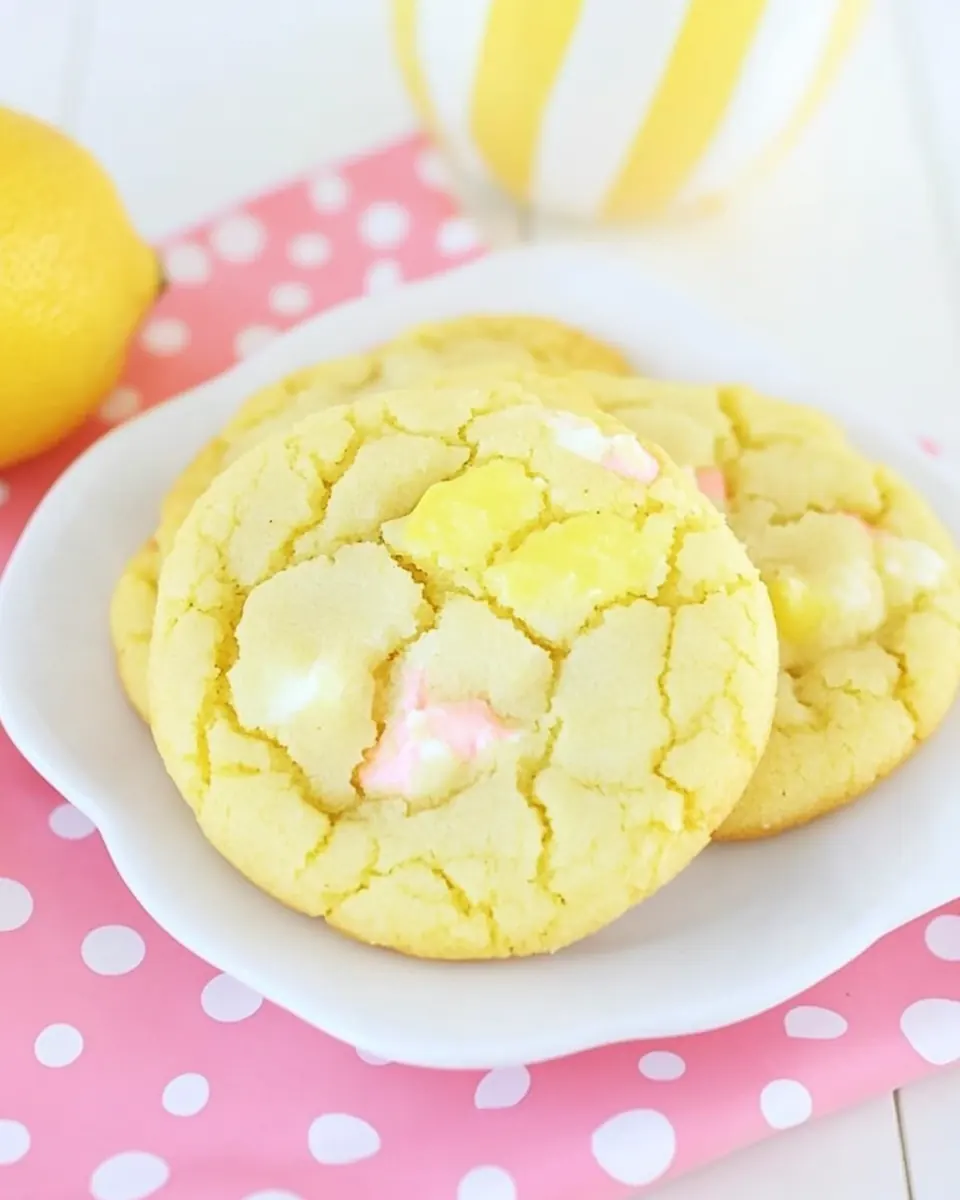
These ingredients are deliberately straightforward, built around a bright citrus core. The boxed lemon cake mix provides a tender crumb and immediate lemon foundation, while small amounts of flour and baking powder give structure so the cookies keep their shape. The eggs, vegetable oil, and lemon juice bind and moisten the dough, and the grated lemon peel amps up the fresh citrus aroma. Finally, the colorful morsels or chips add sweetness and texture contrast.
- 15 ounce box lemon cake mix: Provides a sweet, lemon-flavored base and structure for the cookies; contains flour, sugar, and leavening that simplify mixing. Adds moisture and color while giving the dough a consistent texture that bakes evenly. Helps infuse the final cookie with an overall lemon cake profile that complements fresh lemon elements.
- 2 tablespoons flour: Lightens and stabilizes the dough by absorbing excess moisture and providing slight structure; helps prevent spreading during baking. Works with the cake mix to yield a tender crumb and a balanced chewiness in the finished cookie.
- 1/2 tsp baking powder: Boosts lift and contributes to a lighter, slightly aerated texture when combined with the cake mix; helps the cookies rise modestly. Acts as a secondary leavening agent to ensure consistent size and tenderness across batches.
- 2 eggs: Binds ingredients together and adds richness and moisture while aiding in leavening through trapped air when beaten. Contributes to a tender crumb and helps the cookies hold their shape without becoming too dense.
- 1/3 cup vegetable oil: Adds fat that contributes tenderness, moisture, and a soft chewiness; helps create a cohesive dough that bakes evenly. Provides richness without overwhelming the lemon flavor and helps retard excessive spreading.
- Juice from one lemon: Imparts bright acidity and concentrated lemon flavor that balances the sweetness; adds moisture to the dough and aids in activating any baking agents. Enhances the cookie's fresh citrus character and brings a lively tang to each bite.
- Grated lemon peel from one lemon: Delivers intense citrus aroma and concentrated lemon oils that lift the cookie's scent and flavor profile; the zest contains flavorful oils not present in juice. Adds a bright, fresh note and subtle texture flecks that emphasize the lemon theme.
- 1 cup pink and yellow Nestle Springtime Morsels or white chocolate chips: Introduces bursts of sweet, creamy pockets that contrast the lemon tang and soft cookie crumb; melts into little pockets of flavor during baking. Provides visual color contrast and a pleasant vanilla-white sweetness that complements the citrus elements.
The Process for Making Lemon Cookies

These steps guide you from sticky batter to finished cookies, with sensory cues and troubleshooting along the way. Read each step fully before starting so you can anticipate textures and timing. I like to set out my ingredients so moving through the process feels calm and steady.
- In a large bowl, combine all ingredients and mix well to combine. Dough will be quite sticky. Chill covered in refrigerator for 30-60 minutes.: The scent at this stage is intensely citrusy and slightly sweet, and you should notice the batter shining from the vegetable oil . Mixing fully creates a uniform color and small pockets of morsels throughout; you may hear the soft scrape of your spoon as dry bits fold in. Chilling firms the dough so it is manageable, and it also helps the flavors meld into a cohesive whole. One common mistake is skipping the chill, which makes portioning messy and causes excessive spreading. If your batter smells too eggy or curdled, it likely needs a bit more mixing or a touch more flour for balance. Cover the bowl tightly to prevent the lemon aroma from dissipating in the fridge.
- When ready to bake, preheat oven to 375 degree F. Once oven is ready, remove cookie dough from fridge and drop by spoonfuls (approximately 1-2 tablespoons per cookie) onto a baking sheet covered with parchment paper.: You will hear the whisper of the oven fan and feel the warmth when you open the oven door, a tangible cue that the environment is ready. The chilled dough will be tacky but hold shape when scooped; the small mounds should look matte and slightly domed. Using parchment prevents sticking and promotes even browning on the bottom. A frequent error is placing dough in a cold oven, which alters baking time and texture, so always wait for the full preheat. If your cookies flatten too much, try a slightly taller scoop or a few extra minutes chilling.
- Bake for 7-10 minutes or until very lightly browned.: As the cookies bake you will notice a gentle lemon perfume and the tops going from glossy to set. The edges should take on a hint of golden color while the centers remain pale and tender. Listen for a faint faint settling sound as steam escapes, and watch for the subtle color shift that signals doneness. Overbaking is the most common pitfall, producing dry cookies, so remove them while centers still look slightly soft, as they firm while cooling. If your oven runs hot, check at the earliest time and rotate the pan for even color.
- Remove from oven and allow to cool completely. Store tightly covered.: Fresh from the oven the cookies will smell deeply of lemon and sweet chips, and the bottoms will have a delicate crisp. Cooling on the sheet for a short period helps stabilize shape, then transfer to a rack to cool fully; this prevents trapped steam from making the bottoms soggy. Storing airtight preserves texture and keeps the morsels from becoming chalky. A mistake to avoid is stacking warm cookies, which can cause them to stick and lose their crisp edge. If you plan to keep them longer, place parchment between layers to protect the surface and maintain the fresh bite.
Helpful Hints

I like to share practical tips that keep the baking process smooth and your results consistent. These hints cover ingredient handling, timing, and small adjustments that make a big difference over multiple batches.
- Use fresh zest: Grate the lemon right before mixing to capture the most aromatic oils and brightest flavor.
- Measure carefully: Spoon flour into the measuring spoon rather than scooping it directly from the bag to avoid packing and a dense cookie.
- Chill time matters: If you have the patience, chilling for the full 60 minutes yields neater cookies and intensified flavors.
- Watch the oven: The bake window is short, so check at the early time to prevent overbrowning and dry centers.
- Customize chips: If you do not have springtime morsels, white chocolate chips provide a similar creamy contrast without changing the overall balance.
Serving Ideas for Lemon Cookies
These cookies are versatile, and a few simple serving ideas turn them into a thoughtful dessert course or snack. I often present them with small accompaniments that accentuate the citrus notes, and they work well for casual gatherings or holiday boxes. Below are many ways to serve and store them for different occasions.
- Casual afternoon snack: Arrange on a small plate with a pot of tea or a glass of cold milk for a bright, uplifting treat.
- Picnic friendly: Pack in an airtight tin lined with parchment, adding a layer of paper between rows to prevent sticking during transport.
- Spring gatherings: Present them with pastel chips visible on top for a seasonal look, pairing with light salads or fruit.
- Gift packaging: Place in cellophane bags tied with ribbon, or stack in a small box with parchment separators for a pretty homemade gift.
- Storage tips: Keep at room temperature in an airtight container, or freeze individually on a tray then transfer to a sealed bag for longer storage.
- Occasion pairing: They work well for brunch, baby showers, or anytime you want a sweet that feels fresh rather than heavy.
FAQ
Conclusion
What makes these Lemon Cookies special is their effortless bright lemon flavor paired with a tender, cakey texture and playful morsels that keep each bite interesting. They are a straightforward, forgiving cookie that suits both last minute treats and thoughtful homemade gifts, offering a sunny note that contrasts heavier desserts. Give them a try next time you want a simple yet memorable cookie, and enjoy how quickly a few pantry staples can become a crowd pleaser.

Lemon Cookies
Ingredients
Equipment
Method
- In a large bowl, combine all ingredients and mix well to combine. Dough will be quite sticky. Chill covered in refrigerator for 30-60 minutes.: The scent at this stage is intensely citrusy and slightly sweet, and you should notice the batter shining from the vegetable oil . Mixing fully creates a uniform color and small pockets of morsels throughout; you may hear the soft scrape of your spoon as dry bits fold in. Chilling firms the dough so it is manageable, and it also helps the flavors meld into a cohesive whole. One common mistake is skipping the chill, which makes portioning messy and causes excessive spreading. If your batter smells too eggy or curdled, it likely needs a bit more mixing or a touch more flour for balance. Cover the bowl tightly to prevent the lemon aroma from dissipating in the fridge.
- When ready to bake, preheat oven to 375 degree F. Once oven is ready, remove cookie dough from fridge and drop by spoonfuls (approximately 1-2 tablespoons per cookie) onto a baking sheet covered with parchment paper.: You will hear the whisper of the oven fan and feel the warmth when you open the oven door, a tangible cue that the environment is ready. The chilled dough will be tacky but hold shape when scooped; the small mounds should look matte and slightly domed. Using parchment prevents sticking and promotes even browning on the bottom. A frequent error is placing dough in a cold oven, which alters baking time and texture, so always wait for the full preheat. If your cookies flatten too much, try a slightly taller scoop or a few extra minutes chilling.
- Bake for 7-10 minutes or until very lightly browned.: As the cookies bake you will notice a gentle lemon perfume and the tops going from glossy to set. The edges should take on a hint of golden color while the centers remain pale and tender. Listen for a faint faint settling sound as steam escapes, and watch for the subtle color shift that signals doneness. Overbaking is the most common pitfall, producing dry cookies, so remove them while centers still look slightly soft, as they firm while cooling. If your oven runs hot, check at the earliest time and rotate the pan for even color.
- Remove from oven and allow to cool completely. Store tightly covered.: Fresh from the oven the cookies will smell deeply of lemon and sweet chips, and the bottoms will have a delicate crisp. Cooling on the sheet for a short period helps stabilize shape, then transfer to a rack to cool fully; this prevents trapped steam from making the bottoms soggy. Storing airtight preserves texture and keeps the morsels from becoming chalky. A mistake to avoid is stacking warm cookies, which can cause them to stick and lose their crisp edge. If you plan to keep them longer, place parchment between layers to protect the surface and maintain the fresh bite.
Notes
- Use fresh zest: Grate the lemon right before mixing to capture the most aromatic oils and brightest flavor.
- Measure carefully: Spoon flour into the measuring spoon rather than scooping it directly from the bag to avoid packing and a dense cookie.
- Chill time matters: If you have the patience, chilling for the full 60 minutes yields neater cookies and intensified flavors.
- Watch the oven: The bake window is short, so check at the early time to prevent overbrowning and dry centers.
- Customize chips: If you do not have springtime morsels, white chocolate chips provide a similar creamy contrast without changing the overall balance.