Lemon Curd Tarts
Lemon Curd Tarts are the kind of dessert I reach for when I want something bright, buttery, and a little nostalgic.
One spring afternoon I dug through my kitchen drawer for a forgotten tin of tart pans and found myself craving the sweet and tangy bite I remember from childhood picnics. I set out to make miniature versions that feel elegant but are easy enough to assemble on a weekday evening. The first sentence of every recipe should make you smile, and these tiny shells filled with glossy lemon curd and crowned with whipped cream and raspberries always do that for me.
As I whisk the eggs and sugar over gentle heat, the kitchen fills with a warm citrus perfume that reminds me of sunlit windowsills. I love how the butter enriches the curd, turning it from zesty and tart into something luxuriously smooth. When the crusts come out of the oven with their golden edges, I feel both proud and giddy, like I pulled off a small baking miracle. These mini tarts are simple to share, yet they look like you spent ages on them, which is perfect when guests pop by unexpectedly.
Recipe Snapshot
35 mins
15 mins
20 mins
Medium
250 kcal
American
Gluten-Free, Low FODMAP
Desserts
Mini Tart Pan Set, Vanilla Extract, Granulated Sugar
What Sets This Lemon Curd Tarts Apart
Bright, balanced flavor
I adore how Lemon Curd Tarts combine sharp citrus with creamy richness. The lemon juice and zest bring that unmistakable tang, while the butter and egg yolks round out the profile, so every bite feels lively but not overly sour.
Textural contrast
The play between a crisp pie crust and the satiny lemon curd is what keeps me coming back. That crisp snap of pastry against the smooth filling creates a multi dimensional mouthfeel that makes each tartlet feel decadent.
Quick but impressive
These tarts are deceptively simple. I can whisk a curd on the stovetop and blind bake a few shells faster than many desserts take to assemble, yet they present beautifully, which makes them my go to for last minute gatherings.
Highly adaptable
While the recipe as written is classic, I love that Lemon Curd Tarts welcome little twists. Swapping the garnish, piping patterns of whipped cream, or serving them at different temperatures keeps the idea fresh for multiple occasions.
Perfect portion control
Because these are mini tarts, they feel indulgent without being excessive. I appreciate how they allow guests to savor a sweet finish without overdoing it, and they are ideal when you want dessert that doubles as a dainty treat.
Ingredients You’ll Need for Lemon Curd Tarts
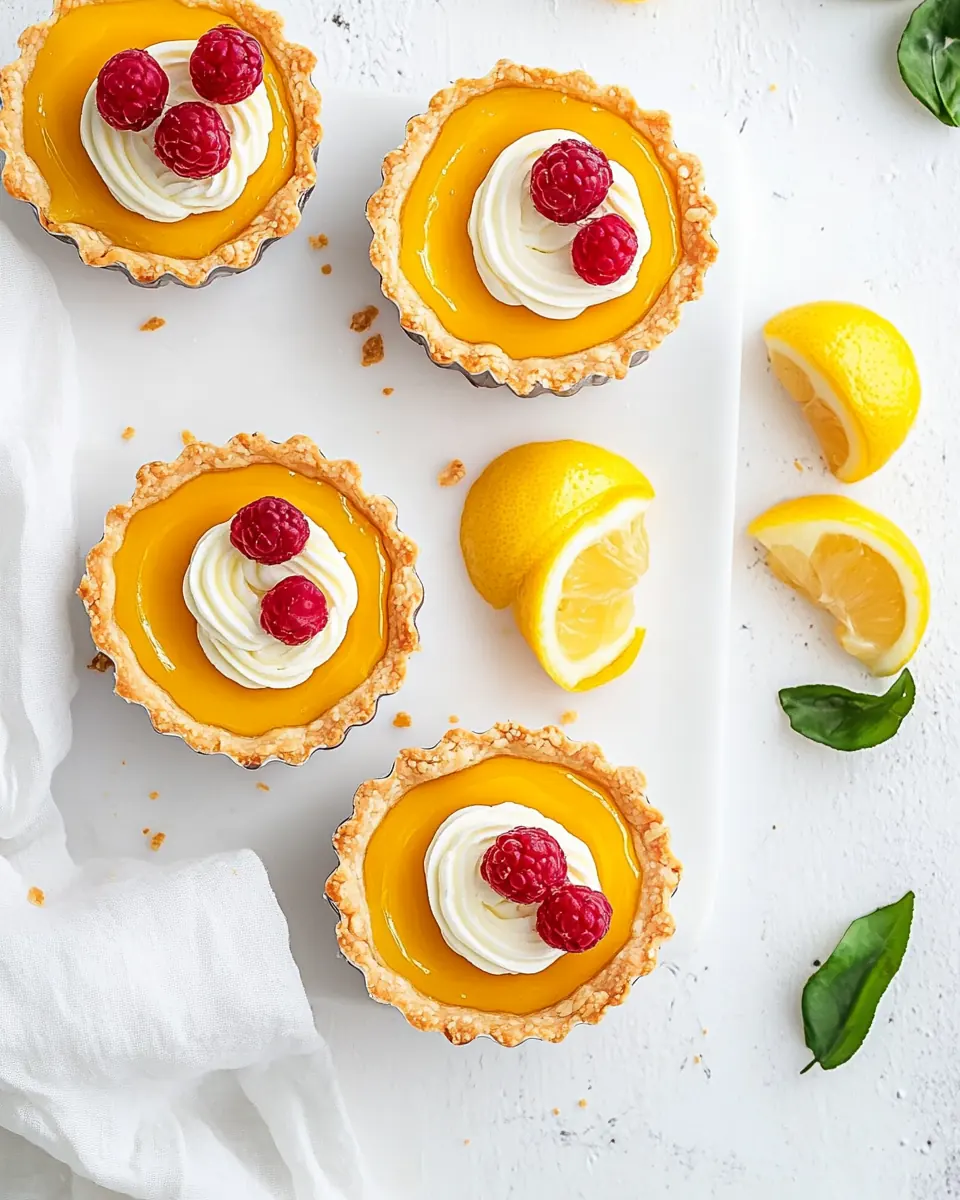
These ingredients are a tight little team. The eggs and sugar form the structure and sweetness for the curd, the lemon juice and lemon zest supply bright acidity and aromatic oils, and the butter gives a silky mouthfeel. The crust is the crunchy foundation that contrasts the filling, while the whipped cream and fresh raspberries add creaminess and a fruity finish that balances the citrus.
- 1/3 cup granulated sugar: Sweeten and balance the curd with fine granulated sugar; dissolve into eggs and lemon juice to create a smooth, glossy custard base. Provide structure and sweetness that cooks into a slightly thickened, tangy filling when heated gently.
- 1 large whole egg: Bind and enrich the lemon curd by adding whole egg for body and stability; cook gently to thicken without curdling. Contribute to a silkier texture and help set the custard as it cools inside the tart shell.
- 2 large egg yolks: Concentrate richness and help thicken the lemon curd by contributing extra yolk fat; whisk with sugar and lemon for a velvety finish. Intensify color and creaminess, improving the curd’s ability to set firmly within the crust.
- 1/3 cup lemon juice: Supply bright acidity and primary citrus flavor; strain or measure fresh juice to ensure consistent tartness. React with sugar and eggs during cooking to produce the characteristic lemon curd tang and brightness.
- 1 tablespoon lemon zest: Enhance aromatic intensity and fresh citrus oils by finely zesting; stir into the curd to boost fragrance and depth of lemon flavor. Add nuanced citrus complexity that complements the juice without extra acidity.
- 4 tablespoons butter: Enrich and smooth the curd with butter, creating a glossy, luscious finish when stirred in off the heat; melt gradually to emulsify into the custard. Add a silky mouthfeel and slight richness that rounds the tart’s flavor profile.
- 1/2 teaspoon pure vanilla extract: Add a subtle floral-vanilla note to round and mellow the lemon’s sharpness; stir in at the end of cooking to preserve aroma. Enhance overall flavor complexity without overpowering the citrus elements.
- 1 raw pie crust, store bought or homemade: Provide the structural base and flaky container for the curd; blind-bake or pre-bake according to package or recipe instructions to prevent sogginess. Create crisp edges and a tender foundation that complements the smooth lemon filling.
- 1 cup fresh raspberries: Offer fresh tartness and contrasting texture as a topping; scatter raspberries over the set curd to add bright color and juicy bursts. Balance the sweet, rich filling with natural acidity and a lightly seedy bite.
- 1 cup fresh whipped cream: Finish the tarts with light, airy cream for contrast; whip to soft peaks and dollop or pipe over each tart for visual appeal and richness balance. Provide a cool, creamy counterpoint to the tangy curd and crisp crust.
How to Prepare Lemon Curd Tarts
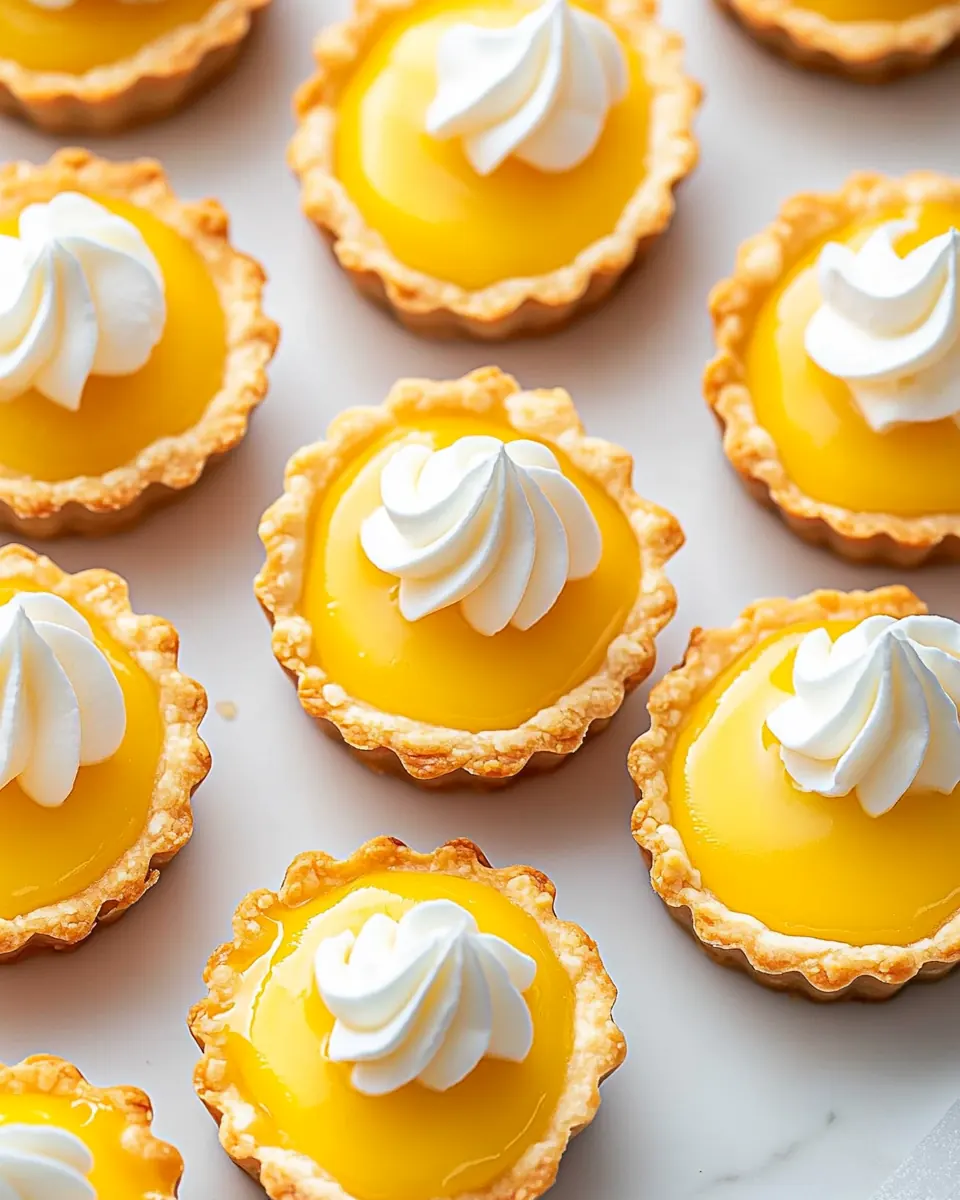
These steps walk you through curd making, cooling, blind baking shells, and assembling the tarts. I like to move methodically, keeping an eye on textures and temperatures so the final tarts are glossy and well set.
- Add the granulated sugar, egg, and egg yolks to a small saucepan and whisk until well combined and pale yellow, about 1 minute.: The moment you begin whisking you will notice the sugar dissolving into the eggs and the mixture turning a paler yellow, which signals even distribution. This initial whisk is more than busy work, it ensures uniform cooking when heat is applied, so there are no hot pockets that scramble. You should feel the bowl warming slightly under your hands as the sugar and eggs integrate. A common error is under whisking, which leaves streaks and a non uniform cook later, so take that full minute seriously and keep a steady whisking rhythm.
- Add the lemon juice and lemon zest to the pan. Whisk to combine.: When you incorporate the lemon juice and lemon zest the aroma instantly brightens the kitchen with citrus top notes, and you will see tiny flecks of zest suspended in the liquid. This step infuses the curd with volatile oils from the zest, which is why I never skip it. If the lemon juice is added too cold and the pan is already hot it can shock the mixture, so aim for room temperature components when possible.
- Set the pan over low heat and cook, whisking constantly for 4-5 minutes or until the curd has thickened enough to coat the back of a spoon. Make sure to keep whisking the whole time so the curd doesn’t scorch or curdle.: As the pan gently heats you will hear a faint simmer and see the mixture thicken and cling to your whisk, forming ribbons when you lift it. The low heat protects the eggs from curdling while allowing gradual coagulation for that custardy texture. Keep the whisk moving in a steady motion, scraping the bottom so nothing sticks. A frequent mistake is turning up the heat to speed things up, which risks scrambling the eggs and producing a grainy curd.
- Once the curd has thickened, remove it from the heat and whisk in the butter and vanilla.: Off the heat, adding cold butter in pieces lets it melt through and emulsify, which yields a glossy, velvety finish. Whisking now distributes the fat evenly and cools the curd slightly, which stabilizes its texture. You will smell a buttery, floral lift as the vanilla blooms into the mixture. Avoid skipping the whisk off heat, because lingering residual heat that is too high can break the emulsion or overcook the eggs.
- Once the butter has combined, pour the curd through a fine mesh sieve to remove the lemon zest and any bits of egg that may have scrambled.: Pushing the curd through a sieve gives you a satiny, lump free filling, and the act smooths out any tiny cooked strands of egg. You will notice a thicker stream of curd falling into the bowl below, and the sieve will retain any unwanted bits. This step improves mouthfeel dramatically, and skipping it can leave a less refined texture that is noticeable when you bite in.
- Place a piece of plastic wrap so that it is touching the surface of the lemon curd and then refrigerate the curd until it is completely cool, about 2 hours.: Laying plastic directly on the surface prevents a skin from forming and keeps the curd glossy. As it cools, it firms to a spreadable but pipeable consistency, and you will feel it thicken when you stir after chilling. The two hour chill also allows flavors to meld. A common slip is leaving it uncovered, which yields an unpleasant skin and uneven texture.
- Preheat your oven to 400 degrees F and spray 4 small tartlet pans with nonstick baking spray.: Heating the oven to 400 degrees F prepares for rapid initial oven spring and ensures the crust sets cleanly. Spraying the pans helps the baked shells release easily, which preserves their delicate edges. You should feel the kitchen warmth rise as the oven reaches temperature, and hearing the faint click of the thermostat is satisfying. Forgetting to preheat results in underbaked bottoms or uneven browning, so wait for the full heat.
- Roll out your pie crust to 1/8 inch thick and cut out four circles that are 1/4 inch larger than the base of your tart pans.: Rolling to an even 1/8 inch gives a delicate, crisp shell that bakes through without being tough. Cutting circles slightly larger than the pan base ensures the crust fits neatly up the sides without pulling. The dough should feel cool and pliable, not tacky. Overworking the dough makes it tough, so rest it if it feels elastic.
- Press each pie crust into a tart pan and then poke the bottom a few times with a fork.: Pressing gently into the pan forms a defined edge and curling helps the shell hold its shape. Docking with a fork prevents air bubbles from puffing up during blind baking, which keeps the bottom flat for filling. You will see tiny perforations across the base when done. Failing to dock can create uneven pockets that ruin the filling plane.
- Place a piece of parchment paper over each crust and fill the center with pie weights or dried beans or rice.: The parchment plus weights holds the crust in place and prevents the walls from collapsing, and you will notice the parchment conforming to the shell. This is essential for crisp, even baked shells. Using anything too heavy or metal can warp the pan, so use appropriate weights. Skipping weights often results in misshapen shells.
- Bake for 10 minutes, then remove the pie weights and bake for an additional 5 minutes.: The first phase sets the shell structure, and the second phase without weights allows the bottom to dry and brown. You should see the edges become a warm golden color and smell a toasty, buttery aroma. Timing is crucial because underbaking leaves a raw tasting base, while overbaking makes it overly hard. Keep a close eye during the last few minutes.
- When the crusts are golden brown, remove them from the oven and allow them to cool completely before filling.: Cooling ensures the crusts firm up and avoids steam from the warm shell making the curd runny. Visually you will see an even golden tone and feel a crisp surface when touched. Patience here preserves texture. Filling hot shells is a frequent mistake that leads to soggy bottoms.
- To assemble, remove a cooled crust from the tart pan and fill the center with lemon curd. Spread (or pipe) whipped cream on top and garnish with fresh raspberries.: As you spoon or pipe the lemon curd into the shell you will enjoy the glossy surface settling into the crust, and the bright scent of lemon will lift. Filling to just below the rim leaves room for whipped cream or garnishes. Overfilling causes spills and makes presentation messy, so aim for restraint.
- Serve immediately. Unfilled pie crusts can be kept in an airtight container at room temperature for up to three days. The lemon curd can be kept in an airtight container in the fridge for up to five days.: The final flourish of fresh whipped cream softens the lemon tang and the fresh raspberries add color and a fresh bite. Piping gives a neat, professional look while a simple spread is charmingly rustic. Add the berries gently so they stay whole. A mistake to avoid is applying whipped cream that is too soft, which will collapse on the curd.
- Serve immediately: When served right away, you will enjoy the contrast of cool curd and crisp shell, and the textures remain at their best. If you must store them, keep shells and curd separate and assemble before serving to maintain crispness. Serving too late can lead to sogginess and muted flavors, so time your plating with care.
Recipe Variations about Lemon Curd Tarts
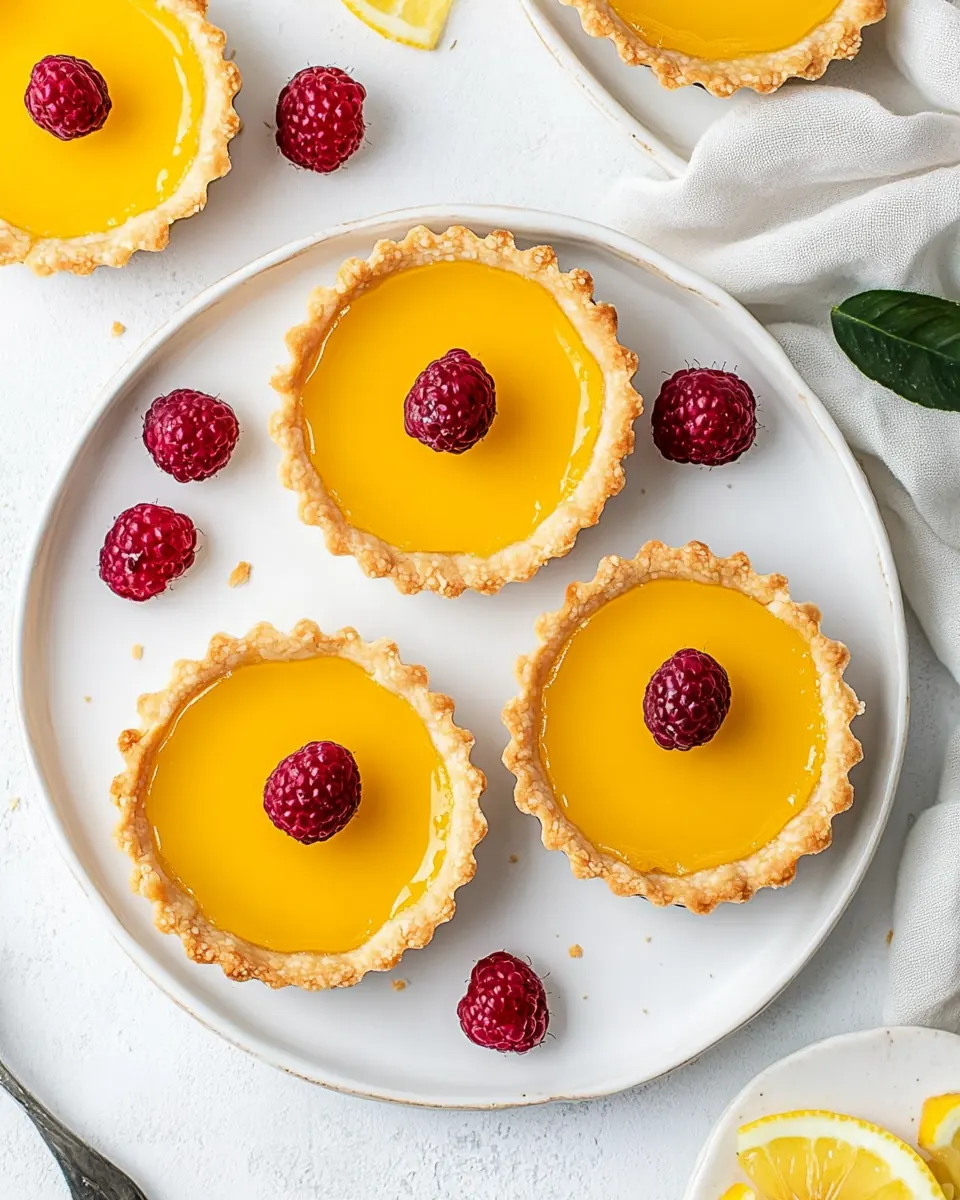
I like to think of variations as gentle nudges, not overhauls. Below are ways to change presentation, texture, and flavor while staying true to the core idea. Each tip highlights a technique or small swap to elevate your tarts.
- Swap the crust: Try a sweet shortbread crust for a crumbly texture, or use pre made tart shells when you need speed without sacrificing structure.
- Garnish creatively: Instead of raspberries, top with thinly sliced candied lemon or a few micro herbs for contrast and visual interest.
- Adjust sweetness: If your lemons are very tart, add a touch more granulated sugar when whisking, tasting as you go to maintain balance.
- Pipe for presentation: Use a star tip to pipe the fresh whipped cream in disciplined rosettes for an elegant finish that holds during transport.
- Make ahead strategy: Blind bake shells and store at room temperature, keep curd chilled, and assemble just before serving to preserve crispness and freshness.
Side Dish Ideas for Lemon Curd Tarts
These mini tarts pair well with light accompaniments and suit many occasions, from afternoon tea to festive gatherings. Think about balancing textures and temperatures when planning a menu.
- Light tea service: Serve with a small pot of green tea or floral herbal tea to complement the citrus and cut the richness.
- Brunch spread: Offer alongside fresh fruit platters and simple pastries so guests can sample multiple items without overwhelming the palate.
- Spring gatherings: These tarts work beautifully for spring events, paired with seasonal salads and bright vegetable sides for a fresh menu.
- Ramadan iftar: Serve as a small sweet course after the main meal, alongside dates and a soothing beverage to gently break the fast.
- Storage advice: Keep baked shells in an airtight container at room temperature for up to three days. Store the curd chilled for up to five days, and assemble just before serving for best texture.
- Presentation: Arrange tarts on a tiered stand for parties, or plate individually with a tiny spoon of extra curd on the side for added flair.
- Seasonal pairing: Pair with late spring berries or a light citrus salad to echo the tart’s flavors and keep the dessert feeling fresh and relevant to the season.
FAQ
Conclusion
What makes these Lemon Curd Tarts special is the harmony of bright citrus, silky curd, and crisp pastry in an elegant, bite sized package. They are easy enough for a casual afternoon bake and impressive enough for guests, which makes them a versatile addition to your repertoire. Give them a try the next time you want a dessert that feels both nostalgic and refined, and enjoy the way a small tart can make a big impression.
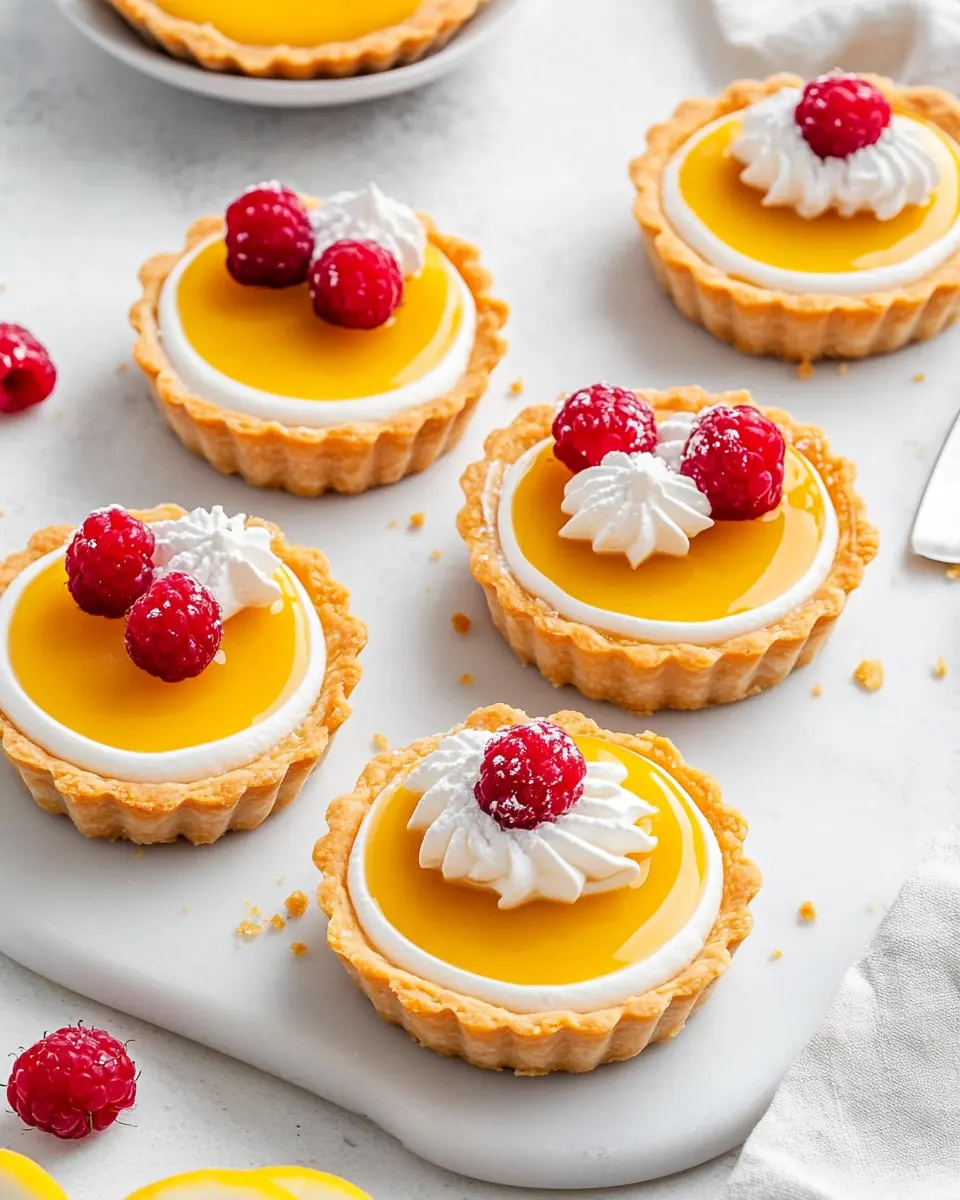
Lemon Curd Tarts
Ingredients
Equipment
Method
- Add the granulated sugar, egg, and egg yolks to a small saucepan and whisk until well combined and pale yellow, about 1 minute.: The moment you begin whisking you will notice the sugar dissolving into the eggs and the mixture turning a paler yellow, which signals even distribution. This initial whisk is more than busy work, it ensures uniform cooking when heat is applied, so there are no hot pockets that scramble. You should feel the bowl warming slightly under your hands as the sugar and eggs integrate. A common error is under whisking, which leaves streaks and a non uniform cook later, so take that full minute seriously and keep a steady whisking rhythm.
- Add the lemon juice and lemon zest to the pan. Whisk to combine.: When you incorporate the lemon juice and lemon zest the aroma instantly brightens the kitchen with citrus top notes, and you will see tiny flecks of zest suspended in the liquid. This step infuses the curd with volatile oils from the zest, which is why I never skip it. If the lemon juice is added too cold and the pan is already hot it can shock the mixture, so aim for room temperature components when possible.
- Set the pan over low heat and cook, whisking constantly for 4-5 minutes or until the curd has thickened enough to coat the back of a spoon. Make sure to keep whisking the whole time so the curd doesn’t scorch or curdle.: As the pan gently heats you will hear a faint simmer and see the mixture thicken and cling to your whisk, forming ribbons when you lift it. The low heat protects the eggs from curdling while allowing gradual coagulation for that custardy texture. Keep the whisk moving in a steady motion, scraping the bottom so nothing sticks. A frequent mistake is turning up the heat to speed things up, which risks scrambling the eggs and producing a grainy curd.
- Once the curd has thickened, remove it from the heat and whisk in the butter and vanilla.: Off the heat, adding cold butter in pieces lets it melt through and emulsify, which yields a glossy, velvety finish. Whisking now distributes the fat evenly and cools the curd slightly, which stabilizes its texture. You will smell a buttery, floral lift as the vanilla blooms into the mixture. Avoid skipping the whisk off heat, because lingering residual heat that is too high can break the emulsion or overcook the eggs.
- Once the butter has combined, pour the curd through a fine mesh sieve to remove the lemon zest and any bits of egg that may have scrambled.: Pushing the curd through a sieve gives you a satiny, lump free filling, and the act smooths out any tiny cooked strands of egg. You will notice a thicker stream of curd falling into the bowl below, and the sieve will retain any unwanted bits. This step improves mouthfeel dramatically, and skipping it can leave a less refined texture that is noticeable when you bite in.
- Place a piece of plastic wrap so that it is touching the surface of the lemon curd and then refrigerate the curd until it is completely cool, about 2 hours.: Laying plastic directly on the surface prevents a skin from forming and keeps the curd glossy. As it cools, it firms to a spreadable but pipeable consistency, and you will feel it thicken when you stir after chilling. The two hour chill also allows flavors to meld. A common slip is leaving it uncovered, which yields an unpleasant skin and uneven texture.
- Preheat your oven to 400 degrees F and spray 4 small tartlet pans with nonstick baking spray.: Heating the oven to 400 degrees F prepares for rapid initial oven spring and ensures the crust sets cleanly. Spraying the pans helps the baked shells release easily, which preserves their delicate edges. You should feel the kitchen warmth rise as the oven reaches temperature, and hearing the faint click of the thermostat is satisfying. Forgetting to preheat results in underbaked bottoms or uneven browning, so wait for the full heat.
- Roll out your pie crust to 1/8 inch thick and cut out four circles that are 1/4 inch larger than the base of your tart pans.: Rolling to an even 1/8 inch gives a delicate, crisp shell that bakes through without being tough. Cutting circles slightly larger than the pan base ensures the crust fits neatly up the sides without pulling. The dough should feel cool and pliable, not tacky. Overworking the dough makes it tough, so rest it if it feels elastic.
- Press each pie crust into a tart pan and then poke the bottom a few times with a fork.: Pressing gently into the pan forms a defined edge and curling helps the shell hold its shape. Docking with a fork prevents air bubbles from puffing up during blind baking, which keeps the bottom flat for filling. You will see tiny perforations across the base when done. Failing to dock can create uneven pockets that ruin the filling plane.
- Place a piece of parchment paper over each crust and fill the center with pie weights or dried beans or rice.: The parchment plus weights holds the crust in place and prevents the walls from collapsing, and you will notice the parchment conforming to the shell. This is essential for crisp, even baked shells. Using anything too heavy or metal can warp the pan, so use appropriate weights. Skipping weights often results in misshapen shells.
- Bake for 10 minutes, then remove the pie weights and bake for an additional 5 minutes.: The first phase sets the shell structure, and the second phase without weights allows the bottom to dry and brown. You should see the edges become a warm golden color and smell a toasty, buttery aroma. Timing is crucial because underbaking leaves a raw tasting base, while overbaking makes it overly hard. Keep a close eye during the last few minutes.
- When the crusts are golden brown, remove them from the oven and allow them to cool completely before filling.: Cooling ensures the crusts firm up and avoids steam from the warm shell making the curd runny. Visually you will see an even golden tone and feel a crisp surface when touched. Patience here preserves texture. Filling hot shells is a frequent mistake that leads to soggy bottoms.
- To assemble, remove a cooled crust from the tart pan and fill the center with lemon curd. Spread (or pipe) whipped cream on top and garnish with fresh raspberries.: As you spoon or pipe the lemon curd into the shell you will enjoy the glossy surface settling into the crust, and the bright scent of lemon will lift. Filling to just below the rim leaves room for whipped cream or garnishes. Overfilling causes spills and makes presentation messy, so aim for restraint.
- Serve immediately. Unfilled pie crusts can be kept in an airtight container at room temperature for up to three days. The lemon curd can be kept in an airtight container in the fridge for up to five days.: The final flourish of fresh whipped cream softens the lemon tang and the fresh raspberries add color and a fresh bite. Piping gives a neat, professional look while a simple spread is charmingly rustic. Add the berries gently so they stay whole. A mistake to avoid is applying whipped cream that is too soft, which will collapse on the curd.
- Serve immediately: When served right away, you will enjoy the contrast of cool curd and crisp shell, and the textures remain at their best. If you must store them, keep shells and curd separate and assemble before serving to maintain crispness. Serving too late can lead to sogginess and muted flavors, so time your plating with care.
Notes
- Swap the crust: Try a sweet shortbread crust for a crumbly texture, or use pre made tart shells when you need speed without sacrificing structure.
- Garnish creatively: Instead of raspberries, top with thinly sliced candied lemon or a few micro herbs for contrast and visual interest.
- Adjust sweetness: If your lemons are very tart, add a touch more granulated sugar when whisking, tasting as you go to maintain balance.
- Pipe for presentation: Use a star tip to pipe the fresh whipped cream in disciplined rosettes for an elegant finish that holds during transport.
- Make ahead strategy: Blind bake shells and store at room temperature, keep curd chilled, and assemble just before serving to preserve crispness and freshness.