Cucumber Quinoa Salad
Cucumber Quinoa Salad has been my go to on hot afternoons when I crave something bright, cooling, and just a touch herbaceous. The first time I mixed a bowl of this salad I was coming back from a farmers market loaded with fresh herbs and a stubbornly warm bunch of cucumbers. I wanted a dish that felt fresh but still filling, something I could spoon into a lunchbox or set out at a casual dinner and not worry about it wilting under the heat.
That day I tossed together chilled quinoa with crisp cucumber, briny feta cheese, and a fragrant pile of herbs, then dressed it in a lemon and olive oil vinaigrette bright enough to wake everything up. I remember leaning over the bowl, fork in hand, surprised how the textures played off one another the way crunchy and creamy often do when you get the ratios right. It felt like the kind of recipe you can tweak endlessly yet still return to the same comforting balance.
Over the years I have served Cucumber Quinoa Salad at picnics, brought it to potlucks, and packed it for busy lunch weeks. Each version taught me small lessons about timing and salt, and how a quick rest after tossing lets the flavors settle into a relaxed, cohesive whole. I now keep a jar of the dressing ready in my fridge so a last minute salad is always possible. If you enjoy bright herb flavors and a satisfying bite, this is a recipe you will reach for again and again.
Recipe Snapshot
16 mins
15 mins
1 mins
Easy
250 kcal
Mediterranean
Vegan, Gluten-Free
Salads
Large bowl, Small bowl or jar, Fork, Spoon or spatula
Why This Cucumber Quinoa Salad Works
Bright refreshing flavor that sings
I love how Cucumber Quinoa Salad balances bright lemony dressing with cooling cucumber so every forkful feels lively. The acid from the lemon lifts the grain, while the herbs add that green, aromatic note that keeps the salad from tasting flat. You get a clean finish on your palate, and that makes it especially appealing on warm days.
Textural contrast that satisfies
One reason I make this often is the interplay of textures. The slightly nutty bite of cooked quinoa contrasts with crunchy cucumber and the creamy crumbles of feta cheese. I find that contrast makes the salad feel substantial without relying on heavy dressings or long cooking.
Flexible and forgiving
We can scale this recipe up or down and it remains forgiving. If your quinoa is a little warm, let it cool so the herbs do not wilt. If you prefer a tangier dressing, add more lemon juice. This flexibility is why I bring it to gatherings, because it adapts to what I have on hand while still delivering a dependable result.
Herbs make it sing
The trio of parsley, mint, and dill in this salad is what lifts it from good to memorable. I always chop them roughly so they still deliver aroma and texture in every bite. They play a crucial role in cutting through the richness of the olive oil and tying the whole bowl together.
Healthy and convenient
Between the plant protein of chickpeas and the whole grain quinoa, this salad keeps you full for hours, making it perfect for lunch or a light dinner. It stores and travels well, which is why I often make a big batch and portion it for the week. That kind of convenience is invaluable on busy days.
What’s In This Cucumber Quinoa Salad
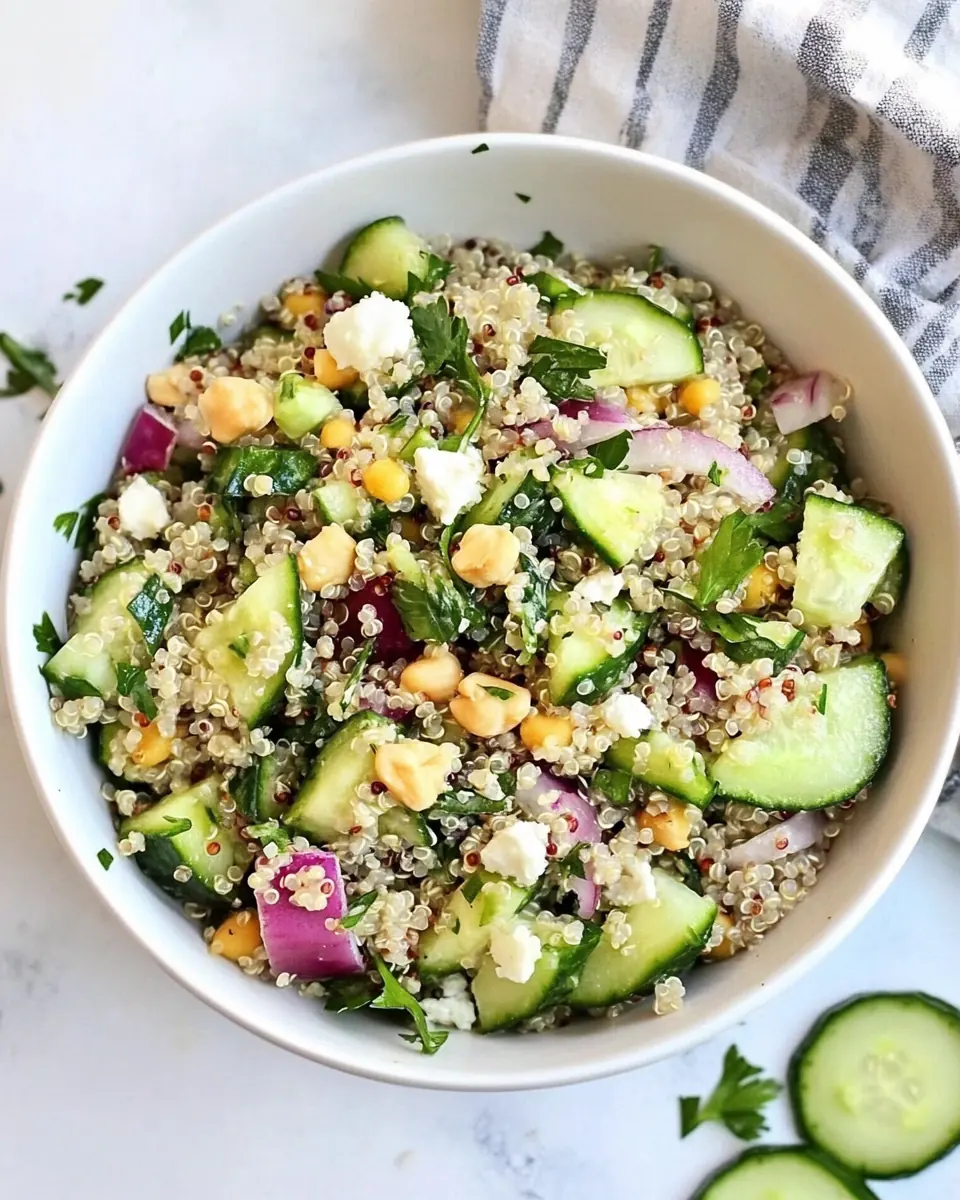
These ingredients create a simple harmony between grain, legumes, fresh vegetables, and herbs. The philosophy here is balance. Each ingredient plays a clear role: the quinoa provides a nutty base and protein, the chickpeas add heft and creaminess, and the crunchy cucumber brings refreshment. The herbs and feta cheese are the aroma and finishing notes that make each bite sing.
- 1/3 cup olive oil: Light and fruity oil that binds the dressing and helps coat the quinoa and vegetables evenly; adds richness and carries other flavors. Use as the base for emulsifying lemon juice and garlic to create a balanced vinaigrette for the salad.
- 3 tablespoons lemon juice: Bright, acidic citrus juice that provides tang and balances the richness of olive oil and feta; helps brighten the overall flavor profile. Squeeze fresh for best aroma and whisk into the dressing to enliven the quinoa and chickpeas.
- 2 cloves garlic, minced: Aromatic, pungent allium used minced to infuse the dressing with savory depth and slight heat; enhances complexity without overpowering. Add carefully to control intensity and allow to macerate briefly in the lemon–olive oil mixture for even distribution.
- Kosher salt and black pepper, to taste: Seasoning agents used to enhance and balance flavors throughout the salad; adjust to taste to avoid over- or under-seasoning. Sprinkle gradually while tossing to ensure the quinoa, chickpeas, and herbs reach an even savory finish.
- 2 cups cooked quinoa at room temperature or chilled: Cooked grain-like seed that provides a fluffy, nutty base and bulk for the salad; serves as the primary carbohydrate and texture component. Use chilled or at room temperature to prevent wilting of herbs and vegetables while absorbing dressing for cohesive bites.
- 15 ounces chickpeas: Protein-rich legumes that add creaminess, heartiness, and a satisfying bite to the salad; contribute fiber and plant-based protein for satiety. Rinse and drain if canned, then fold in to distribute evenly among quinoa and vegetables.
- 1 hothouse cucumber, chopped: Crunchy, hydrating vegetable with mild flavor that adds refreshing crispness and moisture to the salad; helps lighten heavier components. Chop to uniform pieces so cucumber mixes evenly with grains and herbs without releasing excessive water.
- 1/2 red onion, thinly sliced: Sharp, slightly sweet onion that provides a spicy bite and crunchy texture; sliced thinly to integrate without dominating other flavors. Soak briefly in cold water if desired to mellow pungency before combining with quinoa and herbs.
- 1/4 cup chopped Italian parsley: Herbaceous, slightly peppery leafy herb that adds freshness, color, and aromatic lift; chopped finely to disperse flavor throughout the salad. Use generous amounts to create bright herb pockets that contrast the grains and chickpeas.
- 1/4 cup chopped mint: Cooling, sweet herb that imparts a bright, menthol-like freshness and aromatic lift; chopped to complement parsley and dill for layered herb flavors. Mix thoroughly so mint’s fragrance punctuates each bite without overwhelming the dish.
- 2 tablespoons chopped fresh dill: Fragrant, feathery herb with a delicate anise-like flavor that adds depth and complexity; chopped small to meld with parsley and mint. Use sparingly relative to other herbs to avoid an overly grassy or licorice note.
- 1/3 cup crumbled feta cheese: Salty, tangy crumbly cheese that contributes creaminess, savory umami, and a contrasting texture; crumbled over the salad to finish. Sprinkle evenly so small pockets of feta punctuate the quinoa and vegetables with bright, salty hits.
- Kosher salt and black pepper, to taste: Final seasoning to adjust and perfect the salad’s overall balance; used at the end to ensure proper salt and pepper levels after combining all components. Taste and add incrementally to avoid oversalting given the presence of feta and canned chickpeas.
Cooking Instructions for Cucumber Quinoa Salad
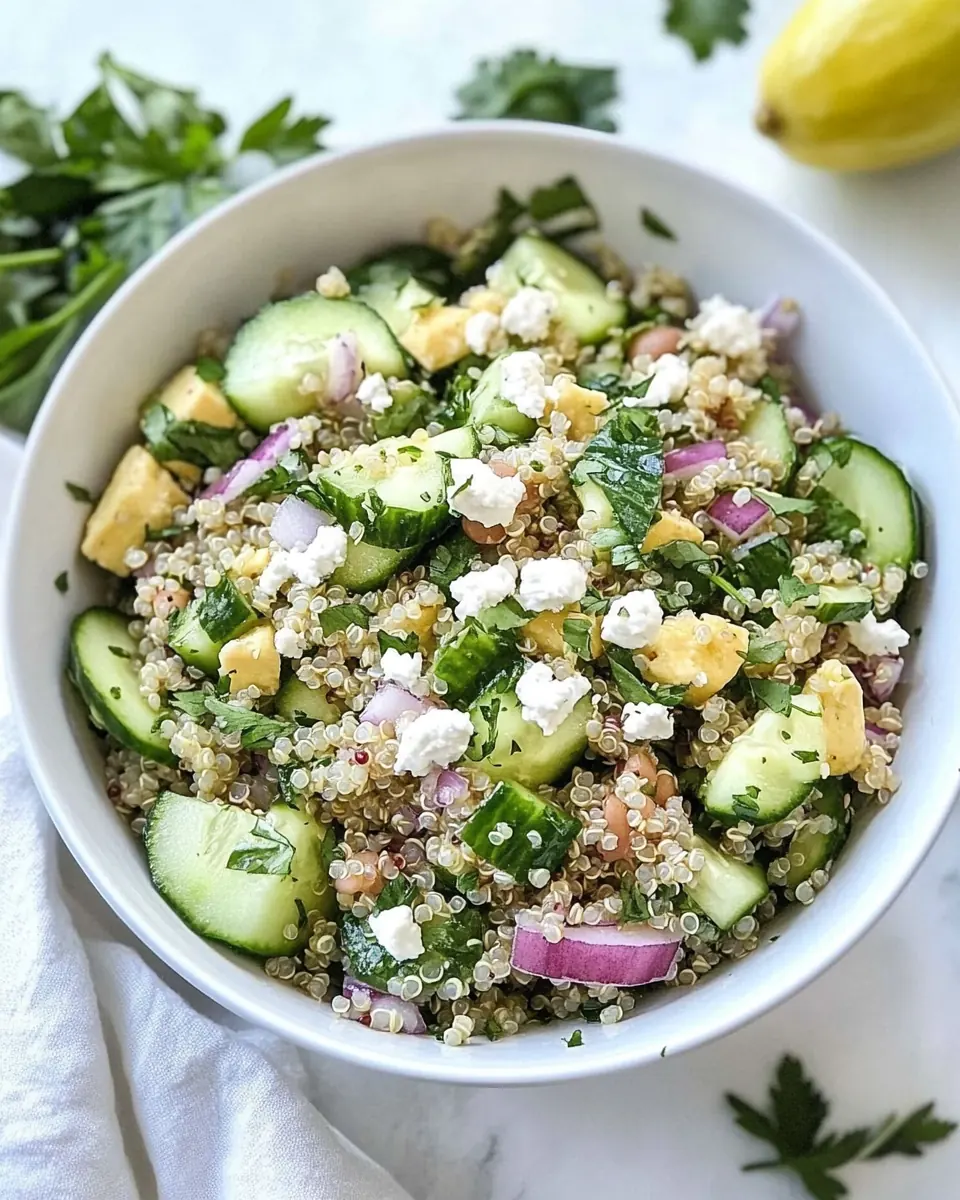
These instructions are straightforward but rewarding. Keep your senses engaged as you prepare the components so textures and flavors develop properly. The steps below build toward a balanced salad where timing and seasoning matter more than complex technique.
- To make the dressing, combine the olive oil, lemon juice, garlic, salt, and pepper in a small bowl or jar. Whisk until well combined.: Bright citrus and rich olive oil should smell fresh and slightly fruity as you whisk them together, and the sharp bite of minced garlic will add a savory undertone that perfumes the mixture. Vigorously whisking until it emulsifies gives the dressing body so it clings to the quinoa and vegetables rather than pooling at the bottom, and you should see a slight sheen and uniform texture when it is ready. If you use a jar, you will hear a gentle clinking as you shake everything, which means the ingredients are marrying. Why this matters: an emulsified dressing distributes flavor evenly, preventing dry pockets in the salad. Troubleshooting tip: if the dressing separates, whisk or shake again vigorously, and add a tiny pinch of salt which can help stabilize the emulsion. Avoid adding the dressing to piping hot quinoa , because heat can make the herbs wilt and change the texture.
- Place the cooked quinoa in a large bowl. Add the chickpeas, cucumber, red onion, parsley, mint, dill, and feta cheese. Drizzle in the lemon dressing and stir until combined. Season with salt and pepper, to taste. Serve.: The quinoa should be fluffy and separate, not gluey, and you can test this with your fingers or a fork, noting a light, slightly nutty aroma. As you transfer it into a big bowl you will hear a soft, dry rustle of grains, and that texture is the foundation for the salad. It is important to use quinoa that has cooled to room temperature or chilled so it does not steam the herbs or soften the cucumber . Why this matters: warm grains can make the salad limp and reduce the contrast between ingredients. Troubleshooting tip: if your quinoa feels clumpy, fluff it with a fork and spread it on a rimmed tray to cool quickly before assembling.
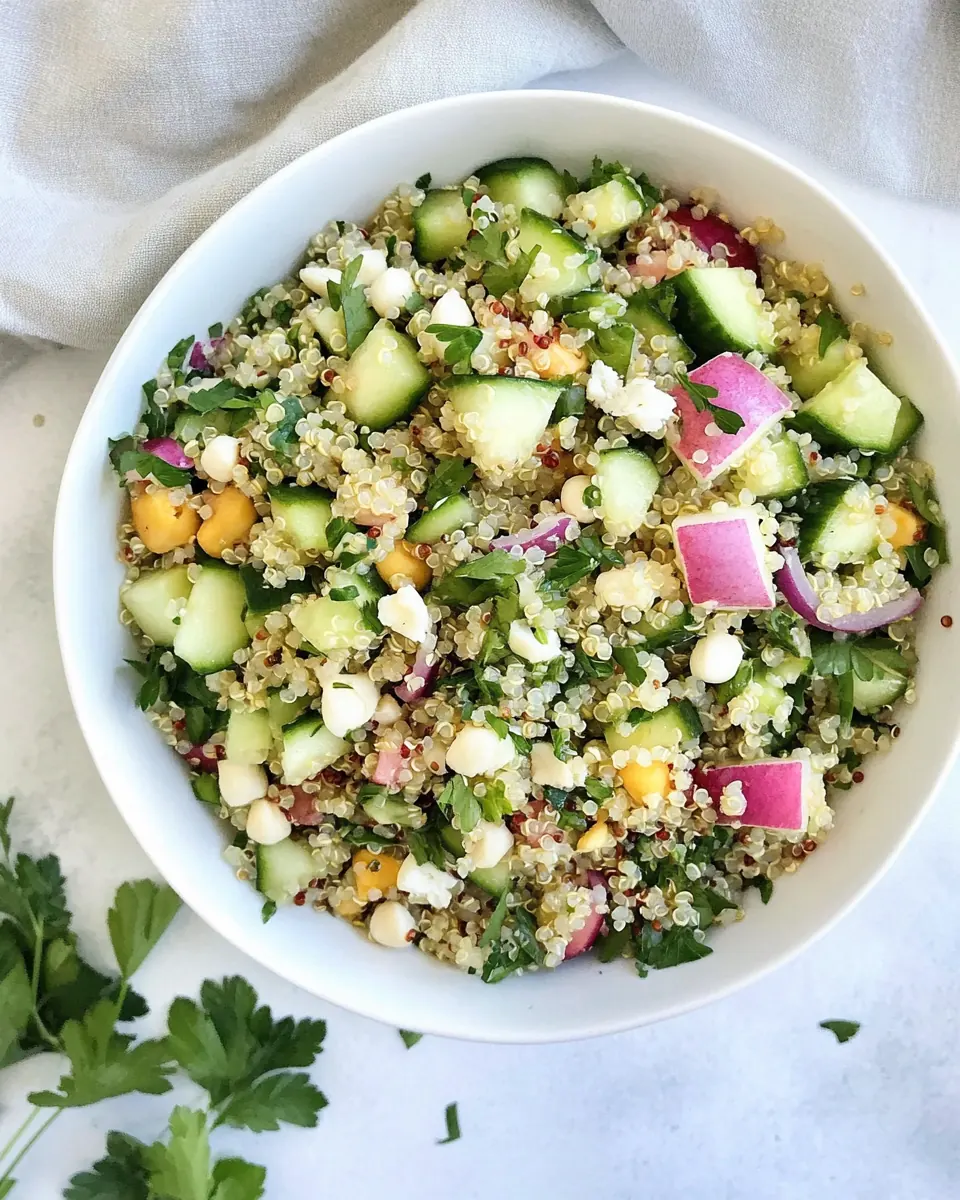
- Note – follow the package instructions to cook the quinoa.: As you spoon in the ingredients, notice the color and texture contrast, the pale roundness of the chickpeas , the bright green flecks of herbs, and the creamy white of the feta cheese . The chopped cucumber will give crisp, juicy snaps when you bite, while thinly sliced red onion provides a clean, sharp counterpoint. Toss gently so the feta cheese breaks into small pieces and distributes without turning to paste. Why this matters: careful mixing preserves the integrity of each component for a more interesting mouthfeel. Troubleshooting tip: avoid over mixing which can mangle the feta cheese and bruise the herbs, making the salad look muddy rather than bright.
- Drizzle in the lemon dressing and stir until combined: As you pour the vinaigrette over the bowl you should hear a soft splatter and see the olive oil glisten on the surface of the grains and vegetables, creating an appetizing shine. Use a wide spoon or spatula to fold the dressing through so every grain is lightly coated, which enhances both flavor and mouthfeel. Why this matters: an even coating ensures each bite is balanced and prevents dry areas in the salad. Troubleshooting tip: if the salad seems dry after a gentle toss, add a little more dressing a teaspoon at a time, tasting as you go to avoid over dressing.
- Season with salt and pepper, to taste: After the dressing brings everything together, taste a small spoonful to judge final seasoning, paying attention to the salty notes from the feta cheese . Add kosher salt sparingly, because the feta cheese may already contribute enough salinity, and finish with a few twists of freshly ground black pepper for warmth. Why this matters: correct seasoning lifts flavors and gives the salad clarity instead of flatness. Troubleshooting tip: if you over salt, add a bit more rinsed chickpeas or an extra squeeze of lemon juice to rebalance the bowl gently.
- Serve: When plating, you will notice the salad retains a bright sheen from the dressing and a mosaic of colors from herbs, cucumber, and feta cheese . Serve immediately if you prefer maximum crunch from the cucumber , or allow it to rest for 10 to 20 minutes for flavors to meld and the texture to soften slightly. Why this matters: resting allows the dressing to penetrate and marry the ingredients, producing a more cohesive taste profile. Troubleshooting tip: if you plan to store leftovers, keep them chilled in an airtight container and know the texture of the cucumber will mellow over time, so if you plan to enjoy it over several days, consider adding freshly chopped cucumber just before serving to preserve crunch.
- Note – follow the package instructions to cook the quinoa: Properly cooked quinoa should be tender with a tiny white ring around each grain, and you often hear a whispery pop when it finishes cooking, indicating the germ has separated. Rinsing prior to cooking removes bitterness, and following the package water ratio prevents gummy results. Why this matters: the texture of the quinoa underpins the entire salad, so precise cooking is essential for an ideal chew. Troubleshooting tip: if your quinoa is too wet or sticky after cooking, drain any excess water and spread it on a baking sheet to cool slightly and dry out before assembling.
Helpful Notes about Cucumber Quinoa Salad
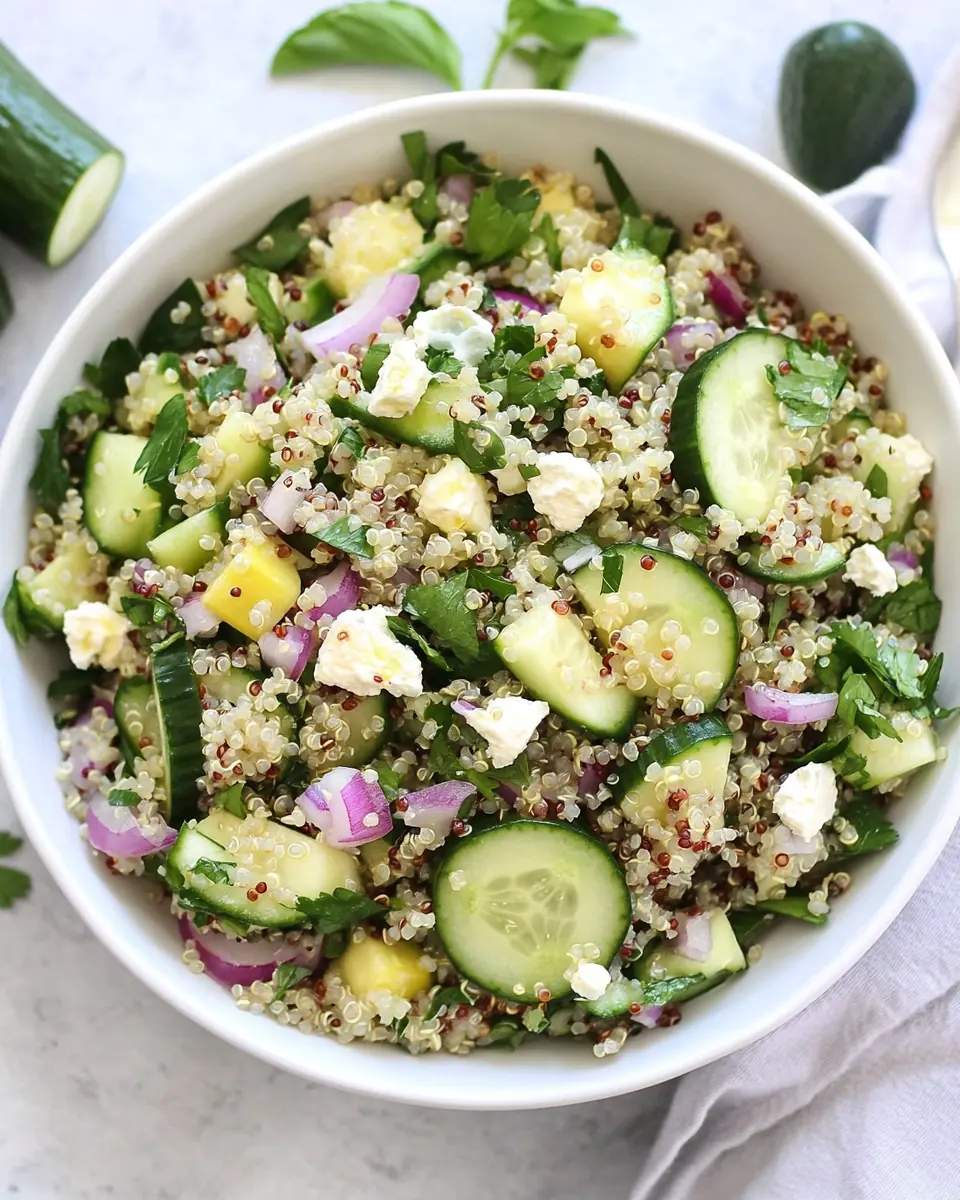
This salad behaves like a dependable friend. It is forgiving of small changes and rewards attention to fresh ingredients. Below are practical tips I use to keep every batch bright, balanced, and travel friendly.
- Prep the dressing first so the flavors have a chance to meld while you prepare the other ingredients, which will deepen the overall taste of the salad without extra effort.
- Cool the quinoa thoroughly on a rimmed tray or in the refrigerator before tossing, this prevents the herbs from wilting and keeps the texture lively.
- Rinse and drain chickpeas to avoid adding unnecessary canning brine, rinsing improves texture and controls sodium for better balance.
- Slice onions thinly and soak briefly in cold water if you prefer a milder bite, this reduces sharpness while preserving crunch.
- Store in airtight containers and separate any extra dressing so leftovers remain fresh and do not become soggy during storage.
Serve This Cucumber Quinoa Salad With
This salad is wonderfully versatile on the table. It works as a main course for a light lunch or as a colorful side at dinners and gatherings. Pair it with simple grilled vegetables, or offer it at a midday spread where guests can help themselves. When serving, think about texture contrasts and seasonal pairings to elevate the whole meal experience.
- As a light main present it with a wedge of lemon so guests can add extra acidity to suit their taste, making the salad feel personal and bright.
- At picnics and potlucks this salad travels well if chilled and kept out of direct sun, its sturdy ingredients mean it holds up through serving rounds.
- For weeknight dinners serve alongside roasted vegetables or a warm grain bowl to introduce temperature contrast that feels comforting and complete.
- Seasonal pairing in summer highlight the fresh herbs and crisp cucumber, while in cooler months add heartier sides so the meal feels more substantial.
- Storage tips keep the salad in an airtight container in the refrigerator for up to three days, and if the dressing tastes muted, refresh with a squeeze of lemon before serving.
FAQ
Conclusion
Cucumber Quinoa Salad stands out for its bright lemon dressing, fresh herbs, and satisfying mix of textures. It is easy to prepare, travels well, and makes a reliably delicious lunch or side for gatherings. Give it a try this week, and tweak the herbs or acidity to match your preference. I hope it becomes a staple in your rotation for warm weather meals and simple, healthy entertaining.
Cucumber Quinoa Salad
Ingredients
Equipment
Method
- To make the dressing, combine the olive oil, lemon juice, garlic, salt, and pepper in a small bowl or jar. Whisk until well combined.: Bright citrus and rich olive oil should smell fresh and slightly fruity as you whisk them together, and the sharp bite of minced garlic will add a savory undertone that perfumes the mixture. Vigorously whisking until it emulsifies gives the dressing body so it clings to the quinoa and vegetables rather than pooling at the bottom, and you should see a slight sheen and uniform texture when it is ready. If you use a jar, you will hear a gentle clinking as you shake everything, which means the ingredients are marrying. Why this matters: an emulsified dressing distributes flavor evenly, preventing dry pockets in the salad. Troubleshooting tip: if the dressing separates, whisk or shake again vigorously, and add a tiny pinch of salt which can help stabilize the emulsion. Avoid adding the dressing to piping hot quinoa , because heat can make the herbs wilt and change the texture.
- Place the cooked quinoa in a large bowl. Add the chickpeas, cucumber, red onion, parsley, mint, dill, and feta cheese. Drizzle in the lemon dressing and stir until combined. Season with salt and pepper, to taste. Serve.: The quinoa should be fluffy and separate, not gluey, and you can test this with your fingers or a fork, noting a light, slightly nutty aroma. As you transfer it into a big bowl you will hear a soft, dry rustle of grains, and that texture is the foundation for the salad. It is important to use quinoa that has cooled to room temperature or chilled so it does not steam the herbs or soften the cucumber . Why this matters: warm grains can make the salad limp and reduce the contrast between ingredients. Troubleshooting tip: if your quinoa feels clumpy, fluff it with a fork and spread it on a rimmed tray to cool quickly before assembling.
- Note - follow the package instructions to cook the quinoa.: As you spoon in the ingredients, notice the color and texture contrast, the pale roundness of the chickpeas , the bright green flecks of herbs, and the creamy white of the feta cheese . The chopped cucumber will give crisp, juicy snaps when you bite, while thinly sliced red onion provides a clean, sharp counterpoint. Toss gently so the feta cheese breaks into small pieces and distributes without turning to paste. Why this matters: careful mixing preserves the integrity of each component for a more interesting mouthfeel. Troubleshooting tip: avoid over mixing which can mangle the feta cheese and bruise the herbs, making the salad look muddy rather than bright.
- Drizzle in the lemon dressing and stir until combined: As you pour the vinaigrette over the bowl you should hear a soft splatter and see the olive oil glisten on the surface of the grains and vegetables, creating an appetizing shine. Use a wide spoon or spatula to fold the dressing through so every grain is lightly coated, which enhances both flavor and mouthfeel. Why this matters: an even coating ensures each bite is balanced and prevents dry areas in the salad. Troubleshooting tip: if the salad seems dry after a gentle toss, add a little more dressing a teaspoon at a time, tasting as you go to avoid over dressing.
- Season with salt and pepper, to taste: After the dressing brings everything together, taste a small spoonful to judge final seasoning, paying attention to the salty notes from the feta cheese . Add kosher salt sparingly, because the feta cheese may already contribute enough salinity, and finish with a few twists of freshly ground black pepper for warmth. Why this matters: correct seasoning lifts flavors and gives the salad clarity instead of flatness. Troubleshooting tip: if you over salt, add a bit more rinsed chickpeas or an extra squeeze of lemon juice to rebalance the bowl gently.
- Serve: When plating, you will notice the salad retains a bright sheen from the dressing and a mosaic of colors from herbs, cucumber, and feta cheese . Serve immediately if you prefer maximum crunch from the cucumber , or allow it to rest for 10 to 20 minutes for flavors to meld and the texture to soften slightly. Why this matters: resting allows the dressing to penetrate and marry the ingredients, producing a more cohesive taste profile. Troubleshooting tip: if you plan to store leftovers, keep them chilled in an airtight container and know the texture of the cucumber will mellow over time, so if you plan to enjoy it over several days, consider adding freshly chopped cucumber just before serving to preserve crunch.
- Note - follow the package instructions to cook the quinoa: Properly cooked quinoa should be tender with a tiny white ring around each grain, and you often hear a whispery pop when it finishes cooking, indicating the germ has separated. Rinsing prior to cooking removes bitterness, and following the package water ratio prevents gummy results. Why this matters: the texture of the quinoa underpins the entire salad, so precise cooking is essential for an ideal chew. Troubleshooting tip: if your quinoa is too wet or sticky after cooking, drain any excess water and spread it on a baking sheet to cool slightly and dry out before assembling.
Notes
- Prep the dressing first so the flavors have a chance to meld while you prepare the other ingredients, which will deepen the overall taste of the salad without extra effort.
- Cool the quinoa thoroughly on a rimmed tray or in the refrigerator before tossing, this prevents the herbs from wilting and keeps the texture lively.
- Rinse and drain chickpeas to avoid adding unnecessary canning brine, rinsing improves texture and controls sodium for better balance.
- Slice onions thinly and soak briefly in cold water if you prefer a milder bite, this reduces sharpness while preserving crunch.
- Store in airtight containers and separate any extra dressing so leftovers remain fresh and do not become soggy during storage.