Add the granulated sugar, egg, and egg yolks to a small saucepan and whisk until well combined and pale yellow, about 1 minute.: The moment you begin whisking you will notice the sugar dissolving into the eggs and the mixture turning a paler yellow, which signals even distribution. This initial whisk is more than busy work, it ensures uniform cooking when heat is applied, so there are no hot pockets that scramble. You should feel the bowl warming slightly under your hands as the sugar and eggs integrate. A common error is under whisking, which leaves streaks and a non uniform cook later, so take that full minute seriously and keep a steady whisking rhythm.
Add the lemon juice and lemon zest to the pan. Whisk to combine.: When you incorporate the lemon juice and lemon zest the aroma instantly brightens the kitchen with citrus top notes, and you will see tiny flecks of zest suspended in the liquid. This step infuses the curd with volatile oils from the zest, which is why I never skip it. If the lemon juice is added too cold and the pan is already hot it can shock the mixture, so aim for room temperature components when possible.
Set the pan over low heat and cook, whisking constantly for 4-5 minutes or until the curd has thickened enough to coat the back of a spoon. Make sure to keep whisking the whole time so the curd doesn’t scorch or curdle.: As the pan gently heats you will hear a faint simmer and see the mixture thicken and cling to your whisk, forming ribbons when you lift it. The low heat protects the eggs from curdling while allowing gradual coagulation for that custardy texture. Keep the whisk moving in a steady motion, scraping the bottom so nothing sticks. A frequent mistake is turning up the heat to speed things up, which risks scrambling the eggs and producing a grainy curd.
Once the curd has thickened, remove it from the heat and whisk in the butter and vanilla.: Off the heat, adding cold butter in pieces lets it melt through and emulsify, which yields a glossy, velvety finish. Whisking now distributes the fat evenly and cools the curd slightly, which stabilizes its texture. You will smell a buttery, floral lift as the vanilla blooms into the mixture. Avoid skipping the whisk off heat, because lingering residual heat that is too high can break the emulsion or overcook the eggs.
Once the butter has combined, pour the curd through a fine mesh sieve to remove the lemon zest and any bits of egg that may have scrambled.: Pushing the curd through a sieve gives you a satiny, lump free filling, and the act smooths out any tiny cooked strands of egg. You will notice a thicker stream of curd falling into the bowl below, and the sieve will retain any unwanted bits. This step improves mouthfeel dramatically, and skipping it can leave a less refined texture that is noticeable when you bite in.
Place a piece of plastic wrap so that it is touching the surface of the lemon curd and then refrigerate the curd until it is completely cool, about 2 hours.: Laying plastic directly on the surface prevents a skin from forming and keeps the curd glossy. As it cools, it firms to a spreadable but pipeable consistency, and you will feel it thicken when you stir after chilling. The two hour chill also allows flavors to meld. A common slip is leaving it uncovered, which yields an unpleasant skin and uneven texture.
Preheat your oven to 400 degrees F and spray 4 small tartlet pans with nonstick baking spray.: Heating the oven to 400 degrees F prepares for rapid initial oven spring and ensures the crust sets cleanly. Spraying the pans helps the baked shells release easily, which preserves their delicate edges. You should feel the kitchen warmth rise as the oven reaches temperature, and hearing the faint click of the thermostat is satisfying. Forgetting to preheat results in underbaked bottoms or uneven browning, so wait for the full heat.
Roll out your pie crust to 1/8 inch thick and cut out four circles that are 1/4 inch larger than the base of your tart pans.: Rolling to an even 1/8 inch gives a delicate, crisp shell that bakes through without being tough. Cutting circles slightly larger than the pan base ensures the crust fits neatly up the sides without pulling. The dough should feel cool and pliable, not tacky. Overworking the dough makes it tough, so rest it if it feels elastic.
Press each pie crust into a tart pan and then poke the bottom a few times with a fork.: Pressing gently into the pan forms a defined edge and curling helps the shell hold its shape. Docking with a fork prevents air bubbles from puffing up during blind baking, which keeps the bottom flat for filling. You will see tiny perforations across the base when done. Failing to dock can create uneven pockets that ruin the filling plane.
Place a piece of parchment paper over each crust and fill the center with pie weights or dried beans or rice.: The parchment plus weights holds the crust in place and prevents the walls from collapsing, and you will notice the parchment conforming to the shell. This is essential for crisp, even baked shells. Using anything too heavy or metal can warp the pan, so use appropriate weights. Skipping weights often results in misshapen shells.
Bake for 10 minutes, then remove the pie weights and bake for an additional 5 minutes.: The first phase sets the shell structure, and the second phase without weights allows the bottom to dry and brown. You should see the edges become a warm golden color and smell a toasty, buttery aroma. Timing is crucial because underbaking leaves a raw tasting base, while overbaking makes it overly hard. Keep a close eye during the last few minutes.
When the crusts are golden brown, remove them from the oven and allow them to cool completely before filling.: Cooling ensures the crusts firm up and avoids steam from the warm shell making the curd runny. Visually you will see an even golden tone and feel a crisp surface when touched. Patience here preserves texture. Filling hot shells is a frequent mistake that leads to soggy bottoms.
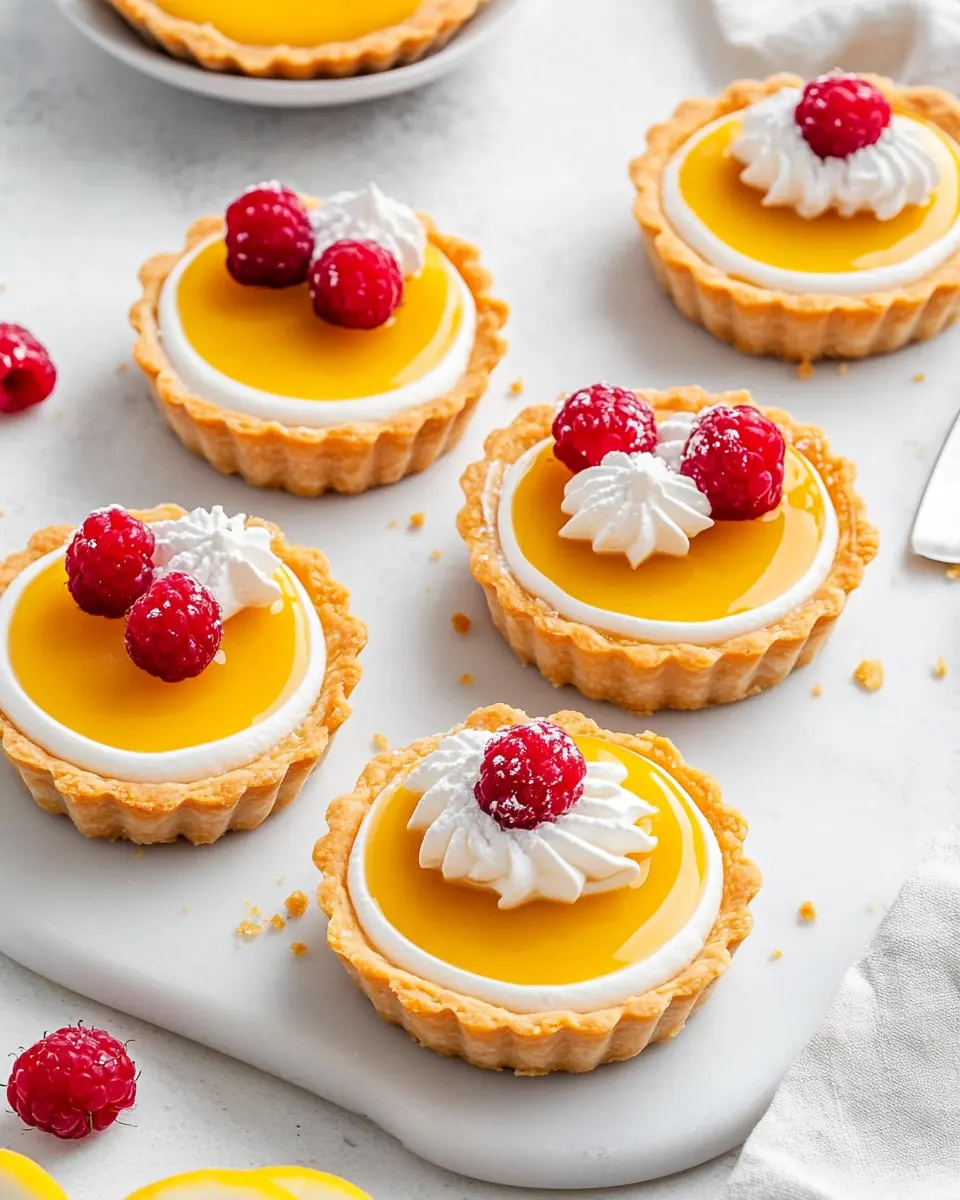
To assemble, remove a cooled crust from the tart pan and fill the center with lemon curd. Spread (or pipe) whipped cream on top and garnish with fresh raspberries.: As you spoon or pipe the lemon curd into the shell you will enjoy the glossy surface settling into the crust, and the bright scent of lemon will lift. Filling to just below the rim leaves room for whipped cream or garnishes. Overfilling causes spills and makes presentation messy, so aim for restraint.
Serve immediately. Unfilled pie crusts can be kept in an airtight container at room temperature for up to three days. The lemon curd can be kept in an airtight container in the fridge for up to five days.: The final flourish of fresh whipped cream softens the lemon tang and the fresh raspberries add color and a fresh bite. Piping gives a neat, professional look while a simple spread is charmingly rustic. Add the berries gently so they stay whole. A mistake to avoid is applying whipped cream that is too soft, which will collapse on the curd.
Serve immediately: When served right away, you will enjoy the contrast of cool curd and crisp shell, and the textures remain at their best. If you must store them, keep shells and curd separate and assemble before serving to maintain crispness. Serving too late can lead to sogginess and muted flavors, so time your plating with care.