Mardi Gras Monkey Bread
Mardi Gras Monkey Bread is one of those joyous recipes that always makes the holidays, family brunches, or casual get togethers feel like a celebration. I first met this version at a neighborhood potluck where the table brimmed with color and laughter, and this sticky, pull apart treat disappeared first. Its playful combination of gooey layers and crunchy pecans reminded me of why I love hands on baking, where everyone gathers around and peels off a warm piece while it steams at the center.
That afternoon I learned how forgiving this recipe can be. I was racing the clock, juggling kids and coats, but the simple ritual of rolling biscuit pieces in a cinnamon sugar mix calmed the chaos. The aroma of butter and brown sugar filling the kitchen was almost meditative, and by the time the glaze went on, the whole room seemed to sigh in relief. Because it is built from pantry friendly ingredients, Mardi Gras Monkey Bread is one of the few desserts I reach for when I want something showy with minimal fuss.
Over the years I adapted small touches to suit my crowd. I started brushing a few extra spoonfuls of the buttery syrup over the top for an extra glossy finish, and I learned to let the baked loaf rest just the right amount so it unmolds cleanly. Friends often ask for the recipe because it feeds a crowd, looks festive, and slices into imperfect, rustic wedges that invite conversation. If you love recipes that are communal and a little nostalgic, this one will earn a permanent place in your rotation.
Recipe Snapshot
60 mins
15 mins
45 mins
Medium
320 kcal
American
Gluten-Free, Low FODMAP
Desserts
Bundt Pan
Why You’ll Love This Mardi Gras Monkey Bread
It Brings People Together
I love how Mardi Gras Monkey Bread turns serving into a shared moment. You don’t plate individual portions, you pass around a warm, sticky ring and watch everyone peel off pieces, talk, and laugh. That physical act of sharing makes it more than a dessert, it becomes the centerpiece of the gathering.
Simple Ingredients, Big Impact
This recipe relies on basic pantry staples like sugar, butter, and refrigerated biscuits, yet the result tastes rich and indulgent. I appreciate recipes that let quality shine, and here the technique coaxing the sugars into a glossy caramel is what elevates ordinary items into something memorable.
Flexible and Forgiving
One reason I keep returning to Mardi Gras Monkey Bread is how forgiving it is. If you are a little short on time, the biscuit shortcut keeps things moving. If your oven runs a touch hot, a slightly longer rest after baking helps the loaf hold together when you invert it. Small adjustments still yield great results.
Playful and Festive
With colorful sprinkles in gold, purple, and green, this dessert feels celebratory. I often make it for Mardi Gras themed gatherings, but its joyful look and pull apart nature make it perfect for birthdays or casual brunches too. It’s a fun way to add personality to any table.
Texture Contrast
The combination of tender, pillowy biscuits, crunchy chopped pecans, and a shine of buttery caramel is where the magic lives. That contrast keeps each bite interesting and makes the recipe more than the sum of its parts.
Mardi Gras Monkey Bread Shopping List
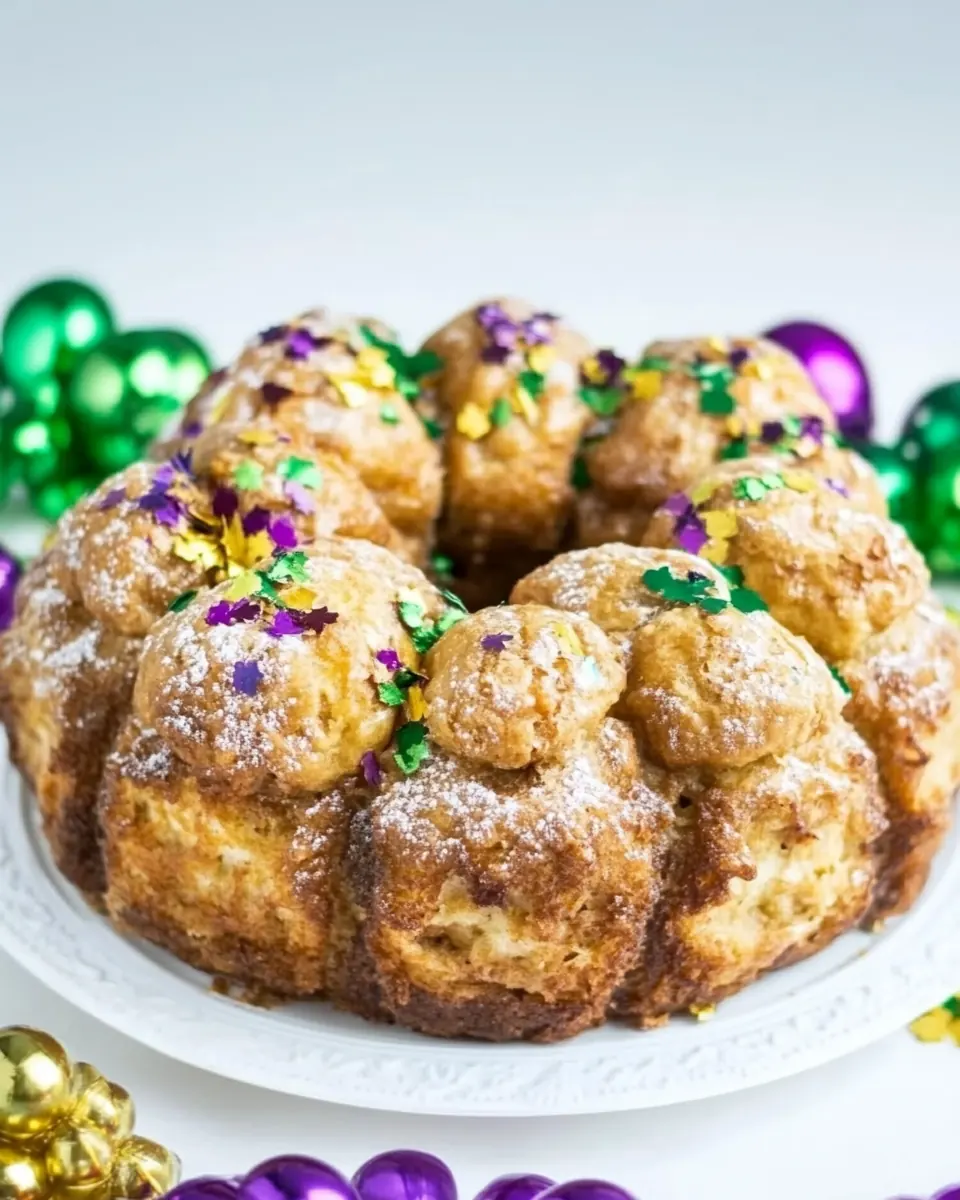
These ingredients work together like a small team where each player supports the other. The canned biscuits provide tender structure, the sugars and butter create a caramelized coating, and the pecans add crunch and toasty notes. The icing components bring a sweet, creamy finish that mellows the caramel and ties the whole loaf together.
- 4 small tubes refrigerated Homestyle Biscuits, not the Grands: Provide soft, flaky biscuit pieces that form the doughy base of the monkey bread; tear or cut into bite-sized chunks so they bake evenly and absorb the sweet buttery sauce for pillowy texture.
- 1 3/4 cups sugar, separated: Add bulk sweetening and create caramelization; separate portions allow one part to coat the biscuit pieces before baking and another to sweeten the glaze or sauce, controlling overall sweetness and texture.
- 1/2 cup finely chopped pecans: Contribute crunchy nutty texture and rich flavor contrast; finely chopped pecans distribute evenly through the layers and toast during baking to enhance aroma and mouthfeel.
- 2 teaspoons ground cinnamon: Impart warm aromatic spice to the coating mixture; ground cinnamon blends with sugar to give classic sweet-spiced notes throughout the bread.
- 1/4 cup packed brown sugar: Provide a deeper, molasses-like sweetness and help create a sticky caramel layer; packed brown sugar dissolves into the sauce for chewiness and rich flavor.
- 1/4 cup evaporated milk: Add a creamy, slightly cooked milk component that helps thin and bind the brown sugar mixture; evaporated milk contributes body and a subtle caramelized dairy note to the sauce.
- 3/4 cup butter: Create the rich buttery sauce that soaks into the biscuit pieces and browns during baking; melted butter helps carry sugars and spices while adding moistness and flavor.
- 2 cups powdered sugar: Form a thick sweet topping that balances the sticky interior; powdered sugar whisked into the glaze yields a smooth, spreadable finish that adds extra sweetness and sheen.
- 1/3 cup heavy cream: Thin and loosen the powdered sugar glaze to a pourable consistency; heavy cream enriches the icing with a silky mouthfeel and helps it set on the finished bread.
- 1 teaspoon vanilla extract: Add a warm vanilla aroma and round out the sweetness of the glaze; vanilla extract brightens flavors and gives a familiar dessert note to the icing.
- gold, purple and green sprinkles: Provide festive color, sparkle, and a crunchy decorative finish; gold, purple and green sprinkles crown the monkey bread with Mardi Gras-themed visual appeal and a bit of texture.
How to Prepare Mardi Gras Monkey Bread
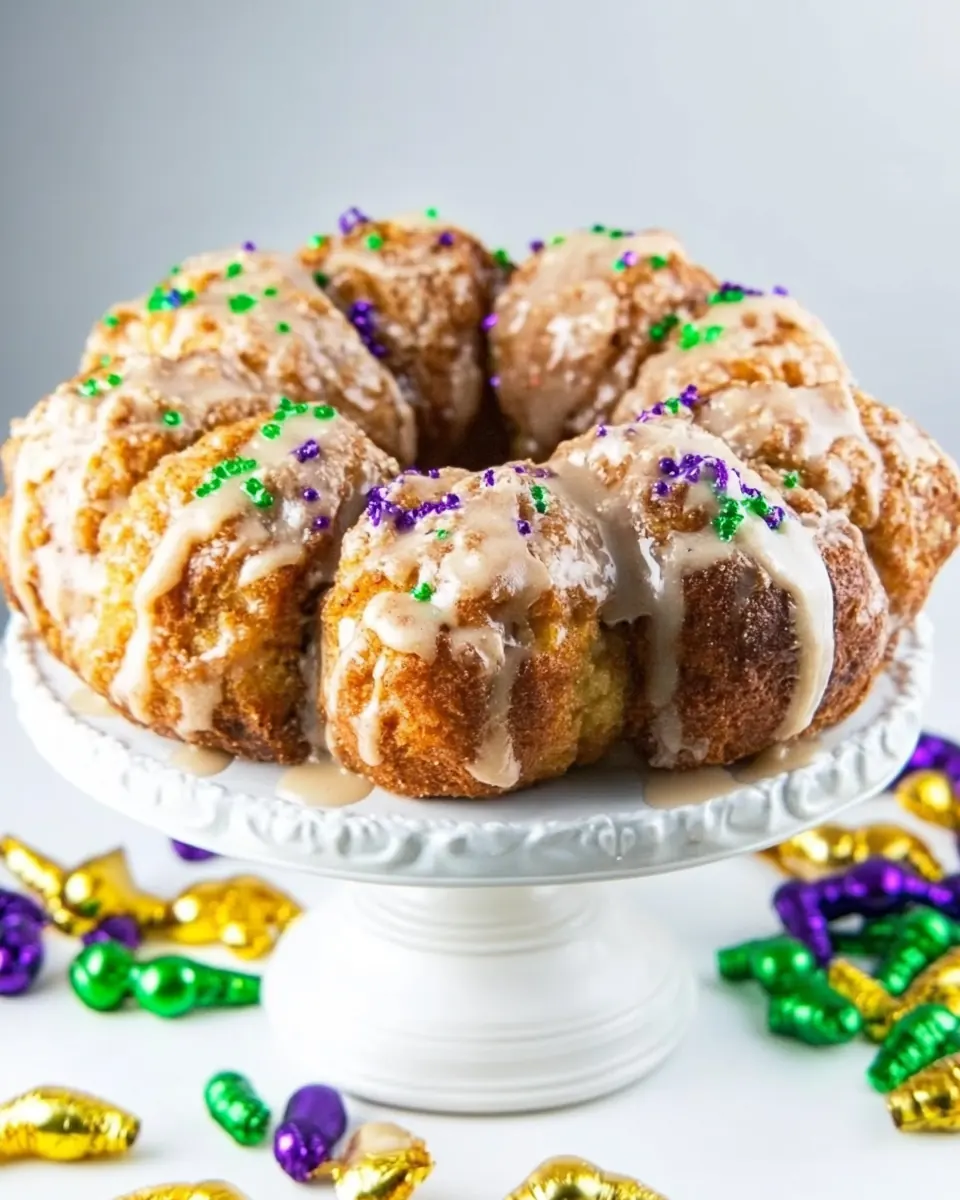
This recipe is straightforward but rewarding. As you move through the steps, pay attention to the visual cues and aromas, because they guide you to the right textures and doneness. I like to have everything measured and ready, since the syrup comes together fast. Follow the directions closely for the best pull apart loaf.
- Preheat oven to 350 degrees.: The warm, faintly sweet scent of a preheated oven signals stability, and setting it to 350 degrees creates a steady environment for even browning. This temperature helps the exterior caramelize without drying the inside, producing a golden finish that is glossy and deep in color. Avoid putting the pan into an oven that is not fully heated because the loaf may bake unevenly, leaving some pieces underdone while others overbake. One common mistake is trusting a dial gauge without preheating for at least 10 minutes, which can shift bake times significantly.
- Cut each biscuit into 4 pieces.: When you cut the refrigerated biscuits into quarters, you will notice a soft, pillowy texture that compresses easily between your fingers. Evenly sized pieces ensure consistent baking and uniform caramel coating, so aim for similar shapes. The auditory cue of a gentle snip or slice signals readiness, and the visual of uniform pieces helps with layering in the pan. A frequent error is cutting irregular sizes, which leads to undercooked pockets; use a sharp knife or kitchen shears and steady hands for neat results.
- In a medium bowl, combine 3/4 cup sugar, pecan pieces, and cinnamon. Roll each biscuit piece in sugar mixture and then place in a Bundt pan. You should use most of the sugar mixture up, but it's ok to have some left over. You can sprinkle it on top of the biscuit pieces once you have them all added to the pan.: The scent of cinnamon blooming in the sugar is immediate and warming, and when you roll the biscuit pieces, you should feel the coarse coating adhere to the soft dough. Dropping them into the Bundt Pan in tight clusters helps them fuse as they bake, forming those delightful pull apart layers. The visual cue to aim for is a cohesive mound of sugared bites, some with visible pecans tucked between. One pitfall is rolling too roughly, which can compress the air pockets in the dough and yield dense bites; be gentle when coating so the biscuit retains its tenderness.
- In a saucepan, combine 1 cup sugar, brown sugar, evaporated milk, and butter. Heat stirring occasionally, until butter melts. Pour over biscuit pieces.: As the sugars and butter melt together, a toffee like aroma will rise, and you will notice the mixture become glossy and thickened. This syrup is the glue that transforms individual pieces into a cohesive monkey bread, so achieving a smooth, lump free texture is important. Pouring it evenly over the stacked biscuits ensures each piece picks up syrup and caramelizes into a golden crust. A common mistake is letting the mixture boil hard, which can overcook the sugars and produce a grainy texture; heat just until melted and combined, stirring slowly to maintain a velvety consistency.
- Bake 40-45 minutes. Let cool 5 minutes and then invert onto a cake stand or large plate.: During baking the kitchen fills with a deep, buttery caramel perfume, and the top should develop a rich, even brown color with some glossy patches where the syrup bubbled. The internal structure becomes tender and set, and the pecans will toast slightly, adding crispness. Resting for about five minutes lets the syrup settle so the loaf unmolds without falling apart, and inverting will reveal the glossy crown. Avoid waiting too long to invert, because excess cooling can make the loaf stick; too soon, and the syrup may still be overly fluid. The sweet sound of syrup settling and a clean edge where the Bundt Pan releases indicate success.
- For Icing, whisk together powdered sugar, heavy cream, and vanilla extract. Spread on top of Monkey Bread.: The glaze should be silky and pourable, with a soft vanilla perfume that complements the caramel. As you whisk powdered sugar into heavy cream , aim for a smooth, lump free texture; small whisking motions help dissolve the sugar and incorporate air for a glossy finish. Brushing or drizzling the icing over the warm loaf creates ribbons of opaque white that contrast beautifully with the golden caramel beneath, and the final touch of colorful sprinkles adds festivity. A frequent misstep is adding the glaze when the loaf is too hot, which can make it slide off; allow a short cool down so the icing adheres without melting away.
Variations to Try
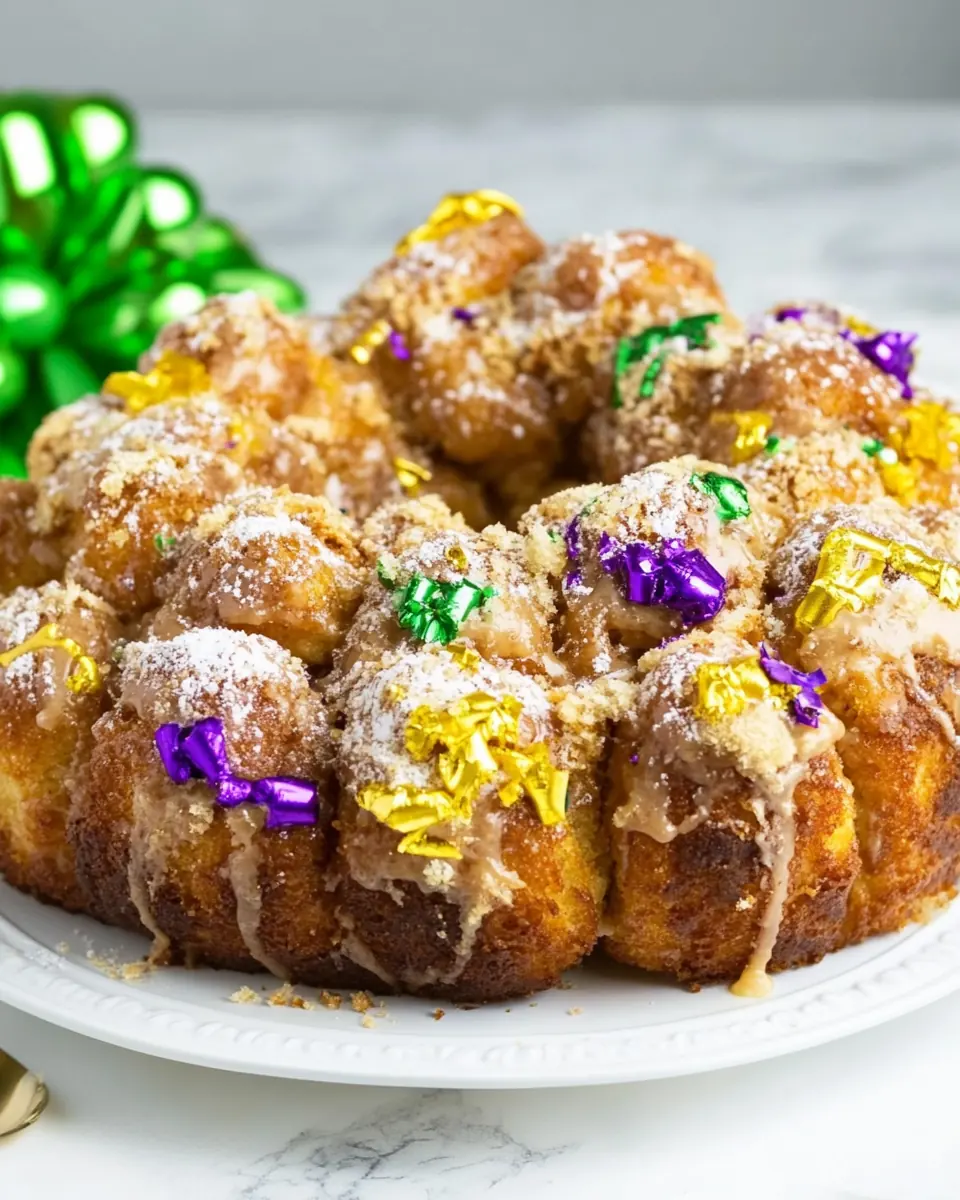
If you want to play around with Mardi Gras Monkey Bread, small tweaks can change texture and presentation without altering the core method. Below are thoughtful variations and ideas to inspire you. I like each of these because they keep the recipe approachable yet let you personalize the loaf.
- Swap biscuit size thoughtfully. Use two cans of larger biscuits if you prefer chunkier bites; this changes the pull apart rhythm and makes the loaf heartier without changing technique.
- Boost nutty flavor. Add extra chopped pecans between layers for a pronounced crunch; distribute them evenly to maintain balance and prevent clumping.
- Adjust sweetness subtly. If you prefer less sweetness, reduce the 1 cup granulated sugar in the syrup by two tablespoons; this retains caramelization while tempering the overall sugar level.
- Make it ahead cautiously. Assemble the coated pieces in the Bundt Pan and refrigerate briefly, but bake from chilled to preserve structure; long refrigeration can tighten the dough.
- Gild with extra glaze. Prepare double the glaze and drizzle in two passes, allowing the first layer to set slightly; this creates a thicker, more luxurious finish that looks professional.
- Use flavored extract sparingly. Swap some or all of the vanilla for a small amount of almond extract for a different aromatic profile, but keep quantities low to avoid overpowering the caramel.
Serving Options for Mardi Gras Monkey Bread
This loaf works wonderfully across occasions, from casual brunches to festive celebrations. I often serve it warm so the syrup is glossy and inviting, but it also travels well for potlucks. Here are thoughtful serving approaches and pairings to consider.
- Brunch centerpiece. Serve the warm loaf at a family brunch, placed on a large cake stand to encourage sharing and conversation.
- Holiday dessert. For Mardi Gras or festive gatherings, top with the gold, purple, and green sprinkles to echo the theme and add color contrast.
- Casual coffee pairing. Offer alongside hot coffee or tea, the warm caramel notes complementing bitter and bright beverages for balance.
- Potluck friendly. Transport the loaf inverted on a plate, and finish with glaze and sprinkles at the venue for best presentation and freshness.
- Storage advice. Keep leftovers loosely covered at room temperature for up to two days, or refrigerate for longer keeping, then rewarm gently to revive the syrup gloss.
- Occasion flexibility. This bread suits breakfasts, casual dinners, holiday mornings, or anytime you want a shareable sweet that feels celebratory.
FAQ
Conclusion
Mardi Gras Monkey Bread stands out because of its playful presentation and harmonious textures, pairing tender biscuit pieces with crunchy pecans and a glossy caramel glaze. It’s a recipe that feels celebratory yet remains easy enough for busy hosts who want a show stopping centerpiece without complicated steps. Give it a try the next time you want a dessert that invites sharing, joy, and a little bit of festive color on the table. You’ll likely find it becomes one of those go to recipes you reach for whenever friends or family gather.
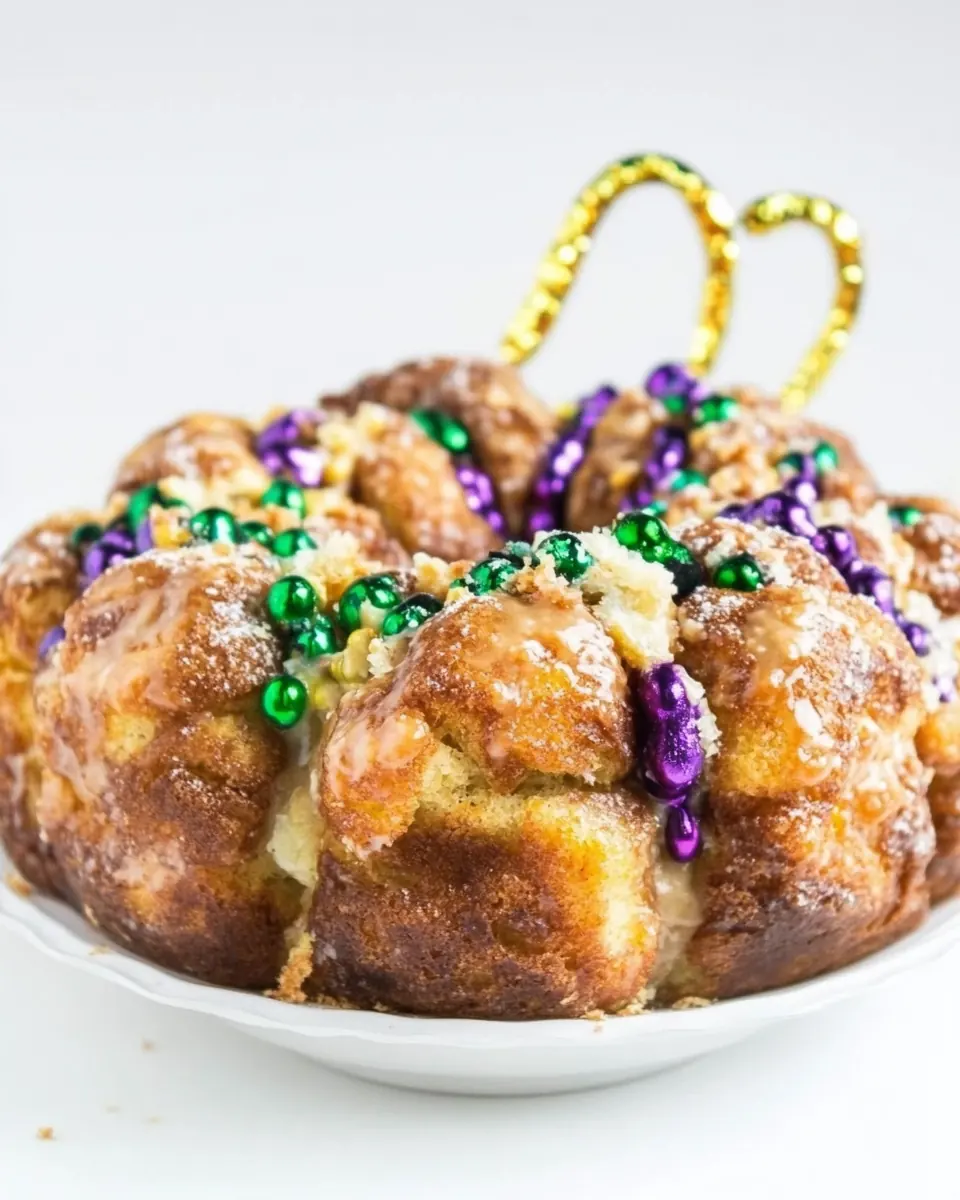
Mardi Gras Monkey Bread
Ingredients
Equipment
Method
- Preheat oven to 350 degrees.: The warm, faintly sweet scent of a preheated oven signals stability, and setting it to 350 degrees creates a steady environment for even browning. This temperature helps the exterior caramelize without drying the inside, producing a golden finish that is glossy and deep in color. Avoid putting the pan into an oven that is not fully heated because the loaf may bake unevenly, leaving some pieces underdone while others overbake. One common mistake is trusting a dial gauge without preheating for at least 10 minutes, which can shift bake times significantly.
- Cut each biscuit into 4 pieces.: When you cut the refrigerated biscuits into quarters, you will notice a soft, pillowy texture that compresses easily between your fingers. Evenly sized pieces ensure consistent baking and uniform caramel coating, so aim for similar shapes. The auditory cue of a gentle snip or slice signals readiness, and the visual of uniform pieces helps with layering in the pan. A frequent error is cutting irregular sizes, which leads to undercooked pockets; use a sharp knife or kitchen shears and steady hands for neat results.
- In a medium bowl, combine 3/4 cup sugar, pecan pieces, and cinnamon. Roll each biscuit piece in sugar mixture and then place in a Bundt pan. You should use most of the sugar mixture up, but it's ok to have some left over. You can sprinkle it on top of the biscuit pieces once you have them all added to the pan.: The scent of cinnamon blooming in the sugar is immediate and warming, and when you roll the biscuit pieces, you should feel the coarse coating adhere to the soft dough. Dropping them into the Bundt Pan in tight clusters helps them fuse as they bake, forming those delightful pull apart layers. The visual cue to aim for is a cohesive mound of sugared bites, some with visible pecans tucked between. One pitfall is rolling too roughly, which can compress the air pockets in the dough and yield dense bites; be gentle when coating so the biscuit retains its tenderness.
- In a saucepan, combine 1 cup sugar, brown sugar, evaporated milk, and butter. Heat stirring occasionally, until butter melts. Pour over biscuit pieces.: As the sugars and butter melt together, a toffee like aroma will rise, and you will notice the mixture become glossy and thickened. This syrup is the glue that transforms individual pieces into a cohesive monkey bread, so achieving a smooth, lump free texture is important. Pouring it evenly over the stacked biscuits ensures each piece picks up syrup and caramelizes into a golden crust. A common mistake is letting the mixture boil hard, which can overcook the sugars and produce a grainy texture; heat just until melted and combined, stirring slowly to maintain a velvety consistency.
- Bake 40-45 minutes. Let cool 5 minutes and then invert onto a cake stand or large plate.: During baking the kitchen fills with a deep, buttery caramel perfume, and the top should develop a rich, even brown color with some glossy patches where the syrup bubbled. The internal structure becomes tender and set, and the pecans will toast slightly, adding crispness. Resting for about five minutes lets the syrup settle so the loaf unmolds without falling apart, and inverting will reveal the glossy crown. Avoid waiting too long to invert, because excess cooling can make the loaf stick; too soon, and the syrup may still be overly fluid. The sweet sound of syrup settling and a clean edge where the Bundt Pan releases indicate success.
- For Icing, whisk together powdered sugar, heavy cream, and vanilla extract. Spread on top of Monkey Bread.: The glaze should be silky and pourable, with a soft vanilla perfume that complements the caramel. As you whisk powdered sugar into heavy cream , aim for a smooth, lump free texture; small whisking motions help dissolve the sugar and incorporate air for a glossy finish. Brushing or drizzling the icing over the warm loaf creates ribbons of opaque white that contrast beautifully with the golden caramel beneath, and the final touch of colorful sprinkles adds festivity. A frequent misstep is adding the glaze when the loaf is too hot, which can make it slide off; allow a short cool down so the icing adheres without melting away.
Notes
- Swap biscuit size thoughtfully. Use two cans of larger biscuits if you prefer chunkier bites; this changes the pull apart rhythm and makes the loaf heartier without changing technique.
- Boost nutty flavor. Add extra chopped pecans between layers for a pronounced crunch; distribute them evenly to maintain balance and prevent clumping.
- Adjust sweetness subtly. If you prefer less sweetness, reduce the 1 cup granulated sugar in the syrup by two tablespoons; this retains caramelization while tempering the overall sugar level.
- Make it ahead cautiously. Assemble the coated pieces in the Bundt Pan and refrigerate briefly, but bake from chilled to preserve structure; long refrigeration can tighten the dough.
- Gild with extra glaze. Prepare double the glaze and drizzle in two passes, allowing the first layer to set slightly; this creates a thicker, more luxurious finish that looks professional.
- Use flavored extract sparingly. Swap some or all of the vanilla for a small amount of almond extract for a different aromatic profile, but keep quantities low to avoid overpowering the caramel.