Preheat oven to 350 degrees.: The warm, faintly sweet scent of a preheated oven signals stability, and setting it to 350 degrees creates a steady environment for even browning. This temperature helps the exterior caramelize without drying the inside, producing a golden finish that is glossy and deep in color. Avoid putting the pan into an oven that is not fully heated because the loaf may bake unevenly, leaving some pieces underdone while others overbake. One common mistake is trusting a dial gauge without preheating for at least 10 minutes, which can shift bake times significantly.
Cut each biscuit into 4 pieces.: When you cut the refrigerated biscuits into quarters, you will notice a soft, pillowy texture that compresses easily between your fingers. Evenly sized pieces ensure consistent baking and uniform caramel coating, so aim for similar shapes. The auditory cue of a gentle snip or slice signals readiness, and the visual of uniform pieces helps with layering in the pan. A frequent error is cutting irregular sizes, which leads to undercooked pockets; use a sharp knife or kitchen shears and steady hands for neat results.
In a medium bowl, combine 3/4 cup sugar, pecan pieces, and cinnamon. Roll each biscuit piece in sugar mixture and then place in a Bundt pan. You should use most of the sugar mixture up, but it's ok to have some left over. You can sprinkle it on top of the biscuit pieces once you have them all added to the pan.: The scent of cinnamon blooming in the sugar is immediate and warming, and when you roll the biscuit pieces, you should feel the coarse coating adhere to the soft dough. Dropping them into the Bundt Pan in tight clusters helps them fuse as they bake, forming those delightful pull apart layers. The visual cue to aim for is a cohesive mound of sugared bites, some with visible pecans tucked between. One pitfall is rolling too roughly, which can compress the air pockets in the dough and yield dense bites; be gentle when coating so the biscuit retains its tenderness.
In a saucepan, combine 1 cup sugar, brown sugar, evaporated milk, and butter. Heat stirring occasionally, until butter melts. Pour over biscuit pieces.: As the sugars and butter melt together, a toffee like aroma will rise, and you will notice the mixture become glossy and thickened. This syrup is the glue that transforms individual pieces into a cohesive monkey bread, so achieving a smooth, lump free texture is important. Pouring it evenly over the stacked biscuits ensures each piece picks up syrup and caramelizes into a golden crust. A common mistake is letting the mixture boil hard, which can overcook the sugars and produce a grainy texture; heat just until melted and combined, stirring slowly to maintain a velvety consistency.
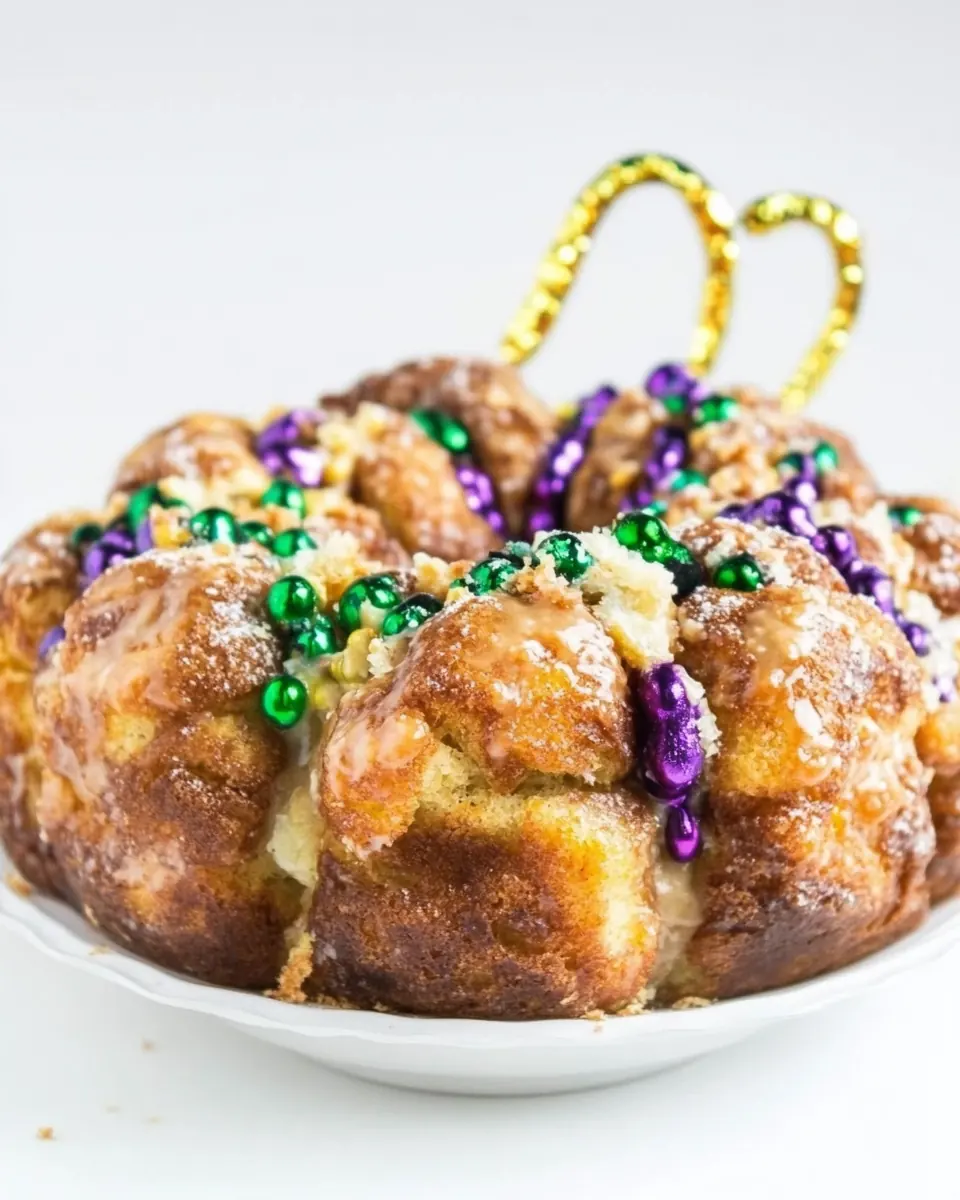
Bake 40-45 minutes. Let cool 5 minutes and then invert onto a cake stand or large plate.: During baking the kitchen fills with a deep, buttery caramel perfume, and the top should develop a rich, even brown color with some glossy patches where the syrup bubbled. The internal structure becomes tender and set, and the pecans will toast slightly, adding crispness. Resting for about five minutes lets the syrup settle so the loaf unmolds without falling apart, and inverting will reveal the glossy crown. Avoid waiting too long to invert, because excess cooling can make the loaf stick; too soon, and the syrup may still be overly fluid. The sweet sound of syrup settling and a clean edge where the Bundt Pan releases indicate success.
For Icing, whisk together powdered sugar, heavy cream, and vanilla extract. Spread on top of Monkey Bread.: The glaze should be silky and pourable, with a soft vanilla perfume that complements the caramel. As you whisk powdered sugar into heavy cream , aim for a smooth, lump free texture; small whisking motions help dissolve the sugar and incorporate air for a glossy finish. Brushing or drizzling the icing over the warm loaf creates ribbons of opaque white that contrast beautifully with the golden caramel beneath, and the final touch of colorful sprinkles adds festivity. A frequent misstep is adding the glaze when the loaf is too hot, which can make it slide off; allow a short cool down so the icing adheres without melting away.