Mini Chocolate Poke Cakes
Mini Chocolate Poke Cakes are one of those treats I keep tucked into my back pocket for anytime someone knocks on the door and I want to impress without fuss. The first time I made these, I was hosting a casual book club and wanted something that felt special but would let me sit and chat rather than hover over the oven. I remember the steam lifting from the jars as I carried them in, the warm scent of cocoa powder and coffee making everyone pause mid conversation, and how the little jars felt like tiny presents on the table.
These jars are perfect when I need a dessert that looks like I spent all afternoon but actually came together quickly. I love that the cakes bake right in the canning jars, so serving is effortless and the presentation is charming without being fussy. The texture is soft and a bit pillowy, with those pockets of caramel sinking in and adding a sticky, buttery contrast to the airy crumb. When friends ask for the recipe, I always tell them it is my secret for hosting with minimal stress and maximum cheers.
Another memory that sticks is making these with my niece on a rainy afternoon, letting her pour batter into each jar while I handled the oven. We giggled as the batter looked surprisingly thin in the bowl, worried it would not hold up, then watched the cakes rise and set into perfect little domes. Toppings make all the difference, and for us, a drizzle of caramel sauce with a sprinkle of candy bits is pure joy. I like that these are versatile, forgiving, and endlessly shareable, and every time I serve them they spark the same delight.
Recipe Snapshot
39 mins
15 mins
24 mins
Easy
250 kcal
American
Gluten-Free, Low FODMAP
Desserts
Electric mixer, Whisk attachment, Mixing bowl, Large baking sheet, 4 ounce canning jars, Rubber spatula, Wooden skewer
Why You Need This Mini Chocolate Poke Cakes
A tiny showstopper that looks gourmet
I love how Mini Chocolate Poke Cakes arrive at the table and immediately draw compliments. The jars make each serving feel curated, and I find guests pay more attention to presentation when it is already plated. It is an easy way to elevate a simple cake without extra plating time.
Moist texture thanks to the poke
Poking the warm cakes and filling the holes with caramel sauce creates concentrated pockets of flavor that keep each bite lusciously moist. I always notice that the cakes stay tender, instead of drying out the next day, because the sauce sinks inside and acts like a flavor reservoir.
Speed with personality
Between whisking the batter and baking, these come together quickly. For busy nights when I want dessert but not a long commitment, this recipe feels like a win. The jar method cuts down on trimming and fancy plating, so you trade effort for charm.
Flexible toppings for every mood
These little cakes invite creativity. I often switch up the garnish depending on who I am serving. A spoonful of whipped cream and some chopped candy bits make it festive, while plain caramel is cozy and elegant. That freedom is why I reach for this recipe again and again.
Perfect for gatherings or solo treats
I keep a batch in mind for potlucks, brunches, and last minute guests. They travel well if the lids fit, and people love the individualized servings. When I bring these, I know they will disappear fast, which always feels rewarding.
What You’ll Need for Mini Chocolate Poke Cakes
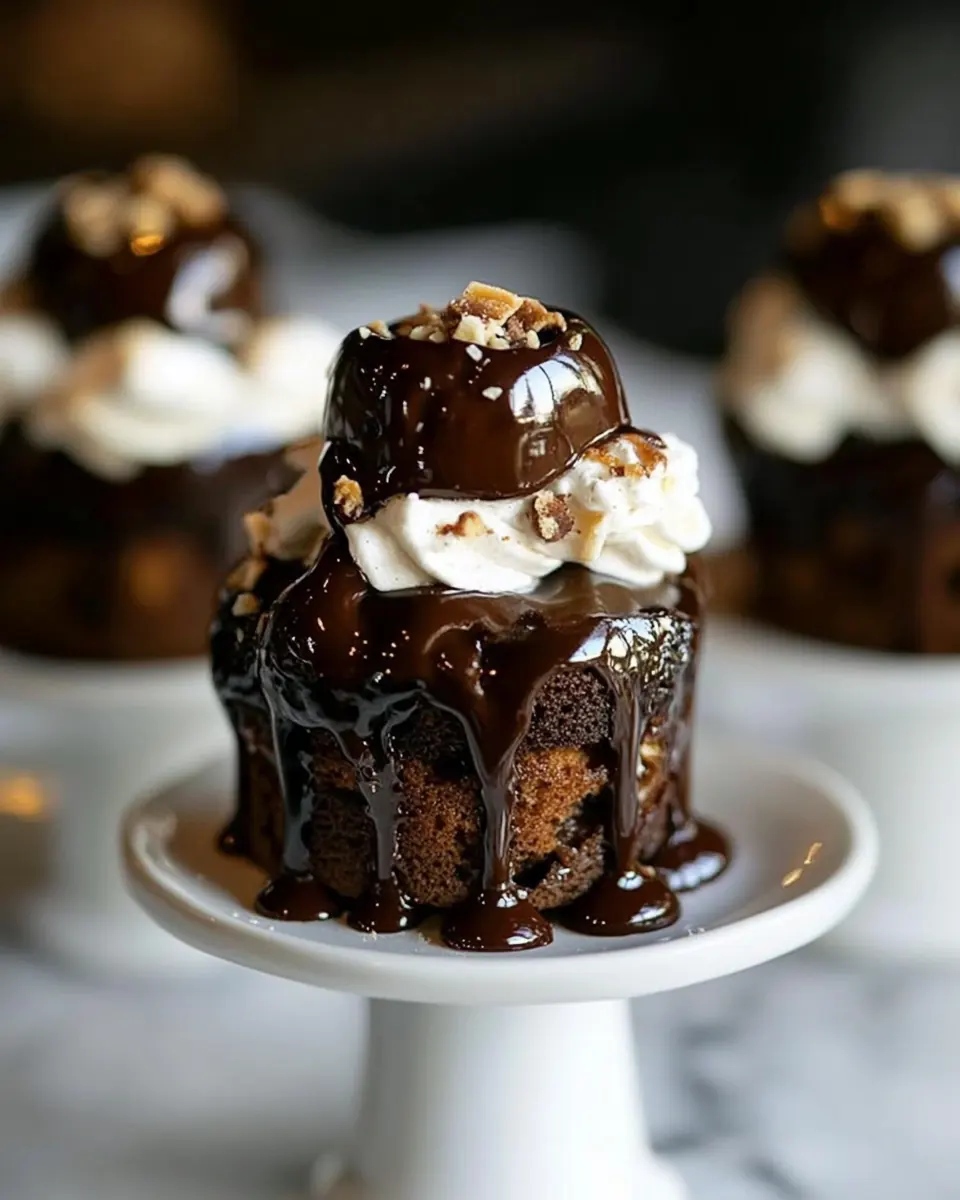
These ingredients are intentionally straightforward, combining pantry staples with a few components that do the heavy lifting. The all purpose flour and granulated sugar give structure and sweetness, while unsweetened cocoa powder provides the chocolate backbone. Buttermilk and oil keep the crumb tender and moist, and the hot coffee amplifies the chocolate flavor without adding coffee taste unless you want it to.
- 1 3/4 cups all-purpose flour 2 cups granulated sugar 3/4 cups unsweetened cocoa powder 2 teaspoons baking soda 1 teaspoon baking powder 1 teaspoon salt 1 cup buttermilk, shaken 1/2 cup vegetable oil 2 eggs, at room temperature 1 teaspoon pure vanilla extract: Provides structure and bulk to the cake batter while contributing gluten for a tender crumb; works with leaveners and liquid ingredients to form the cake matrix. Balances sweetness and cocoa flavor, and helps absorb moisture from buttermilk, oil, and eggs for consistent texture.
- 1 cup freshly brewed hot coffee: Adds deep chocolate flavor and a dry component that intensifies cocoa richness; helps create the cake’s chocolate base and color. Combines with sugar and liquids to distribute chocolate taste evenly throughout each mini cake.
- For the Topping 1 cup quality caramel sauce whipped cream or whipped topping Heath candy bar bits: Leavens the batter to create lift and lightness; reacts with acidic ingredients like buttermilk to produce carbon dioxide bubbles that expand during baking. Also contributes a slight alkaline balance that can affect texture and browning.
Instructions for Mini Chocolate Poke Cakes
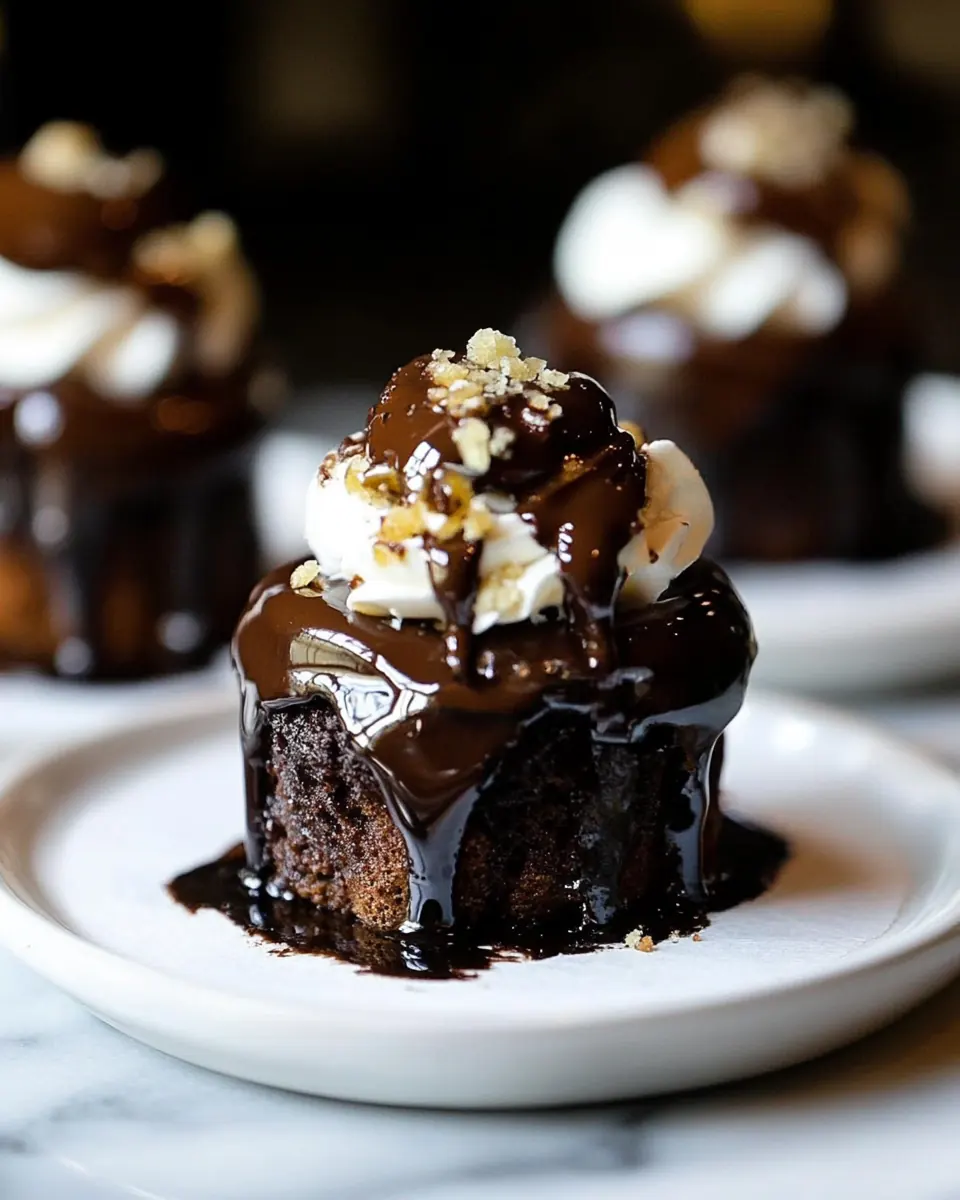
I like to approach the method like a short ritual: preheat, mix, pour, bake, poke, and finish. Below I expand each original direction into detailed, sensory driven steps so you can follow along confidently and avoid the small missteps that trip up first timers.
- Preheat the oven to 350 degrees F. Spray 18 small (4 ounce) canning jars with nonstick cooking spray. Place jars on a large baking sheet. Be sure to leave room between each of the jars for air to circulate while baking.: As the oven warms, you will notice a faint heat and the familiar hum of the element coming to life. Getting the oven to a steady 350 degrees F before you slide in the tray is crucial so the cakes set properly and rise evenly. If the oven is cooler than required, cakes may bake unevenly or take longer and dry out; if it is hotter, the edges can firm up before the centers are cooked. A common mistake is not allowing the oven enough time to stabilize, so I always wait at least ten minutes after the indicator clicks to ensure an even bake.
- Sift the flour, sugar, cocoa powder, baking soda, baking powder, and salt into the bowl of an electric mixer fitted with the whisk attachment and mix on low speed until combined.: Rubbing a thin sheen of spray inside each jar prevents sticking and gives the cake a clean release when you serve. You should feel the slick surface before pouring batter, and when the jars sit on the counter you will notice they are slightly glossy. Avoid over spraying which can pool and create greasy spots; a light even coat is best. If the cake sticks, it is often due to skipped or uneven coating, so take a moment to do this step well.
- In another bowl, whisk together the buttermilk, oil, eggs, and vanilla. With the mixer on low speed, slowly add the wet ingredients to the dry. With mixer still on low, add in the coffee stir just to combine, scraping the bottom of the bowl with a rubber spatula. The batter will be very thin.: Lining up the jars on a sheet allows for stable transport into the oven and ensures air circulates around each jar. You will hear a gentle clink as they settle; spread them so there is a little breathing room between each jar to promote even heat flow. Crowding the pan can lead to oddly risen cakes and varied baking times. One trap is placing jars too close to the oven walls where hotter pockets can darken the sides, so center the sheet whenever possible.
- Using a large scoop, distribute the batter into the prepared canning jars, filling each 2/3 of the way full. Be sure you do not overfill the jars.: The act of sifting creates a fine, airy bed of dry ingredients and helps remove lumps, especially from the cocoa powder . As the mixer moves on low you will see a uniform, chocolate colored fine powder form. This even distribution prevents dense clumps in the batter and helps leaveners activate consistently. A common error is skipping sifting which can leave pockets of unmixed dry ingredients, producing streaks in the final cake.
- Bake for 22-24 minutes, or until a cake tester comes out clean. Allow jars to cool for 5 minutes.: Whisking these wet ingredients yields a smooth, glossy mixture that smells faintly of vanilla and has a slightly frothy top. The buttermilk provides tang and tenderness while the oil ensures moistness. Room temperature eggs blend more homogeneously; if they are cold, the batter can look streaky. Avoid over whisking which can introduce too much air and change the cake texture.
- Once cakes have cooled for 5 minutes, use a wooden skewer to poke holes in the top of each cake. Spoon 2 teaspoons of caramel over the top of the warm cakes, allowing it to trickle into the holes. If desired, top each cake with whipped cream and Heath candy bar bits.: As you combine them, the batter will begin to form and darken, releasing a deep chocolate aroma. Low speed prevents overworking the gluten, so the crumb remains tender. You will see the mixture thicken then loosen once the hot coffee is added. A common mistake is mixing too fast which makes the cake tough, so keep the speed gentle and patient.
- With mixer still on low add in the coffee stir just to combine scraping the bottom of the bowl with a rubber spatula: Adding the hot coffee blooms the cocoa, intensifying aroma and creating a glossy, thin batter that will pour easily. Use a spatula to reach the bottom where flour may hide, ensuring everything is uniform. The batter should be noticeably thin but cohesive, which is expected here. Avoid vigorous stirring after the coffee is in, because it can overwork the batter and change the final texture.
- Using a large scoop distribute the batter into the prepared canning jars filling each 2 3 of the way full: Filling the jars to about two thirds leaves room for rise and prevents overflow. As you scoop, you will hear a soft plop and see the batter settle into each jar, glossy and chocolate colored. If you overfill, the cakes will spill and create uneven baking, so pause and check levels frequently. I find a consistent scoop makes the batch uniform, avoiding jars that bake faster or slower than the rest.
- Bake for 22 to 24 minutes or until a cake tester comes out clean: During baking the cakes will spring up and the tops will lose their wet sheen, giving off a warm, chocolate aroma that fills the kitchen. At about twenty minutes I start checking for doneness; the tester should come out without wet batter but may have a few moist crumbs. Over baking leads to a dry texture, so aim for the first moment the cake is set. If you notice the tops puffing quickly or darkening too much, rotate the pan for even color.
- Allow jars to cool for 5 minutes: After removing the pan, the jars will be very warm and steam will escape slightly as the temperature drops. This brief rest helps the crumb settle and makes the cakes easier to handle for the poking step. If you leave them too long they cool and the caramel will not seep as well, so the five minute window is purposeful. A common slip is waiting until completely cool, which reduces the amount of sauce the cake will absorb.
- Once cakes have cooled for 5 minutes use a wooden skewer to poke holes in the top of each cake: Poking produces tiny tunnels where the caramel sauce can sink, and you will feel a soft give as the skewer penetrates the warm crumb. The sound is faint, a slight hollowing sensation as the holes create channels. Be sure not to push all the way through to the bottom or you may create leaks at the jar base. Many people poke randomly; I prefer evenly spaced holes across the top for uniform distribution of sauce.
- Spoon 2 teaspoons of caramel over the top of the warm cakes allowing it to trickle into the holes: The caramel sauce should look glossy as it pools and then disappears into the holes, creating shining pockets of sweet richness. Use a small spoon for control so each jar receives the same amount, and watch the caramel meld with the warm cake, smelling buttery and sweet. If the caramel is very thick, warm it slightly for easier pouring; cold caramel can sit on top rather than soaking in. Too much caramel will make the cake soggy, so stick to the suggested amount.
- If desired top each cake with whipped cream and Heath candy bar bits: A dollop of whipped cream cools the top and adds an airy contrast, while the chopped candy bits bring satisfying crunch. The temperature contrast between warm cake and cool topping is delightful. Be mindful not to add the whipped cream too early if you are storing the jars, as it will weep; add it just before serving for best texture.
Tips and Tricks about Mini Chocolate Poke Cakes
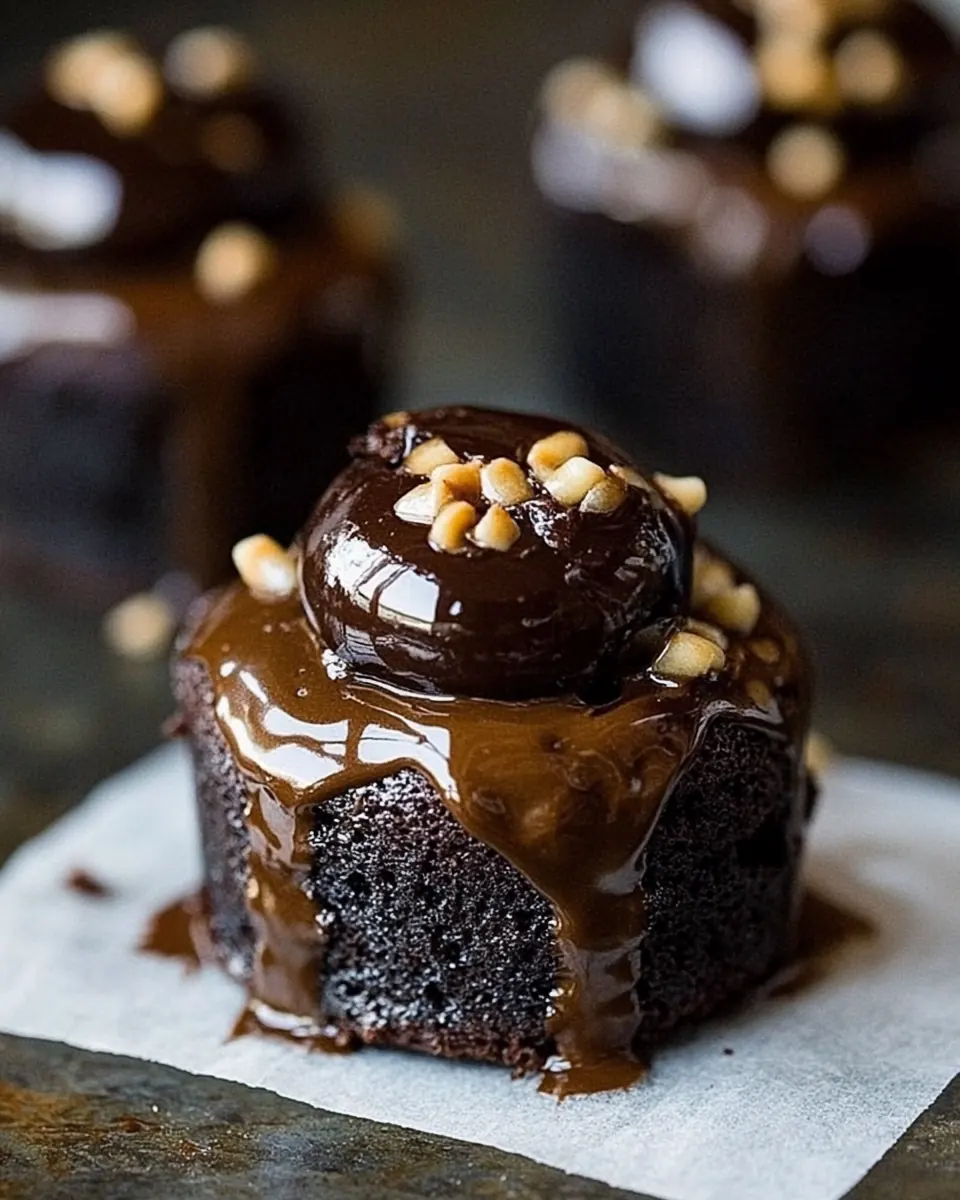
These tips focus on getting consistent texture and presentation when making Mini Chocolate Poke Cakes. I include practical notes I use every time so the cakes are moist, evenly baked, and beautifully finished.
- Control batter consistency by adding the hot coffee slowly, watching for a glossy thin batter. This ensures even pouring and predictable rise in the jars.
- Even scooping matters, use a large scoop for uniform portions so each jar finishes at the same time without over or under filling.
- Timing for poking is important, poke when the jars are warm not piping hot and not cold to maximize caramel absorption into the crumb.
- Lightly coat jars with nonstick spray to prevent sticking and to make serving easier; a thin even layer is better than heavy pooling.
- Top when serving if using whipped cream, add it just before guests arrive to avoid weeping and maintain a fresh look.
- Store carefully if you have leftovers, put lids on the jars or cover tightly to keep moisture in and refrigerate for up to three days for best texture.
What to Pair With Mini Chocolate Poke Cakes
These mini cakes are versatile and can be part of many occasions from dessert tables to individual favors. Below I outline pairing ideas, serving styles, and storage tips to help you present them confidently.
- Casual brunch pairing, serve these after a savory spread for an indulgent finish, they pair nicely with coffee or tea and feel not too heavy for a late morning treat.
- Party dessert table, arrange several jars on a tray with small spoons and labels so guests can choose toppings, this makes them ideal for showers and birthday gatherings.
- Gifting idea, seal with lids and attach a ribbon and tag for a homemade edible gift, make sure to include reheating or serving notes so recipients know to add whipped cream fresh.
- Occasion styling, for holidays or themed events, swap candy bits to match colors and decorate the jars with seasonal tags to integrate into your table decor.
- Storage tips, refrigerate uncovered if topped with whipped cream for a short period, otherwise seal with lids and keep for up to three days, bring to room temperature before serving for best flavor.
- Serving temperature, these are delightful warm from the oven with the caramel slightly melted, or gently warmed in the microwave for a few seconds if chilled.
FAQ
Conclusion
Mini Chocolate Poke Cakes stand out because they combine simplicity with a showy presentation, delivering moist chocolate cake pockets filled with sticky caramel in every bite. I encourage you to give them a try the next time you want an easy, memorable dessert that feels homemade and thoughtful. They are forgiving, travel well if needed, and invite playful toppings so you can make them your own with minimal fuss.
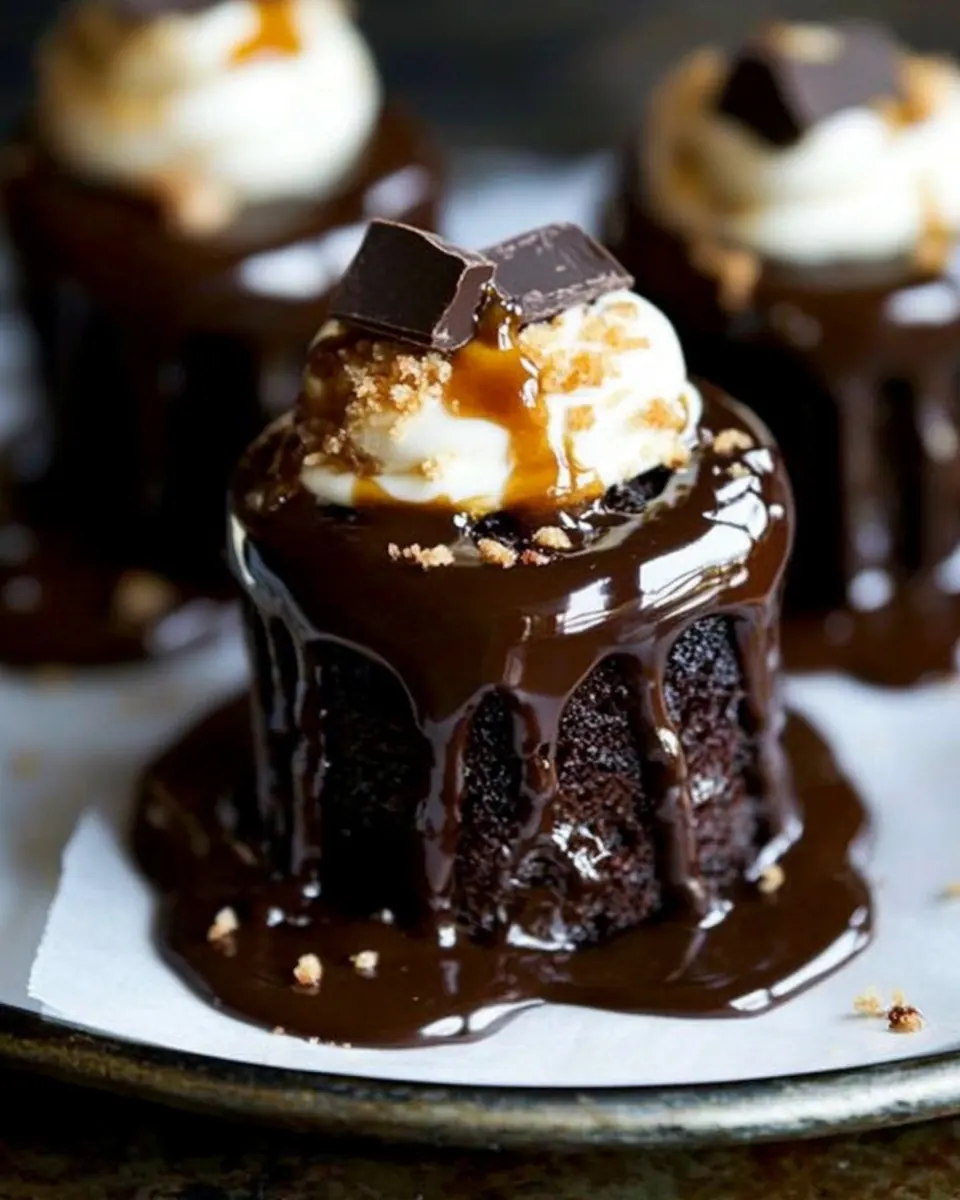
Mini Chocolate Poke Cakes
Ingredients
Equipment
Method
- Preheat the oven to 350 degrees F. Spray 18 small (4 ounce) canning jars with nonstick cooking spray. Place jars on a large baking sheet. Be sure to leave room between each of the jars for air to circulate while baking.: As the oven warms, you will notice a faint heat and the familiar hum of the element coming to life. Getting the oven to a steady 350 degrees F before you slide in the tray is crucial so the cakes set properly and rise evenly. If the oven is cooler than required, cakes may bake unevenly or take longer and dry out; if it is hotter, the edges can firm up before the centers are cooked. A common mistake is not allowing the oven enough time to stabilize, so I always wait at least ten minutes after the indicator clicks to ensure an even bake.
- Sift the flour, sugar, cocoa powder, baking soda, baking powder, and salt into the bowl of an electric mixer fitted with the whisk attachment and mix on low speed until combined.: Rubbing a thin sheen of spray inside each jar prevents sticking and gives the cake a clean release when you serve. You should feel the slick surface before pouring batter, and when the jars sit on the counter you will notice they are slightly glossy. Avoid over spraying which can pool and create greasy spots; a light even coat is best. If the cake sticks, it is often due to skipped or uneven coating, so take a moment to do this step well.
- In another bowl, whisk together the buttermilk, oil, eggs, and vanilla. With the mixer on low speed, slowly add the wet ingredients to the dry. With mixer still on low, add in the coffee stir just to combine, scraping the bottom of the bowl with a rubber spatula. The batter will be very thin.: Lining up the jars on a sheet allows for stable transport into the oven and ensures air circulates around each jar. You will hear a gentle clink as they settle; spread them so there is a little breathing room between each jar to promote even heat flow. Crowding the pan can lead to oddly risen cakes and varied baking times. One trap is placing jars too close to the oven walls where hotter pockets can darken the sides, so center the sheet whenever possible.
- Using a large scoop, distribute the batter into the prepared canning jars, filling each 2/3 of the way full. Be sure you do not overfill the jars.: The act of sifting creates a fine, airy bed of dry ingredients and helps remove lumps, especially from the cocoa powder . As the mixer moves on low you will see a uniform, chocolate colored fine powder form. This even distribution prevents dense clumps in the batter and helps leaveners activate consistently. A common error is skipping sifting which can leave pockets of unmixed dry ingredients, producing streaks in the final cake.
- Bake for 22-24 minutes, or until a cake tester comes out clean. Allow jars to cool for 5 minutes.: Whisking these wet ingredients yields a smooth, glossy mixture that smells faintly of vanilla and has a slightly frothy top. The buttermilk provides tang and tenderness while the oil ensures moistness. Room temperature eggs blend more homogeneously; if they are cold, the batter can look streaky. Avoid over whisking which can introduce too much air and change the cake texture.
- Once cakes have cooled for 5 minutes, use a wooden skewer to poke holes in the top of each cake. Spoon 2 teaspoons of caramel over the top of the warm cakes, allowing it to trickle into the holes. If desired, top each cake with whipped cream and Heath candy bar bits.: As you combine them, the batter will begin to form and darken, releasing a deep chocolate aroma. Low speed prevents overworking the gluten, so the crumb remains tender. You will see the mixture thicken then loosen once the hot coffee is added. A common mistake is mixing too fast which makes the cake tough, so keep the speed gentle and patient.
- With mixer still on low add in the coffee stir just to combine scraping the bottom of the bowl with a rubber spatula: Adding the hot coffee blooms the cocoa, intensifying aroma and creating a glossy, thin batter that will pour easily. Use a spatula to reach the bottom where flour may hide, ensuring everything is uniform. The batter should be noticeably thin but cohesive, which is expected here. Avoid vigorous stirring after the coffee is in, because it can overwork the batter and change the final texture.
- Using a large scoop distribute the batter into the prepared canning jars filling each 2 3 of the way full: Filling the jars to about two thirds leaves room for rise and prevents overflow. As you scoop, you will hear a soft plop and see the batter settle into each jar, glossy and chocolate colored. If you overfill, the cakes will spill and create uneven baking, so pause and check levels frequently. I find a consistent scoop makes the batch uniform, avoiding jars that bake faster or slower than the rest.
- Bake for 22 to 24 minutes or until a cake tester comes out clean: During baking the cakes will spring up and the tops will lose their wet sheen, giving off a warm, chocolate aroma that fills the kitchen. At about twenty minutes I start checking for doneness; the tester should come out without wet batter but may have a few moist crumbs. Over baking leads to a dry texture, so aim for the first moment the cake is set. If you notice the tops puffing quickly or darkening too much, rotate the pan for even color.
- Allow jars to cool for 5 minutes: After removing the pan, the jars will be very warm and steam will escape slightly as the temperature drops. This brief rest helps the crumb settle and makes the cakes easier to handle for the poking step. If you leave them too long they cool and the caramel will not seep as well, so the five minute window is purposeful. A common slip is waiting until completely cool, which reduces the amount of sauce the cake will absorb.
- Once cakes have cooled for 5 minutes use a wooden skewer to poke holes in the top of each cake: Poking produces tiny tunnels where the caramel sauce can sink, and you will feel a soft give as the skewer penetrates the warm crumb. The sound is faint, a slight hollowing sensation as the holes create channels. Be sure not to push all the way through to the bottom or you may create leaks at the jar base. Many people poke randomly; I prefer evenly spaced holes across the top for uniform distribution of sauce.
- Spoon 2 teaspoons of caramel over the top of the warm cakes allowing it to trickle into the holes: The caramel sauce should look glossy as it pools and then disappears into the holes, creating shining pockets of sweet richness. Use a small spoon for control so each jar receives the same amount, and watch the caramel meld with the warm cake, smelling buttery and sweet. If the caramel is very thick, warm it slightly for easier pouring; cold caramel can sit on top rather than soaking in. Too much caramel will make the cake soggy, so stick to the suggested amount.
- If desired top each cake with whipped cream and Heath candy bar bits: A dollop of whipped cream cools the top and adds an airy contrast, while the chopped candy bits bring satisfying crunch. The temperature contrast between warm cake and cool topping is delightful. Be mindful not to add the whipped cream too early if you are storing the jars, as it will weep; add it just before serving for best texture.
Notes
- Control batter consistency by adding the hot coffee slowly, watching for a glossy thin batter. This ensures even pouring and predictable rise in the jars.
- Even scooping matters, use a large scoop for uniform portions so each jar finishes at the same time without over or under filling.
- Timing for poking is important, poke when the jars are warm not piping hot and not cold to maximize caramel absorption into the crumb.
- Lightly coat jars with nonstick spray to prevent sticking and to make serving easier; a thin even layer is better than heavy pooling.
- Top when serving if using whipped cream, add it just before guests arrive to avoid weeping and maintain a fresh look.
- Store carefully if you have leftovers, put lids on the jars or cover tightly to keep moisture in and refrigerate for up to three days for best texture.