Preheat the oven to 350 degrees F. Spray 18 small (4 ounce) canning jars with nonstick cooking spray. Place jars on a large baking sheet. Be sure to leave room between each of the jars for air to circulate while baking.: As the oven warms, you will notice a faint heat and the familiar hum of the element coming to life. Getting the oven to a steady 350 degrees F before you slide in the tray is crucial so the cakes set properly and rise evenly. If the oven is cooler than required, cakes may bake unevenly or take longer and dry out; if it is hotter, the edges can firm up before the centers are cooked. A common mistake is not allowing the oven enough time to stabilize, so I always wait at least ten minutes after the indicator clicks to ensure an even bake.
Sift the flour, sugar, cocoa powder, baking soda, baking powder, and salt into the bowl of an electric mixer fitted with the whisk attachment and mix on low speed until combined.: Rubbing a thin sheen of spray inside each jar prevents sticking and gives the cake a clean release when you serve. You should feel the slick surface before pouring batter, and when the jars sit on the counter you will notice they are slightly glossy. Avoid over spraying which can pool and create greasy spots; a light even coat is best. If the cake sticks, it is often due to skipped or uneven coating, so take a moment to do this step well.
In another bowl, whisk together the buttermilk, oil, eggs, and vanilla. With the mixer on low speed, slowly add the wet ingredients to the dry. With mixer still on low, add in the coffee stir just to combine, scraping the bottom of the bowl with a rubber spatula. The batter will be very thin.: Lining up the jars on a sheet allows for stable transport into the oven and ensures air circulates around each jar. You will hear a gentle clink as they settle; spread them so there is a little breathing room between each jar to promote even heat flow. Crowding the pan can lead to oddly risen cakes and varied baking times. One trap is placing jars too close to the oven walls where hotter pockets can darken the sides, so center the sheet whenever possible.
Using a large scoop, distribute the batter into the prepared canning jars, filling each 2/3 of the way full. Be sure you do not overfill the jars.: The act of sifting creates a fine, airy bed of dry ingredients and helps remove lumps, especially from the cocoa powder . As the mixer moves on low you will see a uniform, chocolate colored fine powder form. This even distribution prevents dense clumps in the batter and helps leaveners activate consistently. A common error is skipping sifting which can leave pockets of unmixed dry ingredients, producing streaks in the final cake.
Bake for 22-24 minutes, or until a cake tester comes out clean. Allow jars to cool for 5 minutes.: Whisking these wet ingredients yields a smooth, glossy mixture that smells faintly of vanilla and has a slightly frothy top. The buttermilk provides tang and tenderness while the oil ensures moistness. Room temperature eggs blend more homogeneously; if they are cold, the batter can look streaky. Avoid over whisking which can introduce too much air and change the cake texture.
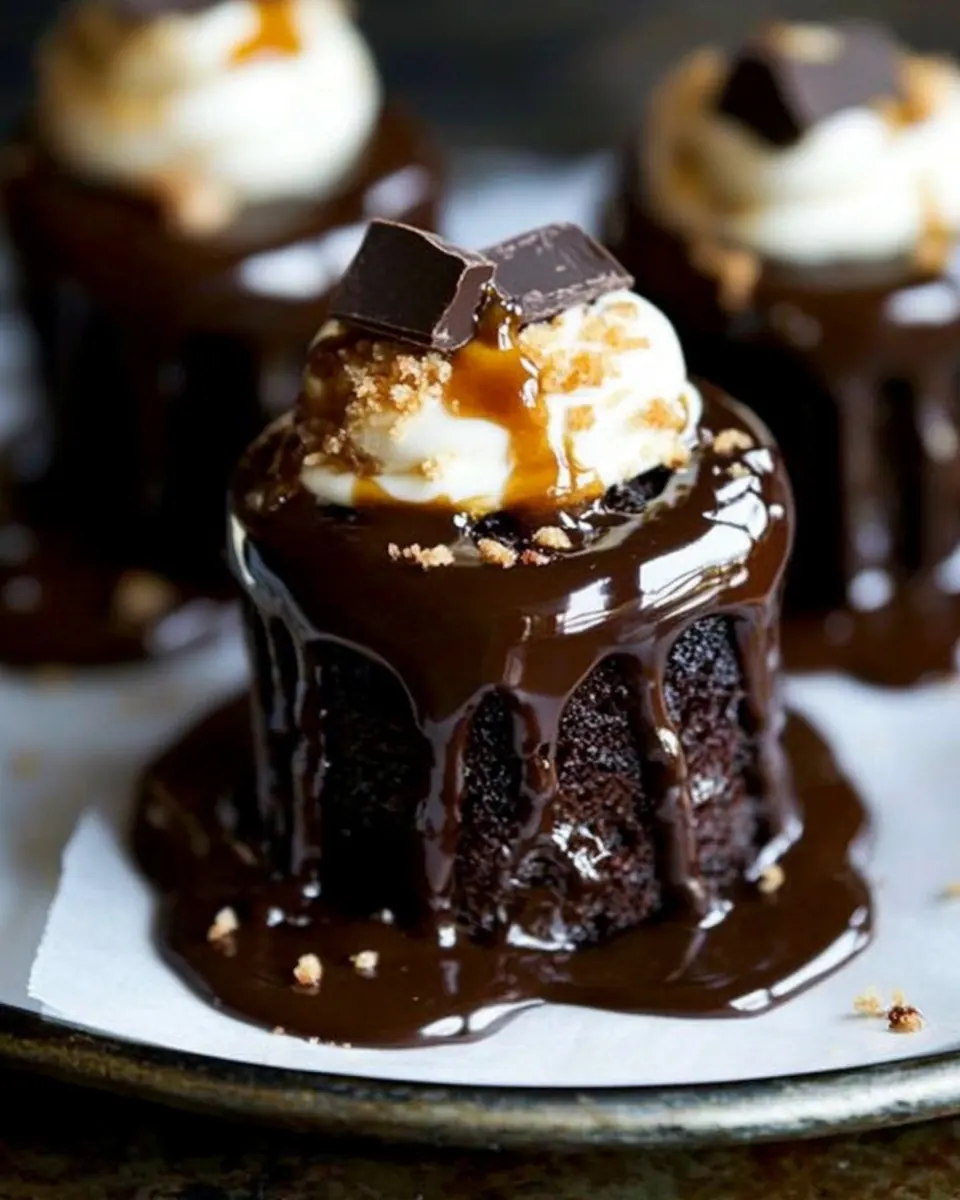
Once cakes have cooled for 5 minutes, use a wooden skewer to poke holes in the top of each cake. Spoon 2 teaspoons of caramel over the top of the warm cakes, allowing it to trickle into the holes. If desired, top each cake with whipped cream and Heath candy bar bits.: As you combine them, the batter will begin to form and darken, releasing a deep chocolate aroma. Low speed prevents overworking the gluten, so the crumb remains tender. You will see the mixture thicken then loosen once the hot coffee is added. A common mistake is mixing too fast which makes the cake tough, so keep the speed gentle and patient.
With mixer still on low add in the coffee stir just to combine scraping the bottom of the bowl with a rubber spatula: Adding the hot coffee blooms the cocoa, intensifying aroma and creating a glossy, thin batter that will pour easily. Use a spatula to reach the bottom where flour may hide, ensuring everything is uniform. The batter should be noticeably thin but cohesive, which is expected here. Avoid vigorous stirring after the coffee is in, because it can overwork the batter and change the final texture.
Using a large scoop distribute the batter into the prepared canning jars filling each 2 3 of the way full: Filling the jars to about two thirds leaves room for rise and prevents overflow. As you scoop, you will hear a soft plop and see the batter settle into each jar, glossy and chocolate colored. If you overfill, the cakes will spill and create uneven baking, so pause and check levels frequently. I find a consistent scoop makes the batch uniform, avoiding jars that bake faster or slower than the rest.
Bake for 22 to 24 minutes or until a cake tester comes out clean: During baking the cakes will spring up and the tops will lose their wet sheen, giving off a warm, chocolate aroma that fills the kitchen. At about twenty minutes I start checking for doneness; the tester should come out without wet batter but may have a few moist crumbs. Over baking leads to a dry texture, so aim for the first moment the cake is set. If you notice the tops puffing quickly or darkening too much, rotate the pan for even color.
Allow jars to cool for 5 minutes: After removing the pan, the jars will be very warm and steam will escape slightly as the temperature drops. This brief rest helps the crumb settle and makes the cakes easier to handle for the poking step. If you leave them too long they cool and the caramel will not seep as well, so the five minute window is purposeful. A common slip is waiting until completely cool, which reduces the amount of sauce the cake will absorb.
Once cakes have cooled for 5 minutes use a wooden skewer to poke holes in the top of each cake: Poking produces tiny tunnels where the caramel sauce can sink, and you will feel a soft give as the skewer penetrates the warm crumb. The sound is faint, a slight hollowing sensation as the holes create channels. Be sure not to push all the way through to the bottom or you may create leaks at the jar base. Many people poke randomly; I prefer evenly spaced holes across the top for uniform distribution of sauce.
Spoon 2 teaspoons of caramel over the top of the warm cakes allowing it to trickle into the holes: The caramel sauce should look glossy as it pools and then disappears into the holes, creating shining pockets of sweet richness. Use a small spoon for control so each jar receives the same amount, and watch the caramel meld with the warm cake, smelling buttery and sweet. If the caramel is very thick, warm it slightly for easier pouring; cold caramel can sit on top rather than soaking in. Too much caramel will make the cake soggy, so stick to the suggested amount.
If desired top each cake with whipped cream and Heath candy bar bits: A dollop of whipped cream cools the top and adds an airy contrast, while the chopped candy bits bring satisfying crunch. The temperature contrast between warm cake and cool topping is delightful. Be mindful not to add the whipped cream too early if you are storing the jars, as it will weep; add it just before serving for best texture.