No Fuss Coconut Lime Tart
No Fuss Coconut Lime Tart is one of those recipes I turn to when I want something bright yet incredibly simple, a dessert that feels like sunshine on a plate. The first time I made it I was wrestling with a late afternoon craving and only a handful of pantry staples. I remember the warm citrus perfume filling the kitchen while the crust toasted, and how that sticky, zesty honey drizzle made the whole thing feel celebratory without any fuss.
I come back to this tart when I want to impress without a lot of ceremony. It is forgiving, easy to scale, and has that wonderful contrast between a crunchy, salty crust and a silky, lime scented filling. Friends have asked for the recipe more than once after the first bite, and I always smile because it takes almost no time and relies on smart pairing rather than technique. Every time I serve it the mango slices on top make it feel like summer, even if the calendar says otherwise.
Recipe Snapshot
30 mins
15 mins
15 mins
Easy
350 kcal
American
Gluten-Free, Low FODMAP
Desserts
Food Processor, Tart Pan, Large Pot
Why You’ll Love This No Fuss Coconut Lime Tart
Bright, Balanced Flavor
I love how No Fuss Coconut Lime Tart balances tangy lime with sweet honey and a touch of salt. The lime zest and juice give the filling a lively citrus lift, while the honey rounds the edges so nothing tastes sharp. That contrast is what keeps me reaching for a second slice.
Textural Contrast That Delights
The crust mixes crunchy graham cracker crumbs with crunchy pretzel twists and toasty coconut, so every forkful has a little snap. I appreciate recipes that layer textures because they feel thoughtfully composed without extra effort.
Incredibly Practical
This tart is genuinely low maintenance. The crust comes together in a food processor in moments, and the filling is cooked on the stove with simple stirring. I can make the whole thing between errands and chill it while I get other things done. That practicality is one reason it sits in my regular rotation.
Flexible for Dietary Needs
I often adapt recipes for guests. The base concept here lets you swap the dairy for canned coconut cream while keeping the flavor profile intact, so it works for a range of diets without losing its soul.
Showstopping Yet Approachable
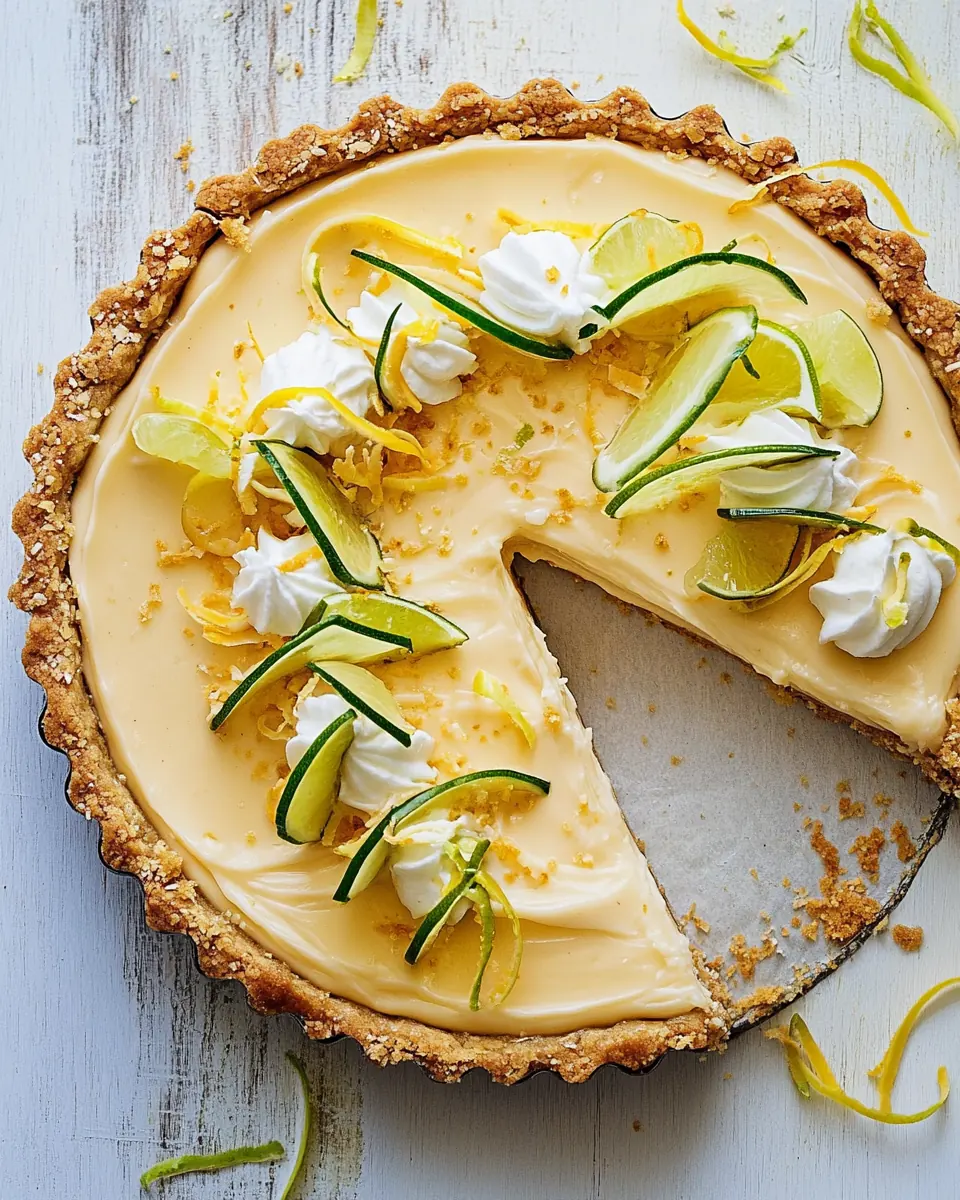
Putting sliced mango on top transforms the tart from everyday to special. It looks like something you bought at a bakery, yet it tastes homemade and honest. I serve it at small dinner parties when I want praise without the fuss.
Shopping List for No Fuss Coconut Lime Tart
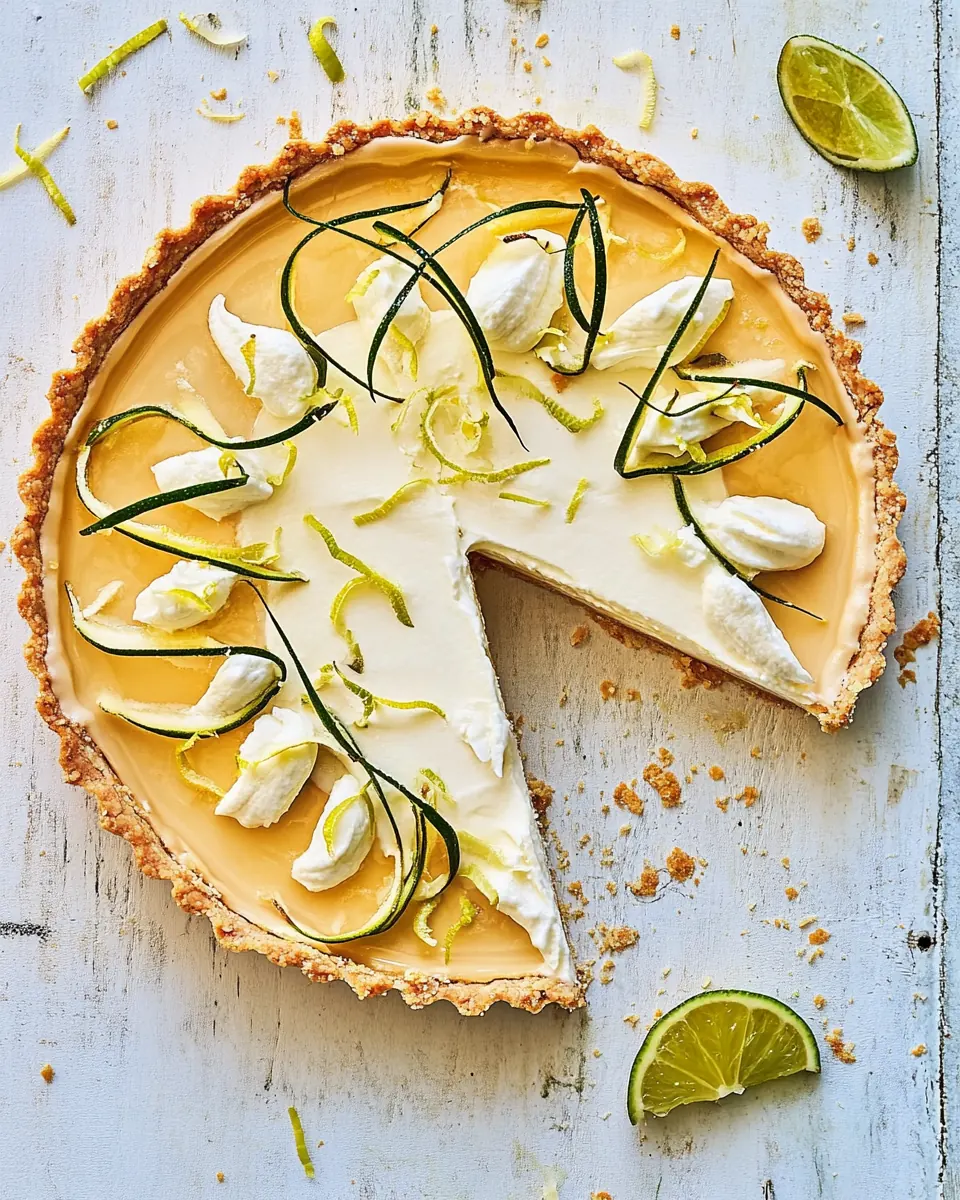
These ingredients are chosen to create a bright, balanced tart with crunchy texture and a creamy, citrus filled center. The crust players bring salt and crunch, the filling brings richness and acidity, and the mango garnish provides a fresh, sweet contrast. Each component supports the others so the final bite is complex without being complicated.
- 5 full size graham cracker sheets (about 2/3 cup once crushed into crumbs): Crushed into fine crumbs and used as the primary base, provides structure and a slightly sweet, malty foundation for the tart crust; combines with melted butter to form a pressable shell that holds the filling together during chilling and serving.
- 1 cup salted pretzel twists: Adds a salty, crunchy contrast when crushed and mixed into the crust, cutting through sweetness and enhancing overall texture; complements the graham crumbs by introducing savory notes that balance the dessert.
- 1/2 cup unsweetened shredded coconut: Offers a toasty, tropical flavor and chewy texture when folded into the crust mix or sprinkled on top, reinforcing coconut–lime pairing; contributes aroma and subtle nuttiness that elevates the tart’s profile.
- 6 tablespoons salted butter, melted: Melted and combined with the crumb mixtures to bind ingredients into a cohesive, sliceable crust, also imparts a rich mouthfeel and slight saltiness that enhances overall flavor depth.
- 2 tablespoons + 2/3 cup honey: Brings concentrated sweetness and a floral undertone to both crust and filling applications; can be used sparingly to sweeten while maintaining a clean, natural sugar profile and helping to set textures.
- 3 1/2 cups heavy cream: Creates a luxuriously rich and creamy filling base when whipped or gently heated, providing body and a smooth mouthfeel that carries lime and coconut flavors; contributes to the tart’s richness and stability once chilled.
- 4 tablespoons lime zest + 1/3 cup lime juice: Delivers intense citrus brightness and acidity that balances the creaminess and sweetness, with zest adding aromatic oils and juice supplying tang and structure to the filling; together they define the tart’s signature tropical-lime character.
- 1 teaspoon vanilla extract: Provides warm, familiar aromatics and rounds out the filling with a hint of vanilla sweetness, enhancing other flavors without overpowering them and contributing to a balanced, dessert-like finish.
- 1/4 teaspoon ground cinnamon: Introduces a subtle warm spice note that complements the tropical elements and deepens flavor complexity when lightly incorporated into the crust or filling; its small quantity prevents clashing while adding nuance.
- 1 champagne or regular mango, sliced: Serves as a fresh, juicy topping that brings natural sweetness and a bright, fruity finish, offering color, texture, and a pleasant contrast to the creamy lime filling when arranged over the tart.
No Fuss Coconut Lime Tart Instructions
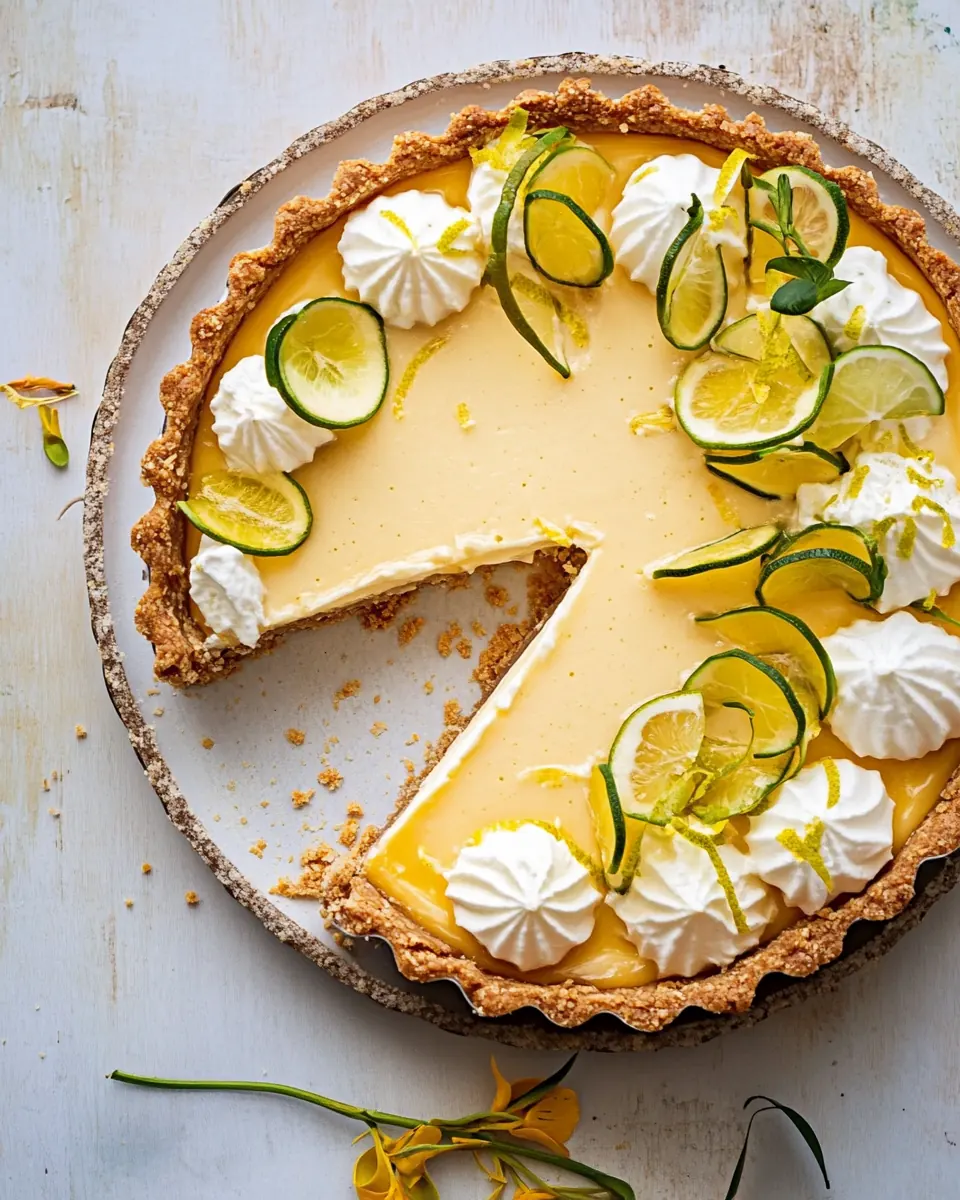
I like to think of these steps as a relaxed sequence that rewards small attentions. The crust comes together quickly, the filling simmers to thicken, and chilling does the heavy lifting. With an organized counter the assembly feels almost meditative.
- Preheat the oven to 350 degrees F. To make the crust. In a food processor, pulse the graham crackers, pretzels, and coconut into semi-fine crumbs. Add the butter and 2 tablespoons honey and pulse until the mixture holds together when pinched and starts to look like dough. Press the dough into an 8 or 9 inch tart pan with a removable bottom or a standard pie plate. Transfer to the oven and bake until toasted, about 8 minutes. Meanwhile, combine the heavy cream, 1/3 cup honey, and 2 tablespoons lime zest in a large pot, bigger than you think you'll need. Set over high heat and bring to a boil. Once boiling, boil 5 minutes and then remove from the heat. Whisk in the lime juice, vanilla, cinnamon, and a pinch of salt. Let cool 10 minutes. Carefully pour the lime cream into the baked crust. Cover and chill 2-3 hours or until set. Meanwhile, combine the remaining 1/3 cup honey, 2 tablespoons lime zest, and flaky sea salt. Before serving, remove the tart from the pan and top with whipped cream and sliced mangos. Drizzle over the zesty lime honey.: Warm, toasty aromas will greet you as the oven comes up to temperature, and preheating ensures the crust browns evenly when it goes in. You want the oven fully heated so that the butter in the crust begins to set on contact, promoting crisp edges. A common mistake is sliding the tart into a not fully preheated oven, which can yield a soggy rather than crisp crust, so wait until it registers the temperature.
- To make the crust: The sound of the food processor pulsing the crumbs becomes a faint hum that signals progress, and the mixture should look sandy with small, still distinct pieces. This texture lets the melted butter coat the crumbs evenly so the crust compacts without becoming greasy. If you overprocess it into a paste the crust will be dense, so stop when crumbs hold together when pinched.
- In a food processor, pulse the graham crackers, pretzels, and coconut into semi-fine crumbs: You will see a mix of pale graham flecks, darker pretzel specks, and slivers of coconut, and the aroma will shift toward toasted sweetness. This visual variety creates the signature crunch. Avoid running the processor too long, because overly fine crumbs pack too tightly and lose their lively texture.
- Add the butter and 2 tablespoons honey and pulse until the mixture holds together when pinched and starts to look like dough: The mixture will glisten slightly as the butter melds with the crumbs; this sheen tells you it will bind into the crust. The honey helps tack the crumbs, so they press neatly into the pan. If the mixture feels dry, you can press harder to test cohesion, but resist adding extra liquid which would make the crust greasy.
- Press the dough into an 8 or 9 inch tart pan with a removable bottom or a standard pie plate: Use the back of a measuring cup to tamp the crust evenly, watching for an even thickness and compact edges. The visual cue is a smooth, uniform surface with no gaps. A common slip is leaving the edges thinner than the base, which leads to uneven baking, so take time to press the sides gently and evenly.
- Transfer to the oven and bake until toasted, about 8 minutes: During baking the crust will turn golden and begin to smell nutty and toasty. The sound is quiet, but the visual cue of a light deepening in color tells you it is ready. If left too long, the crust can become overly crisp and brittle, so aim for a warm golden hue rather than deep brown.
- Meanwhile, combine the heavy cream, 1/3 cup honey, and 2 tablespoons lime zest in a large pot, bigger than you think you'll need: As the pot warms the kitchen will fill with a rich, floral steam, and the lime oils will perfume the air. Using a larger pot prevents boil over when the mixture froths, a key reason for the size note. A common oversight is using a small pot which causes messy boil over and flavor loss.
- Set over high heat and bring to a boil: Watch the surface as it moves from gentle shimmer to active rolling bubbles, and listen for a soft roar that indicates a true boil. Achieving a vigorous boil helps reduce the cream slightly, concentrating flavor and body. Boiling at too low a temperature will not thicken the filling properly, so maintain steady high heat.
- Once boiling, boil 5 minutes and then remove from the heat: During these minutes the mixture will reduce and the steam will carry honeyed citrus scent, signaling a thicker, silkier base forming. Timing here ensures the filling reaches the right viscosity after chilling. Boil too long and the cream can separate or taste overly cooked; too short and the filling will be loose rather than set.
- Whisk in the lime juice, vanilla, cinnamon, and a pinch of salt: The moment you add lime juice the mixture brightens and steam will lift the citrus perfume sharply. Whisking disperses the acids so the texture stays smooth rather than curdling, and salt plus vanilla deepens the overall flavor. Skipping thorough whisking risks small curdled bits and uneven flavor distribution.
- Let cool 10 minutes: Cooling softens the heat so the filling will not shock the baked crust and helps volatile aromas settle. In this window the filling becomes silkier to the touch. If you pour while piping hot the crust can become soggy or warp, so give the filling a proper rest.
- Carefully pour the lime cream into the baked crust: As the filling meets the warm crust you will see it settle into a smooth glossy surface, and the scent will intensify. Pouring slowly prevents splashes and air pockets, which keeps the surface even. A rushed pour can cause bubbles or an uneven top that detracts from the final presentation.
- Cover and chill 2 to 3 hours or until set: During chilling the filling firms and the flavors knit together, producing a sliceable, custard like center. The tactile cue is a slight give when touched and a glossy, stable top. If you do not chill long enough the filling will be too soft to cleanly slice, so plan ahead for the chill period.
- Meanwhile, combine the remaining 1/3 cup honey, 2 tablespoons lime zest, and flaky sea salt: This quick glaze marries sweet, tart, and saline notes and will be drizzled for final brightness. Whisking them together releases more zest oil and dissolves the honey for a silky drizzle. Forgetting the flaky salt reduces the contrast that makes the tart pop on the palate.
- Before serving, remove the tart from the pan and top with whipped cream and sliced mangos: Lifting it from the removable bottom reveals a clean edge, and the whipped cream adds airy richness while the mango brings fresh juiciness. Arrange the slices decoratively so each piece gets fruit, then finish with the lime honey drizzle for shine and aroma. A sloppy unmolding can mar the edges, so run a thin knife around the pan before releasing.
- Drizzle over the zesty lime honey: The final drizzle glints on the fruit and adds a last layer of bright sweetness and salt. The scent of honey and lime right before serving makes the first bite memorable. Overdoing the drizzle can make slices sticky and heavy, so go light and tasteful.
Ways to Customize
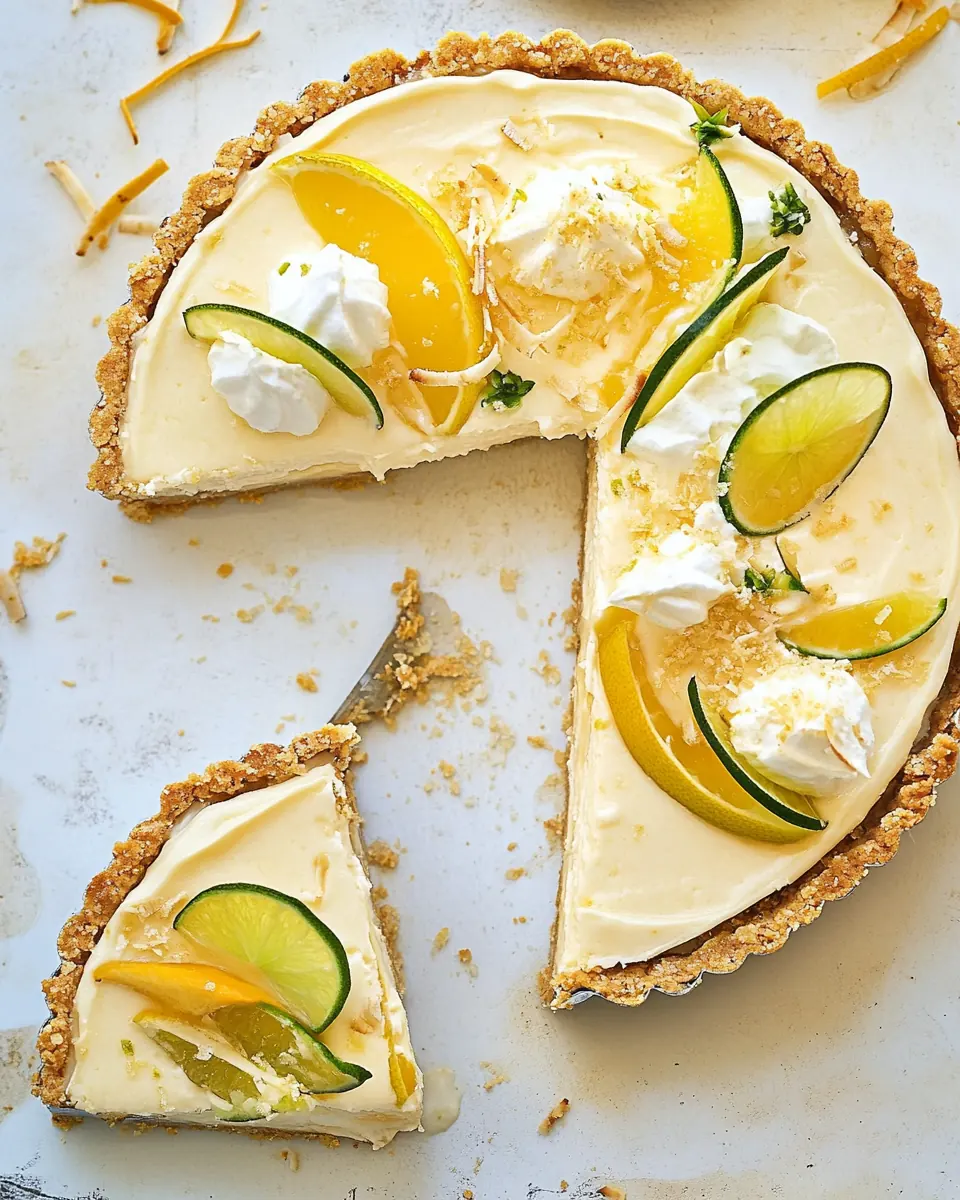
This tart is a great base for small, thoughtful changes that shift flavor and texture while keeping the method intact. Below are practical, tested ideas to make the tart your own, each expanded so you can decide what fits your pantry and guests.
- Use canned coconut cream to make dairy free: Replace the heavy cream with 3 1/2 cups canned coconut cream and follow the same boiling step, extending to 15 minutes, then chill overnight for a firmer set. This swap strengthens the coconut character while keeping the lime brightness, and it yields a creamy, dairy free filling without texture loss.
- Swap the graham crackers for digestive biscuits: If you prefer a slightly less sweet base, digestive biscuits provide a sturdier, more neutral crust. Crush them to the same semi fine consistency and combine with the pretzel and coconut so the balance of sweet and salty remains.
- Add a citrus twist with extra zest: Increase lime zest by a tablespoon if you want a more aromatic top note; the oils in the zest will perfume the filling and glaze, but avoid increasing juice in the filling because extra acidity can prevent setting.
- Make the crust nuttier with ground almonds: Fold in up to 1/4 cup finely ground almonds with the crumbs to introduce a faintly nutty, buttery depth. This change complements the coconut and gives the crust a denser feel that slices more cleanly.
- Toast coconut for more aroma: Lightly toast the shredded coconut in a dry pan until golden before adding to the crust, watching closely to prevent burning. Toasting amplifies the coconut‘s aroma and provides a pleasant color contrast in the crust.
- Use a different fruit garnish: If mango is out of season, sliced stone fruits or kiwi work well, each adding its own acidity and texture. Choose fruit that holds shape and offers a bright counterpoint to the creamy filling.
Serving Ideas for No Fuss Coconut Lime Tart
This tart is versatile to serve at casual gatherings or festive meals, and plating choices can pivot it from picnic fare to an elegant finish. Below are detailed serving suggestions, storage notes, and occasion pairings to help you plan presentations and preservation.
- Casual dessert for backyard meals: Serve slices with a light spoonful of whipped cream and a few extra mango slices on a small plate. The tart’s bright flavors cut through heavier grilled mains, making it a refreshing finish for outdoor lunches.
- Summer party centerpiece: Present the whole tart on a cake stand lined with fresh mango slices around the base. Guests will be drawn to the glossy top and citrus scent, and it holds well at room temperature for short serving windows when the event is outside.
- Elegant plated dessert: For dinner parties, plate smaller wedges with a thin ribbon of the lime honey and a dusting of finely grated lime zest. Pair with a small mint sprig to add color contrast, keeping portions refined and visually striking.
- Make ahead and storage: Chill the tart covered for up to three days, or freeze slices wrapped tightly for up to one month. Thaw in the refrigerator overnight and finish with fresh mango right before serving. Proper chilling preserves the custardy texture and prevents separation.
- Occasion pairing: This tart suits summertime birthdays, Ramadan iftar spreads as a light sweet finish, and casual brunches where a bright dessert is welcomed. Its tropical notes pair well with fruit forward menus or lighter savory mains.
- Portioning and presentation tips: Use a hot, dry knife between cuts for clean slices, wiping between each cut. Serve on chilled plates to keep the filling firm during presentation, especially in warm environments.
FAQ
Conclusion
This tart stands out because it combines a crunchy, salty crust with a silky, citrus forward filling for a dessert that tastes both simple and sophisticated. I encourage you to try it because it requires minimal hands on time and yields something that feels special on the table. Make it when you want a bright, summery finish that guests will comment on, and enjoy the ease of a dessert that looks harder to make than it actually is.
No Fuss Coconut Lime Tart
Ingredients
Equipment
Method
- Preheat the oven to 350 degrees F. To make the crust. In a food processor, pulse the graham crackers, pretzels, and coconut into semi-fine crumbs. Add the butter and 2 tablespoons honey and pulse until the mixture holds together when pinched and starts to look like dough. Press the dough into an 8 or 9 inch tart pan with a removable bottom or a standard pie plate. Transfer to the oven and bake until toasted, about 8 minutes. Meanwhile, combine the heavy cream, 1/3 cup honey, and 2 tablespoons lime zest in a large pot, bigger than you think you'll need. Set over high heat and bring to a boil. Once boiling, boil 5 minutes and then remove from the heat. Whisk in the lime juice, vanilla, cinnamon, and a pinch of salt. Let cool 10 minutes. Carefully pour the lime cream into the baked crust. Cover and chill 2-3 hours or until set. Meanwhile, combine the remaining 1/3 cup honey, 2 tablespoons lime zest, and flaky sea salt. Before serving, remove the tart from the pan and top with whipped cream and sliced mangos. Drizzle over the zesty lime honey.: Warm, toasty aromas will greet you as the oven comes up to temperature, and preheating ensures the crust browns evenly when it goes in. You want the oven fully heated so that the butter in the crust begins to set on contact, promoting crisp edges. A common mistake is sliding the tart into a not fully preheated oven, which can yield a soggy rather than crisp crust, so wait until it registers the temperature.
- To make the crust: The sound of the food processor pulsing the crumbs becomes a faint hum that signals progress, and the mixture should look sandy with small, still distinct pieces. This texture lets the melted butter coat the crumbs evenly so the crust compacts without becoming greasy. If you overprocess it into a paste the crust will be dense, so stop when crumbs hold together when pinched.
- In a food processor, pulse the graham crackers, pretzels, and coconut into semi-fine crumbs: You will see a mix of pale graham flecks, darker pretzel specks, and slivers of coconut, and the aroma will shift toward toasted sweetness. This visual variety creates the signature crunch. Avoid running the processor too long, because overly fine crumbs pack too tightly and lose their lively texture.
- Add the butter and 2 tablespoons honey and pulse until the mixture holds together when pinched and starts to look like dough: The mixture will glisten slightly as the butter melds with the crumbs; this sheen tells you it will bind into the crust. The honey helps tack the crumbs, so they press neatly into the pan. If the mixture feels dry, you can press harder to test cohesion, but resist adding extra liquid which would make the crust greasy.
- Press the dough into an 8 or 9 inch tart pan with a removable bottom or a standard pie plate: Use the back of a measuring cup to tamp the crust evenly, watching for an even thickness and compact edges. The visual cue is a smooth, uniform surface with no gaps. A common slip is leaving the edges thinner than the base, which leads to uneven baking, so take time to press the sides gently and evenly.
- Transfer to the oven and bake until toasted, about 8 minutes: During baking the crust will turn golden and begin to smell nutty and toasty. The sound is quiet, but the visual cue of a light deepening in color tells you it is ready. If left too long, the crust can become overly crisp and brittle, so aim for a warm golden hue rather than deep brown.
- Meanwhile, combine the heavy cream, 1/3 cup honey, and 2 tablespoons lime zest in a large pot, bigger than you think you'll need: As the pot warms the kitchen will fill with a rich, floral steam, and the lime oils will perfume the air. Using a larger pot prevents boil over when the mixture froths, a key reason for the size note. A common oversight is using a small pot which causes messy boil over and flavor loss.
- Set over high heat and bring to a boil: Watch the surface as it moves from gentle shimmer to active rolling bubbles, and listen for a soft roar that indicates a true boil. Achieving a vigorous boil helps reduce the cream slightly, concentrating flavor and body. Boiling at too low a temperature will not thicken the filling properly, so maintain steady high heat.
- Once boiling, boil 5 minutes and then remove from the heat: During these minutes the mixture will reduce and the steam will carry honeyed citrus scent, signaling a thicker, silkier base forming. Timing here ensures the filling reaches the right viscosity after chilling. Boil too long and the cream can separate or taste overly cooked; too short and the filling will be loose rather than set.
- Whisk in the lime juice, vanilla, cinnamon, and a pinch of salt: The moment you add lime juice the mixture brightens and steam will lift the citrus perfume sharply. Whisking disperses the acids so the texture stays smooth rather than curdling, and salt plus vanilla deepens the overall flavor. Skipping thorough whisking risks small curdled bits and uneven flavor distribution.
- Let cool 10 minutes: Cooling softens the heat so the filling will not shock the baked crust and helps volatile aromas settle. In this window the filling becomes silkier to the touch. If you pour while piping hot the crust can become soggy or warp, so give the filling a proper rest.
- Carefully pour the lime cream into the baked crust: As the filling meets the warm crust you will see it settle into a smooth glossy surface, and the scent will intensify. Pouring slowly prevents splashes and air pockets, which keeps the surface even. A rushed pour can cause bubbles or an uneven top that detracts from the final presentation.
- Cover and chill 2 to 3 hours or until set: During chilling the filling firms and the flavors knit together, producing a sliceable, custard like center. The tactile cue is a slight give when touched and a glossy, stable top. If you do not chill long enough the filling will be too soft to cleanly slice, so plan ahead for the chill period.
- Meanwhile, combine the remaining 1/3 cup honey, 2 tablespoons lime zest, and flaky sea salt: This quick glaze marries sweet, tart, and saline notes and will be drizzled for final brightness. Whisking them together releases more zest oil and dissolves the honey for a silky drizzle. Forgetting the flaky salt reduces the contrast that makes the tart pop on the palate.
- Before serving, remove the tart from the pan and top with whipped cream and sliced mangos: Lifting it from the removable bottom reveals a clean edge, and the whipped cream adds airy richness while the mango brings fresh juiciness. Arrange the slices decoratively so each piece gets fruit, then finish with the lime honey drizzle for shine and aroma. A sloppy unmolding can mar the edges, so run a thin knife around the pan before releasing.
- Drizzle over the zesty lime honey: The final drizzle glints on the fruit and adds a last layer of bright sweetness and salt. The scent of honey and lime right before serving makes the first bite memorable. Overdoing the drizzle can make slices sticky and heavy, so go light and tasteful.
Notes
- Use canned coconut cream to make dairy free: Replace the heavy cream with 3 1/2 cups canned coconut cream and follow the same boiling step, extending to 15 minutes, then chill overnight for a firmer set. This swap strengthens the coconut character while keeping the lime brightness, and it yields a creamy, dairy free filling without texture loss.
- Swap the graham crackers for digestive biscuits: If you prefer a slightly less sweet base, digestive biscuits provide a sturdier, more neutral crust. Crush them to the same semi fine consistency and combine with the pretzel and coconut so the balance of sweet and salty remains.
- Add a citrus twist with extra zest: Increase lime zest by a tablespoon if you want a more aromatic top note; the oils in the zest will perfume the filling and glaze, but avoid increasing juice in the filling because extra acidity can prevent setting.
- Make the crust nuttier with ground almonds: Fold in up to 1/4 cup finely ground almonds with the crumbs to introduce a faintly nutty, buttery depth. This change complements the coconut and gives the crust a denser feel that slices more cleanly.
- Toast coconut for more aroma: Lightly toast the shredded coconut in a dry pan until golden before adding to the crust, watching closely to prevent burning. Toasting amplifies the coconut's aroma and provides a pleasant color contrast in the crust.
- Use a different fruit garnish: If mango is out of season, sliced stone fruits or kiwi work well, each adding its own acidity and texture. Choose fruit that holds shape and offers a bright counterpoint to the creamy filling.