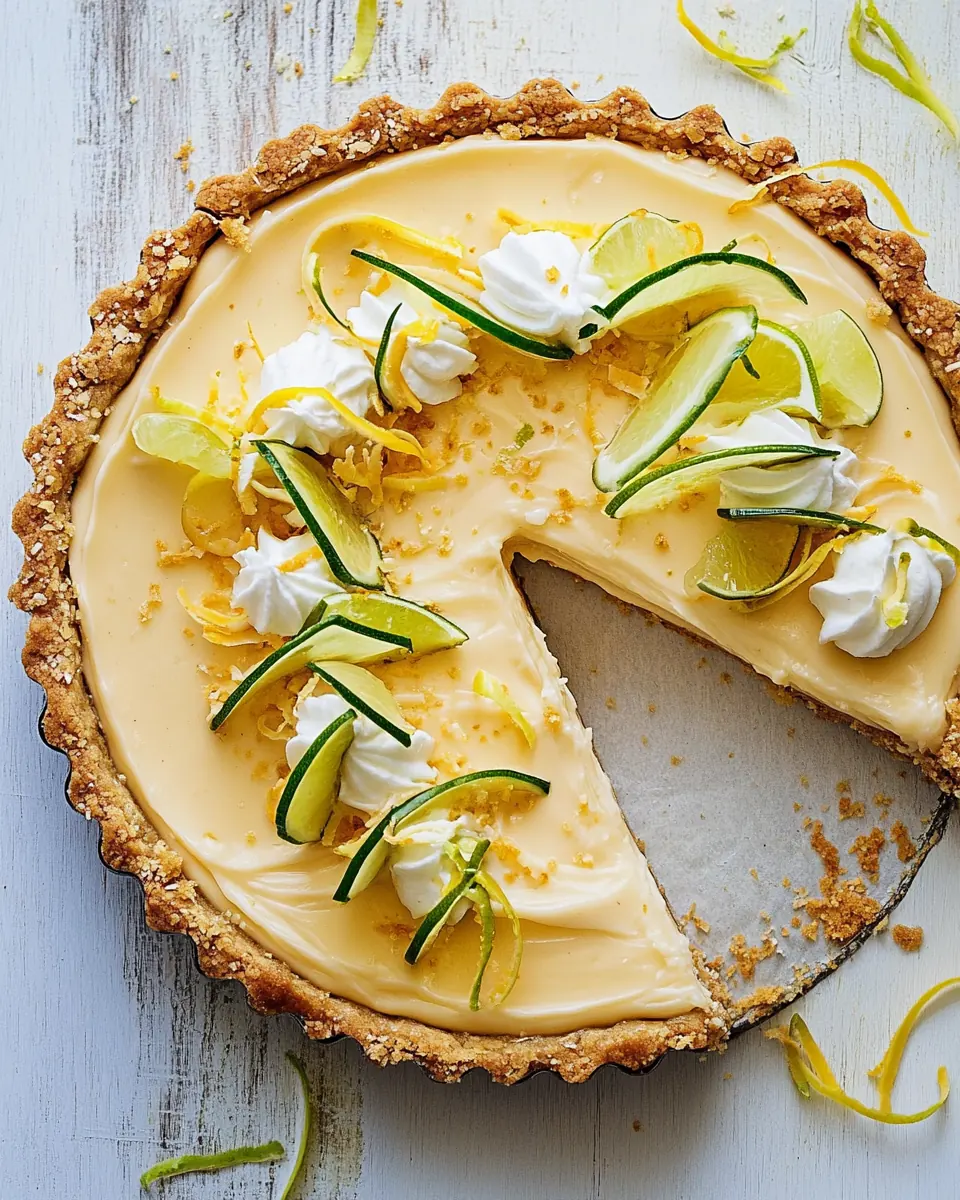
Preheat the oven to 350 degrees F. To make the crust. In a food processor, pulse the graham crackers, pretzels, and coconut into semi-fine crumbs. Add the butter and 2 tablespoons honey and pulse until the mixture holds together when pinched and starts to look like dough. Press the dough into an 8 or 9 inch tart pan with a removable bottom or a standard pie plate. Transfer to the oven and bake until toasted, about 8 minutes. Meanwhile, combine the heavy cream, 1/3 cup honey, and 2 tablespoons lime zest in a large pot, bigger than you think you'll need. Set over high heat and bring to a boil. Once boiling, boil 5 minutes and then remove from the heat. Whisk in the lime juice, vanilla, cinnamon, and a pinch of salt. Let cool 10 minutes. Carefully pour the lime cream into the baked crust. Cover and chill 2-3 hours or until set. Meanwhile, combine the remaining 1/3 cup honey, 2 tablespoons lime zest, and flaky sea salt. Before serving, remove the tart from the pan and top with whipped cream and sliced mangos. Drizzle over the zesty lime honey.: Warm, toasty aromas will greet you as the oven comes up to temperature, and preheating ensures the crust browns evenly when it goes in. You want the oven fully heated so that the butter in the crust begins to set on contact, promoting crisp edges. A common mistake is sliding the tart into a not fully preheated oven, which can yield a soggy rather than crisp crust, so wait until it registers the temperature.
To make the crust: The sound of the food processor pulsing the crumbs becomes a faint hum that signals progress, and the mixture should look sandy with small, still distinct pieces. This texture lets the melted butter coat the crumbs evenly so the crust compacts without becoming greasy. If you overprocess it into a paste the crust will be dense, so stop when crumbs hold together when pinched.
In a food processor, pulse the graham crackers, pretzels, and coconut into semi-fine crumbs: You will see a mix of pale graham flecks, darker pretzel specks, and slivers of coconut, and the aroma will shift toward toasted sweetness. This visual variety creates the signature crunch. Avoid running the processor too long, because overly fine crumbs pack too tightly and lose their lively texture.
Add the butter and 2 tablespoons honey and pulse until the mixture holds together when pinched and starts to look like dough: The mixture will glisten slightly as the butter melds with the crumbs; this sheen tells you it will bind into the crust. The honey helps tack the crumbs, so they press neatly into the pan. If the mixture feels dry, you can press harder to test cohesion, but resist adding extra liquid which would make the crust greasy.
Press the dough into an 8 or 9 inch tart pan with a removable bottom or a standard pie plate: Use the back of a measuring cup to tamp the crust evenly, watching for an even thickness and compact edges. The visual cue is a smooth, uniform surface with no gaps. A common slip is leaving the edges thinner than the base, which leads to uneven baking, so take time to press the sides gently and evenly.
Transfer to the oven and bake until toasted, about 8 minutes: During baking the crust will turn golden and begin to smell nutty and toasty. The sound is quiet, but the visual cue of a light deepening in color tells you it is ready. If left too long, the crust can become overly crisp and brittle, so aim for a warm golden hue rather than deep brown.
Meanwhile, combine the heavy cream, 1/3 cup honey, and 2 tablespoons lime zest in a large pot, bigger than you think you'll need: As the pot warms the kitchen will fill with a rich, floral steam, and the lime oils will perfume the air. Using a larger pot prevents boil over when the mixture froths, a key reason for the size note. A common oversight is using a small pot which causes messy boil over and flavor loss.
Set over high heat and bring to a boil: Watch the surface as it moves from gentle shimmer to active rolling bubbles, and listen for a soft roar that indicates a true boil. Achieving a vigorous boil helps reduce the cream slightly, concentrating flavor and body. Boiling at too low a temperature will not thicken the filling properly, so maintain steady high heat.
Once boiling, boil 5 minutes and then remove from the heat: During these minutes the mixture will reduce and the steam will carry honeyed citrus scent, signaling a thicker, silkier base forming. Timing here ensures the filling reaches the right viscosity after chilling. Boil too long and the cream can separate or taste overly cooked; too short and the filling will be loose rather than set.
Whisk in the lime juice, vanilla, cinnamon, and a pinch of salt: The moment you add lime juice the mixture brightens and steam will lift the citrus perfume sharply. Whisking disperses the acids so the texture stays smooth rather than curdling, and salt plus vanilla deepens the overall flavor. Skipping thorough whisking risks small curdled bits and uneven flavor distribution.
Let cool 10 minutes: Cooling softens the heat so the filling will not shock the baked crust and helps volatile aromas settle. In this window the filling becomes silkier to the touch. If you pour while piping hot the crust can become soggy or warp, so give the filling a proper rest.
Carefully pour the lime cream into the baked crust: As the filling meets the warm crust you will see it settle into a smooth glossy surface, and the scent will intensify. Pouring slowly prevents splashes and air pockets, which keeps the surface even. A rushed pour can cause bubbles or an uneven top that detracts from the final presentation.
Cover and chill 2 to 3 hours or until set: During chilling the filling firms and the flavors knit together, producing a sliceable, custard like center. The tactile cue is a slight give when touched and a glossy, stable top. If you do not chill long enough the filling will be too soft to cleanly slice, so plan ahead for the chill period.
Meanwhile, combine the remaining 1/3 cup honey, 2 tablespoons lime zest, and flaky sea salt: This quick glaze marries sweet, tart, and saline notes and will be drizzled for final brightness. Whisking them together releases more zest oil and dissolves the honey for a silky drizzle. Forgetting the flaky salt reduces the contrast that makes the tart pop on the palate.
Before serving, remove the tart from the pan and top with whipped cream and sliced mangos: Lifting it from the removable bottom reveals a clean edge, and the whipped cream adds airy richness while the mango brings fresh juiciness. Arrange the slices decoratively so each piece gets fruit, then finish with the lime honey drizzle for shine and aroma. A sloppy unmolding can mar the edges, so run a thin knife around the pan before releasing.
Drizzle over the zesty lime honey: The final drizzle glints on the fruit and adds a last layer of bright sweetness and salt. The scent of honey and lime right before serving makes the first bite memorable. Overdoing the drizzle can make slices sticky and heavy, so go light and tasteful.