Pecan Pie Cheesecake
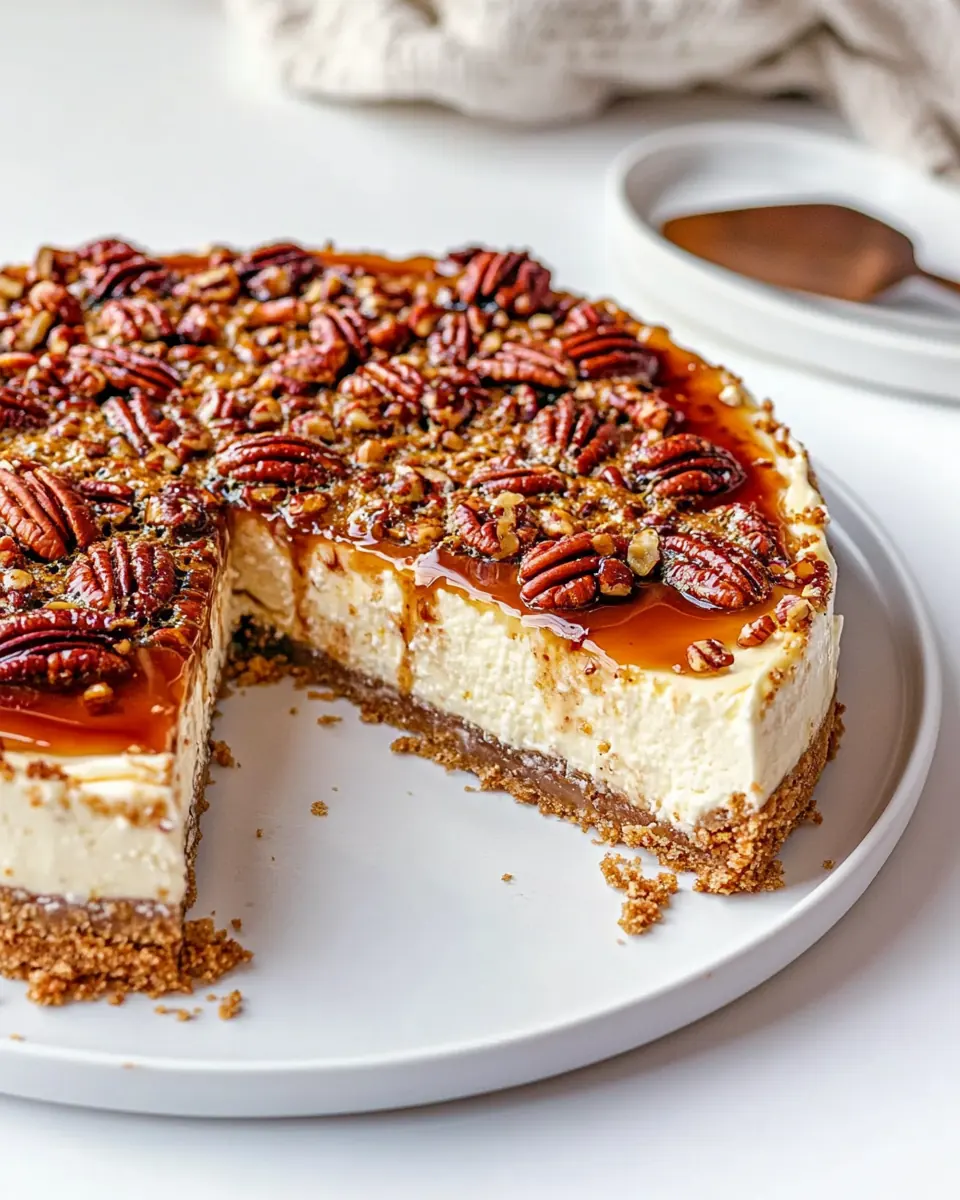
Pecan Pie Cheesecake has been my go to showstopper for autumn gatherings ever since I first baked it for a nervous holiday dinner years ago.
The first time I served this dessert I remember the soft hush that fell over the table as people tasted the creamy filling paired with the crunchy pecan topping. I was half proud and half relieved, because the combination of a velvety cream cheese layer and a caramel like pecan pie crown felt decadent but somehow homey. Over time I adapted little techniques to make the texture reliably smooth and the topping perfectly toasted, and those small habits now feel like culinary comfort rituals.
I love how the recipe balances textures, from the buttery crumb of the crust to the slightly chewy pockets of pecan. Guests often ask whether it is complicated, and I always tell them that with a reliable 9 inch springform pan and a patient cooldown, the results are more than worth the effort. Baking this has become my way to mark special moments, and the aroma that fills the kitchen while it rests is part of the memory.
When I sit down to plan a holiday menu I reach for this cake because it plays well with coffee, tea, or a simple scoop of ice cream, and it travels well for potlucks. It also gives me a chance to show off small skills, like properly smoothing the filling and gently folding in the chopped nuts. If you love a dessert with both pecans and a rich, creamy filling, you’ll find this recipe satisfying and dependable.
Recipe Snapshot
1 hr 50 mins
30 mins
80 mins
Medium
350 kcal
American
Gluten-Free, Low FODMAP
Desserts
9-inch Springform Pan, 9 Cup Food Processor, KitchenAid Artisan 5 Quart Stand Mixer, Keep Calm And Bake On Spatula
What’s Great About This Pecan Pie Cheesecake
Complex Texture Without Excess Fuss
I adore that Pecan Pie Cheesecake delivers layered textures, but it does not demand complicated techniques. The crumbly graham crackers and chopped pecans form a crunchy base, while the cheesecake layer stays silky. I appreciate that you get both crisp and creamy in one slice, which always earns compliments at the table.
Comforting, Seasonal Flavors
This recipe sings of fall with toasted pecans and brown sugar notes. I find the combination evokes holiday warmth without feeling overdone. When I serve it around Thanksgiving, the flavors feel familiar yet indulgent, perfect for family crowds who want something classic with a twist.
Reliable Technique for Consistent Results
I love how straightforward the method is. With simple mixing and staged baking, the cheesecake sets beautifully. Over the years I learned small tricks that make it more forgiving, like letting the filling come to room temperature and not overbeating the cream cheese. These adjustments make this recipe a repeatable winner.
Flexible Presentation Options
This cake looks elegant enough for a dinner party, yet approachable enough for a weekend gathering. I often drizzle caramel or scatter extra toasted pecans on top. Because it holds its shape well, you can slice neat wedges or serve rustic pieces, and both approaches feel right.
Great for Sharing and Storing
I value that Pecan Pie Cheesecake keeps well in the refrigerator, and it even freezes nicely when wrapped tightly. That means you can bake ahead for stress free hosting, which is one reason I reach for it for big holiday days.
Recipe Ingredients for Pecan Pie Cheesecake
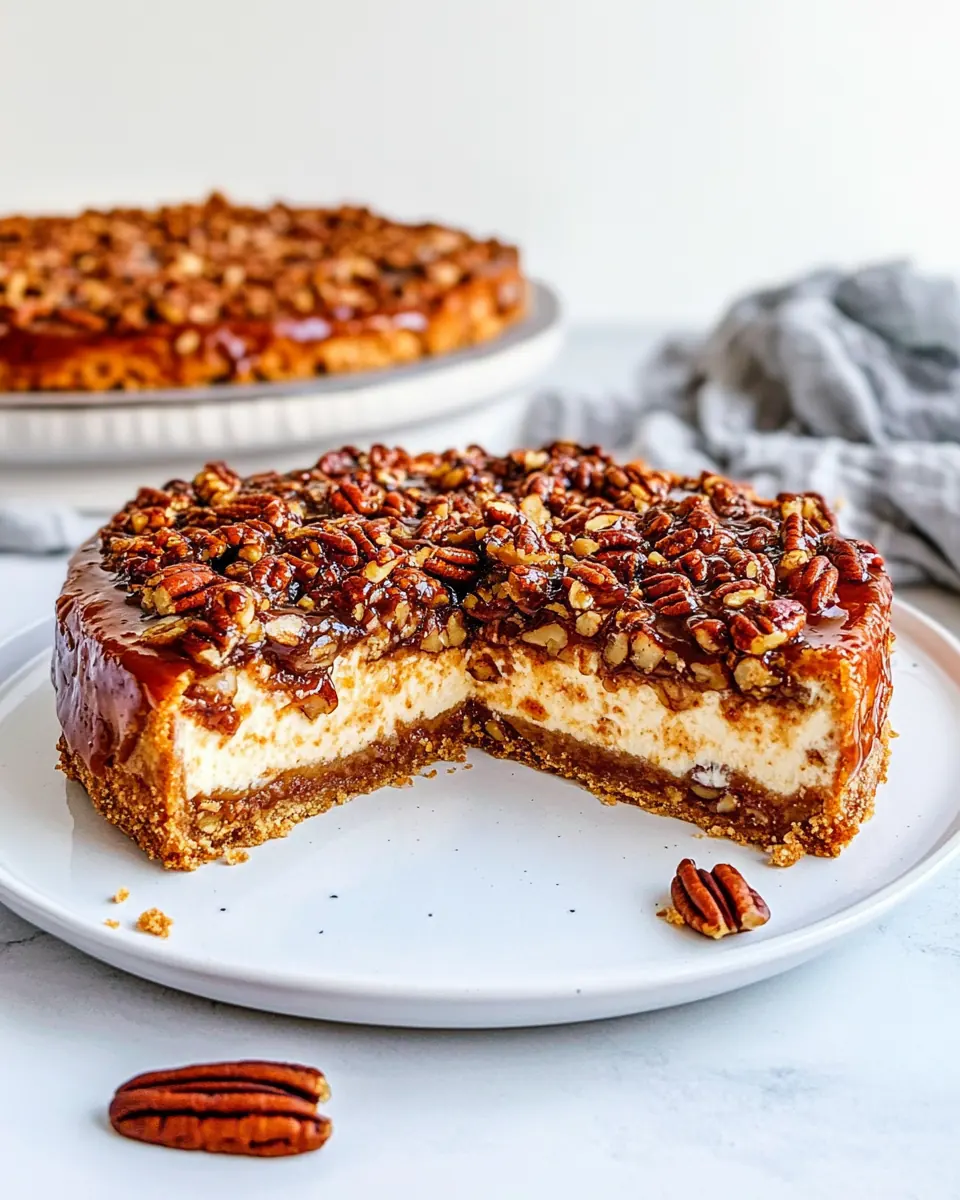
These ingredients form a simple, classic ensemble designed to work in harmony. The crust ingredients provide a buttery, crunchy foundation, while the cheesecake filling brings the creamy, tangy heart. The pecan pie topping introduces deep caramel and nutty notes that contrast the smooth filling, creating a well balanced dessert where each element supports the others.
- 1 cup graham crackers: Crushed into fine crumbs to form the base of the crust, adding a slightly sweet, toasty flavor that supports the cheesecake filling. Combine evenly with melted butter and sugar to create a pressable, cohesive layer that bakes into a sturdy foundation. Provides texture contrast between the creamy filling and crunchy pecan topping.
- 1 cup pecans: Chopped or finely ground to contribute a nutty, earthy taste to the crust or filling and to add crunchy bits throughout the dessert. Toast lightly to intensify flavor before mixing so oils release and aroma develops. Balances sweetness with rich, buttery nuttiness for traditional pecan pie-cheesecake character.
- 1/4 cup granulated sugar: Sprinkled into crust or filling to add sweetness and help balance the richer dairy and nut components with clean sugary notes. Dissolves easily when combined with wet ingredients, ensuring uniform sweetness. Can be adjusted slightly to taste but helps control overall sweetness level.
- 1 pinch salt: Added in a small amount to enhance and balance flavors, bringing out sweetness while subtly reducing any overpowering richness. Helps to elevate other ingredients like nuts and chocolate by providing contrast. Use sparingly to avoid noticeable saltiness.
- 1/2 cup butter (unsalted, melted): Melted and mixed with crumbs to bind the crust, adding richness and a tender, buttery mouthfeel that holds the base together. Unsalted butter provides fat without extra salt, allowing controlled seasoning elsewhere in the recipe. Also helps the crust brown and crisp during baking.
- 24 ounce cream cheese (at room temperature): Softened to room temperature and beaten to create a smooth, creamy cheesecake base that provides tanginess and structure. Cream cheese contributes the characteristic rich, dense texture and slight acidity that balances sweet pecan topping. Ensure lumps are fully smoothed for a velvety finish.
- 1/2 cup granulated sugar: Added to the cream cheese mixture to sweeten the cheesecake base and control sweetness level without altering texture. Granulated sugar also helps with structure when combined with eggs, aiding in a smooth, set filling. Dissolves into the batter for even sweetness distribution.
- 1/2 cup brown sugar (packed): Packed to provide deep, molasses-like sweetness and moistness, contributing caramel-like notes to the cheesecake filling or topping. Brown sugar helps create a richer flavor profile and slightly softer crumb compared to granulated sugar. Incorporate fully to avoid clumping.
- 1 teaspoon vanilla extract: Stirred in to flavor and aromatize the filling or topping, adding warm, floral vanilla notes that enhance overall sweetness and complexity. Vanilla extract boosts the perception of other flavors and rounds out the dessert. Measure carefully to avoid overpowering delicate dairy flavors.
- 3 large eggs: Beaten into the cream cheese mixture to incorporate air and help set the filling, providing structure and creaminess as it bakes. Eggs also contribute to binding and a custard-like texture when combined with dairy. Use at room temperature for even mixing and fewer lumps.
- 1 pinch salt: Sprinkled in a pinch to subtly heighten flavors and balance the sweet elements, preventing cloying sweetness from dominating the dessert. Salt enhances the depth and complexity of both the cheesecake and pecan topping. Keep minimal to maintain flavor harmony.
- 1/2 cup brown sugar (packed): Stirred with sugars and corn syrup to create the gooey pecan topping that mimics classic pecan pie, lending sticky, caramelized sweetness over the cheesecake. Brown sugar adds moisture and rich, molasses-like depth that pairs with toasted pecans. Whisk thoroughly to ensure a smooth topping consistency.
- 1/2 teaspoon salt: Measured to add controlled saltiness during topping preparation, enhancing the pecan mixture and balancing the overall sweetness. Salt helps amplify nuts' natural flavors and provides contrast to rich, sugary components. Dissolve evenly to avoid localized salty spots.
- 1 teaspoon vanilla extract: Whisked in to impart aromatic warmth and enhance the flavors of the pecan filling; vanilla deepens the caramel notes when combined with sugar and corn syrup. A small amount goes a long way in rounding the topping's profile. Use quality extract for best flavor impact.
- 3 large eggs: Whisked into the topping mixture to bind ingredients and provide structure that sets during baking, contributing to a slightly custardy, cohesive texture. Eggs provide moisture and act as a firming agent when cooked, ensuring the pecan layer holds together. Beat briefly to combine without overworking.
- 1/4 cup light corn syrup: Poured into the pecan topping to add glossy sweetness and help create a sticky, syrupy texture similar to pecan pie. Light corn syrup prevents crystallization and lends a smooth mouthfeel, stabilizing the topping during baking and cooling. Adjust slightly for desired gooeyness.
- 1/4 cup heavy cream: Stirred in to add richness and a silky texture to the pecan topping, mellowing the sweetness and contributing creaminess. Heavy cream helps the mixture set with a softer bite and integrates with corn syrup and sugars for smooth caramel notes. Warm slightly if needed to help dissolve sugars.
- 1 1/2 cups pecans (roughly chopped): Roughly chopped and folded into the topping to provide pronounced crunch and toasty pecan flavor, creating a signature pecan pie-cheesecake finish. Toast before chopping for intensified aroma and oil release, then scatter evenly for consistent nut distribution. Adds texture contrast and visual appeal.
Preparation Steps for Pecan Pie Cheesecake
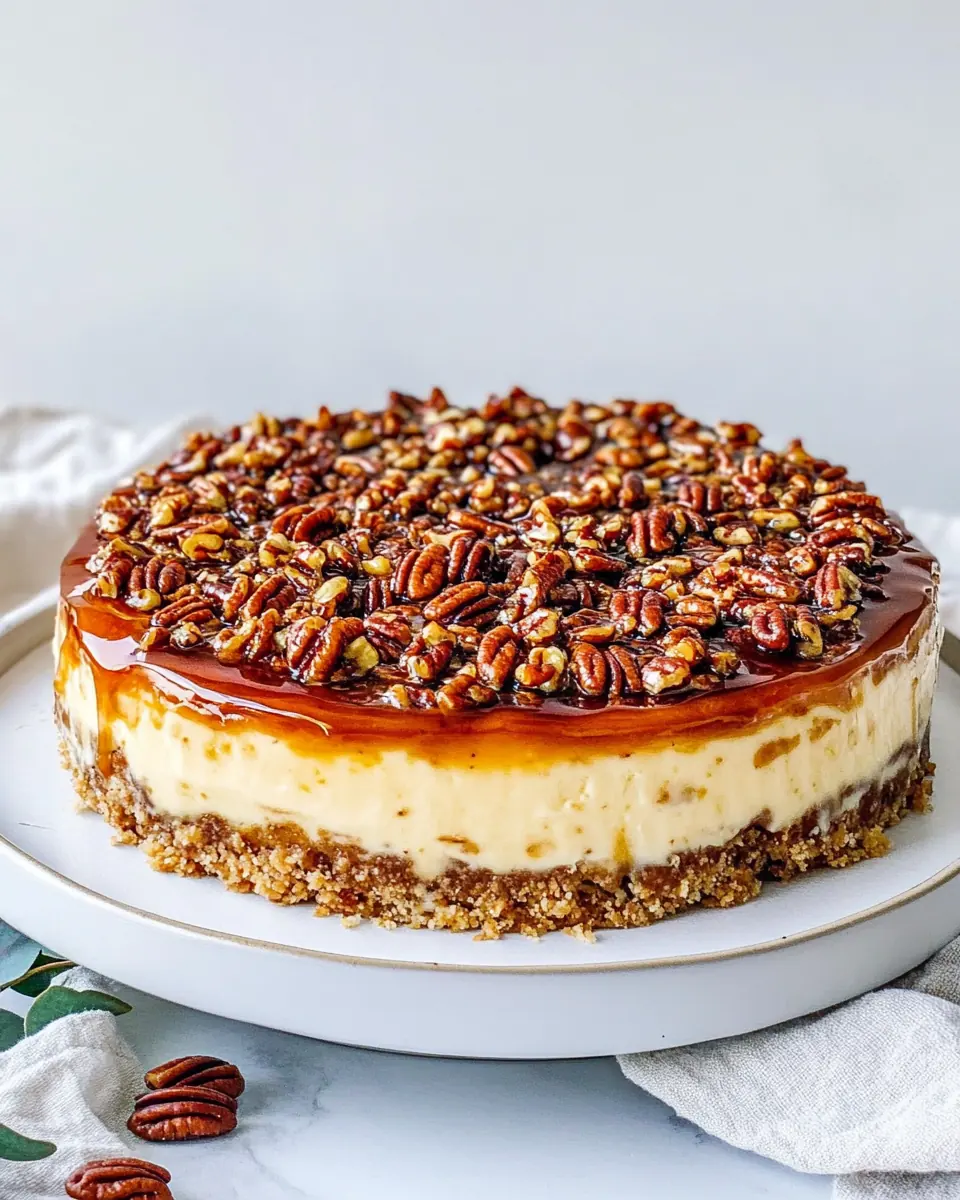
These steps guide you from crust to cool, and I’ll walk you through sensory cues and troubleshooting so you feel confident at every stage. Take your time with mixing and pay attention to texture and aroma; the payoff is a smooth, crack free cheesecake crowned with a glossy pecan topping.
- Preheat your oven to 300℉. Spray the inside of a 9 inch springform pan with cooking spray.: You will notice the oven warming and a faint electrical hum as it reaches 300℉ , which sets a gentle environment to bake the filling evenly. Preparing the 9 inch springform pan with spray ensures later release, and you may also wrap the base in foil if you plan to use a waterbath for extra protection against cracking. A common issue at this stage is skipping the pan prep, which can make it hard to remove slices cleanly; take a moment to coat the ring and base well.
- In a food processor, pulse together the graham crackers, pecans, sugar and salt until coarse crumbs form. Add the melted butter. Pulse until combined.: As you pulse, the mixture will shift from distinct pieces to a fragrant, sandy texture, releasing the warm scent of toasted pecans and sweet graham crackers . Adding the melted butter binds the crumbs so they hold together when pressed. If overprocessed, the crumbs can become pasty, so pulse in short bursts to preserve some texture. If the mixture seems too dry, add a teaspoon of melted butter at a time until it holds when squeezed.
- Press onto the bottom of the prepared pan and set aside.: When pressing the crumb mixture, you'll feel a satisfying compactness under your fingertips, and the surface will appear even and slightly glossy where the butter has distributed. Use the bottom of a measuring cup to smooth and compress the crumbs; this creates a uniform base that avoids weak points. Avoid pressing too tightly because a dense crust can feel heavy; aim for firm but not rock hard.
- Using the paddle attachment on your mixer, beat the cream cheese until smooth. Add the sugars, eggs, vanilla, and salt to the bowl of your mixer. Mix on medium speed until completely combined and smooth. About 5 minutes.: As you beat, the cream cheese will transform from lumpy blocks into a glossy, velvety mass, and the kitchen will fill with a gentle dairy aroma. Adding sugars and eggs in stages helps them emulsify without creating air pockets. Mixing for about 5 minutes produces a homogeneous texture; however, overmixing at high speed can whip excess air into the batter, which often leads to cracks. If you see tiny air bubbles, scrape the bowl and mix briefly at low speed to minimize aeration.
- Pour the mixture over the graham cracker crust. Smooth out as much as possible with a spatula. Bake for 30 minutes.: When you pour the filling, it should flow silkily and settle into a glossy layer over the crust. Smoothing with a spatula gives the top a clean surface that bakes evenly, and you may notice a faint sweet scent as the sugars begin to warm. During the thirty minute bake the edges will set first and the center will still have a slight jiggle like custard; this is the right cue to proceed. A typical mistake is baking too hot, which browns the edges prematurely and leaves the center underbaked.
- To the bowl of your mixer add all the pecan pie ingredients except the pecans and mix until well combined. Add the pecans and mix with a spatula.: The combined sugars, corn syrup , heavy cream and eggs will form a syrupy, glossy mixture that smells richly of caramelizing sugar. Mixing these first ensures the sugars dissolve and the custard base is smooth before folding in the nuts. When you fold in the chopped pecans with a spatula, you preserve their texture; stirring too vigorously can break them down. One pitfall is to heat this mixture before adding it to the cheesecake; keep it unheated so it sets properly while baking on top of the partially cooked filling.
- Pour the mixture over the partially cooked cheesecake, and cook for another 40-50 minutes, or until golden brown.: As the topping bakes, you will smell deep toasty notes and see the surface become thick and glossy, with nut pieces toasting to a rich brown. The edges of the cheesecake should appear set and the topping should glisten; a light jiggle in the center is acceptable. If it browns too quickly, loosely tent with foil to prevent burning while the center finishes. A common error is overbaking, which dries the custard and makes the topping crack instead of staying tender.
- Cool completely, and then cover with plastic wrap. Refrigerate for at least 4 hours before serving.: Cooling brings the cheesecake from a soft custard to a sliceable dessert, and you will notice the internal aroma mellow as it chilling. Covering with plastic prevents the cake from absorbing fridge odors, and chilling for at least 4 hours ensures the texture firms up evenly. If sliced too soon, the filling may be too soft and slide; patient chilling is essential for clean slices and the ideal mouthfeel.
Tips and Variations
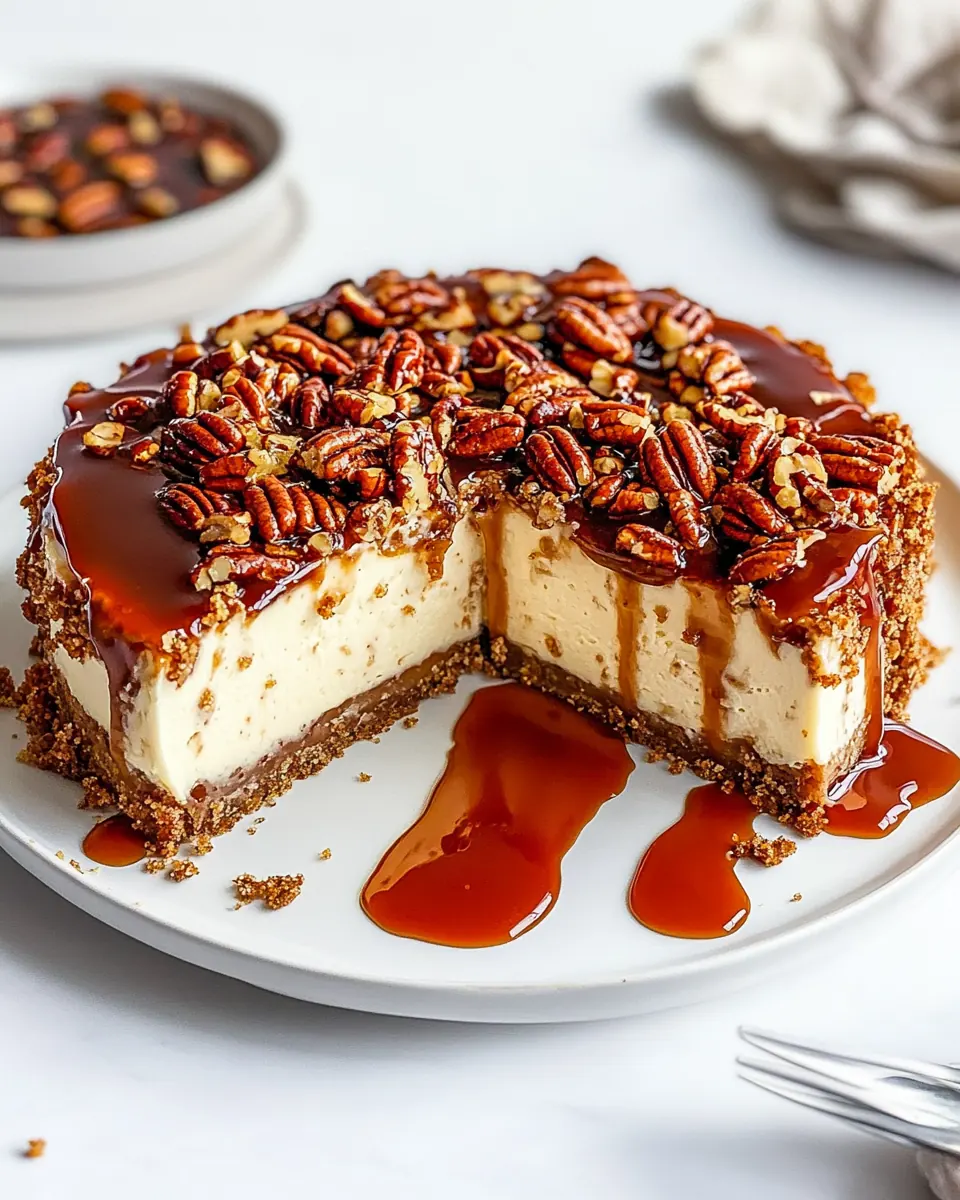
I like to think of tips as small investments that yield reliable, delicious results. Below are detailed, practical suggestions that have helped me get consistent texture and flavor with Pecan Pie Cheesecake.
- Warm the cream cheese: Letting the cream cheese sit at room temperature for about 30 to 60 minutes ensures it blends smoothly without lumps. Cold blocks lead to a gritty batter, so plan this ahead.
- Pulse for texture control: When making the crust, pulse the graham crackers and pecans to a coarse sand so you retain some crunch. Overprocessing will create a paste like mixture that can become overly dense once baked.
- Measure precisely: Pack the brown sugar properly and level all dry ingredients for predictable sweetness and texture. Small variances in sugar quantities will affect caramelization and the firmness of the topping.
- Watch the oven window: Keep an eye on color during the final bake; you want a golden, glossy topping. If edges brown too fast, tent with foil to allow the center to finish without burning the nuts.
- Use a waterbath optionally: If you are concerned about cracking, place the springform pan inside a larger pan and add hot water around it. This moderates heat and encourages even setting, though with the pecan topping many bakers find it optional.
- Chill thoroughly: Refrigerate for at least 4 hours, preferably overnight, to let flavors meld and the texture firm up. Slicing too early results in messy wedges.
- Toast the pecans: Briefly toast pecans in a dry pan to deepen their flavor before using; the scent will become noticeably warm and nutty. Avoid overheating, since burnt nuts taste bitter.
How to Serve Pecan Pie Cheesecake
This cake feels both festive and comforting, so I like serving it at gatherings where people linger with coffee and conversation. Here are ways I present it for different occasions along with storage tips that keep it tasting fresh.
- Classic holiday slice: Serve wedges at room temperature or slightly chilled, with a small spoonful of whipped cream on the side for contrast. The whipped cream adds lightness and a pleasing mouthfeel next to the rich filling.
- With warm sauce: Offer a warm caramel drizzle in a small pitcher so guests can add as much as they like. Warm sauce creates a lovely contrast with the cool cheesecake texture.
- Casual potluck style: Transport the whole cheesecake on a sturdy platter and slice at the venue. Keep it chilled in a cooler for safety, and slice just before serving to keep clean edges.
- Festive presentation: Garnish the top with a scattering of extra toasted pecans and a light dusting of powdered sugar for seasonal flair. This simple finish makes the cake look polished without adding complexity.
- Storage in the fridge: Wrap the cake loosely with aluminum foil or plastic wrap and keep refrigerated up to one week. For best texture, bring to serving temperature about 20 to 30 minutes before slicing.
- Freezing: Wrap slices tightly in plastic freezer wrap and place in freezer bags for longer storage. Thaw in the refrigerator overnight and serve chilled for best results.
FAQ
Conclusion
Pecan Pie Cheesecake stands out because it marries a silky cheesecake base with a caramel like pecan topping for a satisfying contrast of texture and flavor. This recipe is approachable yet impressive, ideal for holidays or any time you want a memorable dessert. Give it a try when you want a centerpiece that looks elegant but rewards steady, simple technique. I find it brings people together, and the leftovers often taste even better the next day, making the effort feel truly worthwhile.
Pecan Pie Cheesecake
Ingredients
Equipment
Method
- Preheat your oven to 300℉. Spray the inside of a 9 inch springform pan with cooking spray.: You will notice the oven warming and a faint electrical hum as it reaches 300℉ , which sets a gentle environment to bake the filling evenly. Preparing the 9 inch springform pan with spray ensures later release, and you may also wrap the base in foil if you plan to use a waterbath for extra protection against cracking. A common issue at this stage is skipping the pan prep, which can make it hard to remove slices cleanly; take a moment to coat the ring and base well.
- In a food processor, pulse together the graham crackers, pecans, sugar and salt until coarse crumbs form. Add the melted butter. Pulse until combined.: As you pulse, the mixture will shift from distinct pieces to a fragrant, sandy texture, releasing the warm scent of toasted pecans and sweet graham crackers . Adding the melted butter binds the crumbs so they hold together when pressed. If overprocessed, the crumbs can become pasty, so pulse in short bursts to preserve some texture. If the mixture seems too dry, add a teaspoon of melted butter at a time until it holds when squeezed.
- Press onto the bottom of the prepared pan and set aside.: When pressing the crumb mixture, you'll feel a satisfying compactness under your fingertips, and the surface will appear even and slightly glossy where the butter has distributed. Use the bottom of a measuring cup to smooth and compress the crumbs; this creates a uniform base that avoids weak points. Avoid pressing too tightly because a dense crust can feel heavy; aim for firm but not rock hard.
- Using the paddle attachment on your mixer, beat the cream cheese until smooth. Add the sugars, eggs, vanilla, and salt to the bowl of your mixer. Mix on medium speed until completely combined and smooth. About 5 minutes.: As you beat, the cream cheese will transform from lumpy blocks into a glossy, velvety mass, and the kitchen will fill with a gentle dairy aroma. Adding sugars and eggs in stages helps them emulsify without creating air pockets. Mixing for about 5 minutes produces a homogeneous texture; however, overmixing at high speed can whip excess air into the batter, which often leads to cracks. If you see tiny air bubbles, scrape the bowl and mix briefly at low speed to minimize aeration.
- Pour the mixture over the graham cracker crust. Smooth out as much as possible with a spatula. Bake for 30 minutes.: When you pour the filling, it should flow silkily and settle into a glossy layer over the crust. Smoothing with a spatula gives the top a clean surface that bakes evenly, and you may notice a faint sweet scent as the sugars begin to warm. During the thirty minute bake the edges will set first and the center will still have a slight jiggle like custard; this is the right cue to proceed. A typical mistake is baking too hot, which browns the edges prematurely and leaves the center underbaked.
- To the bowl of your mixer add all the pecan pie ingredients except the pecans and mix until well combined. Add the pecans and mix with a spatula.: The combined sugars, corn syrup , heavy cream and eggs will form a syrupy, glossy mixture that smells richly of caramelizing sugar. Mixing these first ensures the sugars dissolve and the custard base is smooth before folding in the nuts. When you fold in the chopped pecans with a spatula, you preserve their texture; stirring too vigorously can break them down. One pitfall is to heat this mixture before adding it to the cheesecake; keep it unheated so it sets properly while baking on top of the partially cooked filling.
- Pour the mixture over the partially cooked cheesecake, and cook for another 40-50 minutes, or until golden brown.: As the topping bakes, you will smell deep toasty notes and see the surface become thick and glossy, with nut pieces toasting to a rich brown. The edges of the cheesecake should appear set and the topping should glisten; a light jiggle in the center is acceptable. If it browns too quickly, loosely tent with foil to prevent burning while the center finishes. A common error is overbaking, which dries the custard and makes the topping crack instead of staying tender.
- Cool completely, and then cover with plastic wrap. Refrigerate for at least 4 hours before serving.: Cooling brings the cheesecake from a soft custard to a sliceable dessert, and you will notice the internal aroma mellow as it chilling. Covering with plastic prevents the cake from absorbing fridge odors, and chilling for at least 4 hours ensures the texture firms up evenly. If sliced too soon, the filling may be too soft and slide; patient chilling is essential for clean slices and the ideal mouthfeel.
Notes
- Warm the cream cheese: Letting the cream cheese sit at room temperature for about 30 to 60 minutes ensures it blends smoothly without lumps. Cold blocks lead to a gritty batter, so plan this ahead.
- Pulse for texture control: When making the crust, pulse the graham crackers and pecans to a coarse sand so you retain some crunch. Overprocessing will create a paste like mixture that can become overly dense once baked.
- Measure precisely: Pack the brown sugar properly and level all dry ingredients for predictable sweetness and texture. Small variances in sugar quantities will affect caramelization and the firmness of the topping.
- Watch the oven window: Keep an eye on color during the final bake; you want a golden, glossy topping. If edges brown too fast, tent with foil to allow the center to finish without burning the nuts.
- Use a waterbath optionally: If you are concerned about cracking, place the springform pan inside a larger pan and add hot water around it. This moderates heat and encourages even setting, though with the pecan topping many bakers find it optional.
- Chill thoroughly: Refrigerate for at least 4 hours, preferably overnight, to let flavors meld and the texture firm up. Slicing too early results in messy wedges.
- Toast the pecans: Briefly toast pecans in a dry pan to deepen their flavor before using; the scent will become noticeably warm and nutty. Avoid overheating, since burnt nuts taste bitter.