Preheat your oven to 300℉. Spray the inside of a 9 inch springform pan with cooking spray.: You will notice the oven warming and a faint electrical hum as it reaches 300℉ , which sets a gentle environment to bake the filling evenly. Preparing the 9 inch springform pan with spray ensures later release, and you may also wrap the base in foil if you plan to use a waterbath for extra protection against cracking. A common issue at this stage is skipping the pan prep, which can make it hard to remove slices cleanly; take a moment to coat the ring and base well.
In a food processor, pulse together the graham crackers, pecans, sugar and salt until coarse crumbs form. Add the melted butter. Pulse until combined.: As you pulse, the mixture will shift from distinct pieces to a fragrant, sandy texture, releasing the warm scent of toasted pecans and sweet graham crackers . Adding the melted butter binds the crumbs so they hold together when pressed. If overprocessed, the crumbs can become pasty, so pulse in short bursts to preserve some texture. If the mixture seems too dry, add a teaspoon of melted butter at a time until it holds when squeezed.
Press onto the bottom of the prepared pan and set aside.: When pressing the crumb mixture, you'll feel a satisfying compactness under your fingertips, and the surface will appear even and slightly glossy where the butter has distributed. Use the bottom of a measuring cup to smooth and compress the crumbs; this creates a uniform base that avoids weak points. Avoid pressing too tightly because a dense crust can feel heavy; aim for firm but not rock hard.
Using the paddle attachment on your mixer, beat the cream cheese until smooth. Add the sugars, eggs, vanilla, and salt to the bowl of your mixer. Mix on medium speed until completely combined and smooth. About 5 minutes.: As you beat, the cream cheese will transform from lumpy blocks into a glossy, velvety mass, and the kitchen will fill with a gentle dairy aroma. Adding sugars and eggs in stages helps them emulsify without creating air pockets. Mixing for about 5 minutes produces a homogeneous texture; however, overmixing at high speed can whip excess air into the batter, which often leads to cracks. If you see tiny air bubbles, scrape the bowl and mix briefly at low speed to minimize aeration.
Pour the mixture over the graham cracker crust. Smooth out as much as possible with a spatula. Bake for 30 minutes.: When you pour the filling, it should flow silkily and settle into a glossy layer over the crust. Smoothing with a spatula gives the top a clean surface that bakes evenly, and you may notice a faint sweet scent as the sugars begin to warm. During the thirty minute bake the edges will set first and the center will still have a slight jiggle like custard; this is the right cue to proceed. A typical mistake is baking too hot, which browns the edges prematurely and leaves the center underbaked.
To the bowl of your mixer add all the pecan pie ingredients except the pecans and mix until well combined. Add the pecans and mix with a spatula.: The combined sugars, corn syrup , heavy cream and eggs will form a syrupy, glossy mixture that smells richly of caramelizing sugar. Mixing these first ensures the sugars dissolve and the custard base is smooth before folding in the nuts. When you fold in the chopped pecans with a spatula, you preserve their texture; stirring too vigorously can break them down. One pitfall is to heat this mixture before adding it to the cheesecake; keep it unheated so it sets properly while baking on top of the partially cooked filling.
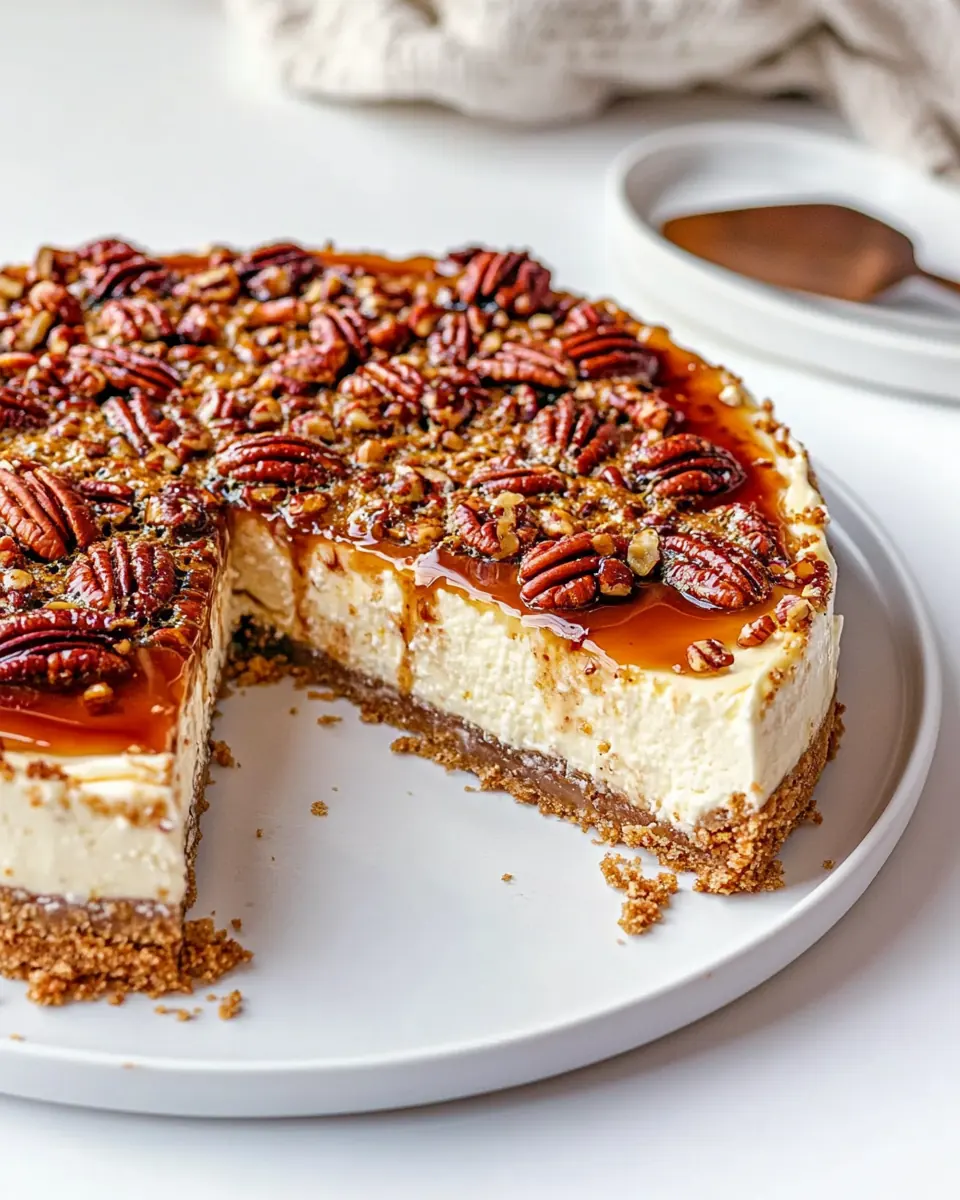
Pour the mixture over the partially cooked cheesecake, and cook for another 40-50 minutes, or until golden brown.: As the topping bakes, you will smell deep toasty notes and see the surface become thick and glossy, with nut pieces toasting to a rich brown. The edges of the cheesecake should appear set and the topping should glisten; a light jiggle in the center is acceptable. If it browns too quickly, loosely tent with foil to prevent burning while the center finishes. A common error is overbaking, which dries the custard and makes the topping crack instead of staying tender.
Cool completely, and then cover with plastic wrap. Refrigerate for at least 4 hours before serving.: Cooling brings the cheesecake from a soft custard to a sliceable dessert, and you will notice the internal aroma mellow as it chilling. Covering with plastic prevents the cake from absorbing fridge odors, and chilling for at least 4 hours ensures the texture firms up evenly. If sliced too soon, the filling may be too soft and slide; patient chilling is essential for clean slices and the ideal mouthfeel.