Pinto Squash Stew with Chimichurri
Pinto Squash Stew with Chimichurri is one of those bowls I reach for when the days get shorter and I want something snug yet bright on the plate.
I remember the first time I made this stew on a cool autumn afternoon, the kitchen windows fogging a little as the pot simmered. I was drawn to the contrast between the earthy pinto beans and the sweet, tender rounds of delicata squash, while the chimichurri I spooned on at the end added a lively, herby lift. That interplay between comforting and fresh is what keeps me coming back, especially when I have a small stack of pantry staples and a jar of homemade sauce waiting in the fridge.
Each spoonful felt like a tiny celebration of simple ingredients done well. The aroma of sautéed onion and garlic perfumed the air, and the broth mellowed around the vegetables, finishing with a peppery, acidic note from the sauce. I love serving this when friends drop by unexpectedly, because it looks like I fussed for hours though it comes together quickly. Over the years I’ve tweaked the balance between broth and beans so it sits somewhere between a stew and a thick soup, which makes it perfect for dipping crusty bread or spooning over a grain. Whenever squash season rolls around I make a batch and bottle the chimichurri to use on everything from salads to roasted vegetables. It feels like sharing a small kitchen secret, one bowl at a time.
Recipe Snapshot
30 mins
10 mins
20 mins
Easy
300 kcal
American
Vegan, Gluten-Free
Dinner
Stock pot, Knife, Cutting board, Measuring cup, Spoon
Why This Pinto Squash Stew with Chimichurri Stands Out
Bold, Bright Finish
I adore how the chimichurri transforms this humble Pinto Squash Stew with Chimichurri. When I spoon the sauce over a steaming bowl, the herbs and acid cut through the stew’s gentle richness, giving each bite a lifted, aromatic finish. This contrast makes the dish feel more complex than the few steps required to make it.
Comforting, Yet Light
We get the comforting body from the pinto beans and the soft, sweet texture of delicata squash. At the same time, the broth and the zesty sauce keep the stew from feeling heavy. I often reach for this when I want something filling but not weighed down.
Speed and Simplicity
I value recipes that respect a busy weeknight. This one comes together quickly because the components are straightforward, and you can streamline things by using canned pinto beans. The short cook time means you still get deep flavor without a long simmer, which is a favorite trick of mine on rushed evenings.
Pantry Friendly
The ingredient list reads like a pantry checklist. Once you have a jar of chimichurri on hand, this stew becomes a go to for using leftover vegetable broth and beans. It is forgiving, so I often adapt quantities based on what I have, and it still turns out well.
Versatile Serving Options
I love that this stew is equally good in a bowl for dinner, spooned over grains for meal prep, or served as part of a relaxed lunch. The textures and flavors pair with many sides, and it’s easy to dress up for guests. That flexibility is one of the main reasons I keep this recipe in my rotation.
Recipe Ingredients for Pinto Squash Stew with Chimichurri
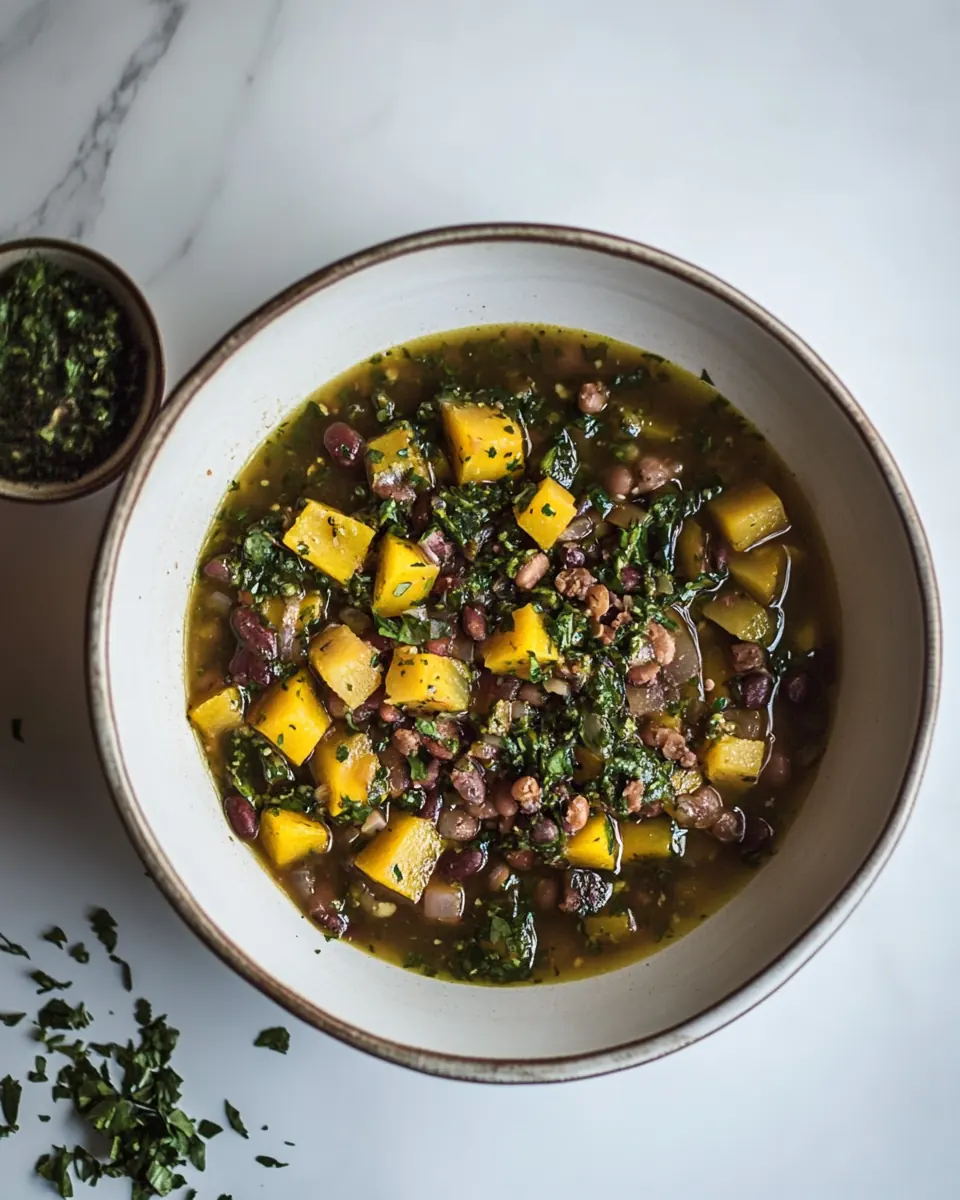
These ingredients work together to balance creaminess, sweetness, and herbal brightness. The pinto beans give body and protein, the delicata squash brings a tender, slightly sweet counterpoint, and the chimichurri finishes the bowl with acidic, herby notes. The aromatics and broth bind the elements, creating a cozy stew that still feels lively.
- 1/2 cup homemade chimichurri: Adds bright, herbaceous richness and a tangy, garlicky finish; use as a finishing sauce stirred in or drizzled over bowls to brighten flavors and add moisture.
- 1/2 medium yellow onion: Provides a sweet, savory base with soft texture when softened; sauté until translucent to build depth and balance in the stew.
- 1 large garlic clove: Imparts pungent aroma and savory depth when minced and lightly cooked; helps round and enhance the overall savory profile of the stew.
- 1 tablespoon olive oil: Coats aromatics and squash while preventing sticking; use to sauté the onion and garlic and to help caramelize squash for additional flavor.
- 1 small delicata squash: Contributes tender, slightly sweet flesh and creamy texture when roasted or sautéed; adds autumnal flavor and body to the stew.
- 1 1/2 cups cooked pinto beans (drained and rinsed if using canned): Supplies protein, creaminess, and earthy flavor; stirred in to make the stew heartier and to add satisfying bite and nutrition.
- 2 to 3 cups vegetable broth: Forms the cooking liquid and controls final stew thickness; add gradually to achieve desired consistency while simmering flavors together.
- Salt (to taste): Balances and enhances overall flavor by seasoning to taste; add gradually and adjust at the end to lift the dish.
- Crushed red pepper (for serving): Provides optional heat and a touch of color when sprinkled at the end; use sparingly to add a warm, spicy kick to servings.
Step by Step Instructions for Pinto Squash Stew with Chimichurri
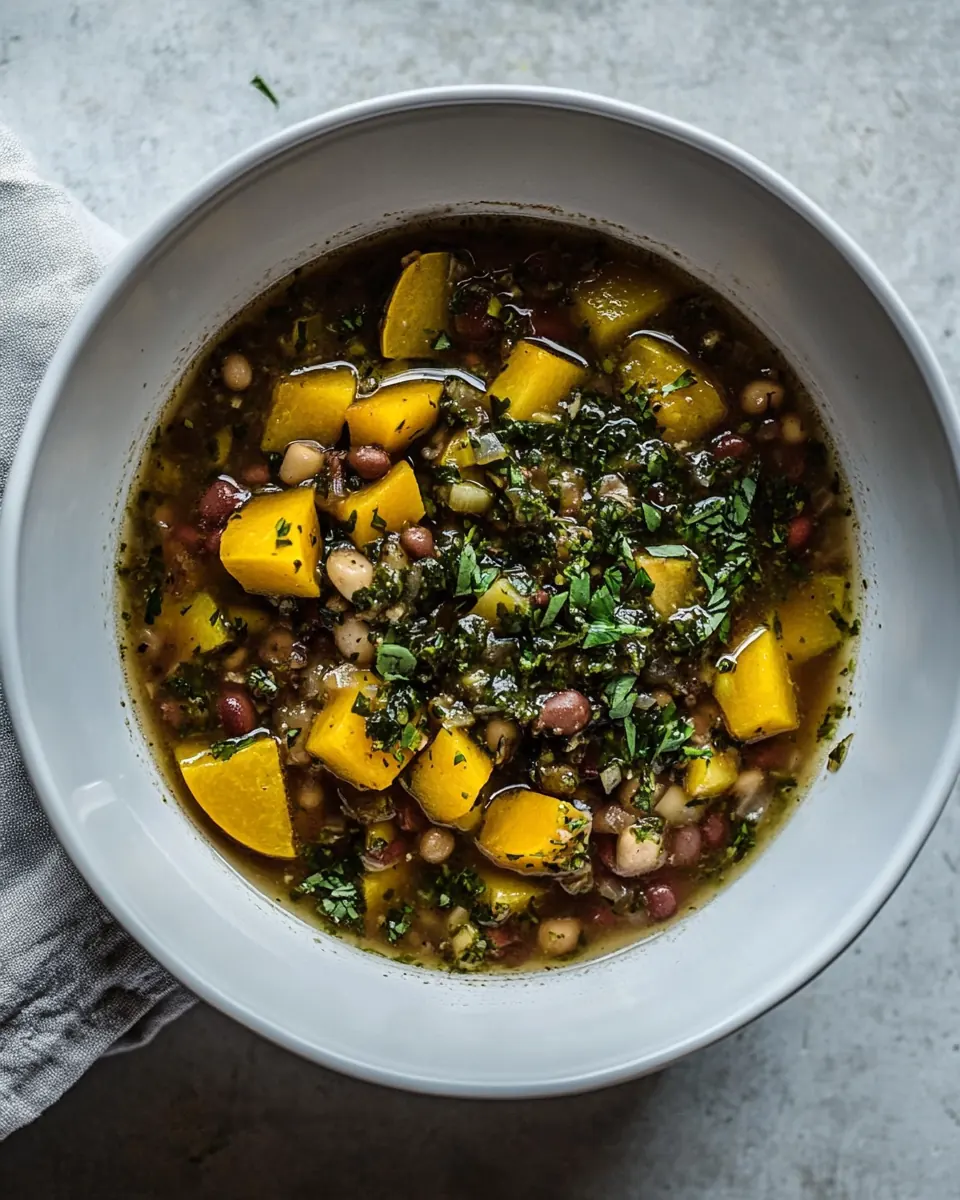
These directions guide you through building layered flavor from aromatics to finished bowl. Move through each step deliberately so the textures and aromas develop. Keep tasting as you go to adjust seasoning and texture.
- Make the chimichurri according to the directions, set aside.: The chimichurri brings a fresh, bright aroma and a slight acidic snap, which will be most vivid if you make it ahead and let it rest. When the herbs sit with oil and acid, the flavors meld and the sauce loses any raw edge, becoming more integrated. Be cautious with the salt in the sauce if your vegetable broth is already salted, because over seasoning can flatten the stew. A common mistake is serving chimichurri straight from the blender without tasting for acidity and salt balance; adjust before spooning it over the finished bowls.
- Mince the onion and garlic. Heat a stock pot over medium heat. Add the olive oil followed by the minced onion. Cook until the onion is tender; 6 minutes or so. Add in the garlic and cook for a minute more.: As the onion softens it will release a sweet perfume and the pan will start to shimmer, signaling the right temperature. The sound changes subtly to a gentle sizzle, and the aroma should be mellow, not sharp. Adding the garlic later prevents burning and bitterness, preserving its mellow warmth. Stir frequently so nothing sticks and turn the heat down if the edges brown too quickly. A common pitfall is rushing this stage on high heat, which can create burnt notes rather than the sweet base you want.
- Cut the delicata squash in half, lengthwise. Scoop out the seeds and place the squash, cut-side down. Slice the squash into half-circles, roughly 1/4” thick. Add to the pot with the onion and garlic, stirring to coat. Measure in the pinto beans and 2 cups of the vegetable broth. Bring to a boil, reduce to a simmer, and cook until the squash is tender; 10 to 15 minutes. Taste and adjust salt as needed. If the stew is too thick, add 1/2 cup vegetable broth as needed.: When you add the delicata squash , notice the contrast between the translucent, softened onion and the pale, firm squash slices. Stirring coats the squash in the flavored oil so it browns gently and starts to release its natural sugars, which add sweetness to the stew. The slices should be uniform so they cook evenly; uneven pieces will result in a mix of underdone and overcooked textures. Avoid cutting pieces too thick, or they will take much longer to become tender in the simmering broth.
- Divide the stew into two bowls and top with 2 to 3 tablespoons of the chimichurri and extra crushed red pepper (optional).: Adding the pinto beans and vegetable broth creates the stew's body while combining starch from the beans with the liquid for a silky mouthfeel. At this point the pot will emit a savory, homey scent as the flavors mingle. If your beans are canned, rinsing beforehand removes excess packing liquid that can taste metallic or overly salty. A common error is adding too much liquid initially; start with 2 cups and gauge the thickness as it simmers, adding more broth only if needed.
- Bring to a boil, reduce to a simmer, and cook until the squash is tender; 10 to 15 minutes: As the stew comes to a boil you will see lively bubbling and a steam rush full of roasted vegetable notes. Reducing to a simmer calms the motion and allows the flavors to knit while the delicata squash softens. The visual cue is when the squash becomes translucent and yields easily to a spoon, and the broth will thicken slightly from bean starch. Avoid a rolling boil for the entire time since it can break down the squash and make the beans mealy. A frequent mistake is under simmering, leaving the squash too firm and the flavors underdeveloped.
- Taste and adjust salt as needed. If the stew is too thick, add 1/2 cup vegetable broth as needed: Tasting now lets you correct seasoning and texture so the final bowl is balanced. Salt amplifies the natural sweetness of the delicata squash and the savory depth of the pinto beans . If the stew seems gluey or overly dense, the gentle addition of small amounts of vegetable broth will loosen it while preserving flavor. Be careful not to dilute the stew by adding too much liquid at once. A common oversight is failing to re taste after adjustments, which can lead to over seasoning or a watery finish.
- Divide the stew into two bowls and top with 2 to 3 tablespoons of the chimichurri and extra crushed red pepper (optional): At plating, the contrast of steaming stew and cool, herbaceous chimichurri is immediately apparent, with the sauce releasing a fresh green aroma over the warm bowl. The bright, slightly acidic sauce elevates the texture and prevents the stew from tasting flat. A small sprinkle of crushed red pepper adds a lively heat that lingers behind the herb notes. Watch portion size so the sauce does not overwhelm the stew; starting with a moderate spoonful and adding more to taste avoids overpowering the base flavors. A common mistake is stirring all the chimichurri into the pot, which can mute its herb freshness; I prefer it spooned on top so it stays distinct.
Ways to Adapt This Recipe
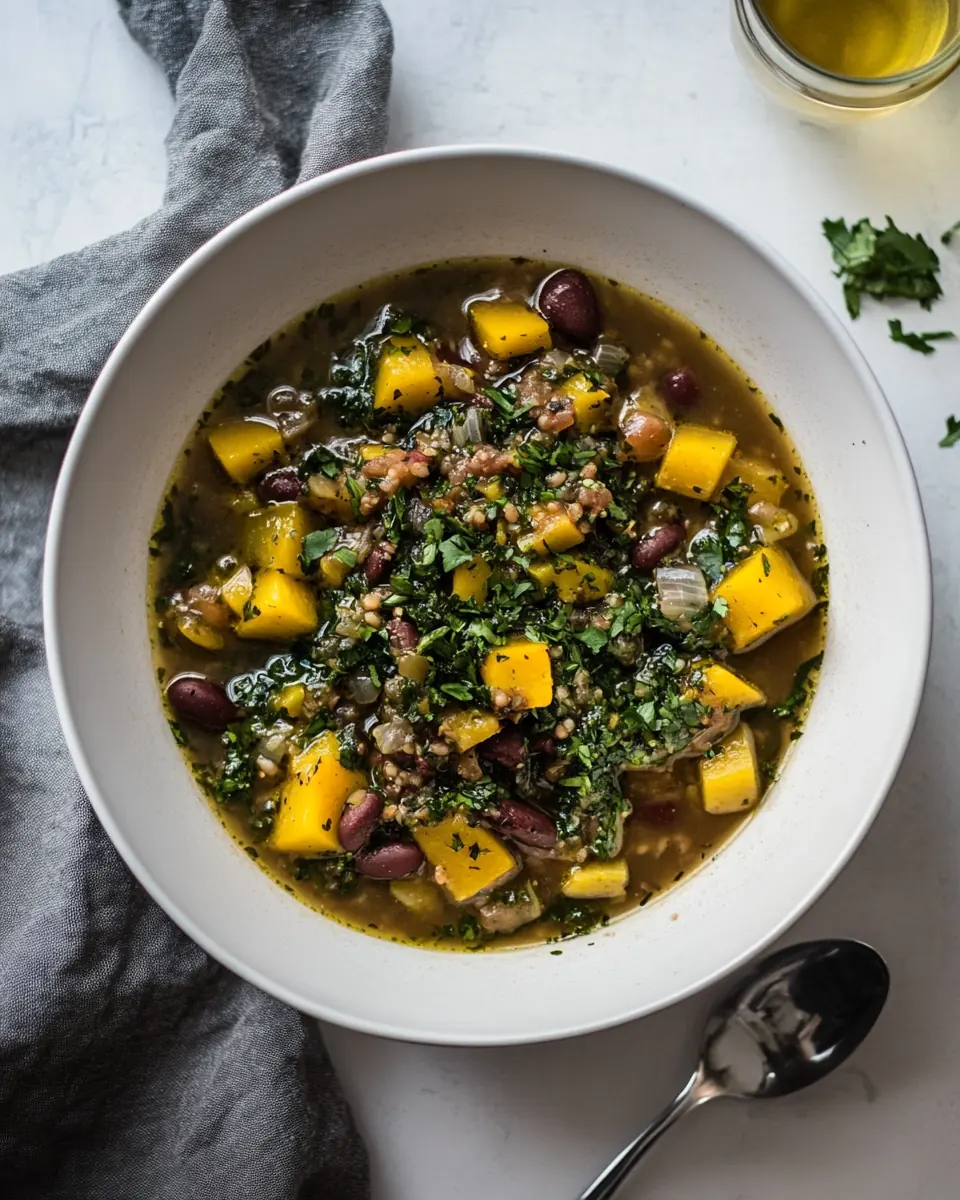
This section helps you personalize the stew without changing the ingredient list. Below are practical ideas to vary texture, presentation, and timing while staying true to the recipe’s spirit.
- Serve it over grains Use warm cooked rice or farro as a base, spoon the stew on top for a heartier meal. The grains soak up the broth and add chew for contrast with the soft delicata squash.
- Adjust the broth Start with 2 cups of vegetable broth if you want a thick stew, add up to 3 cups for soup consistency. This simple tweak changes how you eat it, from ladle into bowls to spooning over toasted bread.
- Make chimichurri ahead The sauce improves after resting, so make it up to a day early and refrigerate. This deepens the herb flavors and saves time when you cook the stew.
- Control the heat Add crushed red pepper at the end to taste. Sprinkle a little at serving for a gentle warmth, or more if you prefer a pronounced kick.
- Use beans from the pantry Canned pinto beans are fine after rinsing, while freshly cooked beans bring a slightly creamier texture. Either works depending on time and preference.
How to Serve Pinto Squash Stew with Chimichurri
This stew is versatile at the table, suitable for intimate dinners or relaxed lunches. Here are detailed serving suggestions and seasonal ideas to make the most of the flavors.
- Simple bowls Ladle the stew into individual bowls and finish with a spoonful of chimichurri. The bright sauce on warm stew creates a balanced bite suitable for a cozy weeknight dinner.
- Over grains Spoon the stew over cooked rice, quinoa, or farro for extra substance. The grains absorb the savory broth and make the meal more filling for colder evenings.
- With toast Serve with slices of toasted bread for dipping, letting guests soak up the broth. The crusty bread adds texture against the tender delicata squash and creamy pinto beans.
- Occasions This dish works well for casual lunches, weeknight dinners, and especially in fall when squash is at its peak. It is also a gentle choice for Ramadan if you want a warming, nourishing bowl after fasting.
- Batch cooking Make a larger pot and refrigerate leftovers for up to three days. Reheat gently on the stove with a splash of vegetable broth to revive the texture, then add fresh chimichurri at serving.
- Seasonal pairings Pair with roasted root vegetables or a crisp green salad in autumn. The stew’s warmth complements roasted textures and bright, raw salads alike.
- Presentation Serve in shallow bowls and spoon the chimichurri in a crescent on top, finishing with a light sprinkle of crushed red pepper for color and contrast.
FAQ
Conclusion
This Pinto Squash Stew with Chimichurri shines because it balances cozy, earthy ingredients with a fresh, herbaceous finish. The marriage of tender delicata squash, creamy pinto beans, and bright chimichurri makes each bowl feel thoughtfully layered yet easy to prepare. Give it a try on a cool evening when you want a satisfying, approachable meal that still tastes special. I hope it becomes one of those go to recipes you return to whenever squash is in season.
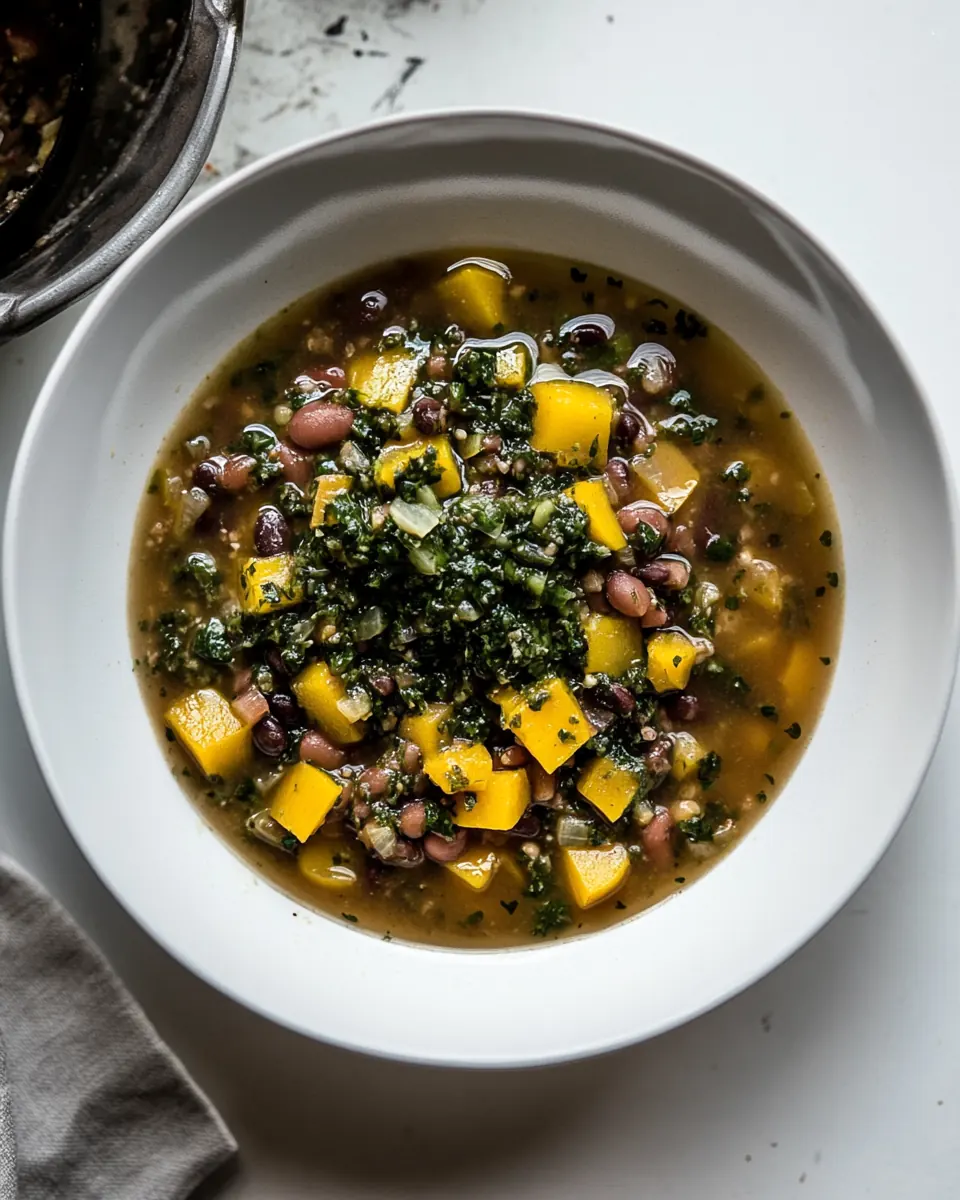
Pinto Squash Stew with Chimichurri
Ingredients
Equipment
Method
- Make the chimichurri according to the directions, set aside.: The chimichurri brings a fresh, bright aroma and a slight acidic snap, which will be most vivid if you make it ahead and let it rest. When the herbs sit with oil and acid, the flavors meld and the sauce loses any raw edge, becoming more integrated. Be cautious with the salt in the sauce if your vegetable broth is already salted, because over seasoning can flatten the stew. A common mistake is serving chimichurri straight from the blender without tasting for acidity and salt balance; adjust before spooning it over the finished bowls.
- Mince the onion and garlic. Heat a stock pot over medium heat. Add the olive oil followed by the minced onion. Cook until the onion is tender; 6 minutes or so. Add in the garlic and cook for a minute more.: As the onion softens it will release a sweet perfume and the pan will start to shimmer, signaling the right temperature. The sound changes subtly to a gentle sizzle, and the aroma should be mellow, not sharp. Adding the garlic later prevents burning and bitterness, preserving its mellow warmth. Stir frequently so nothing sticks and turn the heat down if the edges brown too quickly. A common pitfall is rushing this stage on high heat, which can create burnt notes rather than the sweet base you want.
- Cut the delicata squash in half, lengthwise. Scoop out the seeds and place the squash, cut-side down. Slice the squash into half-circles, roughly 1/4” thick. Add to the pot with the onion and garlic, stirring to coat. Measure in the pinto beans and 2 cups of the vegetable broth. Bring to a boil, reduce to a simmer, and cook until the squash is tender; 10 to 15 minutes. Taste and adjust salt as needed. If the stew is too thick, add 1/2 cup vegetable broth as needed.: When you add the delicata squash , notice the contrast between the translucent, softened onion and the pale, firm squash slices. Stirring coats the squash in the flavored oil so it browns gently and starts to release its natural sugars, which add sweetness to the stew. The slices should be uniform so they cook evenly; uneven pieces will result in a mix of underdone and overcooked textures. Avoid cutting pieces too thick, or they will take much longer to become tender in the simmering broth.
- Divide the stew into two bowls and top with 2 to 3 tablespoons of the chimichurri and extra crushed red pepper (optional).: Adding the pinto beans and vegetable broth creates the stew's body while combining starch from the beans with the liquid for a silky mouthfeel. At this point the pot will emit a savory, homey scent as the flavors mingle. If your beans are canned, rinsing beforehand removes excess packing liquid that can taste metallic or overly salty. A common error is adding too much liquid initially; start with 2 cups and gauge the thickness as it simmers, adding more broth only if needed.
- Bring to a boil, reduce to a simmer, and cook until the squash is tender; 10 to 15 minutes: As the stew comes to a boil you will see lively bubbling and a steam rush full of roasted vegetable notes. Reducing to a simmer calms the motion and allows the flavors to knit while the delicata squash softens. The visual cue is when the squash becomes translucent and yields easily to a spoon, and the broth will thicken slightly from bean starch. Avoid a rolling boil for the entire time since it can break down the squash and make the beans mealy. A frequent mistake is under simmering, leaving the squash too firm and the flavors underdeveloped.
- Taste and adjust salt as needed. If the stew is too thick, add 1/2 cup vegetable broth as needed: Tasting now lets you correct seasoning and texture so the final bowl is balanced. Salt amplifies the natural sweetness of the delicata squash and the savory depth of the pinto beans . If the stew seems gluey or overly dense, the gentle addition of small amounts of vegetable broth will loosen it while preserving flavor. Be careful not to dilute the stew by adding too much liquid at once. A common oversight is failing to re taste after adjustments, which can lead to over seasoning or a watery finish.
- Divide the stew into two bowls and top with 2 to 3 tablespoons of the chimichurri and extra crushed red pepper (optional): At plating, the contrast of steaming stew and cool, herbaceous chimichurri is immediately apparent, with the sauce releasing a fresh green aroma over the warm bowl. The bright, slightly acidic sauce elevates the texture and prevents the stew from tasting flat. A small sprinkle of crushed red pepper adds a lively heat that lingers behind the herb notes. Watch portion size so the sauce does not overwhelm the stew; starting with a moderate spoonful and adding more to taste avoids overpowering the base flavors. A common mistake is stirring all the chimichurri into the pot, which can mute its herb freshness; I prefer it spooned on top so it stays distinct.
Notes
- Serve it over grains Use warm cooked rice or farro as a base, spoon the stew on top for a heartier meal. The grains soak up the broth and add chew for contrast with the soft delicata squash.
- Adjust the broth Start with 2 cups of vegetable broth if you want a thick stew, add up to 3 cups for soup consistency. This simple tweak changes how you eat it, from ladle into bowls to spooning over toasted bread.
- Make chimichurri ahead The sauce improves after resting, so make it up to a day early and refrigerate. This deepens the herb flavors and saves time when you cook the stew.
- Control the heat Add crushed red pepper at the end to taste. Sprinkle a little at serving for a gentle warmth, or more if you prefer a pronounced kick.
- Use beans from the pantry Canned pinto beans are fine after rinsing, while freshly cooked beans bring a slightly creamier texture. Either works depending on time and preference.